Aung San Suu Kyi
Aung San Suu Kyi — an illustrated biography story, set in Global. 10 illustrated pages, free to read on Wonder People.

Page 1

In August 1988, amidst a surge of student-led protests against military rule, a decisive figure emerged in Rangoon, Burma. Aung San Suu Kyi, returned to care for her ailing mother, stepped onto a makeshift stage at the Shwedagon Pagoda, addressing an estimated 500,000 people. Her words ignited the nascent pro-democracy movement, crystallizing a moment of national awakening and positioning her as the undeniable, central voice of dissent against decades of authoritarian control. The world watched as a new leader, heir to a revolutionary legacy, confronted overwhelming state power with an appeal for non-violence and democratic reform.
Biographical Fact: Aung San Suu Kyi's speech at the Shwedagon Pagoda on August 26, 1988, marked her formal entry into politics and rallied hundreds of thousands, challenging the military regime (SLORC).
Page 2
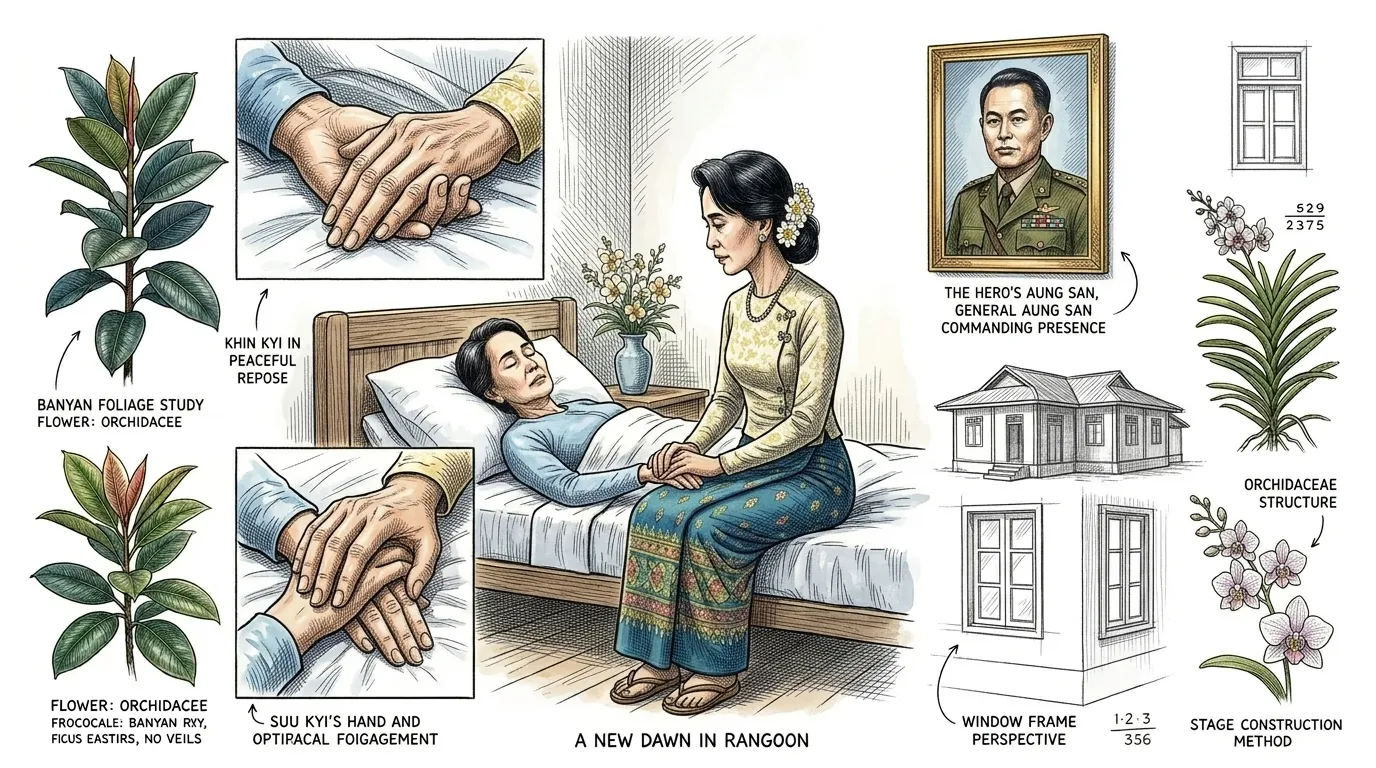
Aung San Suu Kyi's return to Burma in April 1988 was not initially a political act. She came to tend to her mother, Daw Khin Kyi, who had suffered a severe stroke. Yet, her lineage was inextricable from the nation's destiny: she was the daughter of General Aung San, the architect of Burma's independence, assassinated just months before the nation gained freedom. This personal act of familial duty converged with a boiling political crisis, embedding her at the heart of the country's struggle and setting the stage for an unforeseen confrontation with the regime.
Biographical Fact: Aung San Suu Kyi returned to Burma in April 1988 to care for her ailing mother, Daw Khin Kyi, wife of national hero General Aung San. This return coincided with widespread pro-democracy protests.
Page 3
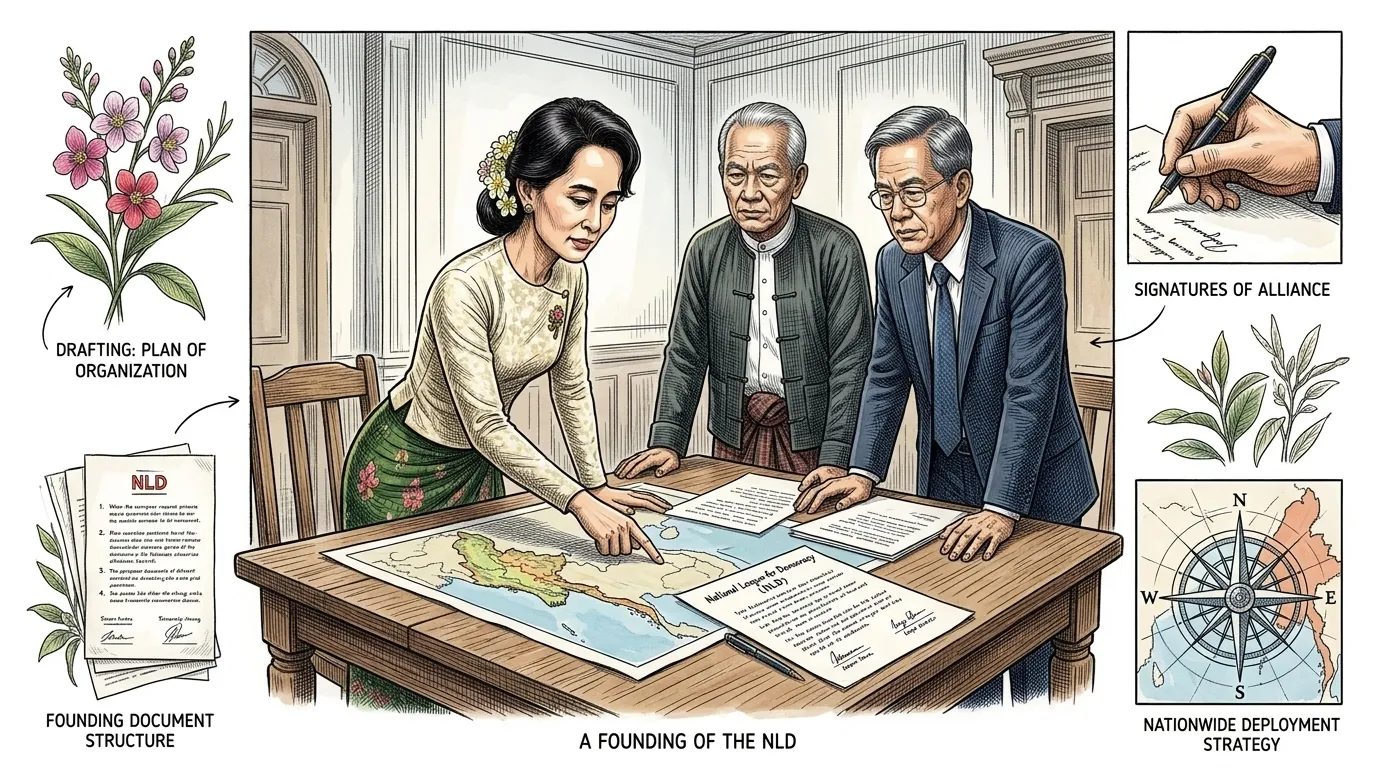
The momentum of the student protests demanded leadership beyond a single speech. In September 1988, Aung San Suu Kyi co-founded the National League for Democracy (NLD), a direct challenge to the military's grip on power. Alongside former Brigadier General U Tin Oo and lawyer U Kyi Maung, she crafted a political vehicle for the aspirations of millions. This act solidified her transition from symbolic figure to active organizer, forging a unified front for change within a country that had long known only military command.
Biographical Fact: The National League for Democracy (NLD) was formed on September 24, 1988, with Aung San Suu Kyi as its General Secretary, U Tin Oo as Chairman, and U Kyi Maung as Vice Chairman, uniting diverse opposition voices.
Page 4

As the NLD gained popular support, the military junta escalated its intimidation tactics. Yet, Aung San Suu Kyi refused to be silenced. She continued to lead rallies, walking directly into the path of armed soldiers, her calm demeanor a stark contrast to their weapons. This deliberate, non-violent confrontation on the streets of Yangon became an iconic image, a powerful display of moral courage that inspired thousands to join her cause and demonstrated the strength of her conviction in the face of brute force.
Biographical Fact: Aung San Suu Kyi's non-violent resistance, including her famous confrontation with armed soldiers in 1989, solidified her image as a fearless leader and amplified her international appeal.
Page 5
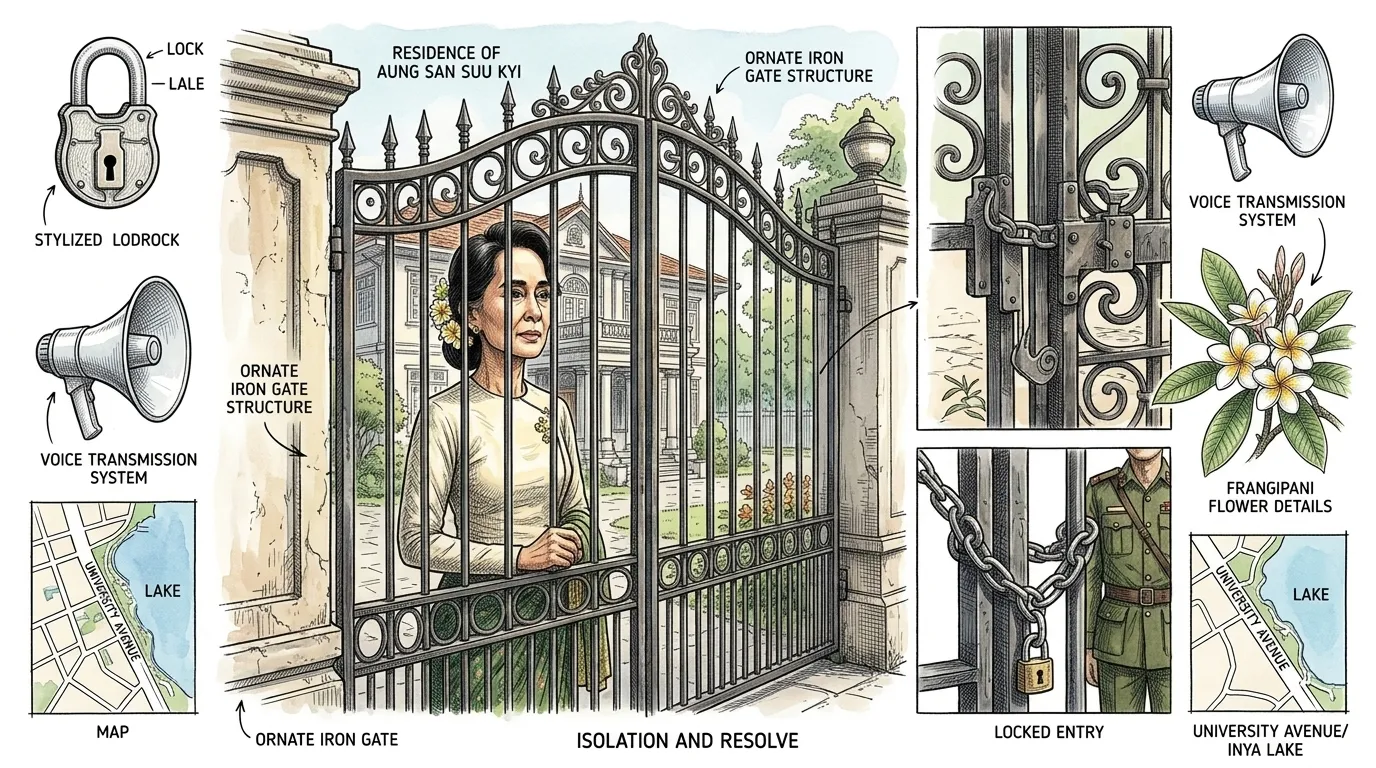
The military regime, unable to break her will through intimidation, resorted to isolation. In July 1989, Aung San Suu Kyi was placed under house arrest at her lakeside home on University Avenue in Yangon. What was once her family residence transformed into a symbol of both her confinement and her unwavering resistance. From behind the gates, her defiance resonated globally, transforming a private struggle into an international cause and proving that even behind walls, a powerful voice could not be fully suppressed.
Biographical Fact: Aung San Suu Kyi was first placed under house arrest on July 20, 1989, by the State Law and Order Restoration Council (SLORC), turning her home into her prison for many years.
Page 6

Even in forced isolation, Aung San Suu Kyi's struggle resonated across continents. In 1991, while she remained under house arrest, the Norwegian Nobel Committee announced her as the recipient of the Nobel Peace Prize. This global recognition brought unprecedented international attention to the plight of Myanmar and its pro-democracy movement. Her confinement could not silence the moral authority that now echoed from Oslo, amplifying her cause and placing immense pressure on the ruling junta to release her.
Biographical Fact: Aung San Suu Kyi was awarded the Nobel Peace Prize in October 1991 for her non-violent struggle for democracy and human rights. Her sons, Alexander and Kim, accepted the prize on her behalf in Oslo.
Page 7
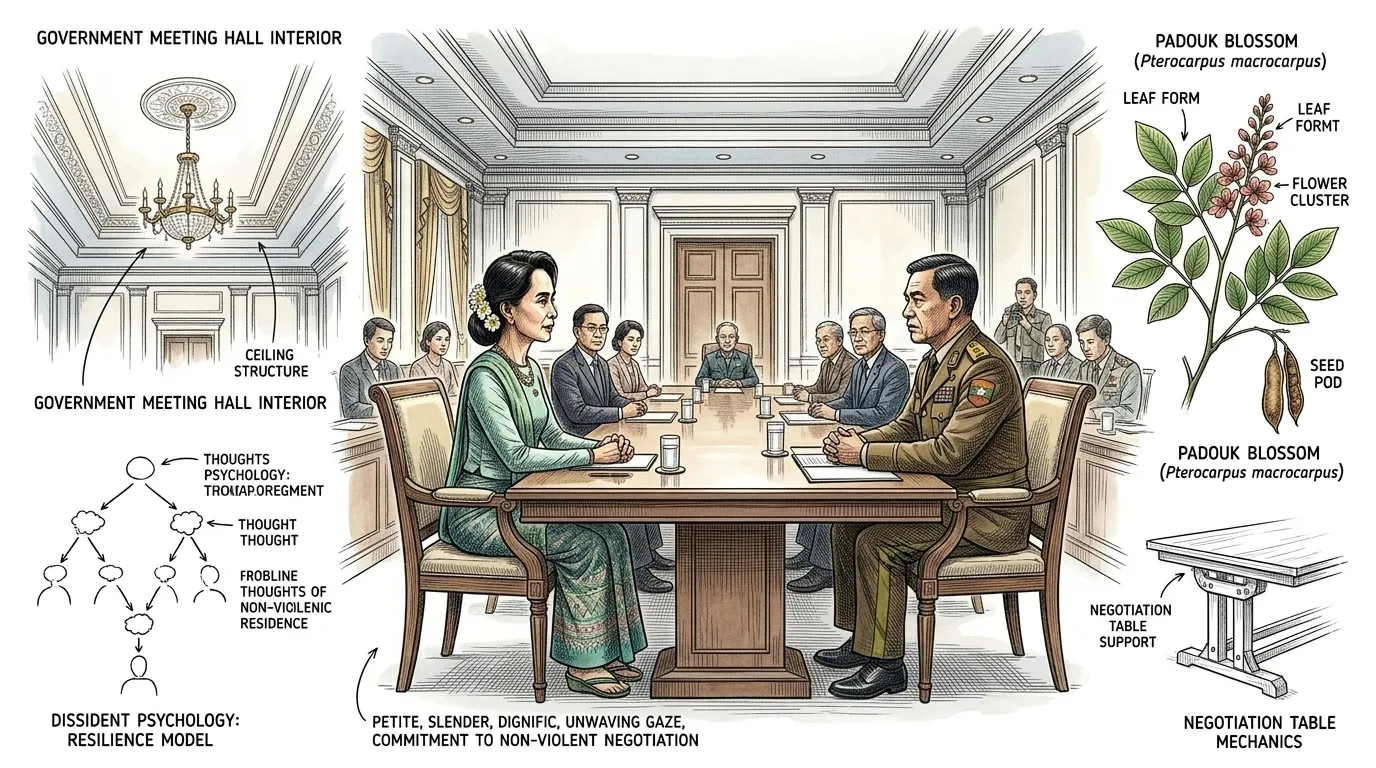
Periods of house arrest were occasionally punctuated by brief releases, allowing Aung San Suu Kyi to engage in tentative dialogues with the military junta. These were not easy exchanges; they were tense, guarded encounters where her commitment to non-violent negotiation was repeatedly tested against the regime's entrenched power. Each meeting was a high-stakes gamble, yet she consistently sought a path toward reconciliation and democratic transition, demonstrating her strategic resolve beyond mere protest.
Biographical Fact: Despite prolonged detention, Aung San Suu Kyi periodically engaged in limited, often fruitless, dialogues with the military government, notably with figures like General Khin Nyunt, demonstrating her consistent pursuit of peaceful resolution.
Page 8

For nearly two decades, Aung San Suu Kyi spent much of her life under house arrest, her home a literal and symbolic prison. During these long years of confinement, she cultivated an inner resilience, spending her days reading, meditating, and tending her garden. This prolonged isolation, enforced by the regime, became a testament to her unyielding commitment to her cause, transforming her quiet endurance into a powerful, global symbol of the struggle for freedom against oppression. Her personal sacrifice deepened her legacy.
Biographical Fact: Aung San Suu Kyi spent a total of 15 of 21 years under house arrest between 1989 and 2010. During these periods, she cultivated a quiet discipline of reading, meditation, and gardening, becoming a symbol of enduring resistance.
Page 9
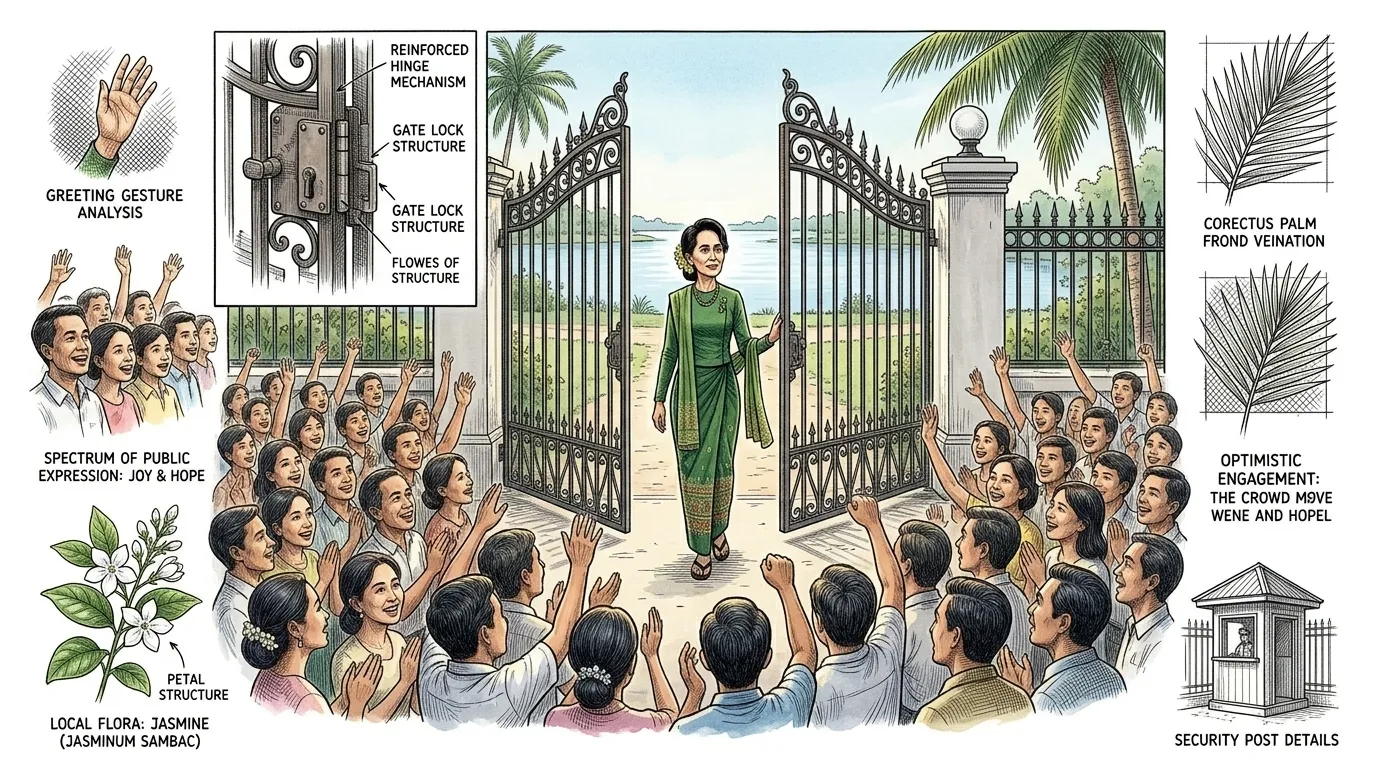
On November 13, 2010, after seven continuous years, Aung San Suu Kyi was finally released from house arrest. The gates of her compound opened to jubilant, massive crowds who had gathered for hours. This pivotal moment reignited democratic hopes and energized the NLD. Her subsequent victory in the 2012 by-election, where she won a parliamentary seat, solidified her direct entry into a newly opening political landscape, confirming her unwavering popular mandate and the nation's profound desire for change. The world watched a beacon of hope step back onto the public stage.
Biographical Fact: Aung San Suu Kyi was released from house arrest on November 13, 2010. She subsequently won a by-election for the Kawhmu constituency in April 2012, marking her formal entry into Myanmar's parliament.
Page 10
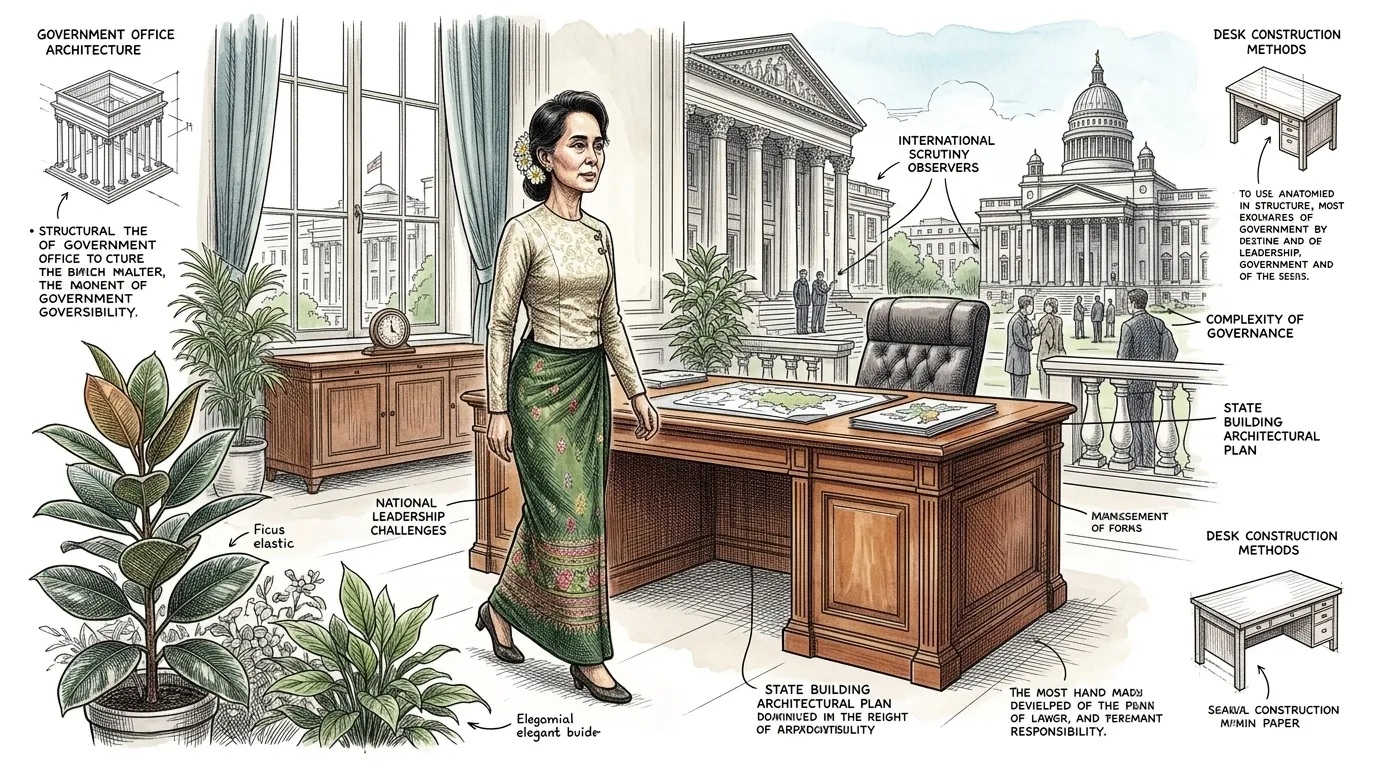
Aung San Suu Kyi's journey from an icon of non-violent resistance to a national leader revealed the profound complexities of power. As State Counsellor, she navigated Myanmar's fragile transition, facing international scrutiny over the Rohingya crisis, a stark contrast to her earlier human rights advocacy. Her unwavering commitment to her nation, even amidst profound ethical challenges and eventually, a military coup in 2021 that returned her to detention, cemented a legacy of immense courage intertwined with the difficult realities of governance. Her enduring image remains one of a leader who irrevocably shaped Myanmar's modern history, both as its conscience and its controversial helmswoman.
Biographical Fact: Aung San Suu Kyi served as State Counsellor of Myanmar from 2016 to 2021, effectively holding the nation's highest political office. Her leadership was marked by significant democratic reforms but also intense criticism regarding the Rohingya crisis, culminating in her detention after the 2021 military coup.
About this story
- Location: Global
- Audience: general readers