أشيل مبيمبي: الفكر النقدي وما بعد الاستعمار

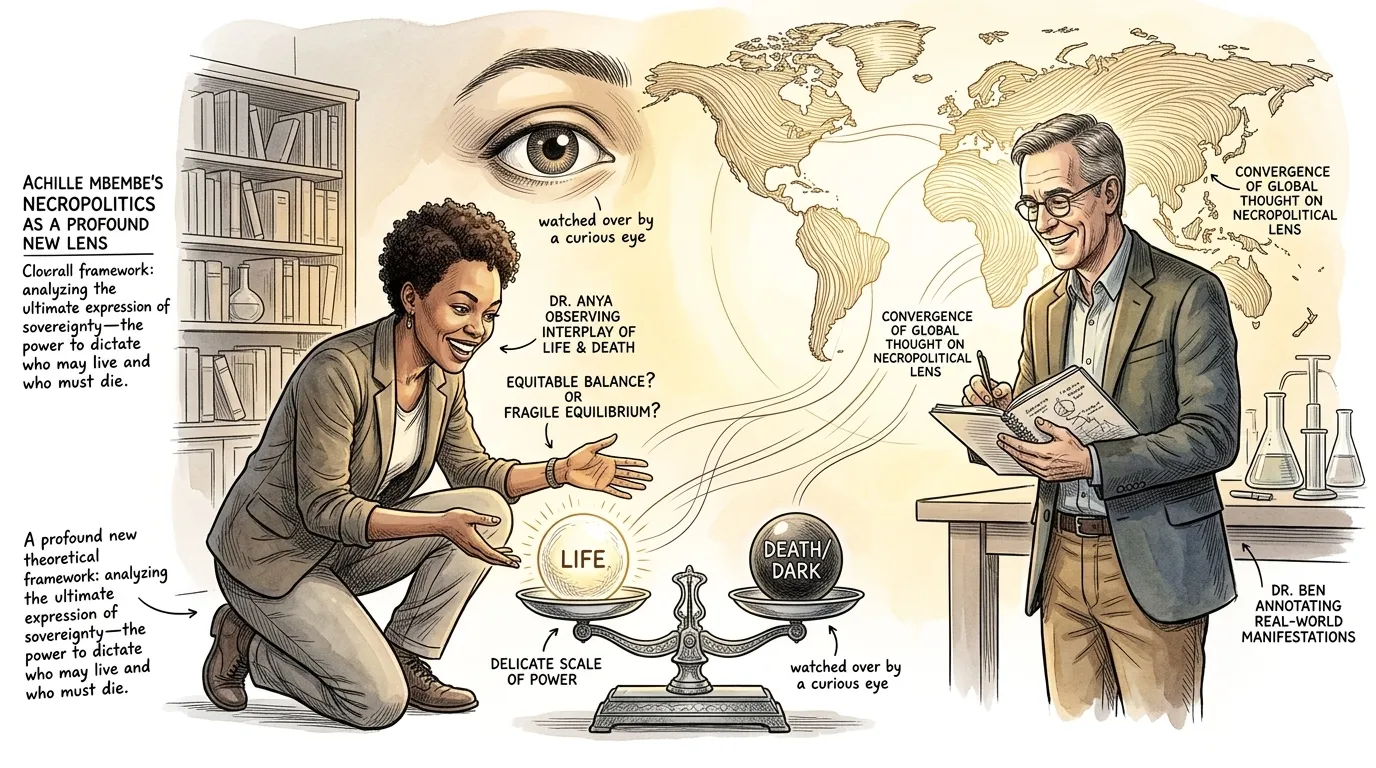
عند نقطة التقاء الفكر العالمي، قدم الفيلسوف الكاميروني أشيل مبيمبي مفهومًا عميقًا أعاد تشكيل فهمنا للسلطة. ففكرته، "السياسة الموتية" أو "نكرو بوليتيكس"، تجبرنا على فحص الرهانات القصوى للسيادة، كاشفةً كيف تمتد السلطة إلى ما هو أبعد من مجرد حكم الحياة لتملي بشكل فعال من يحق له العيش ومن يجب أن يموت، أو يُحكم عليه بـ "موت اجتماعي". إنها عدسة حاسمة يمكن من خلالها تحليل التحديات الإنسانية الأكثر إلحاحًا في العالم اليوم. ملاحظة فلسفية: أشيل مبيمبي، فيلسوف. السياسة الموتية (نكرو بوليتيكس). سلطة تحديد من يهم بما يكفي ليعيش، ومن يمكن تركه ليموت.
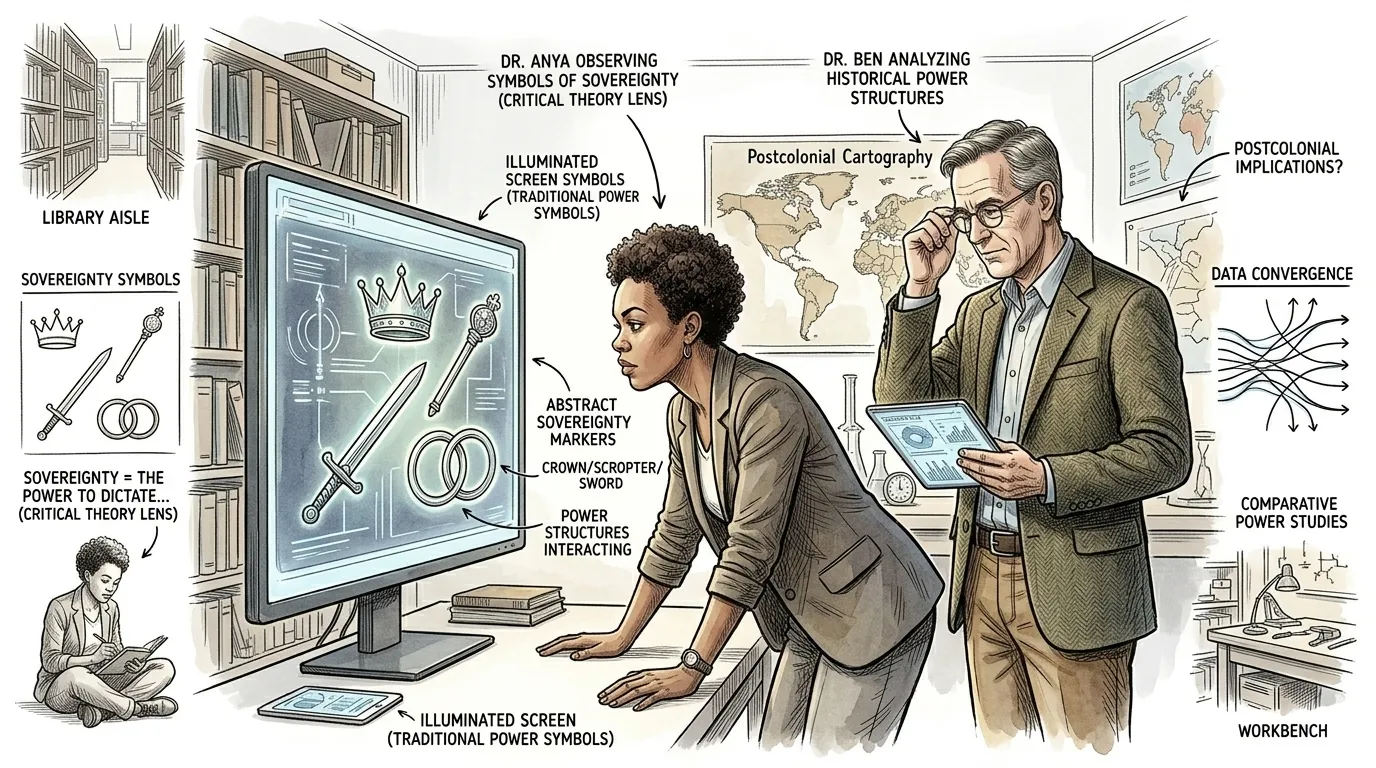
التفتت الدكتورة أنيا إلى الدكتور بن، وقد ارتسمت على وجهها علامات التفكير. لاحظت مشيرة إلى الشاشة: "غالبًا ما تركز المفاهيم التقليدية للسيادة على احتكار الدولة للعنف المشروع، أي الحق في القتل". "لكن مبيمبي يدفع أبعد من ذلك، مشيرًا إلى أن هذا الرأي لا يجسد تمامًا الفروق الدقيقة للسلطة، خاصة في سياقات ما بعد الاستعمار." أومأ الدكتور بن برأسه، وهو يعدل نظارته. "بالفعل، رأى مبيمبي أن "السياسة الحيوية" لـ فوكو - إدارة الحياة والصحة والسكان - على الرغم من أهميتها، لم تأخذ في الاعتبار الإنتاج النشط لعوالم الموت أو التخلي المنهجي عن بعض الأرواح. لقد حدد فجوة حرجة حيث تمارس السلطة السيادية السيطرة ليس فقط على الحياة، بل على الموت نفسه." "غالبًا ما تركز المفاهيم التقليدية للسيادة على احتكار الدولة للعنف المشروع، أي الحق في القتل"، لاحظت الدكتورة أنيا، مشيرة إلى الشاشة. "لكن مبيمبي يدفع أبعد من ذلك، مشيرًا إلى أن هذا الرأي لا يجسد تمامًا الفروق الدقيقة للسلطة، خاصة في سياقات ما بعد الاستعمار." أومأ الدكتور بن برأسه، وهو يعدل نظارته. "بالفعل، رأى مبيمبي أن "السياسة الحيوية" لـ فوكو - إدارة الحياة والصحة والسكان - على الرغم من أهميتها، لم تأخذ في الاعتبار الإنتاج النشط لعوالم الموت أو التخلي المنهجي عن بعض الأرواح. لقد حدد فجوة حرجة حيث تمارس السلطة السيادية السيطرة ليس فقط على الحياة، بل على الموت نفسه." ملاحظة فلسفية: مشكلة تاريخية: تركيز السلطة السيادية على "الحق في القتل" أهمل "الحق الأوسع في ترك الموت". يقدم الدكتور بن "السياسة الحيوية مقابل السياسة الميتة" كتمييز أساسي.
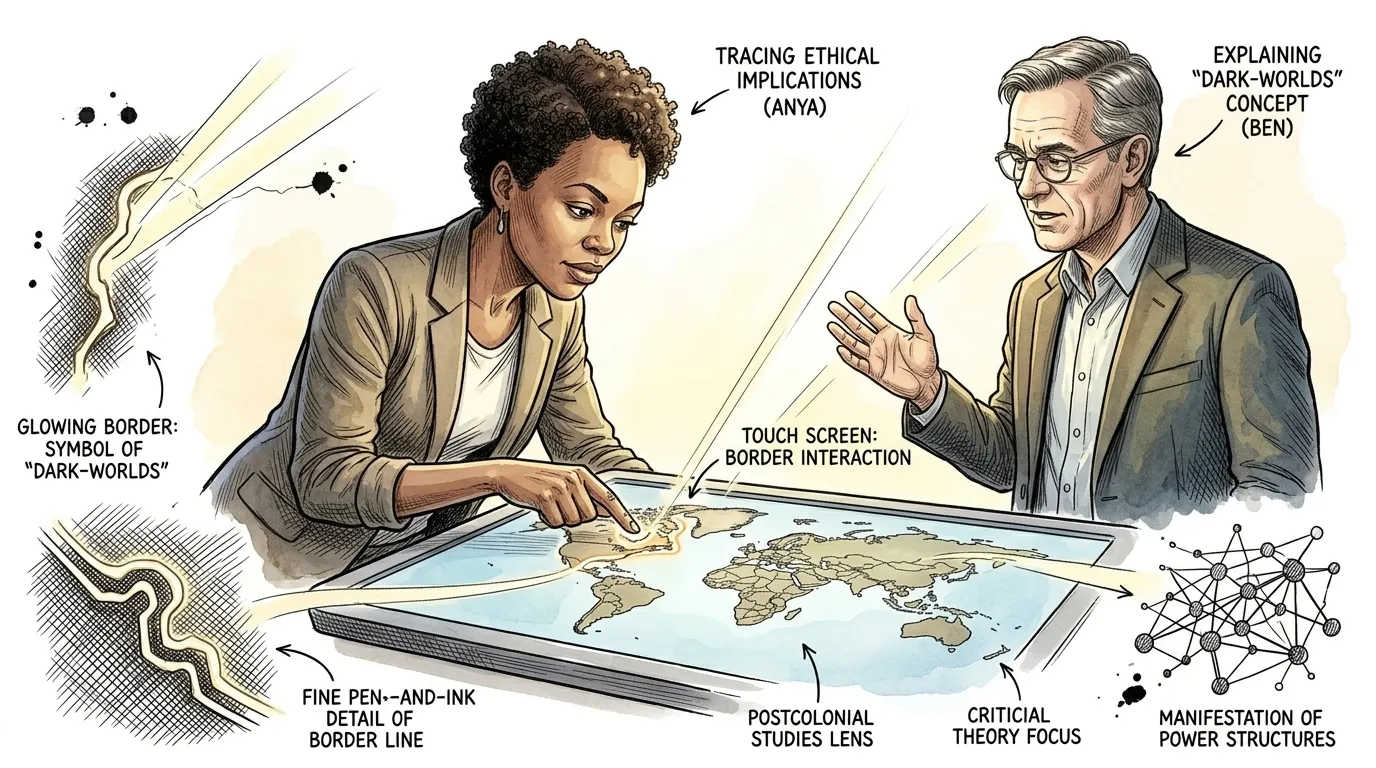
اقتربت الدكتورة أنيا من الشاشة، متتبعةً خط الحدود بإصبعها. "إذن، يشير مبيمبي إلى أنه بخلاف مجرد إدارة السكان لقدراتهم الإنتاجية، كما هو الحال في السياسة الحيوية، فإن القوة المعاصرة تخلق بنشاط ظروفًا تُعتبر فيها بعض الأرواح قابلة للاستغناء عنها، وتوجد في مناطق "الموت الاجتماعي"،" تأملت. أكد الدكتور بن: "بالضبط. فكر في المناطق التي تتضافر فيها الحرب، والفقر المدقع، أو إهمال الدولة لتشكيل ما يسميه "عوالم الموت"، وهي أماكن يتم فيها تفكيك نسيج الحياة ذاته بشكل منهجي، وتوجد فيها السكان في حالة من الحيوية المعلقة. إنه تحول جوهري من جعل الناس يعيشون إلى السماح لهم بالموت، أو حتى جعلهم يموتون، بوسائل غير مباشرة." "إذن، يشير مبيمبي إلى أنه بخلاف مجرد إدارة السكان لقدراتهم الإنتاجية، كما هو الحال في السياسة الحيوية، فإن القوة المعاصرة تخلق بنشاط ظروفًا تُعتبر فيها بعض الأرواح قابلة للاستغناء عنها، وتوجد في مناطق "الموت الاجتماعي"،" تأملت الدكتورة أنيا. أكد الدكتور بن: "بالضبط. فكر في المناطق التي تتضافر فيها الحرب، والفقر المدقع، أو إهمال الدولة لتشكيل ما يسميه "عوالم الموت"، وهي أماكن يتم فيها تفكيك نسيج الحياة ذاته بشكل منهجي، وتوجد فيها السكان في حالة من الحيوية المعلقة. إنه تحول جوهري من جعل الناس يعيشون إلى السماح لهم بالموت، أو حتى جعلهم يموتون، بوسائل غير مباشرة." ملاحظة فلسفية: يوسع مبيمبي فكر فوكو، مجادلًا بأن السلطة السيادية لا "تجعل الناس يعيشون" فحسب، بل "تسمح لهم بالموت" بنشاط من خلال خلق "عوالم الموت".
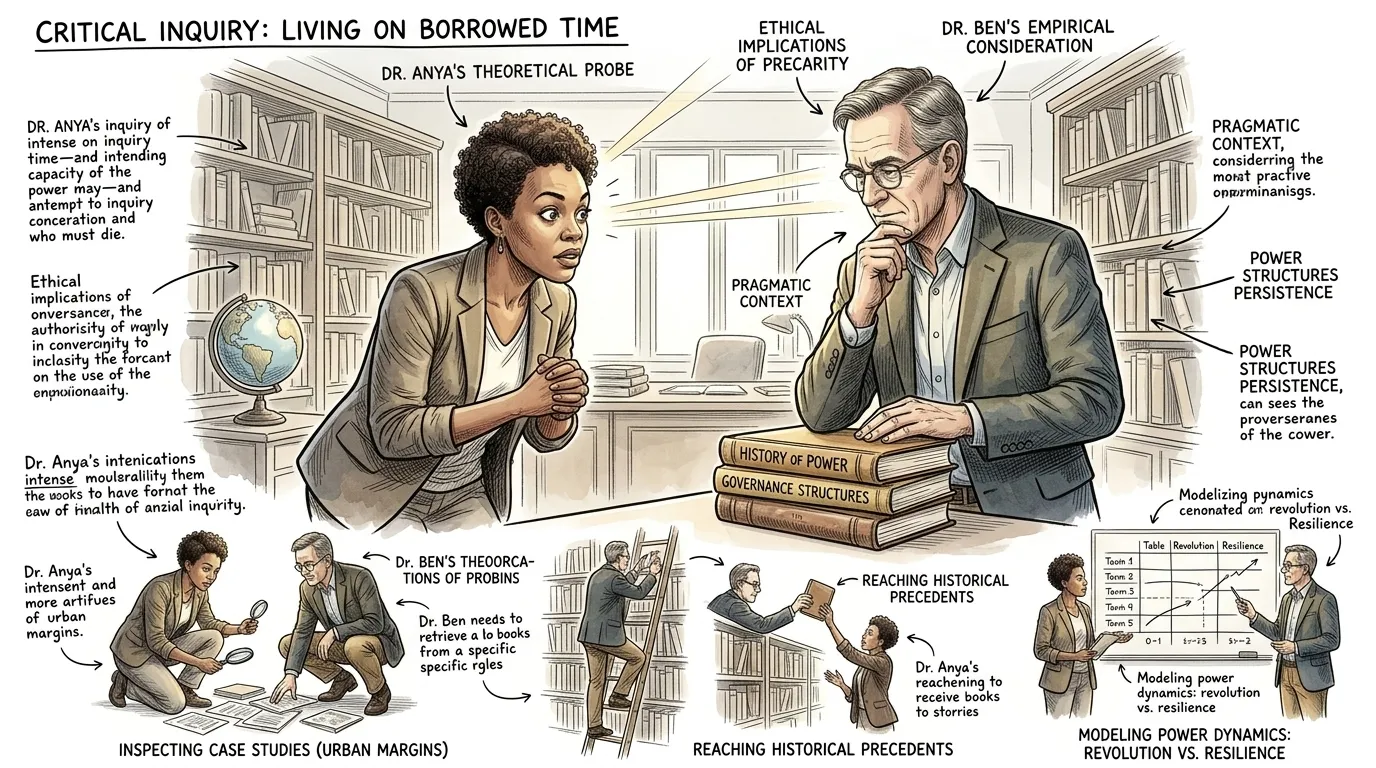
"What does it mean, then, for individuals to live under this necropolitical power?" Dr. Anya asked, looking directly at Dr. Ben. "How does it manifest in daily existence?" Dr. Ben responded with a thoughtful pause. "Mbembe argues that individuals within these 'death-worlds' often exist in a state he describes as 'living on borrowed time.' They are stripped of legal protections, subjected to pervasive surveillance, and their lives are rendered perpetually precarious. As the poet William Butler Yeats once said, 'Things fall apart; the centre cannot hold.' This perfectly captures the disintegration of social and legal order when lives are deemed disposable, a state that becomes not an exception, but the norm." ""What does it mean, then, for individuals to live under this necropolitical power?" Dr. Anya asked, looking directly at Dr. Ben. "How does it manifest in daily existence?" Dr. Ben responded with a thoughtful pause. "Mbembe argues that individuals within these 'death-worlds' often exist in a state he describes as 'living on borrowed time.' They are stripped of legal protections, subjected to pervasive surveillance, and their lives are rendered perpetually precarious. As the poet William Butler Yeats once said, 'Things fall apart; the centre cannot hold.' This perfectly captures the disintegration of social and legal order when lives are deemed disposable, a state that becomes not an exception, but the norm."" Philosophy Note: Mbembe quotes 'living on borrowed time.' Dr. Ben references William Butler Yeats: 'Things fall apart; the centre cannot hold' (from 'The Second Coming'), connecting it to the precarity of life under necropolitical rule.
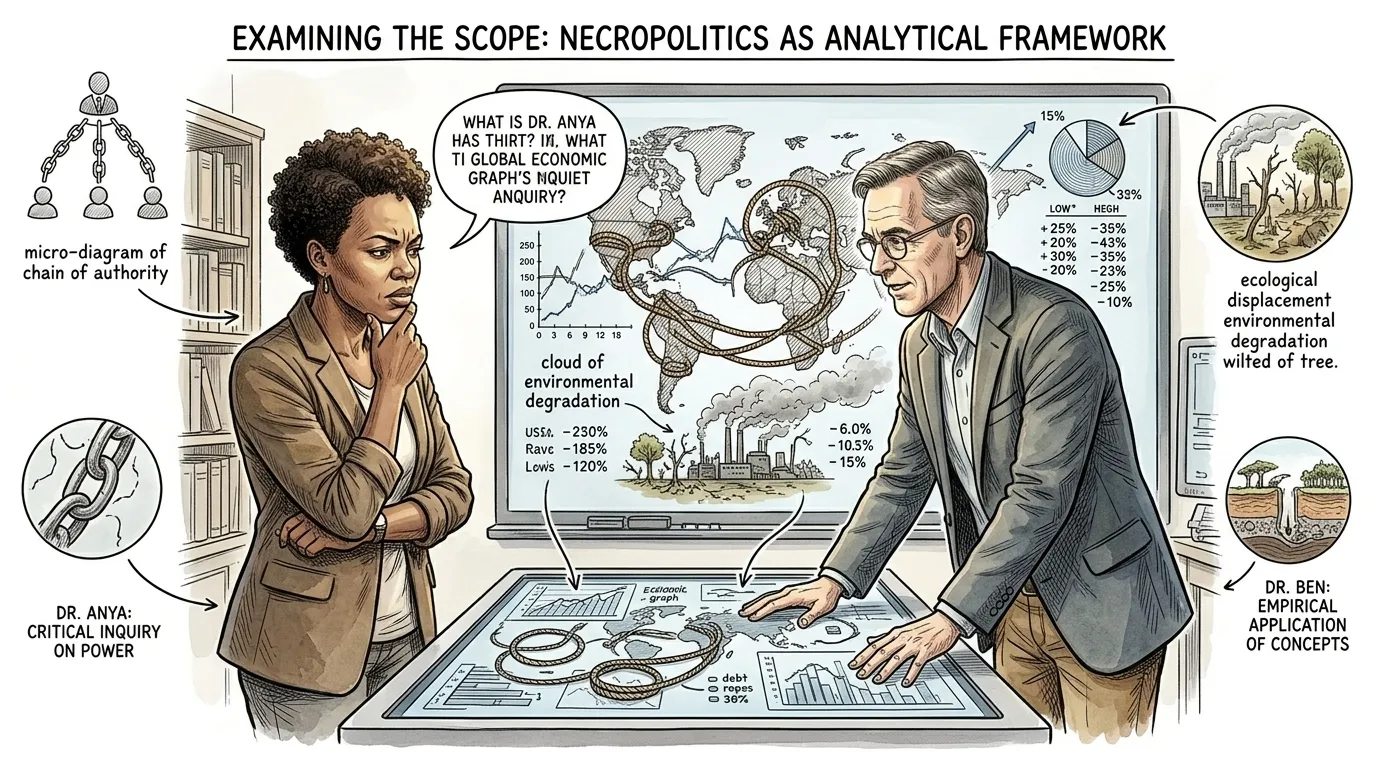
"إذن، سياسات مبيمبي للموت لا تقتصر فقط على العنف المباشر والمميت، أليس كذلك؟" سألت الدكتورة آنيا، وعلامات الدهشة بادية على جبينها. أوضح الدكتور بن: "بالتأكيد لا. إنها تمتد إلى ما هو أبعد بكثير من فعل القتل الصريح، لتشمل التسليح المنهجي للسياسات الاقتصادية، والديون، والتدهور البيئي. هذه أشكال غير مباشرة من السلطة تعرض بشكل هيكلي بعض السكان لأشكال أبطأ من الموت أو المعاناة الطويلة. فكر في برامج التكيف الهيكلي التي تفكك أنظمة الصحة العامة أو التقاعس المتعمد عن معالجة تغير المناخ، مما يؤثر بشكل غير متناسب على المجتمعات الضعيفة. الأمر يتعلق بكيفية أن السياسات يمكن أن تبيح ضمنيًا المعاناة واسعة النطاق." ملاحظة فلسفية: تشمل سياسات الموت السياسات الاقتصادية والديون والتدهور البيئي، مما يعرض السكان لأشكال بطيئة من الموت تتجاوز العنف المباشر.
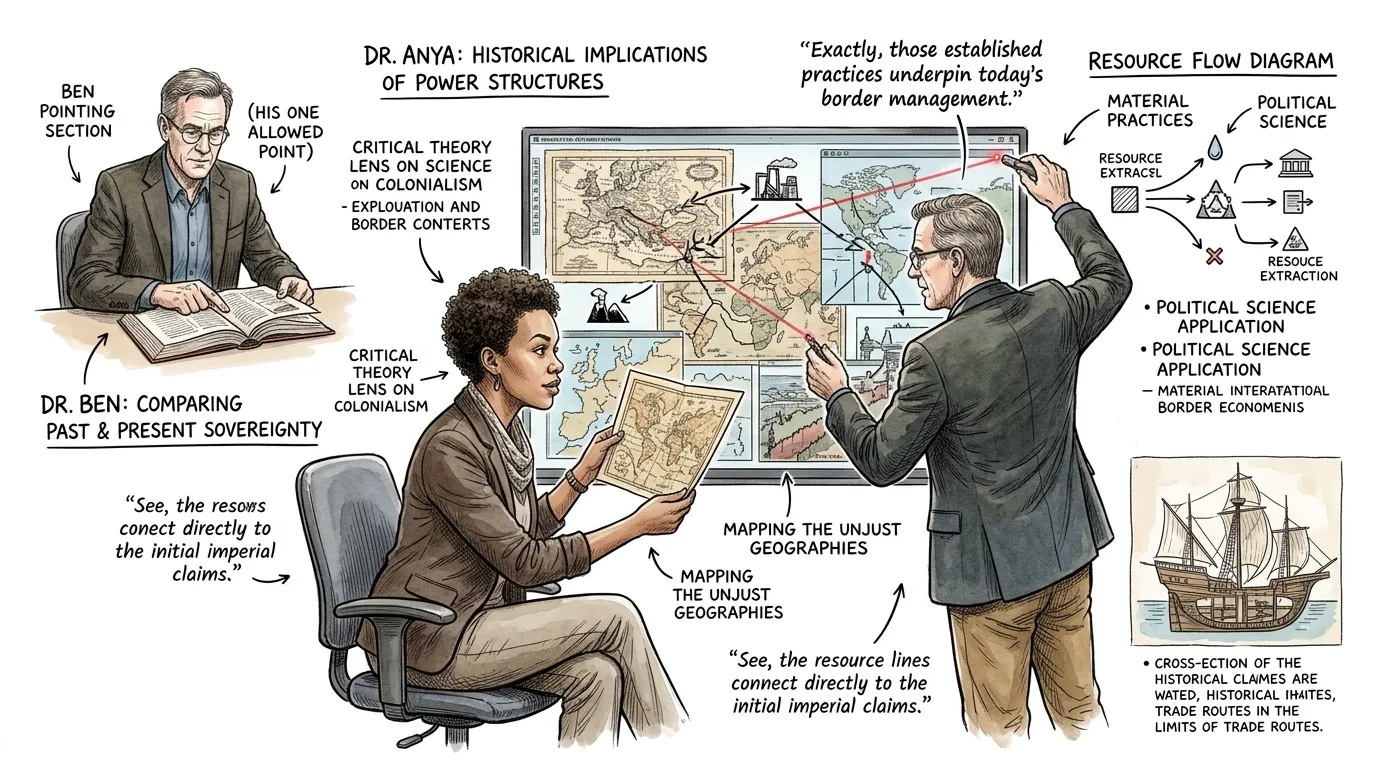
نظرت الدكتورة آنيا في شساعة المفهوم. وعلقت قائلة: "يبدو أن مبيمبي يؤسس هذا في الممارسات التاريخية أيضًا. يجب أن تكون تركة الاستعمار محورية." أكد الدكتور بن: "بالفعل. يتتبع مبيمبي بدقة كيف أن تقنيات نزع الإنسانية، واستخراج الموارد، وإدارة السكان "الفائضين" التي أتقنت خلال الاستعمار تجد تعبيرات جديدة وخبيثة في أنظمة الحدود المعاصرة، والتفاوتات الاقتصادية العالمية، والفصل العنصري في المدن. "المستعمرة"، بالنسبة لمبيمبي، ليست مجرد مكان تاريخي بل هي نموذج مستمر، منطقة تستمر فيها السلطة السيادية في العمل بإفلات قاتل من العقاب بأشكال مختلفة على مستوى العالم. وهذا يسلط الضوء على التأثير الدائم للعنف الماضي." "يبدو أن مبيمبي يؤسس هذا في الممارسات التاريخية أيضًا"، علقت الدكتورة آنيا. "يجب أن تكون تركة الاستعمار محورية." أكد الدكتور بن: "بالفعل. يتتبع مبيمبي بدقة كيف أن تقنيات نزع الإنسانية، واستخراج الموارد، وإدارة السكان "الفائضين" التي أتقنت خلال الاستعمار تجد تعبيرات جديدة وخبيثة في أنظمة الحدود المعاصرة، والتفاوتات الاقتصادية العالمية، والفصل العنصري في المدن. "المستعمرة"، بالنسبة لمبيمبي، ليست مجرد مكان تاريخي بل هي نموذج مستمر، منطقة تستمر فيها السلطة السيادية في العمل بإفلات قاتل من العقاب بأشكال مختلفة على مستوى العالم. وهذا يسلط الضوء على التأثير الدائم للعنف الماضي." ملاحظة فلسفية: يربط مبيمبي السياسات الموتية بتركة الاستعمار، مبيناً كيف تستمر ممارسات نزع الإنسانية والتحكم في أنظمة الحدود الحديثة والتفاوتات العالمية.
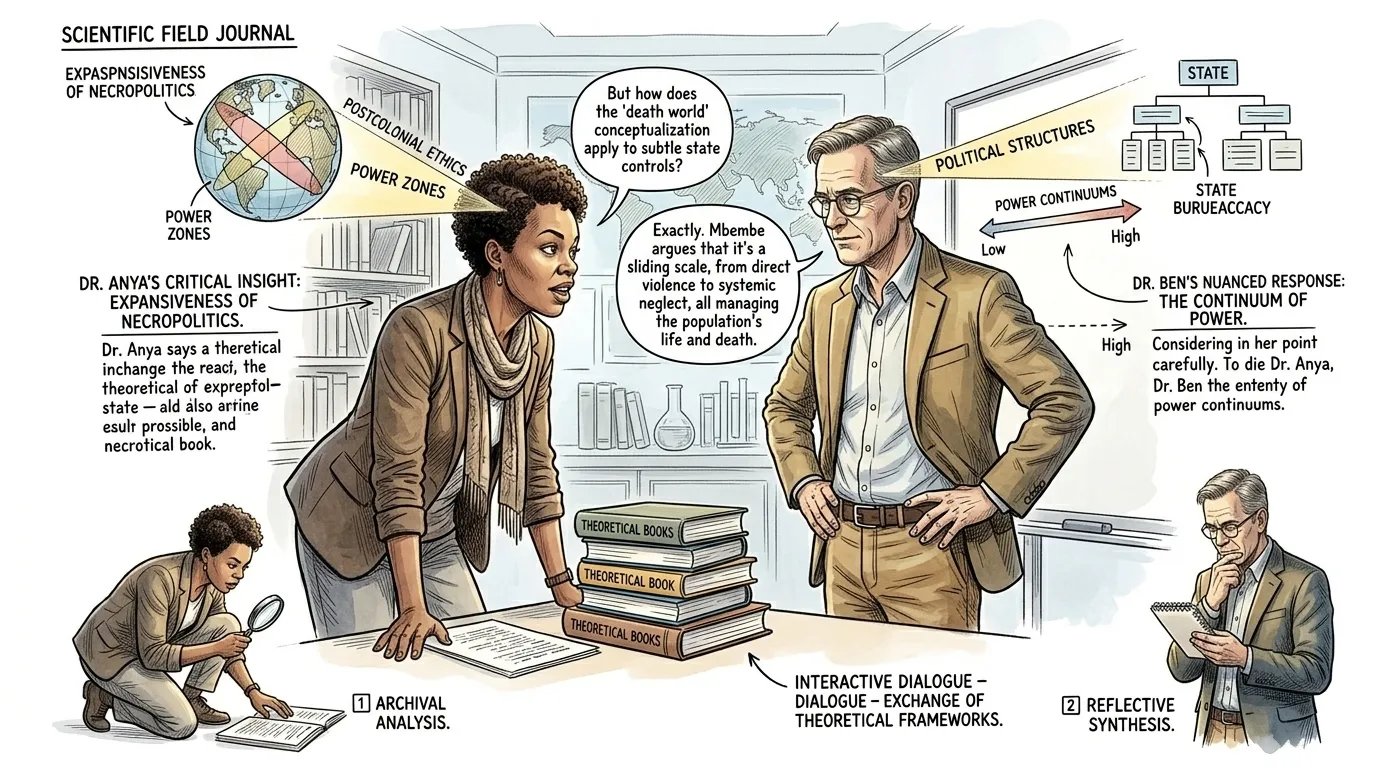
"Some critics might argue that 'necropolitics' is too expansive, potentially diluting the specific horror of direct violence by applying it to broader systemic issues," Dr. Anya proposed, her voice thoughtful. "How does Mbembe address such a critique?" Dr. Ben considered her point carefully. "It's a valid concern. Mbembe isn't intending to diminish direct violence, but rather to broaden our understanding of how power operates, even silently, in producing death-worlds. He encourages us to see the continuum between explicit force and the more insidious, everyday forms of lethal governance. He asks us to confront the fact that 'to govern is to decide who will live and who will die,' as he might suggest, challenging simplistic notions of state responsibility." ""Some critics might argue that 'necropolitics' is too expansive, potentially diluting the specific horror of direct violence by applying it to broader systemic issues," Dr. Anya proposed, her voice thoughtful. "How does Mbembe address such a critique?" Dr. Ben considered her point carefully. "It's a valid concern. Mbembe isn't intending to diminish direct violence, but rather to broaden our understanding of how power operates, even silently, in producing death-worlds. He encourages us to see the continuum between explicit force and the more insidious, everyday forms of lethal governance. He asks us to confront the fact that 'to govern is to decide who will live and who will die,' as he might suggest, challenging simplistic notions of state responsibility."" Philosophy Note: Critics suggest 'necropolitics' is too broad. Mbembe aims to show the continuum of power, from explicit violence to insidious systemic governance that decides who lives and who dies.
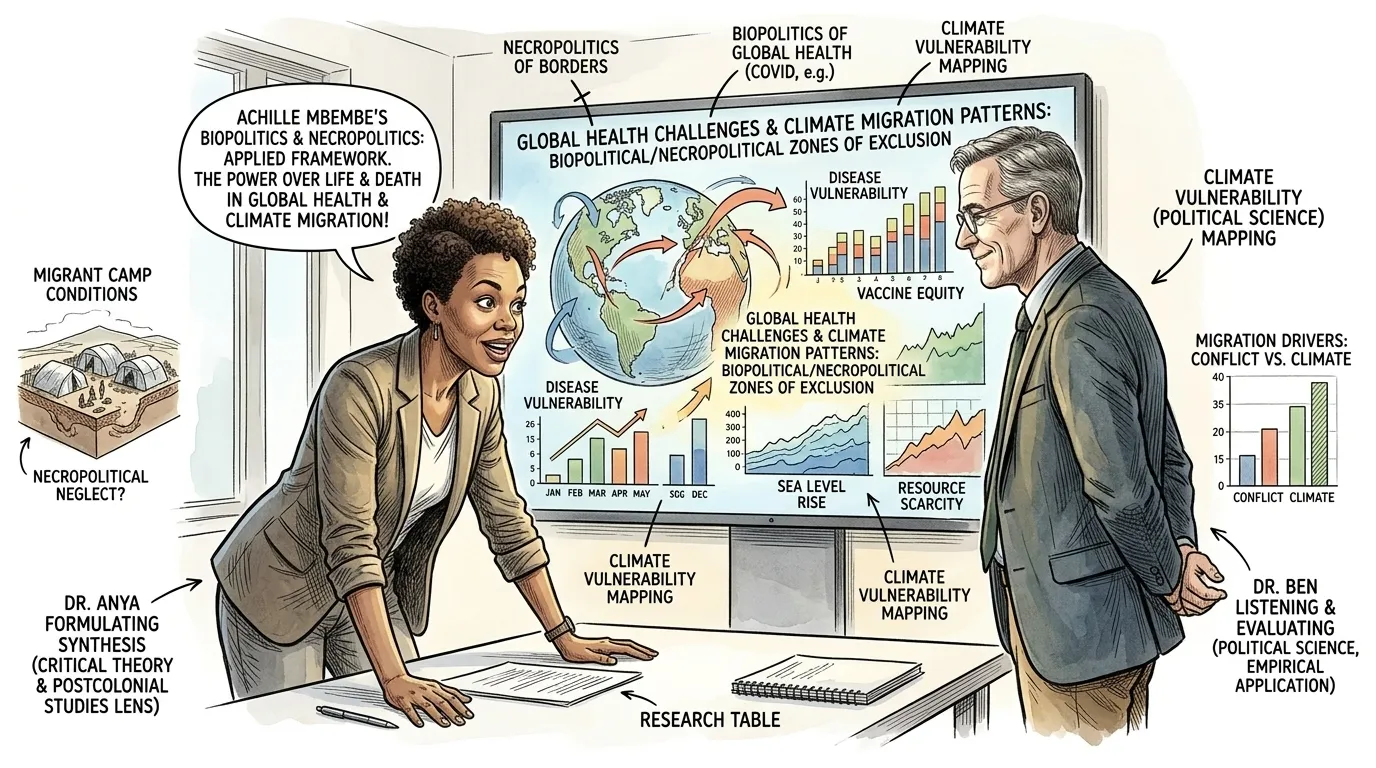
"With our understanding of Mbembe's distinction between biopolitics and necropolitics, how can we apply it to, say, contemporary global health crises or climate migration?" Dr. Anya asked, challenging Dr. Ben. "Remember what we discussed about Mbembe's distinction between biopolitics and necropolitics?" Dr. Ben prompted. Dr. Anya's eyes widened. "Ah, yes! We see biopolitical efforts to 'manage' populations through vaccines or aid, but often these very efforts inadvertently produce necropolitical outcomes for those deemed 'disposable.' Border closures, intellectual property restrictions on medicines, or ignoring climate refugees aren't just failures of policy; they are active decisions to 'let die' for some, while 'making live' for others. Mbembe's lens helps us see the intent and consequence behind these actions." ""With our understanding of Mbembe's distinction between biopolitics and necropolitics, how can we apply it to, say, contemporary global health crises or climate migration?" Dr. Anya asked, challenging Dr. Ben. "Remember what we discussed about Mbembe's distinction between biopolitics and necropolitics?" Dr. Ben prompted. Dr. Anya's eyes widened. "Ah, yes! We see biopolitical efforts to 'manage' populations through vaccines or aid, but often these very efforts inadvertently produce necropolitical outcomes for those deemed 'disposable.' Border closures, intellectual property restrictions on medicines, or ignoring climate refugees aren't just failures of policy; they are active decisions to 'let die' for some, while 'making live' for others. Mbembe's lens helps us see the intent and consequence behind these actions."" Philosophy Note: The conceptual tool of 'biopolitics vs. necropolitics' is applied to analyze global health inequities and climate migration, revealing the active decisions behind 'letting die'.
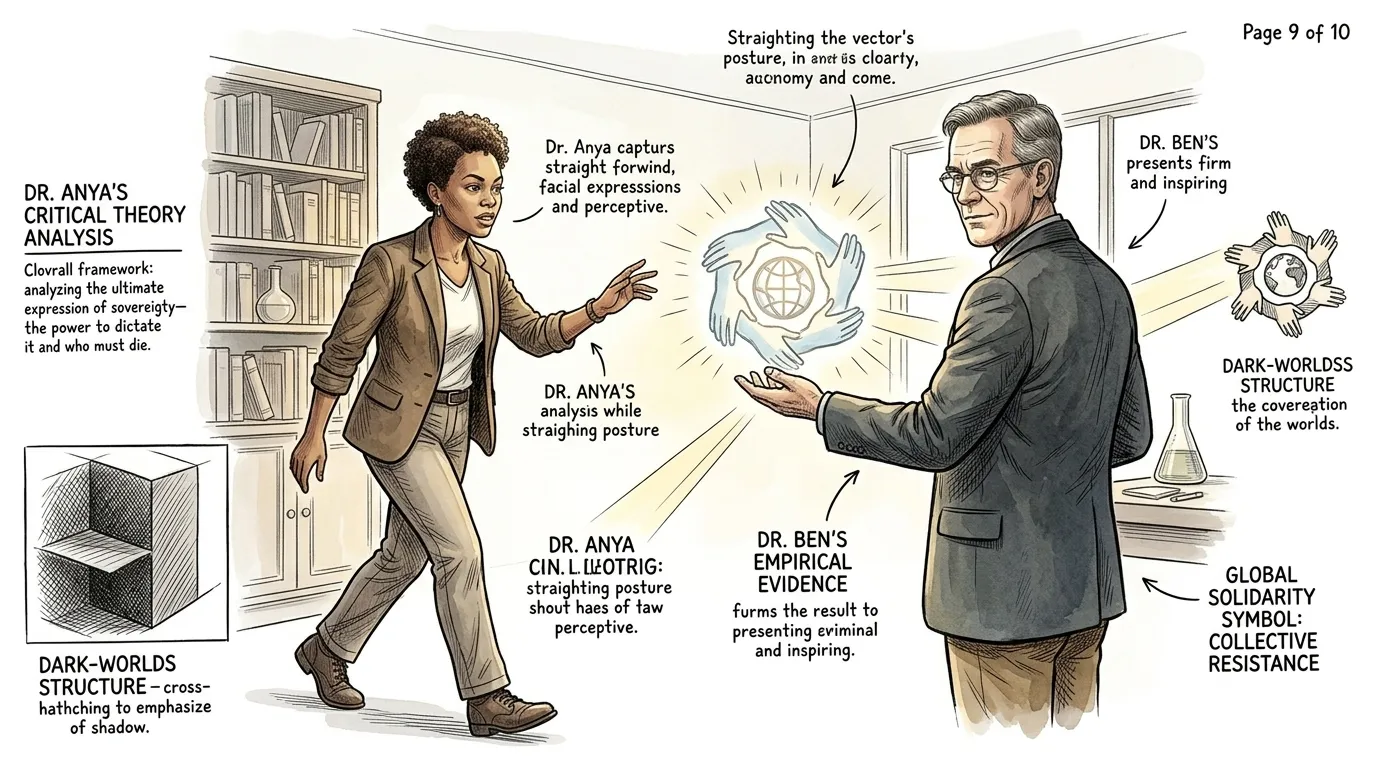
استقامت الدكتورة أنيا، وقد ارتسمت على وجهها جدية بالغة. وقالت: "إطار عمل مبيمبي يجبرنا على مواجهة حقائق مزعجة حول القوة العالمية ومن المستفيد الحقيقي منها". وأضاف الدكتور بن: "الأمر لا يقتصر على تسمية مشكلة؛ بل يتعلق بالاعتراف بالآثار الأخلاقية العميقة للتضامن والمقاومة. فكما أعلن الفيلسوف العظيم نيلسون مانديلا ذات مرة: "يبدو الأمر مستحيلاً دائماً حتى يتم إنجازه". هذا الشعور، عند تطبيقه على سياسات الموت، يلهمنا ألا نقبل تطبيع "عوالم الموت" بل أن نجد طرقاً لمقاومة وإعادة تعريف شروط الحياة والكرامة للجميع. إنه يتطلب إعادة تقييم للمسؤولية الأخلاقية." "إطار عمل مبيمبي يجبرنا على مواجهة حقائق مزعجة حول القوة العالمية ومن المستفيد الحقيقي منها"، صرحت الدكتورة أنيا. وأضاف الدكتور بن: "الأمر لا يقتصر على تسمية مشكلة؛ بل يتعلق بالاعتراف بالآثار الأخلاقية العميقة للتضامن والمقاومة. فكما أعلن الفيلسوف العظيم نيلسون مانديلا ذات مرة: "يبدو الأمر مستحيلاً دائماً حتى يتم إنجازه". هذا الشعور، عند تطبيقه على سياسات الموت، يلهمنا ألا نقبل تطبيع "عوالم الموت" بل أن نجد طرقاً لمقاومة وإعادة تعريف شروط الحياة والكرامة للجميع. إنه يتطلب إعادة تقييم للمسؤولية الأخلاقية." ملاحظة فلسفية: يقتبس الدكتور بن نيلسون مانديلا: "يبدو الأمر مستحيلاً دائماً حتى يتم إنجازه"، رابطاً نقد مبيمبي بضرورة التضامن والمقاومة العالمية ضد قوى سياسات الموت.
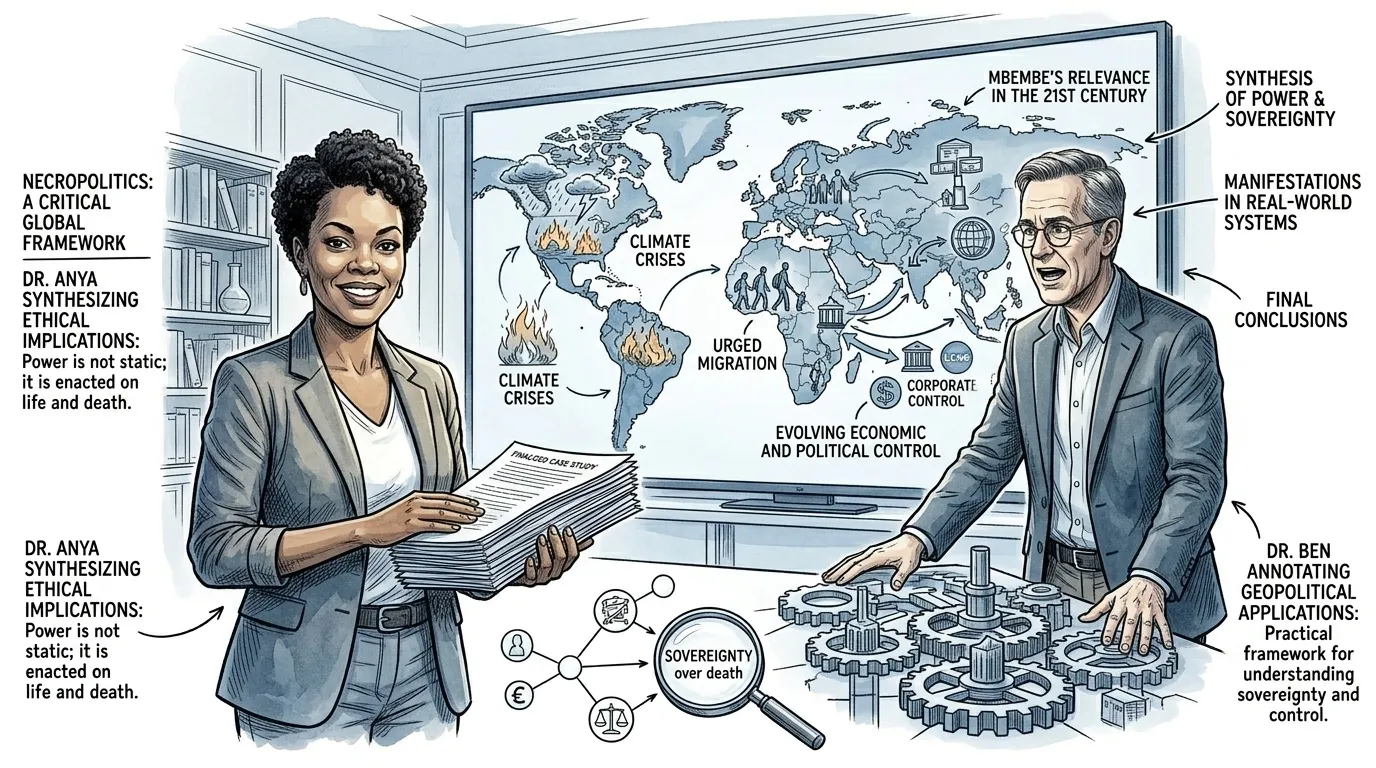
لخصت الدكتورة آنيا نقاشهما باقتناع: "إن عمل أخيل مبيمبي يتحدى بشكل أساسي الروايات المبسطة للتقدم والتنمية، ويحثنا على دراسة حياة من يتم إعطاؤهم الأولوية ومن يعتبرون مستهلكين في النظام العالمي." واختتم الدكتور بن، وصوته يتردد بسلطة: "بالفعل. إطاره لا يزال أداة تحليلية لا غنى عنها للتنقل في عالمنا المعقد، عالم يتزايد تعريفه بأزمات المناخ، والهجرة القسرية، والأشكال المتطورة للسيطرة الاقتصادية والسياسية. السياسة الموتية تجبرنا على مواجهة الجوهر الأخلاقي للسلطة، مما يضمن أننا لا نغفل أبدًا عن أشكال العنف الهادئة والماكرة التي تشكل الوجود البشري." ملاحظة فلسفية: تظل سياسة مبيمبي الموتية حاسمة لتحليل تحديات القرن الحادي والعشرين المعقدة، وتحث على التدقيق الأخلاقي في السلطة وتأثيرها على الوجود البشري.