Das U-Bahn-System: Eine Unterirdische Geschichte der Innovation
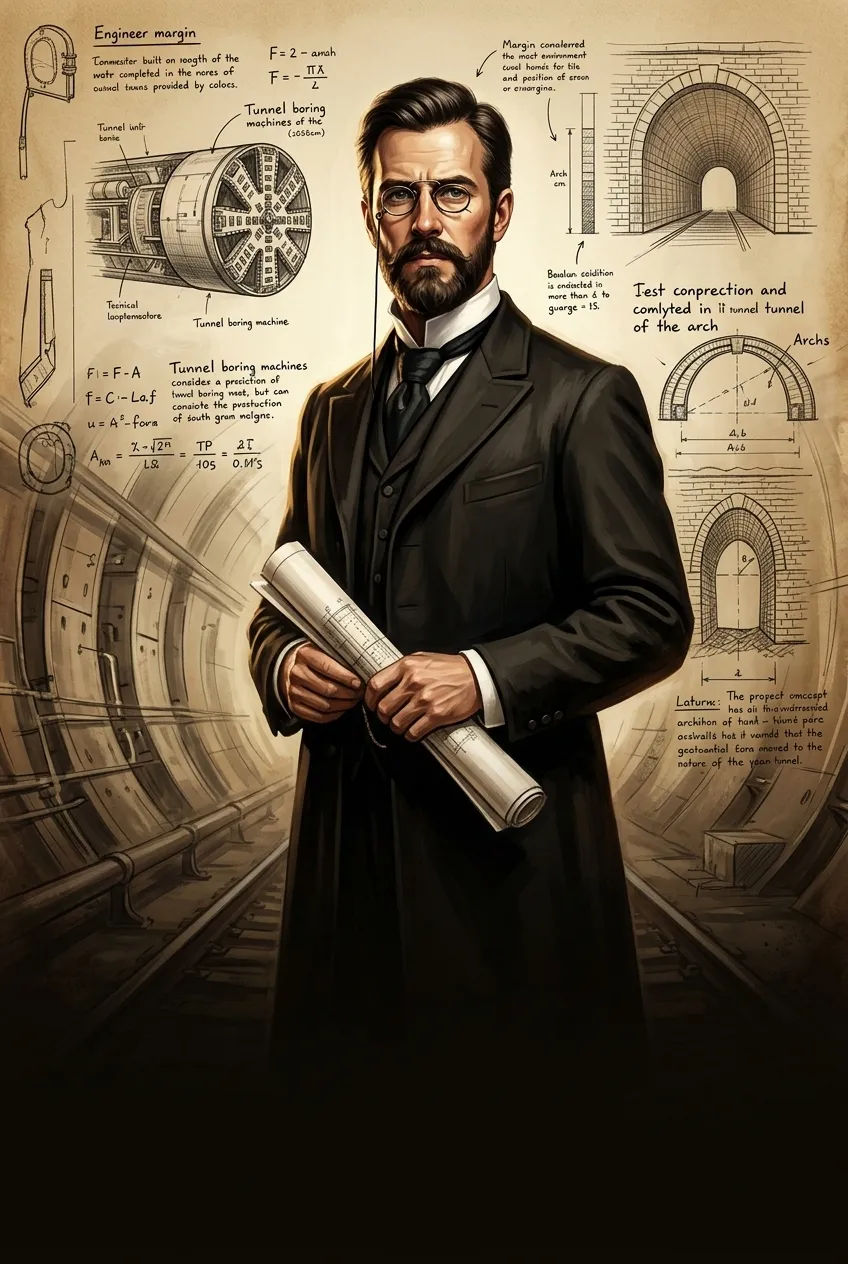
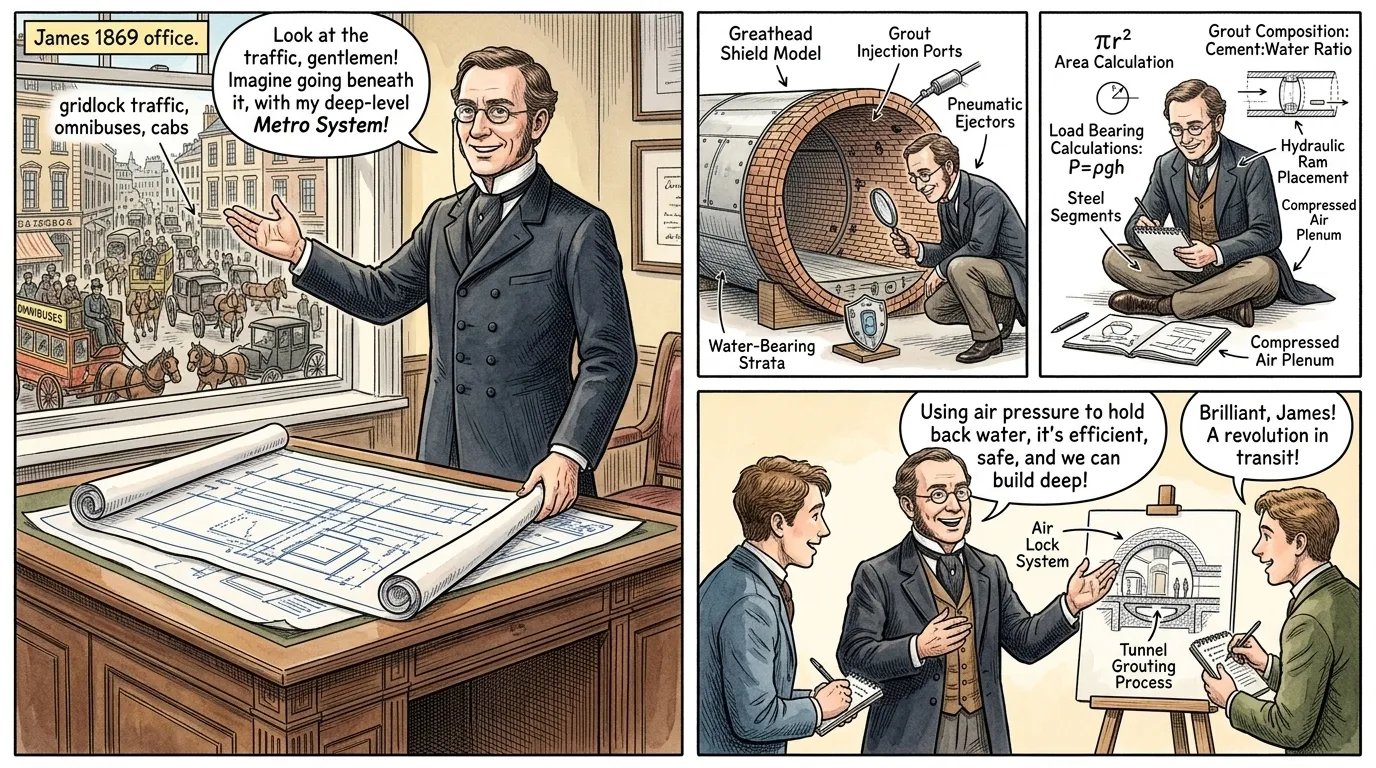
Das Jahr ist achtzehnhundertneunundsechzig, und London, das pulsierende Herz des Britischen Empire, erstickt unter seinem eigenen Erfolg. Der oberirdische Verkehr, ein chaotisches Ballett aus Pferdebussen und Kutschen, hat einen unhaltbaren Stillstand erreicht und verlangt eine revolutionäre Lösung unter seinen Straßen. Hier stellte sich James Henry Greathead, ein brillanter Bauingenieur aus Südafrika, das „Metro System“ vor – ein Netz von Tiefbahnen, gebaut mit einem revolutionären Tunnelbohrschild, um die urbane Mobilität neu zu definieren. Sein in diesem Jahr gesichertes Patent versprach, saubere, stabile Wege durch den notorisch instabilen Ton der Stadt zu graben, ein Durchbruch, um London buchstäblich vor sich selbst zu retten. „Meine Herren, London stranguliert sich selbst“, erklärte James Henry Greathead, ein entschlossener Bauingenieur, und zeigte im Jahr achtzehnhundertneunundsechzig von seinem Bürofenster aus auf die verstopften Straßen. „Die Oberfläche kann keine weitere Kutsche tragen; wir müssen den Weg darunter suchen.“ Er enthüllte Skizzen seines revolutionären Metro Systems und erklärte, wie es stabile Tiefbahnen durch den anspruchsvollen Untergrund der Hauptstadt graben würde. „Wie Thomas Jefferson einmal bemerkte: ‚Der Boden ist das Einzige, was den Bewohnern eines Landes gehört‘, und in diesen Boden müssen wir uns nun mit beispielloser Sicherheit wagen.“
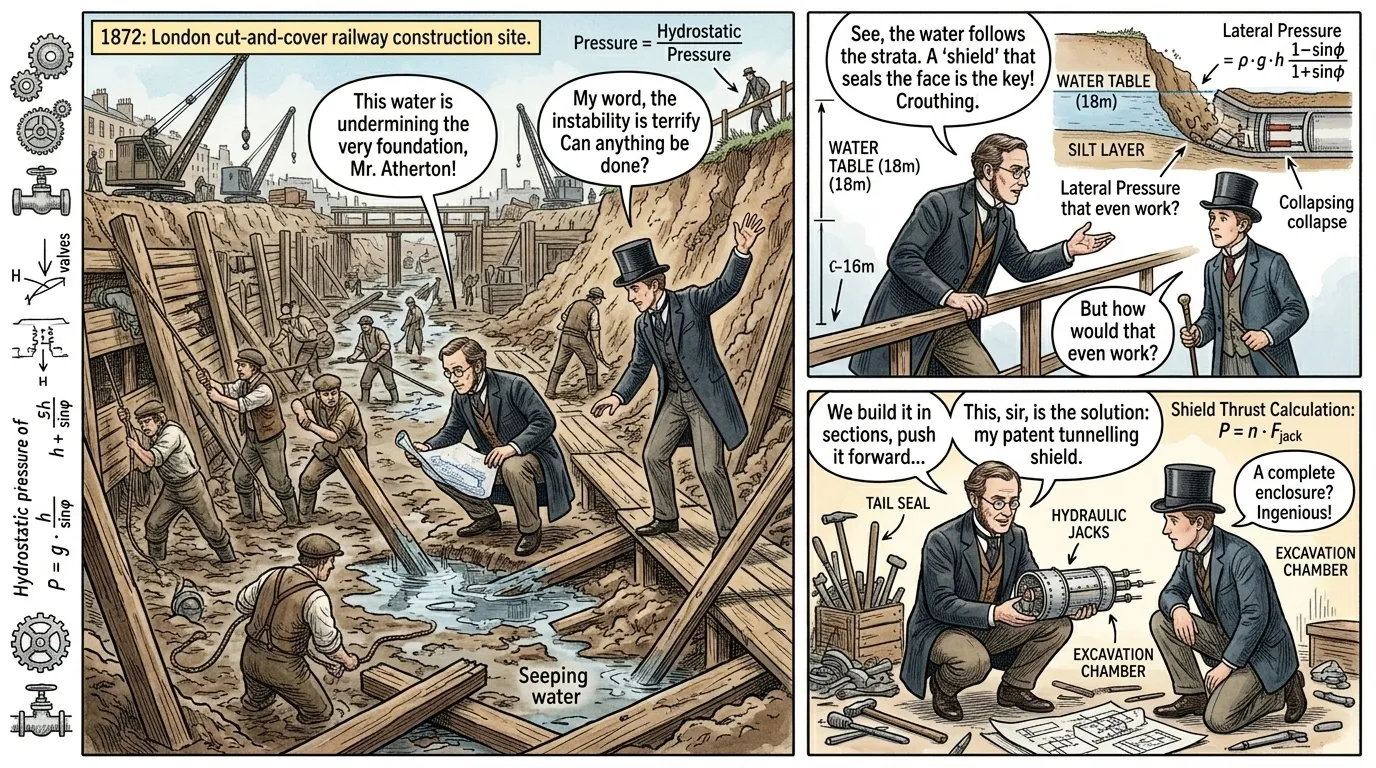
The very foundations of London vibrate under the strain, remarked a prominent city official, Mr. Atherton, to Greathead during an inspection of a cut-and-cover site in 1872. Our current 'cut-and-cover' railways tear through property, cause endless disruption, and only scratch the surface of our problem. Greathead nodded, observing workers struggling with wooden shoring to prevent cave-ins, and added, Indeed, the deeper one goes, the more perilous the water ingress becomes; securing shafts against the Thames' influence without massive flooding is an engineering nightmare. The sheer difficulty of tunneling beneath established buildings and through water-saturated clay remained the formidable obstacle. ""The very foundations of London vibrate under the strain," remarked a prominent city official, Mr. Atherton, to Greathead during an inspection of a cut-and-cover site in 1872. "Our current 'cut-and-cover' railways tear through property, cause endless disruption, and only scratch the surface of our problem." Greathead nodded, observing workers struggling with wooden shoring to prevent cave-ins, and added, "Indeed, the deeper one goes, the more perilous the water ingress becomes; securing shafts against the Thames' influence without massive flooding is an engineering nightmare." The sheer difficulty of tunneling beneath established buildings and through water-saturated clay remained the formidable obstacle."
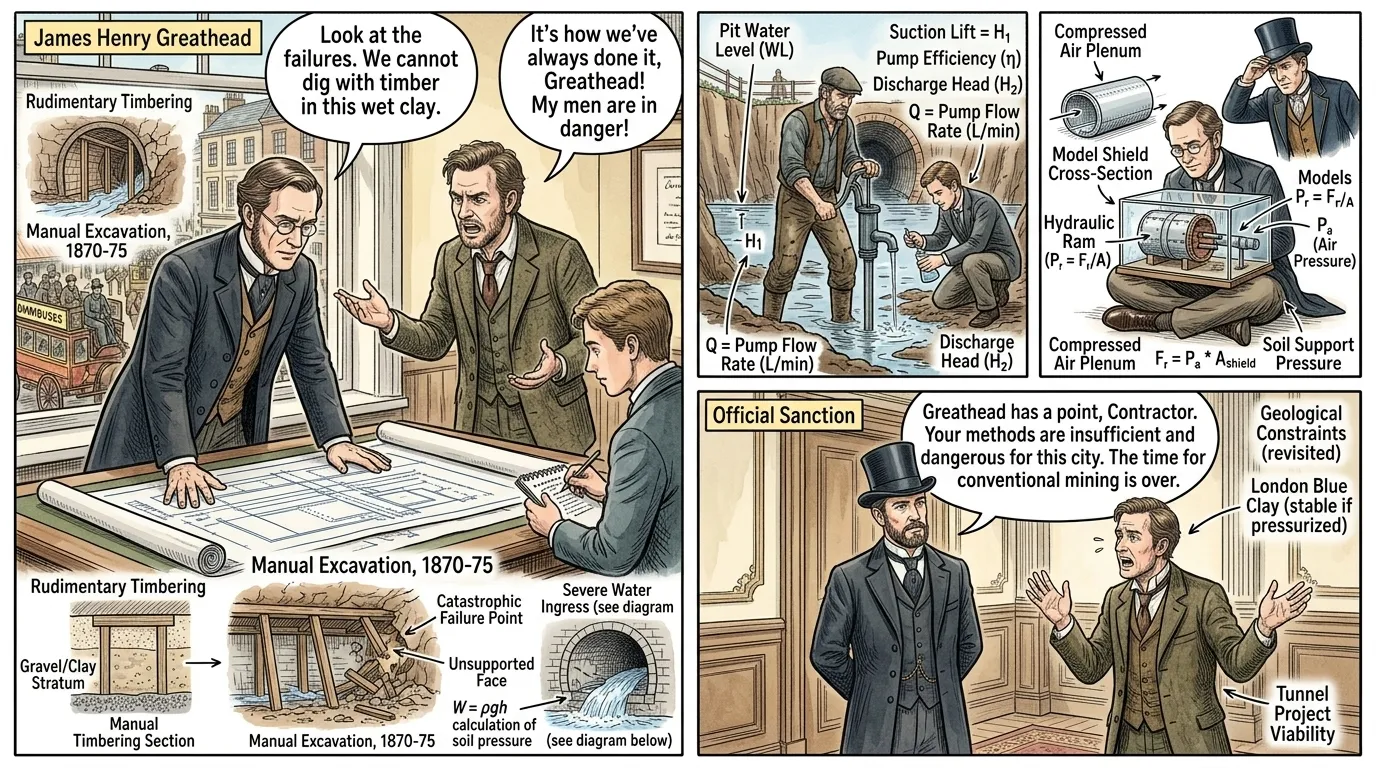
„Frühere Versuche im Tiefbau erwiesen sich als zu kostspielig und gefährlich, Herr Greathead“, erklärte ein verärgerter Bauunternehmer und zeigte auf einen Plan auf seinem Schreibtisch aus dem Jahr achtzehnhundertfünfundsiebzig, der einstürzende Tunnel darstellte. „Ohne eine Methode zur kontinuierlichen Unterstützung der Ausbruchsfläche und zur Abdichtung gegen Wasser wird jede Tiefbohrung zu einem nassen Grab für Kapital und Menschen.“ Greathead studierte das Diagramm aufmerksam und bemerkte die rudimentären Holzverstrebungen und manuellen Aushubtechniken, die für Londons einzigartige Geologie eindeutig unzureichend waren. Er wusste, dass eine radikale Abkehr vom konventionellen Bergbau absolut unerlässlich war.
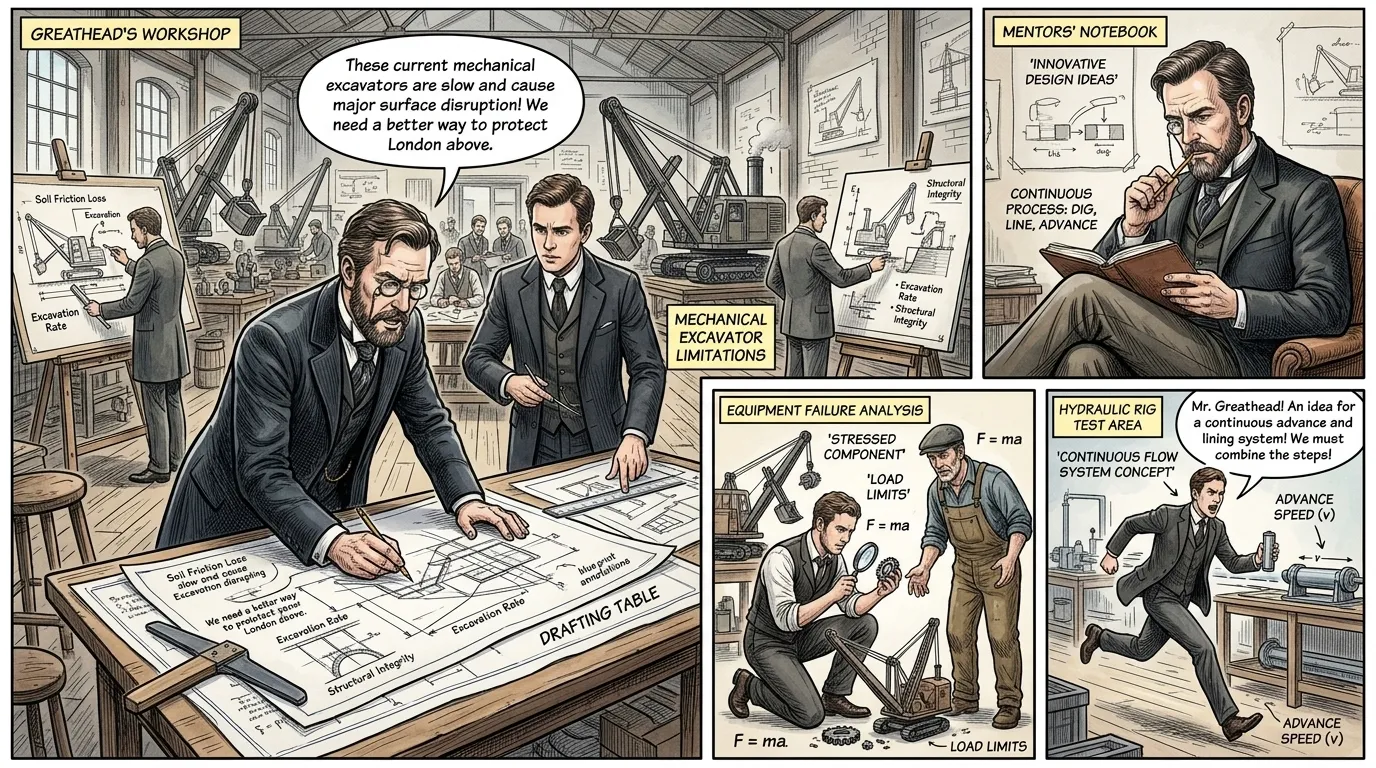
„Die wahre Herausforderung besteht nicht nur darin, sich durch die Erde zu bohren, sondern dies zu tun, ohne die zerbrechliche Stadt darüber zu stören“, überlegte Greathead laut vor seinem Designteam im Jahre achtzehnhundertneunundsiebzig, während er wütend auf einem großen Zeichentisch skizzierte. „Wir brauchen etwas, das sich wie ein Maulwurf vorwärtsbewegen kann, schützend beim Graben und stabilisierend bei der Bewegung.“ Sein Team, zwei jüngere Ingenieure mit ernsten Mienen, diskutierte die Einschränkungen zeitgenössischer mechanischer Bagger, denen die notwendige strukturelle Integrität für Londons besondere Schichten fehlte. Greathead stellte sich eine Lösung vor, die Ausgrabung und Auskleidung zu einem kontinuierlichen, selbsttragenden Prozess integrieren würde.
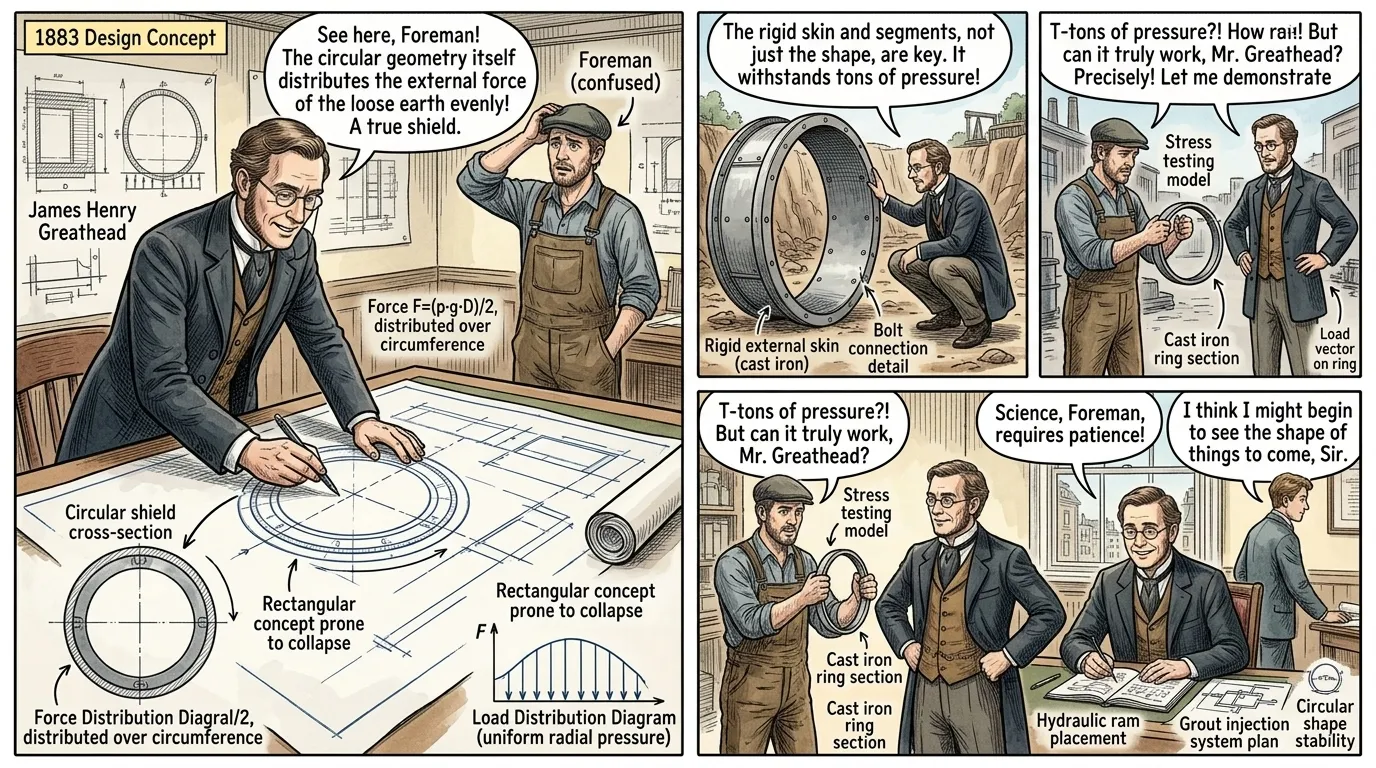
Greatheads frühe Entwürfe kämpften mit dem Problem der Aufrechterhaltung der strukturellen Integrität und zeigten oft Holzrahmen, die entweder zu umständlich oder unzureichend robust waren. „Eine starre Außenhaut, die in der Lage ist, immensem Druck von allen Seiten standzuhalten, ist von grundlegender Bedeutung“, erklärte er einem verwirrten Vorarbeiter, der im Jahr achtzehnhundertdreiundachtzig ein Prototypkonzept überprüfte, und zeigte auf dessen kreisförmiges Profil. Diese kreisförmige Geometrie, so seine Theorie, würde äußere Kräfte gleichmäßig verteilen, eine entscheidende Abkehr von den rechteckigen, einsturzgefährdeten Schächten früherer Versuche. Sein Fokus verlagerte sich vom Widerstand gegen Kräfte auf deren geschickte Umleitung.
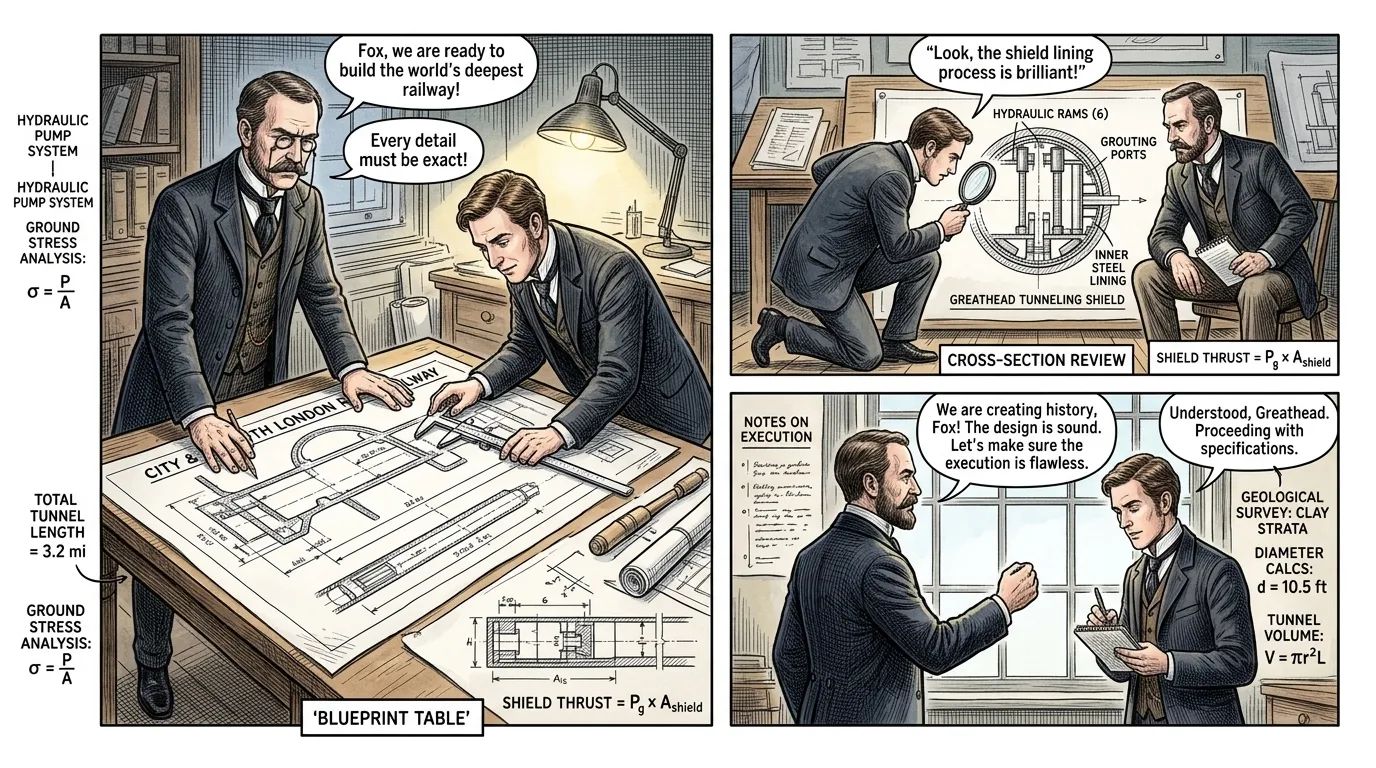
The core principle, then, is continuous support and immediate lining, Greathead articulated to his lead engineer, Francis Fox, in late 1884, overseeing the final drawings for the City & South London Railway project. His innovative tunneling shield acted as a mobile, temporary support, creating a safe chamber for workers at the cutting face. It's a fortress that moves, Fox noted, admiring the detailed blueprints, excavating earth, pushing forward with hydraulic power, and leaving behind a permanent cast-iron cylinder. This seamless integration of excavation and structural reinforcement was the genius of his design. ""The core principle, then, is continuous support and immediate lining," Greathead articulated to his lead engineer, Francis Fox, in late 1884, overseeing the final drawings for the City & South London Railway project. His innovative tunneling shield acted as a mobile, temporary support, creating a safe chamber for workers at the cutting face. "It's a fortress that moves," Fox noted, admiring the detailed blueprints, "excavating earth, pushing forward with hydraulic power, and leaving behind a permanent cast-iron cylinder." This seamless integration of excavation and structural reinforcement was the genius of his design."
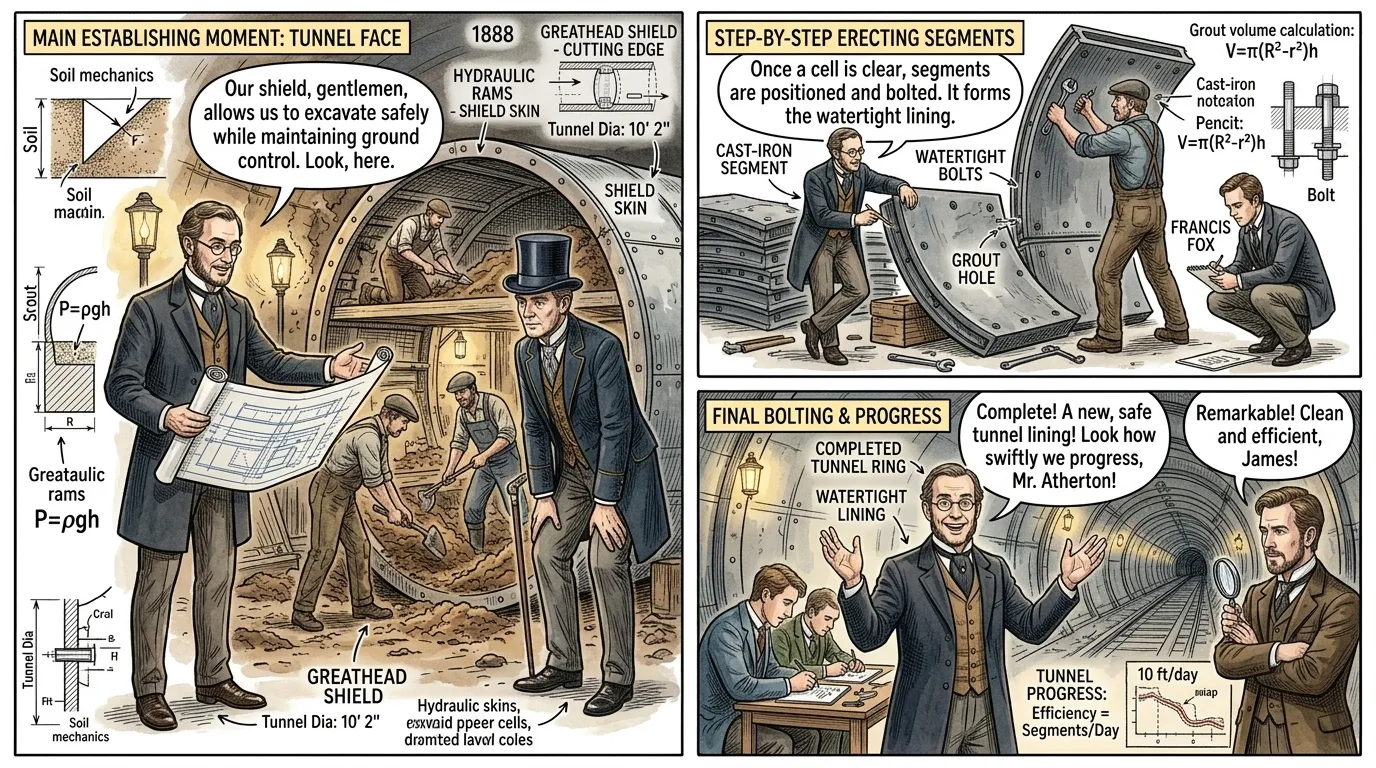
Der Greathead Shield war im Wesentlichen eine dicke, zylindrische Stahlhülle, deren scharfe Vorderkante dazu bestimmt war, sich in die Erde zu graben. Innerhalb dieser schützenden Hülle konnten Arbeiter sicher Erde ausheben, geschützt vor einem sofortigen Einsturz, während leistungsstarke Hydraulikzylinder die gesamte Struktur vorwärts schoben. „Während der Schild vorrückt“, erklärte Greathead einem hochrangigen Besucher im Jahr achtzehnhundertachtundachtzig, während einer frühen Bauphase, „werden vorgefertigte Gusseisensegmente dahinter miteinander verschraubt, um die dauerhafte, wasserdichte Tunnelauskleidung zu bilden.“ Diese Methode verbesserte die Sicherheit und Geschwindigkeit drastisch und veränderte den unterirdischen Bau grundlegend.
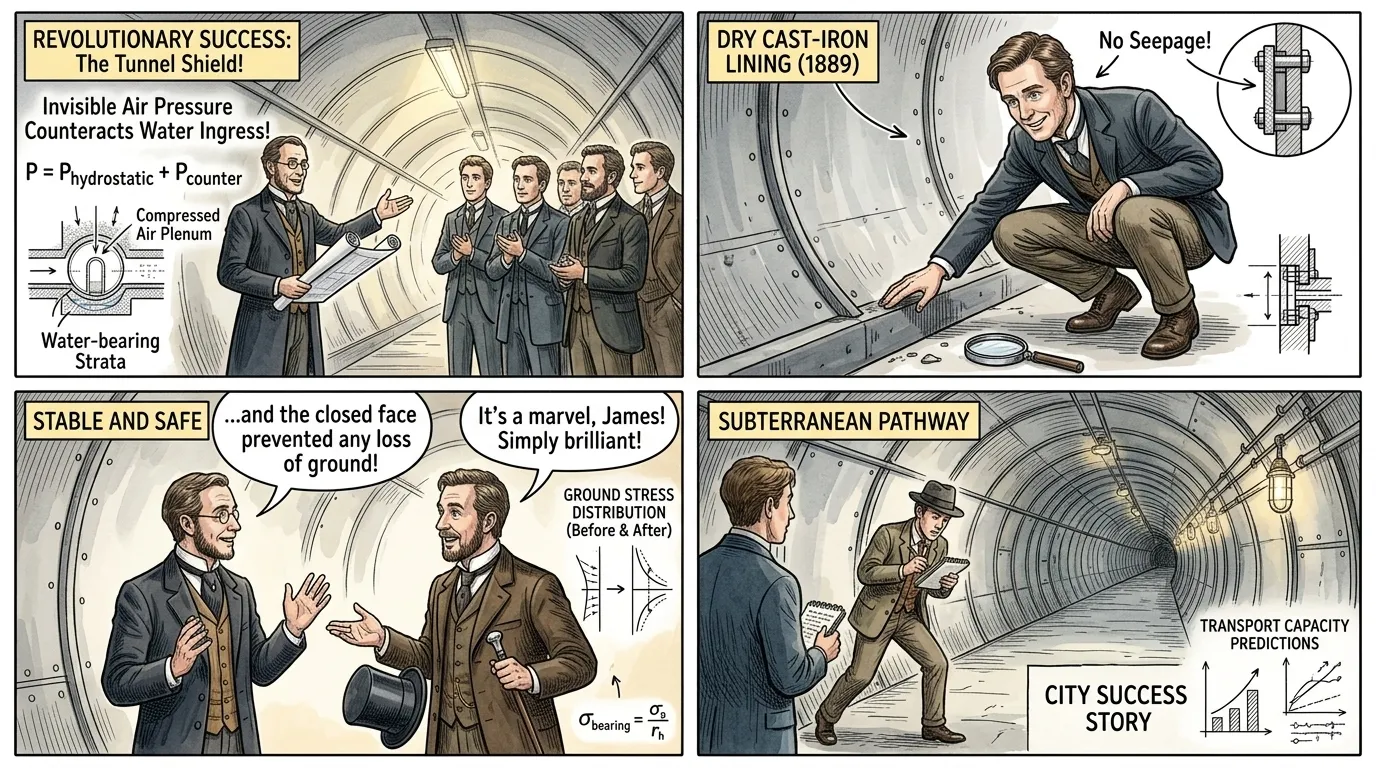
Crucially, the shield's closed-face design and the application of compressed air within the working chamber proved revolutionary, Greathead proudly declared to a group of engineers inspecting a completed tunnel section in 1889. This counteracted the immense pressure of London's water-logged clay, precisely preventing the ingress that plagued earlier attempts. The compressed air pushed back against the water, keeping the excavation dry and stable, allowing the rapid, secure installation of the cast-iron lining. This triumph directly addressed the "engineering nightmare" of water ingress they had discussed years prior. ""Crucially, the shield's closed-face design and the application of compressed air within the working chamber proved revolutionary," Greathead proudly declared to a group of engineers inspecting a completed tunnel section in 1889. "This counteracted the immense pressure of London's water-logged clay, precisely preventing the ingress that plagued earlier attempts." The compressed air pushed back against the water, keeping the excavation dry and stable, allowing the rapid, secure installation of the cast-iron lining. This triumph directly addressed the "engineering nightmare" of water ingress they had discussed years prior."
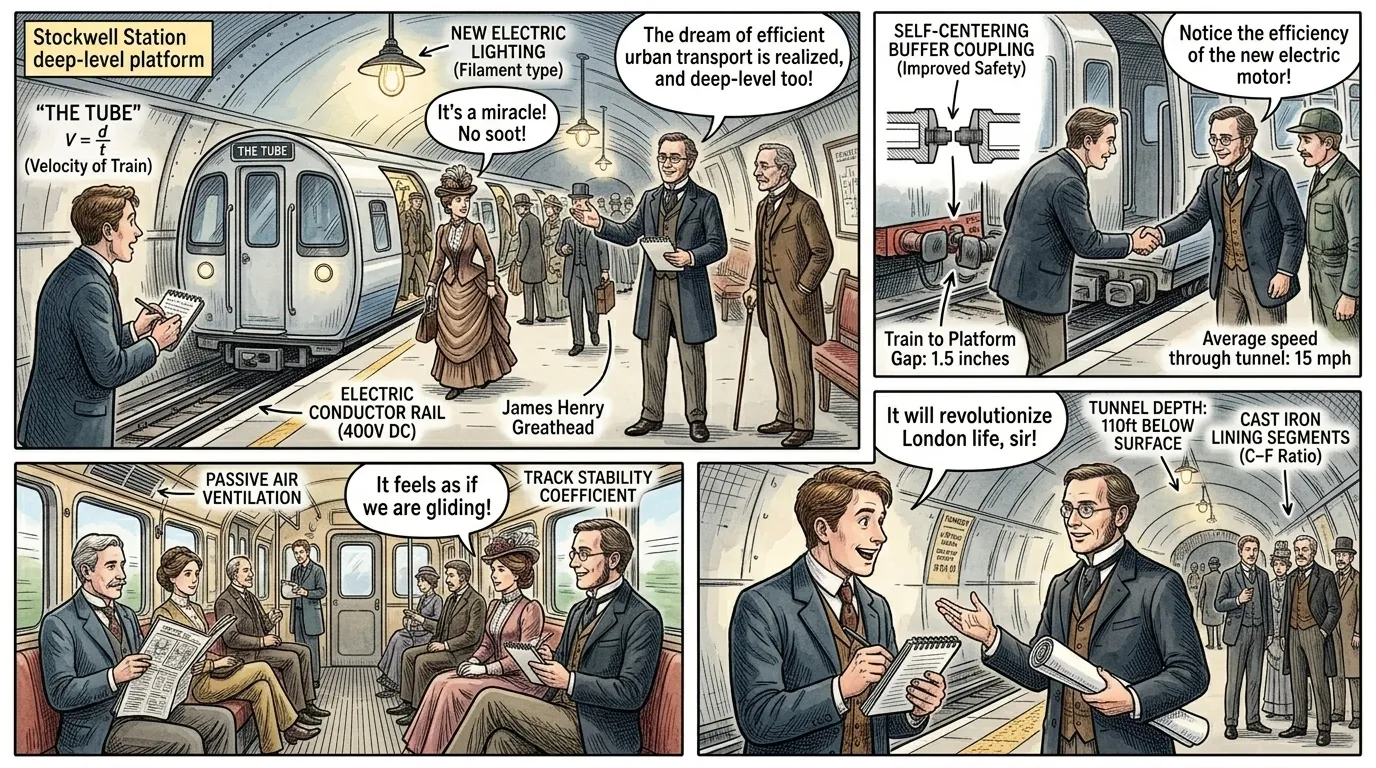
The City & South London Railway opened in 1890, instantly transforming urban life by offering Londoners an escape from surface congestion. It's a truly astonishing feat, a seamless journey beneath the city, exclaimed a newspaper reporter in awe as early passengers disembarked at Stockwell station. The deep-level "tube" system, made possible by Greathead's shield, allowed for lines to be built without acquiring expensive surface property, significantly reducing costs and disruption. This model quickly became the blueprint for subterranean transport networks worldwide. "The City & South London Railway opened in 1890, instantly transforming urban life by offering Londoners an escape from surface congestion. "It's a truly astonishing feat, a seamless journey beneath the city," exclaimed a newspaper reporter in awe as early passengers disembarked at Stockwell station. The deep-level "tube" system, made possible by Greathead's shield, allowed for lines to be built without acquiring expensive surface property, significantly reducing costs and disruption. This model quickly became the blueprint for subterranean transport networks worldwide."
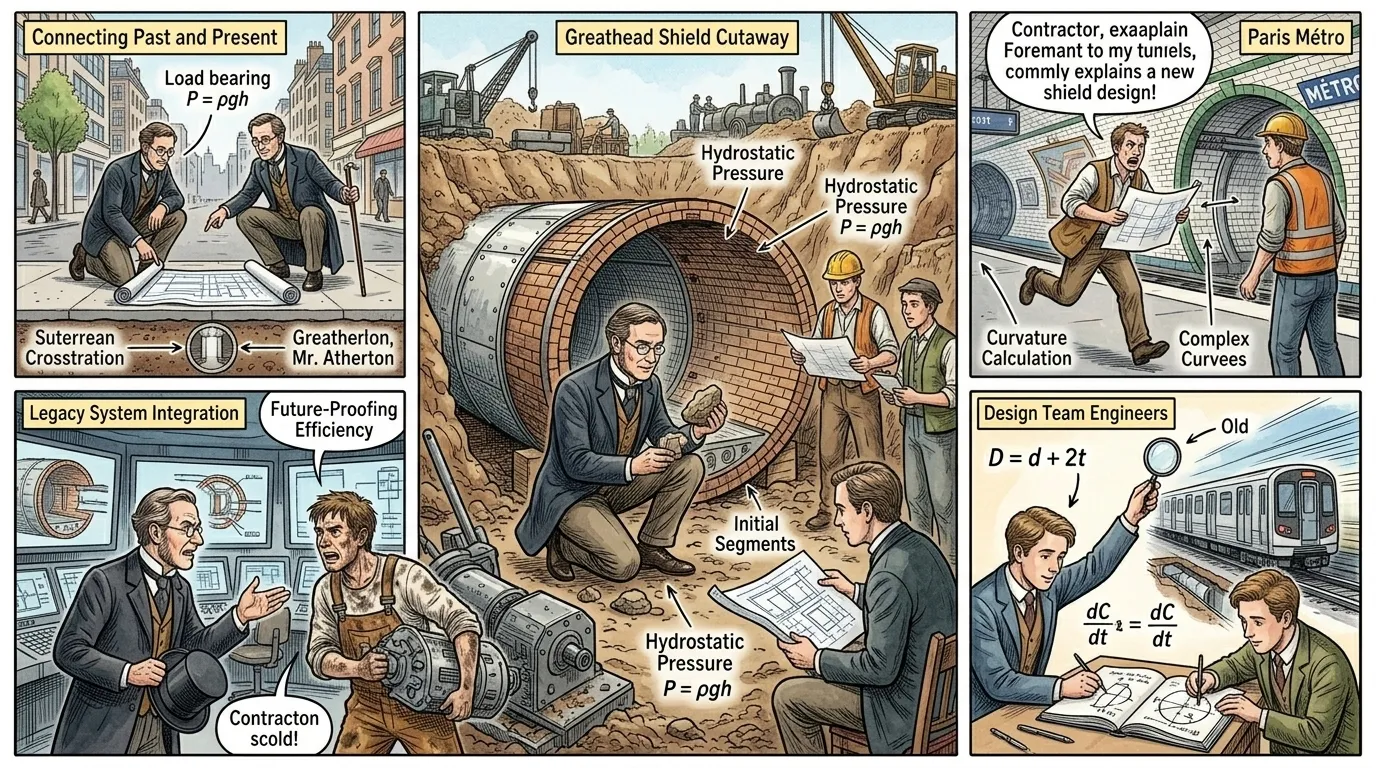
The legacy of Greathead's Metro System shield reverberates globally, shaping modern cities and enabling unprecedented urban expansion. From the Paris Métro to the New York Subway, and countless others, these subterranean arteries facilitate the daily lives of billions. They exemplify human ingenuity, transforming once-insurmountable geological barriers into pathways of progress. The pioneering work of James Henry Greathead underpins the invisible networks that continue to drive global metropolises. "The legacy of Greathead's Metro System shield reverberates globally, shaping modern cities and enabling unprecedented urban expansion. From the Paris Métro to the New York Subway, and countless others, these subterranean arteries facilitate the daily lives of billions. They exemplify human ingenuity, transforming once-insurmountable geological barriers into pathways of progress. The pioneering work of James Henry Greathead underpins the invisible networks that continue to drive global metropolises."