The Papyrus of Ani — Leer en español
Los títulos de las historias todavía aparecen en inglés; el texto de cada historia está en español.
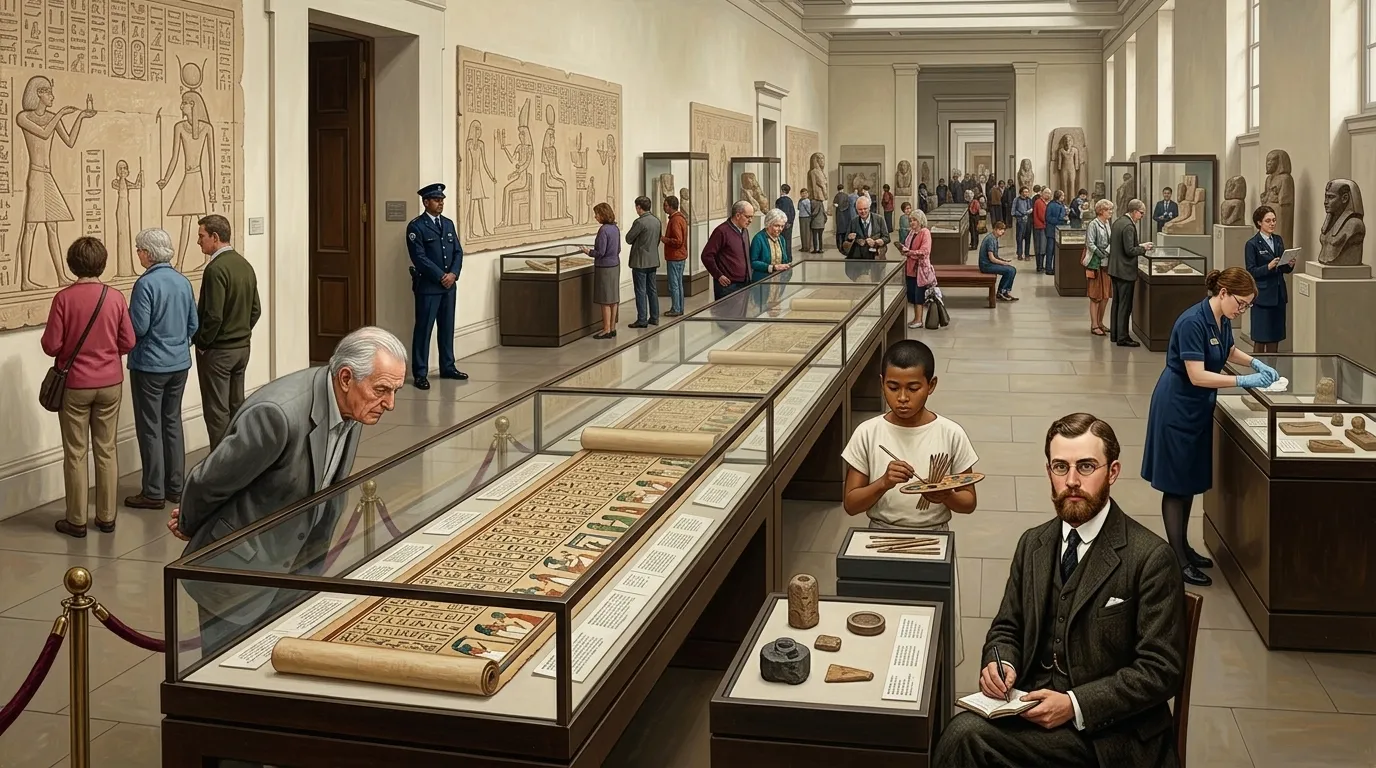
"Ante usted, en el silencioso ambiente de la Sala Sesenta y Dos, el Papiro de Ani se extiende en una vasta vitrina con clima controlado. Este monumental rollo, elaborado hace unos tres mil doscientos setenta años, no está completo como lo estuvo alguna vez. En cambio, treinta y siete hojas individuales de papiro, montadas sobre un respaldo de lino, se extienden por casi veinticuatro metros. Representan el viaje de Ani, un escriba real, a través del inframundo, guiado por intrincados jeroglíficos y vibrantes ilustraciones. El papiro, un profundo testimonio de las antiguas creencias egipcias sobre la vida después de la muerte, revela un registro personal, único en su detalle y calidad artística. Sin embargo, su actual estado fragmentado, cortado para facilitar su exhibición a finales del siglo diecinueve, plantea una pregunta silenciosa sobre el costo de la preservación y la presentación. Este recorrido también examinará el escarabajo corazón de Ani y sus figuras shabti, piezas integrales para su pretendida vida eterna."
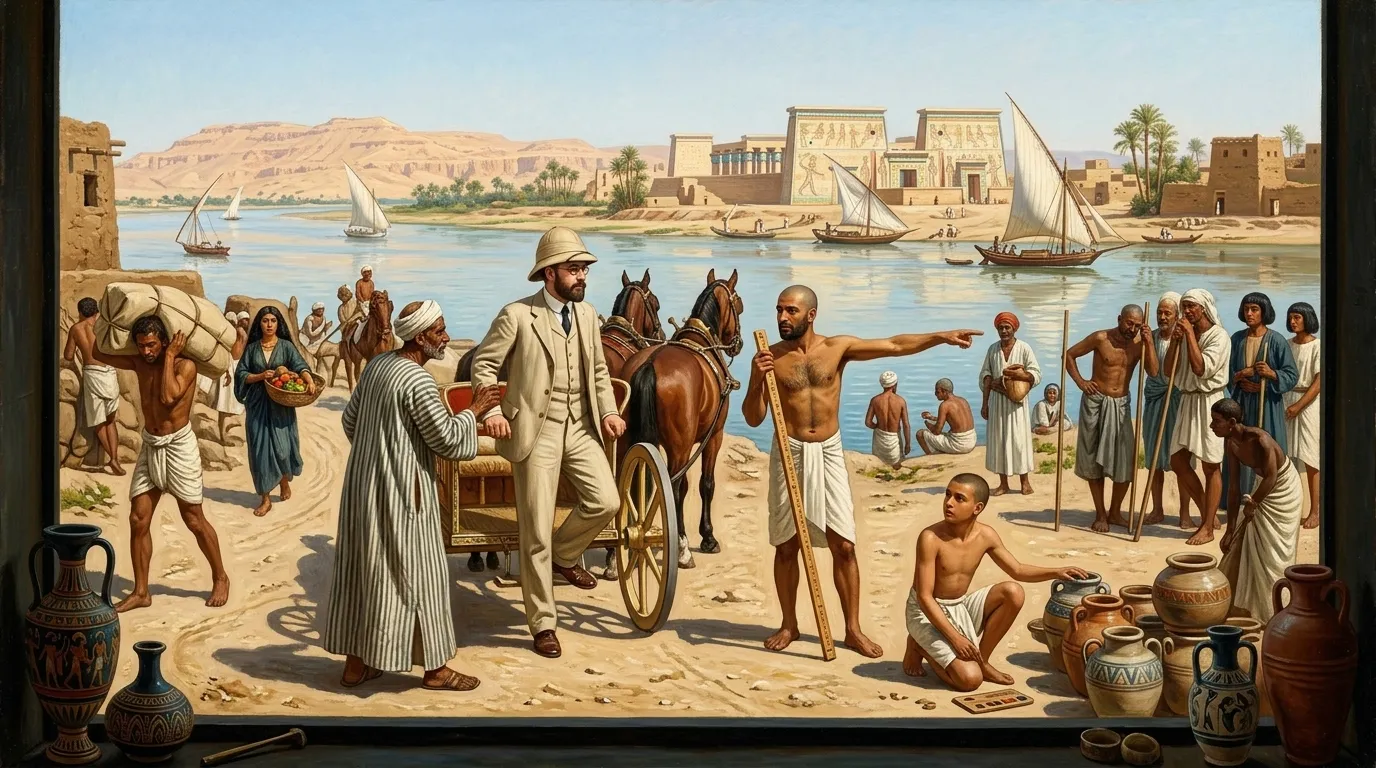
{ "translation": "El año es mil ochocientos ochenta y ocho. En las orillas bañadas por el sol del Nilo, cerca del pueblo de Luxor, un solitario hombre europeo, E. A. Wallis Budge, conversa con un comerciante local. El polvo se arremolina a su alrededor, levantado por pasos invisibles. Budge, de mirada aguda y decidido, sopesa el precio frente a la belleza inigualable del papiro, desenterrado recientemente. Sus colores vibrantes y jeroglíficos nítidos prometen un tesoro incalculable para el Museo Británico. Había navegado por caminos traicioneros y negociaciones silenciosas durante meses, impulsado por la urg urgencia de asegurar tales tesoros antes de que se perdieran o se dañaran irrevocablemente. El pesado rollo de lona, cuidadosamente envuelto, representa no solo un artefacto, sino una ventana a una civilización de tres milenios de antigüedad.\n\n“El precio que pides es elevado, sin embargo, el papiro es… magnífico. Lo llevaremos a salvo a Londres.”" }
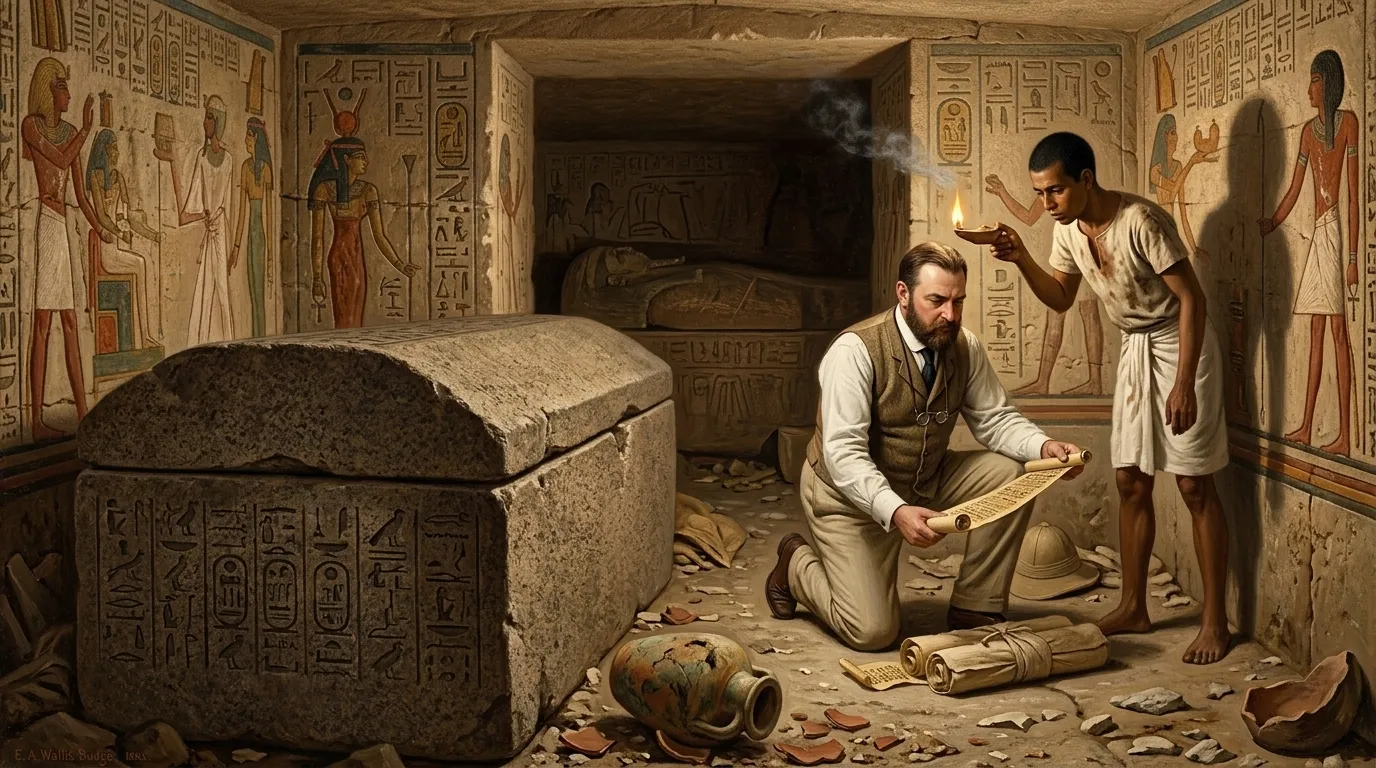
Deep within the necropolis of Thebes, cool air met the desert heat as E. A. Wallis Budge stepped into the recently unsealed tomb of Ani. The air, thick with the scent of ancient dust and dry earth, had not moved for millennia. Before him, nestled amongst the funerary goods and offerings, lay the papyrus scroll, carefully placed beside the wrapped mummy of Ani and his wife, Tutu. The burial chamber, carved from solid rock and dimly lit by a flickering lamp, felt sacred, a direct portal to a distant past. Budge carefully unwrapped a section of the scroll, the colours still vibrant, the ink clear despite the vast passage of time. He understood the immense significance of this complete, personal 'Book of Coming Forth by Day'.
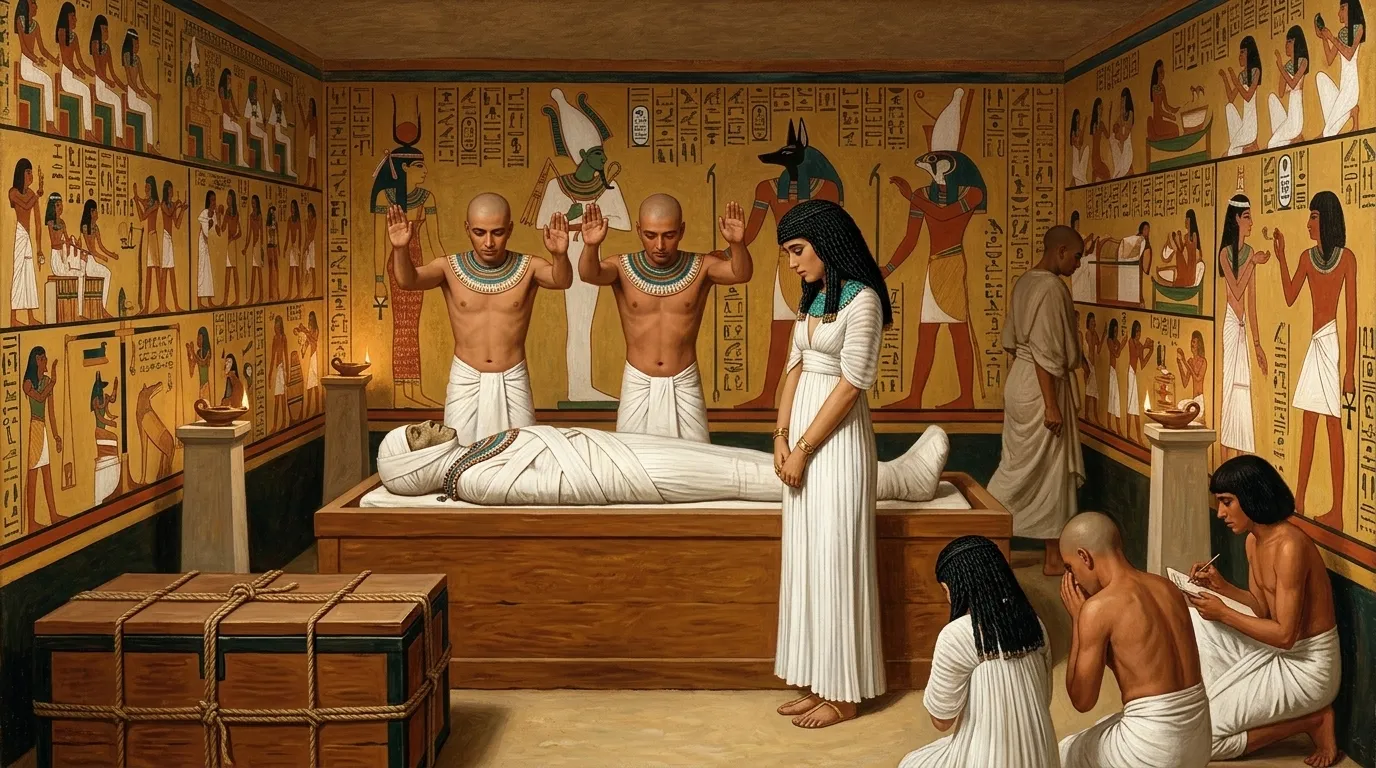
Four millennia before Budge's discovery, in the reign of Ramesses II, the tomb of Ani was sealed. In the cool, quiet chamber, a solemn procession had laid the scribe Ani to rest, his body meticulously prepared and enshrouded. Beside him, his wife Tutu stood, her grief a heavy cloak, as priests chanted the final rites. The papyrus, rolled tightly and carefully bound, was placed within a specially prepared wooden casket, intended to be his guide and protection through the perils of the Duat. The chamber, carved and painted with protective deities, would now house him for eternity. This 'Book of Coming Forth by Day' was his final and most vital possession, ensuring his passage through judgment and into the blessed fields of Aaru. “May the Great Scribe, Ani, be granted passage through the Hall of Two Truths, and may his heart speak no falsehoods.”
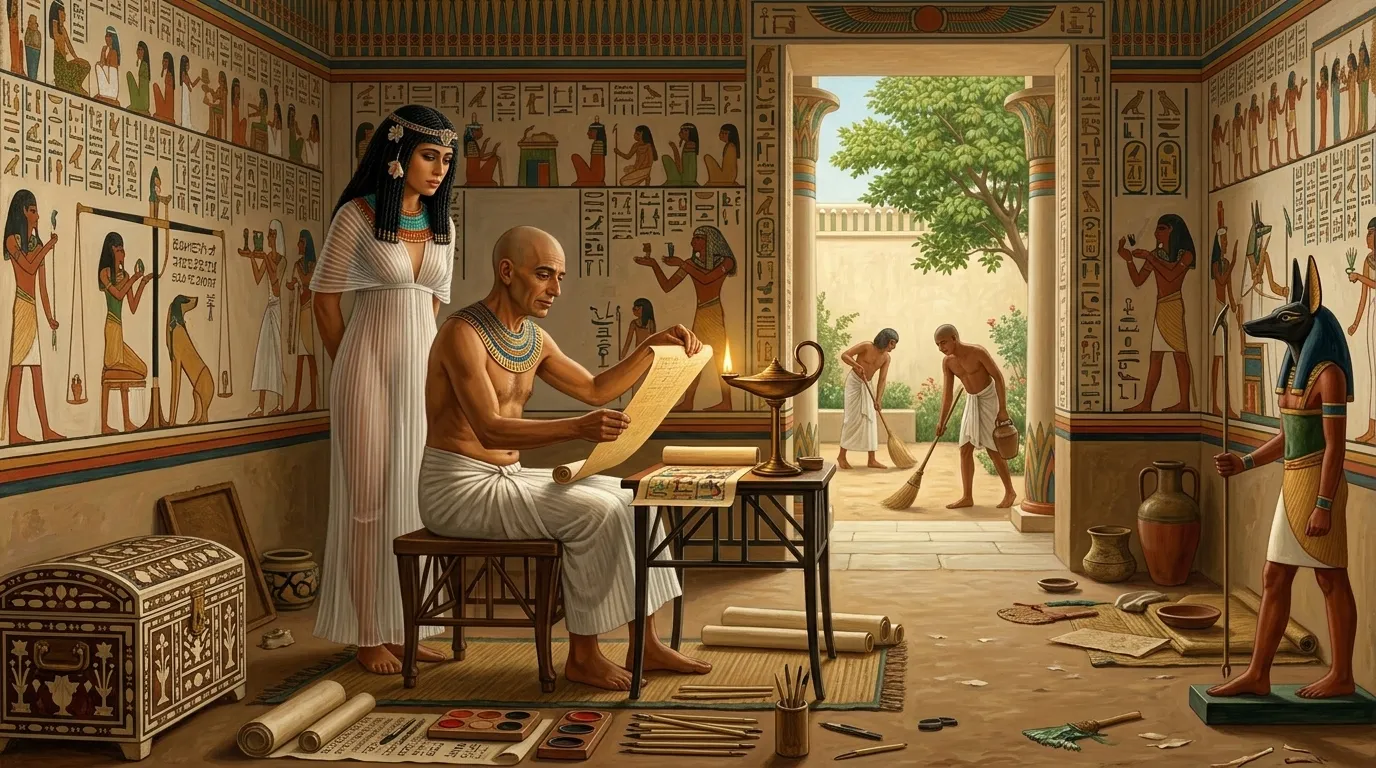
Weeks before his final journey, the royal scribe Ani, a man of substantial years and position, sat in his private study in Thebes. He held the completed papyrus roll, its vivid illustrations gleaming under the light of an oil lamp. His wife, Tutu, a woman in her prime, stood attentively nearby, her hand resting gently on his shoulder. Ani traced the hieroglyphs of Spell 30B, the 'Heart Scarab Spell', with a slender finger, envisioning the moment his heart would be weighed against the feather of Ma'at. This was his legacy, his assurance, purchased at significant cost and crafted with meticulous care by the scribes of the funerary workshop. The weight of his future, eternal life, lay within the intricate lines and colours before him. “This ensures our passage, Tutu. Every word, every image, a shield against the devourer.”
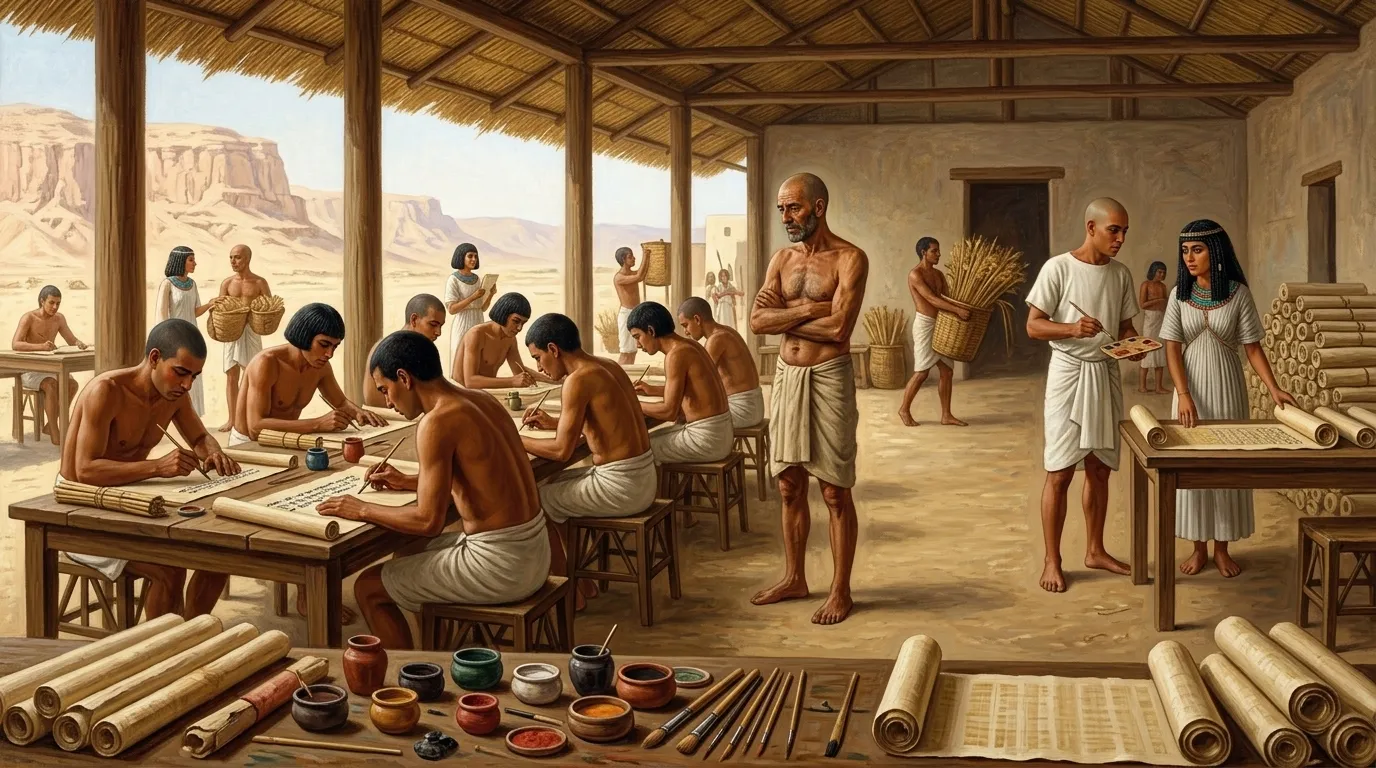
Within the bustling funerary workshop in Thebes, the air was thick with the scent of ink and fresh papyrus. The Master of the Workshop, a stern-faced man of perhaps fifty years, with a short, neat beard, oversaw the production of 'Books of Coming Forth by Day'. Rows of copyists, their fingers stained with pigments, hunched over long papyrus sheets laid out on tables. One young copyist, his brow furrowed in concentration, painstakingly filled in the name 'Ani' into a blank space left within a pre-drawn vignette. These scrolls were prepared in advance, their illustrations already complete, awaiting only the name of the purchaser to personalize their journey to the afterlife. The workshop was a factory of salvation, selling hopes for immortality. “Hold your hand steady, boy. Ani deserves the finest work, as does every soul who seeks the fields of Aaru.”
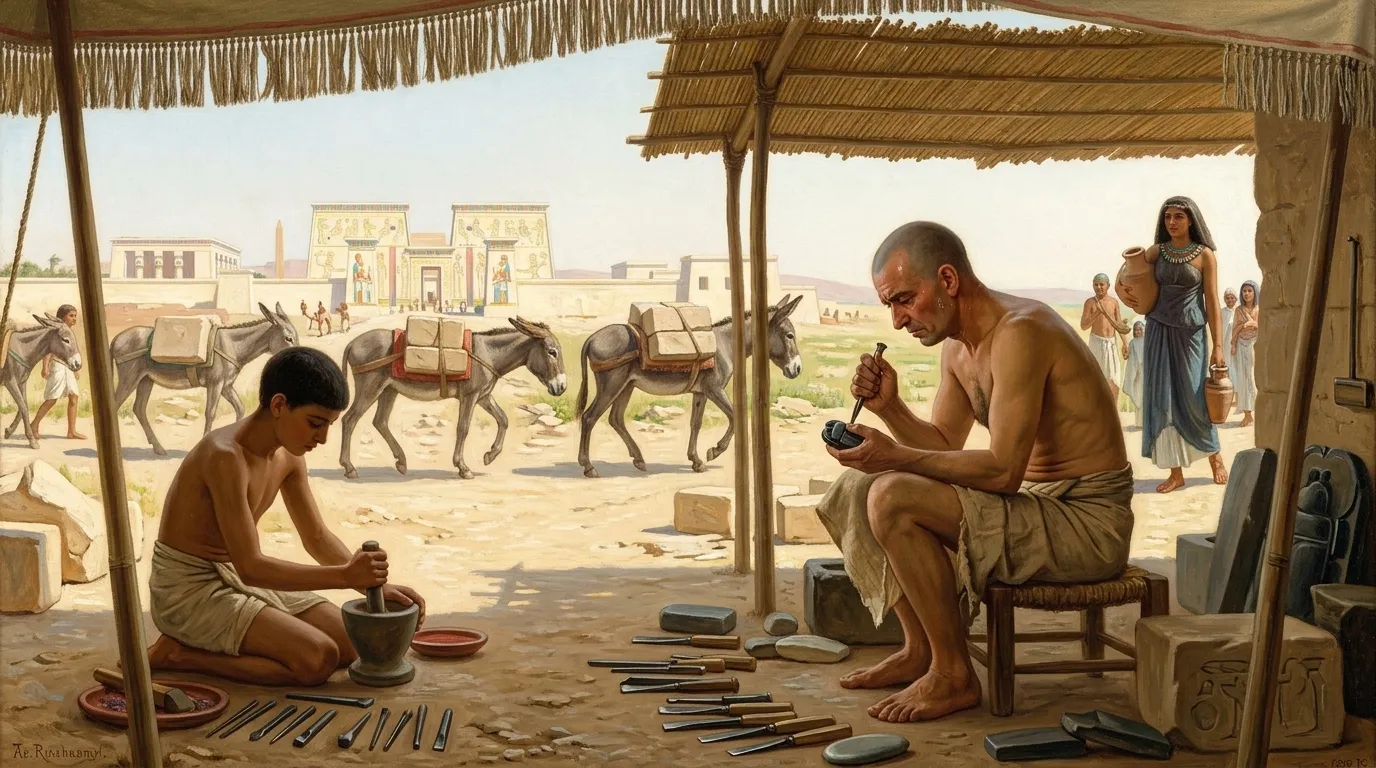
At a stone carver's modest workshop, not far from the River Nile, an artisan meticulously shaped a piece of dark green steatite. His hands, calloused and strong, moved with practiced precision as he carved the intricate details of a scarab beetle. Ani had commissioned this particular heart scarab, intended to be placed over his heart during mummification. On its smooth underside, the carver carefully inscribed the hieroglyphs of Spell 30B, a powerful incantation designed to prevent the deceased's heart from testifying against him during the weighing of the heart. The small, potent amulet held immense spiritual significance, a silent promise of eternal advocacy in the divine judgment hall.
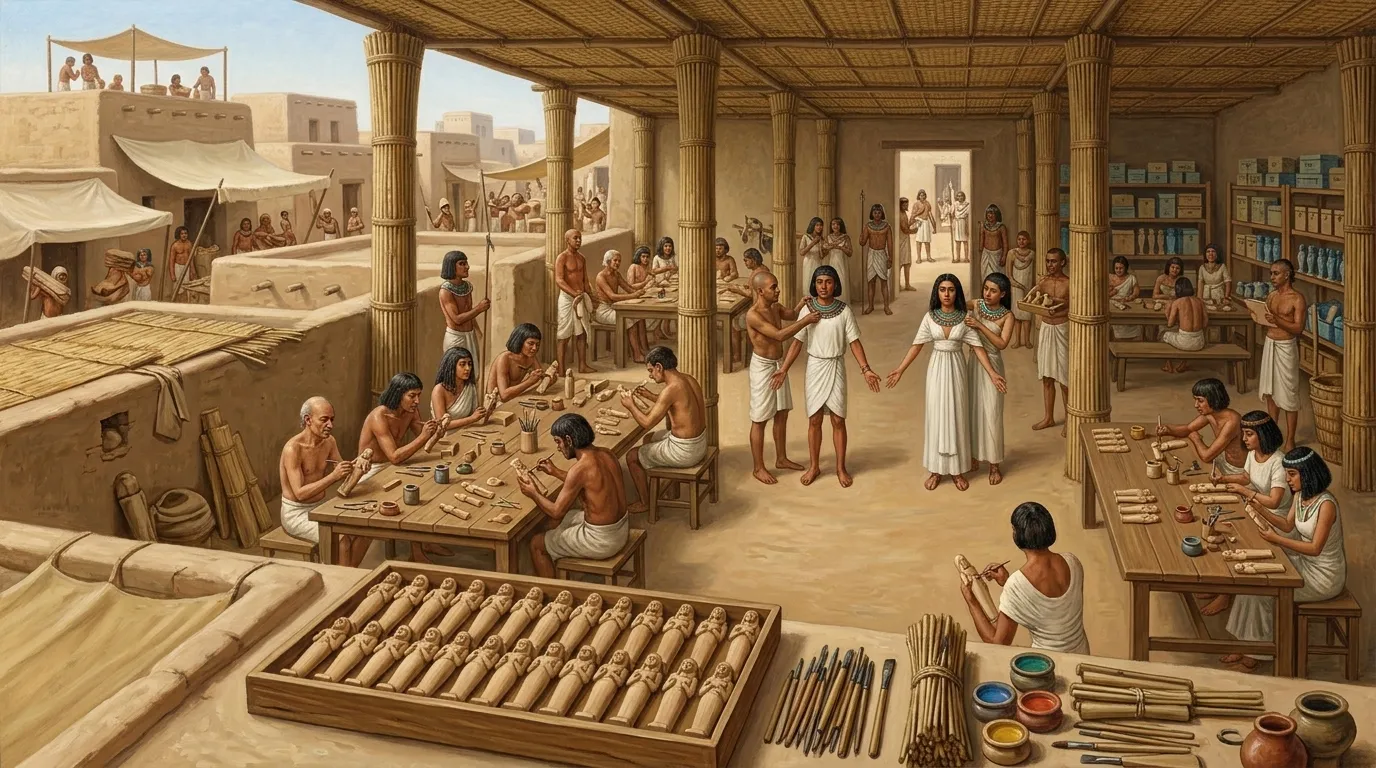
Across town, in another specialized workshop, dozens of small wooden figures lay arranged on long tables, awaiting their final details. These were the shabti figures, created in the thousands for the wealthy deceased. A young painter, his hands quick and steady, dabbed blue and yellow pigment onto the miniature farming tools clutched by the tiny figures. Each shabti was a silent servant, magically imbued to perform manual labor on behalf of Ani in the afterlife, should the gods demand it. Ani, as a man of high standing, would require a legion of these workers, one for each day of the year, ensuring his eternal rest remained undisturbed by physical toil. The workshop hummed with quiet industry, preparing for countless afterlives.
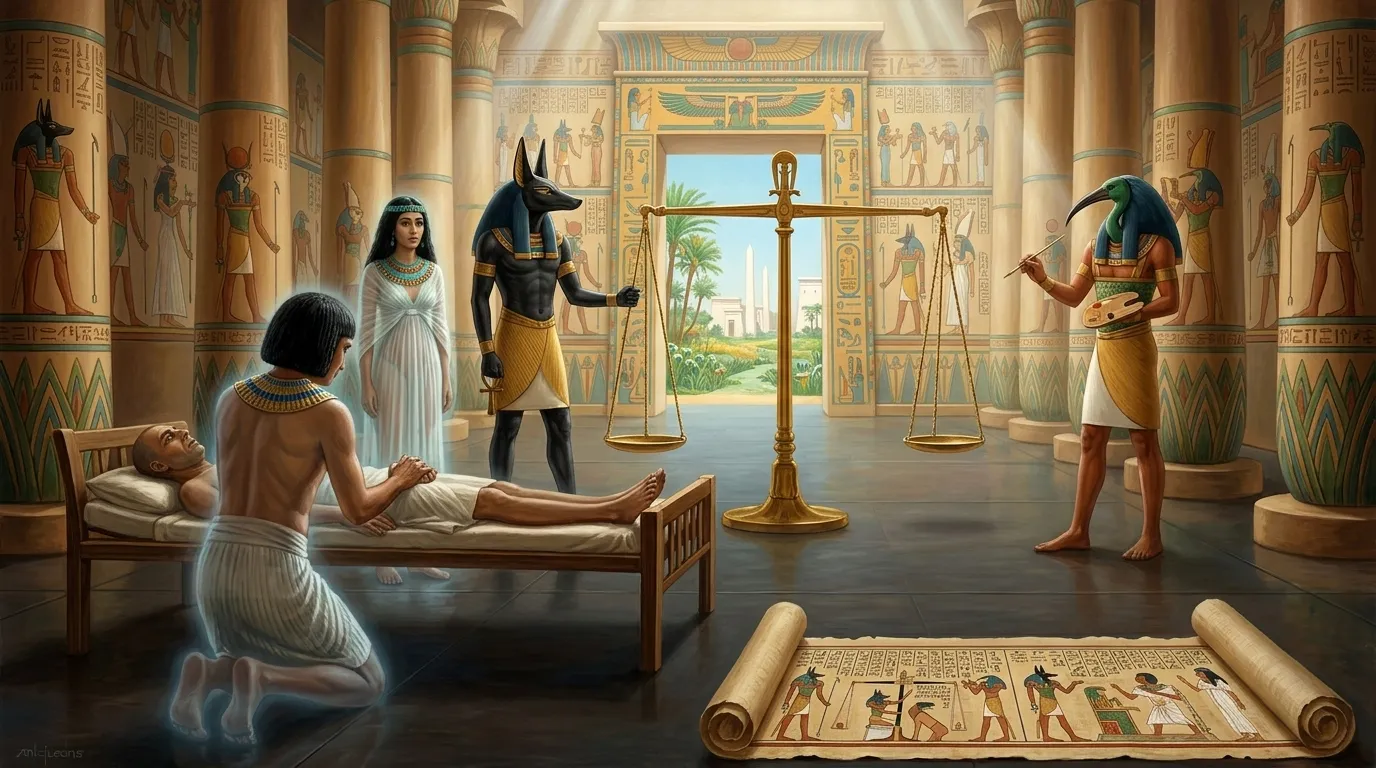
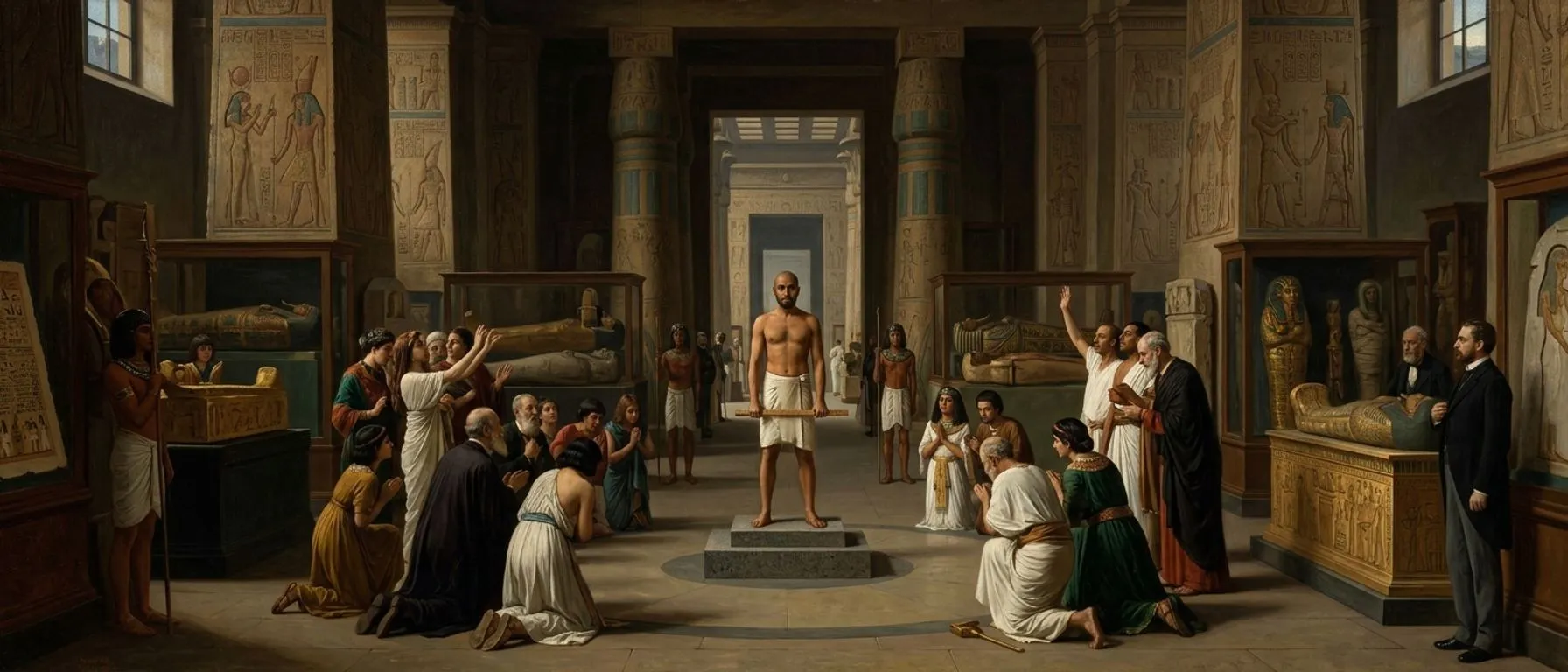
Within the deepest chamber of Ani's tomb, as the final spells of the 'Book of Coming Forth by Day' were recited, Ani's spirit embarked on its conceptual journey. He stood, as depicted in his papyrus, within the majestic Hall of Two Truths. Before him, the great balance scale awaited, overseen by the jackal-headed god Anubis. Ani's heart, his conscience and intellect, was placed upon one pan, balanced against the feather of Ma'at, the embodiment of truth and cosmic order, on the other. Thoth, the ibis-headed scribe of the gods, stood ready to record the verdict. His wife, Tutu, his eternal companion, stood by his side, unwavering. This was the pivotal moment: a righteous life promised eternal bliss, a corrupt heart meant annihilation.
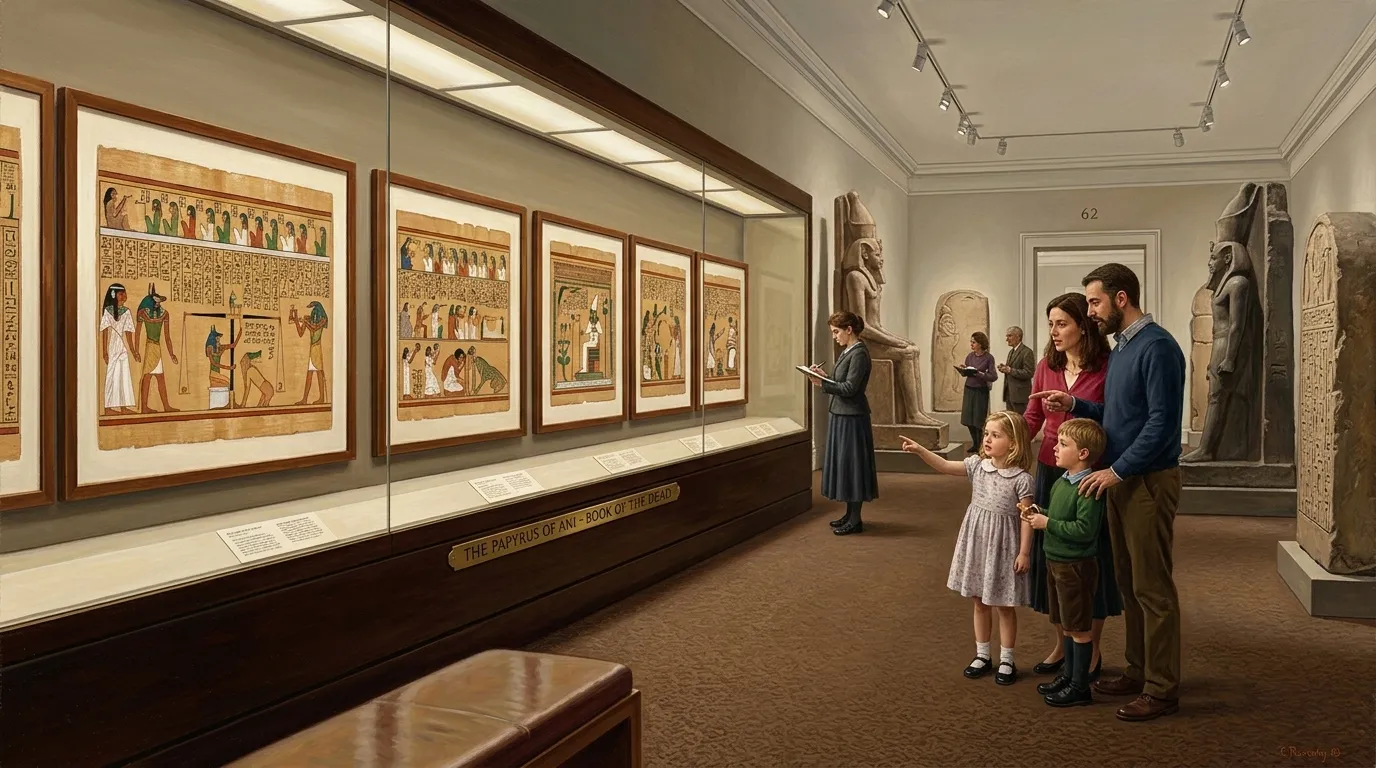
Return now to Room 62, before the Papyrus of Ani. You have traced its path from the meticulous workshop of Thebes, through the quiet rituals of burial, to its re-emergence into the modern world by E. A. Wallis Budge. You have seen how a scribe, Ani, and his wife, Tutu, prepared for eternity, their hopes and fears etched into every hieroglyph. The scroll, once whole, now divided into thirty-seven framed sections, still conveys its majestic purpose. The journey of this artifact, from a personal guide for one man's soul to a globally recognized treasure, speaks to the enduring human quest for meaning beyond life. Its silent presence here connects us across millennia, a whispered testament to faith and artistry.