The Papyrus of Ani — 한국어로 읽기
이야기 제목은 아직 영어로 표시되지만, 본문은 한국어입니다.
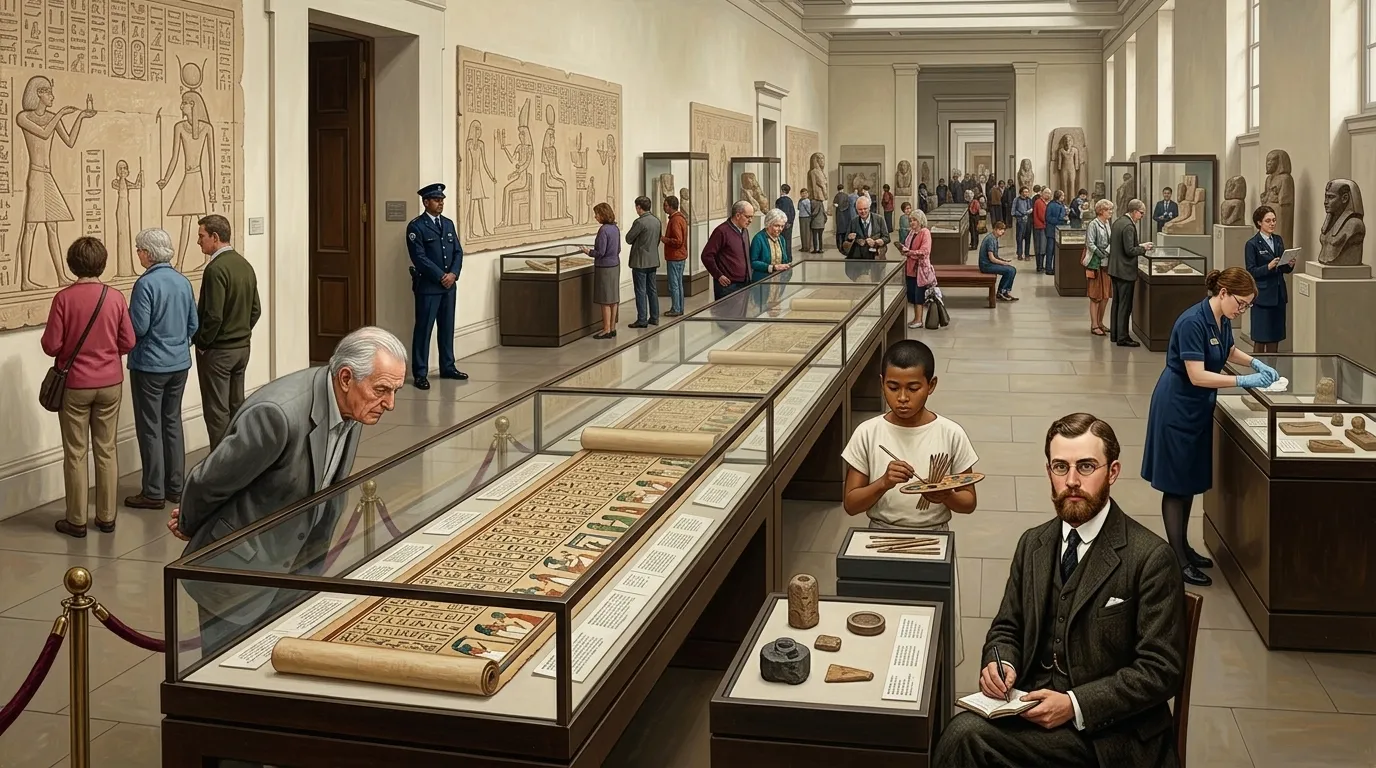
"조용하고 쾌적한 62호실에 있는 아니의 파피루스는 거대한 항온 케이스에 보관되어 있습니다. 약 삼천이백칠십 년 전에 제작된 이 기념비적인 두루마리는 한때 온전했던 모습과는 다릅니다. 대신, 아마포 뒷면에 장착된 서른일곱 장의 파피루스 개별 시트가 거의 이십사 미터에 걸쳐 펼쳐져 있습니다. 이 파피루스는 복잡한 상형문자와 생생한 삽화의 안내를 받으며 왕실 서기관인 아니가 지하세계를 여행하는 모습을 묘사합니다. 고대 이집트인의 사후 세계에 대한 믿음을 심오하게 증명하는 이 파피루스는 그 세부 사항과 예술적 품질 면에서 독특한 개인 기록을 보여줍니다. 그러나 십구세기 후반에 더 쉽게 전시하기 위해 잘라내어 현재 파편화된 상태는 보존과 전시에 드는 비용에 대한 무언의 질문을 던집니다. 이 투어에서는 아니의 심장 스카라브와 그의 샤브티 조각상도 살펴볼 것입니다. 이 조각상들은 그의 의도된 영원한 삶에 필수적인 부분입니다."

"{\"year\": \"천팔백팔십팔년\", \"setting\": \"룩소르 마을 근처 나일강의 햇볕이 내리쬐는 강둑\", \"characters\": [{\"name\": \"E. A. Wallis Budge\", \"nationality\": \"유럽인\", \"occupation\": \"남자\"}, {\"name\": \"현지 상인\", \"occupation\": \"상인\"}], \"event\": \"파피루스 두루마리 구매 협상\", \"details\": [{\"item\": \"파피루스 두루마리\", \"description\": \"최근 발굴됨, 생생한 색상, 선명한 상형문자\"}, {\"item\": \"E. A. Wallis Budge의 동기\", \"description\": \"이러한 보물들이 사라지거나 돌이킬 수 없을 정도로 손상되기 전에 확보하려는 절박함\"}, {\"item\": \"목적지\", \"description\": \"대영 박물관\"}, {\"item\": \"두루마리의 중요성\", \"description\": \"단순한 유물이 아닌, 삼천 년 전 문명으로 향하는 창\"}], \"dialogue\": {\"speaker\": \"E. A. Wallis Budge\", \"line\": \"요구하는 가격이 비싸지만, 두루마리는… 훌륭합니다. 런던으로 안전하게 가져가겠습니다.\"}}"
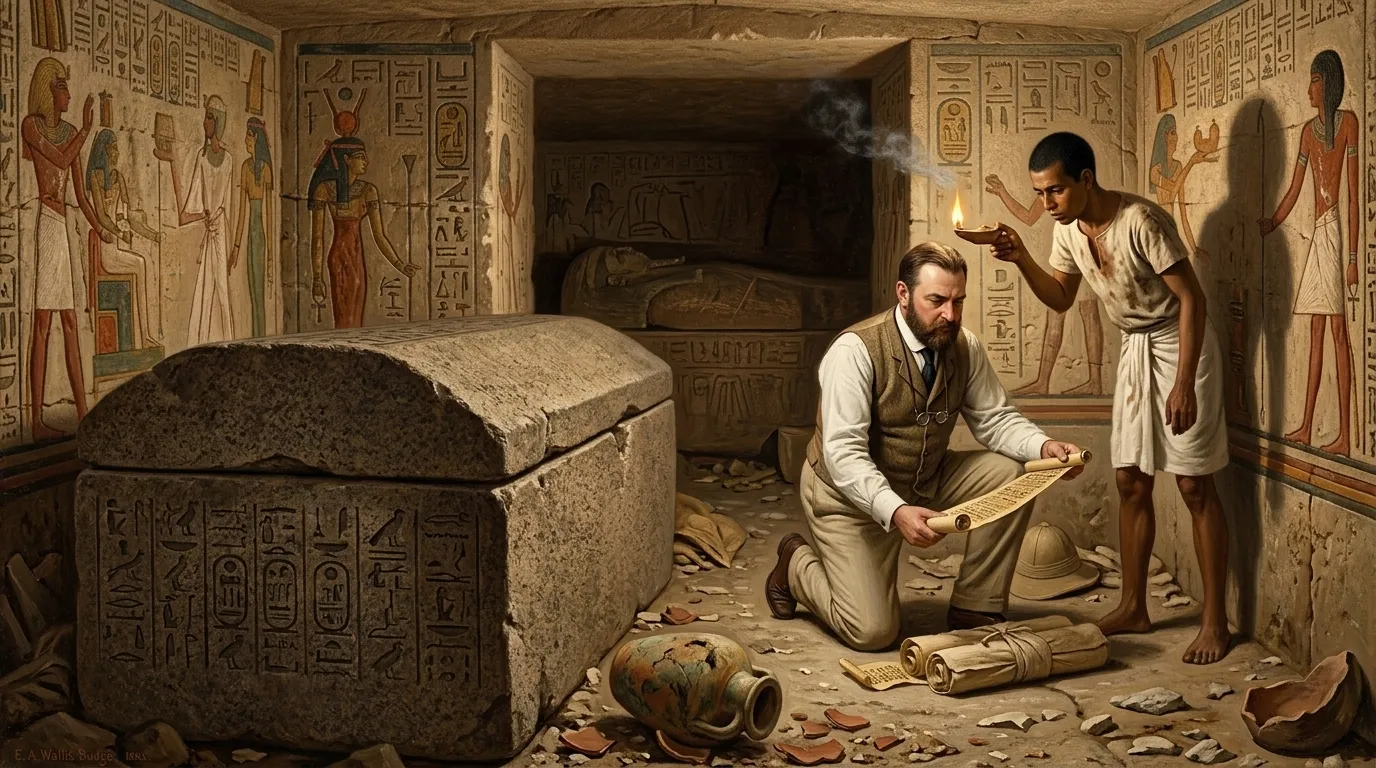
Deep within the necropolis of Thebes, cool air met the desert heat as E. A. Wallis Budge stepped into the recently unsealed tomb of Ani. The air, thick with the scent of ancient dust and dry earth, had not moved for millennia. Before him, nestled amongst the funerary goods and offerings, lay the papyrus scroll, carefully placed beside the wrapped mummy of Ani and his wife, Tutu. The burial chamber, carved from solid rock and dimly lit by a flickering lamp, felt sacred, a direct portal to a distant past. Budge carefully unwrapped a section of the scroll, the colours still vibrant, the ink clear despite the vast passage of time. He understood the immense significance of this complete, personal 'Book of Coming Forth by Day'.
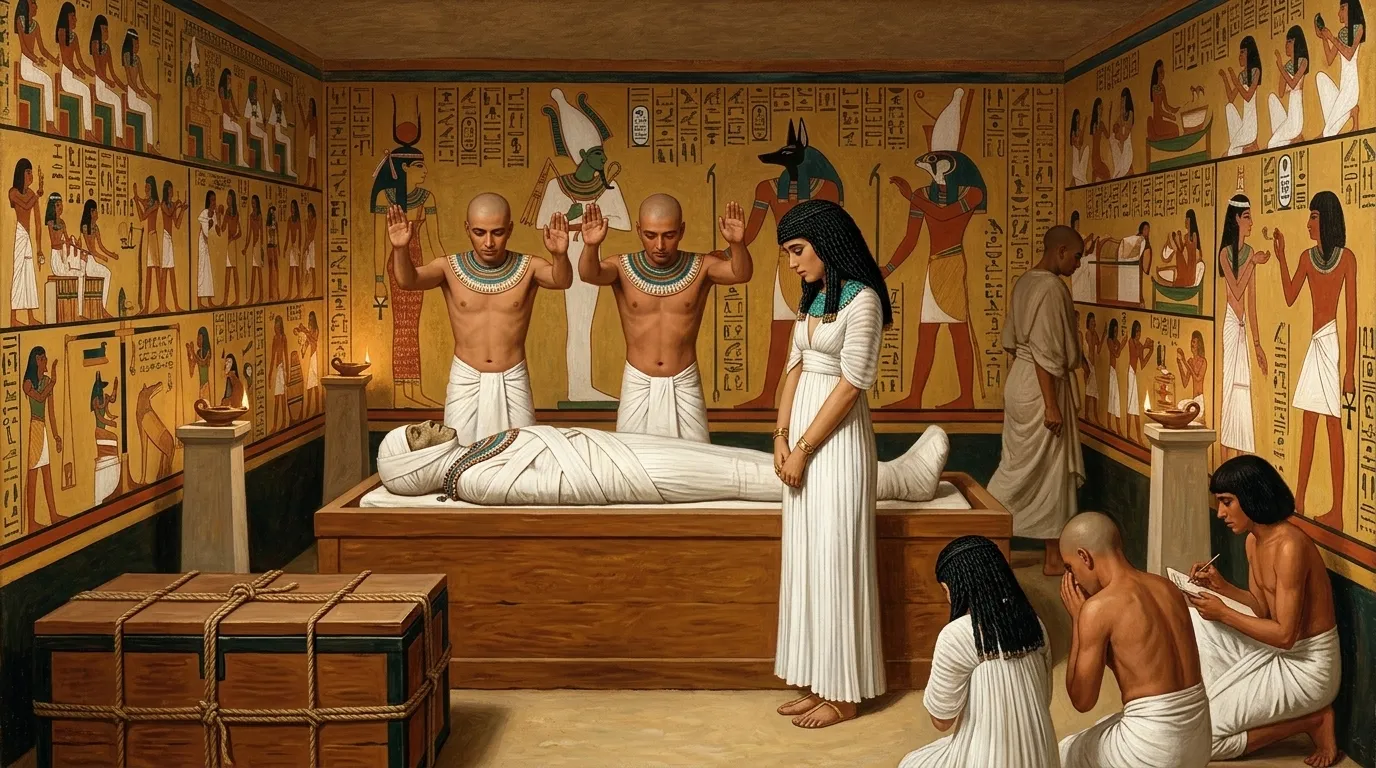
Four millennia before Budge's discovery, in the reign of Ramesses II, the tomb of Ani was sealed. In the cool, quiet chamber, a solemn procession had laid the scribe Ani to rest, his body meticulously prepared and enshrouded. Beside him, his wife Tutu stood, her grief a heavy cloak, as priests chanted the final rites. The papyrus, rolled tightly and carefully bound, was placed within a specially prepared wooden casket, intended to be his guide and protection through the perils of the Duat. The chamber, carved and painted with protective deities, would now house him for eternity. This 'Book of Coming Forth by Day' was his final and most vital possession, ensuring his passage through judgment and into the blessed fields of Aaru. “May the Great Scribe, Ani, be granted passage through the Hall of Two Truths, and may his heart speak no falsehoods.”
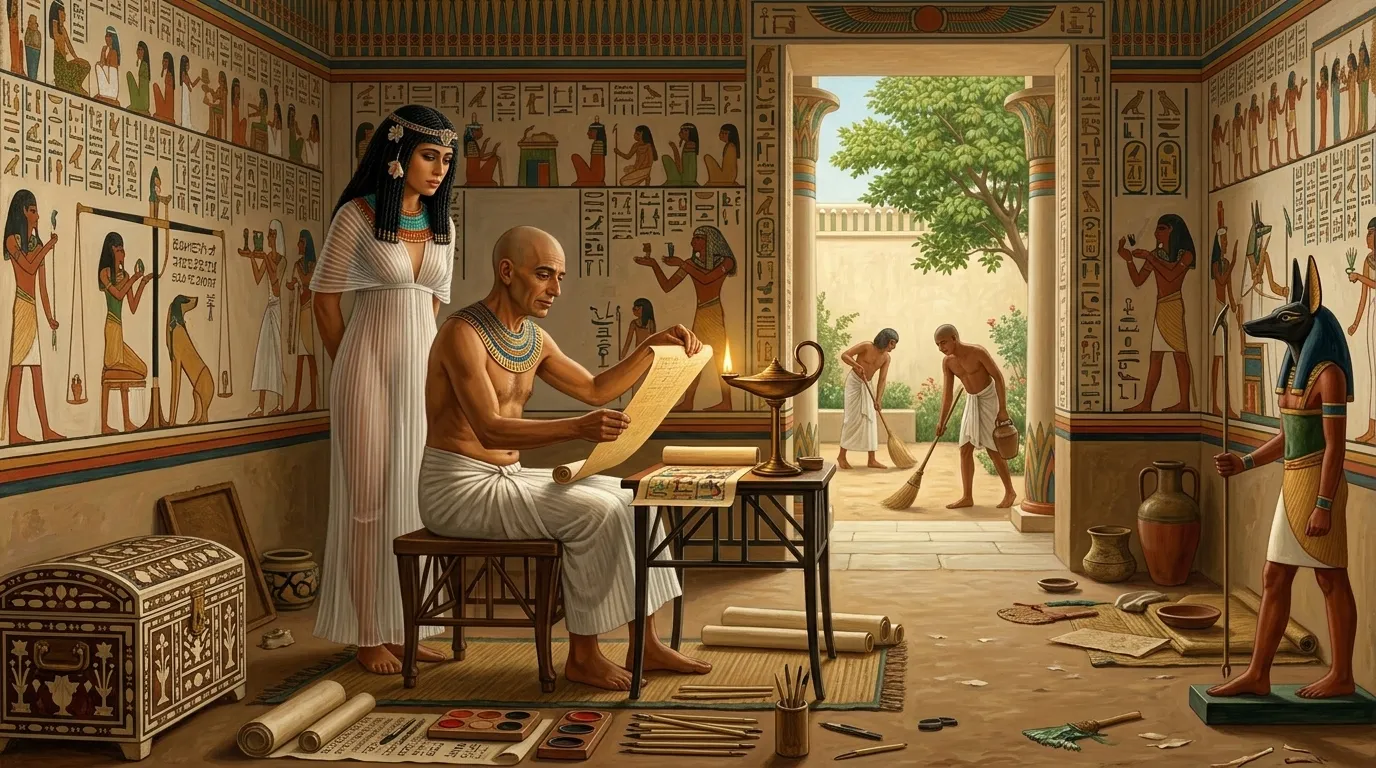
Weeks before his final journey, the royal scribe Ani, a man of substantial years and position, sat in his private study in Thebes. He held the completed papyrus roll, its vivid illustrations gleaming under the light of an oil lamp. His wife, Tutu, a woman in her prime, stood attentively nearby, her hand resting gently on his shoulder. Ani traced the hieroglyphs of Spell 30B, the 'Heart Scarab Spell', with a slender finger, envisioning the moment his heart would be weighed against the feather of Ma'at. This was his legacy, his assurance, purchased at significant cost and crafted with meticulous care by the scribes of the funerary workshop. The weight of his future, eternal life, lay within the intricate lines and colours before him. “This ensures our passage, Tutu. Every word, every image, a shield against the devourer.”
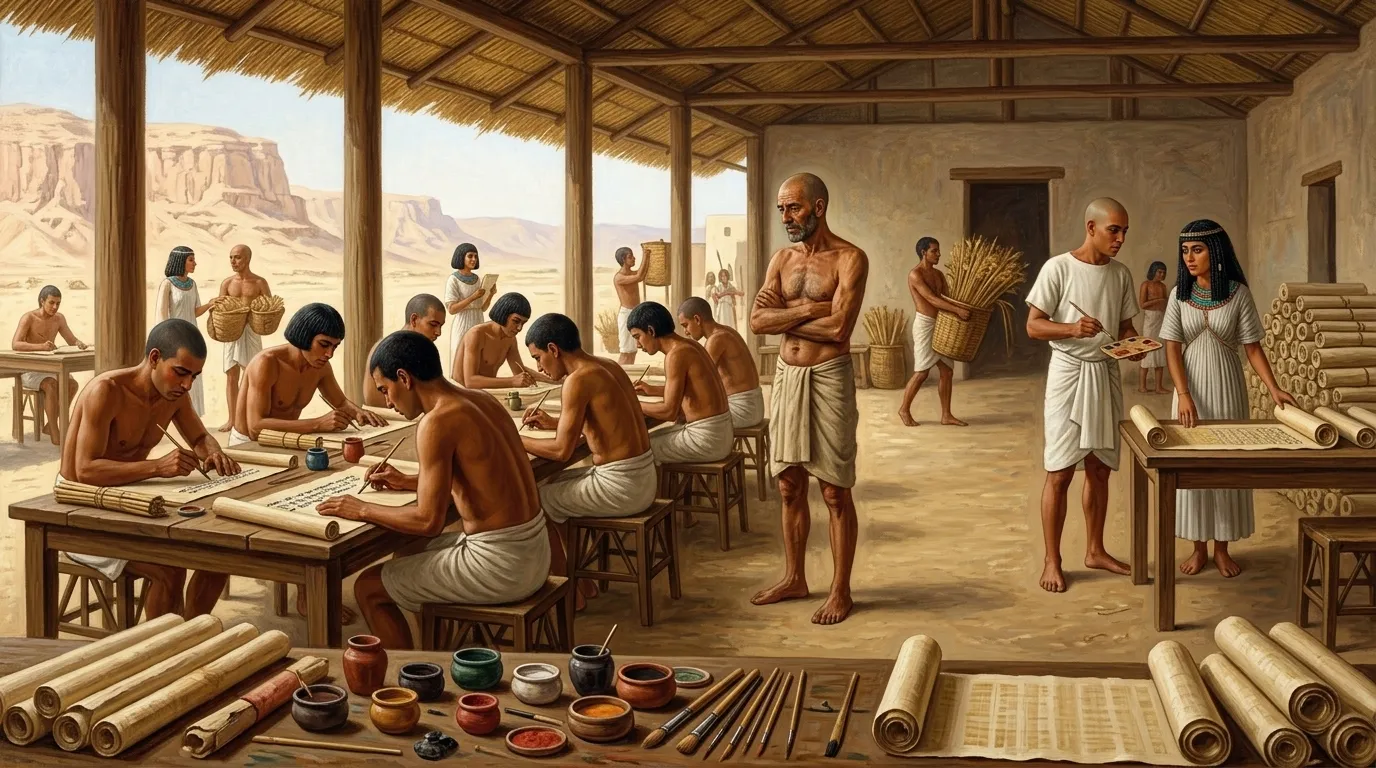
Within the bustling funerary workshop in Thebes, the air was thick with the scent of ink and fresh papyrus. The Master of the Workshop, a stern-faced man of perhaps fifty years, with a short, neat beard, oversaw the production of 'Books of Coming Forth by Day'. Rows of copyists, their fingers stained with pigments, hunched over long papyrus sheets laid out on tables. One young copyist, his brow furrowed in concentration, painstakingly filled in the name 'Ani' into a blank space left within a pre-drawn vignette. These scrolls were prepared in advance, their illustrations already complete, awaiting only the name of the purchaser to personalize their journey to the afterlife. The workshop was a factory of salvation, selling hopes for immortality. “Hold your hand steady, boy. Ani deserves the finest work, as does every soul who seeks the fields of Aaru.”
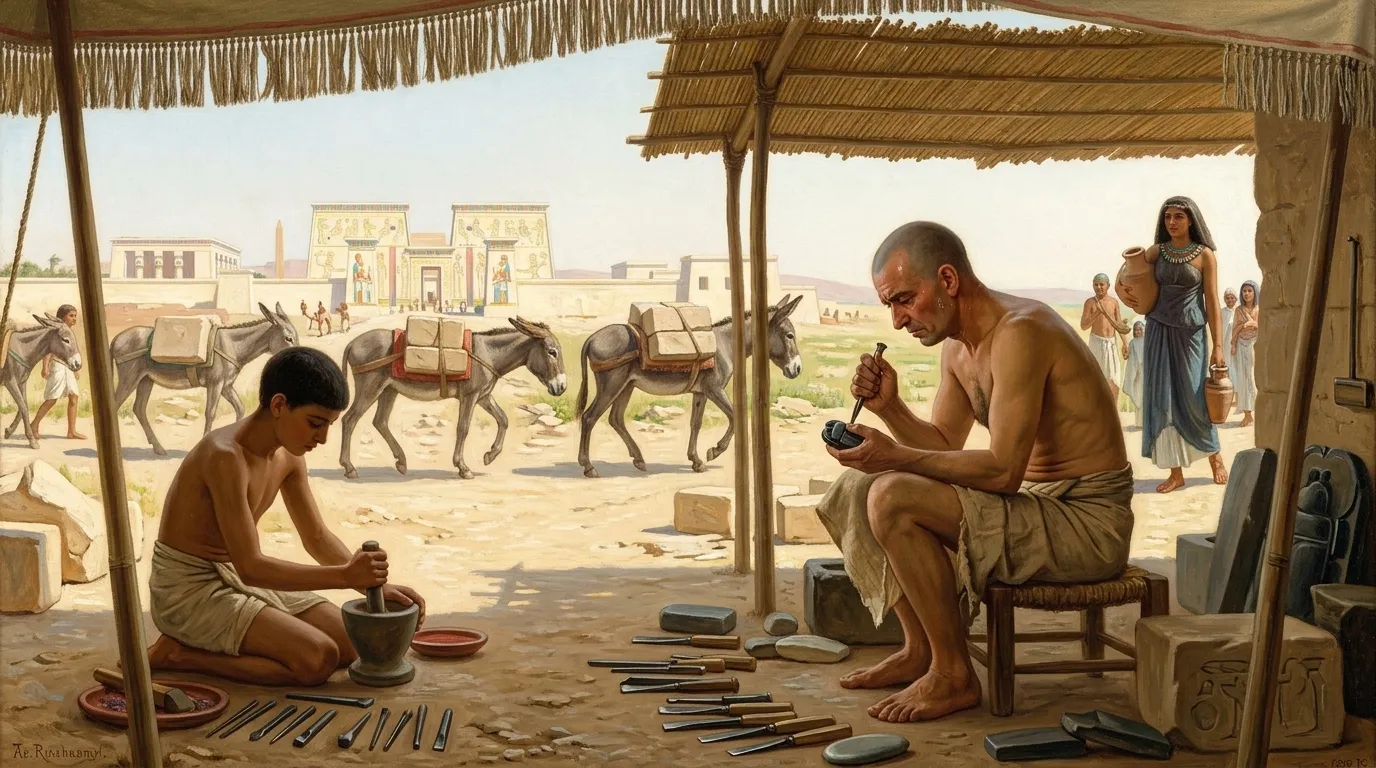
At a stone carver's modest workshop, not far from the River Nile, an artisan meticulously shaped a piece of dark green steatite. His hands, calloused and strong, moved with practiced precision as he carved the intricate details of a scarab beetle. Ani had commissioned this particular heart scarab, intended to be placed over his heart during mummification. On its smooth underside, the carver carefully inscribed the hieroglyphs of Spell 30B, a powerful incantation designed to prevent the deceased's heart from testifying against him during the weighing of the heart. The small, potent amulet held immense spiritual significance, a silent promise of eternal advocacy in the divine judgment hall.
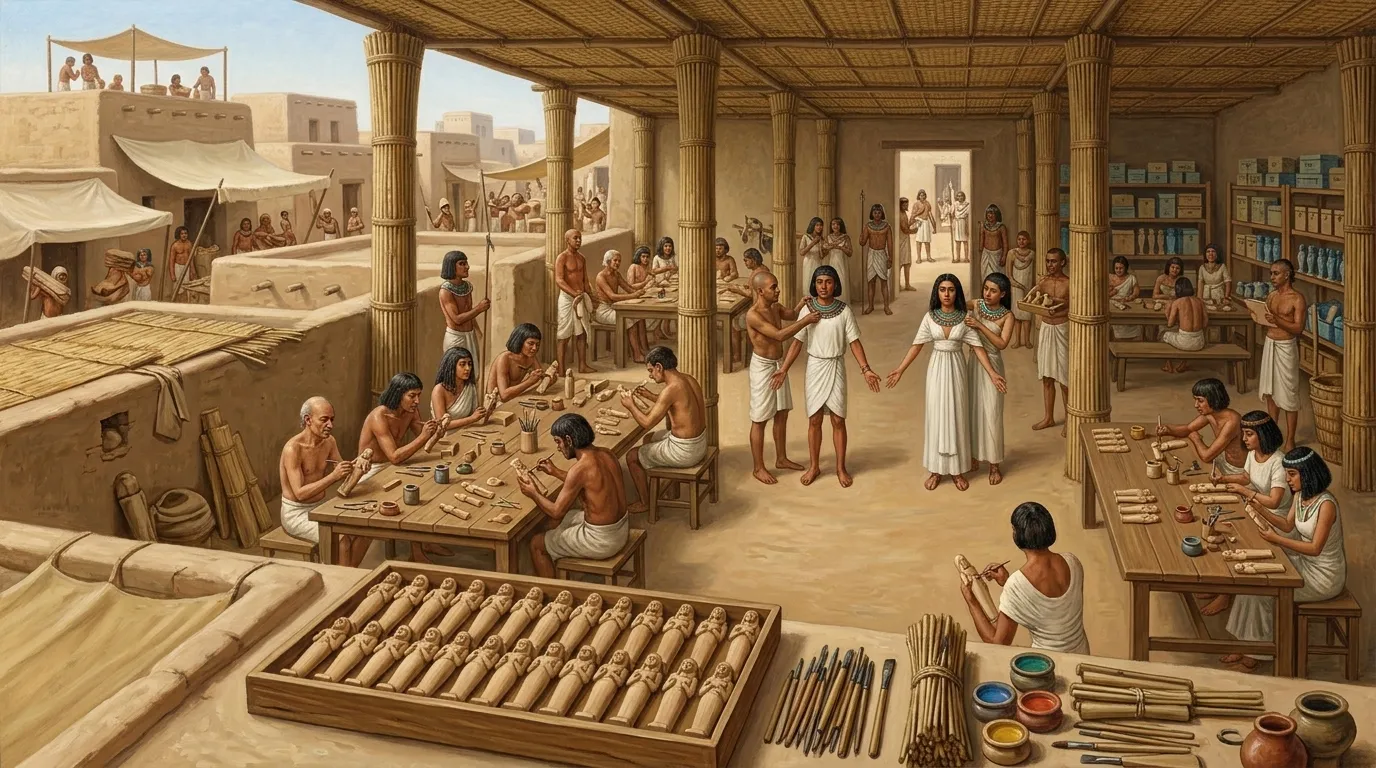
Across town, in another specialized workshop, dozens of small wooden figures lay arranged on long tables, awaiting their final details. These were the shabti figures, created in the thousands for the wealthy deceased. A young painter, his hands quick and steady, dabbed blue and yellow pigment onto the miniature farming tools clutched by the tiny figures. Each shabti was a silent servant, magically imbued to perform manual labor on behalf of Ani in the afterlife, should the gods demand it. Ani, as a man of high standing, would require a legion of these workers, one for each day of the year, ensuring his eternal rest remained undisturbed by physical toil. The workshop hummed with quiet industry, preparing for countless afterlives.
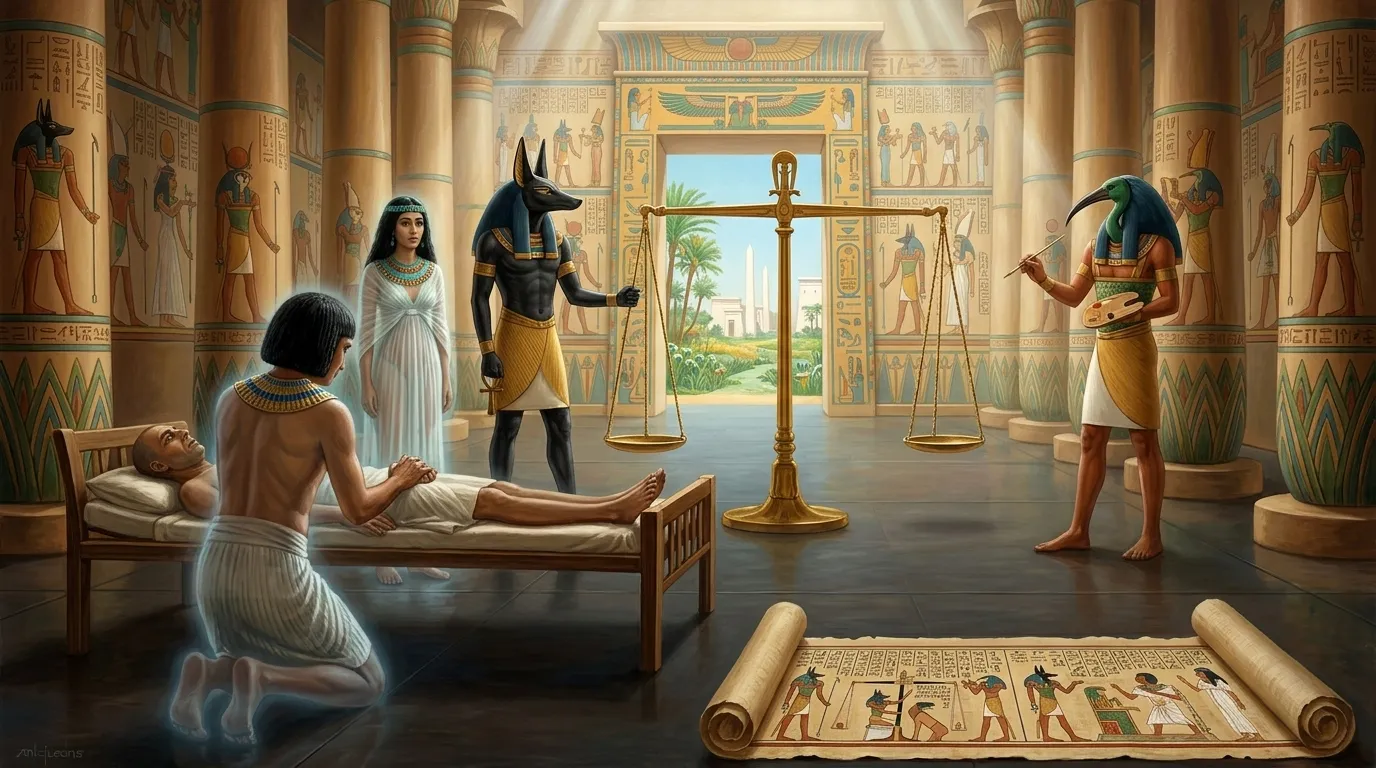
Within the deepest chamber of Ani's tomb, as the final spells of the 'Book of Coming Forth by Day' were recited, Ani's spirit embarked on its conceptual journey. He stood, as depicted in his papyrus, within the majestic Hall of Two Truths. Before him, the great balance scale awaited, overseen by the jackal-headed god Anubis. Ani's heart, his conscience and intellect, was placed upon one pan, balanced against the feather of Ma'at, the embodiment of truth and cosmic order, on the other. Thoth, the ibis-headed scribe of the gods, stood ready to record the verdict. His wife, Tutu, his eternal companion, stood by his side, unwavering. This was the pivotal moment: a righteous life promised eternal bliss, a corrupt heart meant annihilation.
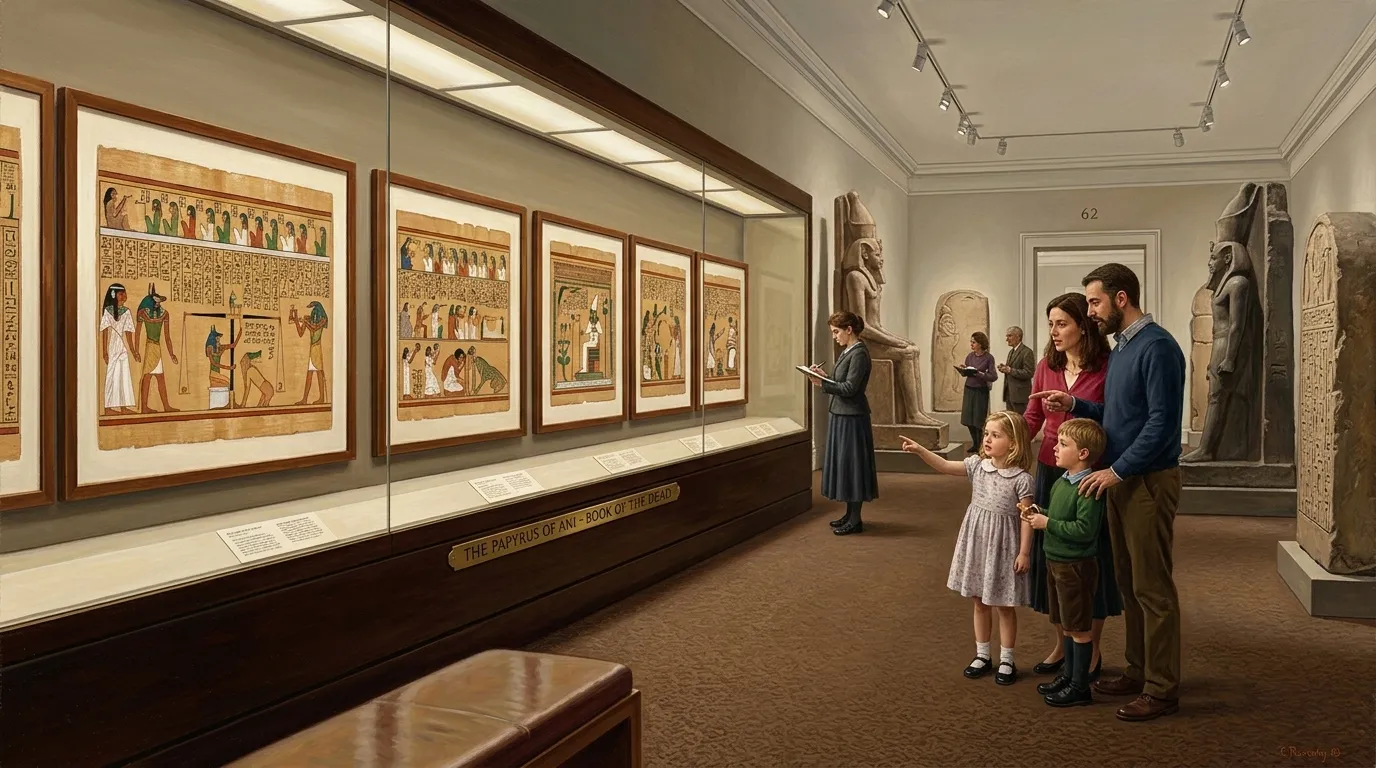
Return now to Room 62, before the Papyrus of Ani. You have traced its path from the meticulous workshop of Thebes, through the quiet rituals of burial, to its re-emergence into the modern world by E. A. Wallis Budge. You have seen how a scribe, Ani, and his wife, Tutu, prepared for eternity, their hopes and fears etched into every hieroglyph. The scroll, once whole, now divided into thirty-seven framed sections, still conveys its majestic purpose. The journey of this artifact, from a personal guide for one man's soul to a globally recognized treasure, speaks to the enduring human quest for meaning beyond life. Its silent presence here connects us across millennia, a whispered testament to faith and artistry.