지하철 시스템: 지하 혁신의 역사
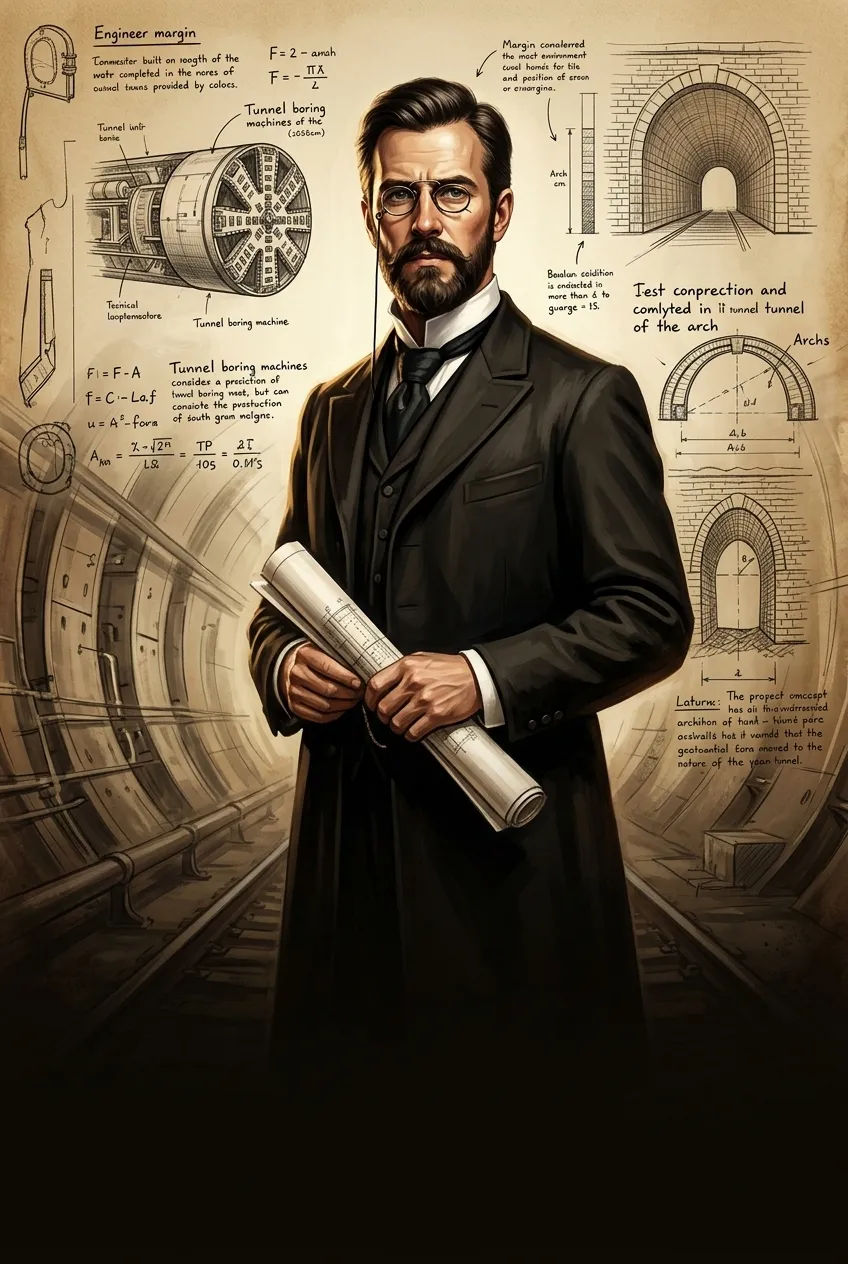
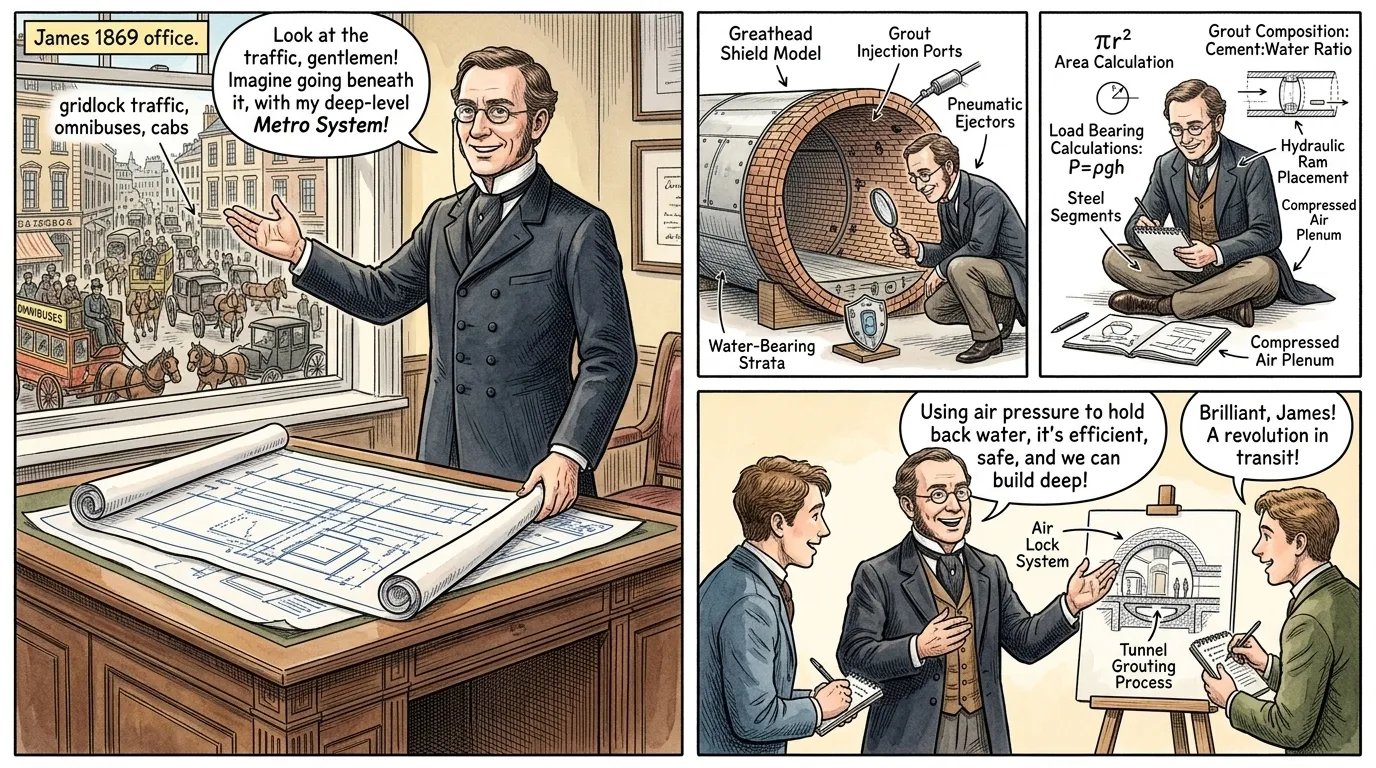
때는 천팔백육십구년, 대영 제국의 심장이자 활기 넘치는 런던은 스스로의 성공에 질식하고 있었습니다. 마차 옴니버스(합승 마차)와 택시가 혼란스럽게 뒤섞인 지상 교통은 더 이상 감당할 수 없는 교통 체증에 이르렀고, 도시의 거리 아래에 혁명적인 해결책이 절실히 요구되었습니다. 바로 이곳에서 남아프리카 출신의 뛰어난 토목 기술자 제임스 헨리 그레이트헤드(James Henry Greathead)는 도시 이동성을 재정의할 혁명적인 터널링 실드(shield)로 건설된 심층 철도망인 '메트로 시스템'을 구상했습니다. 그가 올해 확보한 특허는 런던의 악명 높은 불안정한 점토층을 뚫고 깨끗하고 안정적인 통로를 만들 것을 약속했으며, 말 그대로 런던을 스스로의 문제에서 구해낼 획기적인 발전이었습니다. "신사 여러분, 런던은 스스로 목을 조르고 있습니다." 천팔백육십구년, 단호한 토목 기술자 제임스 헨리 그레이트헤드가 사무실 창밖의 막힌 거리를 가리키며 선언했습니다. "지상은 더 이상 마차를 감당할 수 없습니다. 우리는 지하로 통로를 찾아야 합니다." 그는 자신의 혁명적인 메트로 시스템 스케치를 공개하며, 이 시스템이 수도의 어려운 지반을 뚫고 안정적인 심층 철도를 어떻게 만들 것인지 설명했습니다. "토머스 제퍼슨이 한때 '땅은 한 나라 주민들에게 속한 유일한 것이다'라고 말했듯이, 우리는 이제 전례 없는 안전을 가지고 바로 이 땅속으로 모험을 떠나야 합니다."
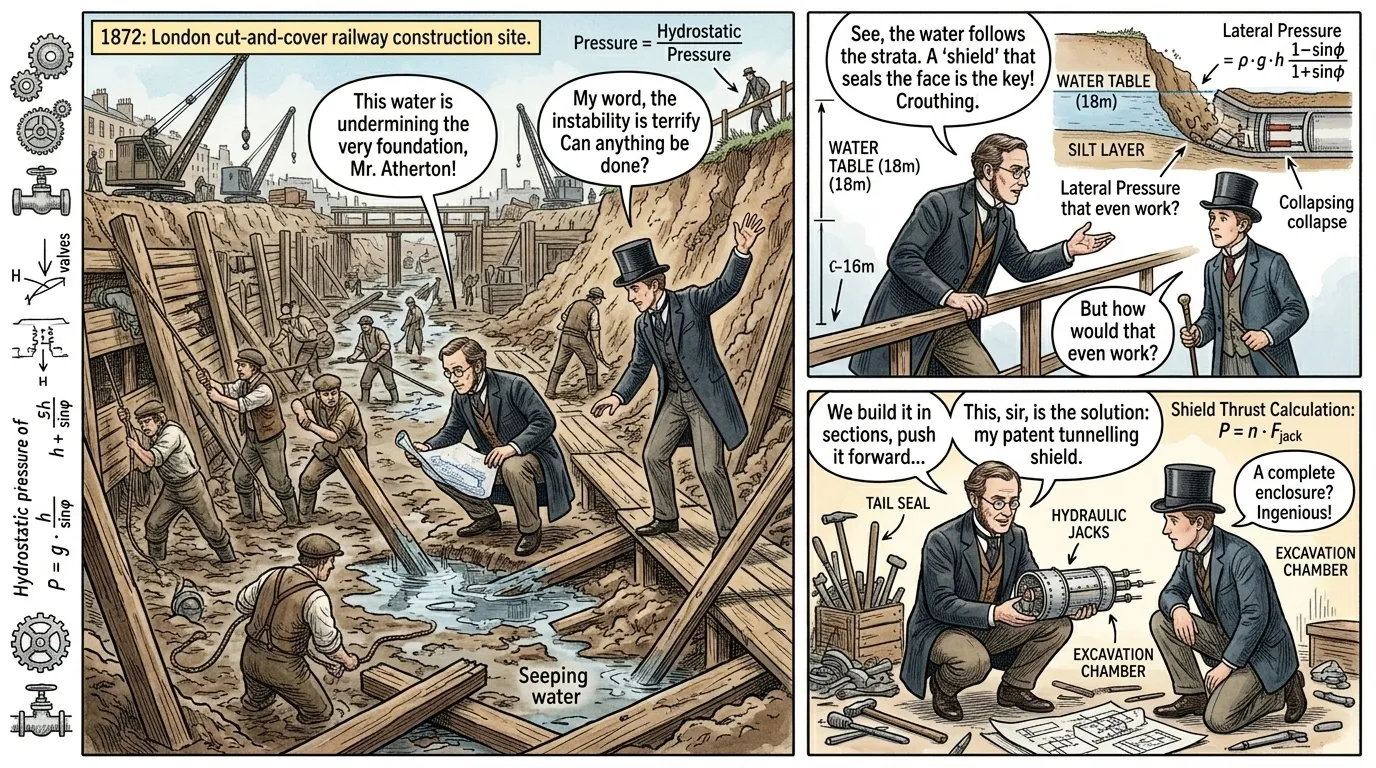
{ "title": "런던 지하철의 역사", "sections": [ { "heading": "초기 도전 과제", "content": "“런던의 바로 그 기반이 압력으로 흔들리고 있습니다.” 저명한 시 공무원인 애서턴 씨가 천팔백칠십이년, 굴착 공사 현장을 점검하던 중 그레이트헤드에게 말했습니다. “현재 우리의 ‘굴착식’ 철도는 재산을 파괴하고, 끝없는 혼란을 야기하며, 우리 문제의 표면만 긁을 뿐입니다.” 그레이트헤드는 작업자들이 붕괴를 막기 위해 나무 지지대와 씨름하는 것을 지켜보며 고개를 끄덕였고, 덧붙였습니다. “정말이지, 더 깊이 들어갈수록 물 유입은 더욱 위험해집니다. 대규모 홍수 없이 템스강의 영향으로부터 갱도를 보호하는 것은 공학적인 악몽입니다.” 기존 건물 아래와 물에 잠긴 점토층을 통해 터널을 뚫는 엄청난 어려움은 여전히 엄청난 장애물이었습니다." } ] }
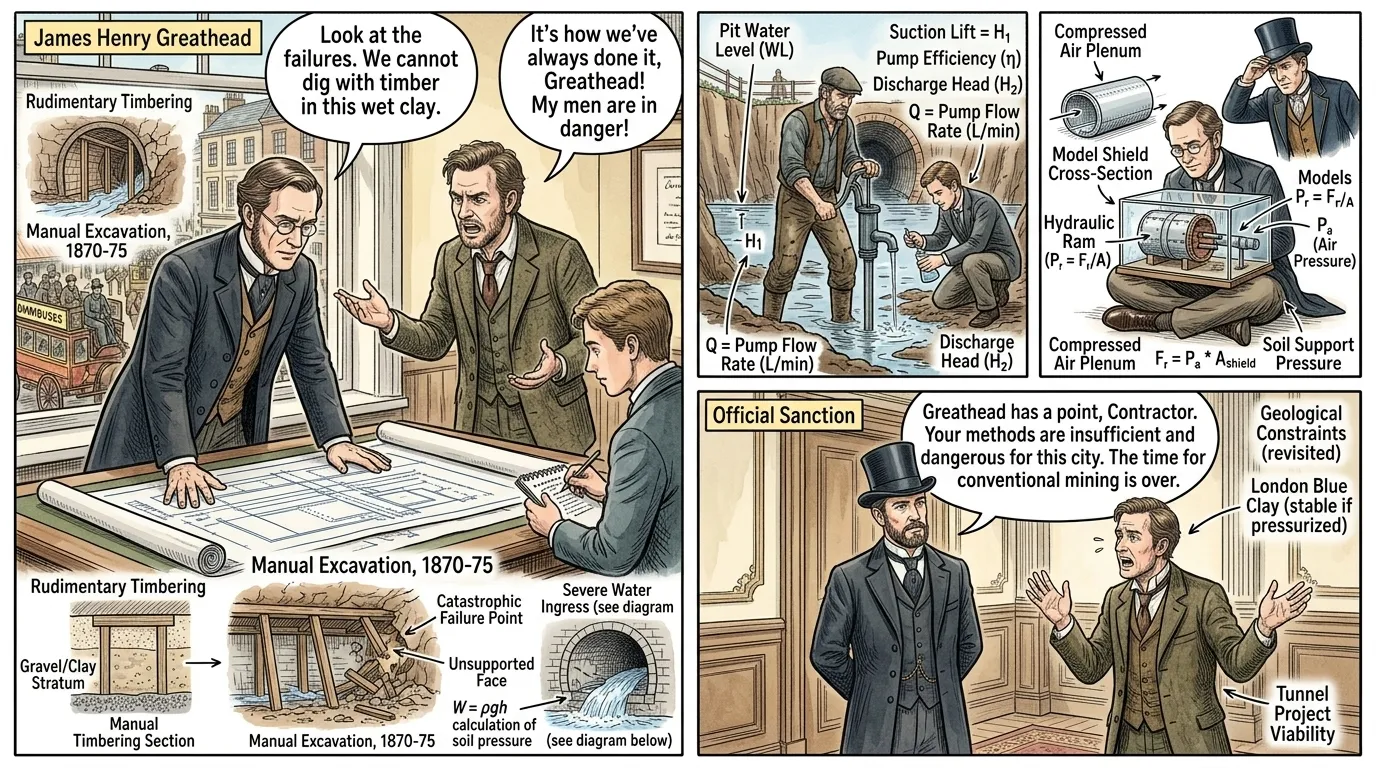
Previous attempts at deep tunneling proved too costly and dangerous, Mr. Greathead, an exasperated contractor explained, pointing to a schematic on his desk in 1875, depicting collapsing tunnels. Without a method to continuously support the excavation face and seal against water, any deep bore will become a watery grave for both capital and men. Greathead intently studied the diagram, noting the rudimentary timbering and manual excavation techniques that were clearly inadequate for London's unique geology. He knew a radical departure from conventional mining was absolutely essential. ""Previous attempts at deep tunneling proved too costly and dangerous, Mr. Greathead," an exasperated contractor explained, pointing to a schematic on his desk in 1875, depicting collapsing tunnels. "Without a method to continuously support the excavation face and seal against water, any deep bore will become a watery grave for both capital and men." Greathead intently studied the diagram, noting the rudimentary timbering and manual excavation techniques that were clearly inadequate for London's unique geology. He knew a radical departure from conventional mining was absolutely essential."
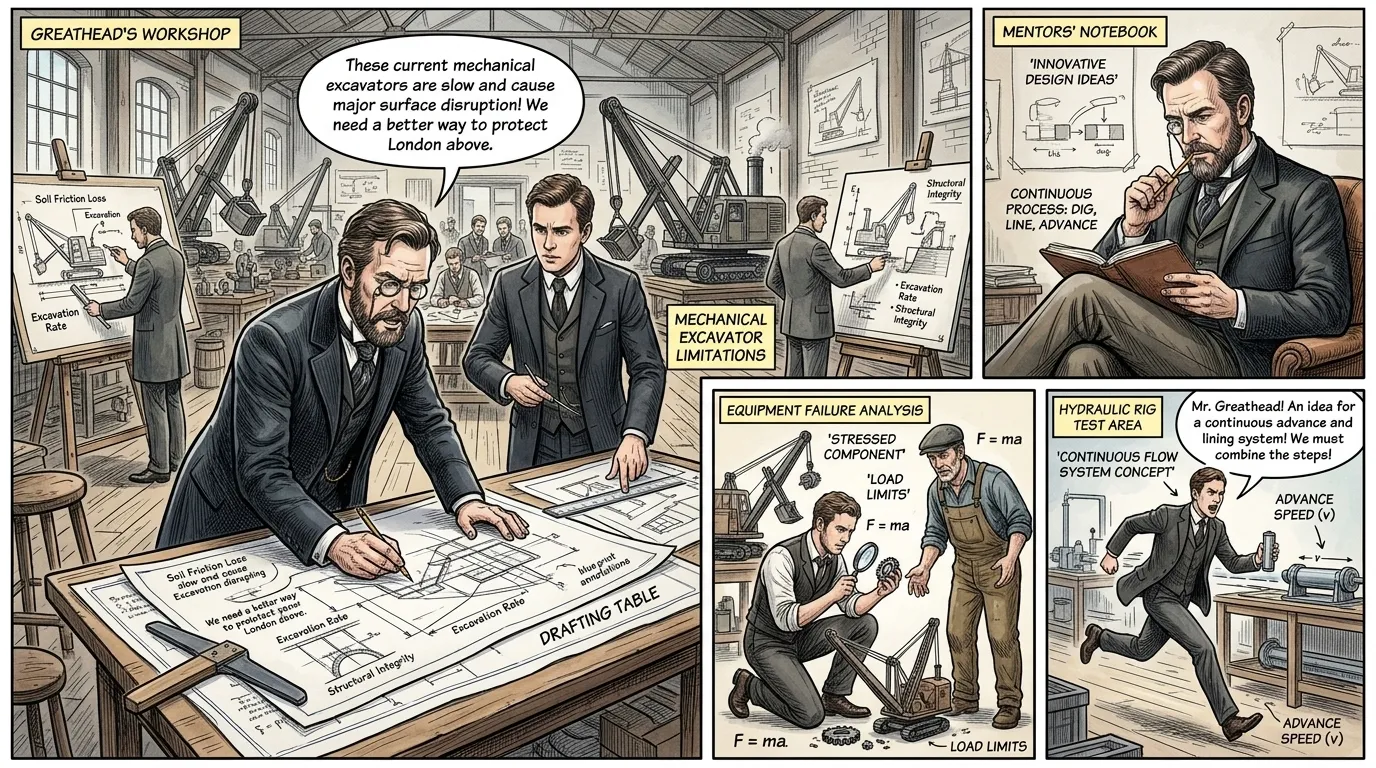
The true challenge lies not just in boring through earth, but in doing so without disturbing the fragile city above, Greathead mused aloud to his design team in 1879, sketching furiously on a large drafting table. We need something that can advance like a mole, protecting as it digs, and stabilizing as it moves. His team, two younger engineers with serious expressions, discussed the limitations of contemporary mechanical excavators, which lacked the necessary structural integrity for London's particular strata. Greathead envisioned a solution that would integrate excavation and lining into a continuous, self-supporting process. ""The true challenge lies not just in boring through earth, but in doing so without disturbing the fragile city above," Greathead mused aloud to his design team in 1879, sketching furiously on a large drafting table. "We need something that can advance like a mole, protecting as it digs, and stabilizing as it moves." His team, two younger engineers with serious expressions, discussed the limitations of contemporary mechanical excavators, which lacked the necessary structural integrity for London's particular strata. Greathead envisioned a solution that would integrate excavation and lining into a continuous, self-supporting process."
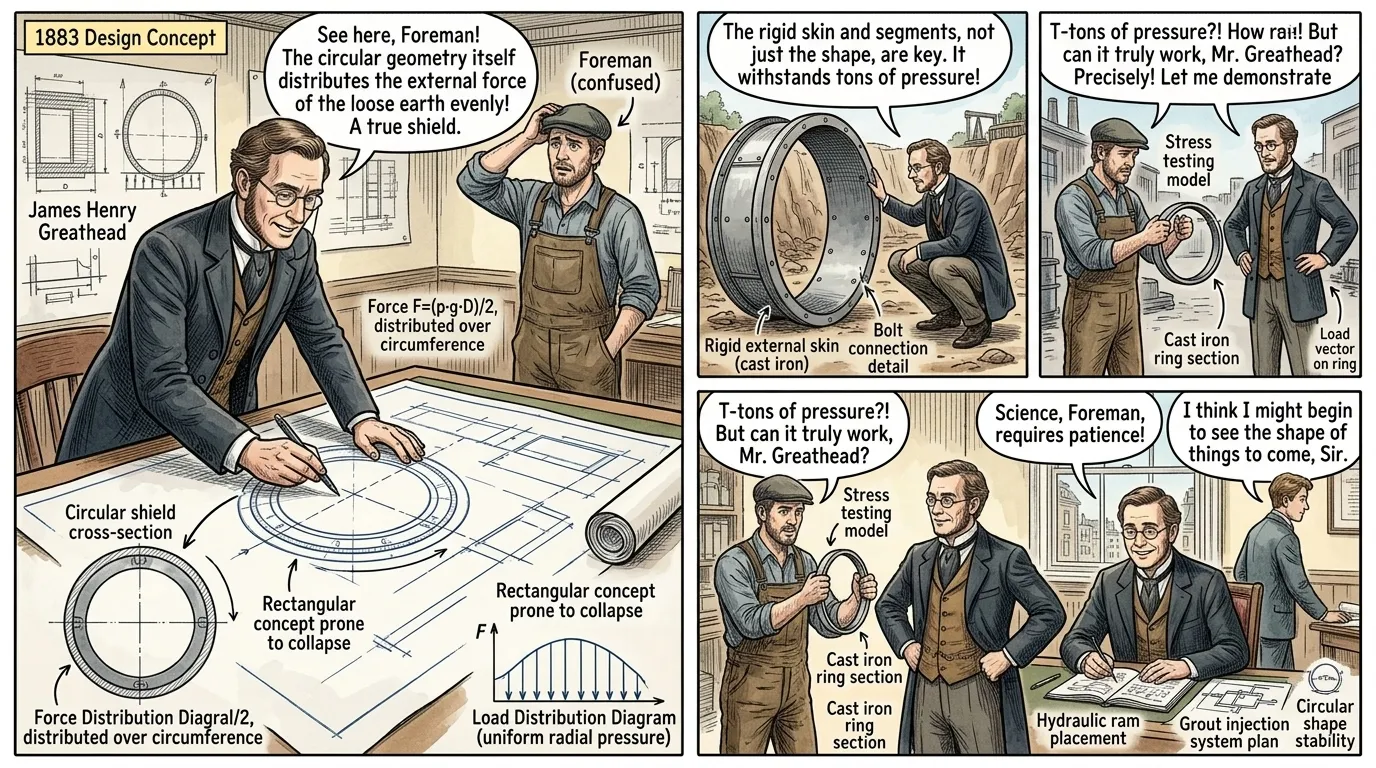
Greathead's early designs grappled with the problem of maintaining structural integrity, often showing timber frameworks that were either too cumbersome or insufficiently robust. A rigid, external skin, capable of withstanding immense pressure from all sides, is fundamental, he explained to a bewildered foreman reviewing a prototype concept in 1883, pointing to its circular profile. This circular geometry, he theorized, would distribute external forces evenly, a crucial departure from the rectangular, prone-to-collapse shafts of prior attempts. His focus shifted from resisting forces to cleverly redirecting them. "Greathead's early designs grappled with the problem of maintaining structural integrity, often showing timber frameworks that were either too cumbersome or insufficiently robust. "A rigid, external skin, capable of withstanding immense pressure from all sides, is fundamental," he explained to a bewildered foreman reviewing a prototype concept in 1883, pointing to its circular profile. This circular geometry, he theorized, would distribute external forces evenly, a crucial departure from the rectangular, prone-to-collapse shafts of prior attempts. His focus shifted from resisting forces to cleverly redirecting them."
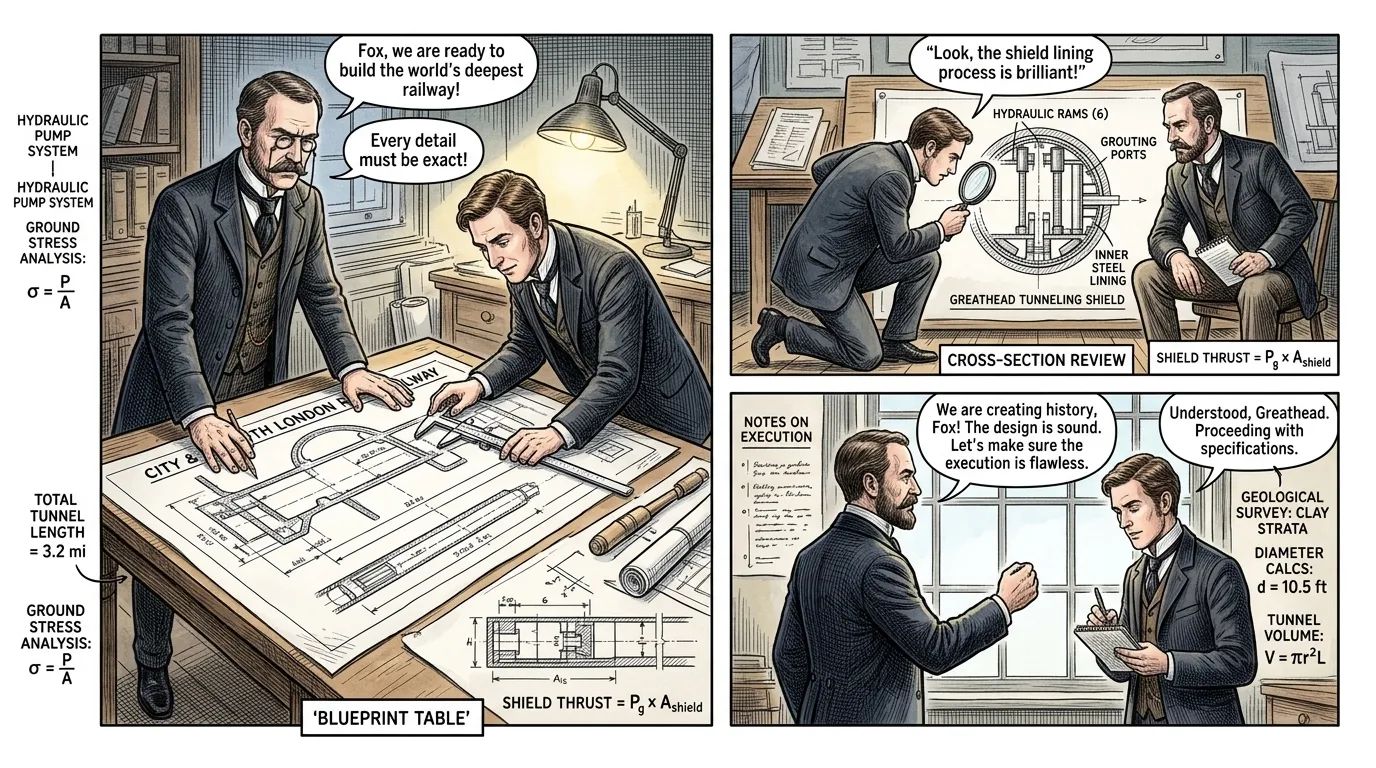
The core principle, then, is continuous support and immediate lining, Greathead articulated to his lead engineer, Francis Fox, in late 1884, overseeing the final drawings for the City & South London Railway project. His innovative tunneling shield acted as a mobile, temporary support, creating a safe chamber for workers at the cutting face. It's a fortress that moves, Fox noted, admiring the detailed blueprints, excavating earth, pushing forward with hydraulic power, and leaving behind a permanent cast-iron cylinder. This seamless integration of excavation and structural reinforcement was the genius of his design. ""The core principle, then, is continuous support and immediate lining," Greathead articulated to his lead engineer, Francis Fox, in late 1884, overseeing the final drawings for the City & South London Railway project. His innovative tunneling shield acted as a mobile, temporary support, creating a safe chamber for workers at the cutting face. "It's a fortress that moves," Fox noted, admiring the detailed blueprints, "excavating earth, pushing forward with hydraulic power, and leaving behind a permanent cast-iron cylinder." This seamless integration of excavation and structural reinforcement was the genius of his design."
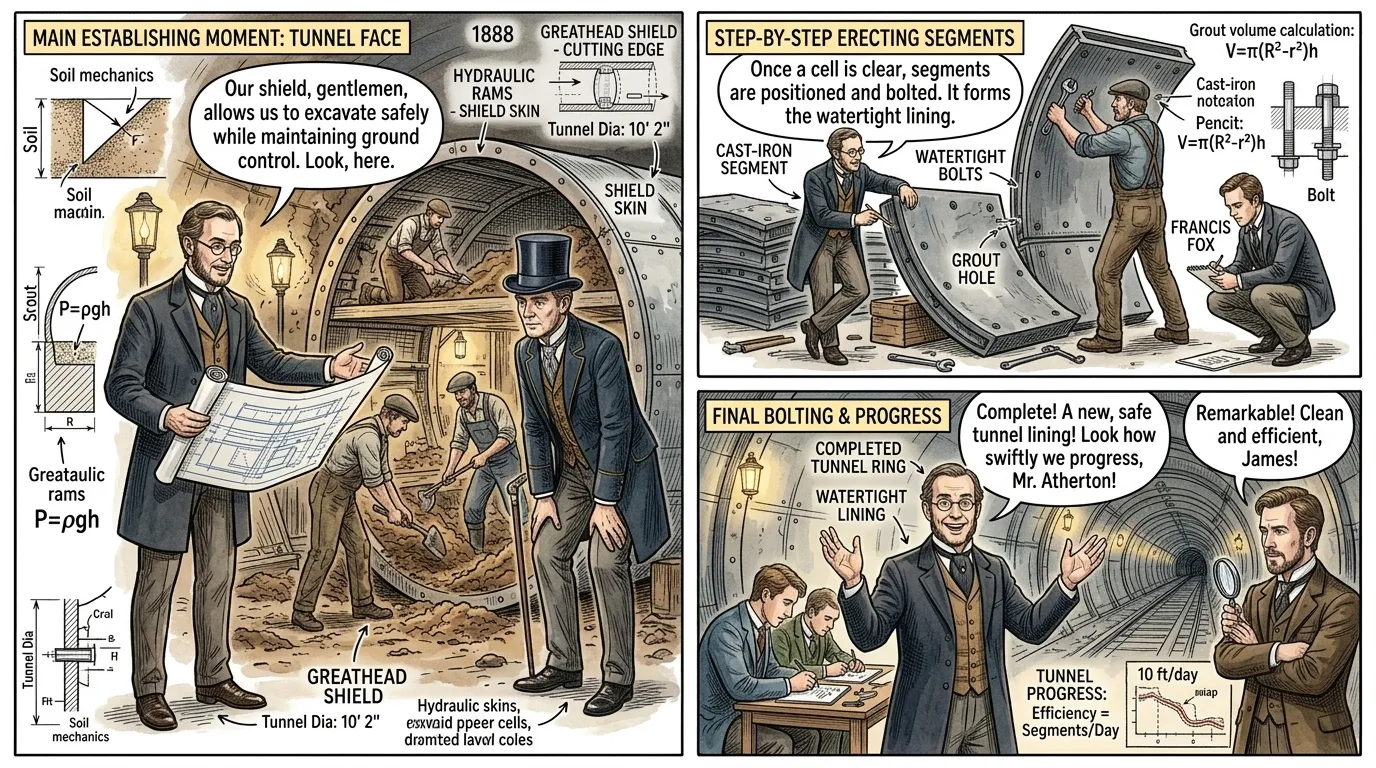
그레이트헤드 실드는 기본적으로 두꺼운 원통형 강철 껍질로, 날카로운 전면 가장자리가 땅을 파고들도록 설계되었습니다. 이 보호 케이스 안에서 작업자들은 즉각적인 붕괴로부터 안전하게 흙을 파낼 수 있었고, 강력한 유압 램이 전체 구조물을 앞으로 밀어냈습니다. 그레이트헤드는 천팔백팔십팔년 초기 건설 단계에서 방문한 고위 인사에게 실드가 전진함에 따라 미리 제작된 주철 세그먼트들이 그 뒤에서 볼트로 연결되어 영구적인 방수 터널 라이닝을 형성한다고 설명했습니다. 이 방법은 안전과 속도를 획기적으로 향상시켜 지하 건설을 근본적으로 변화시켰습니다. "그레이트헤드 실드는 기본적으로 두꺼운 원통형 강철 껍질로, 날카로운 전면 가장자리가 땅을 파고들도록 설계되었습니다. 이 보호 케이스 안에서 작업자들은 즉각적인 붕괴로부터 안전하게 흙을 파낼 수 있었고, 강력한 유압 램이 전체 구조물을 앞으로 밀어냈습니다. 실드가 전진함에 따라," 그레이트헤드는 천팔백팔십팔년 초기 건설 단계에서 방문한 고위 인사에게 설명했습니다. "미리 제작된 주철 세그먼트들이 그 뒤에서 볼트로 연결되어 영구적인 방수 터널 라이닝을 형성합니다." 이 방법은 안전과 속도를 획기적으로 향상시켜 지하 건설을 근본적으로 변화시켰습니다.
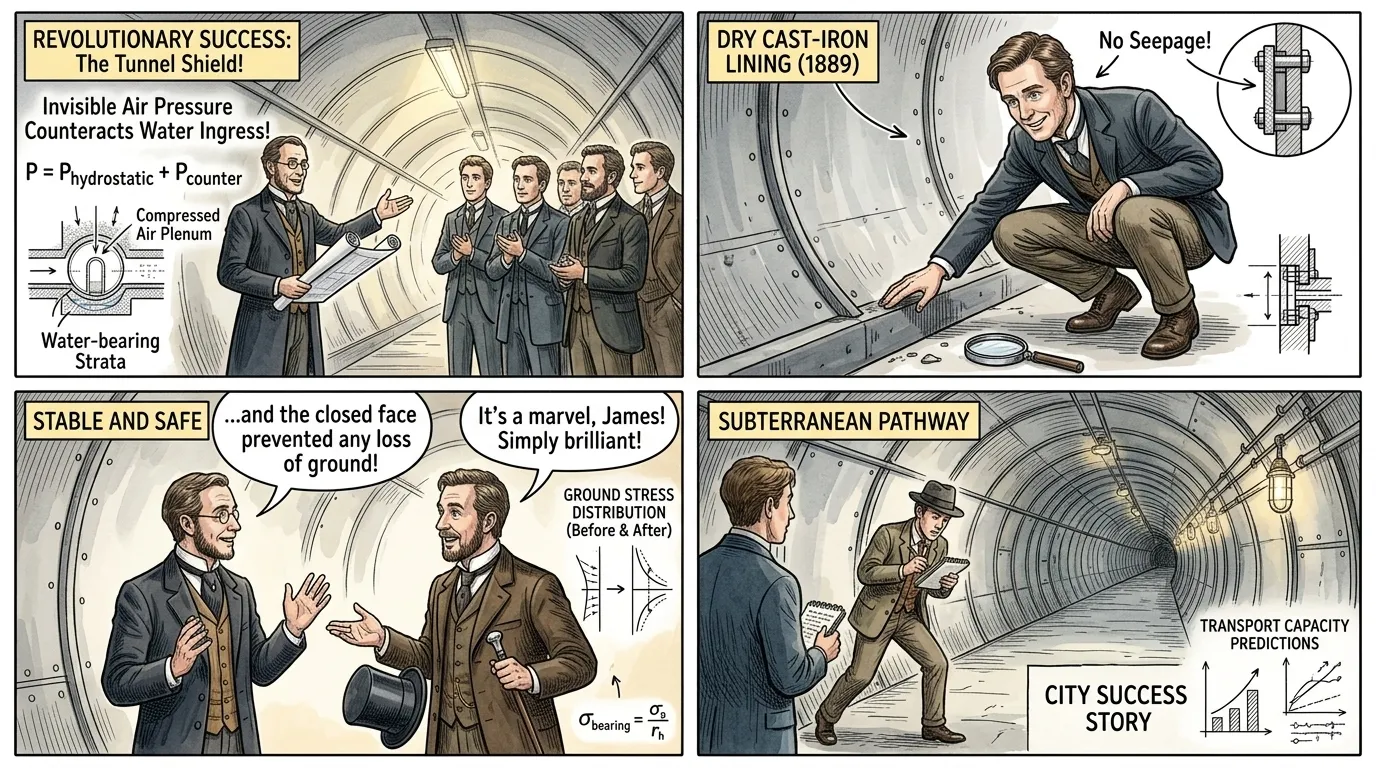
Crucially, the shield's closed-face design and the application of compressed air within the working chamber proved revolutionary, Greathead proudly declared to a group of engineers inspecting a completed tunnel section in 1889. This counteracted the immense pressure of London's water-logged clay, precisely preventing the ingress that plagued earlier attempts. The compressed air pushed back against the water, keeping the excavation dry and stable, allowing the rapid, secure installation of the cast-iron lining. This triumph directly addressed the "engineering nightmare" of water ingress they had discussed years prior. ""Crucially, the shield's closed-face design and the application of compressed air within the working chamber proved revolutionary," Greathead proudly declared to a group of engineers inspecting a completed tunnel section in 1889. "This counteracted the immense pressure of London's water-logged clay, precisely preventing the ingress that plagued earlier attempts." The compressed air pushed back against the water, keeping the excavation dry and stable, allowing the rapid, secure installation of the cast-iron lining. This triumph directly addressed the "engineering nightmare" of water ingress they had discussed years prior."
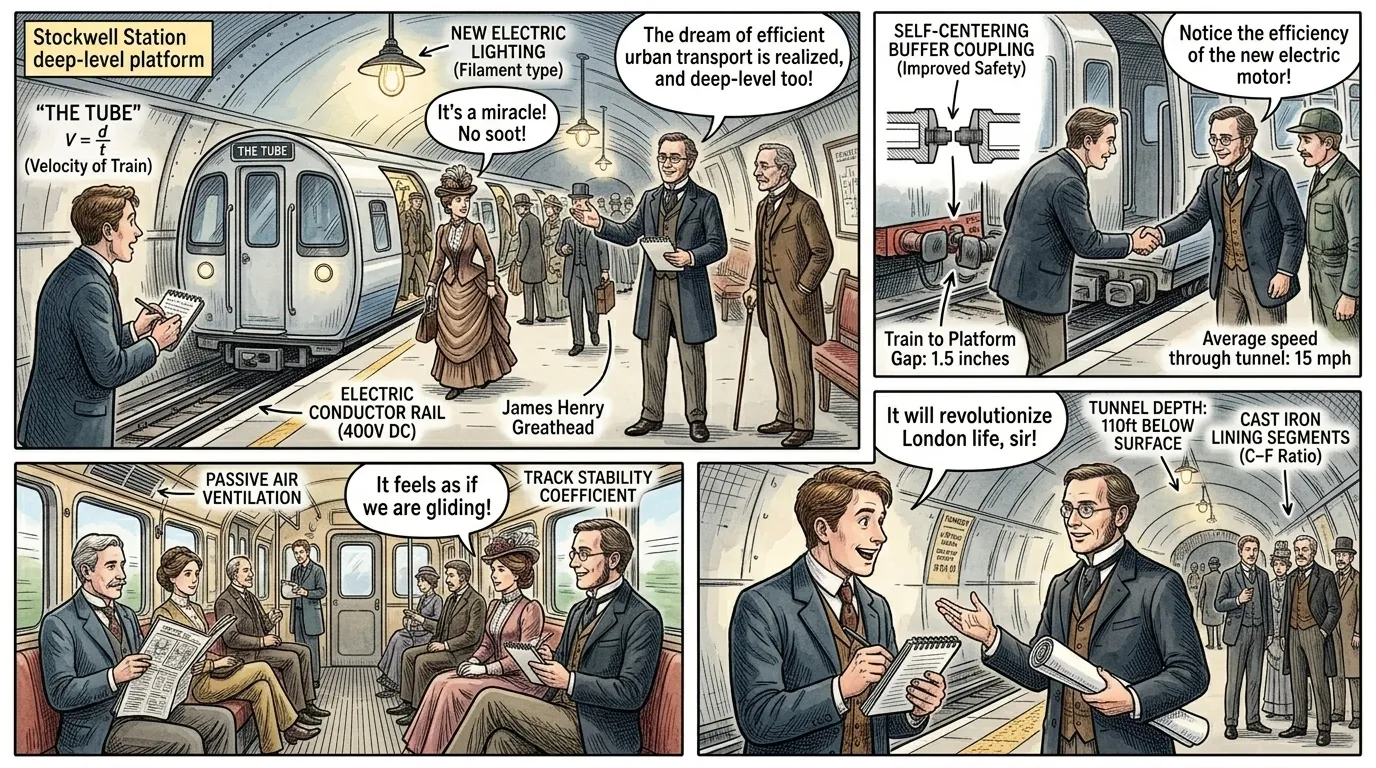
시티 앤 사우스 런던 철도(The City & South London Railway)는 천팔백구십년에 개통하여 런던 시민들에게 지상의 혼잡으로부터 벗어날 수 있는 길을 제공함으로써 도시 생활을 즉시 변화시켰습니다. 한 신문 기자는 초기 승객들이 스톡웰 역에 내리는 것을 보고 경외심에 차서 "이것은 정말 놀라운 위업이며, 도시 아래를 끊김 없이 여행하는 것입니다."라고 외쳤습니다. 그레이트헤드의 실드(Greathead's shield) 덕분에 가능해진 심층 "튜브" 시스템은 값비싼 지상 부동산을 매입하지 않고도 노선을 건설할 수 있게 하여 비용과 혼란을 크게 줄였습니다. 이 모델은 전 세계 지하 교통망의 청사진이 되었습니다.
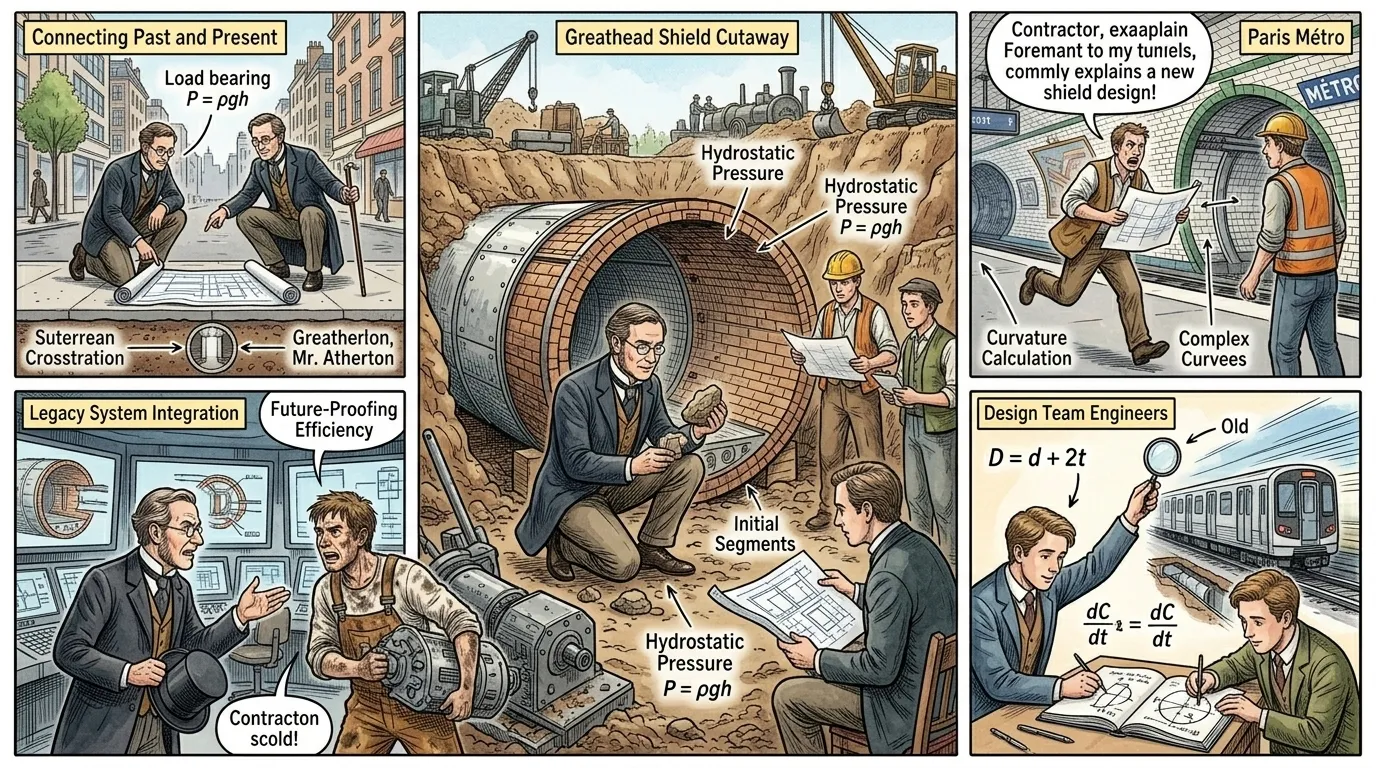
그레이트헤드의 메트로 시스템 실드의 유산은 전 세계적으로 반향을 일으키며 현대 도시를 형성하고 전례 없는 도시 확장을 가능하게 했습니다. 파리 메트로에서 뉴욕 지하철, 그리고 수많은 다른 지하철에 이르기까지, 이러한 지하 동맥은 수십억 명의 일상생활을 원활하게 합니다. 그것들은 한때 극복할 수 없었던 지질학적 장벽을 진보의 길로 바꾸는 인간의 독창성을 보여줍니다. 제임스 헨리 그레이트헤드의 선구적인 작업은 전 세계 대도시를 계속 움직이는 보이지 않는 네트워크의 기반이 됩니다. "그레이트헤드의 메트로 시스템 실드의 유산은 전 세계적으로 반향을 일으키며 현대 도시를 형성하고 전례 없는 도시 확장을 가능하게 했습니다. 파리 메트로에서 뉴욕 지하철, 그리고 수많은 다른 지하철에 이르기까지, 이러한 지하 동맥은 수십억 명의 일상생활을 원활하게 합니다. 그것들은 한때 극복할 수 없었던 지질학적 장벽을 진보의 길로 바꾸는 인간의 독창성을 보여줍니다. 제임스 헨리 그레이트헤드의 선구적인 작업은 전 세계 대도시를 계속 움직이는 보이지 않는 네트워크의 기반이 됩니다."