아킬레 음벰베: 비판 이론과 탈식민주의

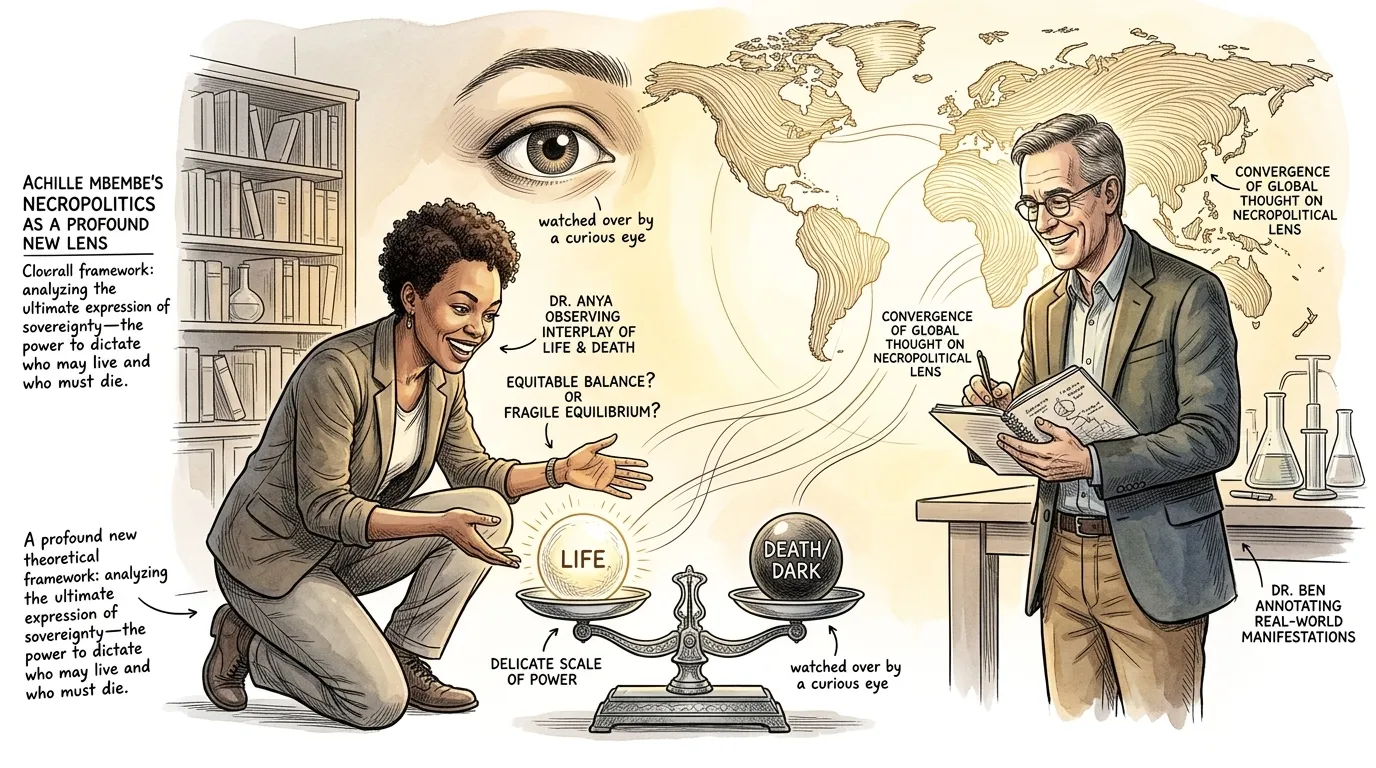
전 세계 사상이 한데 모이는 자리에서, 카메룬의 철학자 아실 음벰베는 권력에 대한 우리의 이해를 재정립하는 심오한 개념을 소개했습니다. 그의 사상인 '네크로폴리틱스'는 우리로 하여금 주권의 궁극적인 이해관계를 고찰하게 하며, 권력이 단순히 삶을 통치하는 것을 넘어 누가 살고 누가 죽을지, 또는 '사회적 죽음'에 처하게 될지를 적극적으로 지시하는 방식으로 확장됨을 보여줍니다. 이는 오늘날 세계의 가장 시급한 인간적 도전을 분석하는 데 중요한 렌즈입니다. 철학 노트: 아실 음벰베, 철학자. 네크로폴리틱스. 살 만큼 중요한 사람과 죽게 내버려 둘 사람을 규정하는 권력.
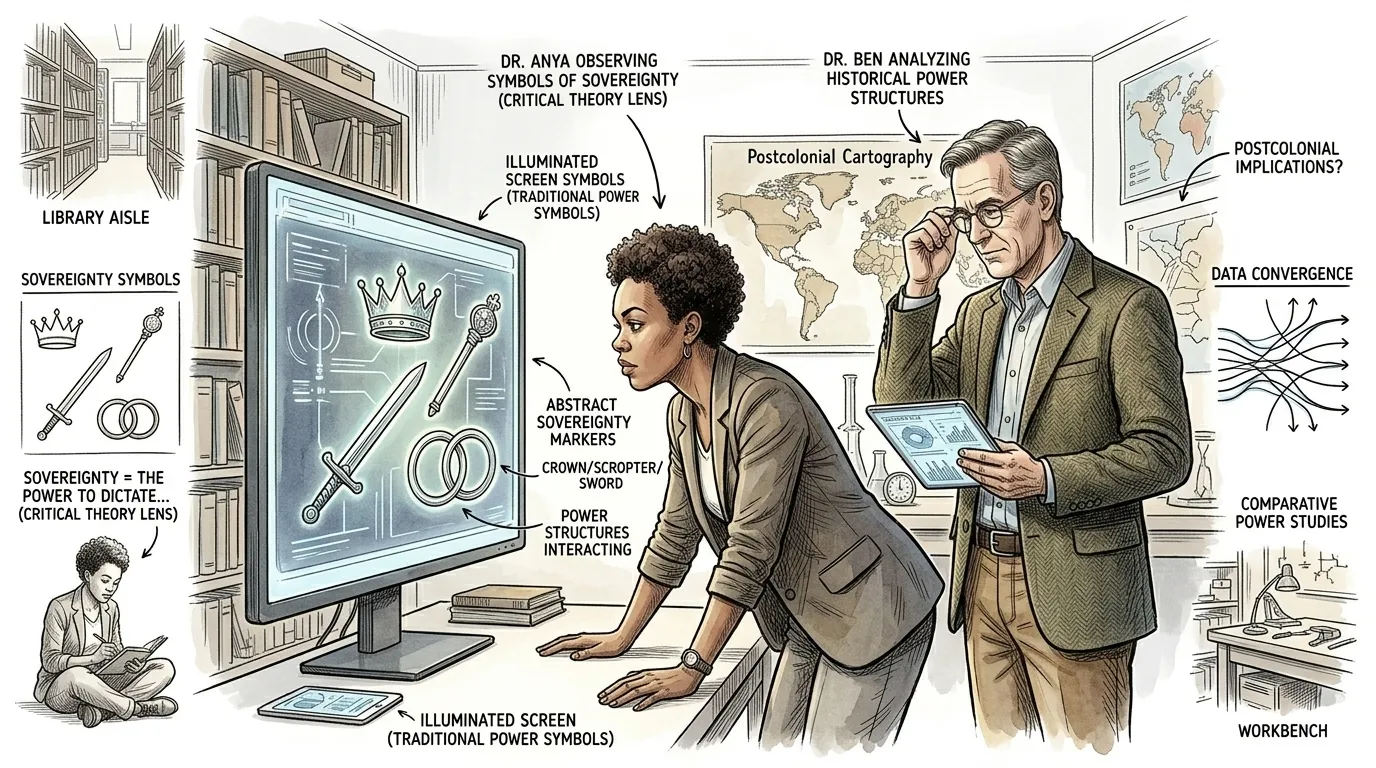
아냐 박사는 벤 박사를 향해 생각에 잠긴 표정으로 말했다. "주권에 대한 전통적인 개념은 종종 정당한 폭력, 즉 살해할 권리에 대한 국가의 독점에 초점을 맞춥니다." 그녀는 화면을 가리키며 말했다. "하지만 음벰베는 이러한 관점이 특히 탈식민주의 맥락에서 권력의 미묘한 차이를 완전히 포착하지 못한다고 주장하며 더 나아갑니다." 벤 박사는 고개를 끄덕이며 안경을 고쳐 썼다. "맞습니다. 음벰베는 푸코의 '생체정치'—생명, 건강, 인구 관리—가 중요하긴 하지만, 죽음의 세계의 능동적인 생산이나 특정 생명의 체계적인 포기를 설명하지 못한다는 것을 알았습니다. 그는 주권 권력이 생명뿐만 아니라 죽음 자체에 대한 통제를 행사하는 중요한 간극을 발견했습니다." "주권에 대한 전통적인 개념은 종종 정당한 폭력, 즉 살해할 권리에 대한 국가의 독점에 초점을 맞춥니다." 아냐 박사는 화면을 가리키며 말했다. "하지만 음벰베는 이러한 관점이 특히 탈식민주의 맥락에서 권력의 미묘한 차이를 완전히 포착하지 못한다고 주장하며 더 나아갑니다." 벤 박사는 고개를 끄덕이며 안경을 고쳐 썼다. "맞습니다. 음벰베는 푸코의 '생체정치'—생명, 건강, 인구 관리—가 중요하긴 하지만, 죽음의 세계의 능동적인 생산이나 특정 생명의 체계적인 포기를 설명하지 못한다는 것을 알았습니다. 그는 주권 권력이 생명뿐만 아니라 죽음 자체에 대한 통제를 행사하는 중요한 간극을 발견했습니다." 철학 노트: 역사적 문제: 주권 권력이 '살해할 권리'에 초점을 맞추면서 더 넓은 의미의 '죽게 내버려둘 권리'를 놓쳤다. 벤 박사는 '생체정치 대 죽음정치'를 핵심적인 구별로 소개한다.
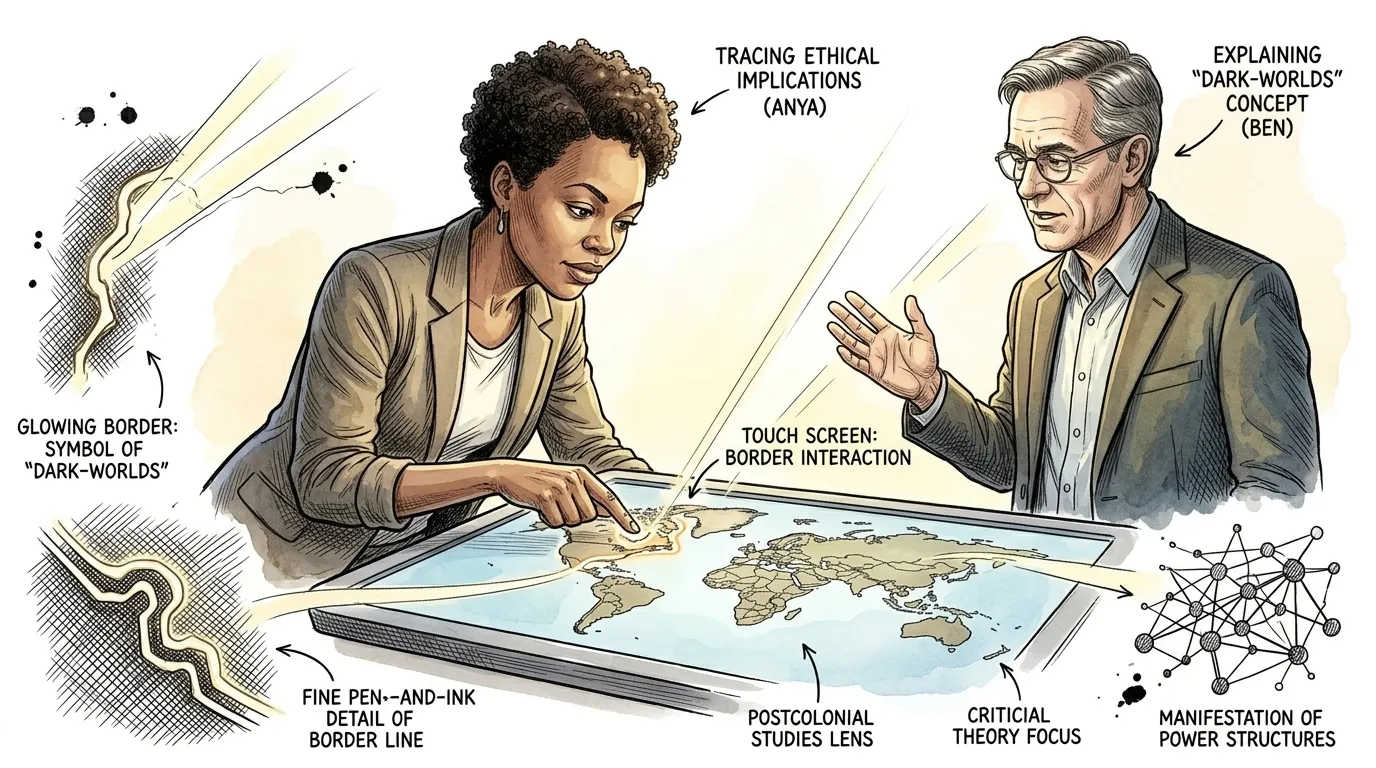
아냐 박사는 화면에 더 가까이 다가가 손가락으로 경계선을 따라 그으며 말했다. "그러니까 음벰베는 생명정치에서처럼 생산 능력 때문에 단순히 인구를 관리하는 것을 넘어, 현대 권력이 일부 생명이 소모품으로 간주되어 '사회적 죽음'의 영역에 존재하도록 조건을 적극적으로 만든다고 말하는 거군요." 벤 박사가 확인해 주었다. "정확합니다. 전쟁, 극심한 빈곤, 또는 국가의 방치가 결합되어 그가 '죽음의 세계'라고 부르는 것을 형성하는 지역들을 생각해 보세요. 그곳에서는 삶의 바로 그 구조가 체계적으로 해체되고, 인구는 유예된 활력 상태로 존재합니다. 그것은 살게 하는 것에서 죽게 내버려 두는 것, 심지어 간접적인 수단을 통해 죽게 만드는 것으로의 근본적인 전환입니다." 철학 노트: 음벰베는 푸코의 주장을 확장하여, 주권 권력이 단순히 '살게 하는 것'뿐만 아니라 '죽음의 세계'를 창조함으로써 적극적으로 '죽게 내버려 두는 것'이라고 주장한다.

{ "translation": "\"그렇다면 개인이 이러한 죽음정치적 권력 아래에서 살아간다는 것은 무엇을 의미할까요?\" 아냐 박사가 벤 박사를 똑바로 바라보며 물었습니다. \"그것이 일상생활에서 어떻게 나타나나요?\" 벤 박사는 잠시 생각에 잠긴 후 대답했습니다. \"음벰베는 이러한 '죽음의 세계'에 사는 개인들이 종종 그가 '빌린 시간으로 사는 것'이라고 묘사하는 상태로 존재한다고 주장합니다. 그들은 법적 보호를 박탈당하고, 만연한 감시를 받으며, 그들의 삶은 영원히 위태롭게 됩니다. 시인 윌리엄 버틀러 예이츠가 한때 말했듯이, '모든 것이 무너지고; 중심은 지탱할 수 없다.' 이것은 삶이 일회용으로 간주될 때 사회적, 법적 질서의 붕괴를 완벽하게 포착하며, 이는 예외가 아니라 규범이 되는 상태입니다.\" \"그렇다면 개인이 이러한 죽음정치적 권력 아래에서 살아간다는 것은 무엇을 의미할까요?\" 아냐 박사가 벤 박사를 똑바로 바라보며 물었습니다. \"그것이 일상생활에서 어떻게 나타나나요?\" 벤 박사는 잠시 생각에 잠긴 후 대답했습니다. \"음벰베는 이러한 '죽음의 세계'에 사는 개인들이 종종 그가 '빌린 시간으로 사는 것'이라고 묘사하는 상태로 존재한다고 주장합니다. 그들은 법적 보호를 박탈당하고, 만연한 감시를 받으며, 그들의 삶은 영원히 위태롭게 됩니다. 시인 윌리엄 버틀러 예이츠가 한때 말했듯이, '모든 것이 무너지고; 중심은 지탱할 수 없다.' 이것은 삶이 일회용으로 간주될 때 사회적, 법적 질서의 붕괴를 완벽하게 포착하며, 이는 예외가 아니라 규범이 되는 상태입니다.\"" }
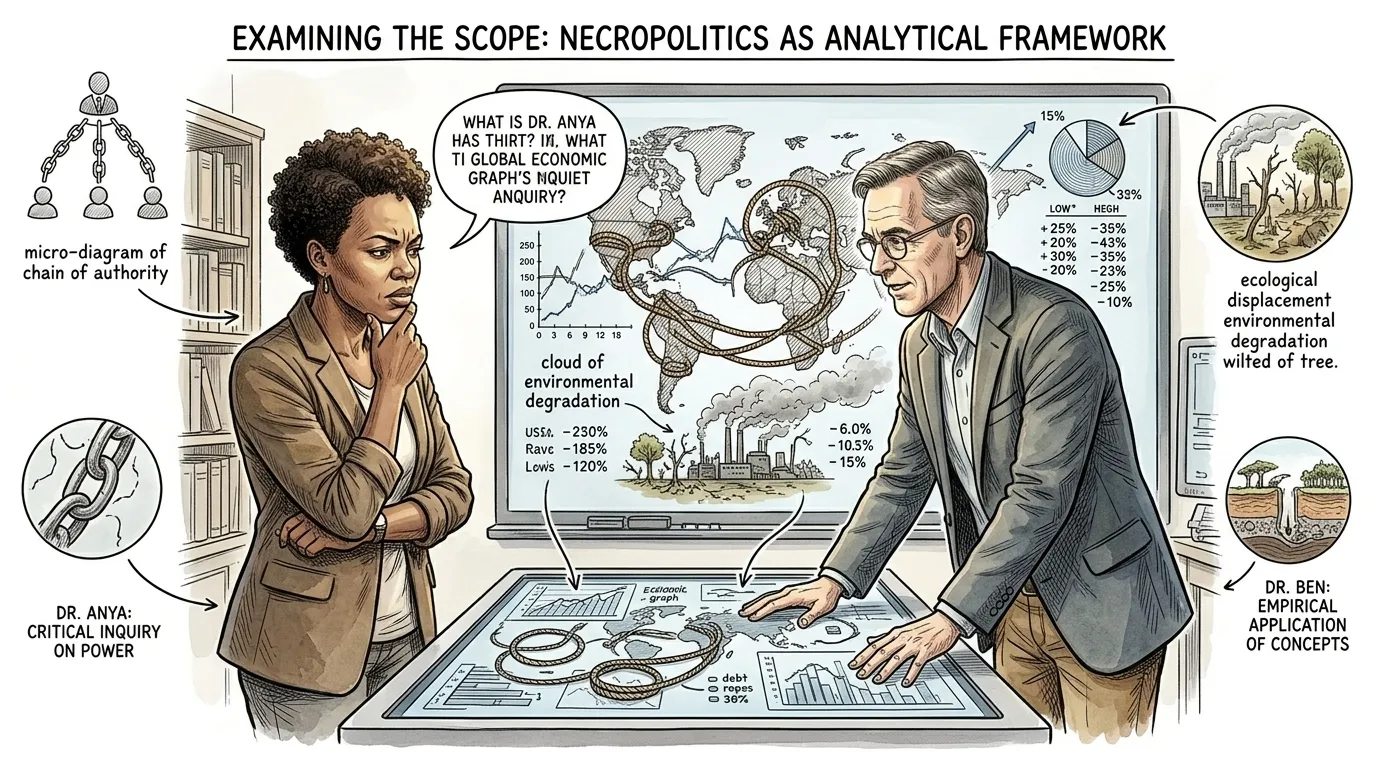
"So, Mbembe's necropolitics isn't solely about direct, lethal violence, is it?" Dr. Anya inquired, her brow furrowed. Dr. Ben clarified, "Absolutely not. It extends far beyond the explicit act of killing, encompassing the systemic weaponization of economic policies, debt, and environmental degradation. These are indirect forms of power that structurally expose certain populations to slower forms of death or prolonged suffering. Think of structural adjustment programs that dismantle public health systems or the deliberate inaction on climate change, disproportionately affecting vulnerable communities. It's about how policies can tacitly sanction widespread suffering." ""So, Mbembe's necropolitics isn't solely about direct, lethal violence, is it?" Dr. Anya inquired, her brow furrowed. Dr. Ben clarified, "Absolutely not. It extends far beyond the explicit act of killing, encompassing the systemic weaponization of economic policies, debt, and environmental degradation. These are indirect forms of power that structurally expose certain populations to slower forms of death or prolonged suffering. Think of structural adjustment programs that dismantle public health systems or the deliberate inaction on climate change, disproportionately affecting vulnerable communities. It's about how policies can tacitly sanction widespread suffering."" Philosophy Note: Necropolitics encompasses economic policies, debt, and environmental degradation, exposing populations to slow forms of death beyond direct violence.
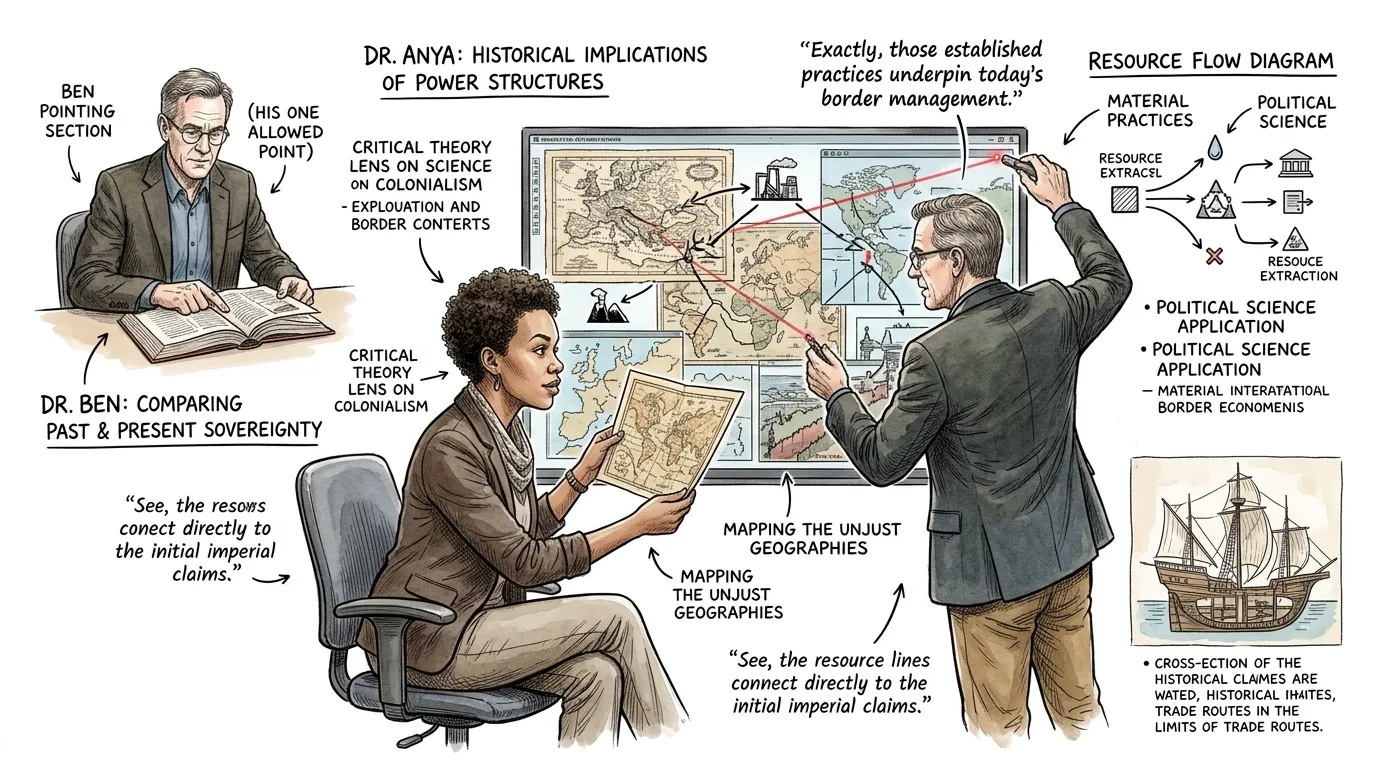
아냐 박사는 그 개념의 광대함을 숙고했다. "음벰베는 이것을 역사적 관행에도 기반을 두고 있는 것 같아요." 그녀가 말했다. "식민주의의 유산이 핵심이 되어야 합니다." 벤 박사가 확인했다. "맞아요. 음벰베는 식민주의 시대에 완성된 비인간화, 자원 착취, 그리고 '잉여' 인구 관리 기술이 현대의 국경 체제, 세계 경제 불평등, 그리고 도시 분리에서 어떻게 새롭고 교활한 표현을 찾아내는지 세심하게 추적합니다. 음벰베에게 '식민지'는 단지 역사적인 장소가 아니라 지속적인 패러다임이며, 주권 권력이 전 세계적으로 다양한 형태로 치명적인 불처벌로 계속 작동하는 구역입니다. 이는 과거 폭력의 지속적인 영향을 강조합니다." 아냐 박사는 그 개념의 광대함을 숙고했다. "음벰베는 이것을 역사적 관행에도 기반을 두고 있는 것 같아요." 그녀가 말했다. "식민주의의 유산이 핵심이 되어야 합니다." 벤 박사가 확인했다. "맞아요. 음벰베는 식민주의 시대에 완성된 비인간화, 자원 착취, 그리고 '잉여' 인구 관리 기술이 현대의 국경 체제, 세계 경제 불평등, 그리고 도시 분리에서 어떻게 새롭고 교활한 표현을 찾아내는지 세심하게 추적합니다. 음벰베에게 '식민지'는 단지 역사적인 장소가 아니라 지속적인 패러다임이며, 주권 권력이 전 세계적으로 다양한 형태로 치명적인 불처벌로 계속 작동하는 구역입니다. 이는 과거 폭력의 지속적인 영향을 강조합니다." 철학 노트: 음벰베는 네크로폴리틱스를 식민주의 유산과 연결하여, 비인간화와 통제 관행이 현대 국경 체제와 세계적 불평등에서 어떻게 지속되는지 보여줍니다.
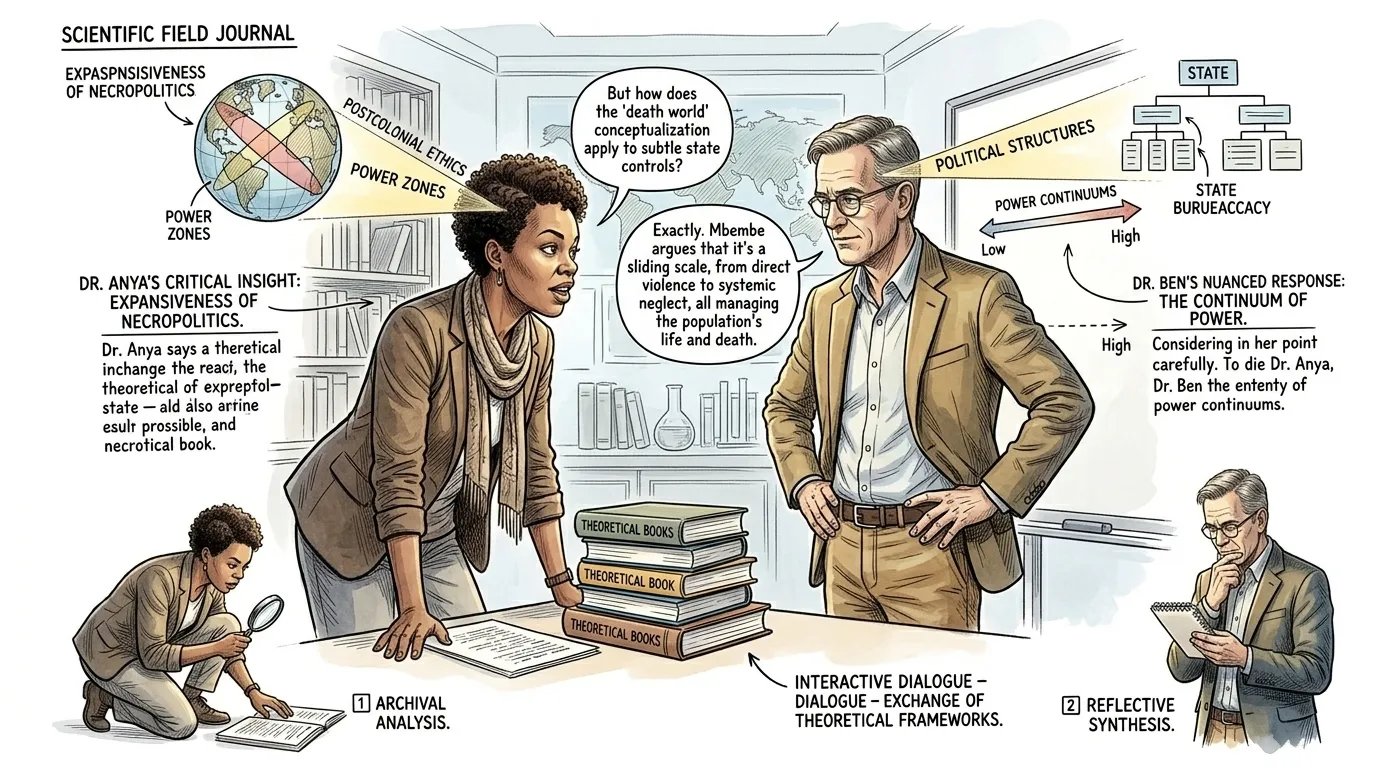
"일부 비평가들은 '네크로폴리틱스'가 너무 광범위해서, 더 넓은 시스템적 문제에 적용함으로써 직접적인 폭력의 특정한 공포를 희석시킬 수 있다고 주장할 수도 있습니다." 아냐 박사가 사려 깊은 목소리로 제안했습니다. "음벰베는 그런 비판에 어떻게 대응하나요?" 벤 박사는 그녀의 의견을 신중하게 고려했습니다. "그것은 타당한 우려입니다. 음벰베는 직접적인 폭력을 경시하려는 것이 아니라, 권력이 죽음의 세계를 생산하는 데 있어 심지어 침묵 속에서도 어떻게 작동하는지에 대한 우리의 이해를 넓히려는 것입니다. 그는 명시적인 힘과 더 은밀하고 일상적인 치명적인 통치 형태 사이의 연속성을 보도록 우리를 독려합니다. 그는 '통치한다는 것은 누가 살고 누가 죽을지 결정하는 것'이라는 사실에 직면하도록 우리에게 요구하며, 국가 책임에 대한 단순한 개념에 도전합니다." 철학 노트: 비평가들은 '네크로폴리틱스'가 너무 광범위하다고 지적합니다. 음벰베는 명시적인 폭력부터 누가 살고 누가 죽을지를 결정하는 은밀한 시스템적 통치에 이르기까지 권력의 연속성을 보여주는 것을 목표로 합니다.
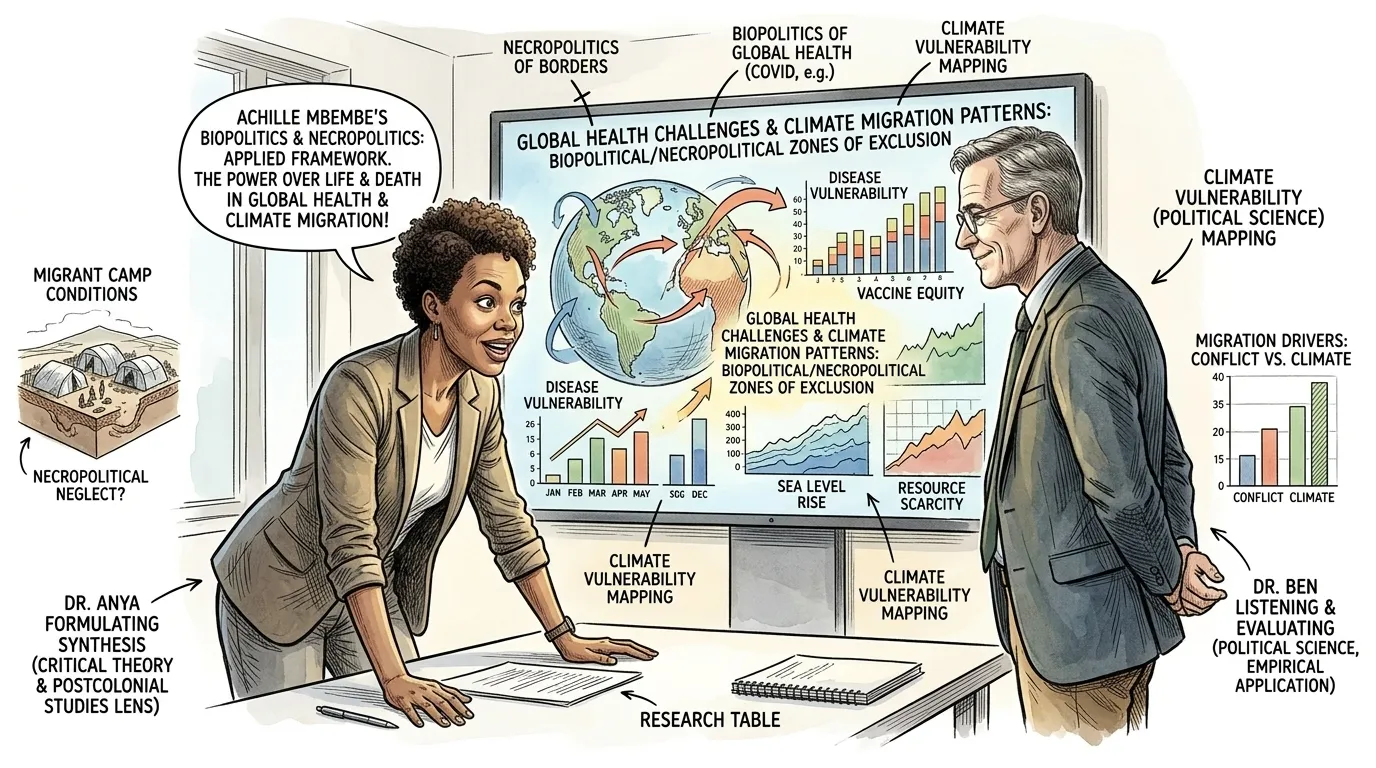
[ { "original": "With our understanding of Mbembe's distinction between biopolitics and necropolitics, how can we apply it to, say, contemporary global health crises or climate migration?", "translation": "음벰베의 생명정치와 죽음정치의 구분에 대한 우리의 이해를 바탕으로, 예를 들어 현대의 세계적인 보건 위기나 기후 이주에 어떻게 적용할 수 있을까요?" }, { "original": "Dr. Anya asked, challenging Dr. Ben.", "translation": "아냐 박사가 벤 박사에게 질문하며 도전했습니다." }, { "original": "Remember what we discussed about Mbembe's distinction between biopolitics and necropolitics?", "translation": "음벰베의 생명정치와 죽음정치 구분에 대해 우리가 논의했던 것을 기억하시나요?" }, { "original": "Dr. Ben prompted.", "translation": "벤 박사가 상기시켰습니다." }, { "original": "Dr. Anya's eyes widened.", "translation": "아냐 박사의 눈이 휘둥그레졌습니다." }, { "original": "Ah, yes! We see biopolitical efforts to 'manage' populations through vaccines or aid, but often these very efforts inadvertently produce necropolitical outcomes for those deemed 'disposable.'", "translation": "아, 맞아요! 우리는 백신이나 원조를 통해 인구를 '관리'하려는 생명정치적 노력을 보지만, 종종 이러한 노력 자체가 '버려질' 대상으로 여겨지는 사람들에게는 의도치 않게 죽음정치적 결과를 초래합니다." }, { "original": "Border closures, intellectual property restrictions on medicines, or ignoring climate refugees aren't just failures of policy; they are active decisions to 'let die' for some, while 'making live' for others.", "translation": "국경 폐쇄, 의약품에 대한 지적 재산권 제한, 또는 기후 난민 무시는 단순히 정책의 실패가 아닙니다. 그것은 일부에게는 '죽게 내버려 두는' 반면, 다른 일부에게는 '살게 만드는' 적극적인 결정입니다." }, { "original": "Mbembe's lens helps us see the intent and consequence behind these actions.", "translation": "음벰베의 시각은 이러한 행동 뒤에 숨겨진 의도와 결과를 이해하는 데 도움을 줍니다." } ]
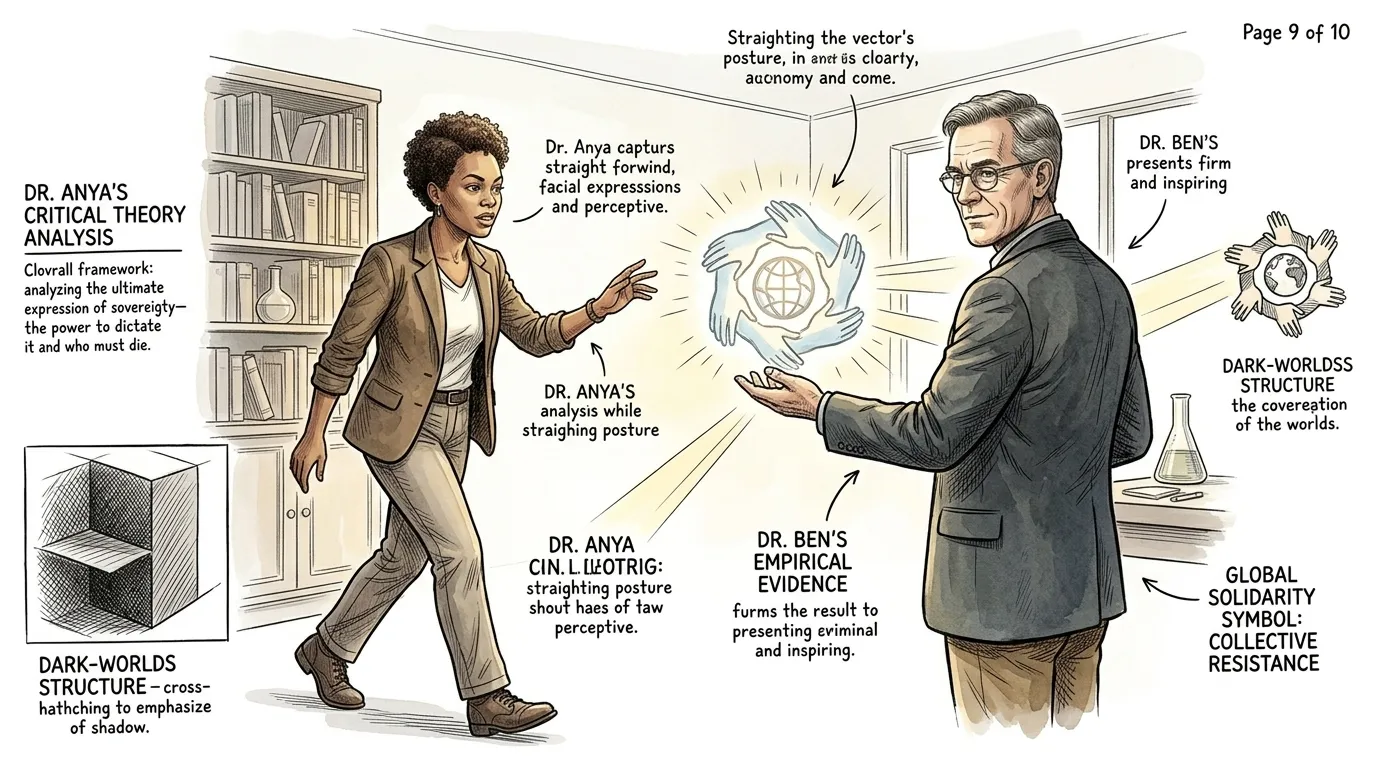
아냐 박사는 똑바로 서서 얼굴에 엄숙함을 띠었다. "음벰베의 틀은 우리가 세계 권력과 누가 진정으로 이득을 얻는지에 대한 불편한 진실에 직면하도록 강요합니다." 그녀가 말했다. 벤 박사는 덧붙였다. "단순히 문제를 명명하는 것을 넘어, 연대와 저항을 위한 심오한 윤리적 함의를 인식하는 것입니다. 위대한 철학자 넬슨 만델라가 한때 선언했듯이, '모든 것은 이루어지기 전까지는 항상 불가능해 보인다.' 이 감정은 죽음의 정치에 적용될 때, 우리가 '죽음의 세계'의 정상화를 받아들이지 않고, 모든 사람을 위한 삶과 존엄성의 바로 그 조건을 저항하고 재정의할 방법을 찾도록 영감을 줍니다. 그것은 윤리적 책임의 재평가를 요구합니다." "음벰베의 틀은 우리가 세계 권력과 누가 진정으로 이득을 얻는지에 대한 불편한 진실에 직면하도록 강요합니다." 아냐 박사가 말했다. 벤 박사는 덧붙였다. "단순히 문제를 명명하는 것을 넘어, 연대와 저항을 위한 심오한 윤리적 함의를 인식하는 것입니다. 위대한 철학자 넬슨 만델라가 한때 선언했듯이, '모든 것은 이루어지기 전까지는 항상 불가능해 보인다.' 이 감정은 죽음의 정치에 적용될 때, 우리가 '죽음의 세계'의 정상화를 받아들이지 않고, 모든 사람을 위한 삶과 존엄성의 바로 그 조건을 저항하고 재정의할 방법을 찾도록 영감을 줍니다. 그것은 윤리적 책임의 재평가를 요구합니다."
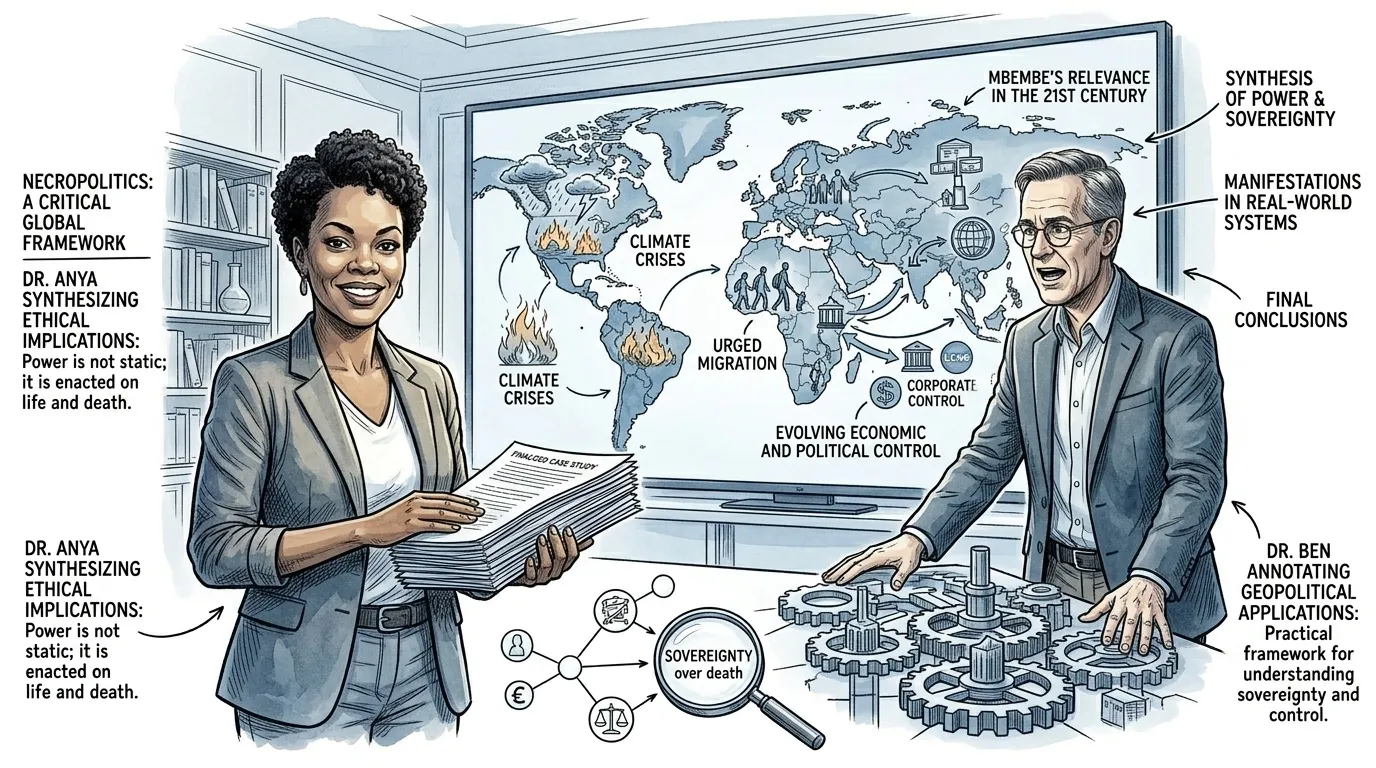
아냐 박사는 확신에 찬 목소리로 그들의 논의를 요약했습니다. "아실 음벰베의 작업은 진보와 발전에 대한 단순한 서사에 근본적으로 도전하며, 글로벌 질서 속에서 누구의 삶이 우선시되고 누구의 삶이 버려지는 것으로 간주되는지 검토하도록 촉구합니다." 벤 박사는 권위 있는 목소리로 결론지었습니다. "정말 그렇습니다. 그의 틀은 기후 위기, 강제 이주, 그리고 진화하는 경제적, 정치적 통제 형태로 점점 더 정의되는 우리의 복잡한 세상을 헤쳐나가는 데 필수적인 분석 도구로 남아 있습니다. 네크로폴리틱스는 우리에게 권력의 윤리적 핵심에 맞서도록 강요하며, 인간 존재를 형성하는 조용하고 교활한 폭력으로부터 결코 눈을 돌리지 않도록 합니다." "아실 음벰베의 작업은 진보와 발전에 대한 단순한 서사에 근본적으로 도전하며, 글로벌 질서 속에서 누구의 삶이 우선시되고 누구의 삶이 버려지는 것으로 간주되는지 검토하도록 촉구합니다." 벤 박사는 권위 있는 목소리로 결론지었습니다. "정말 그렇습니다. 그의 틀은 기후 위기, 강제 이주, 그리고 진화하는 경제적, 정치적 통제 형태로 점점 더 정의되는 우리의 복잡한 세상을 헤쳐나가는 데 필수적인 분석 도구로 남아 있습니다. 네크로폴리틱스는 우리에게 권력의 윤리적 핵심에 맞서도록 강요하며, 인간 존재를 형성하는 조용하고 교활한 폭력으로부터 결코 눈을 돌리지 않도록 합니다." 철학 노트: 음벰베의 네크로폴리틱스는 복잡한 이십일세기 도전을 분석하는 데 여전히 중요하며, 권력과 그것이 인간 존재에 미치는 영향에 대한 윤리적 검토를 촉구합니다.