Since 2016 · twelve libraries of illustrated books

2,341 books.
Written, painted and
narrated in fifteen languages.

Twelve libraries. 29,179 pages painted one at a time. 15 languages, each with its own narrator. AI writes it, paints it, narrates it, ships it and decides what comes next — directed by one solo founder.

There's a free library you can read without paying. No login to start.

Ten years old — the first app shipped in 2016 Reader on web, phone, tablet, watch, TV & headset
🎙️ 15 languages · real voices
🎨 29,179 pages painted
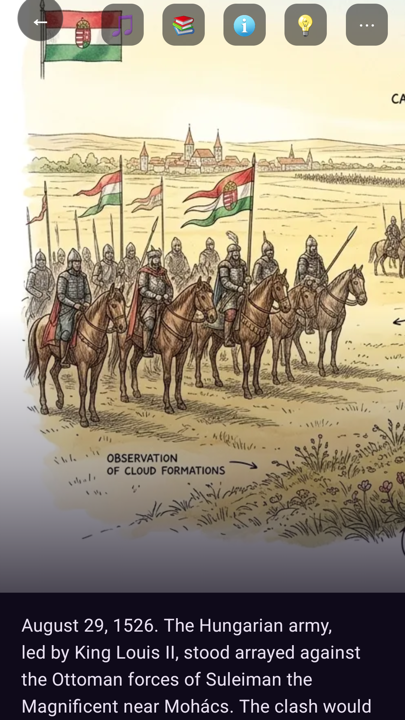
WonderBooks — the reader

A page illustration from the WonderBooks library
The words light up as they are spoken, and the picture pans with the story — so a reader can put the phone down and just listen.
▶

A real page from the library — illustration, text and narration, made together.
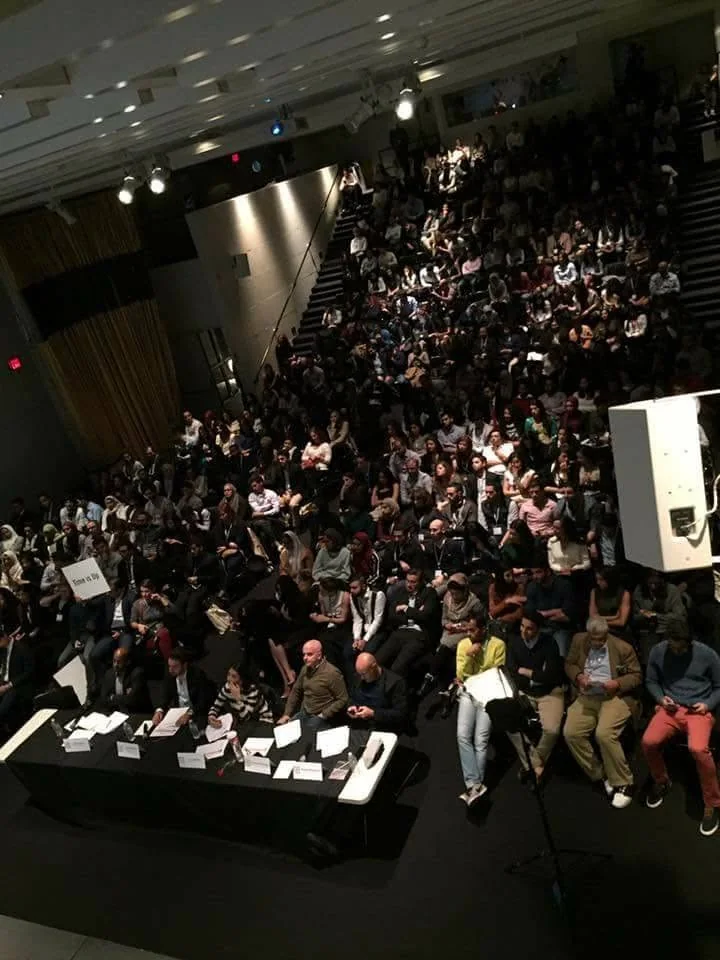
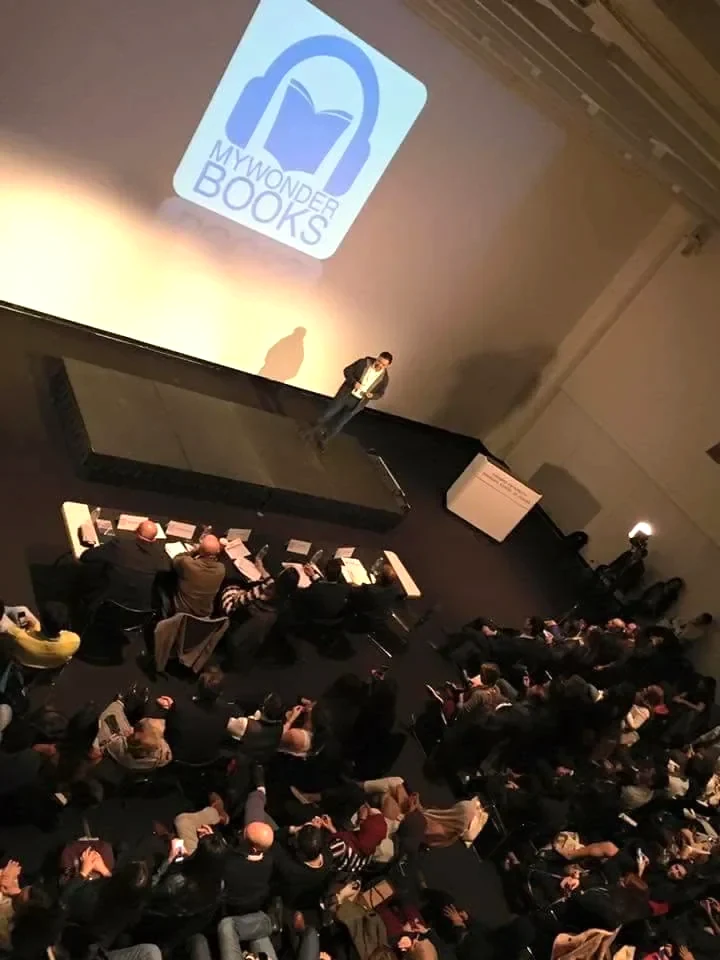
Harvard, 2016 Picked top 10 of around 155 startups to pitch at Harvard Arab Weekend. The photograph is the conference's own.
100,000+ Downloads of the first app, before any of this was automated. On Google Play, as Audio Bedtime Stories for Kids.
976 reviews Written by readers who found it on their own. We never bought an install. Same listing, still live today.
0Libraries
0Books published
0Illustrated pages
0Books narrated
0Languages

Every cover above is a real book in the library, painted for that book alone. Nothing here is stock art.

Ten years, one idea

It started in 2016.
The idea never changed — the tools did.

A child in Cairo and a child in Tokyo open the same story, each in their own language, and feel the same thing at the same page. Different countries, different alphabets, different faiths — the same catch in the throat. That was the whole belief in 2016, when the first app was one person, a handful of tales and a recording microphone.

It found 100,000 readers and 976 reviews on its own, and it was picked top 10 of around 155 startups to pitch at Harvard Arab Weekend in November 2016. Then it hit the wall every small publisher hits: one person can only write, paint and narrate so many books, in so many languages, in one lifetime.

AI did not change the belief. It removed the wall. The same idea now runs across twelve libraries in fifteen languages — written, painted, narrated and published end to end by AI, directed by the same one person who started it.

2016 One app · a few dozen stories · 6 languages
2026 Twelve libraries · thousands of books · 15 languages
A full auditorium at the Harvard Arab Weekend startup pitch, November 2016
The MyWonderBooks logo on the presentation screen at Harvard Arab Weekend, 2016

Harvard Arab Weekend, 12 November 2016. A full house, and our own name on the screen. Ten startups were chosen from about 155 — both photographs were published by the conference itself, not by us.

The scale of it

This is not a demo. It is a working library.

Every number below was measured in the live library, not estimated. It is what one person plus an AI operation produced — and it grows on a schedule, not in a sprint.

📚
0

Books published

Complete illustrated books across eleven libraries — story, cover, ten painted pages, quiz and narration. Not chapters, not samples: finished books.

🎨
0

Illustrations painted

One per page, composed for that page's exact moment. Nobody has a stock photo of the Battle of Marathon — so it gets painted.

🎙️
0

Books narrated

Read aloud page by page with the words highlighting as they're spoken, so a reader can listen hands-free with the illustration panning along.

🌍
0

Languages

Each one translated and re-narrated in a native voice — Arabic, Hindi, Japanese, Korean, Russian, Polish, Indonesian and more. Not captions over an English track.

📱
0

Apps built

Twelve iOS apps and twelve Android apps — one library each — from a single shared codebase, plus native builds for watch, TV, desktop and headset.

🧠
0

Solo founder

No team, no employees, no studio. One person directing an AI operation that covers development, art direction, production, publishing and marketing.

The twelve libraries

Twelve worlds, each with its own colour, catalogue and voice.

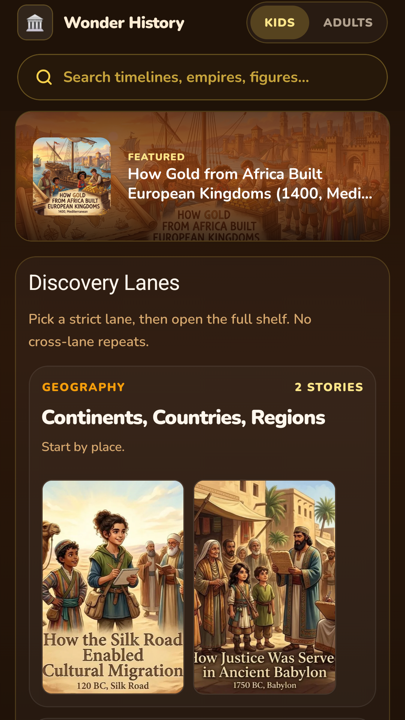
Every library is a separate universe — its own art direction, its own shelves, its own app on the store. They open to readers one after another, and the book count under each name is what is written and illustrated today.

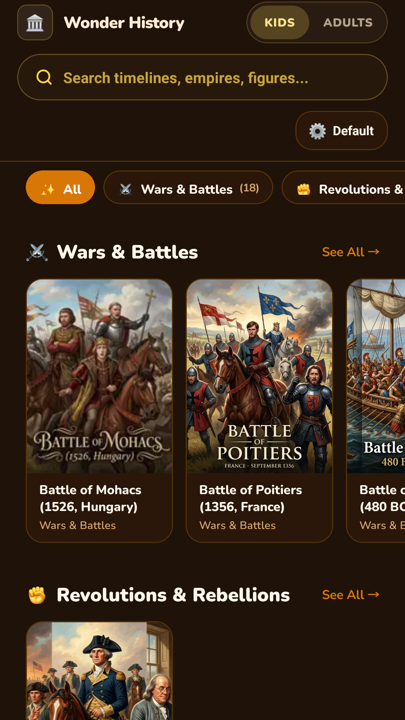
Wonder History

In production

Real events told as illustrated true stories — wars, empires, revolutions and the turning points between them.

Wonder Science

In production

How the universe actually works — discoveries, experiments and the big ideas, told as stories.

Wonder Inventions

In production

The machines and ideas that changed everything, and the stubborn people who built them.

Wonder Arts

In production

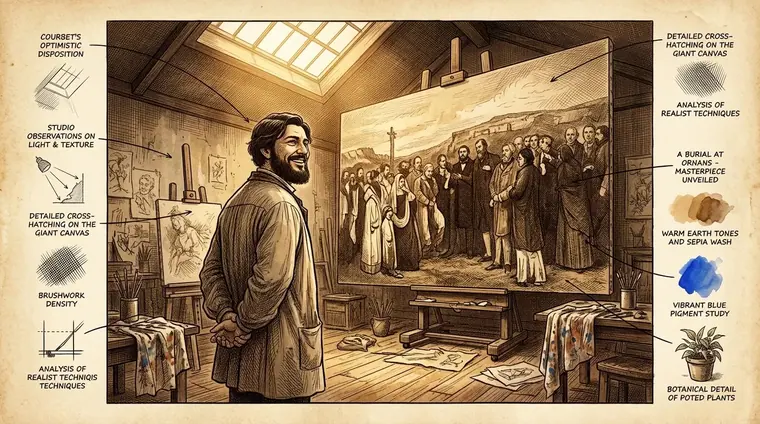
Painters, composers and masterpieces — the story behind the art, not the label beside it.

Wonder Tales

In production

Folk tales and fables from every culture, retold in plain words and freshly illustrated.

Wonder Travel

In production

Places, cultures and journeys — the world’s wonders, one illustrated trip at a time.

Wonder Books

In production

The flagship shelf — the best of every world in one place, for readers who want the range.

Wonder People

In production

Lives that shaped the world, told with the drama they actually deserve.

Wonder Philosophy

In production

Big questions made readable — thinkers and ideas as living stories, not lecture notes.

Wonder Comics

In production

Knowledge with the pacing of a comic book — stories told in panels.

In production

Wonder Novels

In production

Original long-form fiction, illustrated chapter by chapter.

Wonder Egypt

In production

The full sweep of ancient Egypt — pharaohs, temples, the Nile and three thousand years.

Hear it yourself

One page. Fifteen languages. Fifteen real voices.

This is a genuine page from the library — the same illustration, the same story, translated and then re-narrated in each language. Pick a language and press play.

Illustration from the demonstrated book
Loading a page from the library…
—English
Loading the page…
Narration — English Google Chirp3-HD · the same audio the app plays

Every language is generated the same way: the page is translated, checked, then spoken by a native voice with its own timing. Open this book →

A book is not translated once. Every page is translated, checked, then narrated again by a native voice with its own timing — so a reader in Cairo, Seoul or São Paulo gets what an English reader gets.

EnglishEnglish
العربيةArabic
EspañolSpanish
FrançaisFrench
DeutschGerman
ItalianoItalian
PortuguêsPortuguese
РусскийRussian
TürkçeTurkish
PolskiPolish
日本語Japanese
한국어Korean
中文Chinese
हिन्दीHindi
Bahasa IndonesiaIndonesian
The book factory

How one book is made — ten stages, no human hand on the page.

This is the actual production line. A book enters as a title on a curated list and leaves as an illustrated, narrated, translated, quality-scored volume on eleven shelves and two app stores. The same loop runs every night.

STAGE 01
🗂️

Curate the list

AI searches a 2,050-book reference index and the library's own catalogue to decide which subjects are missing, then writes the next batch as a real book list.

Book index · RAG
STAGE 02
🔍

Research first

Before a single sentence is written, a factual brief is produced and locked in as an anchor — the fix that stopped a story about D-Day drifting into the Suez Canal.

wonderbot-research
STAGE 03
✍️

Write the story

Ten short pages under a written story law: dialogue and feeling live in the text, scenery lives in the illustration, and no two books reuse the same shape.

Story law · anti-repetition
STAGE 04
🧑‍🎨

Cast the characters

Character sheets lock every face, age and build before any page is painted, so the person you meet on page one is the same person on page ten.

Character sheets · LoRA
STAGE 05
🎬

Direct the art

Each page gets a written shot: camera at the edge of the room so you always know where you are, characters caught mid-action, one committed style for the whole book.

Visual prompt engine
STAGE 06
🖌️

Paint every page

The illustration is generated for that page alone. A safety filter strips anything frightening from a kids prompt before it is ever sent.

Gemini · FLUX.2
STAGE 07
🎙️

Narrate it

A studio voice reads the page, with word timings so the text highlights in sync and the illustration pans to the position of the audio.

Chirp3-HD · Kokoro
STAGE 08
🌍

Translate & re-voice

Fifteen languages, each translated and then spoken again by a native voice. A language only ships when its translation score and voice error rate pass the bar.

15 languages
STAGE 09
✅

Score and gate

Quality score, metadata integrity, audience policy and a per-book cost meter. A book that fails the gate does not reach a shelf.

QA gate · cost meter
STAGE 10
🚀

Publish & operate

Straight onto the web reader and into twelve iOS and twelve Android apps — then analytics and reader feedback decide what the next cycle writes.

Firebase · 62 functions
A full-page illustration from the library
Made, not found

Nobody has a stock photo of the Battle of Marathon.

No archive, no photo library, no reuse. Each one was painted for a single page of a single book — the right room, the right year, the right faces — and then never used again.

From the WonderBooks library.

So it gets painted. Everything below is real output from the production line — the covers, the pages, the character sheets, the styles. Nothing staged, nothing borrowed.

Made for the momentA page illustration painted for its exact scene

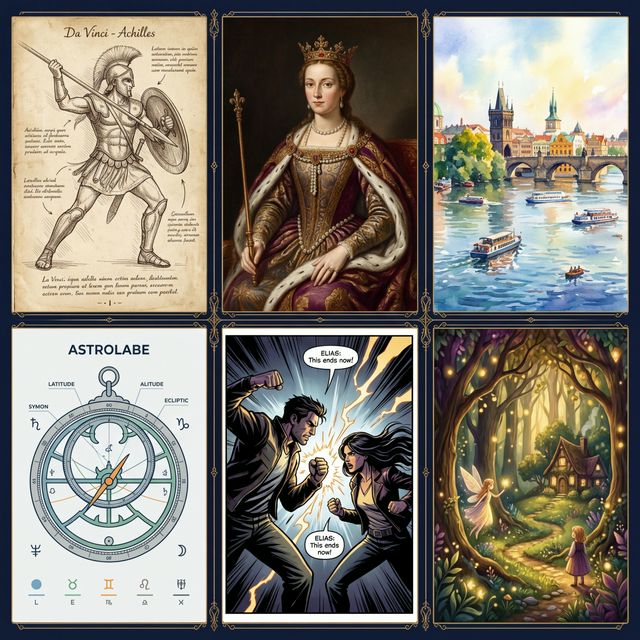
Every illustration is painted for its exact scene

Not clip-art, not a stock library, not a reused background. The picture exists because that page of that story needed it — which is why 29,179 of them had to be made, one at a time, before a single reader saw them.

ContinuityA character sheet keeping one face consistent across a book

The same face on every page

Character sheets anchor each hero before the first page is painted, so nobody quietly becomes a different person halfway through the book.

Art directionA range of art styles used across books

One book, one style

Baroque oil, ligne claire, painterly gouache — a book commits to a single look and holds it cover to cover. Kids does not mean cartoon.

The readerA page illustration as it appears in the reader

Press play and stop reading

Pages narrate one after another, the words light up as they're spoken, and the illustration pans with the audio position — not a zoom, a slow camera move.

Two worldsA page illustration from a different library

Kids and adult never mix

They are two separate worlds end to end — separate writing, separate art rules, separate shelves. Nothing frightening ever reaches a kids prompt, let alone a kids page.

And one real page from each of the twelve libraries, pulled live as you loaded this page. Click any one to see it full size.

The self-healing library

This library is alive.

Because everything is generated, everything is regenerable. A printed book cannot fix a wrong date. An ordinary app cannot repaint a weak illustration. This one does both.

🚩

A reader flags it

Every page carries a feedback button — a wrong date, a weak picture, a clumsy sentence. One tap files it against that exact page.

→
⚡

The library repairs itself

The flagged page enters the repair queue, is regenerated, re-checked and republished — in days, not in a new edition three years later.

→
🗳️

Readers steer what's next

In-app polls ask what should be written next, and the answers become the next batch. The library grows in the direction its readers point.

Everywhere you read

Eleven screens. One library. One design.

The phone app, the watch app, the television and the headset are not four different products with four different menus — they are the same reader, adapted to the input each device has.

WebOpen now
iPhoneApp Store
iPadApp Store
Android phoneGoogle Play
Android tabletGoogle Play
Apple WatchNative
Wear OSNative
Apple TVNative
Android TVNative
Vision ProNative
MacNative
…and offlineBooks download to the device
The app — library shelves
The app — a shelf of books
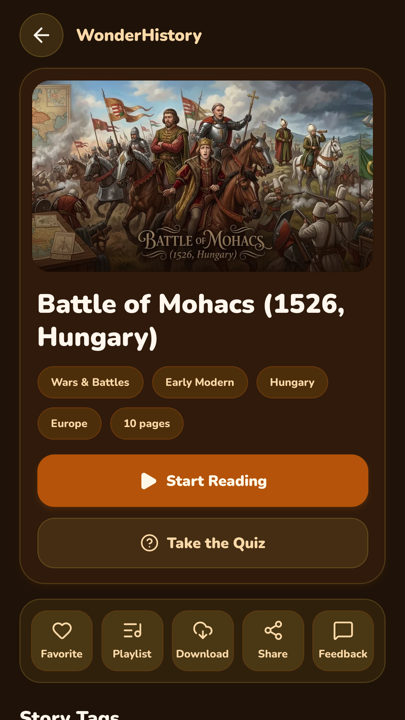
The app — a book, ready to read
The app — the reader, with narration

The same shelves, the same reader, the same narration — on the phone in your pocket.

Under the hood

What actually builds it.

Cloud models where quality demands it, local models on Apple Silicon where volume demands it, and one shared codebase behind every screen a reader can hold.

✍️ Writing & reasoning

  • Gemini
  • GPT
  • Ollama — local brain
  • wonderbot-research
  • wonderbot-kids
  • wonderbot-adult
  • RAG book index
  • Story law engine

🎨 Illustration

  • Gemini image models
  • FLUX.2
  • mflux · Apple Silicon
  • Character LoRAs
  • Visual prompt engine
  • Kids safety filter
  • WebP delivery

🎙️ Voice

  • Google Chirp3-HD
  • Kokoro TTS — on device
  • Word-level timings
  • Voice quality ladder
  • 15 language voices

☁️ Platform

  • Firebase
  • Firestore
  • Cloud Storage
  • Cloud Functions ×62
  • Firebase Auth
  • App Check
  • Hosting + CDN

💻 The apps

  • React 19
  • TypeScript
  • Vite 8
  • React Native 0.83
  • Expo 55
  • SwiftUI
  • Jetpack Compose
  • 24 store apps, one codebase

🛡️ Operations

  • Eight AI departments
  • Nightly routines
  • Error monitoring
  • Self-repair queue
  • Cost control room
  • Locked identity system
How the library runs

AI doesn't just write the books.
AI runs the library.

Most "AI books" stop at the text. Here the whole operation is AI: the curation, the writing, the art direction, the narration, the translation, the release schedule, the store listings, the analytics — and the decision about what to build next.

That is the only reason one person can run twelve libraries, twenty-four apps and a production line that never stops. The library is organised as eight standing departments, each with its own charter, its own audits and its own decision log.

🔒
SecurityKeys, rules, access — audited weekly
🩺
ReliabilityError monitoring and the self-repair queue
⚡
PerformanceLoad speed, disk, memory, build health
📚
Content QAStory law, art quality, factual gates
📈
AnalyticsWhat readers open, finish and ask for
📣
MarketingListings, outreach, launch planning
💰
CostEvery paid call metered, per book
🧭
Chief of staffThe weekly roll-up and what happens next
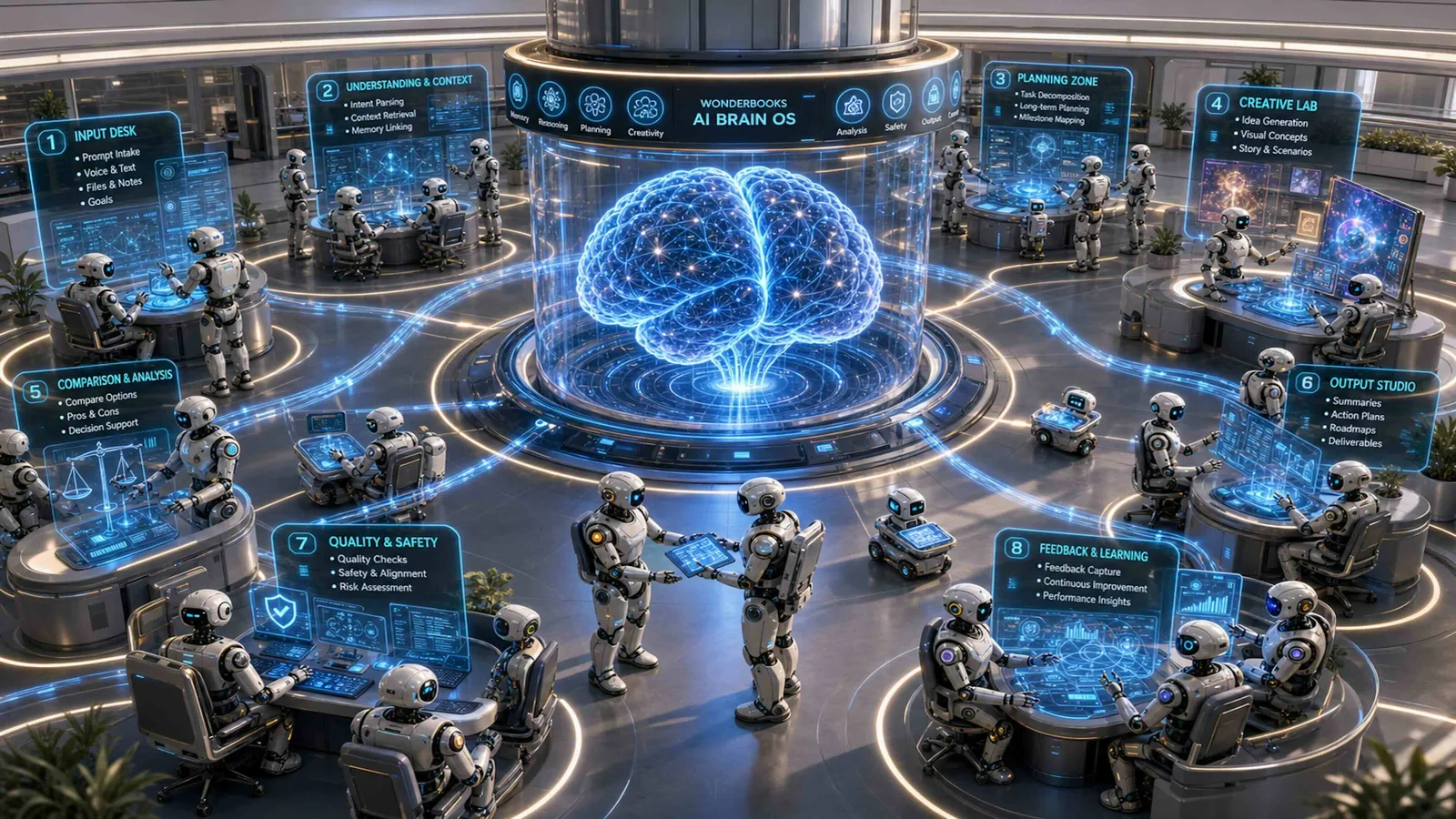
The writing room

And this is how we make a story.

One brief goes in at the intake desk. What comes out the other side is a finished book — written, painted, narrated and translated — after planning, drafting, and a quality and safety pass, before the feedback loop decides what gets made next.

Eight stations, the same eight departments listed above.

The WonderBooks AI operation: a central reasoning core surrounded by eight working stations — intake, understanding, planning, creative, analysis, output, quality and safety, and feedback

Open a book. It takes one tap.

No account, no trial, no card. There's a free library you can read without paying — start with Wonder History and see what a page looks like when it was painted for itself.