O Sistema de Metrô: Uma História Subterrânea de Inovação
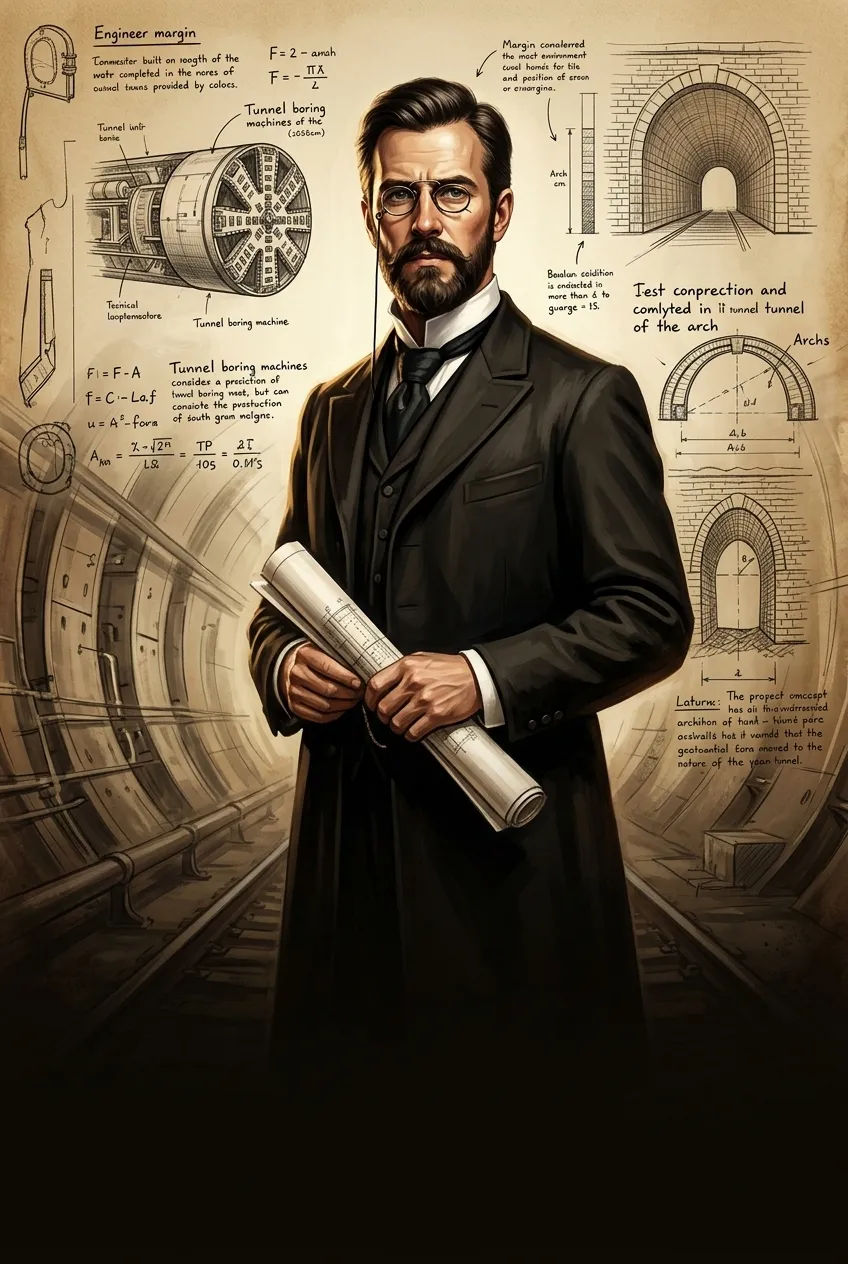
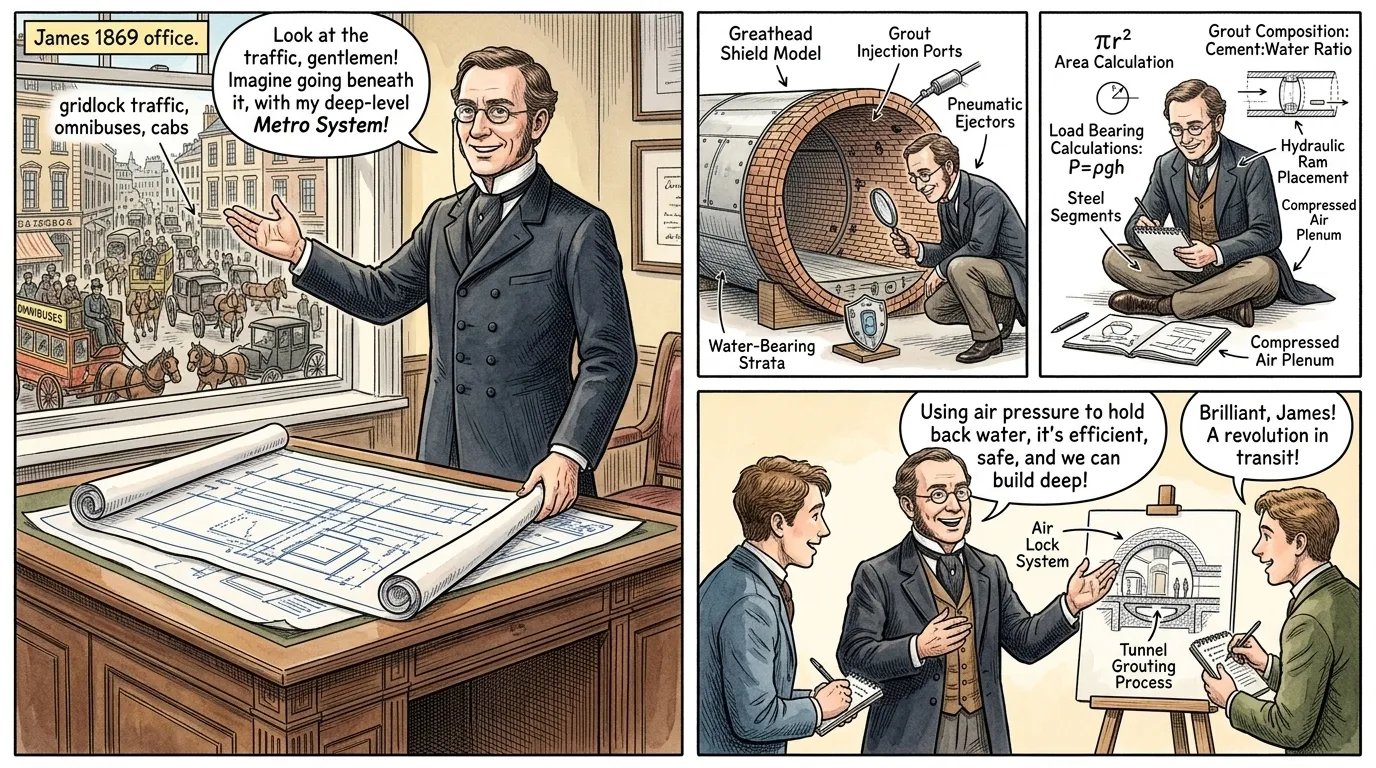
O ano é de mil oitocentos e sessenta e nove, e Londres, o coração pulsante do Império Britânico, sufoca sob o seu próprio sucesso. O transporte de superfície, um balé caótico de ônibus e táxis puxados por cavalos, atingiu um engarrafamento insustentável, exigindo uma solução revolucionária sob suas próprias ruas. Foi aqui que James Henry Greathead, um brilhante engenheiro civil da África do Sul, idealizou o "Sistema de Metrô" – uma rede de ferrovias de nível profundo, construída com um escudo de tunelamento revolucionário, para redefinir a mobilidade urbana. Sua patente, garantida neste ano, prometia abrir caminhos limpos e estáveis através da argila notoriamente instável da cidade, um avanço para literalmente salvar Londres de si mesma. "Senhores, Londres está se estrangulando", declarou James Henry Greathead, um engenheiro civil resoluto, gesticulando em direção às ruas congestionadas da janela de seu escritório em mil oitocentos e sessenta e nove. "A superfície não pode suportar mais uma carruagem; devemos buscar passagem por baixo." Ele revelou esboços de seu revolucionário Sistema de Metrô, explicando como ele abriria ferrovias estáveis e de nível profundo através do terreno desafiador da capital. "Como Thomas Jefferson observou certa vez, 'O solo é a única coisa que pertence aos habitantes de um país', e é neste mesmo solo que devemos agora nos aventurar com segurança sem precedentes."
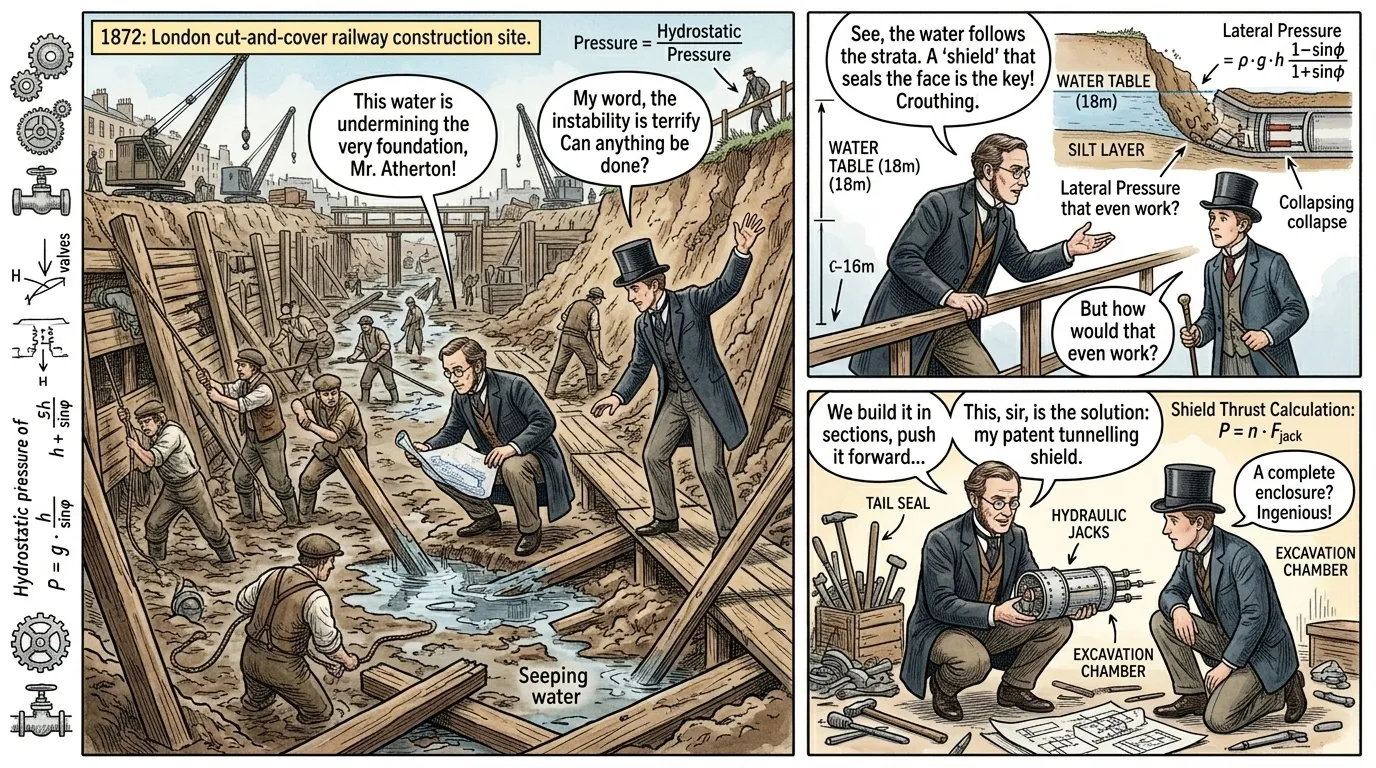
The very foundations of London vibrate under the strain, remarked a prominent city official, Mr. Atherton, to Greathead during an inspection of a cut-and-cover site in 1872. Our current 'cut-and-cover' railways tear through property, cause endless disruption, and only scratch the surface of our problem. Greathead nodded, observing workers struggling with wooden shoring to prevent cave-ins, and added, Indeed, the deeper one goes, the more perilous the water ingress becomes; securing shafts against the Thames' influence without massive flooding is an engineering nightmare. The sheer difficulty of tunneling beneath established buildings and through water-saturated clay remained the formidable obstacle. ""The very foundations of London vibrate under the strain," remarked a prominent city official, Mr. Atherton, to Greathead during an inspection of a cut-and-cover site in 1872. "Our current 'cut-and-cover' railways tear through property, cause endless disruption, and only scratch the surface of our problem." Greathead nodded, observing workers struggling with wooden shoring to prevent cave-ins, and added, "Indeed, the deeper one goes, the more perilous the water ingress becomes; securing shafts against the Thames' influence without massive flooding is an engineering nightmare." The sheer difficulty of tunneling beneath established buildings and through water-saturated clay remained the formidable obstacle."
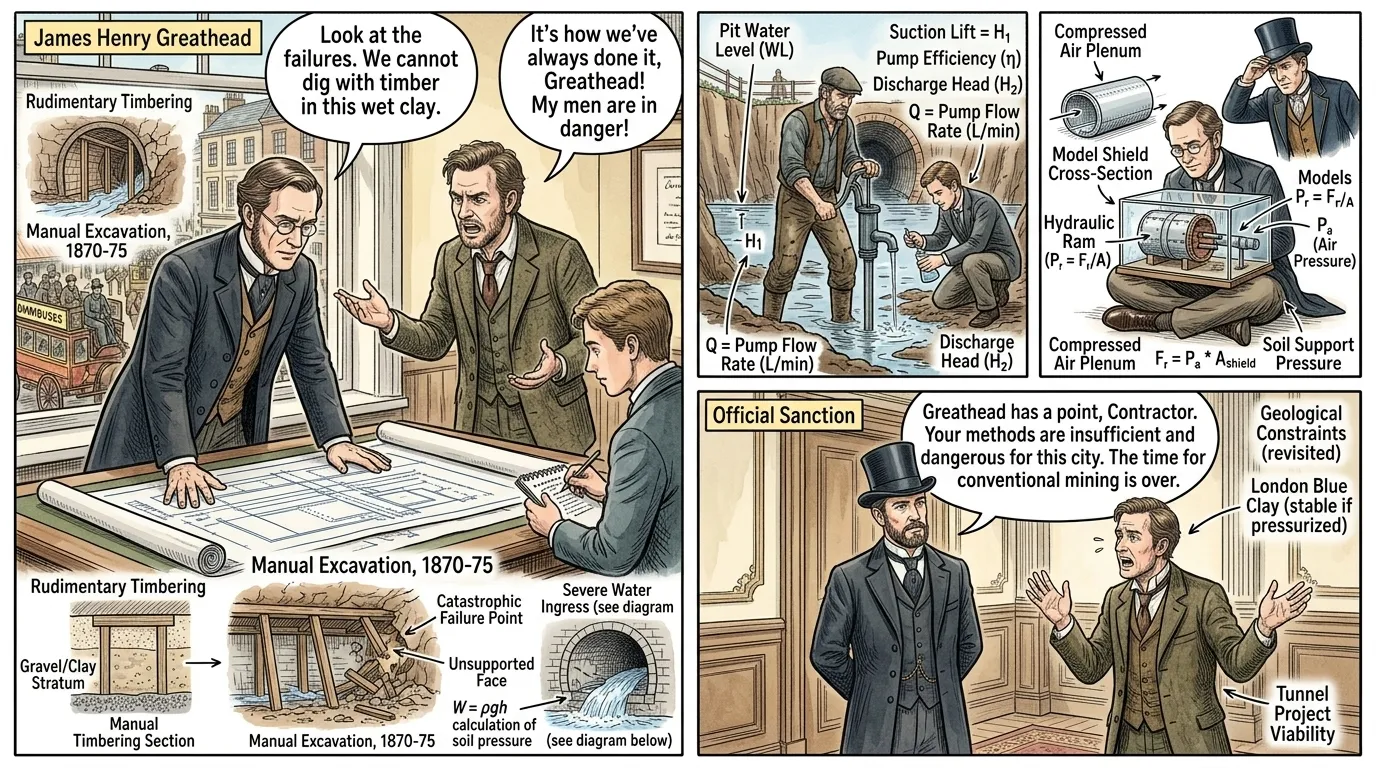
{ "translation": "Tentativas anteriores de escavação profunda provaram ser muito caras e perigosas, explicou o senhor Greathead, um empreiteiro exasperado, apontando para um esquema em sua mesa em mil oitocentos e setenta e cinco, que mostrava túneis desabando. Sem um método para continuamente suportar a frente de escavação e vedar contra a água, qualquer perfuração profunda se tornaria um túmulo aquático tanto para o capital quanto para os homens. Greathead estudou atentamente o diagrama, notando as técnicas rudimentares de escoramento e escavação manual que eram claramente inadequadas para a geologia única de Londres. Ele sabia que uma ruptura radical com a mineração convencional era absolutamente essencial." }
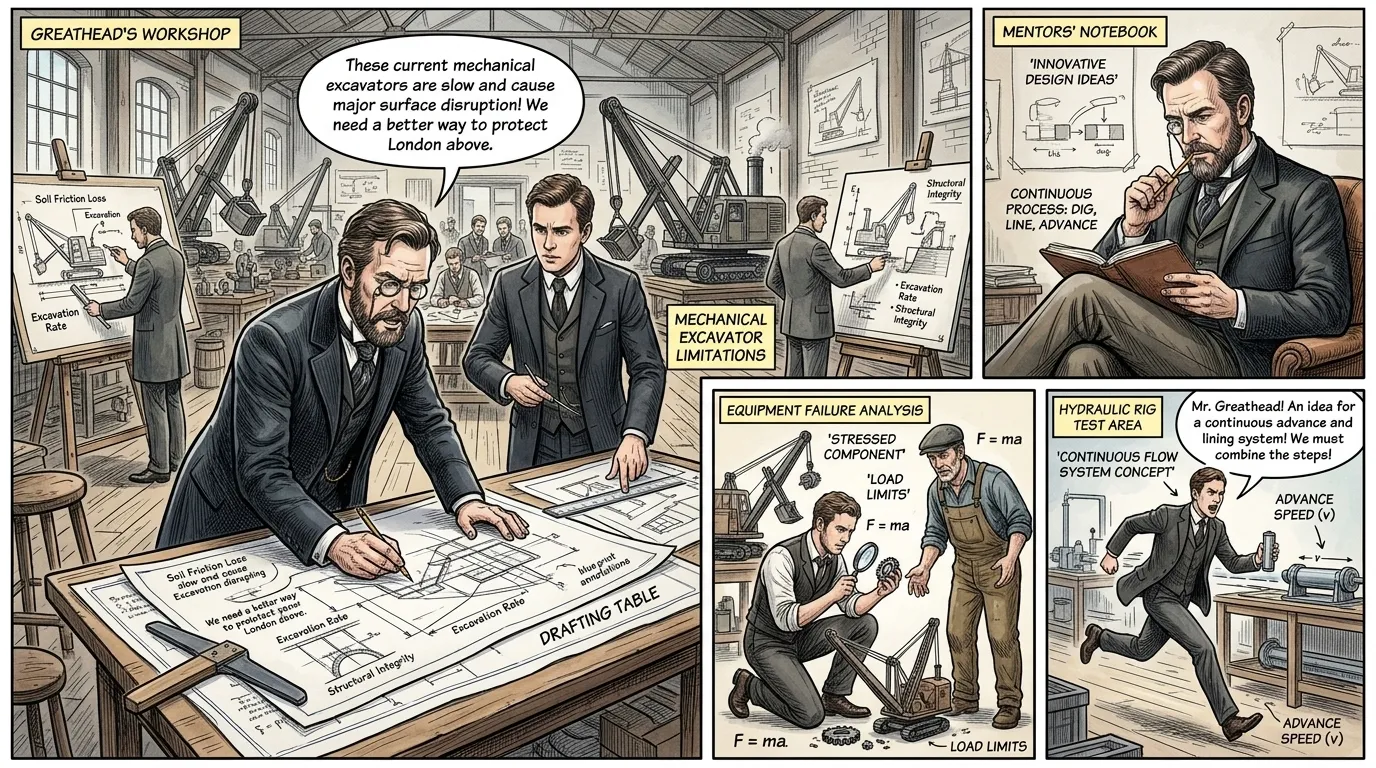
The true challenge lies not just in boring through earth, but in doing so without disturbing the fragile city above, Greathead mused aloud to his design team in 1879, sketching furiously on a large drafting table. We need something that can advance like a mole, protecting as it digs, and stabilizing as it moves. His team, two younger engineers with serious expressions, discussed the limitations of contemporary mechanical excavators, which lacked the necessary structural integrity for London's particular strata. Greathead envisioned a solution that would integrate excavation and lining into a continuous, self-supporting process. ""The true challenge lies not just in boring through earth, but in doing so without disturbing the fragile city above," Greathead mused aloud to his design team in 1879, sketching furiously on a large drafting table. "We need something that can advance like a mole, protecting as it digs, and stabilizing as it moves." His team, two younger engineers with serious expressions, discussed the limitations of contemporary mechanical excavators, which lacked the necessary structural integrity for London's particular strata. Greathead envisioned a solution that would integrate excavation and lining into a continuous, self-supporting process."
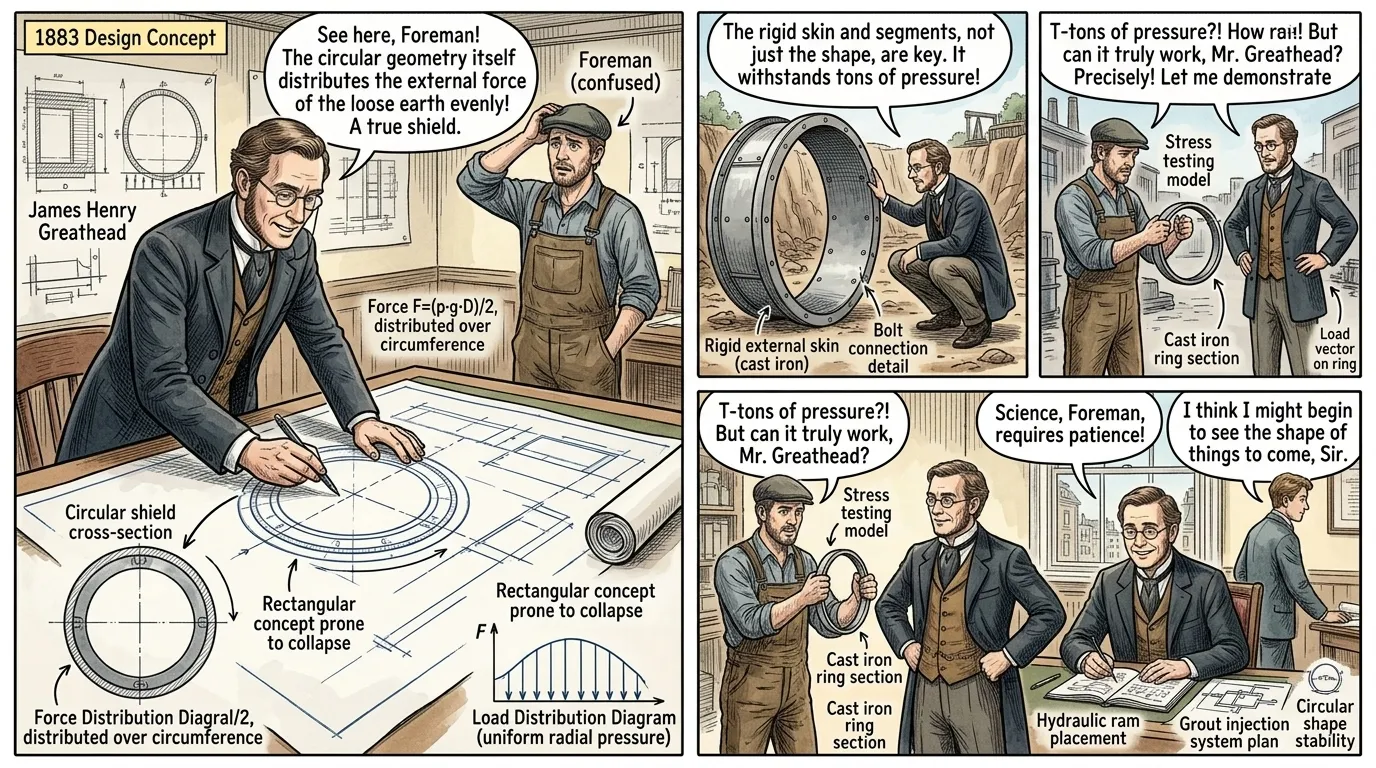
Greathead's early designs grappled with the problem of maintaining structural integrity, often showing timber frameworks that were either too cumbersome or insufficiently robust. A rigid, external skin, capable of withstanding immense pressure from all sides, is fundamental, he explained to a bewildered foreman reviewing a prototype concept in 1883, pointing to its circular profile. This circular geometry, he theorized, would distribute external forces evenly, a crucial departure from the rectangular, prone-to-collapse shafts of prior attempts. His focus shifted from resisting forces to cleverly redirecting them. "Greathead's early designs grappled with the problem of maintaining structural integrity, often showing timber frameworks that were either too cumbersome or insufficiently robust. "A rigid, external skin, capable of withstanding immense pressure from all sides, is fundamental," he explained to a bewildered foreman reviewing a prototype concept in 1883, pointing to its circular profile. This circular geometry, he theorized, would distribute external forces evenly, a crucial departure from the rectangular, prone-to-collapse shafts of prior attempts. His focus shifted from resisting forces to cleverly redirecting them."
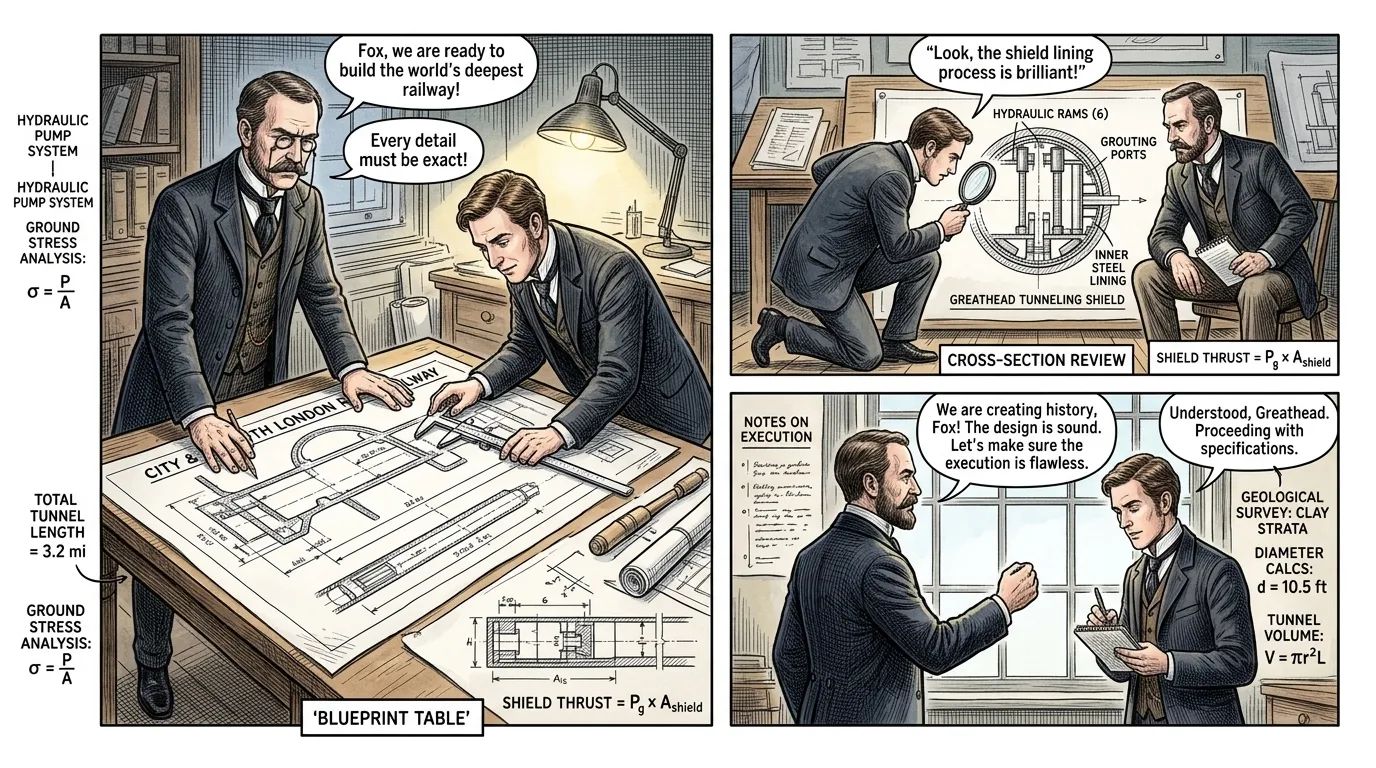
The core principle, then, is continuous support and immediate lining, Greathead articulated to his lead engineer, Francis Fox, in late 1884, overseeing the final drawings for the City & South London Railway project. His innovative tunneling shield acted as a mobile, temporary support, creating a safe chamber for workers at the cutting face. It's a fortress that moves, Fox noted, admiring the detailed blueprints, excavating earth, pushing forward with hydraulic power, and leaving behind a permanent cast-iron cylinder. This seamless integration of excavation and structural reinforcement was the genius of his design. ""The core principle, then, is continuous support and immediate lining," Greathead articulated to his lead engineer, Francis Fox, in late 1884, overseeing the final drawings for the City & South London Railway project. His innovative tunneling shield acted as a mobile, temporary support, creating a safe chamber for workers at the cutting face. "It's a fortress that moves," Fox noted, admiring the detailed blueprints, "excavating earth, pushing forward with hydraulic power, and leaving behind a permanent cast-iron cylinder." This seamless integration of excavation and structural reinforcement was the genius of his design."
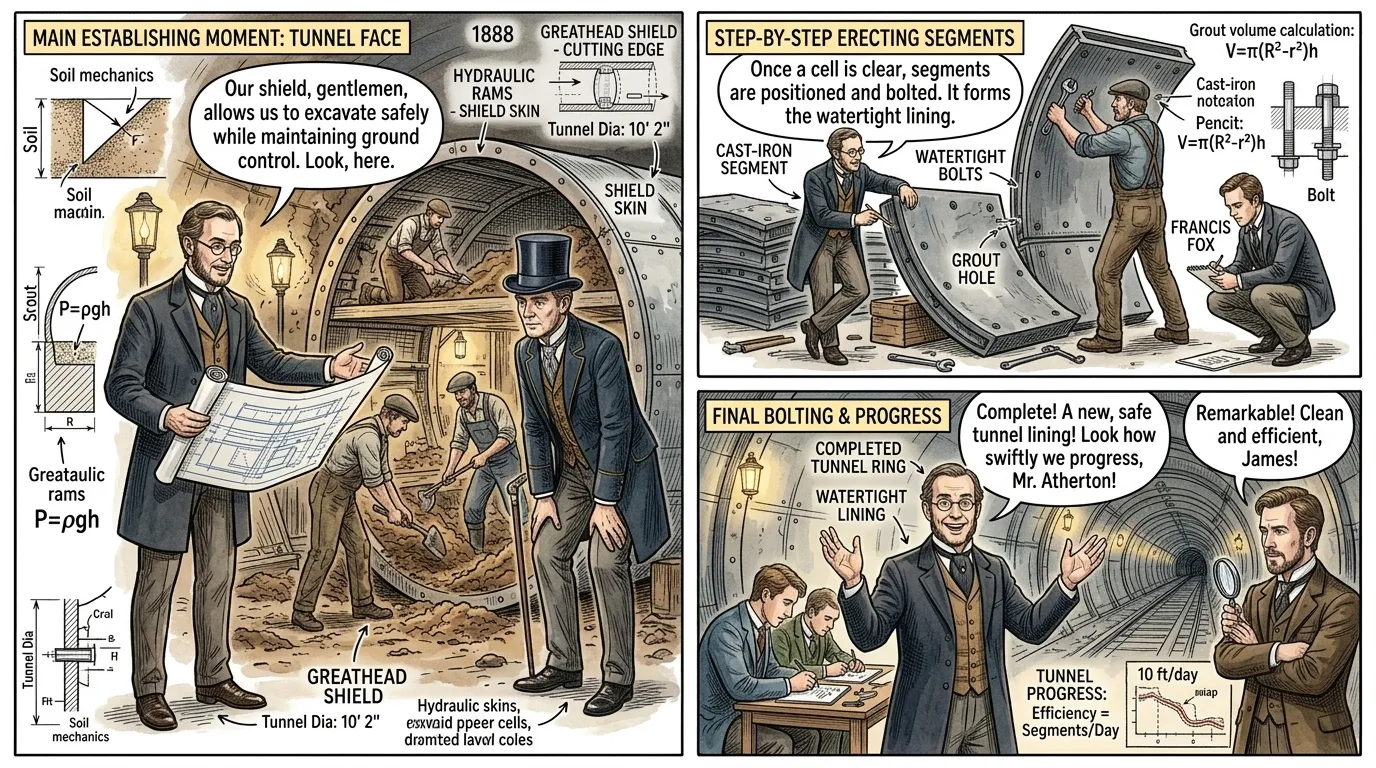
The Greathead Shield was essentially a thick, cylindrical steel shell, its sharp forward edge designed to bite into the earth. Within this protective casing, workers could excavate soil safely, shielded from immediate collapse, while powerful hydraulic rams pushed the entire structure forward. As the shield advances, Greathead explained to a visiting dignitary in 1888, during an early construction phase, pre-fabricated cast-iron segments are bolted together behind it, forming the permanent, watertight tunnel lining. This method drastically improved safety and speed, fundamentally changing subterranean construction. "The Greathead Shield was essentially a thick, cylindrical steel shell, its sharp forward edge designed to bite into the earth. Within this protective casing, workers could excavate soil safely, shielded from immediate collapse, while powerful hydraulic rams pushed the entire structure forward. "As the shield advances," Greathead explained to a visiting dignitary in 1888, during an early construction phase, "pre-fabricated cast-iron segments are bolted together behind it, forming the permanent, watertight tunnel lining." This method drastically improved safety and speed, fundamentally changing subterranean construction."
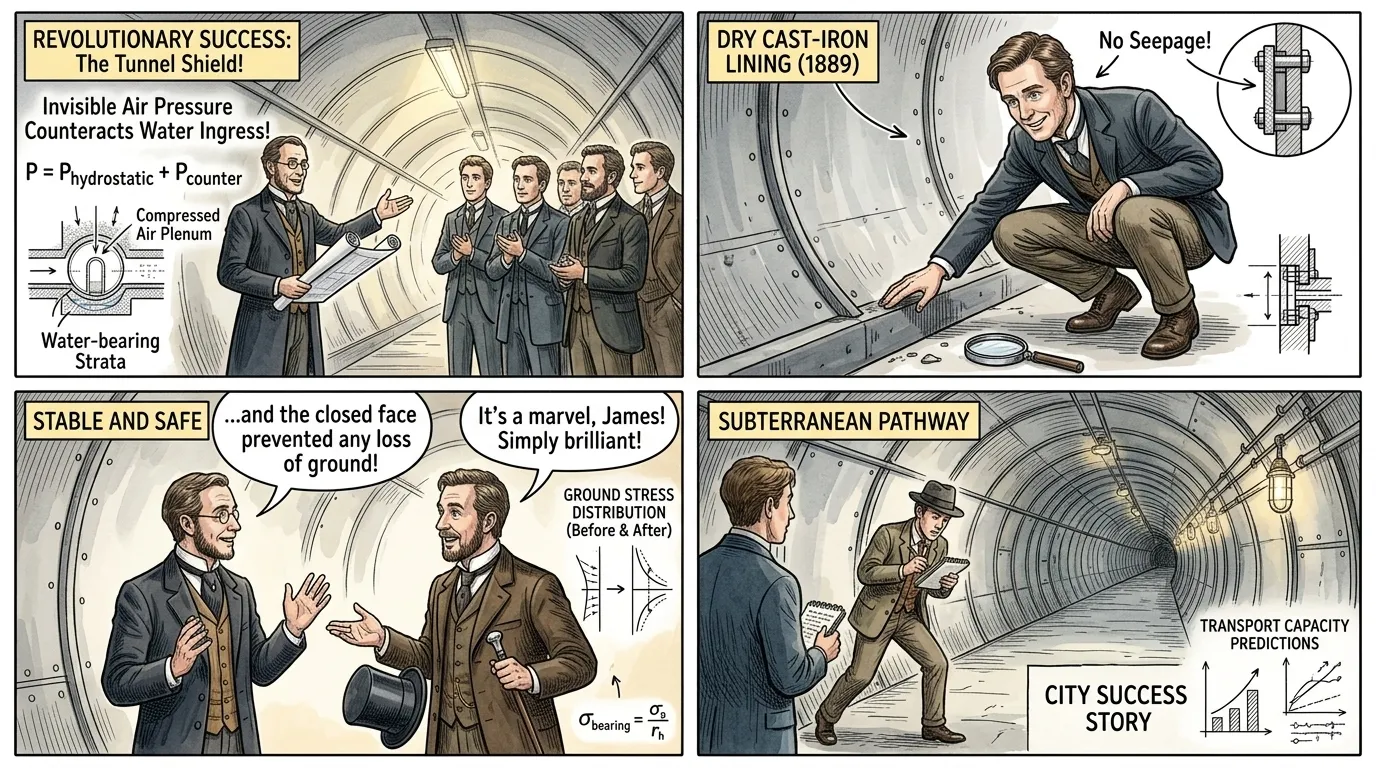
Crucially, the shield's closed-face design and the application of compressed air within the working chamber proved revolutionary, Greathead proudly declared to a group of engineers inspecting a completed tunnel section in 1889. This counteracted the immense pressure of London's water-logged clay, precisely preventing the ingress that plagued earlier attempts. The compressed air pushed back against the water, keeping the excavation dry and stable, allowing the rapid, secure installation of the cast-iron lining. This triumph directly addressed the "engineering nightmare" of water ingress they had discussed years prior. ""Crucially, the shield's closed-face design and the application of compressed air within the working chamber proved revolutionary," Greathead proudly declared to a group of engineers inspecting a completed tunnel section in 1889. "This counteracted the immense pressure of London's water-logged clay, precisely preventing the ingress that plagued earlier attempts." The compressed air pushed back against the water, keeping the excavation dry and stable, allowing the rapid, secure installation of the cast-iron lining. This triumph directly addressed the "engineering nightmare" of water ingress they had discussed years prior."
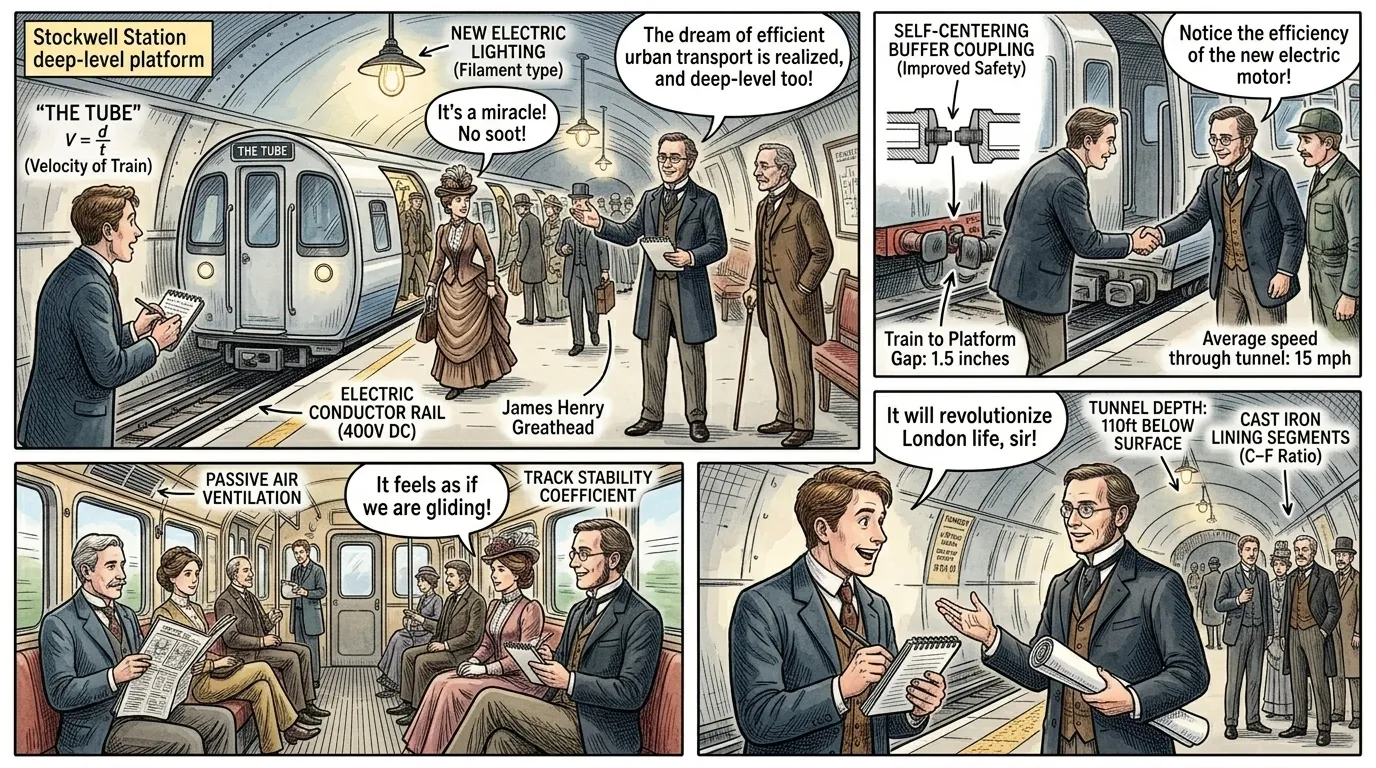
A City & South London Railway foi inaugurada em mil oitocentos e noventa, transformando instantaneamente a vida urbana ao oferecer aos londrinos uma fuga do congestionamento da superfície. "É uma façanha verdadeiramente surpreendente, uma jornada contínua sob a cidade", exclamou um repórter de jornal maravilhado enquanto os primeiros passageiros desembarcavam na estação de Stockwell. O sistema de "metrô" de nível profundo, possibilitado pelo escudo de Greathead, permitiu que as linhas fossem construídas sem a aquisição de propriedades de superfície caras, reduzindo significativamente os custos e as interrupções. Este modelo rapidamente se tornou o projeto para redes de transporte subterrâneo em todo o mundo.
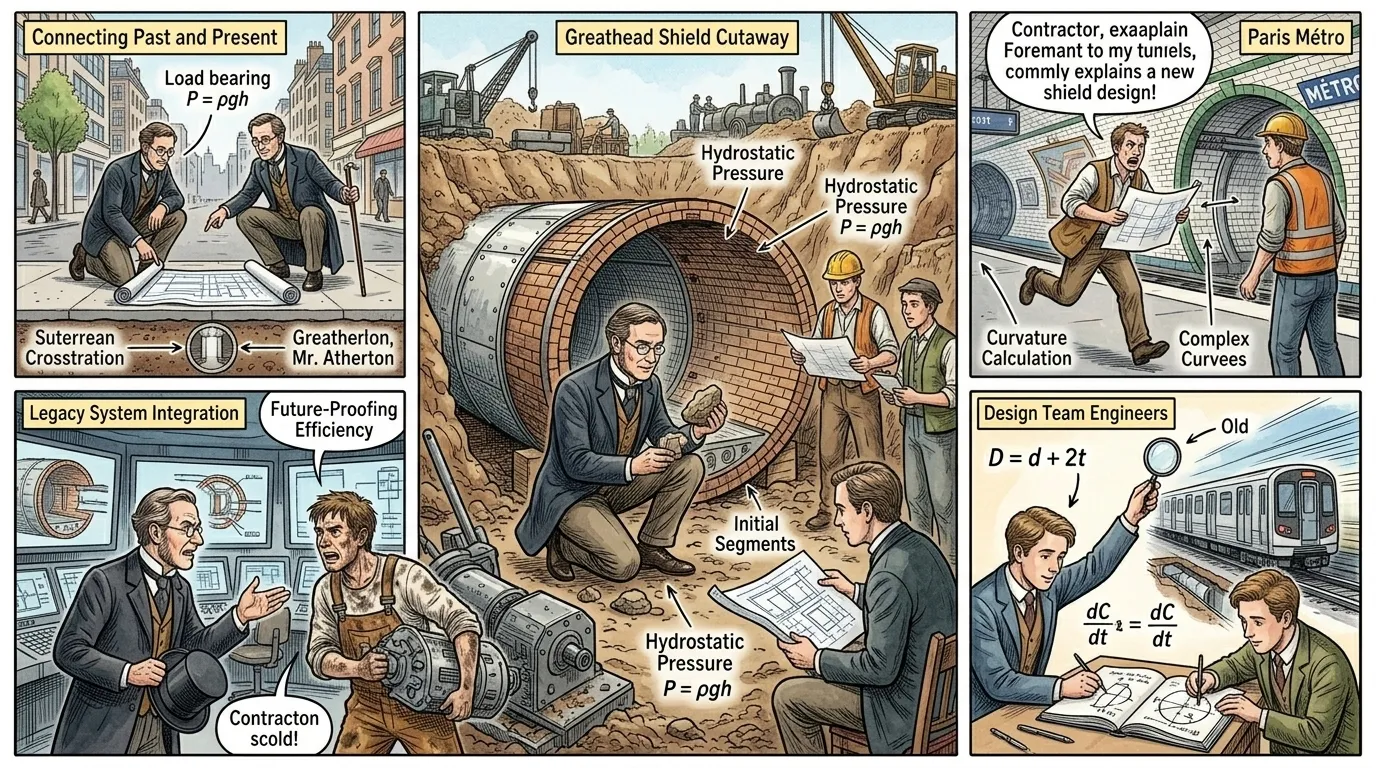
The legacy of Greathead's Metro System shield reverberates globally, shaping modern cities and enabling unprecedented urban expansion. From the Paris Métro to the New York Subway, and countless others, these subterranean arteries facilitate the daily lives of billions. They exemplify human ingenuity, transforming once-insurmountable geological barriers into pathways of progress. The pioneering work of James Henry Greathead underpins the invisible networks that continue to drive global metropolises. "The legacy of Greathead's Metro System shield reverberates globally, shaping modern cities and enabling unprecedented urban expansion. From the Paris Métro to the New York Subway, and countless others, these subterranean arteries facilitate the daily lives of billions. They exemplify human ingenuity, transforming once-insurmountable geological barriers into pathways of progress. The pioneering work of James Henry Greathead underpins the invisible networks that continue to drive global metropolises."