Metro Sistemi: Yeraltı İnovasyonunun Tarihi
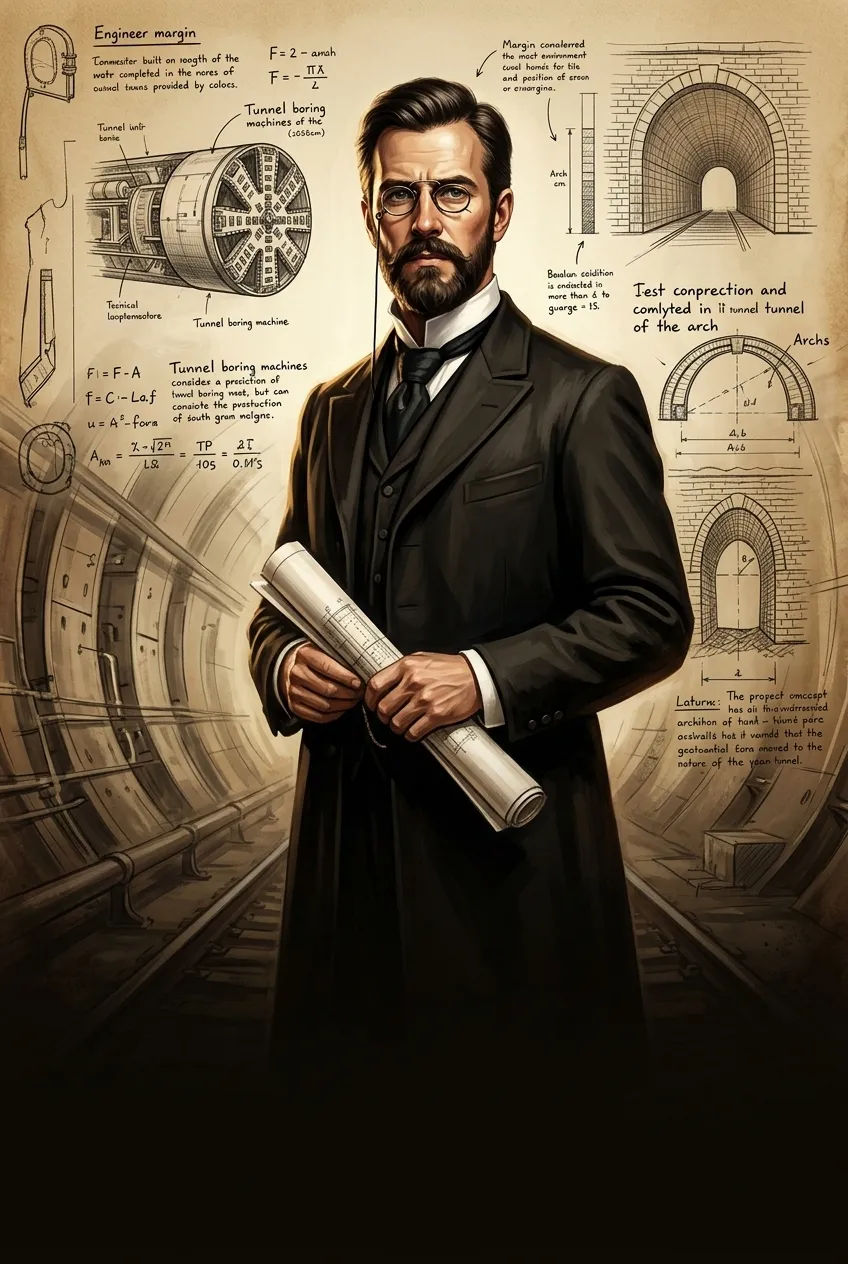
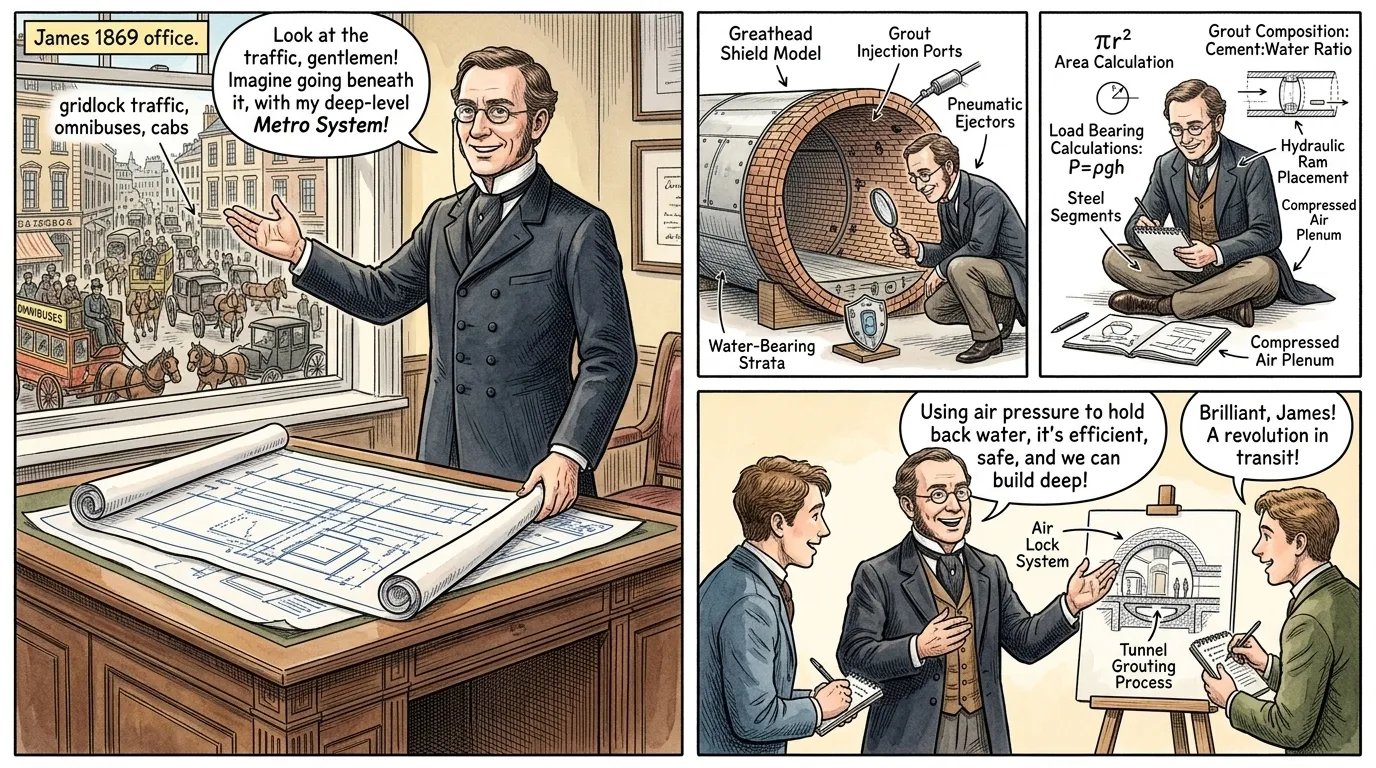
Yıl bin sekiz yüz altmış dokuz ve Britanya İmparatorluğu'nun atan kalbi Londra, kendi başarısı altında boğuluyor. Atlı otobüsler ve taksilerden oluşan kaotik bir bale olan yüzey ulaşımı, sürdürülemez bir tıkanıklığa ulaşarak, kendi sokaklarının altında devrim niteliğinde bir çözüm talep etti. İşte burada, Güney Afrikalı parlak bir inşaat mühendisi olan James Henry Greathead, kentsel hareketliliği yeniden tanımlamak için devrim niteliğinde bir tünel açma kalkanıyla inşa edilmiş derin seviyeli demiryolları ağı olan "Metro Sistemi"ni tasavvur etti. Bu yıl aldığı patenti, şehrin kötü şöhretli dengesiz kilinde temiz, istikrarlı yollar açmayı vaat ediyordu; bu, Londra'yı kelimenin tam anlamıyla kendinden kurtaracak bir atılımdı. "Beyler, Londra kendini boğuyor," diye ilan etti kararlı bir inşaat mühendisi olan James Henry Greathead, bin sekiz yüz altmış dokuzda ofis penceresinden tıkalı sokakları işaret ederek. "Yüzey başka bir vagonu kaldıramaz; geçişi aşağıda aramalıyız." Devrim niteliğindeki Metro Sistemi'nin eskizlerini tanıttı ve bunun başkentin zorlu zemininde nasıl istikrarlı, derin seviyeli demiryolları açacağını açıkladı. "Thomas Jefferson'ın bir zamanlar gözlemlediği gibi, 'Zemin, bir ülkenin sakinlerine ait olan tek şeydir' ve şimdi eşi benzeri görülmemiş bir güvenlikle bu zemine girmeliyiz."
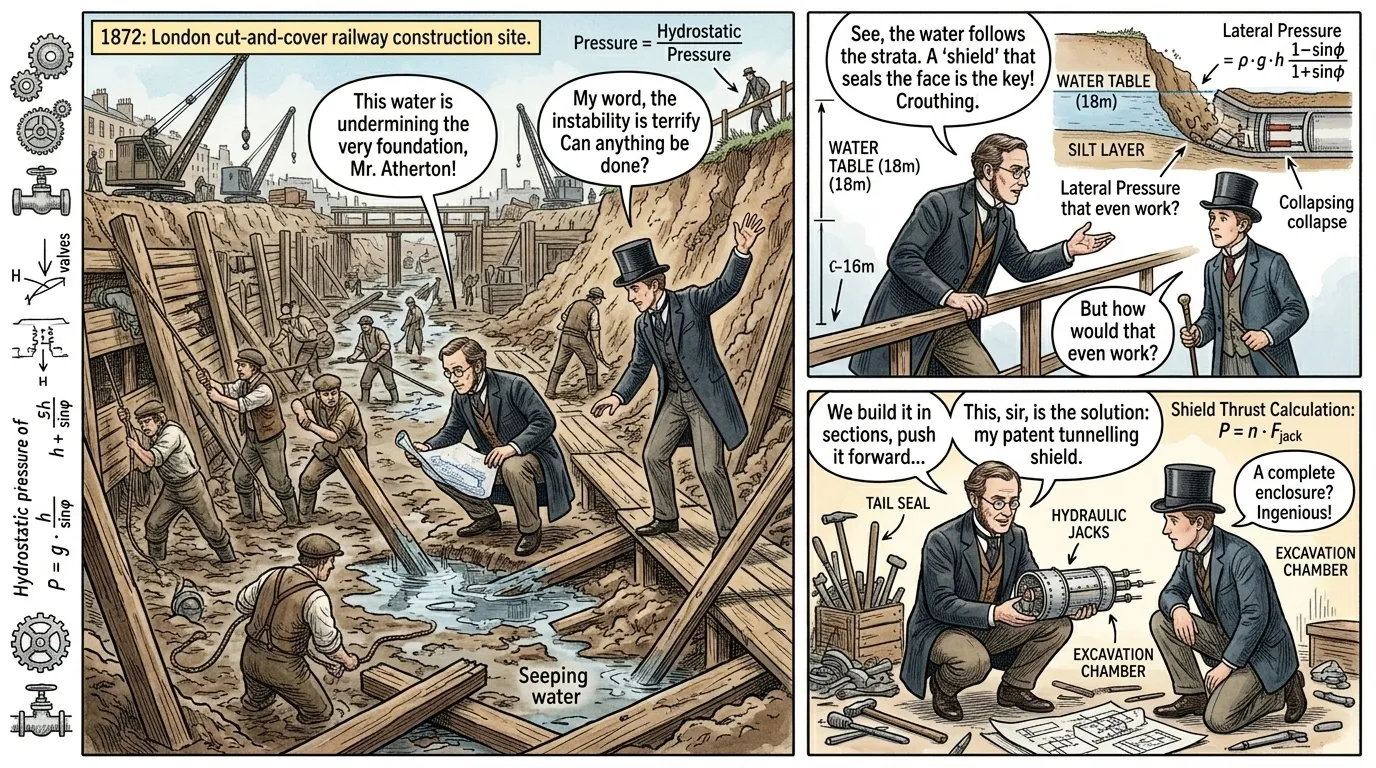
The very foundations of London vibrate under the strain, remarked a prominent city official, Mr. Atherton, to Greathead during an inspection of a cut-and-cover site in 1872. Our current 'cut-and-cover' railways tear through property, cause endless disruption, and only scratch the surface of our problem. Greathead nodded, observing workers struggling with wooden shoring to prevent cave-ins, and added, Indeed, the deeper one goes, the more perilous the water ingress becomes; securing shafts against the Thames' influence without massive flooding is an engineering nightmare. The sheer difficulty of tunneling beneath established buildings and through water-saturated clay remained the formidable obstacle. ""The very foundations of London vibrate under the strain," remarked a prominent city official, Mr. Atherton, to Greathead during an inspection of a cut-and-cover site in 1872. "Our current 'cut-and-cover' railways tear through property, cause endless disruption, and only scratch the surface of our problem." Greathead nodded, observing workers struggling with wooden shoring to prevent cave-ins, and added, "Indeed, the deeper one goes, the more perilous the water ingress becomes; securing shafts against the Thames' influence without massive flooding is an engineering nightmare." The sheer difficulty of tunneling beneath established buildings and through water-saturated clay remained the formidable obstacle."
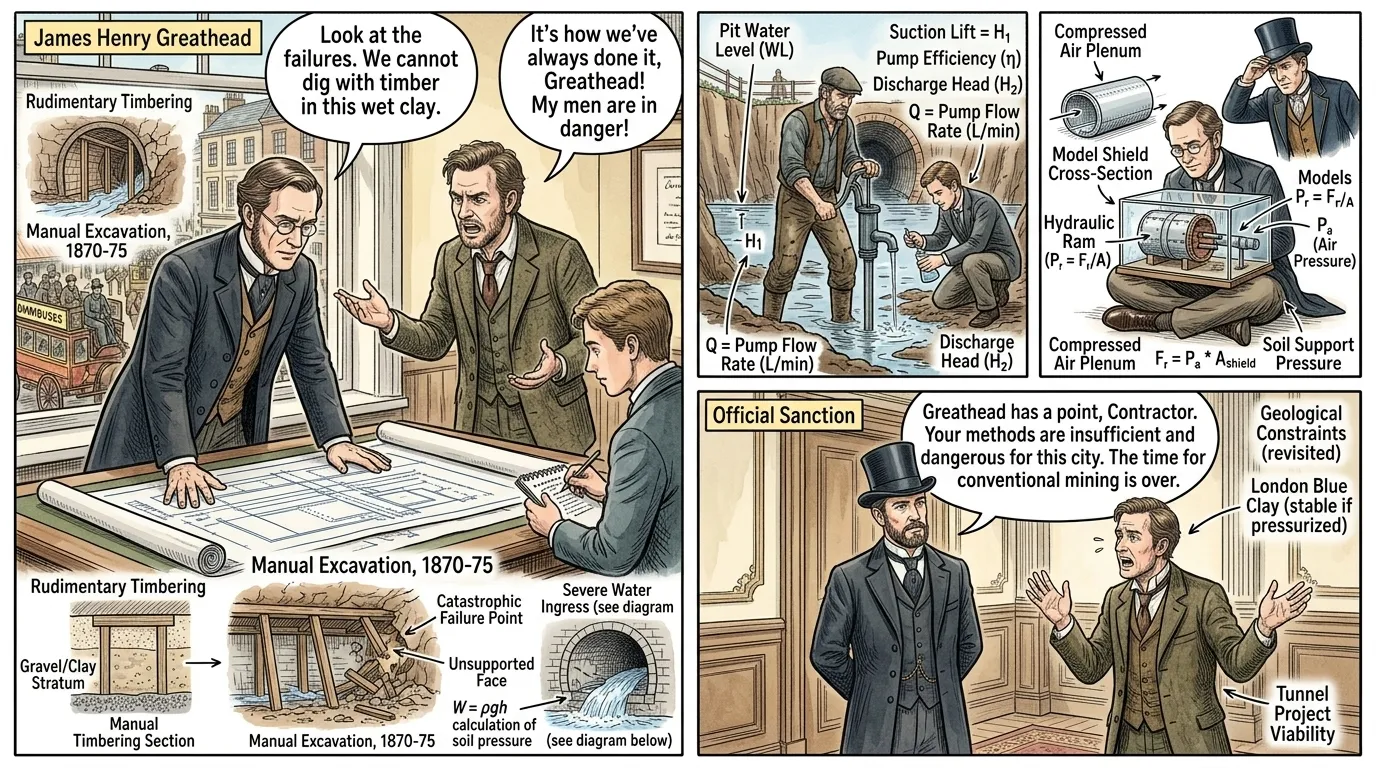
"Daha önceki derin tünel açma girişimleri çok maliyetli ve tehlikeli oldu, Bay Greathead," diye açıkladı öfkeli bir müteahhit, bin sekiz yüz yetmiş beş yılında masasının üzerindeki çöken tünelleri gösteren bir şemayı işaret ederek. "Kazı yüzeyini sürekli destekleyecek ve suya karşı yalıtım sağlayacak bir yöntem olmadan, herhangi bir derin sondaj hem sermaye hem de insanlar için sulu bir mezar haline gelecektir." Greathead, Londra'nın eşsiz jeolojisi için açıkça yetersiz olan ilkel ahşap destekleme ve manuel kazı tekniklerini not ederek diyagramı dikkatle inceledi. Geleneksel madencilikten radikal bir ayrılığın kesinlikle gerekli olduğunu biliyordu.
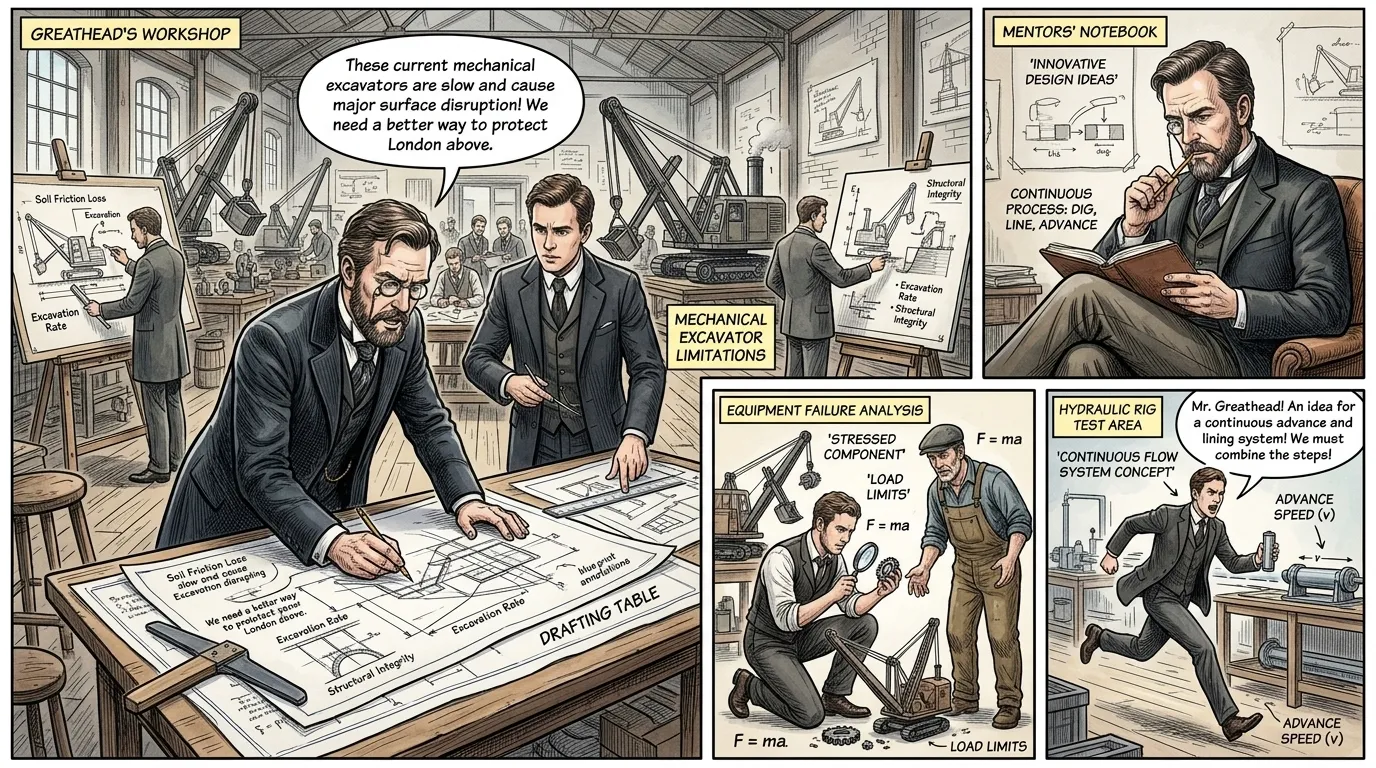
The true challenge lies not just in boring through earth, but in doing so without disturbing the fragile city above, Greathead mused aloud to his design team in 1879, sketching furiously on a large drafting table. We need something that can advance like a mole, protecting as it digs, and stabilizing as it moves. His team, two younger engineers with serious expressions, discussed the limitations of contemporary mechanical excavators, which lacked the necessary structural integrity for London's particular strata. Greathead envisioned a solution that would integrate excavation and lining into a continuous, self-supporting process. ""The true challenge lies not just in boring through earth, but in doing so without disturbing the fragile city above," Greathead mused aloud to his design team in 1879, sketching furiously on a large drafting table. "We need something that can advance like a mole, protecting as it digs, and stabilizing as it moves." His team, two younger engineers with serious expressions, discussed the limitations of contemporary mechanical excavators, which lacked the necessary structural integrity for London's particular strata. Greathead envisioned a solution that would integrate excavation and lining into a continuous, self-supporting process."
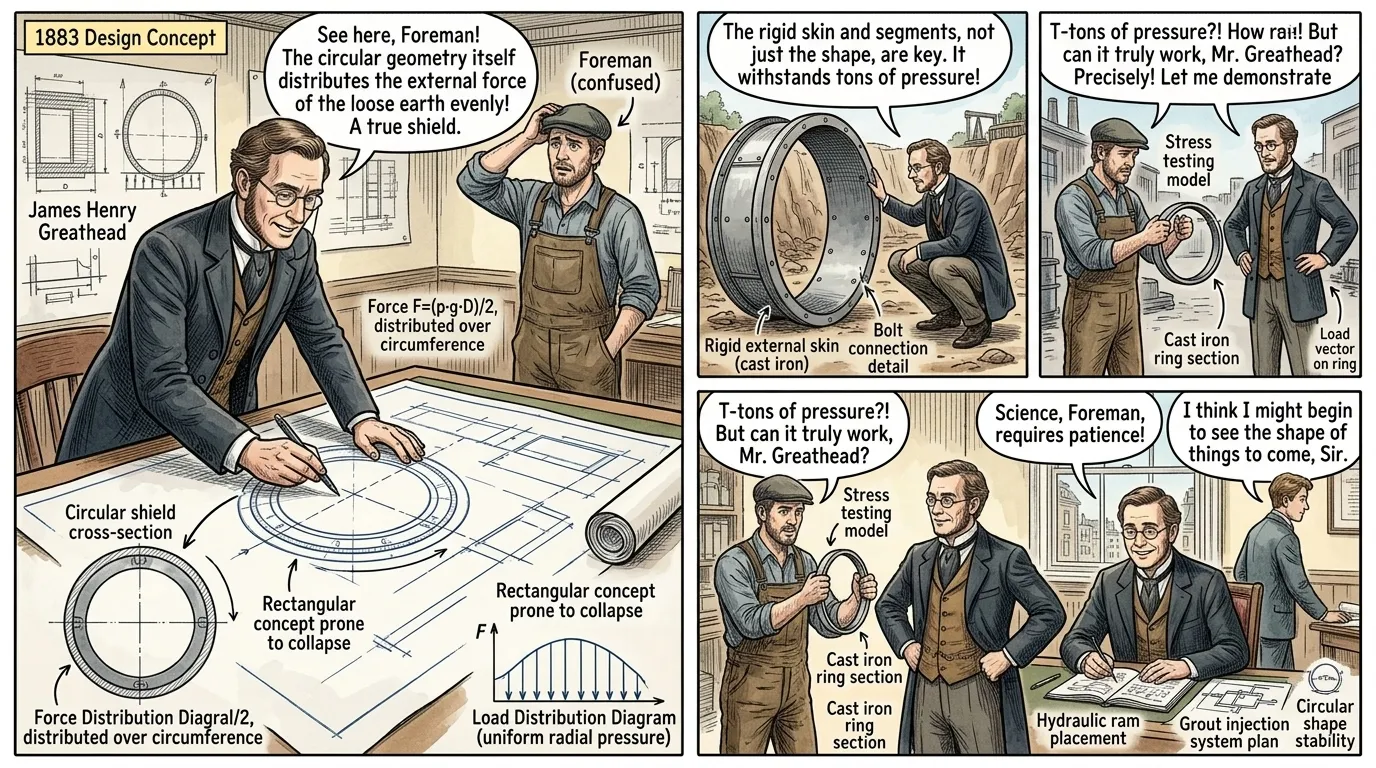
Greathead's early designs grappled with the problem of maintaining structural integrity, often showing timber frameworks that were either too cumbersome or insufficiently robust. A rigid, external skin, capable of withstanding immense pressure from all sides, is fundamental, he explained to a bewildered foreman reviewing a prototype concept in 1883, pointing to its circular profile. This circular geometry, he theorized, would distribute external forces evenly, a crucial departure from the rectangular, prone-to-collapse shafts of prior attempts. His focus shifted from resisting forces to cleverly redirecting them. "Greathead's early designs grappled with the problem of maintaining structural integrity, often showing timber frameworks that were either too cumbersome or insufficiently robust. "A rigid, external skin, capable of withstanding immense pressure from all sides, is fundamental," he explained to a bewildered foreman reviewing a prototype concept in 1883, pointing to its circular profile. This circular geometry, he theorized, would distribute external forces evenly, a crucial departure from the rectangular, prone-to-collapse shafts of prior attempts. His focus shifted from resisting forces to cleverly redirecting them."
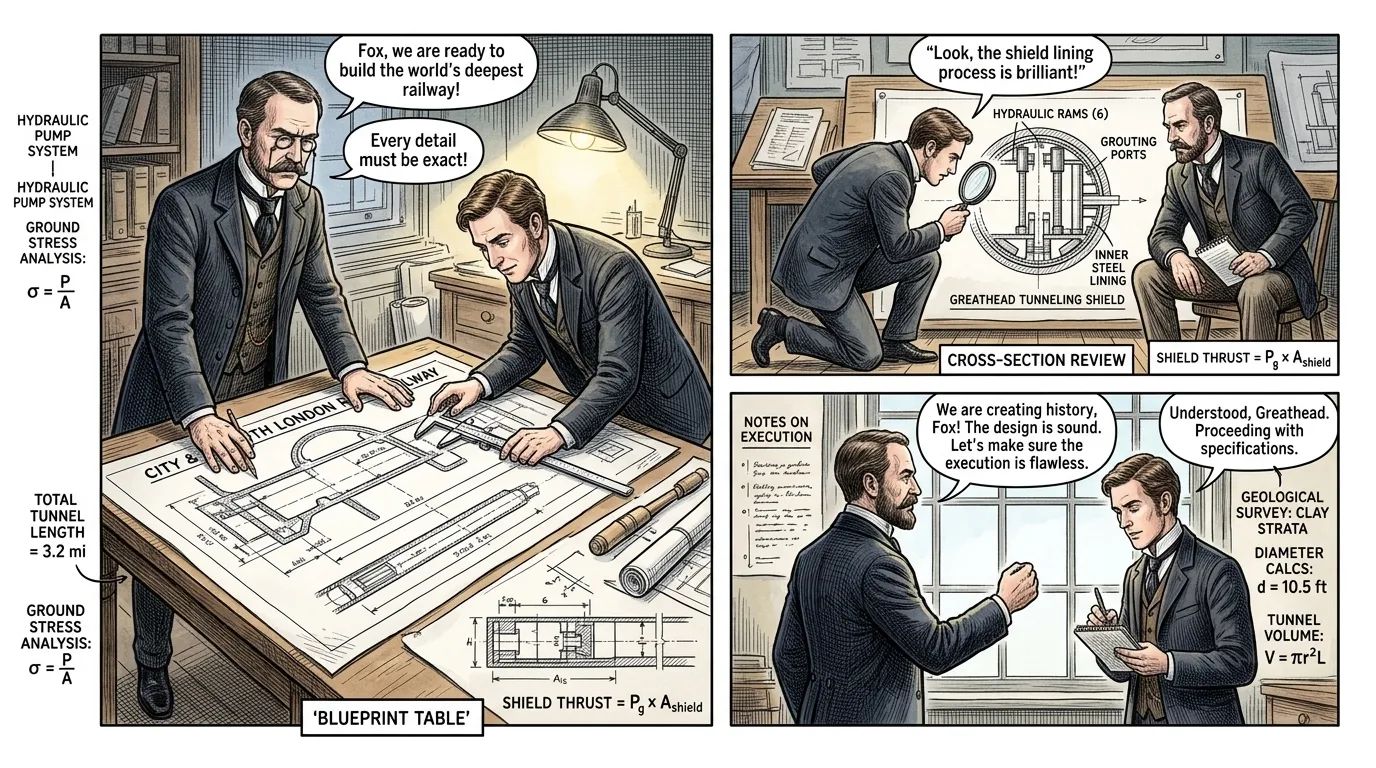
The core principle, then, is continuous support and immediate lining, Greathead articulated to his lead engineer, Francis Fox, in late 1884, overseeing the final drawings for the City & South London Railway project. His innovative tunneling shield acted as a mobile, temporary support, creating a safe chamber for workers at the cutting face. It's a fortress that moves, Fox noted, admiring the detailed blueprints, excavating earth, pushing forward with hydraulic power, and leaving behind a permanent cast-iron cylinder. This seamless integration of excavation and structural reinforcement was the genius of his design. ""The core principle, then, is continuous support and immediate lining," Greathead articulated to his lead engineer, Francis Fox, in late 1884, overseeing the final drawings for the City & South London Railway project. His innovative tunneling shield acted as a mobile, temporary support, creating a safe chamber for workers at the cutting face. "It's a fortress that moves," Fox noted, admiring the detailed blueprints, "excavating earth, pushing forward with hydraulic power, and leaving behind a permanent cast-iron cylinder." This seamless integration of excavation and structural reinforcement was the genius of his design."
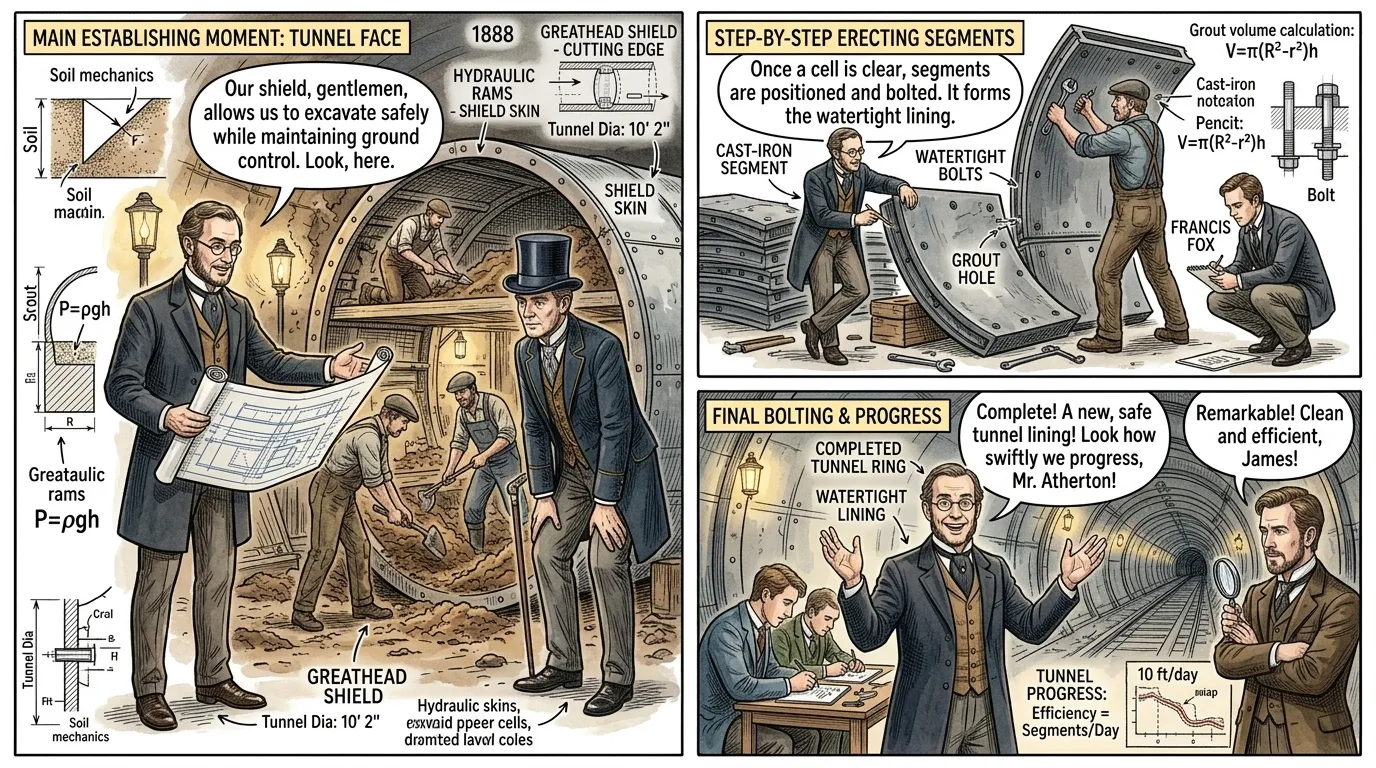
The Greathead Shield was essentially a thick, cylindrical steel shell, its sharp forward edge designed to bite into the earth. Within this protective casing, workers could excavate soil safely, shielded from immediate collapse, while powerful hydraulic rams pushed the entire structure forward. As the shield advances, Greathead explained to a visiting dignitary in 1888, during an early construction phase, pre-fabricated cast-iron segments are bolted together behind it, forming the permanent, watertight tunnel lining. This method drastically improved safety and speed, fundamentally changing subterranean construction. "The Greathead Shield was essentially a thick, cylindrical steel shell, its sharp forward edge designed to bite into the earth. Within this protective casing, workers could excavate soil safely, shielded from immediate collapse, while powerful hydraulic rams pushed the entire structure forward. "As the shield advances," Greathead explained to a visiting dignitary in 1888, during an early construction phase, "pre-fabricated cast-iron segments are bolted together behind it, forming the permanent, watertight tunnel lining." This method drastically improved safety and speed, fundamentally changing subterranean construction."
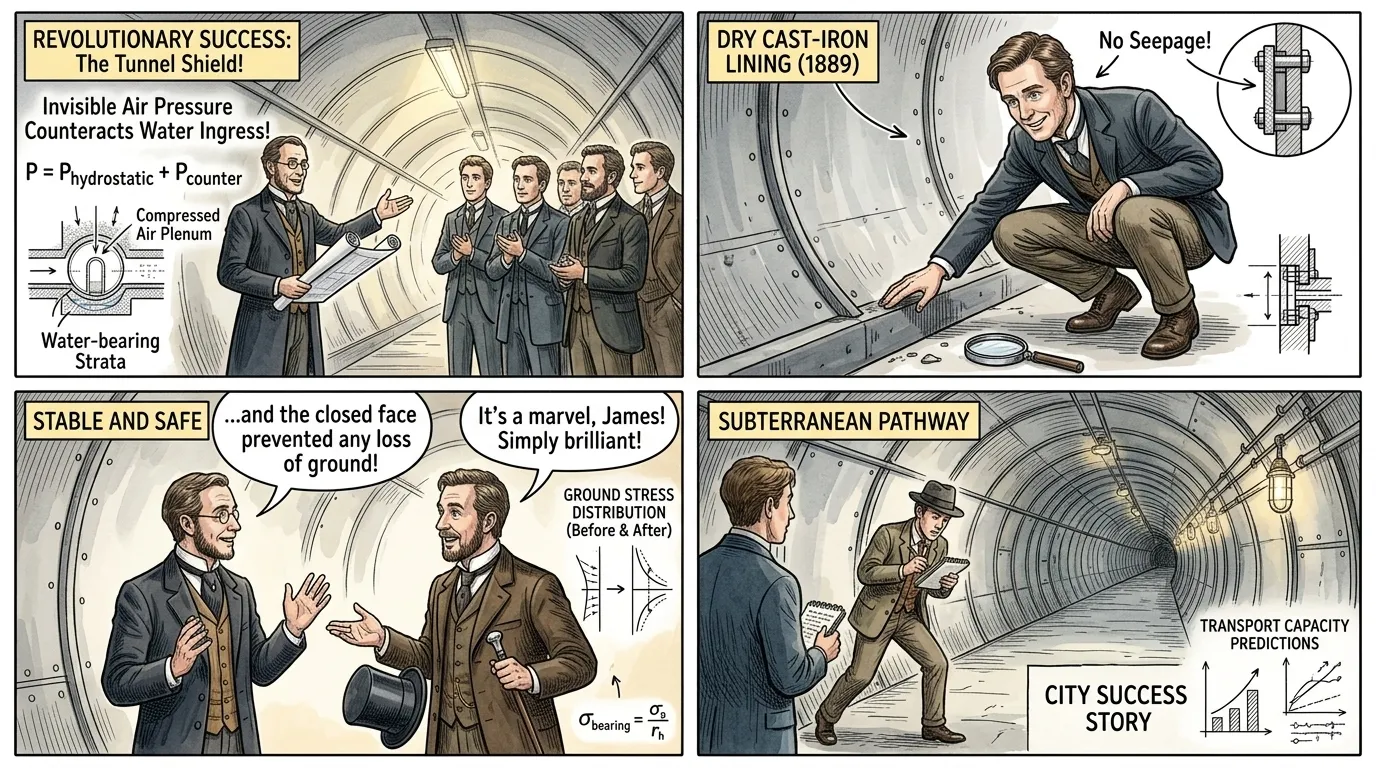
Crucially, the shield's closed-face design and the application of compressed air within the working chamber proved revolutionary, Greathead proudly declared to a group of engineers inspecting a completed tunnel section in 1889. This counteracted the immense pressure of London's water-logged clay, precisely preventing the ingress that plagued earlier attempts. The compressed air pushed back against the water, keeping the excavation dry and stable, allowing the rapid, secure installation of the cast-iron lining. This triumph directly addressed the "engineering nightmare" of water ingress they had discussed years prior. ""Crucially, the shield's closed-face design and the application of compressed air within the working chamber proved revolutionary," Greathead proudly declared to a group of engineers inspecting a completed tunnel section in 1889. "This counteracted the immense pressure of London's water-logged clay, precisely preventing the ingress that plagued earlier attempts." The compressed air pushed back against the water, keeping the excavation dry and stable, allowing the rapid, secure installation of the cast-iron lining. This triumph directly addressed the "engineering nightmare" of water ingress they had discussed years prior."
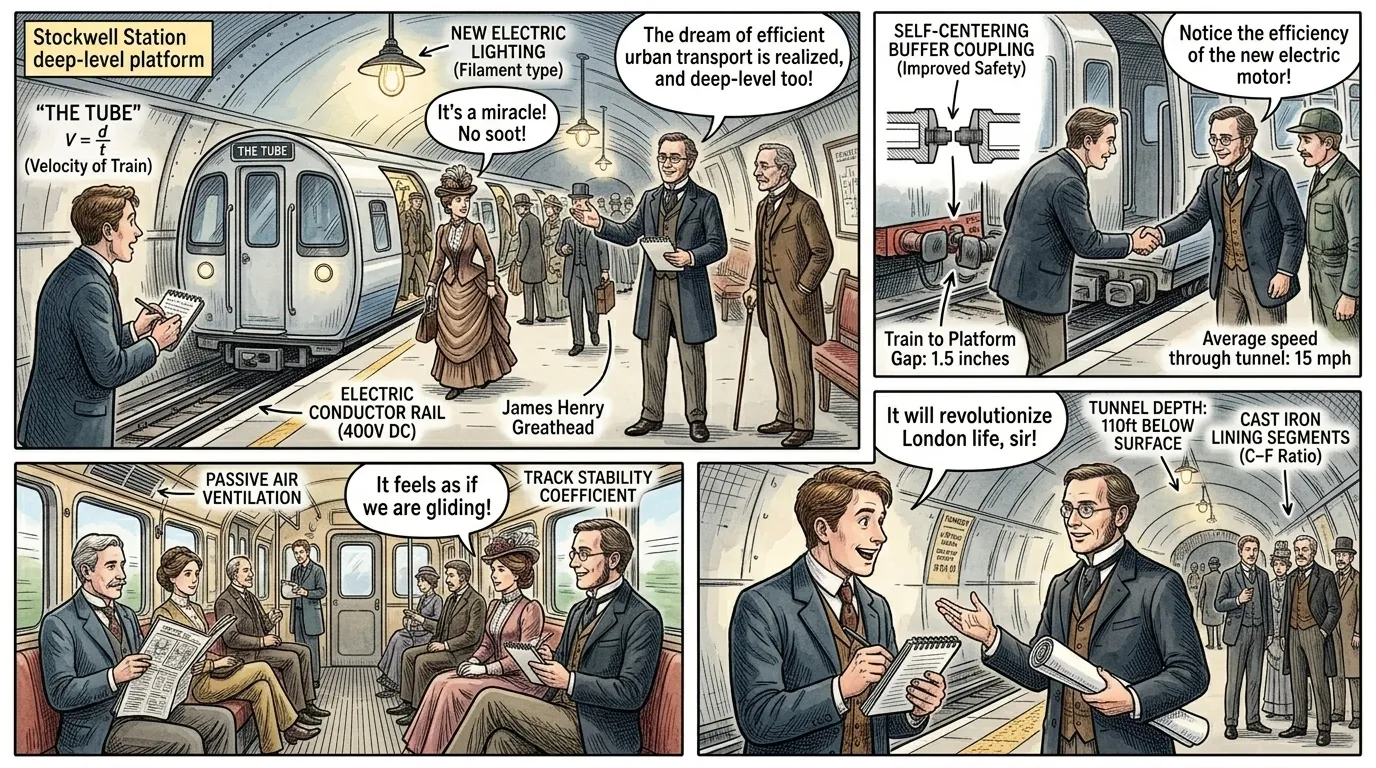
City & South London Railway, bin sekiz yüz doksan yılında açıldı ve Londralılara yüzeydeki trafik sıkışıklığından bir kaçış sunarak şehir yaşamını anında dönüştürdü. "Bu gerçekten şaşırtıcı bir başarı, şehrin altında kesintisiz bir yolculuk," diye hayranlıkla haykırdı bir gazete muhabiri, ilk yolcular Stockwell istasyonunda trenden inerken. Greathead'in kalkanı sayesinde mümkün olan derin seviyeli "tüp" sistemi, pahalı yüzey mülkü edinmeye gerek kalmadan hatların inşa edilmesine olanak sağladı, bu da maliyetleri ve aksaklıkları önemli ölçüde azalttı. Bu model, dünya genelindeki yeraltı ulaşım ağları için hızla bir örnek teşkil etti.
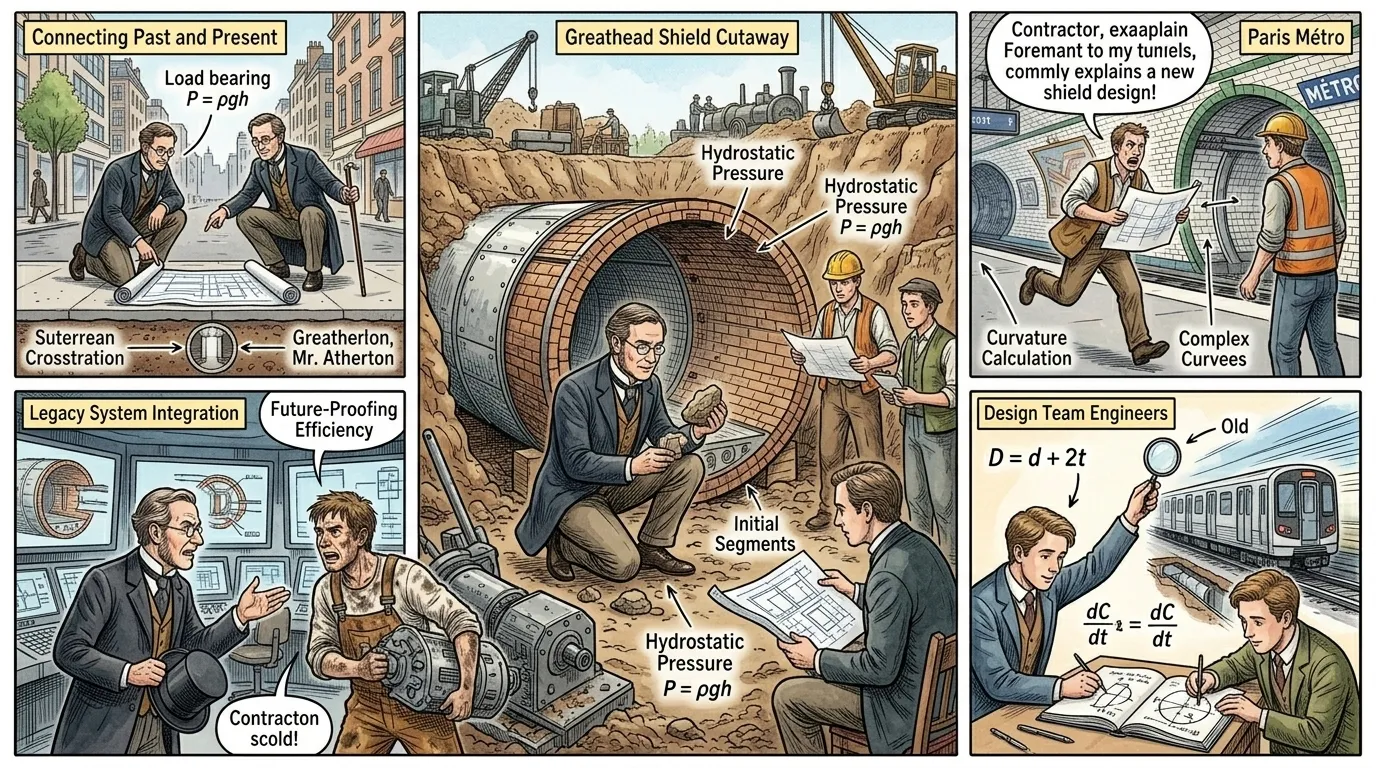
Greathead'in Metro Sistemi kalkanının mirası küresel çapta yankılanmakta, modern şehirleri şekillendirmekte ve benzeri görülmemiş bir kentsel genişlemeyi mümkün kılmaktadır. Paris Metrosu'ndan New York Metrosu'na ve sayısız diğerlerine kadar, bu yeraltı arterleri milyarlarca insanın günlük yaşamını kolaylaştırmaktadır. Bir zamanlar aşılamaz görünen jeolojik engelleri ilerleme yollarına dönüştürerek insan zekasının bir örneğini teşkil etmektedirler. James Henry Greathead'in öncü çalışmaları, küresel metropolleri yönlendirmeye devam eden görünmez ağların temelini oluşturmaktadır.