The Rosetta Stone — 用中文阅读
故事标题目前仍是英文,正文是中文。
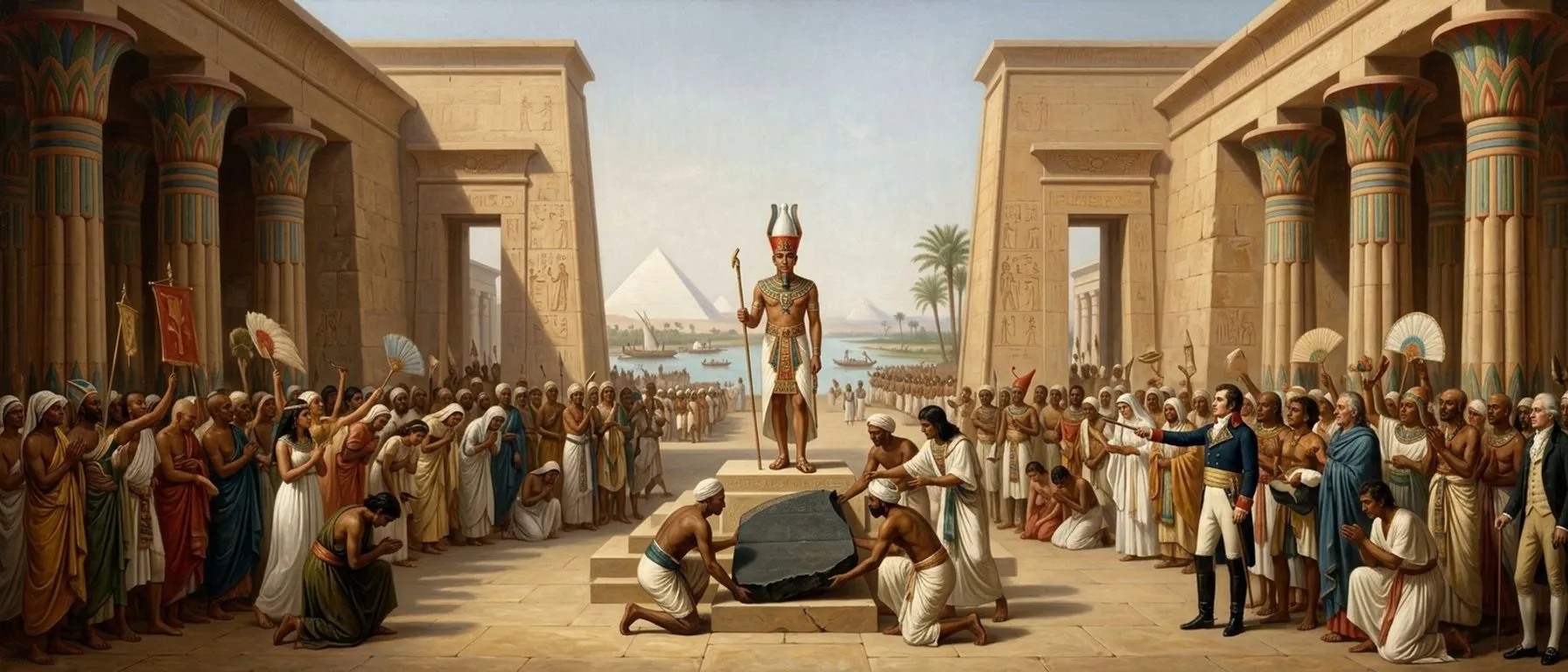
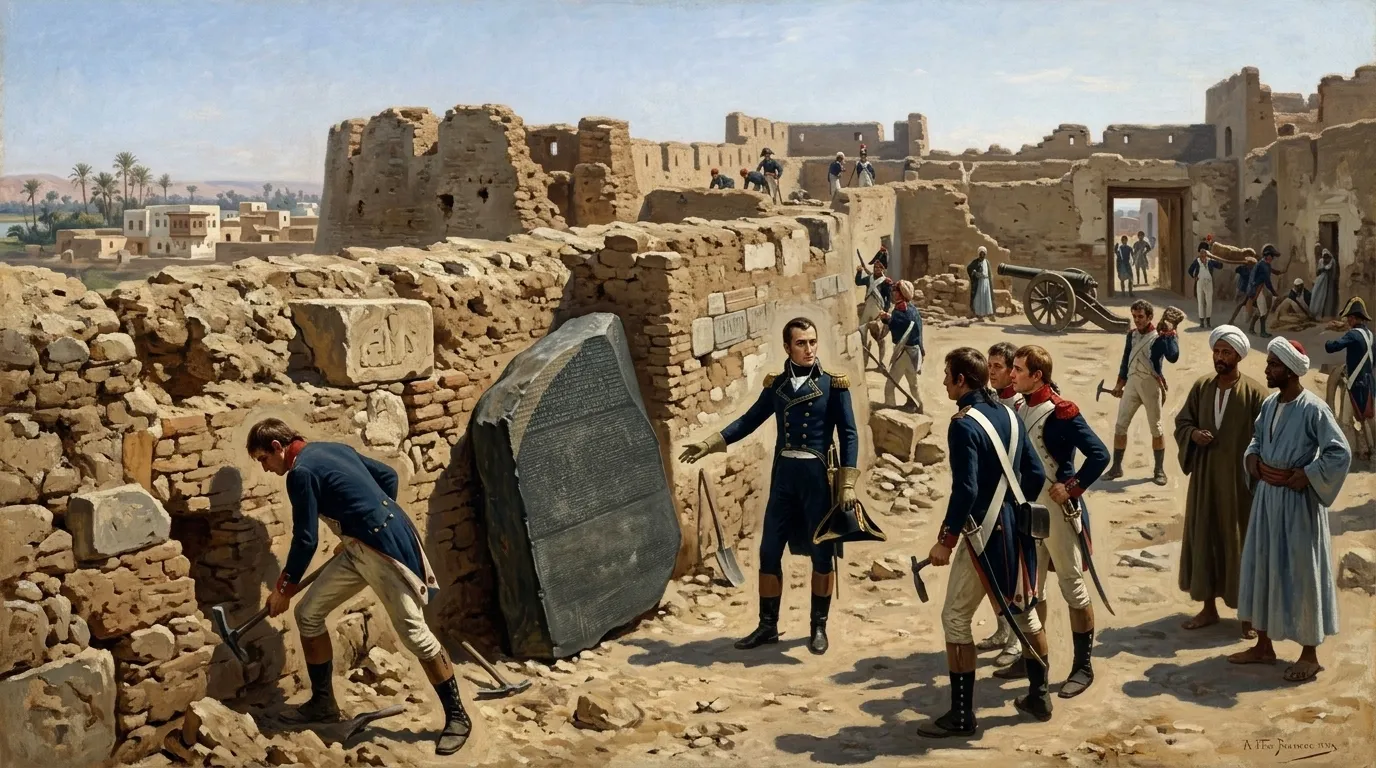
"公元一七九九年七月,在尼罗河三角洲西支,阳光炙烤的拉希德——古称罗塞塔——尘土飞扬。在灼热的埃及艳阳下,朱利安堡的城墙开始坍塌。法国工程师和士兵们正努力加固这座古老的马穆鲁克堡垒,以抵御预期的英军进攻,他们凿击着摇摇欲坠的石墙。工程兵中士皮埃尔-弗朗索瓦·布沙尔监督着这项工作。当镐头敲击和撬动时,一块巨大的深色石头,与墙上其他石头截然不同,慢慢地倾斜松动了。它的一面被打磨光滑,上面刻有三段不同的文字:顶部是法老的象形文字,中间是草书的埃及文字,底部是希腊文字。空气中弥漫着被阳光炙烤的泥土和汗水的味道,瞬间凝滞了。布沙尔的目光追随着那些陌生却又整齐的线条,他感觉到这个意外的发现具有深远的意义,仿佛岁月的重量突然显露无遗。他指挥手下小心翼翼地取出这块石板,一份无声的见证正从它漫长的埋藏中浮现出来。"
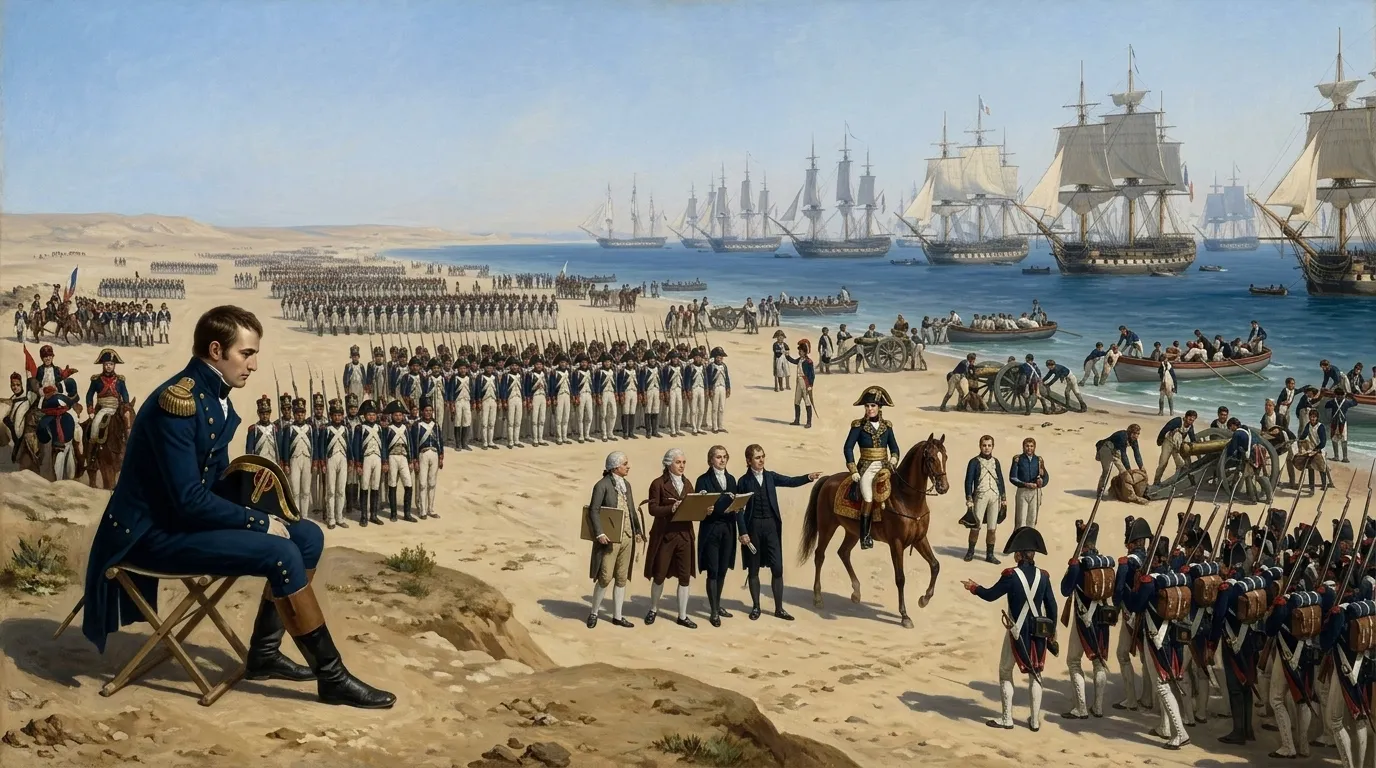
"两年之前,也就是一七九八年夏天,一支庞大的法国舰队,载着拿破仑·波拿巴将军和他的军团,在阿布基尔湾抛锚停泊。他们的船帆曾一度鼓满了征服埃及的雄心。随同这支军事力量而来的,还有一群学者、智者和艺术家——一个由一百六十多位精英组成的科学与艺术委员会。他们的任务不仅仅是征服,更是要编目、理解、揭示这片古老土地的秘密。从他们的靴子踏上亚历山大港附近的沙土那一刻起,这些人便四散开来,描绘古迹,测量废墟,收集动植物标本。这次远征是一项宏大的智力事业,旨在将欧洲理性的光芒带到神秘的尼罗河谷。在开罗,在占领的混乱之中,他们建立了各种机构,其中包括埃及研究院。在那里,卷轴被展开,古老的文本,尽管当时仍无法解读,也得到了研究。一切都已准备就绪,等待着启示,尽管没有人知道真正的理解会从何而来。"
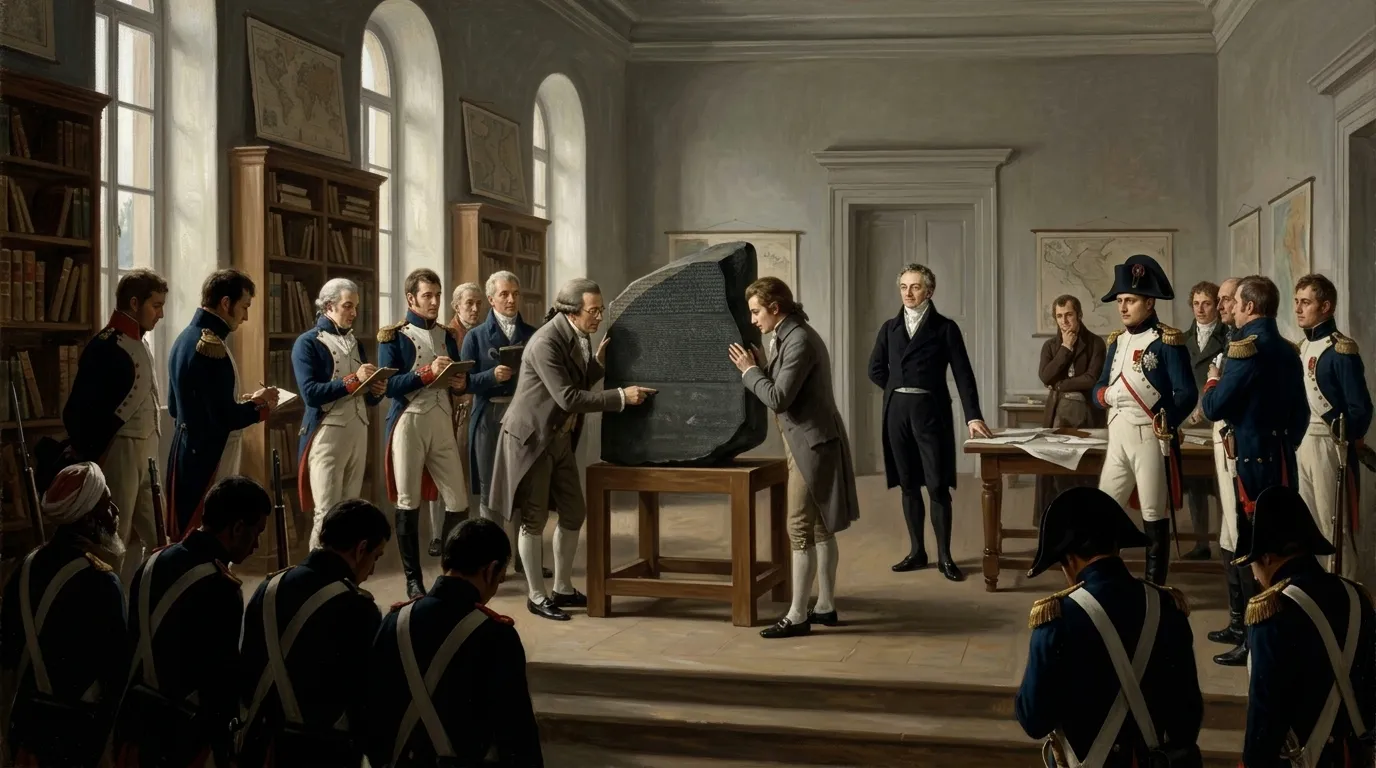
{ "translation": "刻有文字的黑色石碑的消息很快传到了开罗埃及研究所的学术圈。到了一七九九年八月,这块石碑,已从拉希德小心翼翼地运到研究所内,供人查验。探险队的印刷厂厂长让-约瑟夫·马塞尔,一位文学家和敏锐的观察者,与年轻的工程师爱德华·德·维利耶·迪·泰拉日,是首批仔细审视其表面的人。他们看到了顶端残缺的象形文字,底部优雅的希腊文,以及中间神秘的文字。幸运的是,希腊文是清晰可辨的。它讲述了埃及祭司在孟菲斯发布的一项法令,旨在公元前一百九十六年表彰托勒密五世·埃皮法尼斯。关键的短语,“此法令应刻于坚硬石碑上,以神圣文字、本地文字和希腊文字书写”,立刻引起了他们的注意。一股兴奋的浪潮在聚集的学者中荡漾开来。这不仅仅是一件文物;它是一把潜在的钥匙,一个通向已沉寂十四个世纪的语言的希望,其秘密被锁在巨大的墙壁和莎草纸卷轴中。手抄本和油墨拓本很快被委托制作,以传播这一重大发现。" }
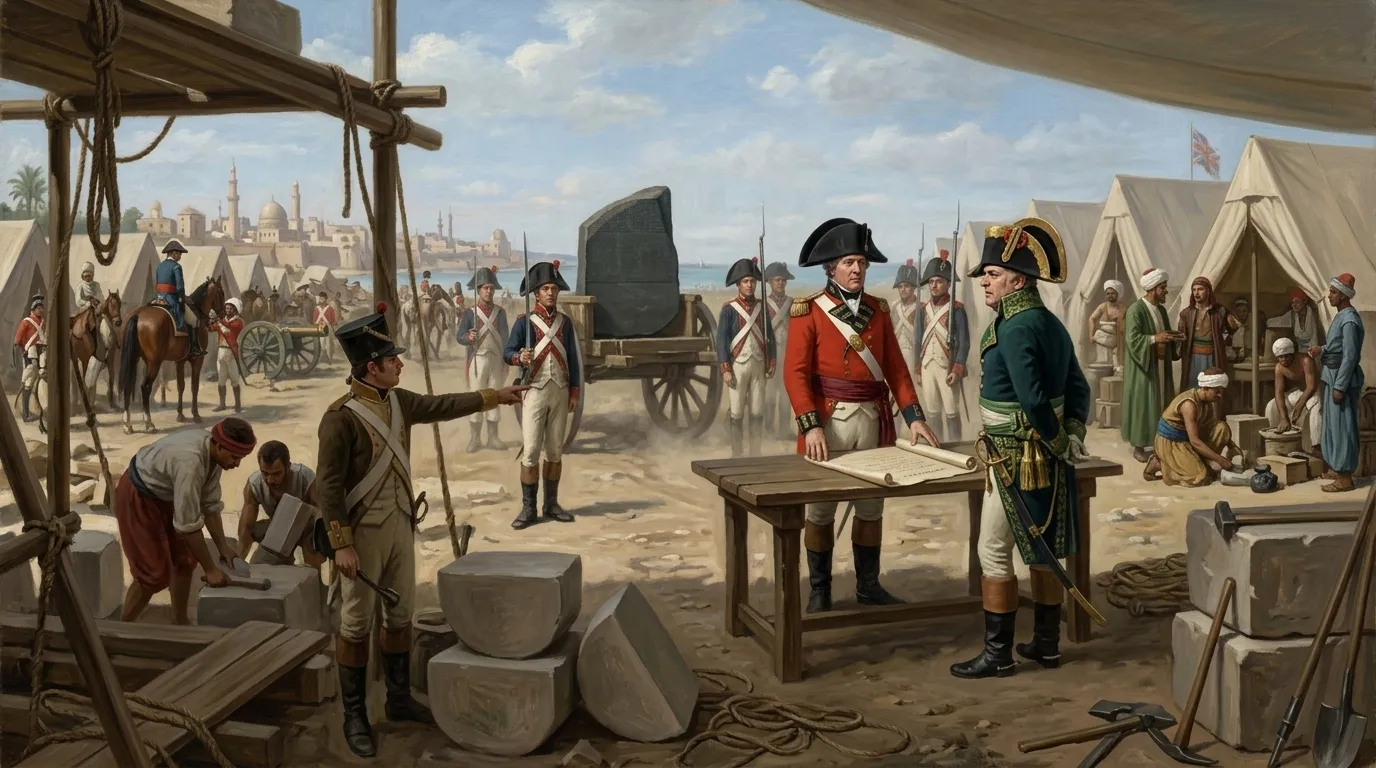
{ "title": "罗塞塔石碑的命运", "paragraphs": [ "随着埃及战局对法国不利,罗塞塔石碑成为了争夺的焦点。一千八百零一年,英军向亚历山大港推进,法军总司令雅克-弗朗索瓦·梅努将军,将石碑视为法国智力胜利的象征,而不仅仅是科学奇迹。尽管军事失利不断升级,他仍拒绝交出石碑。法军被围困,士气低落,节节败退。亚历山大港投降后,双方签署了《亚历山大条约》。英方通过早先的报告和截获的复制品,深知石碑的重要性,因此要求移交石碑。梅努将军顽抗到底,试图藏匿石碑,声称这是他的私人财产。但以外交官兼文物研究者威廉·理查德·汉密尔顿等人物为首的英军态度坚决。他们在梅努将军的个人行李中发现了这块被藏匿的石板。这次移交并非友好的交换,而是一次坚定的夺取,是超越黄金和武器的战利品,代表着一个失落文明的全部知识。", "“这块石碑属于法国!它是我个人收藏的一部分!”法国将军喊道,声音因愤怒而沙哑。一位面容严肃的英国军官回答道:“投降条款写得很清楚,将军。你们探险队发现的所有文物现在都归属于陛下军队的财产。”" ] }
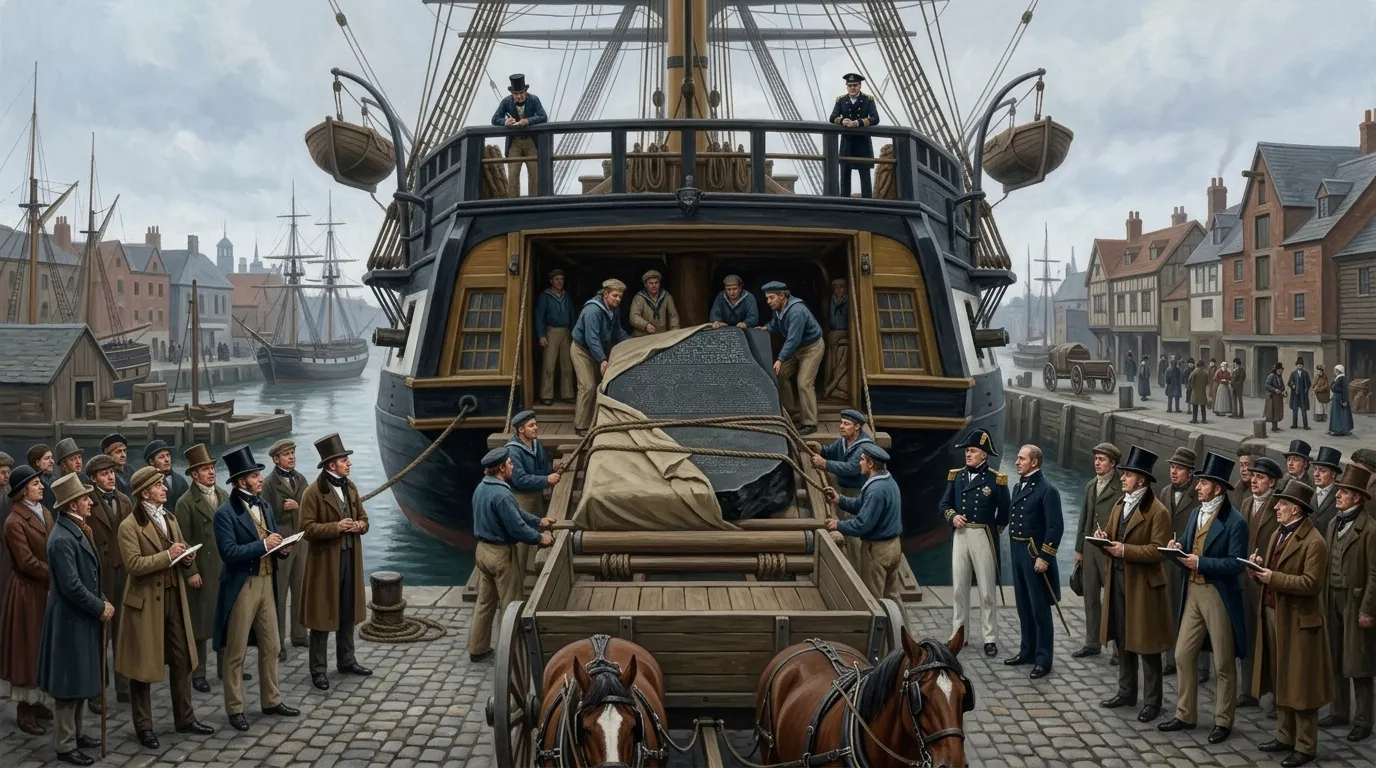
{ "translation": "罗塞塔石碑一经英军缴获,便开始了其意义非凡的旅程。它被帆布包裹,小心翼翼地存放于一艘被俘获的法国护卫舰——“埃及人号”皇家军舰上,这件珍贵的货物横渡地中海,驶向英格兰。在顺风的推动下,航程十分迅速。这块沉重的石头,象征着遥远的土地和古老的过去,是一位沉默的乘客,它的秘密仍未被揭示。一八零二年二月,船只停靠在朴茨茅斯寒冷的英格兰海岸。从那里,它被运往伦敦,这座城市正因新世纪的商业和知识活力而喧嚣不已。在找到其永久归宿之前,这块石头曾在文物学会短暂展出,让学者和好奇的市民们第一次亲眼目睹这件有望解开埃及被遗忘之声的文物。伴随其到来的是一种显而易见的兴奋,一种感觉,即某种真正具有变革性的东西已被带到英国的土地上,一把通往以前无法想象的世界的钥匙。" }
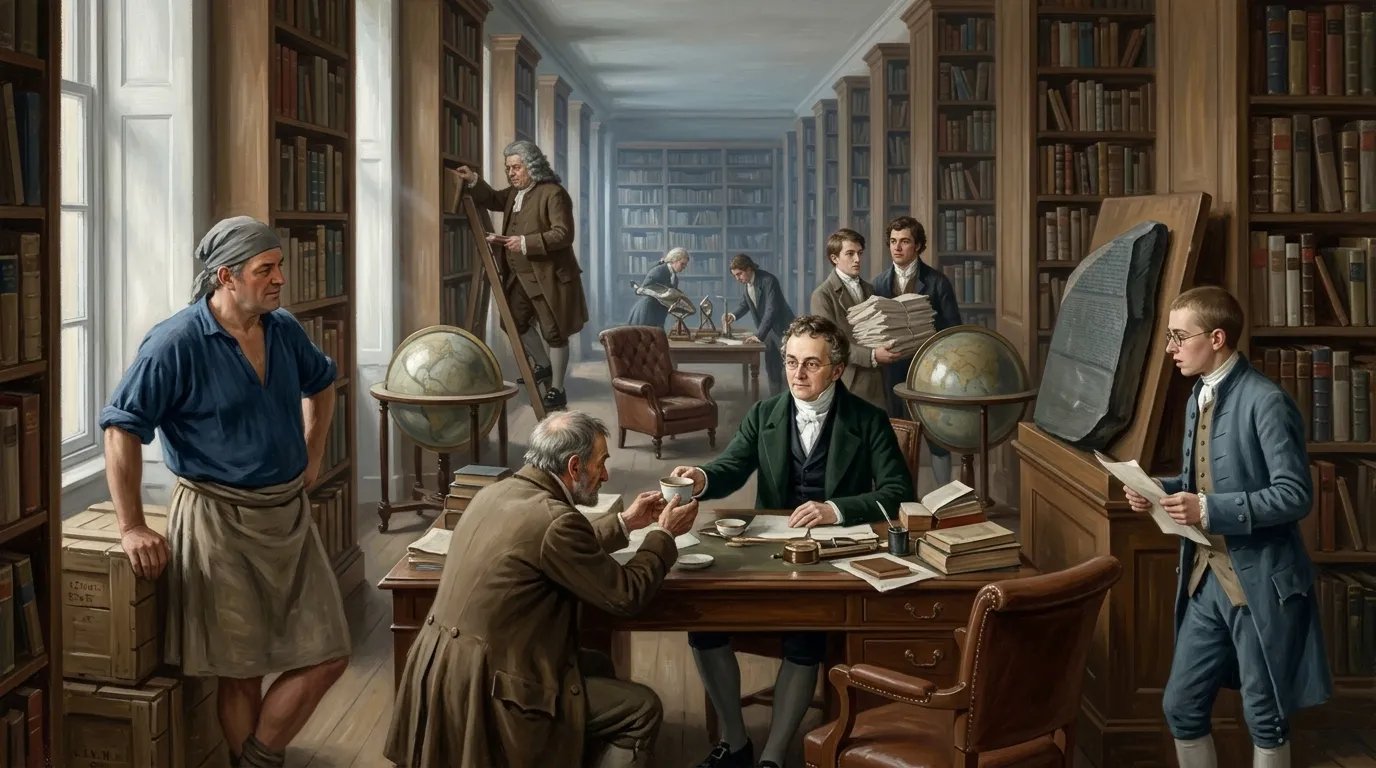
In London, the Rosetta Stone became a focal point of scholarly endeavor. Among the first to seriously tackle its mystery was Thomas Young, a polymath of prodigious intellect, a physician, physicist, and linguist. Working from copies and direct observation in the British Museum, Young, in his studies around 1814, focused intently on the middle script, which he correctly identified as demotic, a cursive form of ancient Egyptian. He began by comparing the demotic with the known Greek text, painstakingly searching for recurring patterns and proper names. His genius allowed him to make significant initial breakthroughs. Young discerned that some hieroglyphs were phonetic, particularly those used for foreign names like 'Ptolemy' and 'Cleopatra' within cartouches—the oval enclosures signifying royal names. He correctly identified several phonetic values and established that the demotic script was partially alphabetic, partially syllabic. Though he could not fully decipher the hieroglyphs, his insights formed the crucial foundational steps, a daring leap into the darkness that would guide others to the full light of understanding.
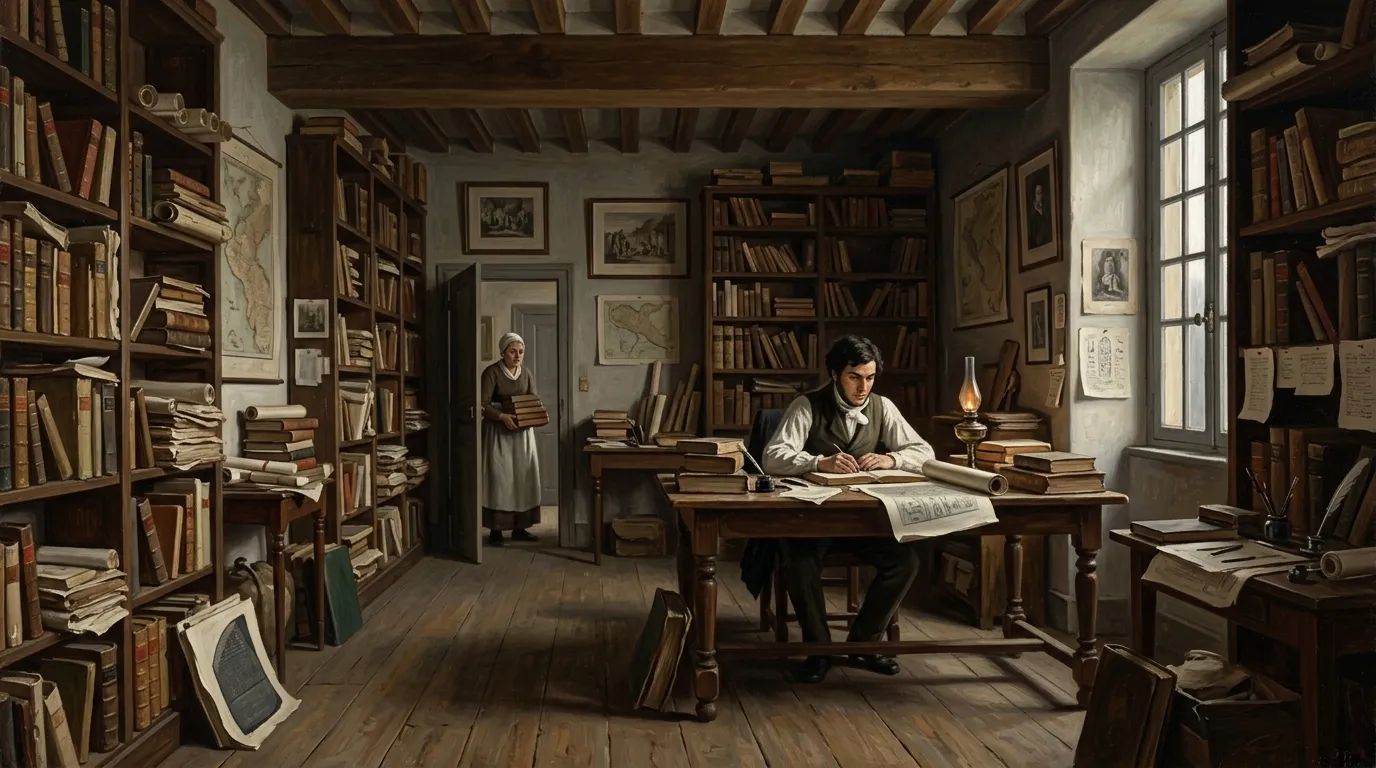
{ "translation": "在海峡对岸的法国格勒诺布尔,一位名叫让-弗朗索瓦·商博良的年轻人怀揣着一种非凡的痴迷。即使在十八世纪初还是个孩子的时候,他就已经被拿破仑埃及远征队的故事以及它所揭示的神秘文字所吸引。与扬不同,商博良将他整个学术生涯都奉献给了埃及学,学习科普特语,这种古埃及语的晚期后裔,他相信它掌握着解开谜团的钥匙。他如饥似渴地阅读了每一份罗塞塔石碑的副本,以及从尼罗河带回来的每一处铭文。到了二十岁出头的时候,商博良,一个瘦削而专注的青年,他的书房是一个堆满了知识的圣殿,里面摆满了文献、地图和象形文字的图画。他孜孜不倦地工作,被一个单一的目标所驱动:倾听法老们的声音。尽管扬取得了进展,但未能完全破译,这加剧了他的挫败感和决心。他认为象形文字不仅仅是像许多人认为的那样是象征性的,而是包含语音元素,他对科普特语的深刻理解证实了这一想法。" }

"{\"history\": \"时值一八二二年,巴黎。让-弗朗索瓦·商博良,一位年近三十二岁的男子,瘦削的身躯因紧张而颤抖,正面临一个关键的顿悟。他收到了阿布辛贝勒神庙新近获得的铭文拓片,其中一个王名圈内有四个独特的符号。与此同时,他重新审视了罗塞塔石碑上的王名圈以及菲莱方尖碑上刻有“克利奥帕特拉”名字的王名圈。商博良将托马斯·扬早期关于“托勒密”的研究与新证据结合起来,取得了里程碑式的突破。他意识到,皇家王名圈内的象形文字并非纯粹的象征符号,而是主要表音的,拼写出了法老和女王的名字。他看到了太阳圆盘代表“拉”以及“斯”音的表音价值,并将它们与科普特语联系起来。这个改写历史的“尤里卡”时刻,如一道闪电般击中了他。他冲出书房,跑到他哥哥的办公室,大喊:“我找到了!”——“Je tiens l'affaire!”。埃及沉寂的语言,终于通过这不起眼的王名圈开始发声。\\n\\n“我找到了!”一个人喊道,声音因巨大的顿悟而颤抖。他疯狂地指向一份文件。他的哥哥吓了一跳,问道:“怎么了?你发现了什么?”第一个人上气不接下气地回答:“那些名字,那些名字!它们不只是符号,它们是声音!法老们开口说话了!”\"}"
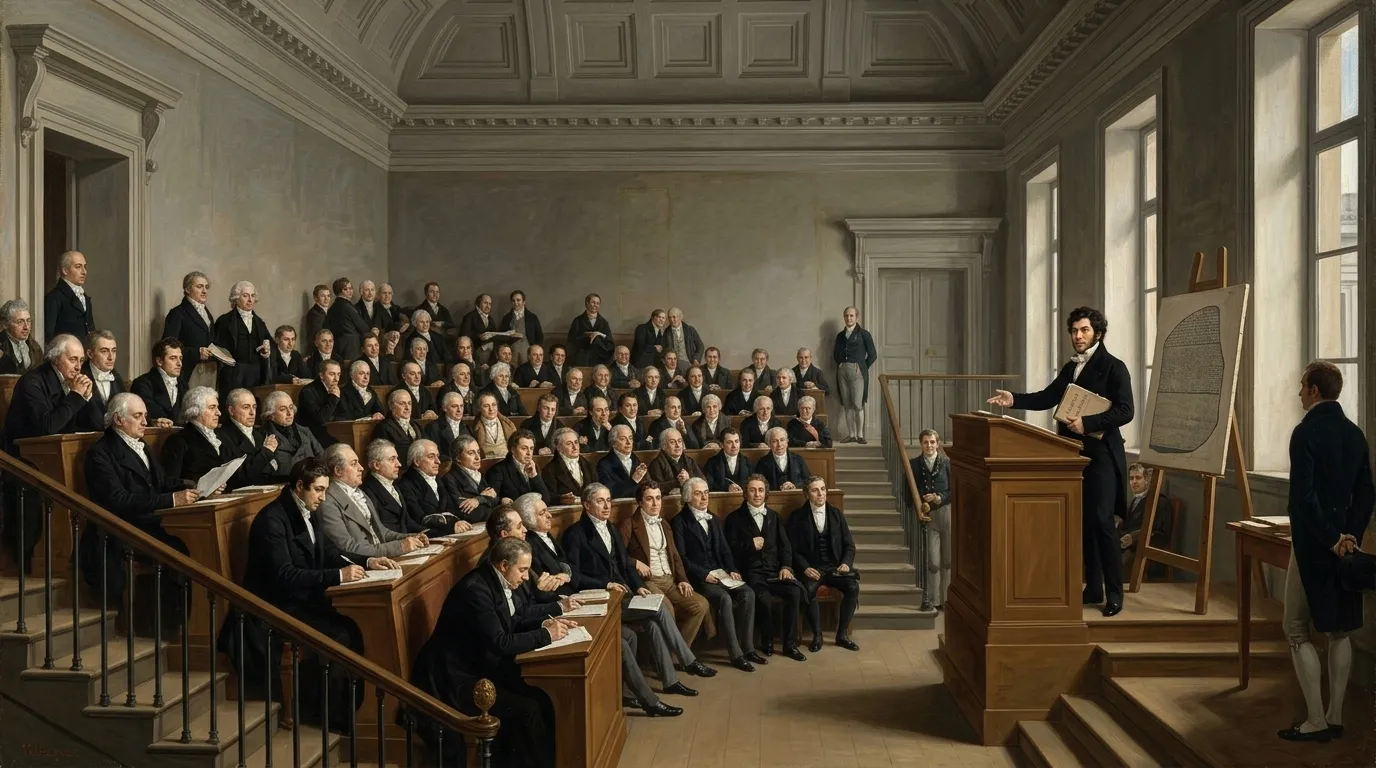
On September 27, 1822, before the esteemed Académie des Inscriptions et Belles-Lettres in Paris, Jean-François Champollion presented his monumental findings in his 'Lettre à M. Dacier.' With quiet dignity, yet radiating immense intellectual power, he systematically laid out his evidence: the comparison of the hieroglyphic, demotic, and Greek scripts on the Rosetta Stone, his insights into the phonetic nature of cartouches, and his ability to read the names of pharaohs long silent. The room, filled with Europe's most brilliant minds, listened in rapt attention as he demonstrated how the seemingly pictorial hieroglyphs could be translated into sounds and words, matching the Coptic language he knew so well. He revealed the system, a complex blend of phonetic, ideographic, and determinative signs, that governed the ancient tongue. A profound silence descended as the implications settled: a civilization buried under millennia of sand and incomprehensibility was now, literally, speaking again. The weight of fourteen centuries of silence was lifted, and the stories of Egypt, from the earliest kings to the Ptolemaic Greeks, were once more accessible to humankind. “...and thus, gentlemen, the names of the pharaohs, long obscured by mere pictograms, reveal their true phonetic values! The Coptic tongue holds the key!” declares Champollion, his voice resonating with clarity.
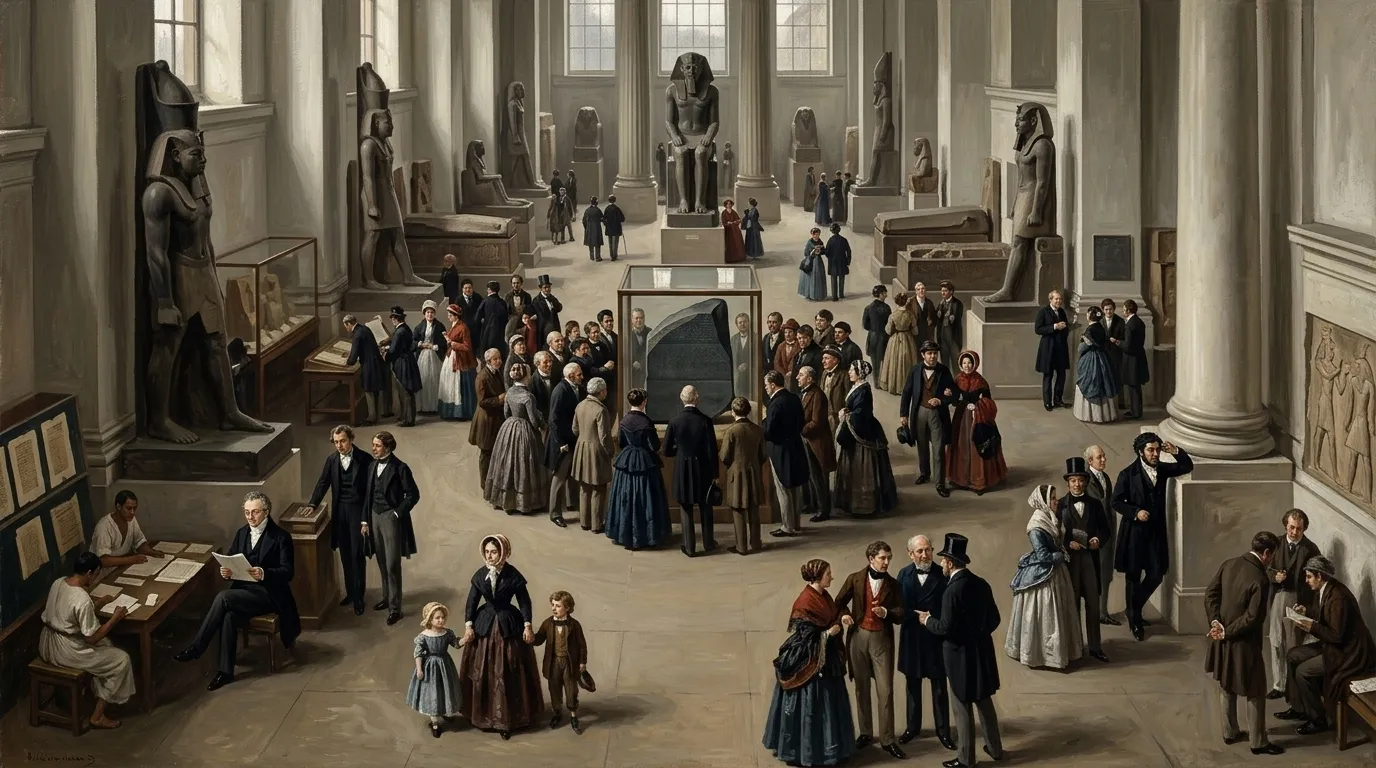
The decipherment of the Rosetta Stone, achieved primarily by Jean-François Champollion, irrevocably altered humanity's understanding of ancient Egypt. The single dark slab, now residing permanently in the British Museum, became the bridge between a lost world and the modern mind. With the hieroglyphic system understood, scholars flocked to the Nile Valley, now able to read the inscriptions on colossal temple walls, the texts in royal tombs, and the narratives on papyri. The faces of pharaohs, once mute, now spoke their names, their deeds, their religious beliefs, and their aspirations across millennia. Akhenaten's revolutionary monotheism, the military campaigns of Ramesses the Great, the burial rituals of Tutankhamun – all these, and countless other narratives, emerged from the silence. The Rosetta Stone did not merely translate a decree; it resurrected an entire civilization, allowing its majestic voice to echo once more, transforming Egypt from an enigma into a vibrant, accessible chapter in human history. Its legacy is the endless flow of knowledge that continues to spill from the sands, ceaselessly enriching our understanding of antiquity.