Achille Mbembe — 用中文阅读
故事标题目前仍是英文,正文是中文。

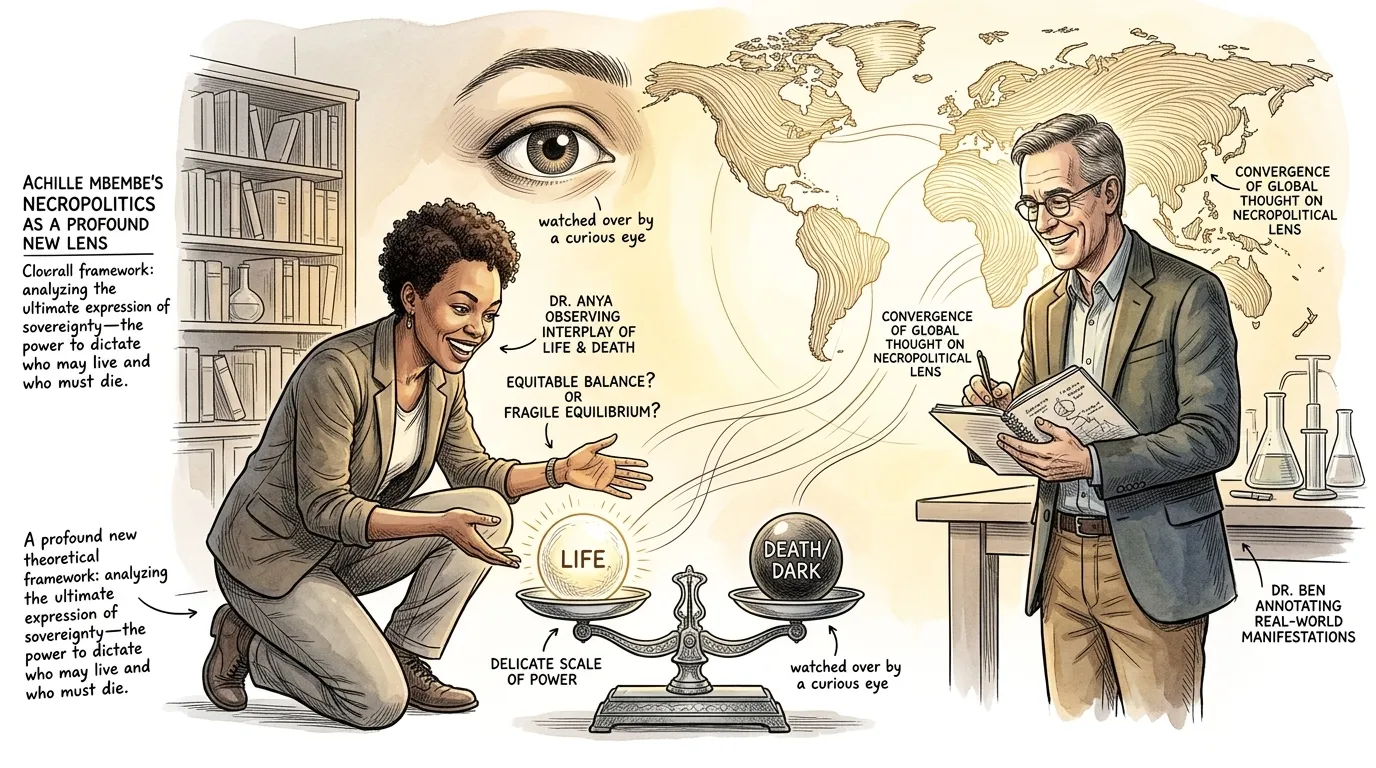
在全球思想交汇之处,喀麦隆哲学家阿希尔·姆贝贝提出了一个深刻的概念,重塑了我们对权力的理解。他的“死力政治”理论迫使我们审视主权的最终利害关系,揭示了权力如何超越单纯的生命治理,积极决定谁可以生、谁可以死,或被判处“社会性死亡”。它是分析当今世界最紧迫的人类挑战的关键视角。 哲学笔记:阿希尔·姆贝贝,哲学家。死力政治。定义谁的生命足够重要得以存活,以及谁可以被弃之不顾任其死亡的权力。
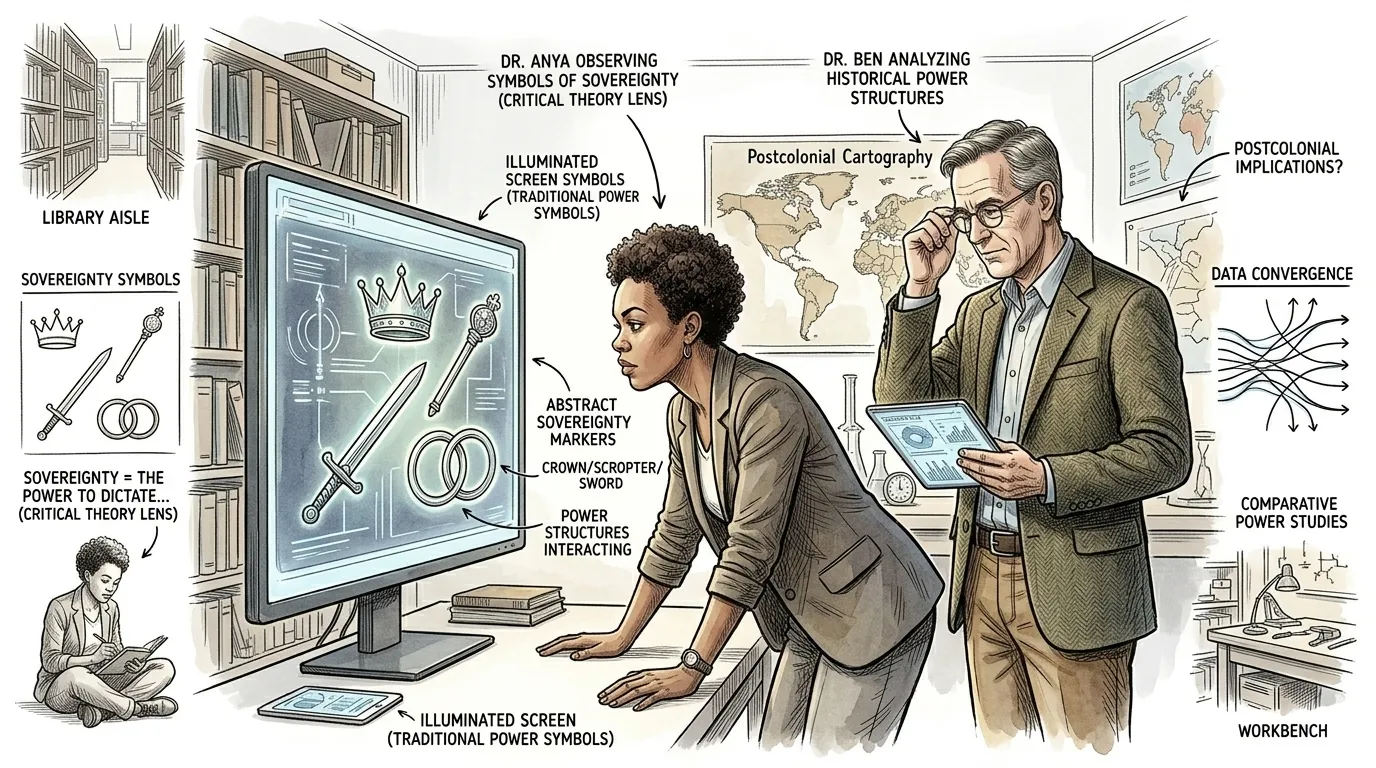
阿尼亚医生转向本医生,若有所思地说道:“传统的主权概念通常侧重于国家对合法暴力的垄断,即杀戮的权利。”她指着屏幕说,“但姆本贝更进一步,认为这种观点未能完全捕捉权力的细微之处,尤其是在后殖民背景下。”本医生点点头,扶了扶眼镜。“确实,姆本贝认为福柯的‘生命政治’——即对生命、健康和人口的管理——虽然至关重要,但并未解释死亡世界的积极生产或某些生命的系统性遗弃。他发现了一个关键的空白,即主权权力不仅控制生命,还控制死亡本身。” “传统的主权概念通常侧重于国家对合法暴力的垄断,即杀戮的权利,”阿尼亚医生指着屏幕说,“但姆本贝更进一步,认为这种观点未能完全捕捉权力的细微之处,尤其是在后殖民背景下。”本医生点点头,扶了扶眼镜。“确实,姆本贝认为福柯的‘生命政治’——即对生命、健康和人口的管理——虽然至关重要,但并未解释死亡世界的积极生产或某些生命的系统性遗弃。他发现了一个关键的空白,即主权权力不仅控制生命,还控制死亡本身。” 哲学笔记:历史问题:主权权力对“杀戮权”的关注,忽略了更广泛的“任其死亡的权利”。本医生引入“生命政治与死亡政治”作为核心区别。
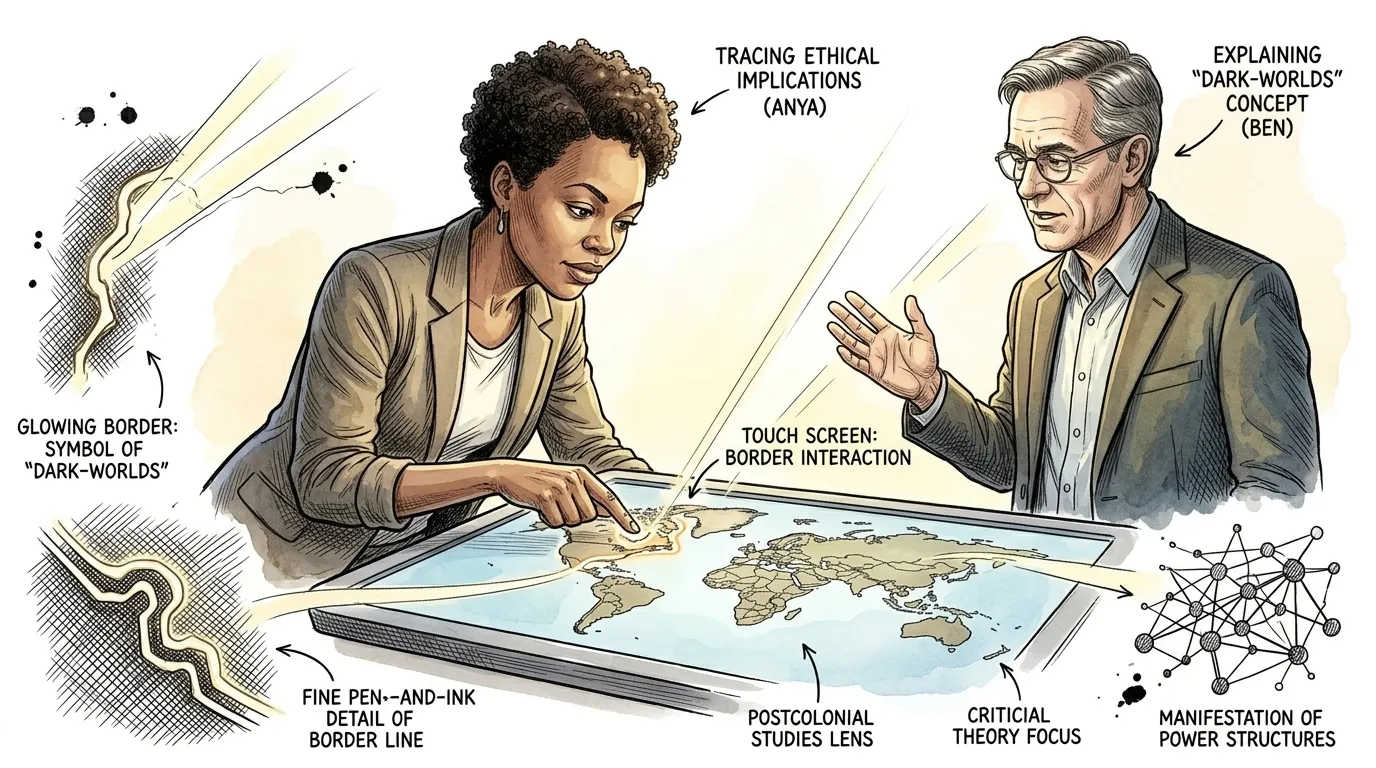
阿尼亚博士凑近屏幕,用手指描绘着一条边界线。“所以,姆贝贝认为,当代权力不仅仅像生命政治那样管理人口以发挥其生产能力,它还积极创造条件,使某些生命被视为可牺牲的,存在于‘社会死亡’的区域中。”她沉思道。本博士肯定地说:“正是如此。想想那些战争、极端贫困或国家忽视相结合,形成他所谓的‘死亡世界’的地区,在这些地方,生命的结构被系统性地瓦解,人口处于一种悬而未决的生命状态。这是一种根本性的转变,从‘使人活’转变为‘任人死’,甚至通过间接手段‘使人死’。” “所以,姆贝贝认为,当代权力不仅仅像生命政治那样管理人口以发挥其生产能力,它还积极创造条件,使某些生命被视为可牺牲的,存在于‘社会死亡’的区域中。”阿尼亚博士沉思道。本博士肯定地说:“正是如此。想想那些战争、极端贫困或国家忽视相结合,形成他所谓的‘死亡世界’的地区,在这些地方,生命的结构被系统性地瓦解,人口处于一种悬而未决的生命状态。这是一种根本性的转变,从‘使人活’转变为‘任人死’,甚至通过间接手段‘使人死’。” 哲学笔记:姆贝贝拓展了福柯的理论,认为主权权力不仅“使人活”,还通过创造“死亡世界”积极地“任人死”。
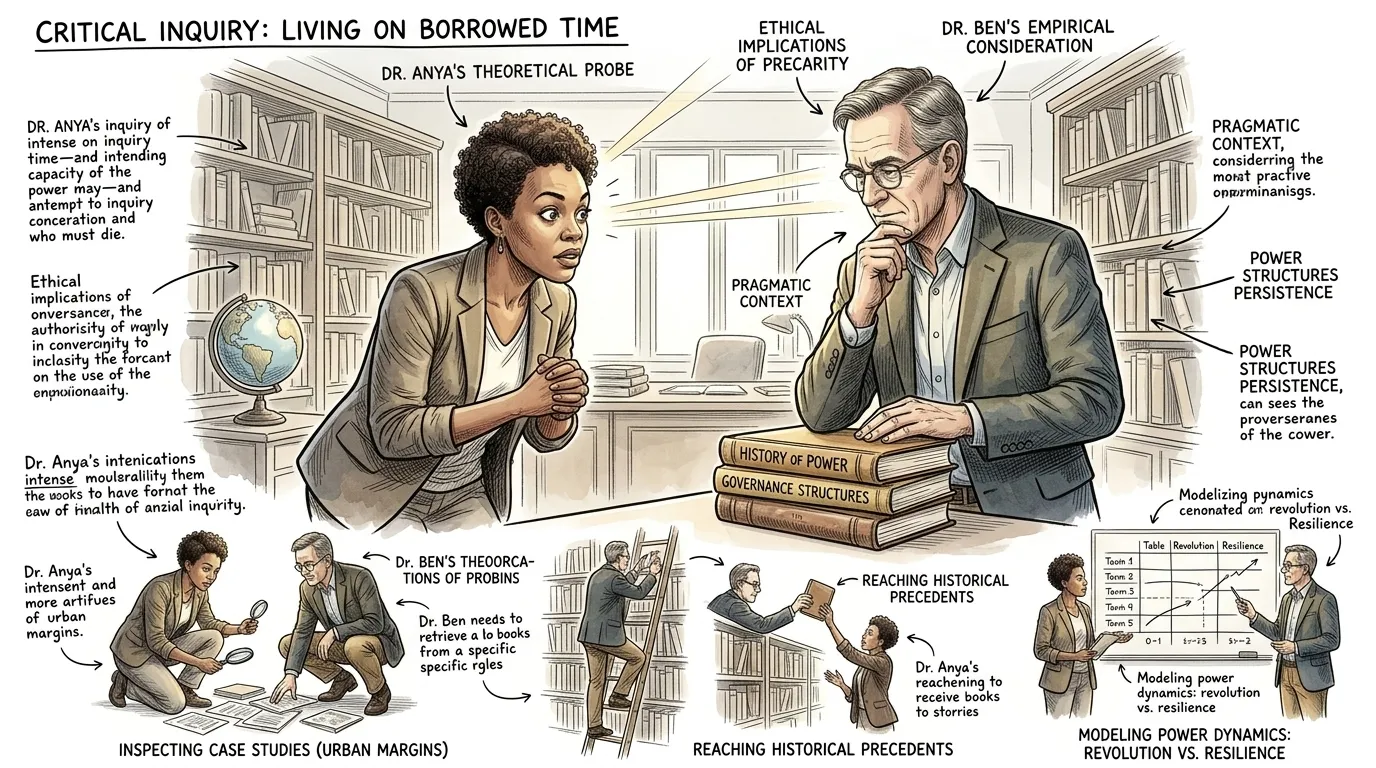
"What does it mean, then, for individuals to live under this necropolitical power?" Dr. Anya asked, looking directly at Dr. Ben. "How does it manifest in daily existence?" Dr. Ben responded with a thoughtful pause. "Mbembe argues that individuals within these 'death-worlds' often exist in a state he describes as 'living on borrowed time.' They are stripped of legal protections, subjected to pervasive surveillance, and their lives are rendered perpetually precarious. As the poet William Butler Yeats once said, 'Things fall apart; the centre cannot hold.' This perfectly captures the disintegration of social and legal order when lives are deemed disposable, a state that becomes not an exception, but the norm." ""What does it mean, then, for individuals to live under this necropolitical power?" Dr. Anya asked, looking directly at Dr. Ben. "How does it manifest in daily existence?" Dr. Ben responded with a thoughtful pause. "Mbembe argues that individuals within these 'death-worlds' often exist in a state he describes as 'living on borrowed time.' They are stripped of legal protections, subjected to pervasive surveillance, and their lives are rendered perpetually precarious. As the poet William Butler Yeats once said, 'Things fall apart; the centre cannot hold.' This perfectly captures the disintegration of social and legal order when lives are deemed disposable, a state that becomes not an exception, but the norm."" Philosophy Note: Mbembe quotes 'living on borrowed time.' Dr. Ben references William Butler Yeats: 'Things fall apart; the centre cannot hold' (from 'The Second Coming'), connecting it to the precarity of life under necropolitical rule.
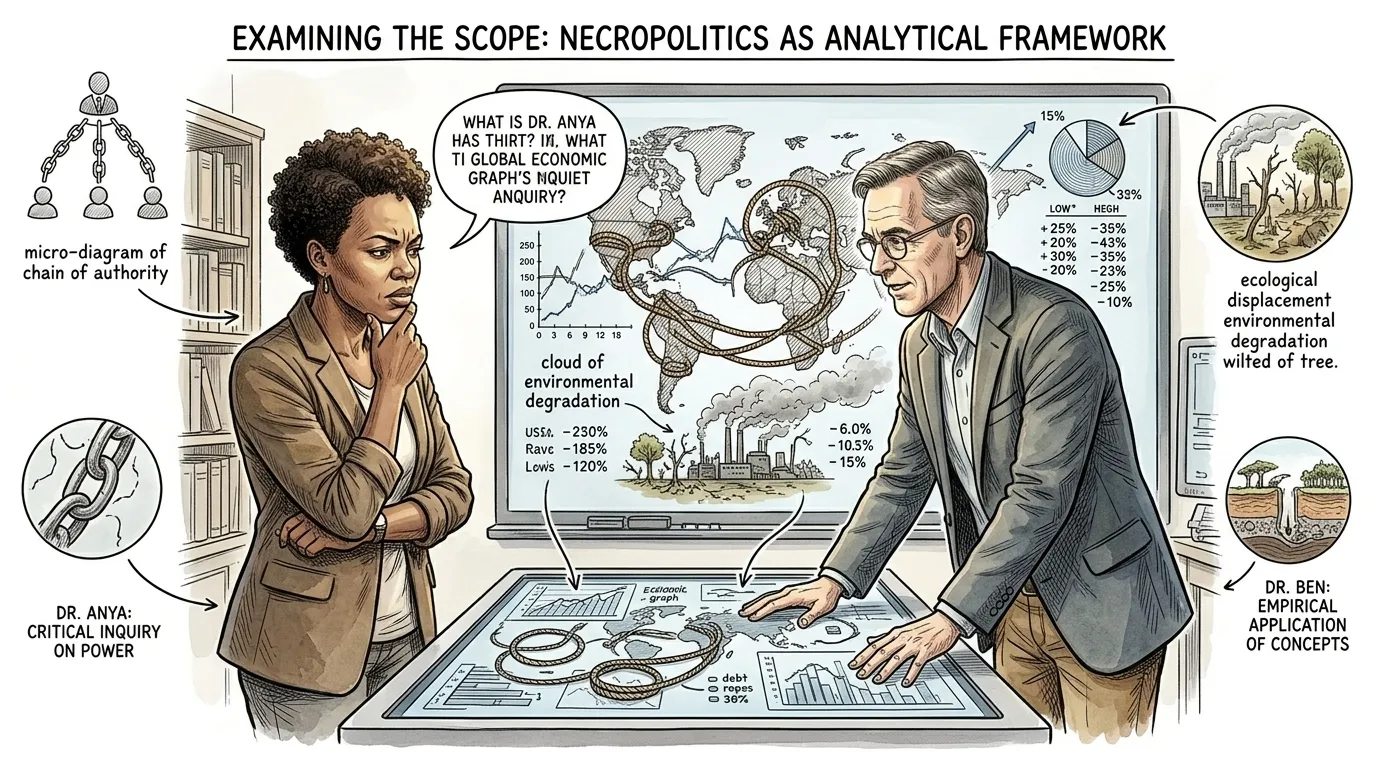
"So, Mbembe's necropolitics isn't solely about direct, lethal violence, is it?" Dr. Anya inquired, her brow furrowed. Dr. Ben clarified, "Absolutely not. It extends far beyond the explicit act of killing, encompassing the systemic weaponization of economic policies, debt, and environmental degradation. These are indirect forms of power that structurally expose certain populations to slower forms of death or prolonged suffering. Think of structural adjustment programs that dismantle public health systems or the deliberate inaction on climate change, disproportionately affecting vulnerable communities. It's about how policies can tacitly sanction widespread suffering." ""So, Mbembe's necropolitics isn't solely about direct, lethal violence, is it?" Dr. Anya inquired, her brow furrowed. Dr. Ben clarified, "Absolutely not. It extends far beyond the explicit act of killing, encompassing the systemic weaponization of economic policies, debt, and environmental degradation. These are indirect forms of power that structurally expose certain populations to slower forms of death or prolonged suffering. Think of structural adjustment programs that dismantle public health systems or the deliberate inaction on climate change, disproportionately affecting vulnerable communities. It's about how policies can tacitly sanction widespread suffering."" Philosophy Note: Necropolitics encompasses economic policies, debt, and environmental degradation, exposing populations to slow forms of death beyond direct violence.
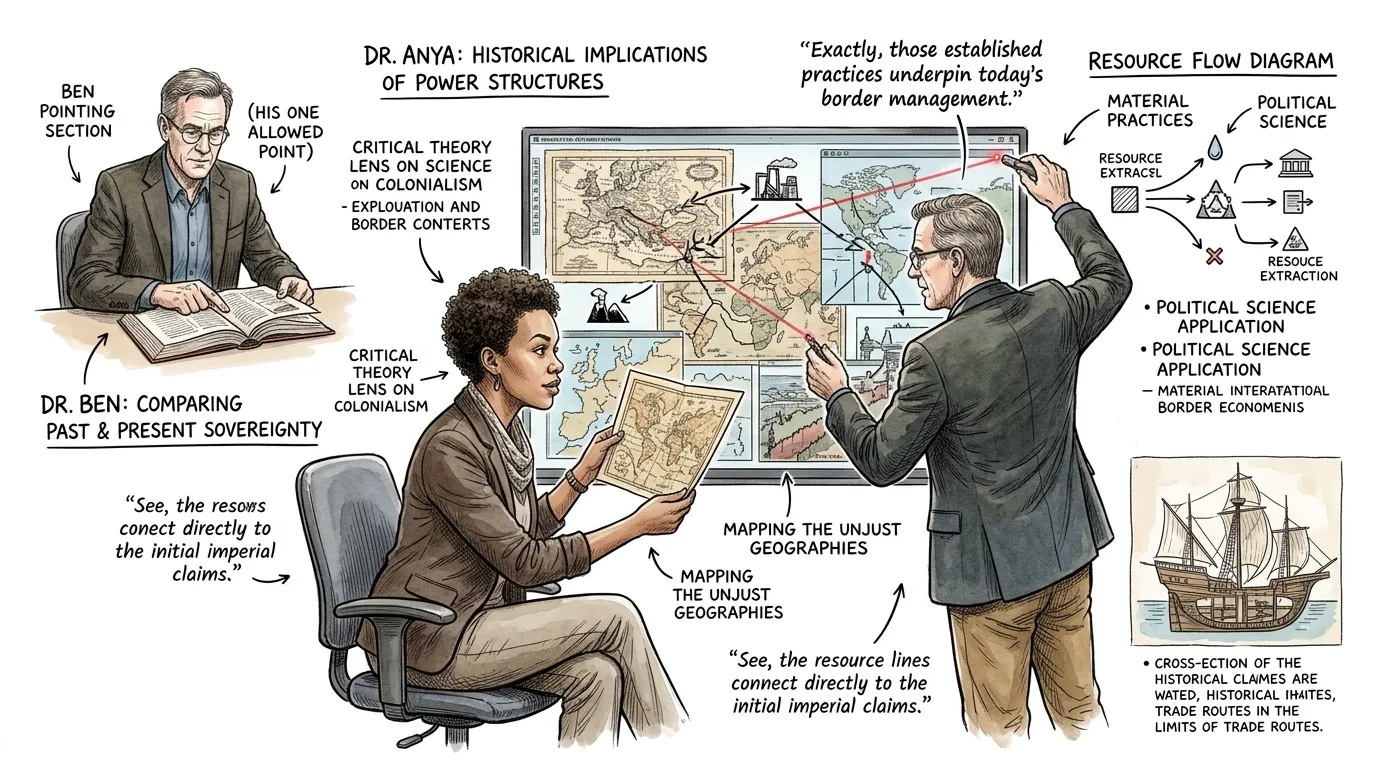
阿尼亚医生思考着这个概念的广阔性。“姆本贝似乎也将其根植于历史实践中,”她评论道,“殖民主义的遗产必须是核心。”本医生肯定道:“确实如此。姆本贝细致地追溯了殖民时期完善的非人化、资源开采和‘多余’人口管理技术,如何在当代边境制度、全球经济不平等和城市隔离中找到新的、阴险的表达。对姆本贝而言,‘殖民地’不仅仅是一个历史地点,而是一个持续存在的范式,一个主权权力在全球范围内以各种形式继续以致命的免责方式运作的区域。它突出了过去暴力的持久影响。” “阿尼亚医生评论道:“姆本贝似乎也将其根植于历史实践中。殖民主义的遗产必须是核心。”本医生肯定道:“确实如此。姆本贝细致地追溯了殖民时期完善的非人化、资源开采和‘多余’人口管理技术,如何在当代边境制度、全球经济不平等和城市隔离中找到新的、阴险的表达。对姆本贝而言,‘殖民地’不仅仅是一个历史地点,而是一个持续存在的范式,一个主权权力在全球范围内以各种形式继续以致命的免责方式运作的区域。它突出了过去暴力的持久影响。” 哲学笔记:姆本贝将死亡政治与殖民遗产联系起来,展示了非人化和控制的实践如何在现代边境制度和全球不平等中持续存在。
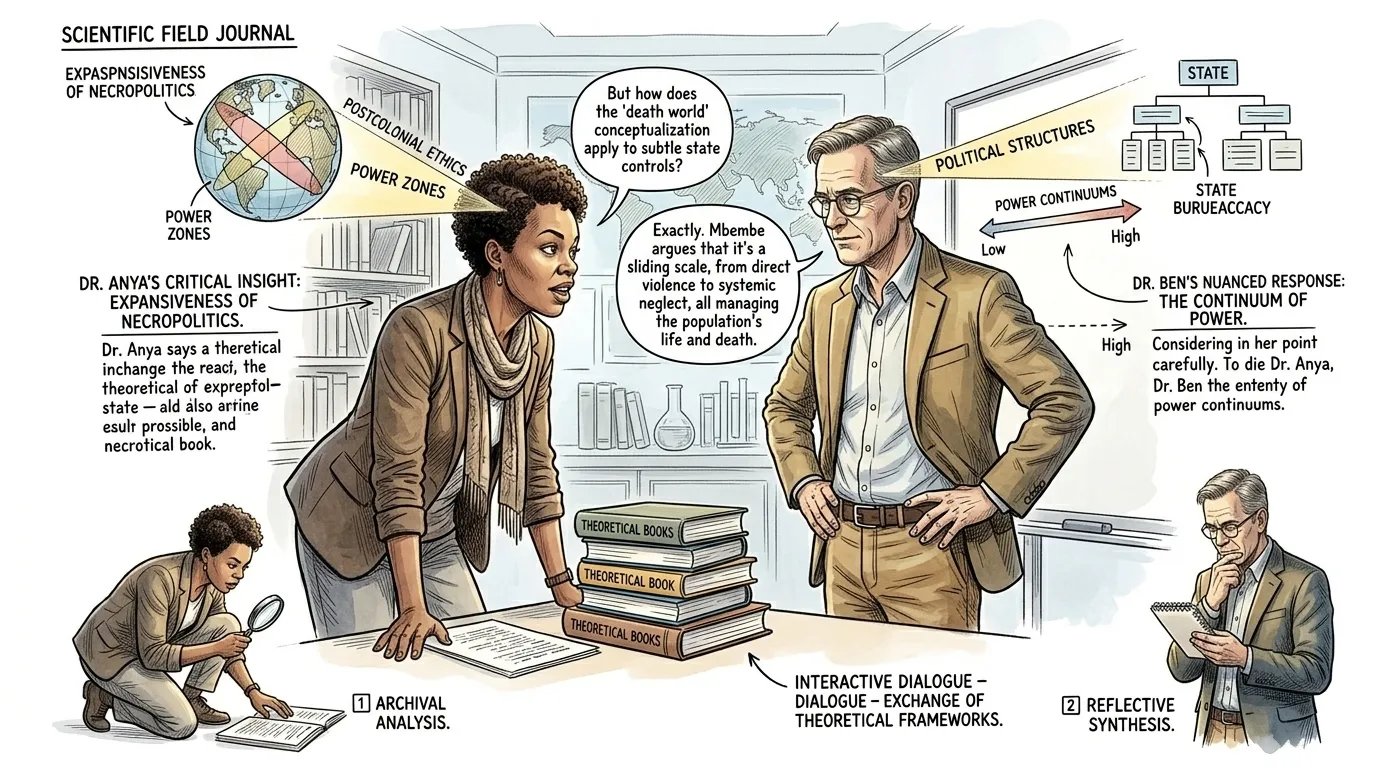
"Some critics might argue that 'necropolitics' is too expansive, potentially diluting the specific horror of direct violence by applying it to broader systemic issues," Dr. Anya proposed, her voice thoughtful. "How does Mbembe address such a critique?" Dr. Ben considered her point carefully. "It's a valid concern. Mbembe isn't intending to diminish direct violence, but rather to broaden our understanding of how power operates, even silently, in producing death-worlds. He encourages us to see the continuum between explicit force and the more insidious, everyday forms of lethal governance. He asks us to confront the fact that 'to govern is to decide who will live and who will die,' as he might suggest, challenging simplistic notions of state responsibility." ""Some critics might argue that 'necropolitics' is too expansive, potentially diluting the specific horror of direct violence by applying it to broader systemic issues," Dr. Anya proposed, her voice thoughtful. "How does Mbembe address such a critique?" Dr. Ben considered her point carefully. "It's a valid concern. Mbembe isn't intending to diminish direct violence, but rather to broaden our understanding of how power operates, even silently, in producing death-worlds. He encourages us to see the continuum between explicit force and the more insidious, everyday forms of lethal governance. He asks us to confront the fact that 'to govern is to decide who will live and who will die,' as he might suggest, challenging simplistic notions of state responsibility."" Philosophy Note: Critics suggest 'necropolitics' is too broad. Mbembe aims to show the continuum of power, from explicit violence to insidious systemic governance that decides who lives and who dies.
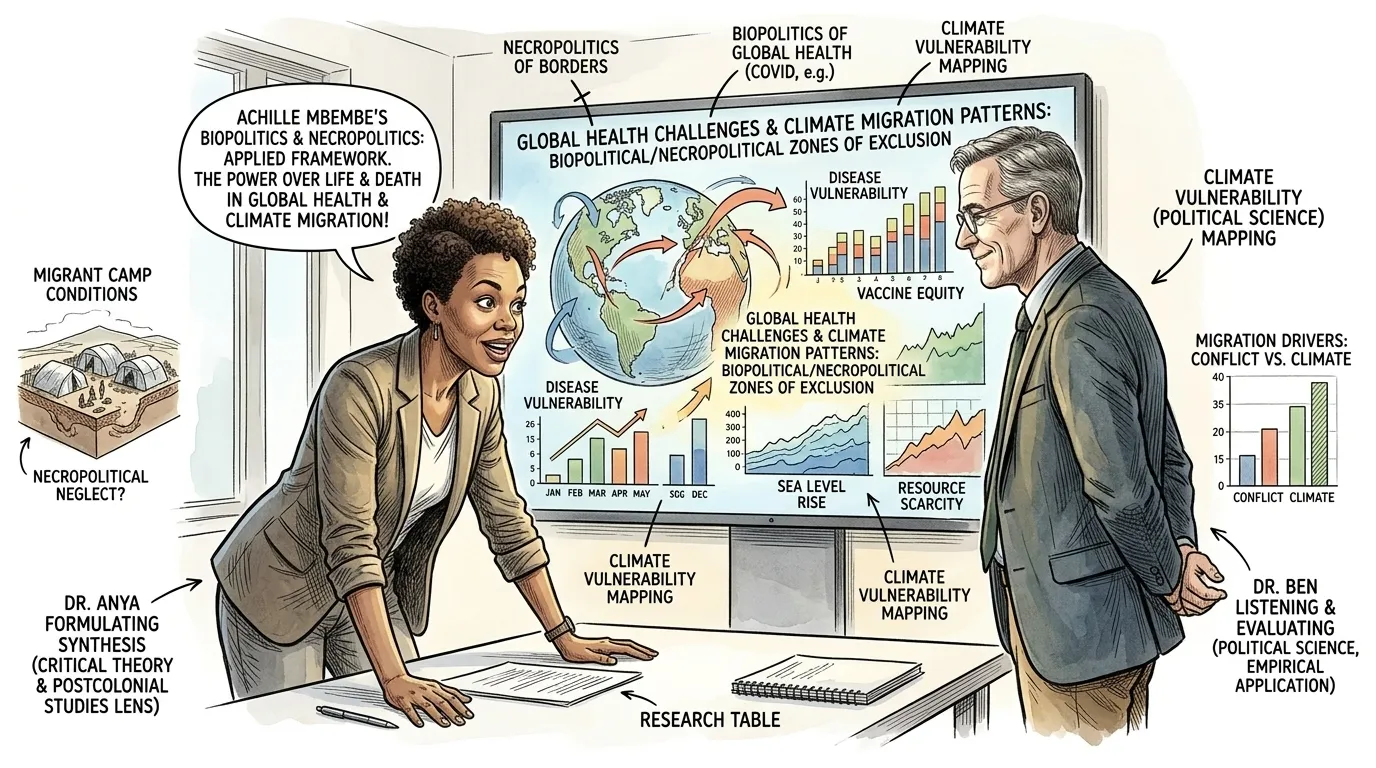
"With our understanding of Mbembe's distinction between biopolitics and necropolitics, how can we apply it to, say, contemporary global health crises or climate migration?" Dr. Anya asked, challenging Dr. Ben. "Remember what we discussed about Mbembe's distinction between biopolitics and necropolitics?" Dr. Ben prompted. Dr. Anya's eyes widened. "Ah, yes! We see biopolitical efforts to 'manage' populations through vaccines or aid, but often these very efforts inadvertently produce necropolitical outcomes for those deemed 'disposable.' Border closures, intellectual property restrictions on medicines, or ignoring climate refugees aren't just failures of policy; they are active decisions to 'let die' for some, while 'making live' for others. Mbembe's lens helps us see the intent and consequence behind these actions." ""With our understanding of Mbembe's distinction between biopolitics and necropolitics, how can we apply it to, say, contemporary global health crises or climate migration?" Dr. Anya asked, challenging Dr. Ben. "Remember what we discussed about Mbembe's distinction between biopolitics and necropolitics?" Dr. Ben prompted. Dr. Anya's eyes widened. "Ah, yes! We see biopolitical efforts to 'manage' populations through vaccines or aid, but often these very efforts inadvertently produce necropolitical outcomes for those deemed 'disposable.' Border closures, intellectual property restrictions on medicines, or ignoring climate refugees aren't just failures of policy; they are active decisions to 'let die' for some, while 'making live' for others. Mbembe's lens helps us see the intent and consequence behind these actions."" Philosophy Note: The conceptual tool of 'biopolitics vs. necropolitics' is applied to analyze global health inequities and climate migration, revealing the active decisions behind 'letting die'.
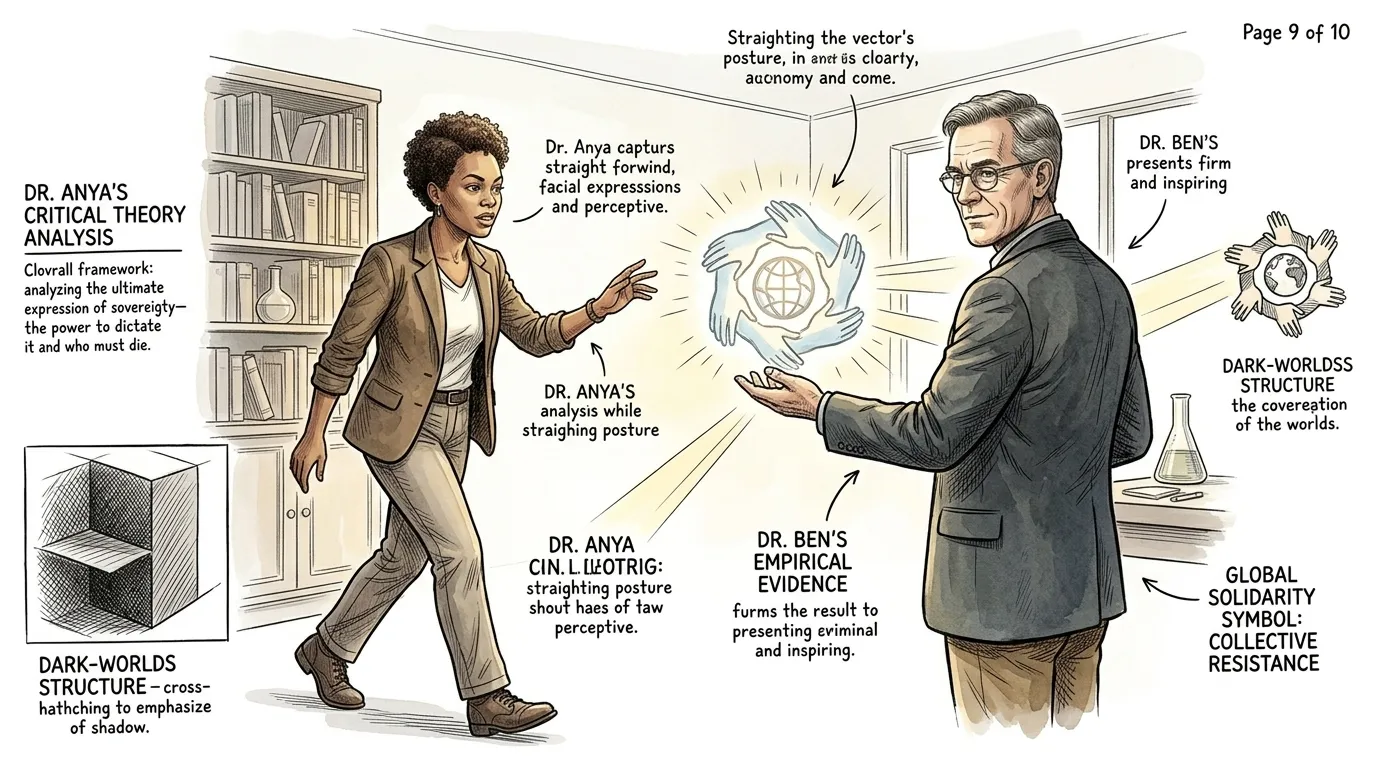
安雅博士站直了身子,脸上流露出凝重的神色。“姆本贝的框架迫使我们正视全球权力以及谁是真正受益者这些令人不安的真相,”她说道。本博士补充道:“这不仅仅是指出一个问题;更是要认识到团结和抵抗所蕴含的深刻伦理意义。正如伟大的哲学家纳尔逊·曼德拉曾经宣称的,‘在事情完成之前,一切都看似不可能。’这种情感,应用于死亡政治学,激励我们不要接受‘死亡世界’的常态化,而是要寻找抵抗并重新定义所有人生命和尊严条件的方法。它要求我们重新评估伦理责任。” “姆本贝的框架迫使我们正视全球权力以及谁是真正受益者这些令人不安的真相,”安雅博士说道。本博士补充道:“这不仅仅是指出一个问题;更是要认识到团结和抵抗所蕴含的深刻伦理意义。正如伟大的哲学家纳尔逊·曼德拉曾经宣称的,‘在事情完成之前,一切都看似不可能。’这种情感,应用于死亡政治学,激励我们不要接受‘死亡世界’的常态化,而是要寻找抵抗并重新定义所有人生命和尊严条件的方法。它要求我们重新评估伦理责任。” 哲学笔记:本博士引用纳尔逊·曼德拉的话:“在事情完成之前,一切都看似不可能,”将姆本贝的批判与全球团结和抵抗死亡政治力量的必要性联系起来。
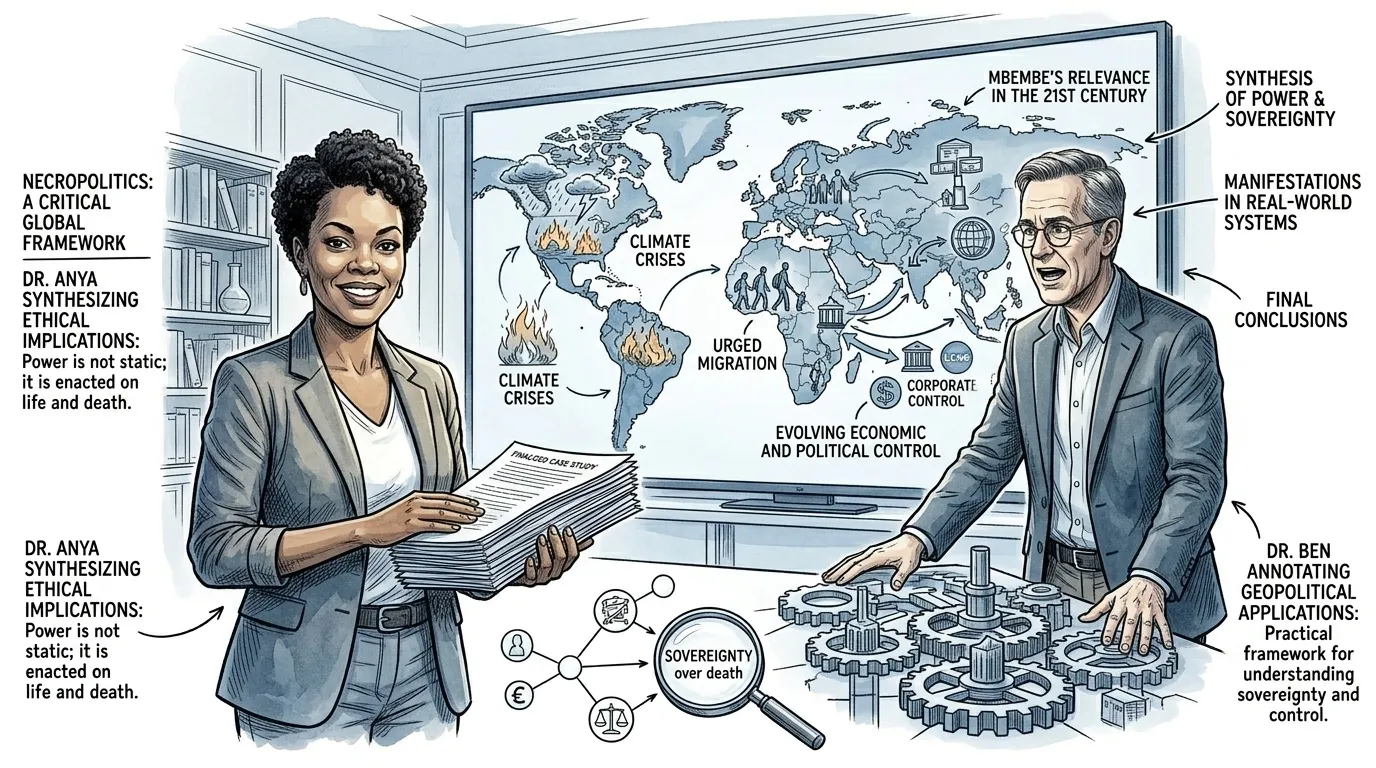
Dr. Anya summarized their discussion with conviction. "Achille Mbembe's work fundamentally challenges simplistic narratives of progress and development, urging us to examine whose lives are prioritized and whose are deemed disposable in the global order." Dr. Ben concluded, his voice resonating with authority, "Indeed. His framework remains an indispensable analytical tool for navigating our complex world, a world increasingly defined by climate crises, forced migration, and evolving forms of economic and political control. Necropolitics compels us to confront the ethical core of power, ensuring we never look away from the quiet, insidious violences that shape human existence." ""Achille Mbembe's work fundamentally challenges simplistic narratives of progress and development, urging us to examine whose lives are prioritized and whose are deemed disposable in the global order." Dr. Ben concluded, his voice resonating with authority, "Indeed. His framework remains an indispensable analytical tool for navigating our complex world, a world increasingly defined by climate crises, forced migration, and evolving forms of economic and political control. Necropolitics compels us to confront the ethical core of power, ensuring we never look away from the quiet, insidious violences that shape human existence."" Philosophy Note: Mbembe's necropolitics remains crucial for analyzing complex 21st-century challenges, urging ethical scrutiny of power and its impact on human existence.