Emmanuel Levinas — 用中文阅读
故事标题目前仍是英文,正文是中文。

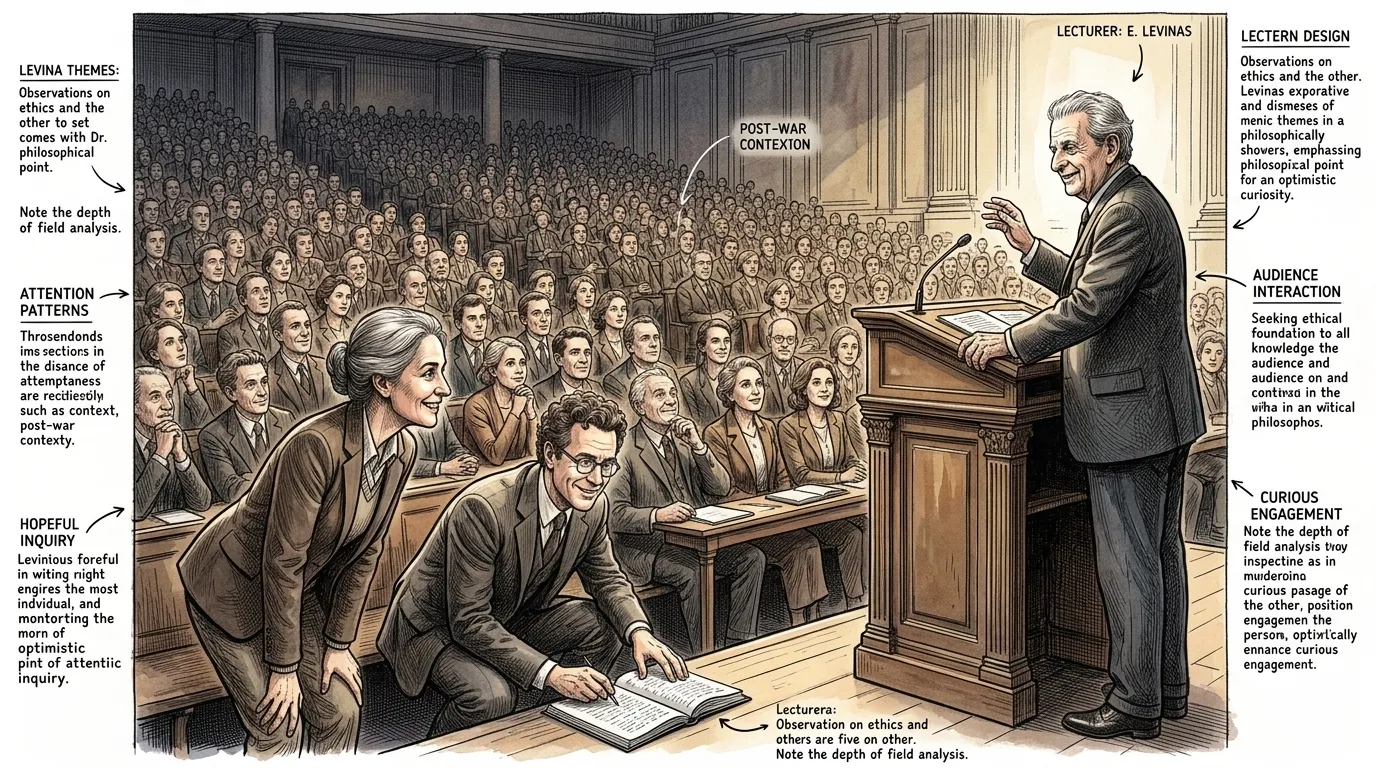
“与他者的伦理相遇,不仅仅是一种道德选择,更是意义和主体性本身的起源,”伊曼纽尔·列维纳斯宣称,他的声音在演讲厅中回荡。“正是在不可化约的他者面前,一种无限的要求降临到我们身上,先于任何深思熟虑、任何契约、任何正义体系。”数千名聚集者专注地聆听着,他们的脸上刻画着战后欧洲的沉重,寻求着超越过去哲学失败的人类互动新基础。 哲学笔记:法国巴黎,二十世纪五十年代:伊曼纽尔·列维纳斯挑战了西方哲学以自我为中心的焦点,主张伦理起源于与“他者”的相遇。这一概念源于大屠杀的创伤,要求重新评估人类的责任。
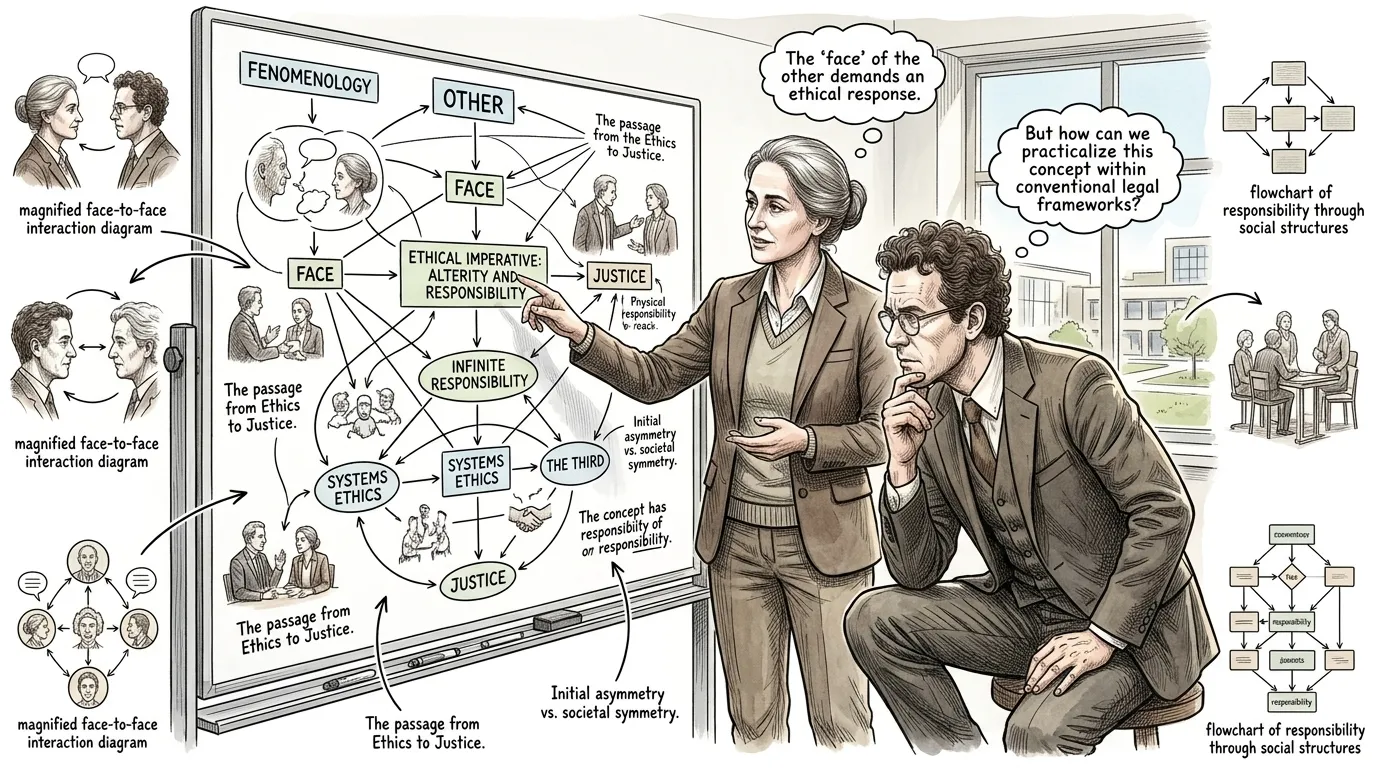
""Levinas's philosophy emerges directly from the ashes of the Holocaust, a profound rejection of any system that would 'totalize' or absorb the unique other into a pre-existing category," Dr. Anya Sharma explained, gesturing to a complex diagram. "He witnessed how readily ideologies—systems of totality—could erase individual humanity. For him, the singular, irreducible person, the 'Other,' resists any attempt to classify or contain them." Dr. Ben Carter considered the diagram, asking, "So, the ethical encounter isn't about understanding the Other through our own concepts, but rather a surrender to their absolute otherness?"" Philosophy Note: Emmanuel Levinas (1906-1995), a French philosopher of Lithuanian Jewish descent, developed his core ethical philosophy as a response to totalitarianism and the atrocities of WWII. He critiqued Western thought's 'philosophy of the Same,' which seeks to understand and incorporate difference into pre-existing categories, arguing this leads to 'totalization.'
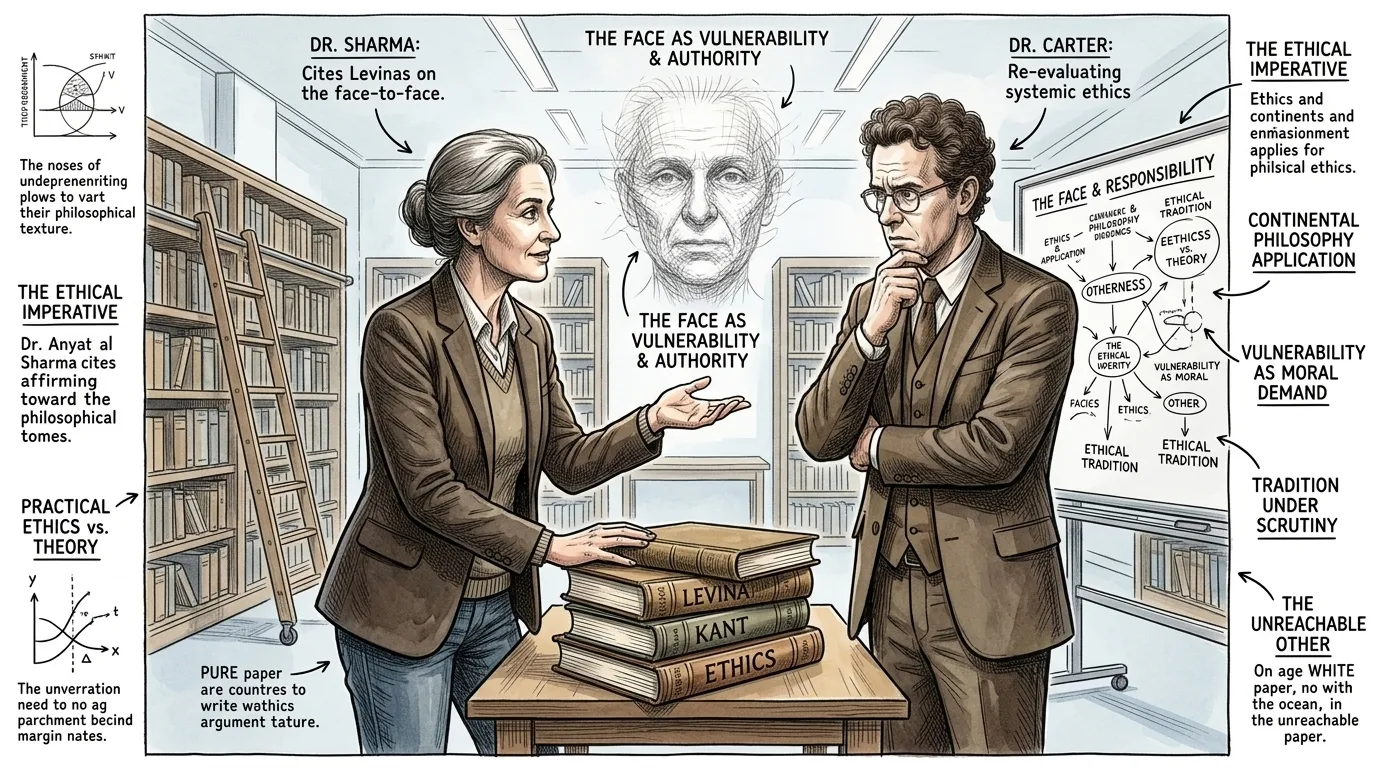
""Precisely," Dr. Sharma affirmed. "Levinas insists that ethics precedes ontology – meaning, our responsibility to the Other comes before any attempt to define or categorize their being. As he famously put it in Totality and Infinity, 'The ethical relation, as a face-to-face, is not a specification of some prior ontological relation.'" Dr. Carter furrowed his brow. "This challenges centuries of Western philosophy that privileges knowledge and being first, doesn't it? It suggests that the very act of seeing the 'Face'—not just a physical face, but the vulnerability and authority of the Other—is what initiates our ethical obligations."" Philosophy Note: Levinas critiques 'ontology,' the philosophical study of being, arguing it reduces the Other to a concept. Instead, he proposes 'first philosophy' is ethics, meaning our infinite responsibility to the Other's unique existence. His seminal work, Totality and Infinity (1961), lays out this foundational argument, emphasizing the 'face-to-face' encounter as prior to all knowledge.
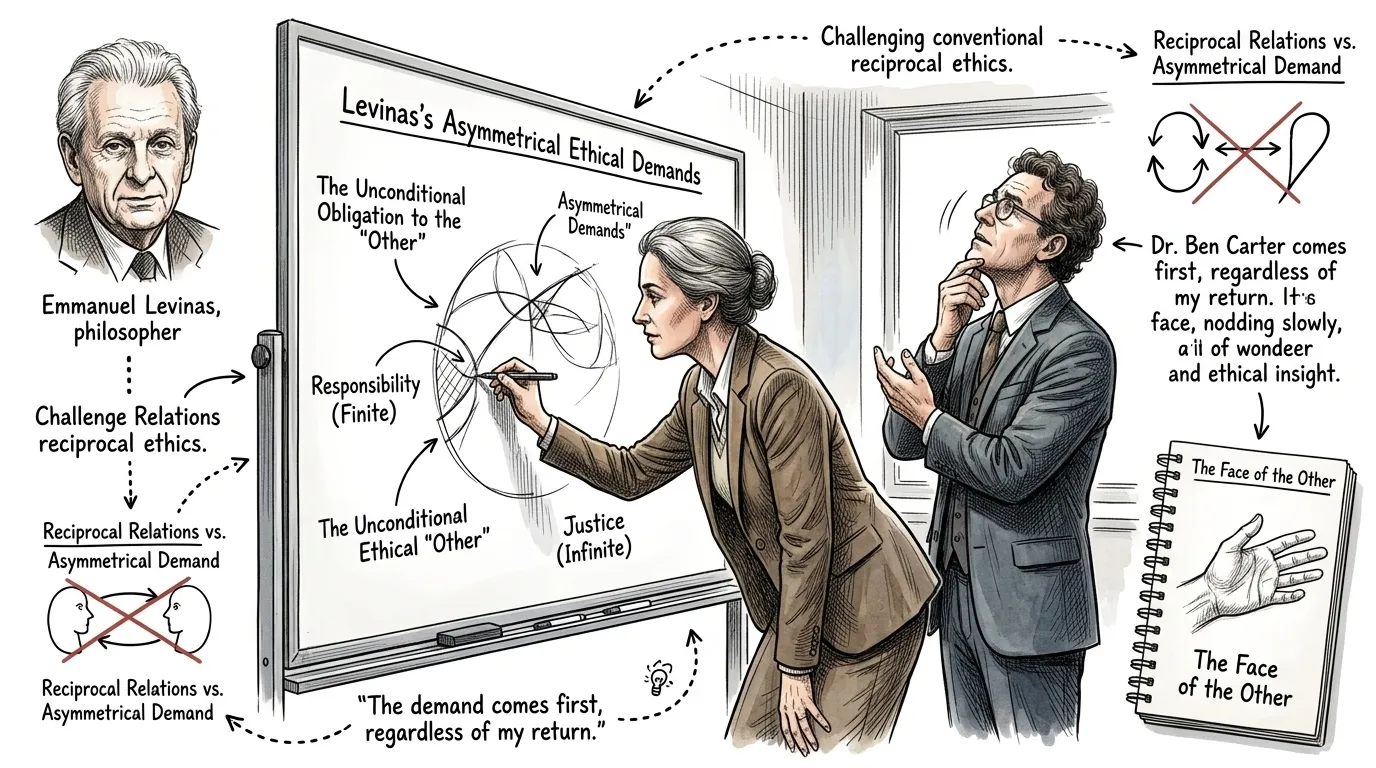
“列维纳斯论点的核心在于面对面相遇的根本不对称性,”沙尔马博士继续说道,同时在白板上勾勒着。“当我面对‘他者’的‘面容’——他们不可还原的独特性和脆弱性时——我立刻就被赋予了义务。他们处于一个高位,一个主人,但同时又完全暴露无遗。我别无选择,只能回应。”卡特博士缓慢地点了点头。“所以,一开始并不是关于平等的交换或共同的理解。它是一种无条件的 H 需求,是我自身自给自足的一种断裂,迫使我采取一种伦理立场?”

“这引出了‘替代’的概念,这是他伦理学中一个深刻且常具挑战性的方面,”沙尔马博士详细阐述道,同时在她的平板电脑上突出显示了一段文字。“列维纳斯提出,我不仅要对他人负责,而且要站在他人的位置上。我被独特地选中来承担这份责任,承担他们的负担,甚至是他们的痛苦。”卡特博士对此深思。“但这暗示着一种几乎不可能承受的负担,一种无限的债务。一个人如何在如此普遍的要求下生活而不至于瘫痪,尤其是在一个有如此多‘他人’的世界里?” 哲学注释:列维纳斯的“替代”概念认为,自我对他人负有独特且无限的责任,取代他们的位置,承担他们的负担。这种激进的观念超越了同情心,暗示了一种不可避免的、原始之前的伦理义务,它先于任何个人选择或自身利益。
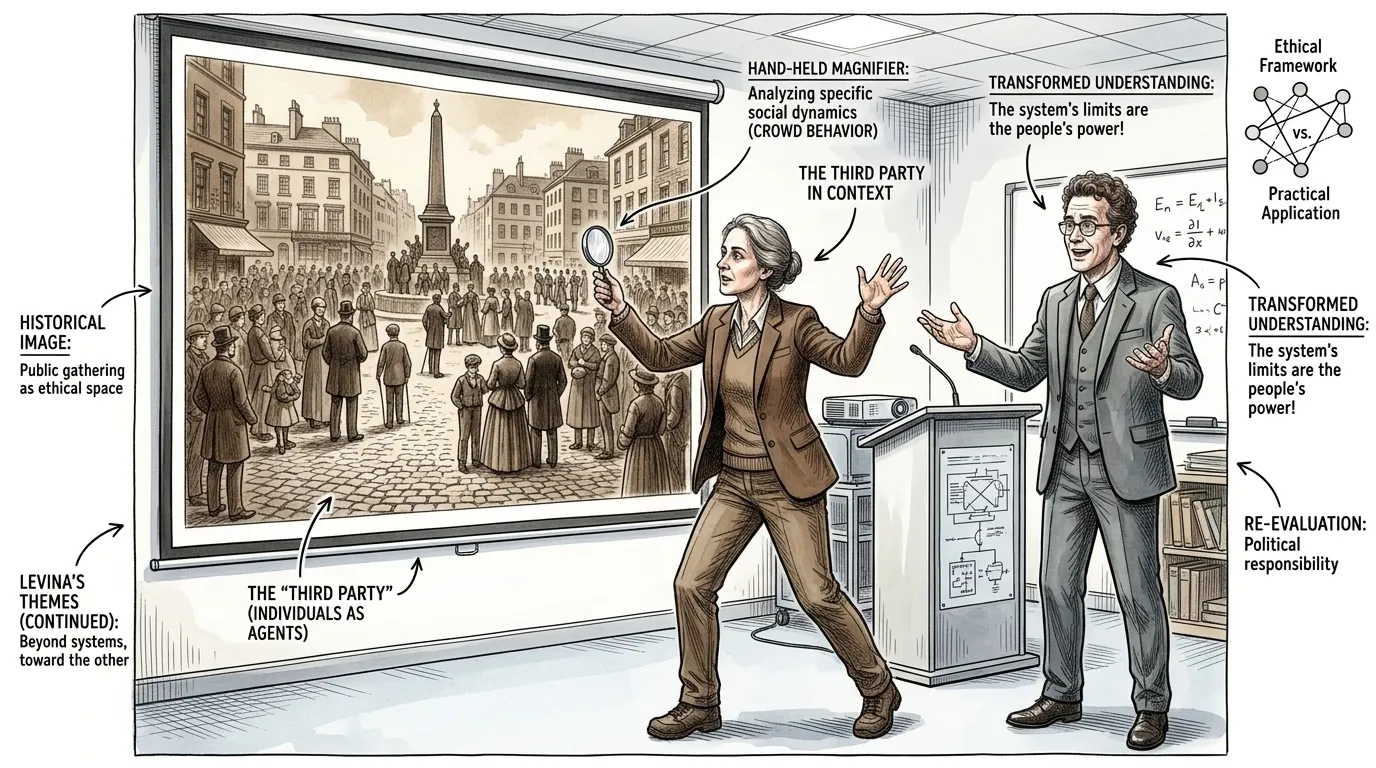
""This is precisely where the concept of the 'Third Party' comes in," Dr. Sharma explained, now referencing a historical image. "While the face-to-face encounter is asymmetrical and infinite, the moment another Other appears—the 'Third Party'—the demand for justice emerges. We can no longer solely prioritize one; we must compare, measure, and establish rules." Dr. Carter chimed in, "So, the state, laws, and institutions of justice aren't negations of ethics, but necessary mediators, born from the impossibility of infinite responsibility for all, at all times? This transforms how we understand political responsibility."" Philosophy Note: Levinas recognizes that while the face-to-face encounter is primary, the presence of a 'Third Party' (any other human beyond the initial dyad) necessitates justice. This introduces comparison, fairness, laws, and the state, transforming the infinite ethical demand into a practical, political responsibility without diminishing its origin.
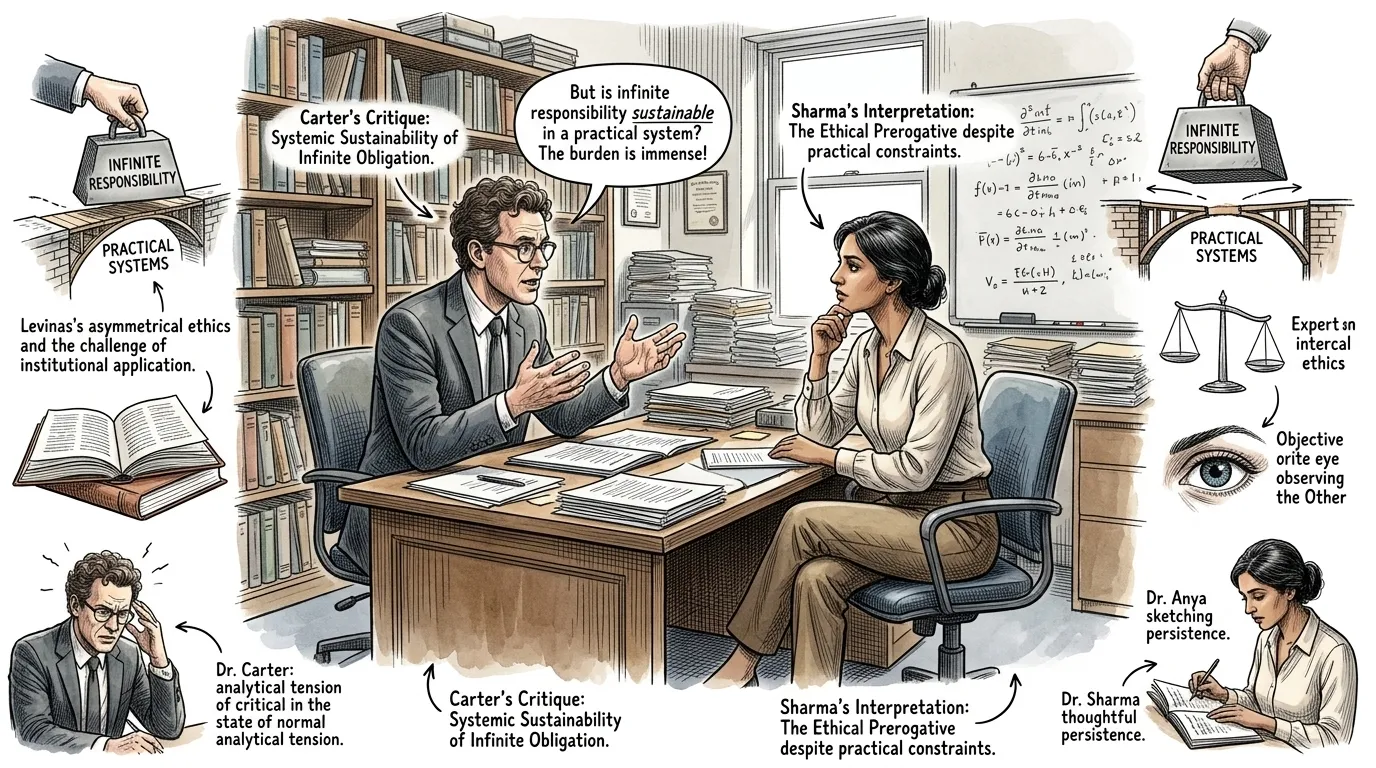
“然而,列维纳斯的哲学面临着重大的批判,”卡特博士转向夏尔马博士,提出了自己的观点。“批评者认为,他所要求的无限的、不对称的责任最终是不可持续的,甚至是令人瘫痪的。尤其是在一个充满无尽苦难的全球化世界里,任何个体如何才能承受如此重担而不至于屈服于内疚或无所作为呢?”夏尔马博士仔细考虑了这一点。“确实,有些人认为这有陷入不切实际的理想主义的风险。另一些人则质疑它是否真正避免了所有形式的‘总体性’,或者‘他者’和‘同一者’的语言本身是否创造了新的范畴。但其力量在于它对我们固有假设的持续挑战。”
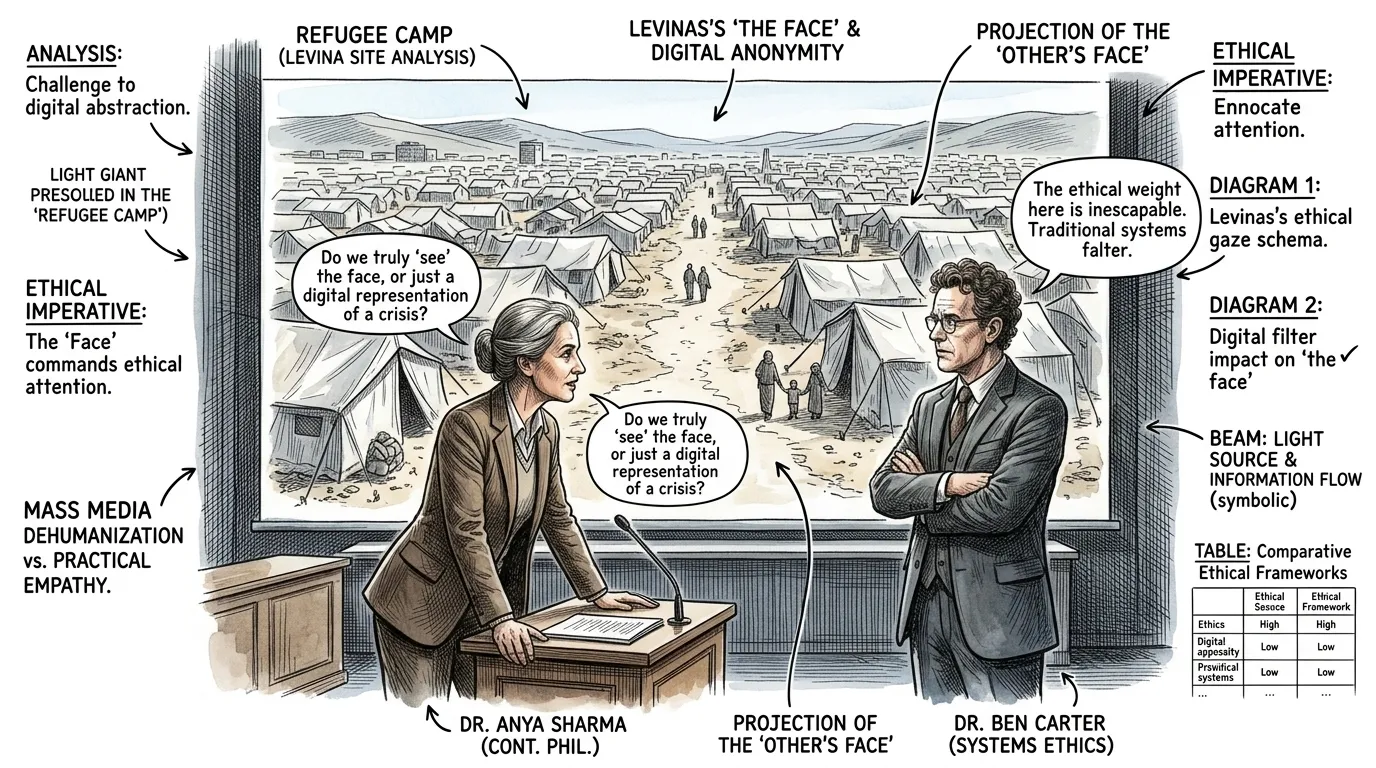
“但正是这种激进的要求,才让列维纳斯在全球化、数字化时代如此重要,”夏尔马博士断言道,她的目光扫过投影上的一幅难民营图像。“当我们面对如此大规模的苦难时,我们很容易将个体简化为统计数字,将他们归类为‘移民’或‘问题’。列维纳斯提醒我们,即使在人群中,每一张‘面孔’仍然提出那种不可化约的、无限的要求。这呼应了捷克剧作家、前总统瓦茨拉夫·哈维尔曾说过的话:‘唯一属于我们的东西是我们的良心。’”卡特博士点点头。“确实,这张‘面孔’挑战了数字互动所滋生的匿名性,以及大众媒体中常有的非人化。它呼唤我们回到一种个人的、坚定不移的伦理遭遇。”
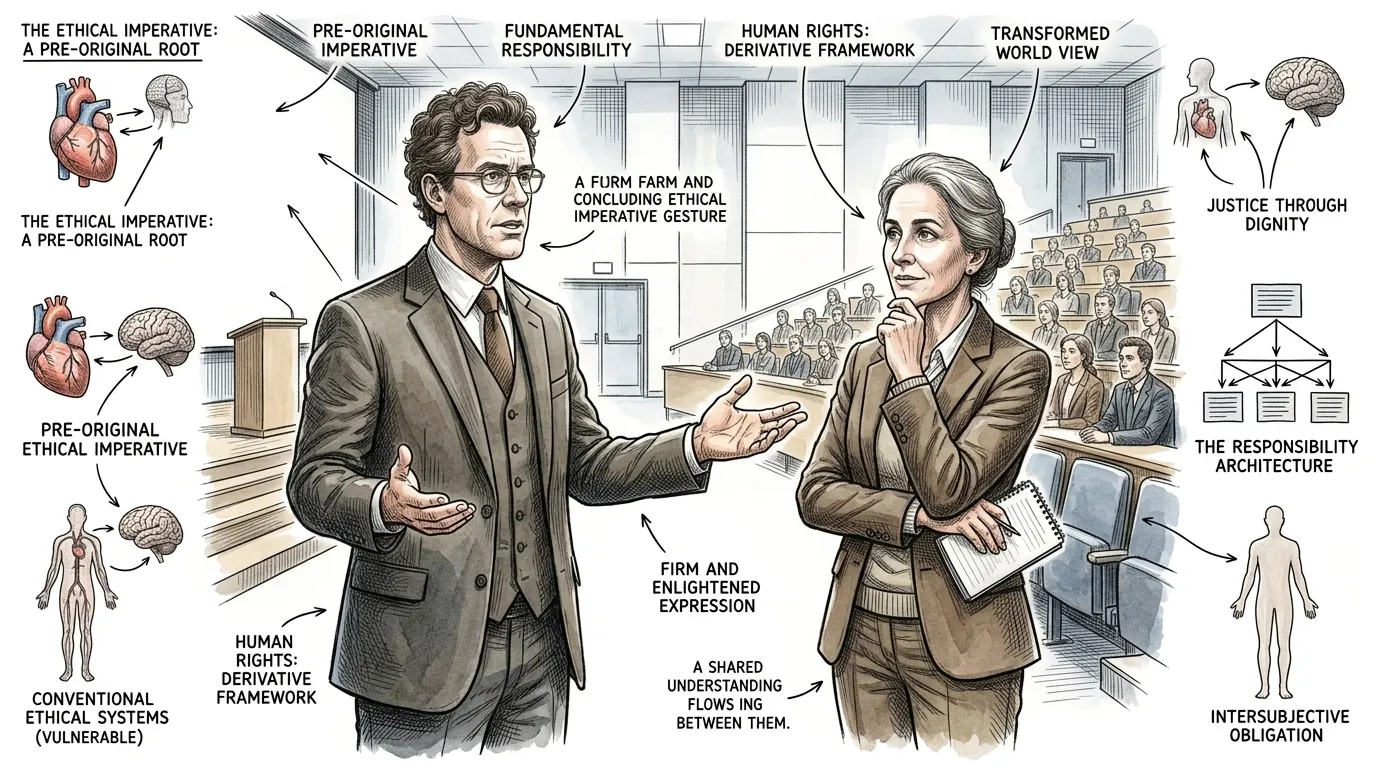
“莱维纳斯因此为理解人权提供了一个关键基础,它并非仅仅是一种法律建构,而是源于一种前原始的伦理命令,”卡特博士总结道,“这意味着我们对维护人类尊严的承诺不是一项政策选择,而是对‘面容’本身的一种根本回应。‘第三方’不仅仅关乎法律,它关乎将那种无限的伦理要求延伸到所有人。”沙尔马博士补充说:“这使我们的视角从一种有时可能是互惠的、基于权利的方法,转向了一种责任优先的伦理,这种伦理不断受到‘他者’不可化约的主张的挑战。它改变了我们解释正义、和平以及作为人本身的意义的方式。”
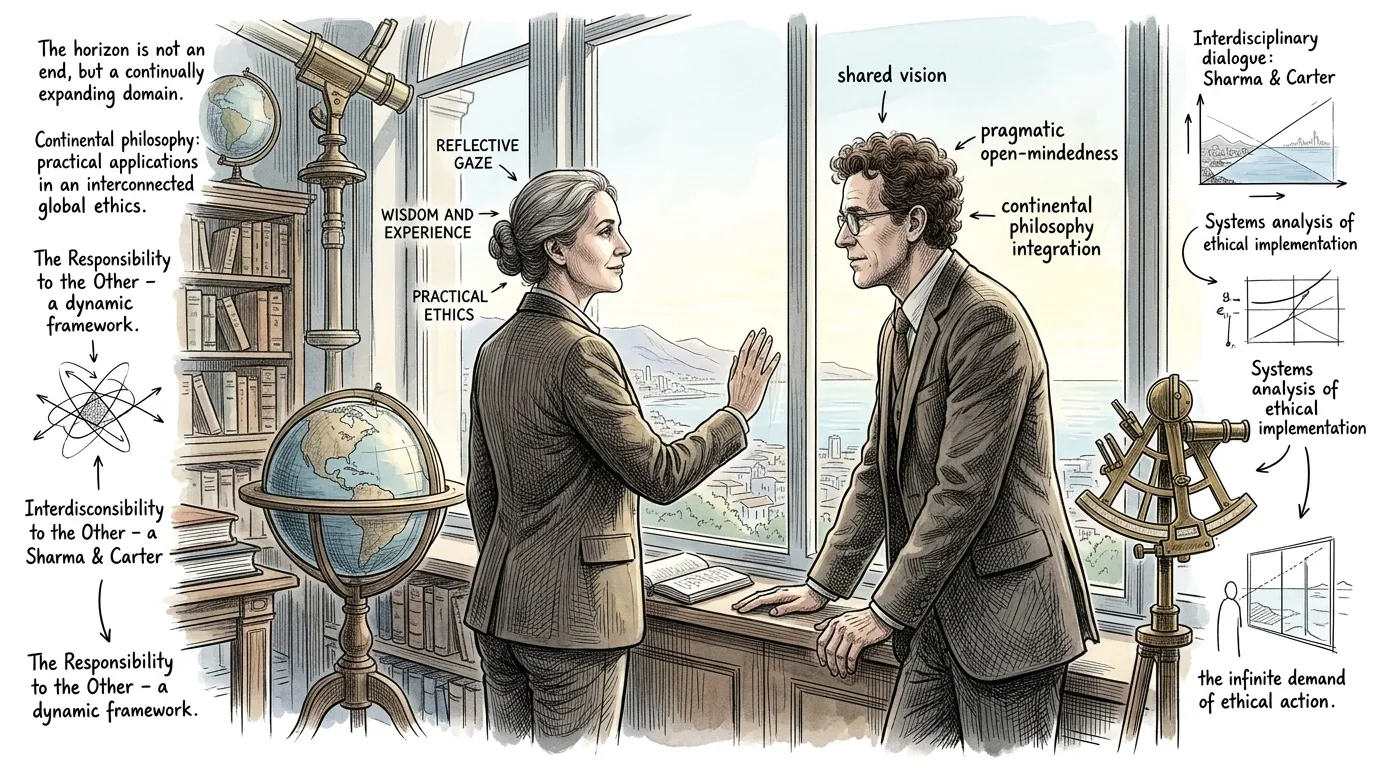
“列维纳斯的遗产,作为一种深刻而令人不安的呼唤,促使我们重新思考哲学的根基,至今仍具有持久的影响力。”夏尔马博士平静地说道,“他将我们推向超越自身利益的境地,甚至超越作为一种选择的利他主义,达到一种对‘他者’不可避免的伦理责任,要求我们抱持彻底的谦逊。”卡特博士点头表示同意。“他的作品挑战我们,让我们将每一次相遇都视为潜在的变革,一个我们的主体性由我们对‘面容’的回应所构成的时刻。在一个日益互联的世界中,这为伦理思想和行动提供了一个持续的、无限的视野。” 哲学注释:伊曼纽尔·列维纳斯的哲学在欧陆哲学、伦理学和批判理论中仍然是一股强大的力量。他对伦理关系的首要性、“他者”的无条件要求以及正义从这种相遇中产生的独特阐述,持续地激发、挑战并塑造着当代关于责任、人权和主体间性的论述。