Caliph Stork
A bored Caliph, a black powder, and one word he should not have forgotten
Page 1
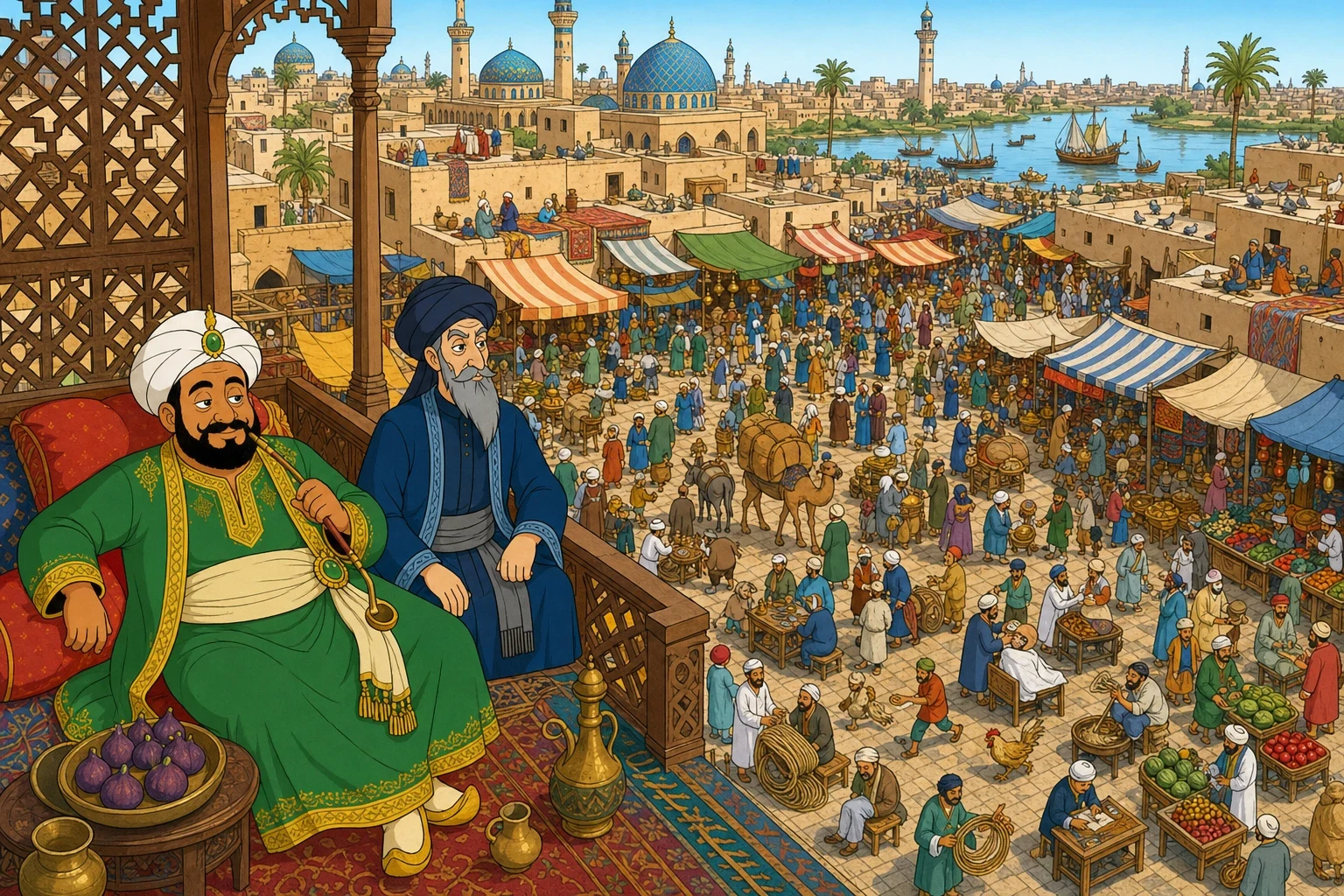
Baghdad on a hot afternoon, and the whole city out of doors.
In the bazaar below, the rope-makers were walking backwards with their cords, the coppersmiths were hammering, the water-seller was ringing his brass cups, and a hundred people were arguing about the price of melons.
Above all of it, on a balcony with a bowl of figs beside him, sat Chasid, the Caliph of Baghdad. His Grand Vizier Mansor sat with him, and the two of them had done, that afternoon, absolutely nothing at all.
"Mansor," said the Caliph, "I am bored."
And just then, down in the street, a pedlar began shouting.
Page 2
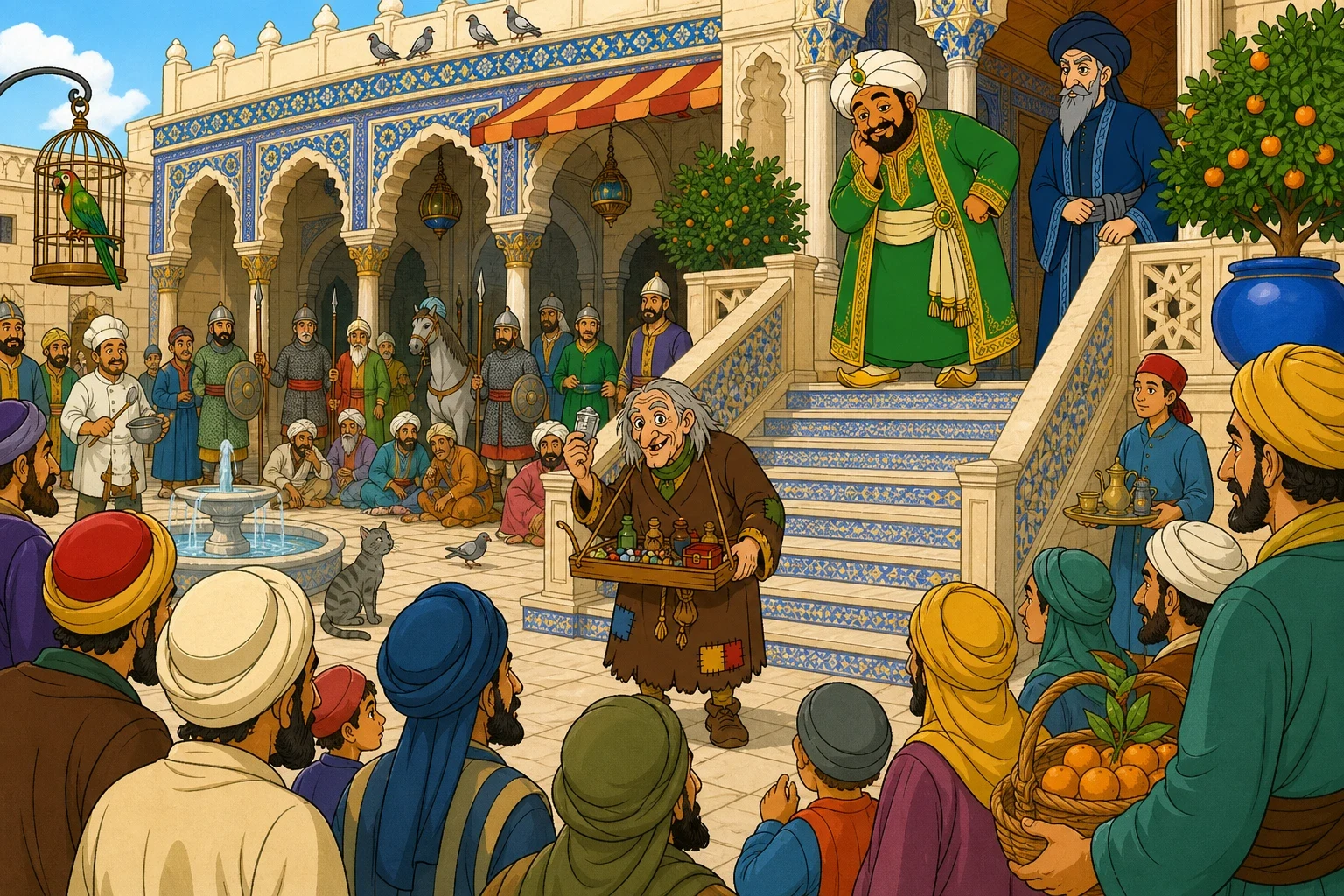
The pedlar was brought up into the courtyard, and the whole palace came to look — guards, cooks, gardeners, scribes, the men waiting with petitions, and a good many people who had no business there at all.
He had a tray of rubbish. Combs and beads and old knives and a tin whistle.
But at the bottom, under everything, was a small silver snuff-box, and inside it a black powder, and folded around it a strip of parchment covered in writing that nobody in the courtyard could read.
The Caliph bought the box for a gold piece, because he was bored, and that is the most expensive reason there is.
Page 3
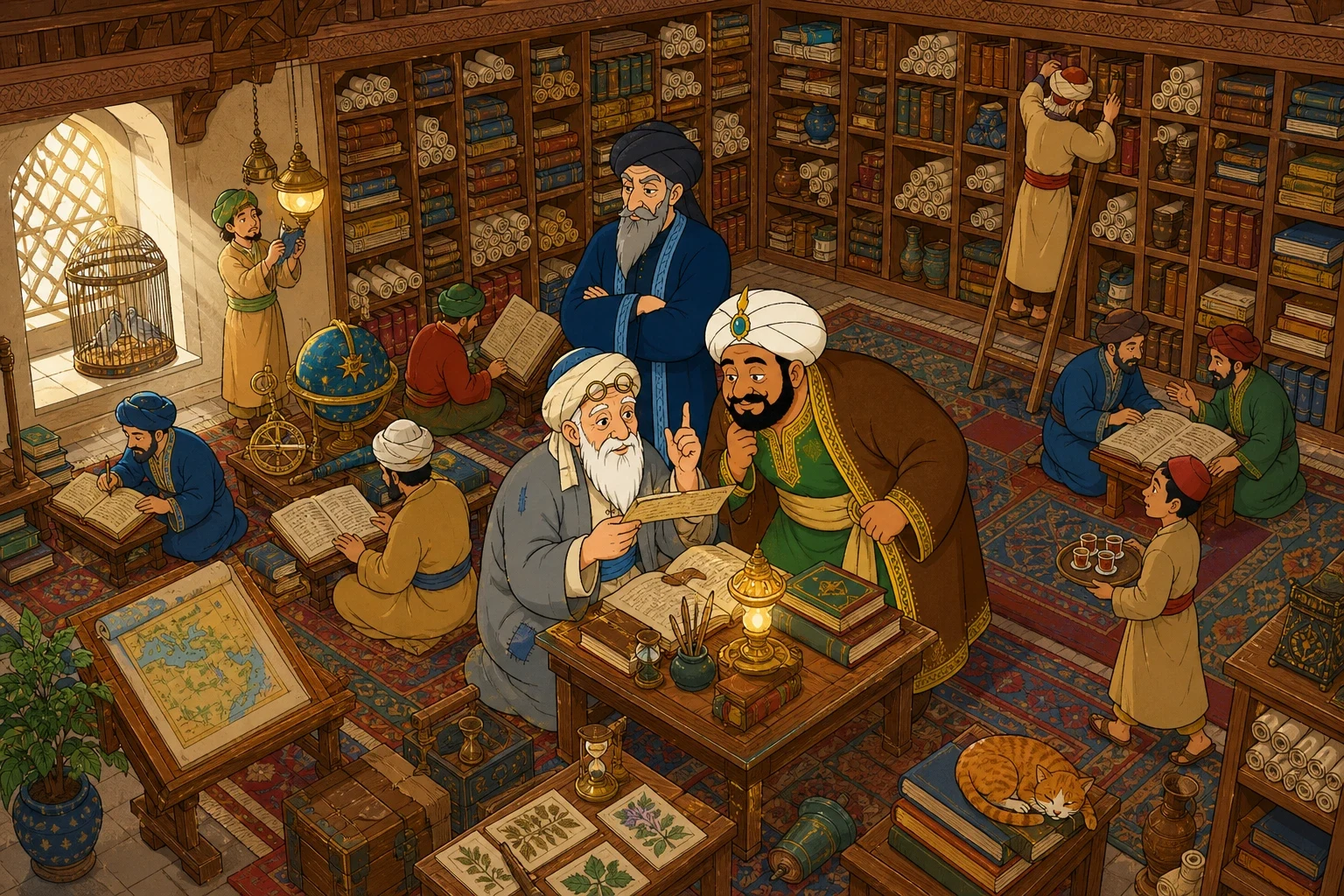
There was one man in Baghdad who could read anything, and his name was Selim.
They found him in the House of Learning, in a room so full of books that the students had to sit on the floor between the stacks.
Selim read the parchment twice. Then he looked up.
"Whoever sniffs this powder," he said, "and says the word *Mutabor*, can become any animal he likes, and will understand the speech of animals. And when he wishes to be a man again he bows three times to the east and says it once more."
"Wonderful," said the Caliph.
"There is a condition," said Selim. "While you are an animal you must not laugh. If you laugh, the word goes clean out of your head."
Page 4
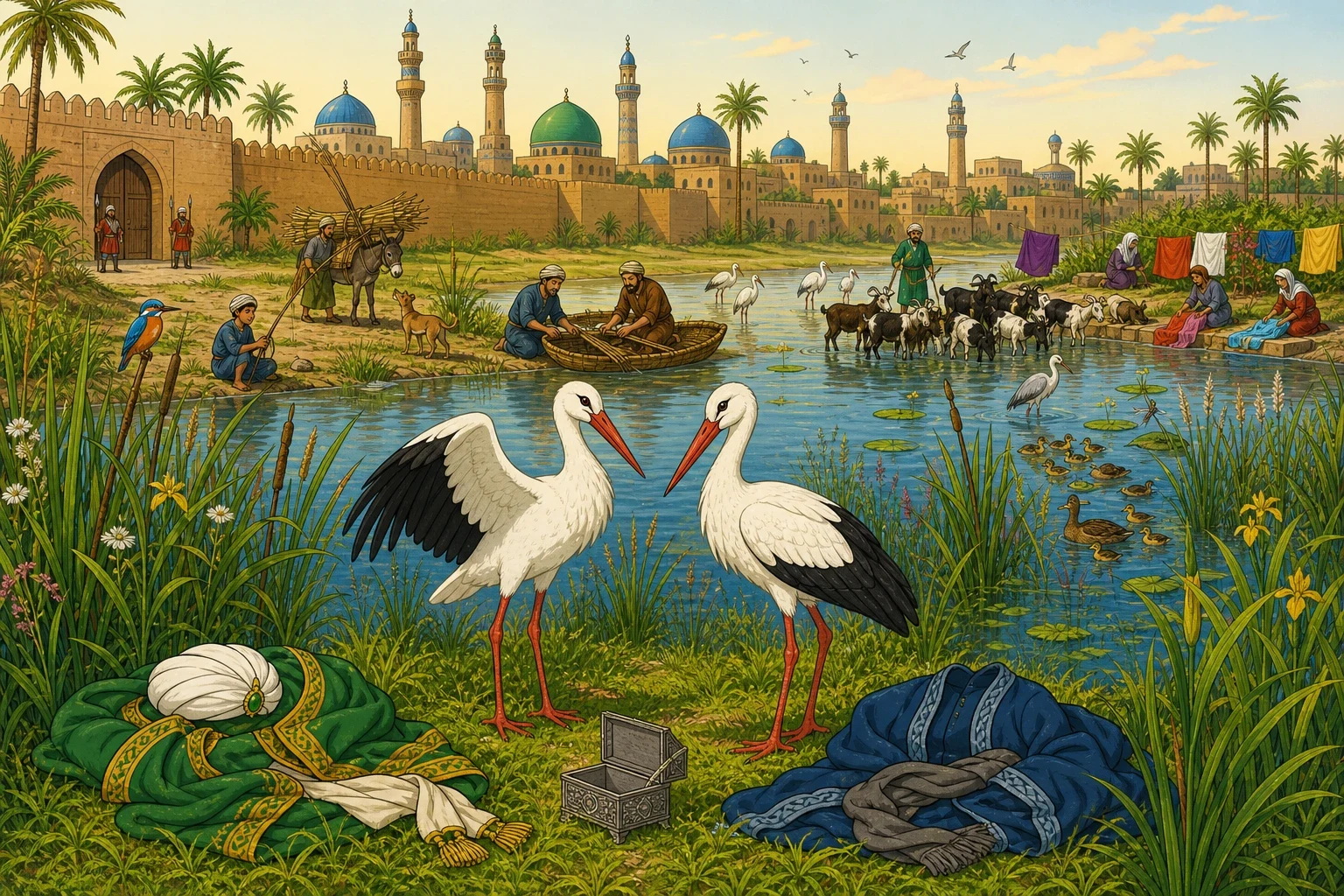
Next morning they walked out past the city walls, to the pond where the storks come.
There were washerwomen beating cloth at the far end, and a herd of goats, and a boy fishing, and a dozen storks picking their way through the shallows on their long red legs.
The Caliph opened the box. They each took a pinch of the black powder, and they said, together, "Mutabor."
And their necks grew long, and their legs grew long and red, and their fine clothes lay in two little heaps on the grass, and there were suddenly two more storks at the pond.
Page 5
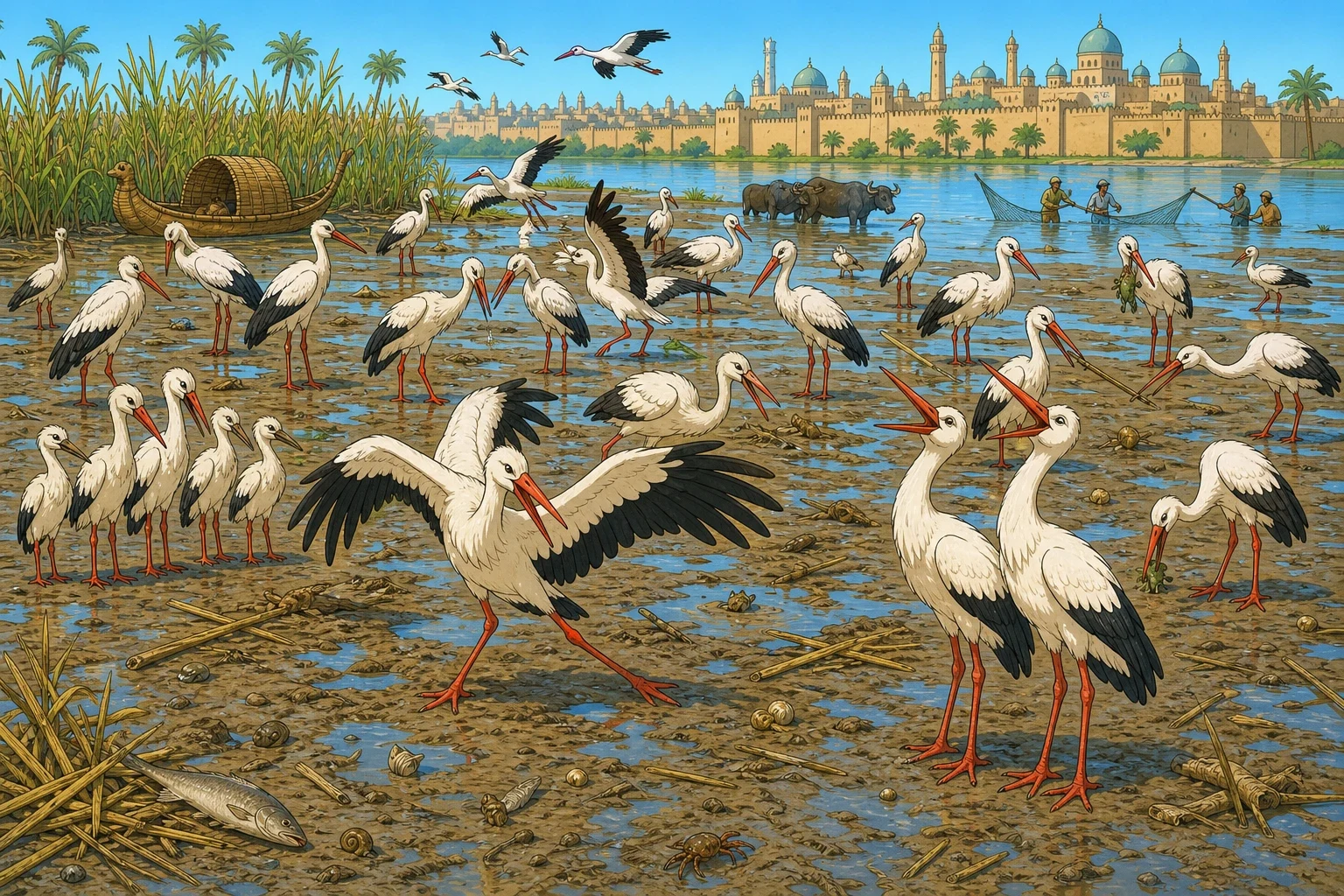
Now they could understand what birds say, which is mostly complaining about the weather.
They followed the flock to the mudflats, where the young storks were being taught to dance. A long-legged one called Leaf-Foot was trying to curtsey to a young lady stork, and every time she bowed, one leg went out from under her, and she said something very rude about the mud.
The Caliph held on as long as he could.
Then he laughed. A stork's laugh is a long clattering of the bill, and the Vizier heard it and started too, and the two of them stood in the mud with their heads back, clattering like a pair of castanets.
And then they stopped. And the word was gone.
Page 6
They tried everything. Mu-, they said. Mo-. Mi-. Mutalor, Mubator, Malibor. Nothing.
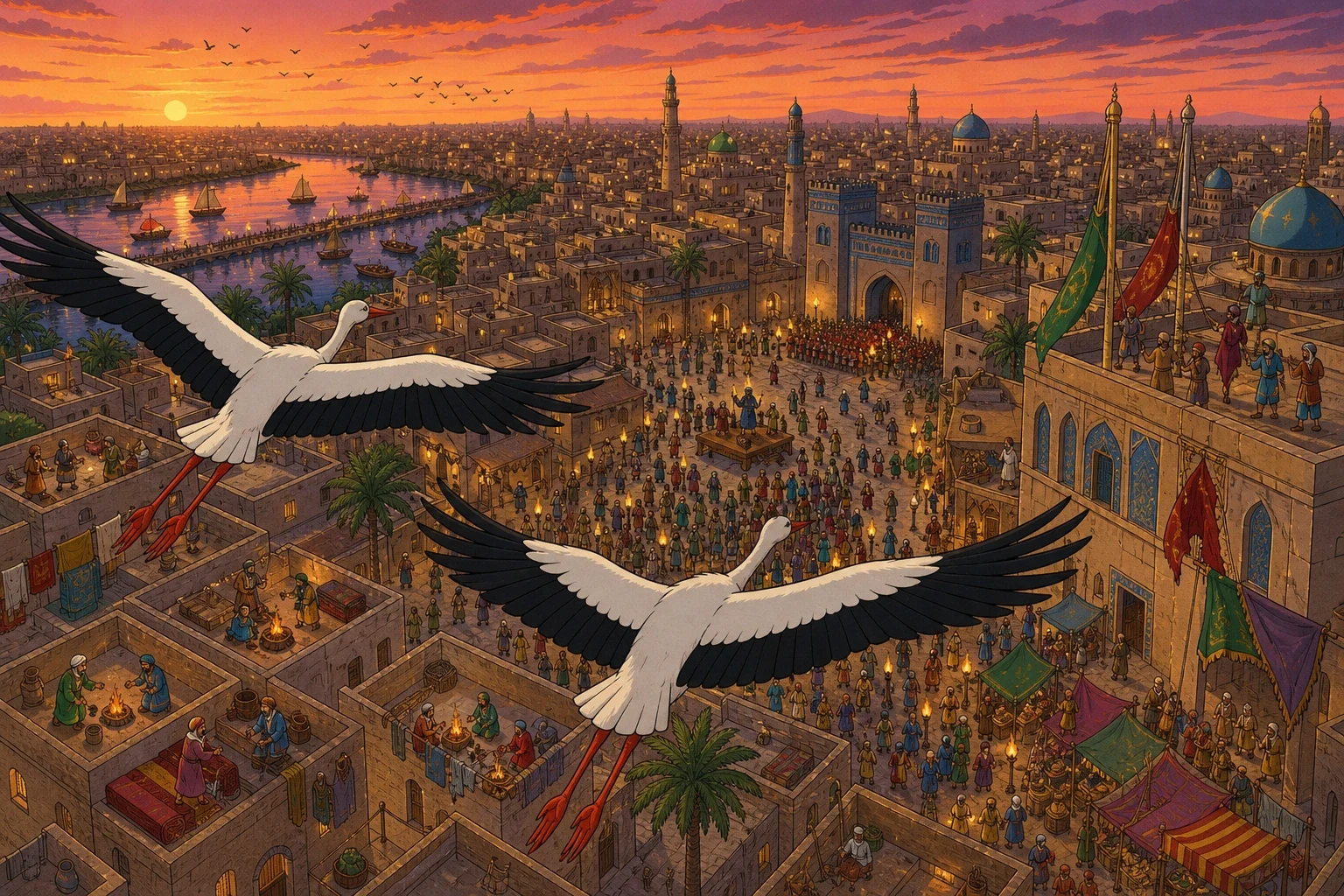
So they flew back over Baghdad as the lamps were being lit, and they saw the squares full of people, and criers at every corner, and the flags being changed on the palace.
They came low enough to hear.
A new Caliph had been proclaimed that afternoon. His name was Mizra, and he was the son of the sorcerer Kaschnur — and Kaschnur, said the crier, was the old pedlar who had come to the palace with a tray.
The two storks flew on over their own city and did not land.
Page 7
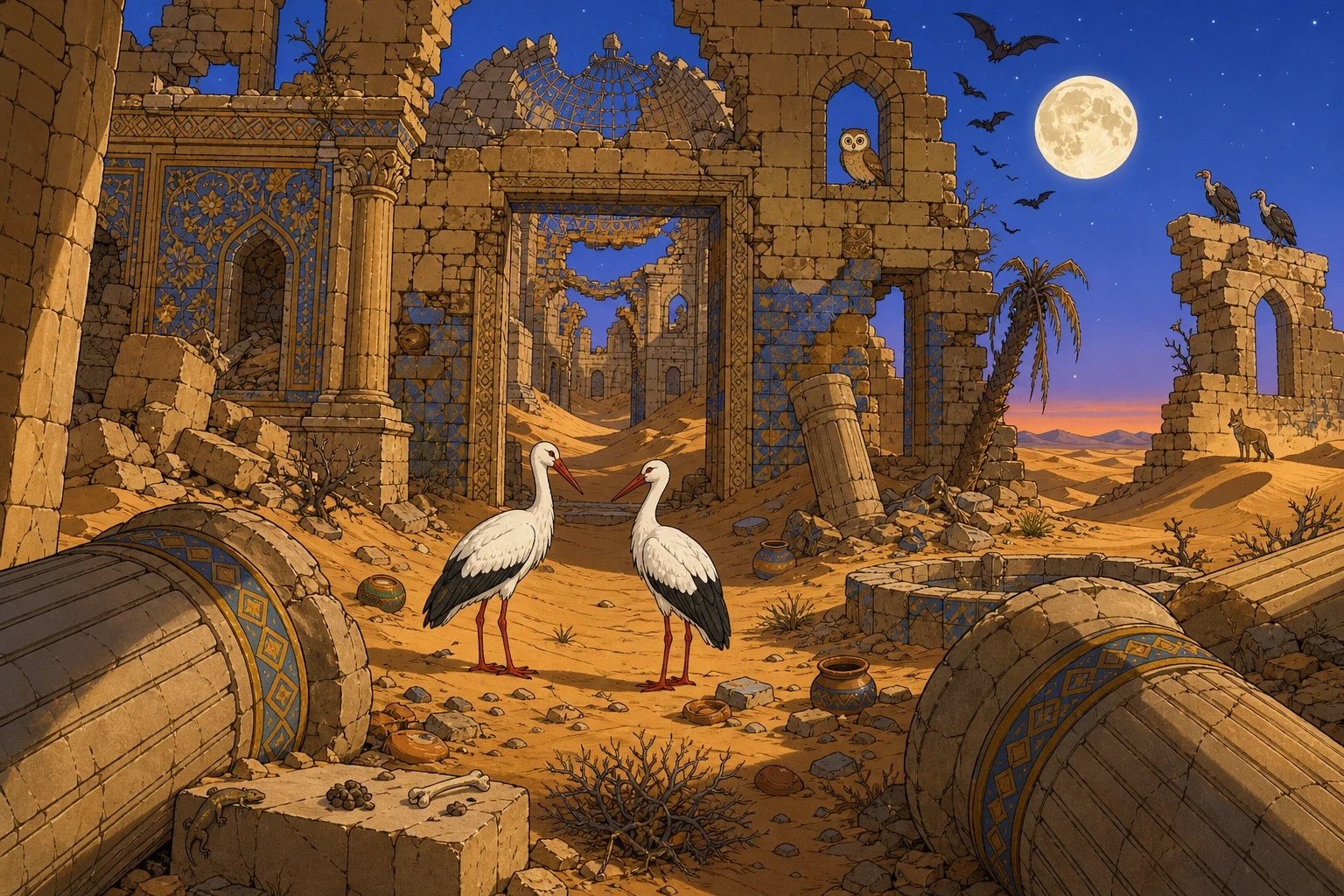
They lived badly for some weeks. Storks eat frogs, and neither of them ever got used to it.
One evening they came down on a ruined palace in the desert — broken columns, sand drifted through the doorways, the wind making a noise in the empty rooms.
And out of the dark came a voice that was not a bird's voice.
"You are welcome," said the voice. "But please do not be frightened of me."
It was an owl. She sat in a broken window with her round face turned towards them, and she was crying.
"My name is Lusa," she said. "My father is the king of India. And a sorcerer called Kaschnur did this to me, because I would not marry his son."
Page 8
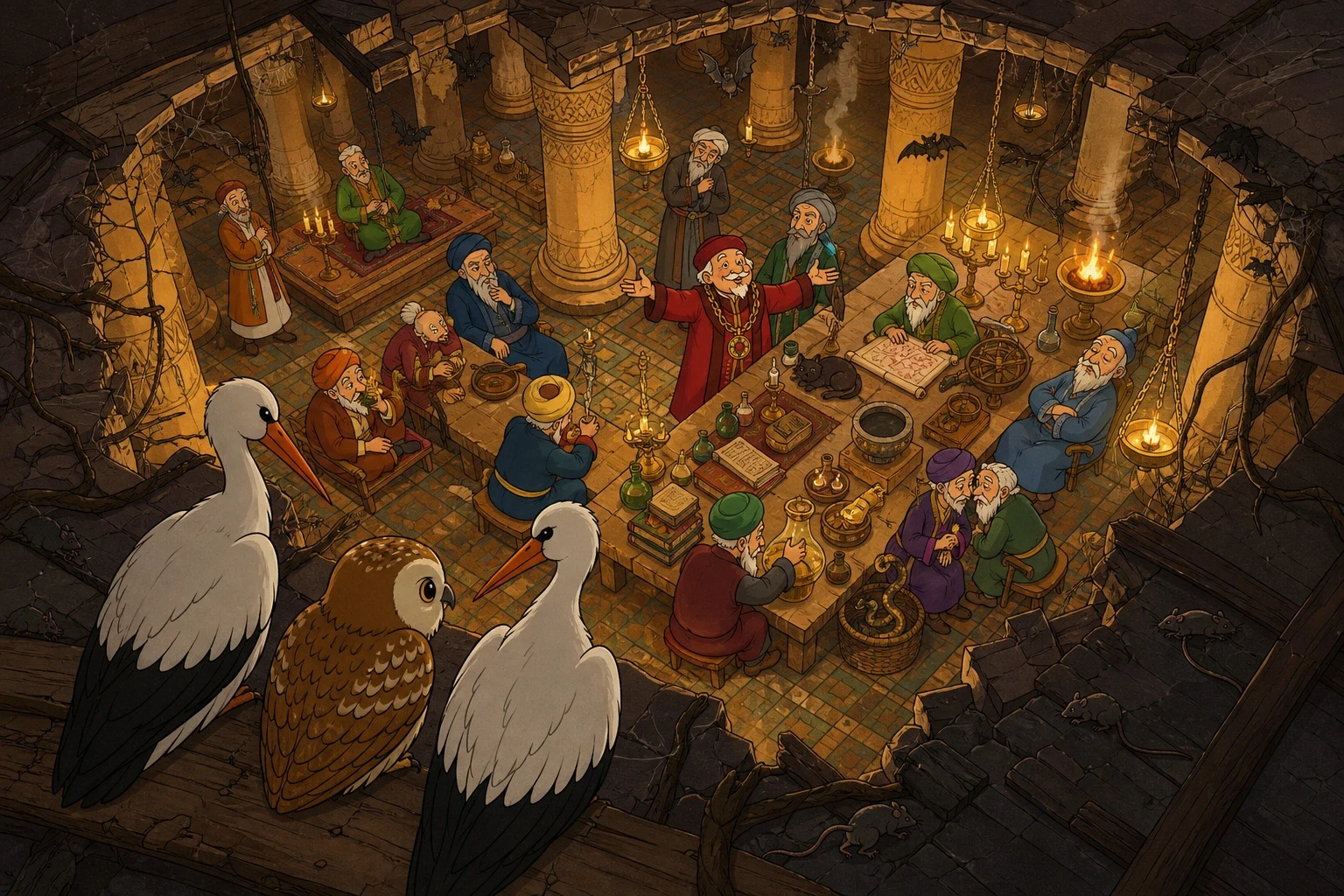
The owl knew something else. Once a month, the sorcerers of the whole country met in the hall underneath the ruin, and bragged to each other about what they had done.
"They come tonight," she said. "There is a crack in the floor above. If you can keep still, you will hear everything."
So the two storks lay flat on the broken floor in the dark, with the owl between them, and watched a dozen men in dark robes come in below and sit down around the lamps.
And Kaschnur, who was the oldest and the proudest of them, told the whole table what he had done to the Caliph of Baghdad. He laughed. And then, because he could not resist it, he said the word out loud.
Mutabor.
Page 9
They flew all night.
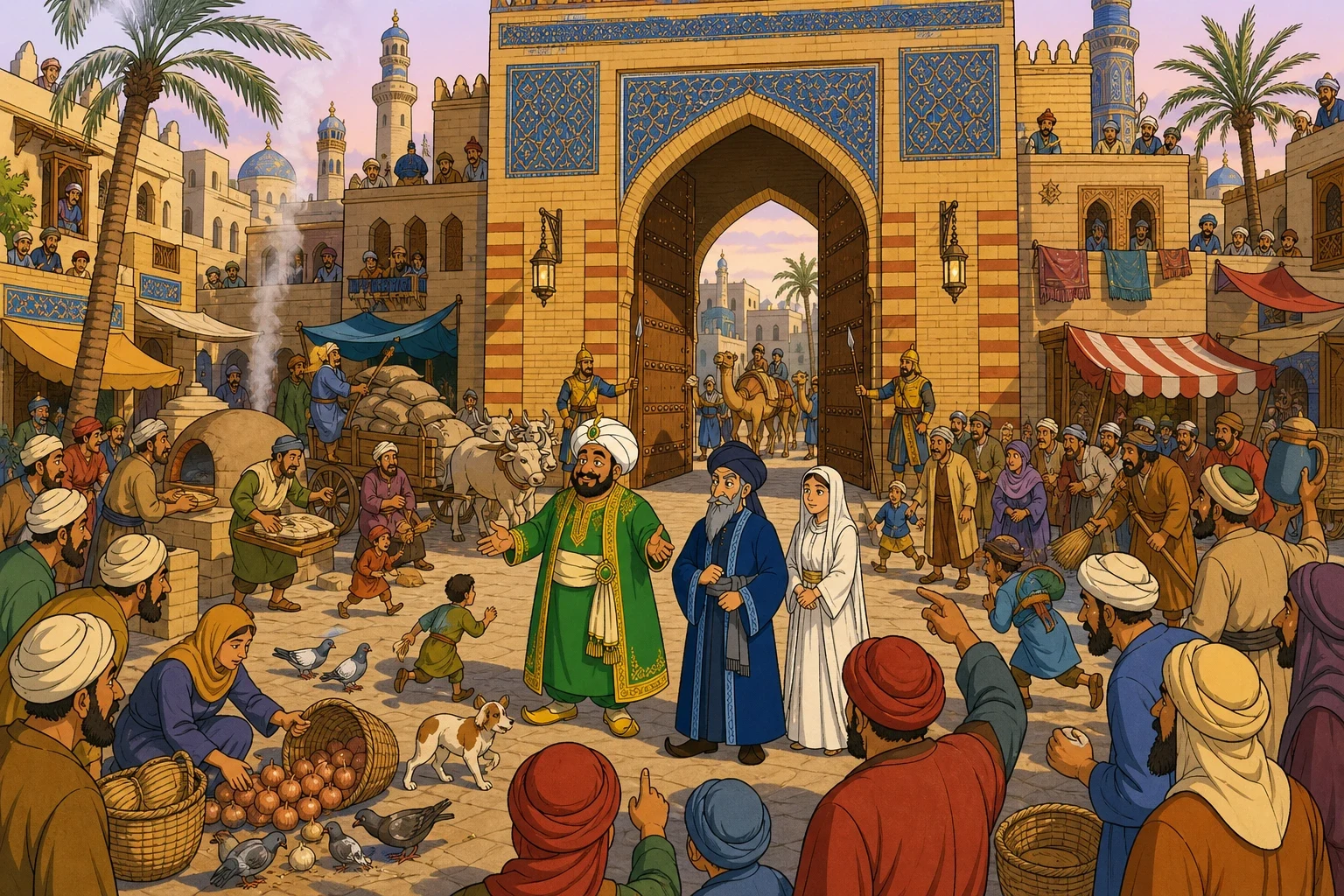
In the grey before sunrise they came down in the square outside the palace gate, where the bread-sellers were already lighting their ovens and the first carts were coming in.
They bowed three times to the east, the way Selim had told them, and they said the word.
And the market woman setting out her onions looked up and saw the Caliph of Baghdad standing in the square in a creased green kaftan, with his Grand Vizier beside him, and a young woman in a white veil who had not been there a moment before.
She dropped the onions. Then she started shouting, and within a minute so was everybody else.
Page 10
It took about an hour.
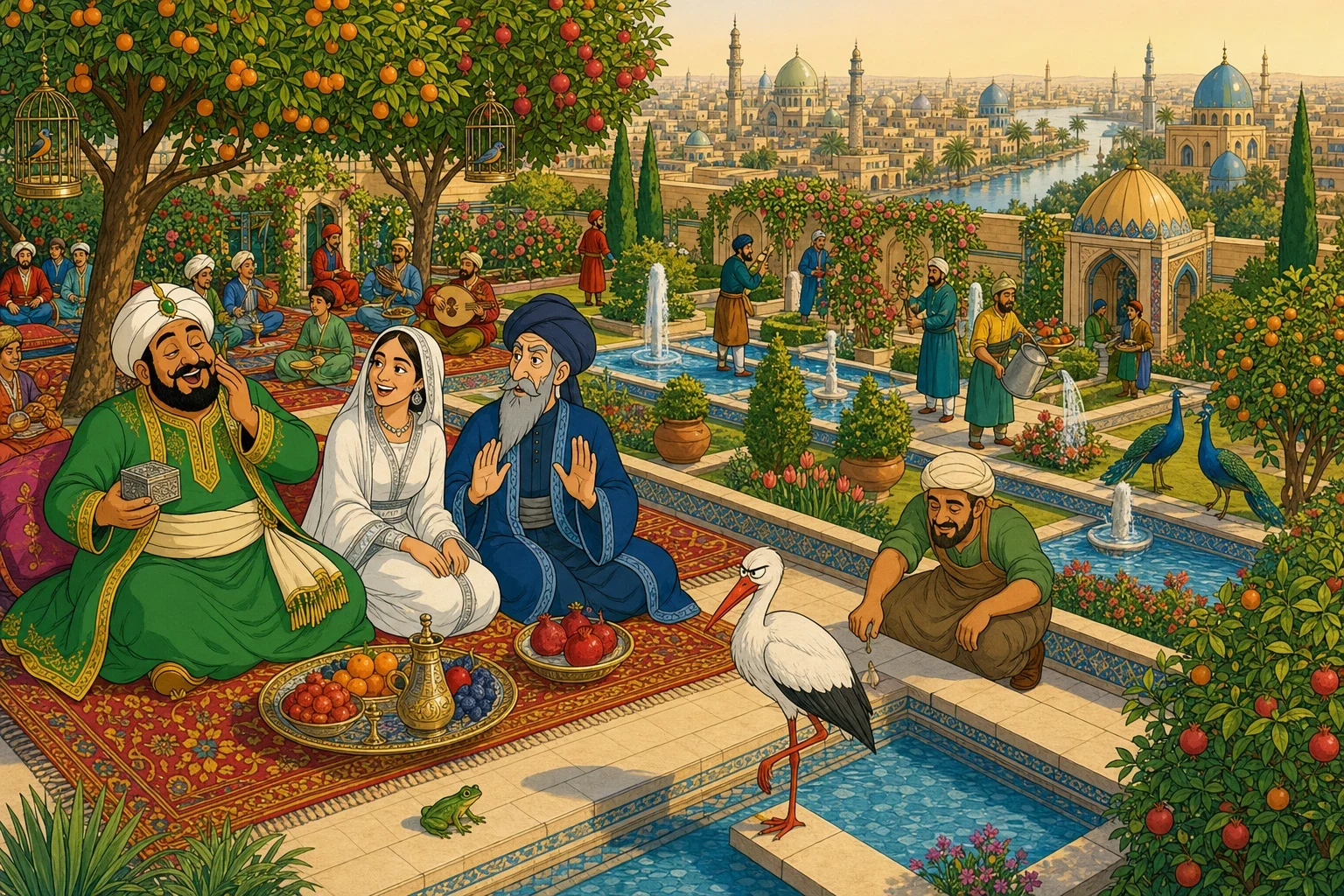
Mizra was taken off the throne before the bread was out of the ovens. Kaschnur lost his box and his powder and his place, and was put out of the city gate, and nobody in Baghdad ever let him back in again.
Mizra was given a pinch of the powder and turned into a stork, and he lives in the palace garden to this day, where the gardeners feed him and nobody at all is afraid of him.
The Caliph married Lusa, who turned out to be very good at ruling a country and much better than he was at remembering things.
And for the rest of his life, whenever the court was dull, the Caliph would take the little silver box out of his sash and clatter his teeth together like a stork's bill, and the Grand Vizier would go slightly pale, and the whole court would laugh.
About this story
- Audience: kids (ages 6–12)
Read Wonder Books on your phone
Wonder Books is available on Android and iPhone and iPad. Get Wonder Books on Google Play · Get Wonder Books on the App Store.