Flora's Shadow Garden of Geodes
Flora's Shadow Garden of Geodes — an illustrated stories story. 10 illustrated pages, free to read on Wonder Books.
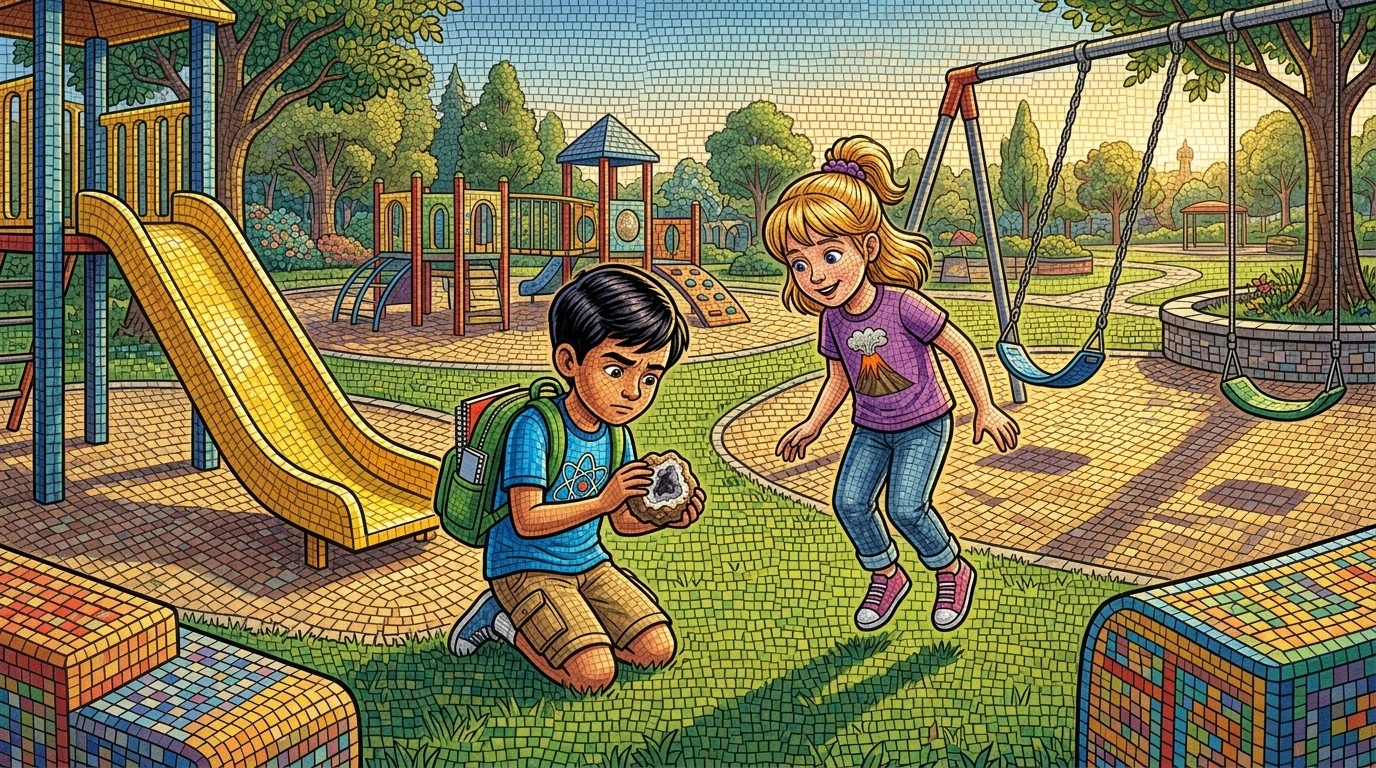
Page 1
Yousef knelt down, examining a peculiar rock he found near the playground slide. "What is this thing?" he wondered aloud, turning the geode over in his hands. Linnea, swinging nearby, hopped off. "Looks like a weird, bumpy potato," she giggled. "Maybe we should ask Mr. Harris, he'll know. I bet it's more than a weird potato."
Page 2
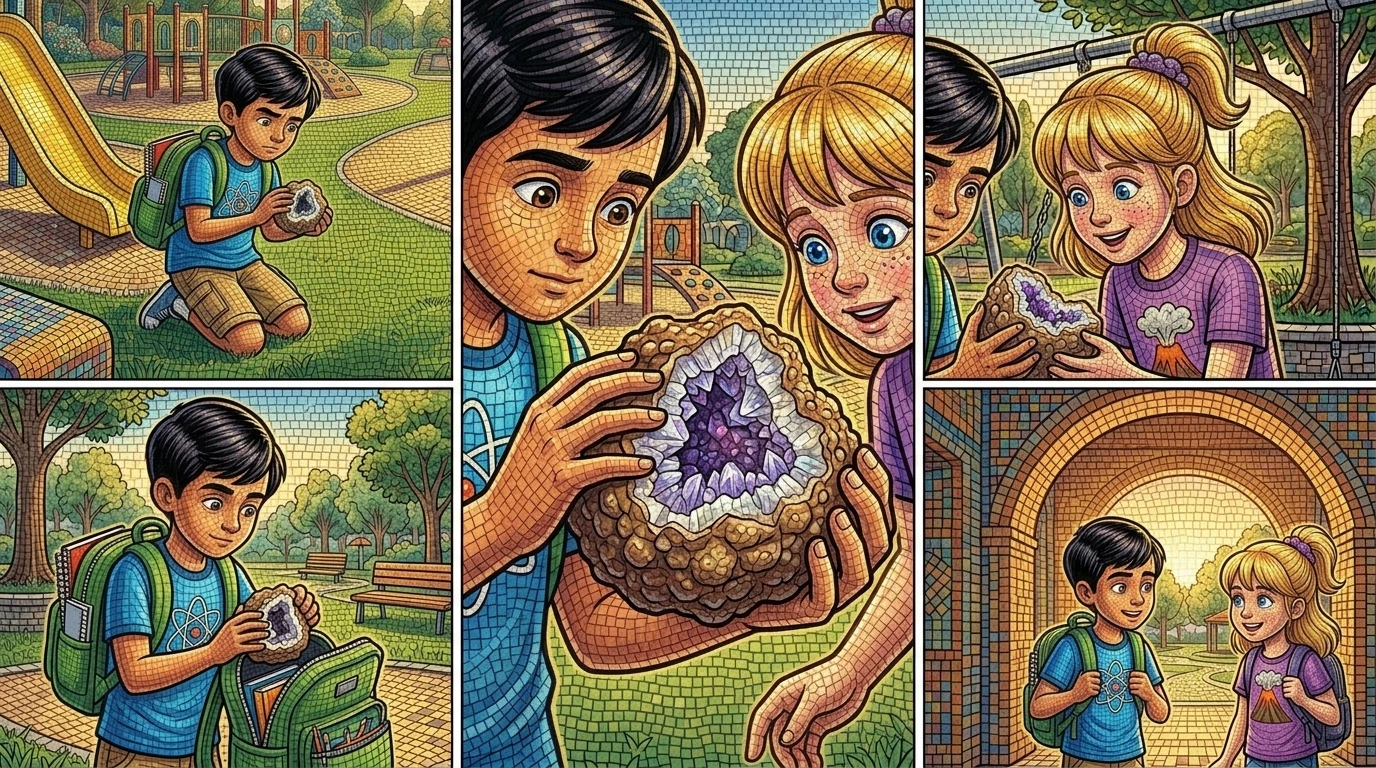
Linnea tilted her head. "I wonder what makes rocks like this form? It looks like there are crystals inside." Yousef shrugged, carefully placing the geode in his backpack. "Mr. Harris always says, the Earth is full of surprises. I think he calls this geology," Yousef explained. "Like, how does something hard become so sparkly inside?"
Page 3
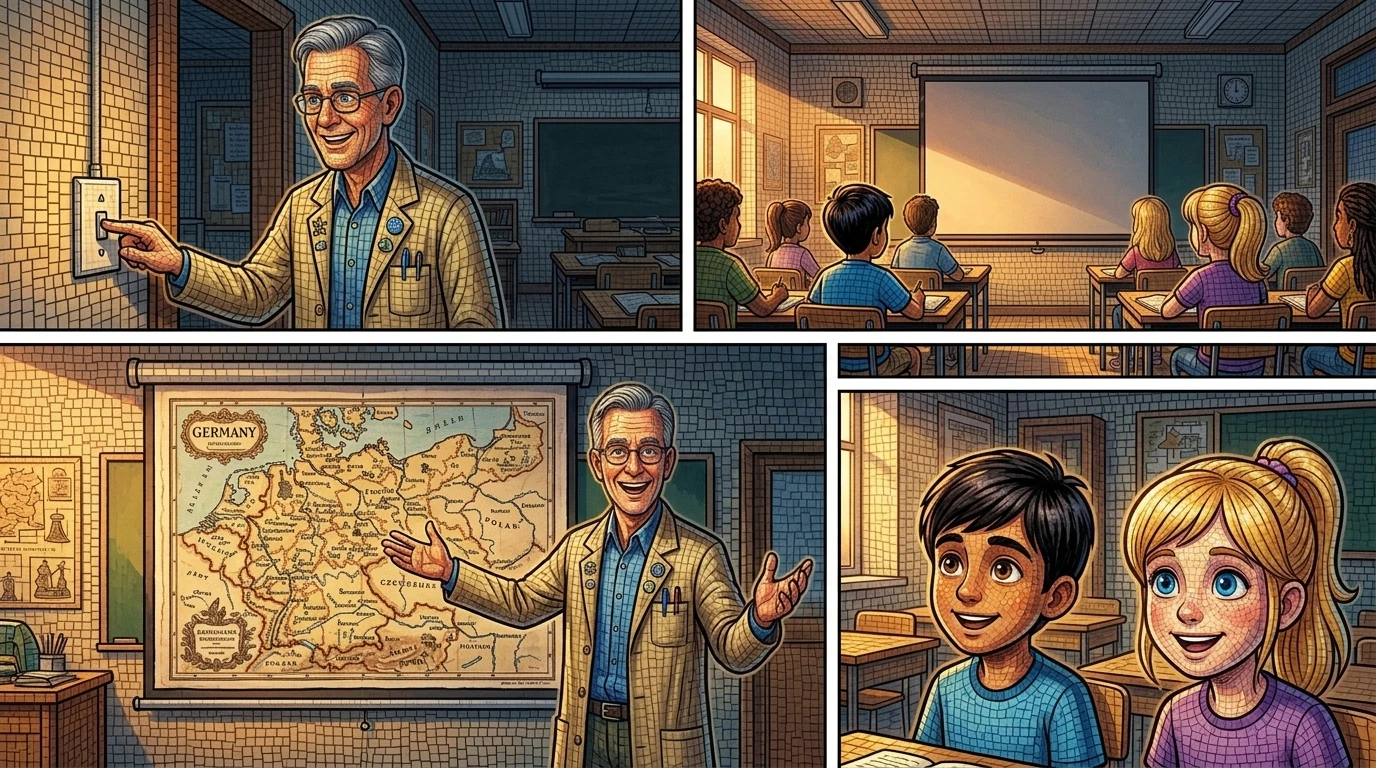
Mr. Harris smiled. "Geodes are fascinating! They're like little treasure chests hidden in ordinary rocks. Let's journey back in time to understand how these hidden gems form." He flicked off the classroom lights. "Imagine Germany in the 1770s," Mr. Harris said, adjusting his glasses, "a time of great scientific curiosity."
Page 4
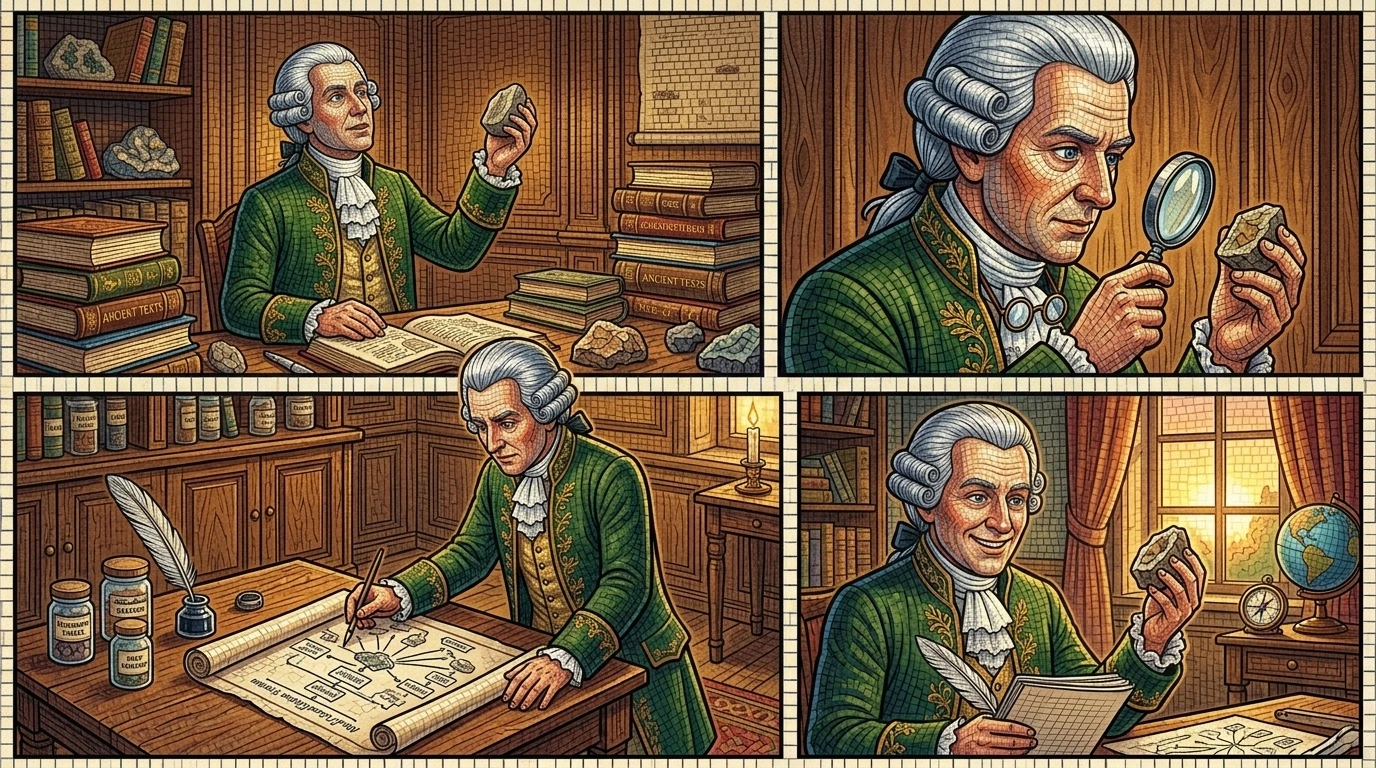
"One of the first scientists to truly explore mineralogy was Abraham Gottlob Werner," Mr. Harris began. "He was a professor at the Freiberg Mining Academy and developed a classification system for minerals. Werner was super dedicated – some say he even tasted rocks!" he adds with a chuckle. He encouraged students to observe carefully.
Page 5
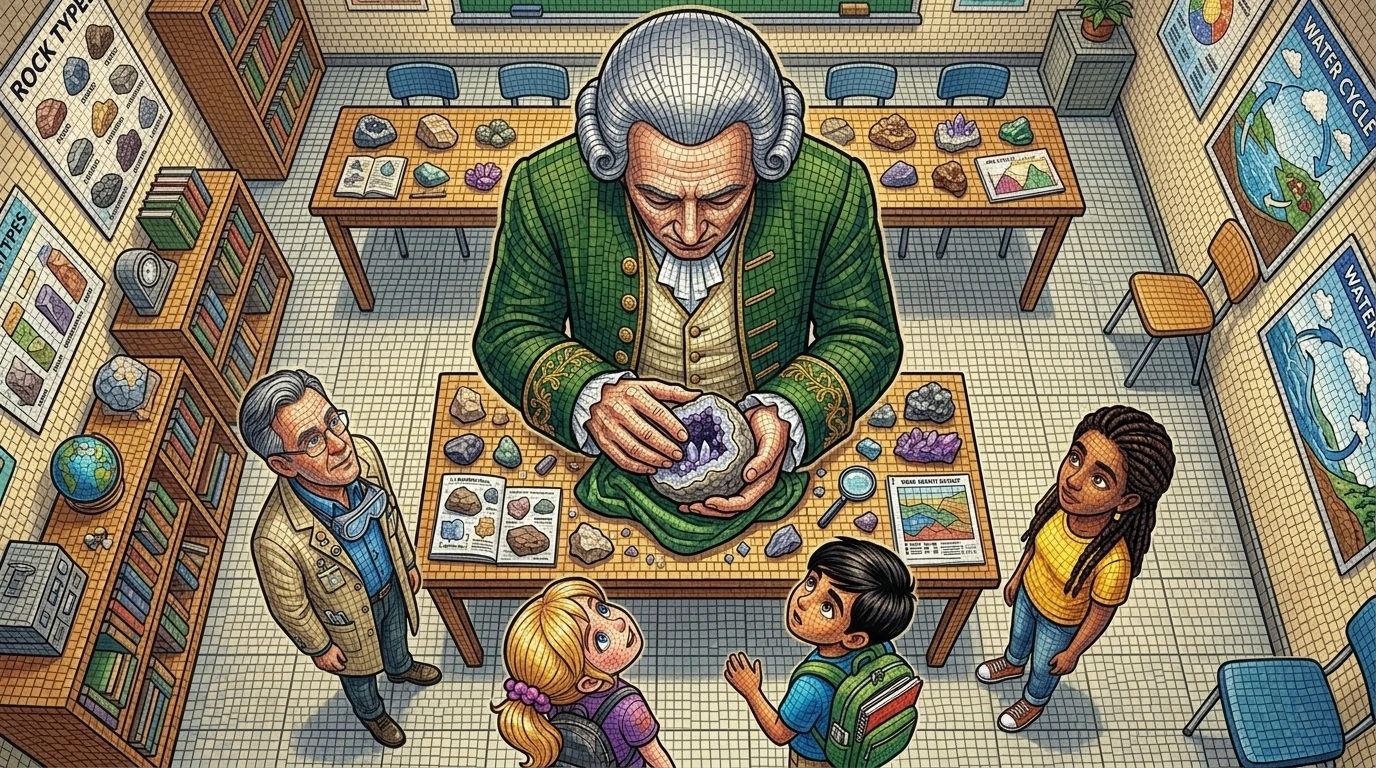
Werner carefully examined a geode, its rough exterior hiding the glittering crystals within. "'The grand show is eternal. It is only the scene that changes,'" Werner mumbled to himself, remembering the words of the philosopher Arthur Schopenhauer. "He understood the hidden beauty even in common things," he said softly. "But how did these amazing crystals get inside?"
Page 6
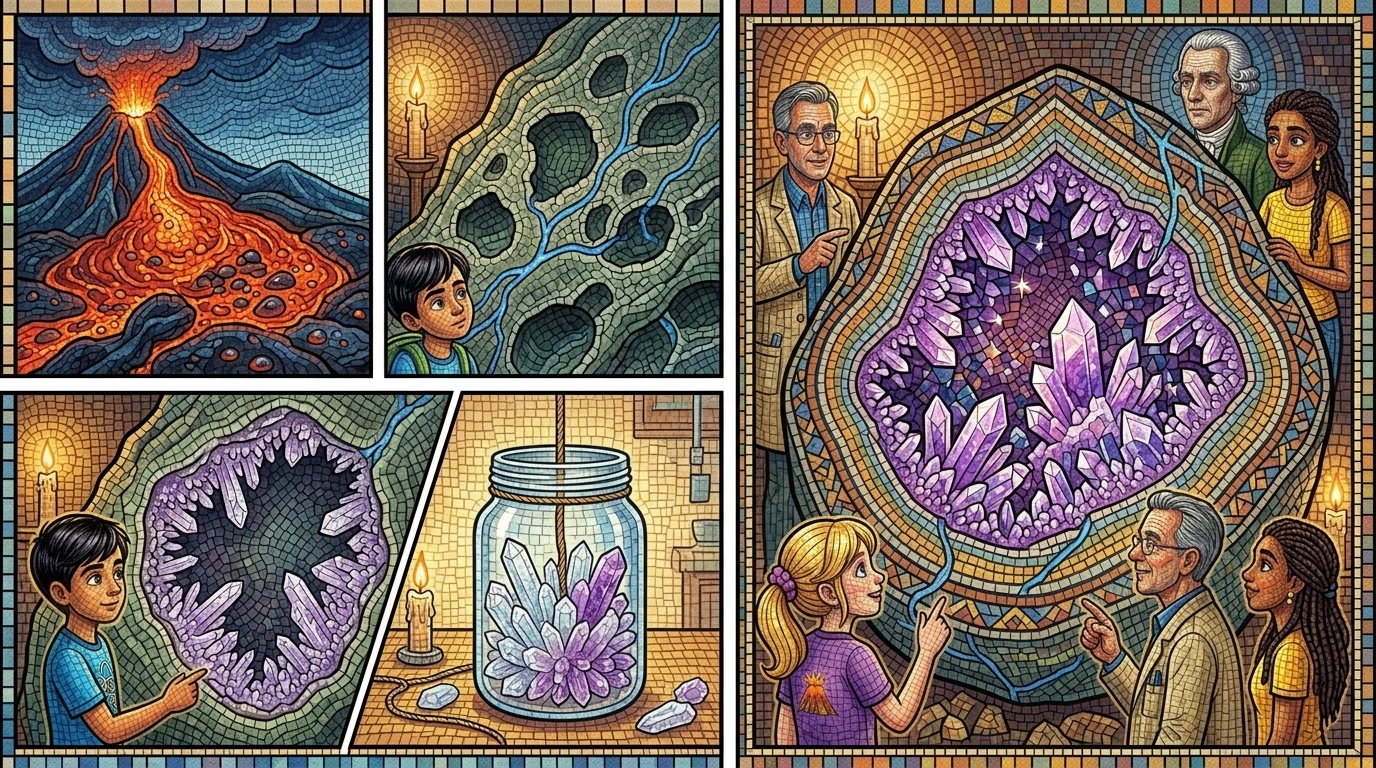
Werner theorized that geodes form when mineral-rich water seeps into bubbles or cavities in volcanic rock. Over millions of years, the minerals slowly precipitate out of the water, forming crystals. Think of it like slowly adding sugar to water—eventually, crystals form on a string! The slow crystallization process produces the stunning formations.
Page 7
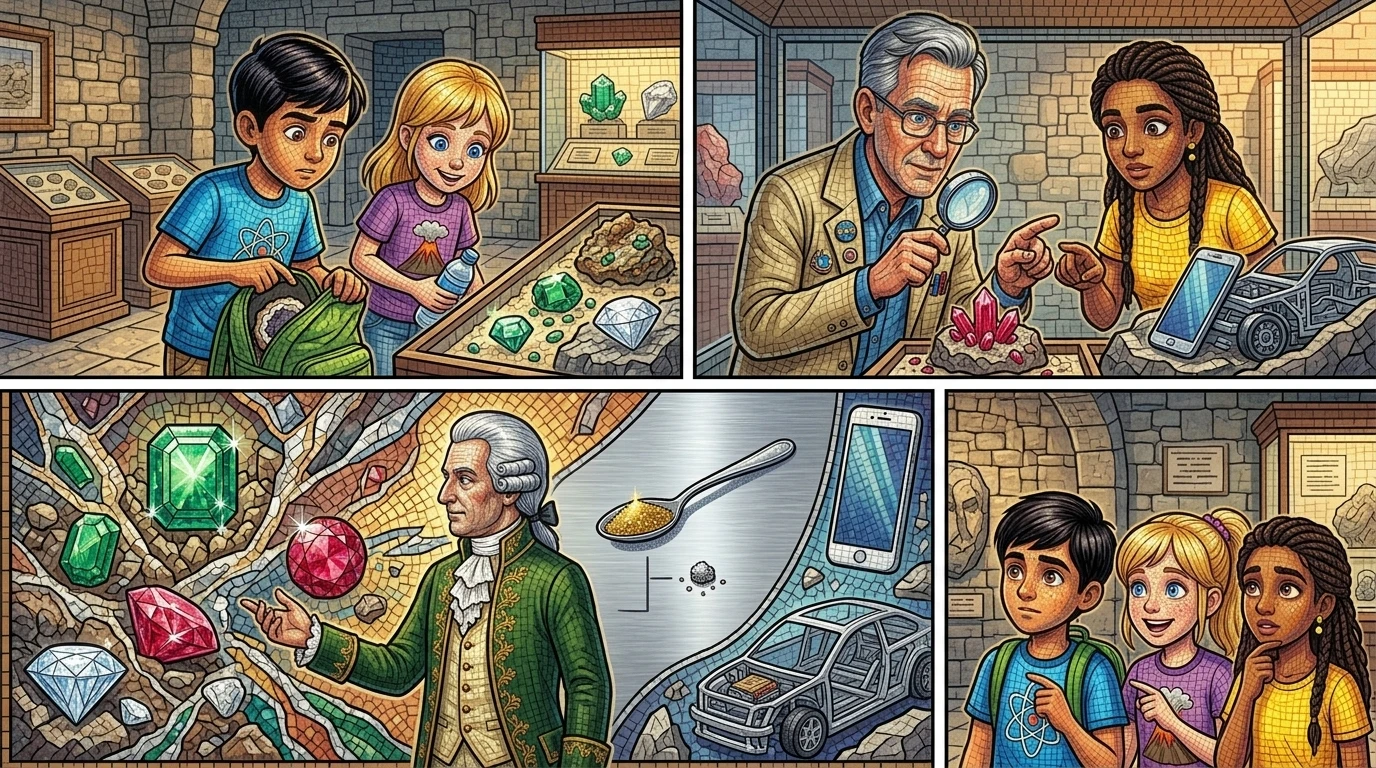
Understanding mineral formation helped us find valuable resources! Knowing how geodes and other mineral deposits form helps us locate everything from gemstones to metals. These elements are vital for modern technology, from smartphones to electric cars! A teaspoon of gold is more common than a teaspoon of rhodium - that's why it's more expensive!
Page 8
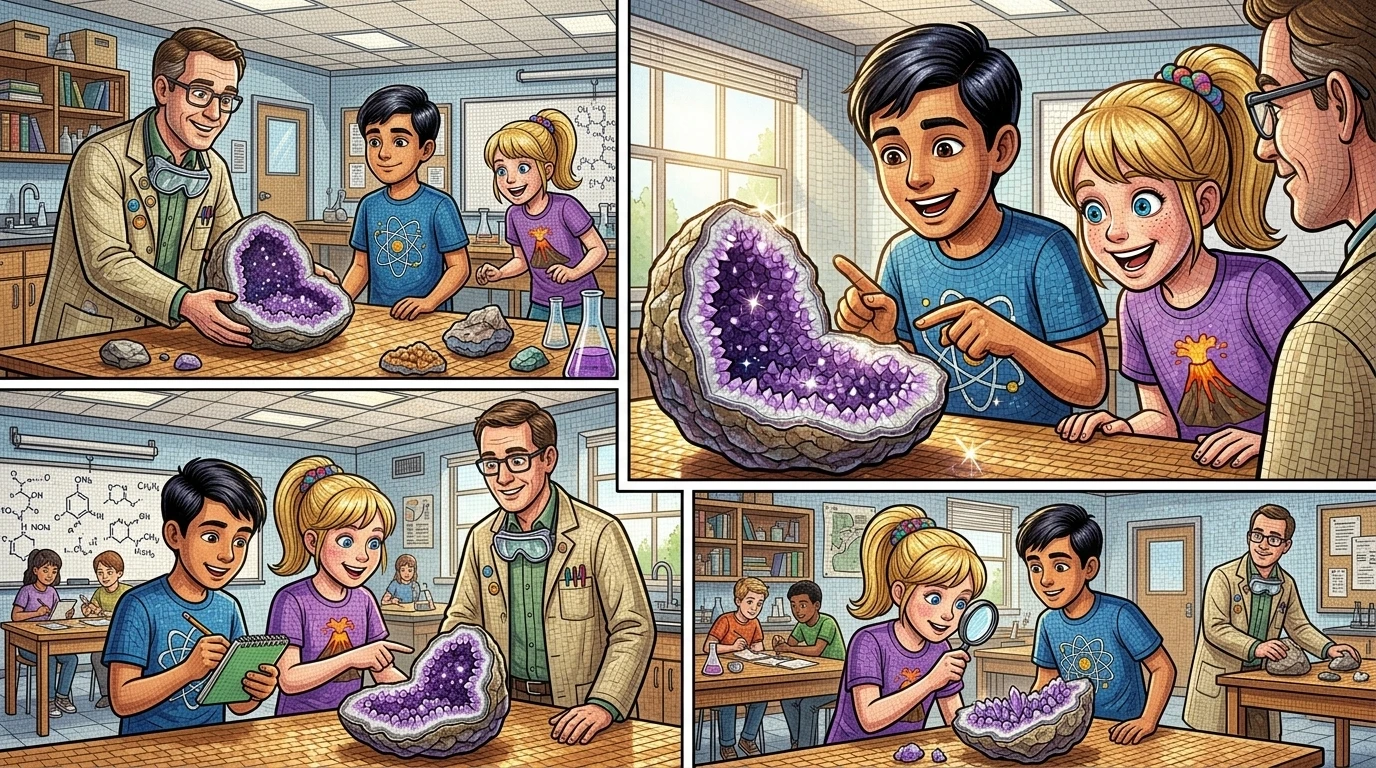
Back in the classroom, Mr. Harris placed Yousef's geode on the table. "So, Yousef, how do you think this geode formed?" Yousef grinned. "It started as a bubble in a rock, and over millions of years, mineral water filled it and slowly turned into these crystals!" Linnea exclaimed, "Wow, it's like a tiny, sparkly history book!"
Page 9
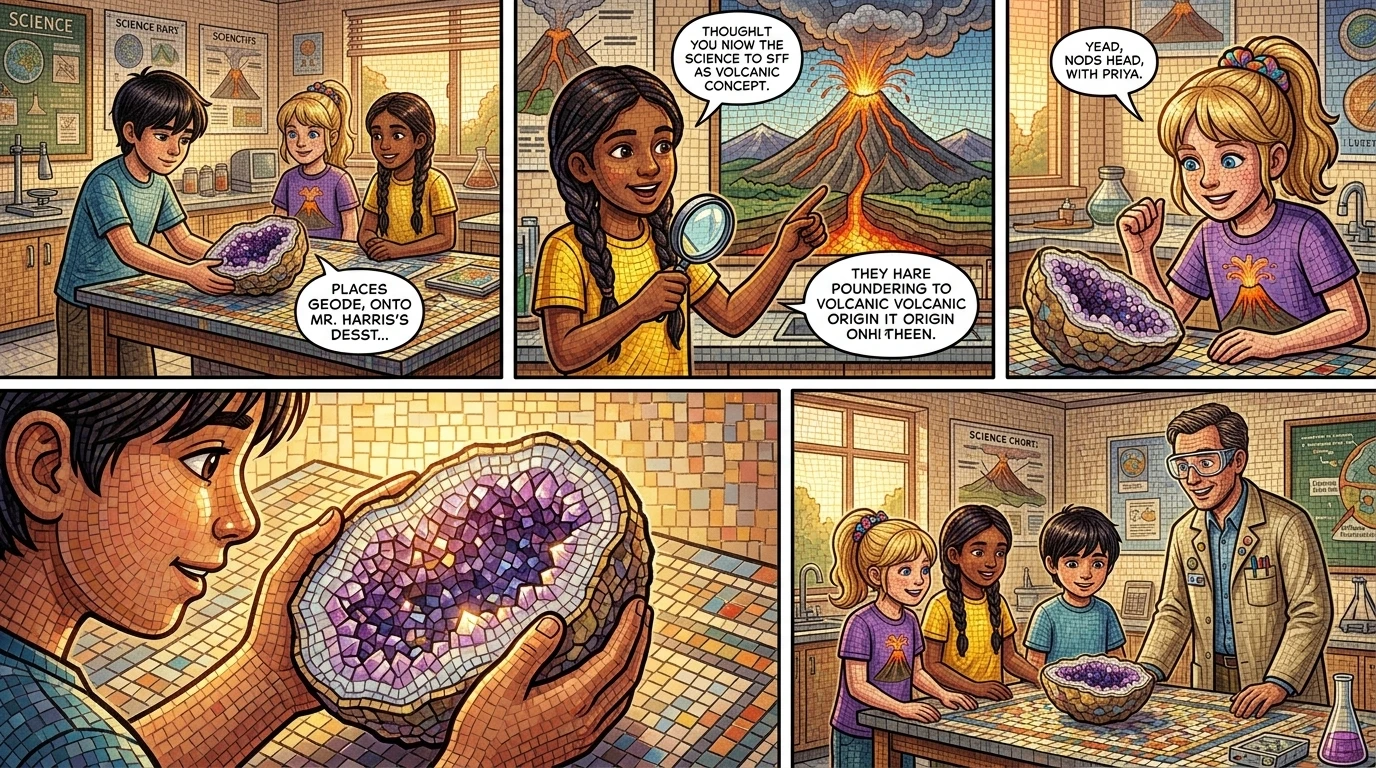
"I bet geodes form near volcanoes," Priya chimed in, "because of all the volcanic rock!" Linnea nodded. "And maybe you can find different crystals based on the minerals in the water!" Yousef added. "It's amazing to think that something so plain on the outside can be so beautiful inside," he mused, holding the geode. He smiled. It felt like a gift from the earth.
Page 10
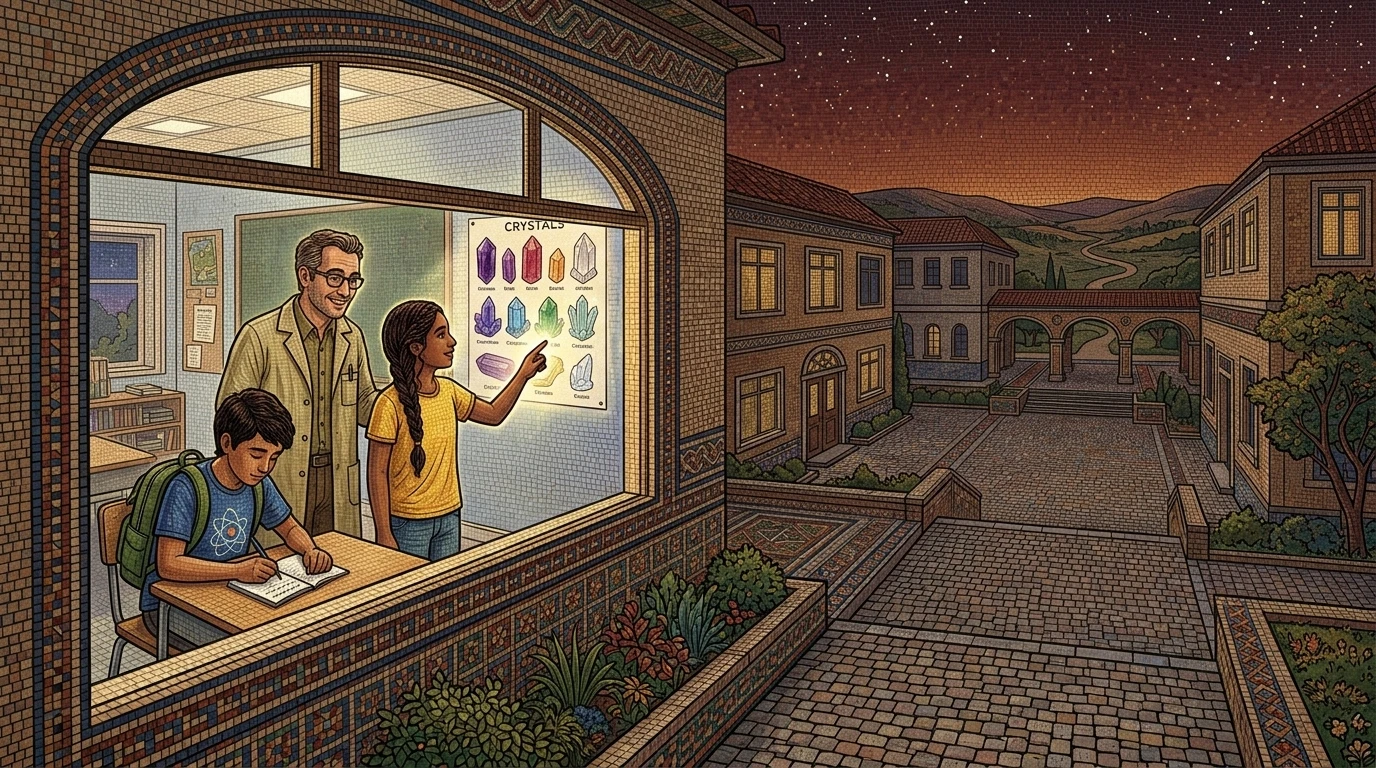
Mr. Harris smiled. "So, a geode is a rock treasure chest filled with slowly grown crystals!" Priya perked up. "That's so cool! But... what makes some crystals purple and others clear?" Yousef opened his notebook and started writing: "Discovery #1: Geodes are sparkly treasure chests of time!" The adventure had just begun.
About this story
- Audience: kids (ages 6–12)
Read Wonder Books on your phone
Wonder Books is available on Android and iPhone and iPad. Get Wonder Books on Google Play · Get Wonder Books on the App Store.