Inside the Human Cell
Inside the Human Cell — an illustrated stories story. 10 illustrated pages, free to read on Wonder Books.
Page 1

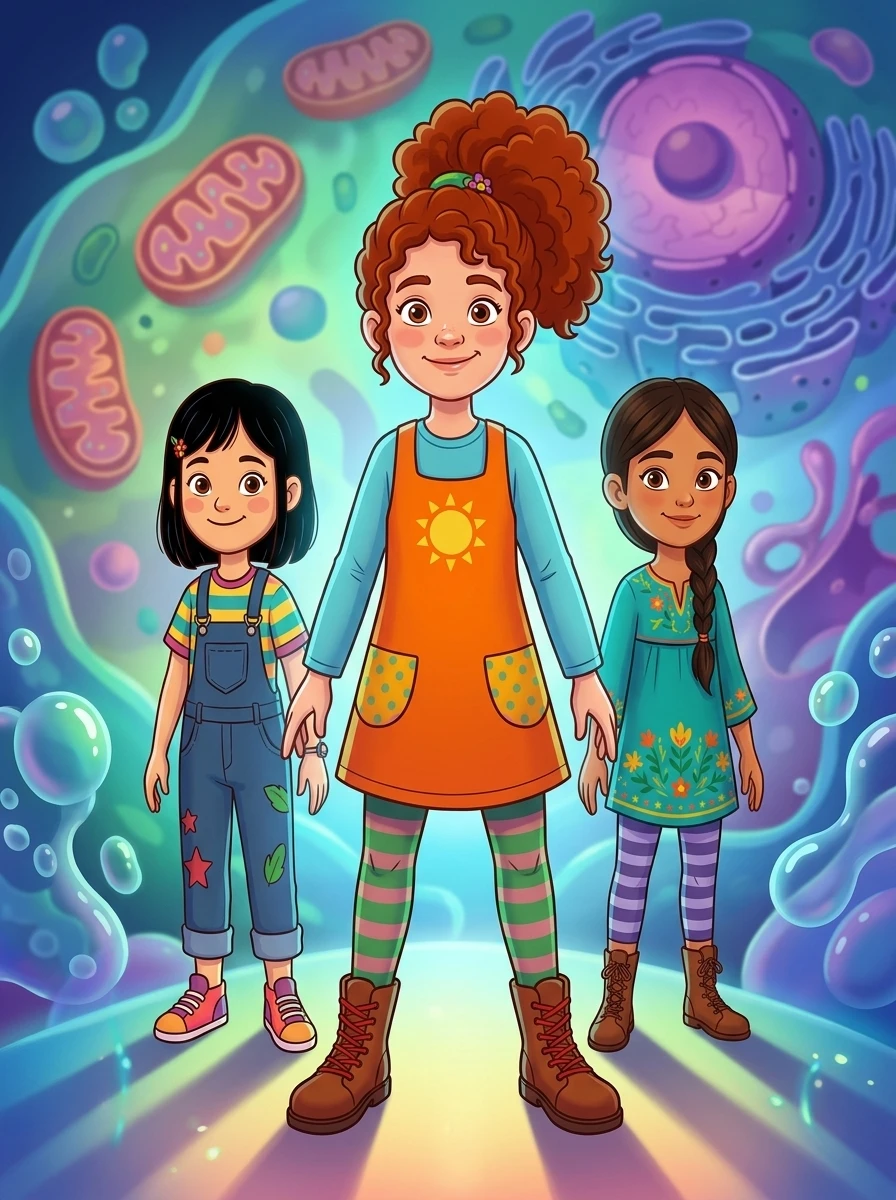
Alina, bundled in a thick waterproof jacket, peered into the inky blackness. Rain lashed against the windows of the research vessel, the 'Deep Explorer'. "I still can't believe we're searching for bioluminescent creatures a mile beneath the ocean surface!" she exclaimed to Erik, adjusting her thick curly auburn hair pulled into a high ponytail so it wouldn't block her view.
Page 2
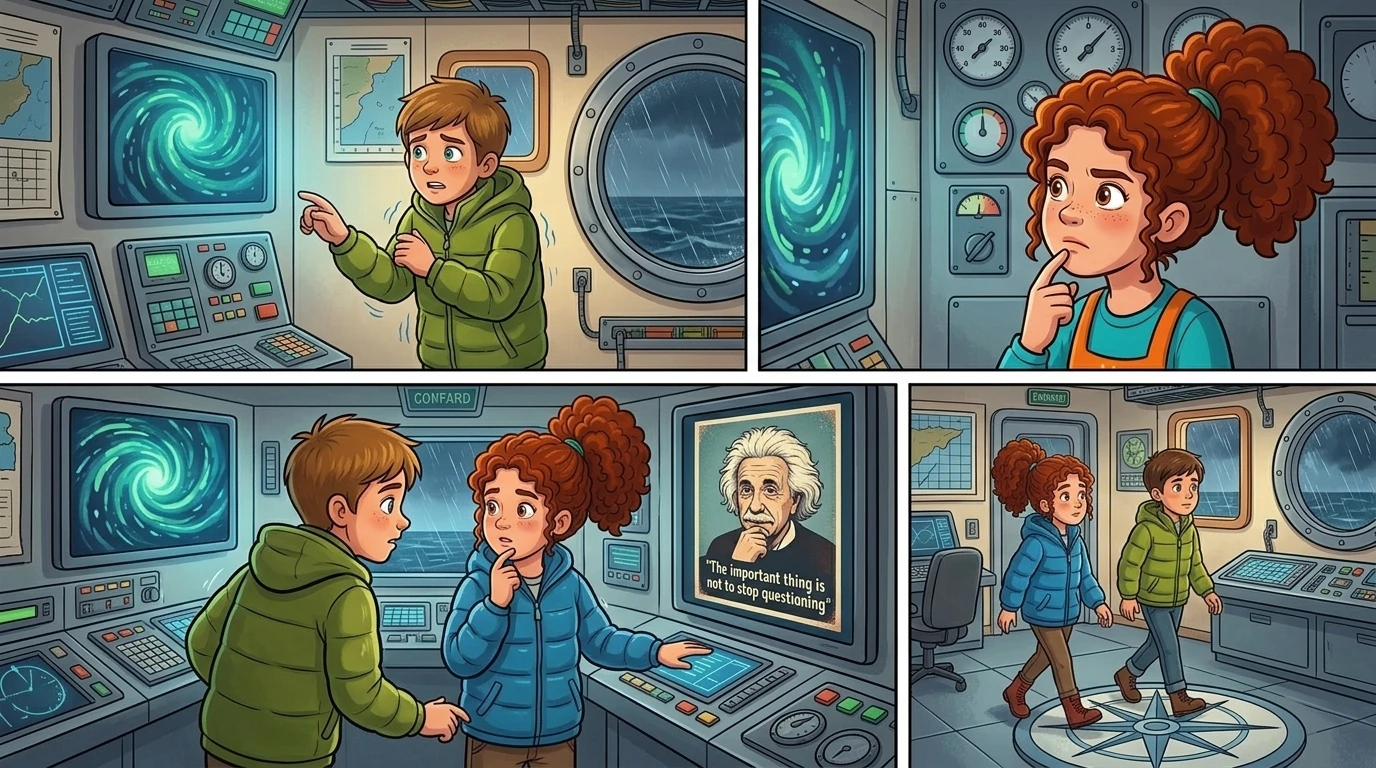
Erik shivered, despite his warm jacket. "Bioluminescence is cool, but why do some creatures glow, and others don't? Is it just...random?" Alina tapped her chin thoughtfully. "Well, Dad always says, 'The important thing is not to stop questioning,' which Albert Einstein said. Maybe there's more to it than just a random glow."
Page 3
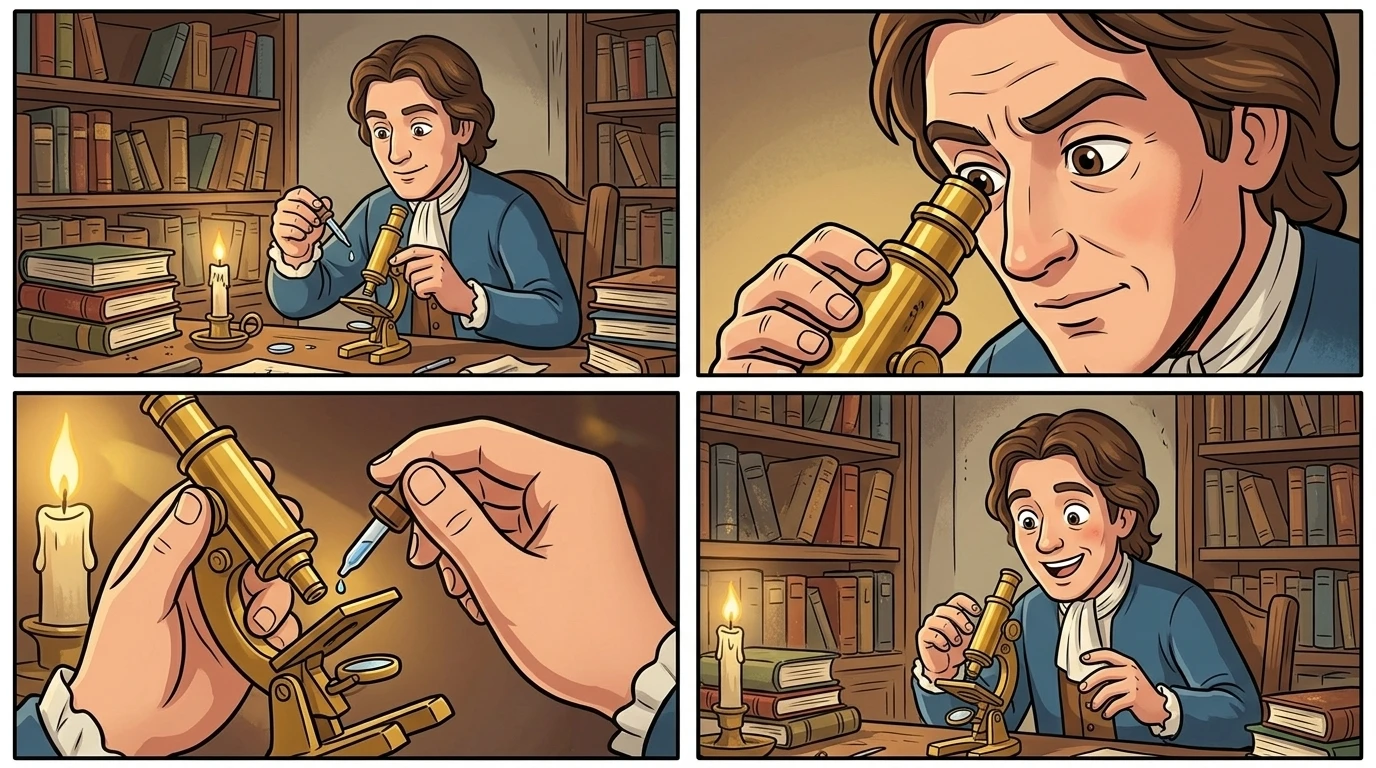
The scene shifts to a cluttered study, candlelight flickering across shelves filled with dusty books. Narration: "Paris, France, 1676. Antonie van Leeuwenhoek, a Dutch draper and scientist, peered through his handmade microscope."
Page 4
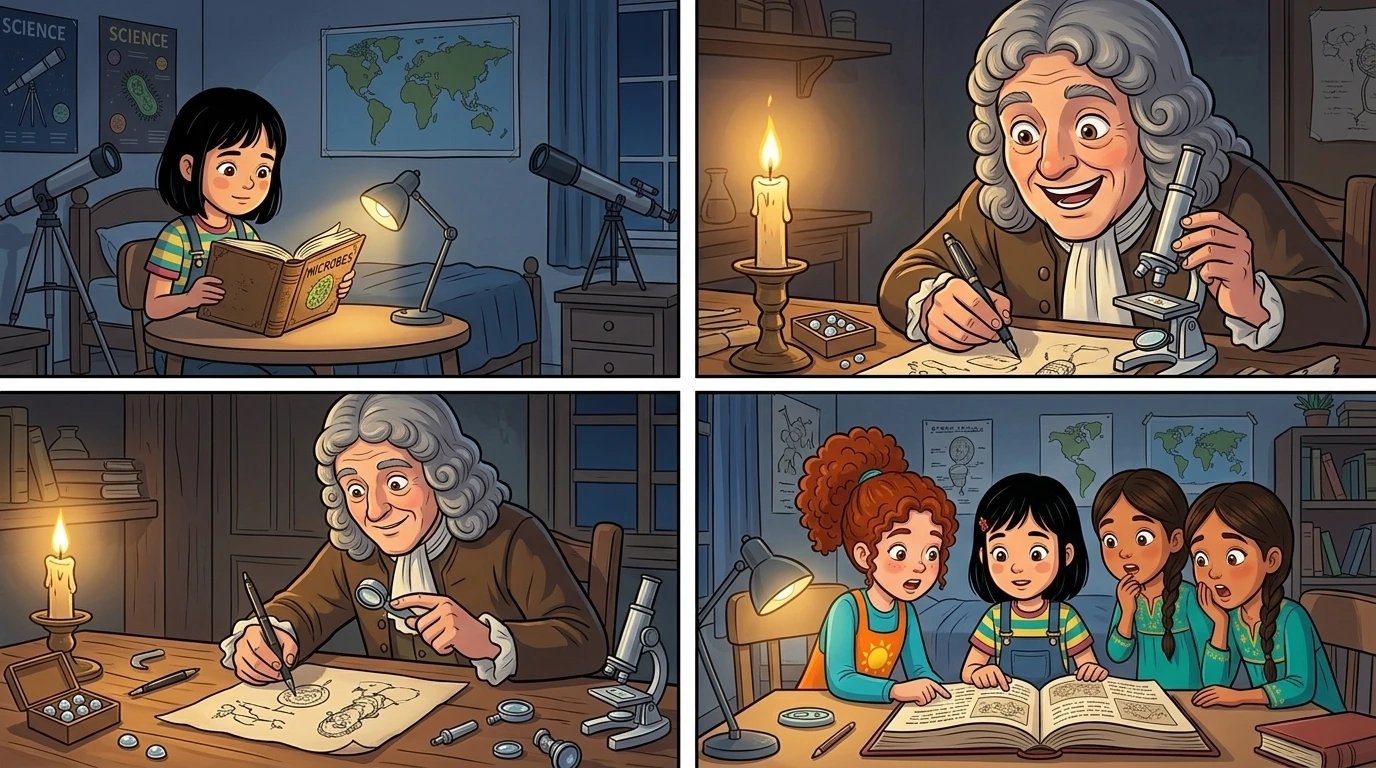
Antonie van Leeuwenhoek, a draper by trade, was obsessed with lenses and what they could reveal. He meticulously ground his own lenses, creating microscopes far more powerful than any others of his time. "I see worlds within worlds!" he exclaimed in Dutch, meticulously sketching what he observed, his short neatly combed long brown hair catching the candlelight.
Page 5
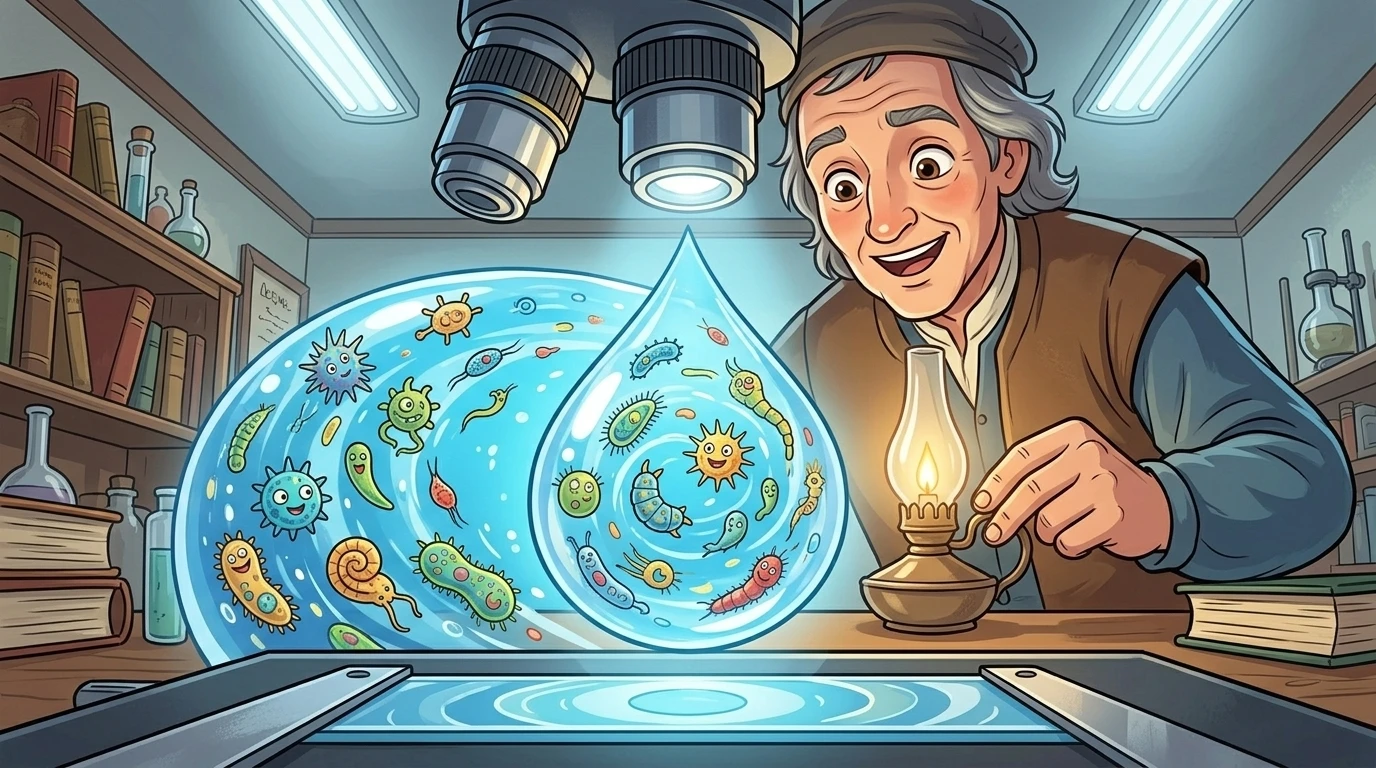
Leeuwenhoek spent countless hours observing everything from pond water to dental plaque. He called the tiny moving organisms he saw "animalcules." He meticulously documented their shapes and movements. "The world teems with life, unseen by the naked eye!" he declared, carefully adjusting the light source.
Page 6
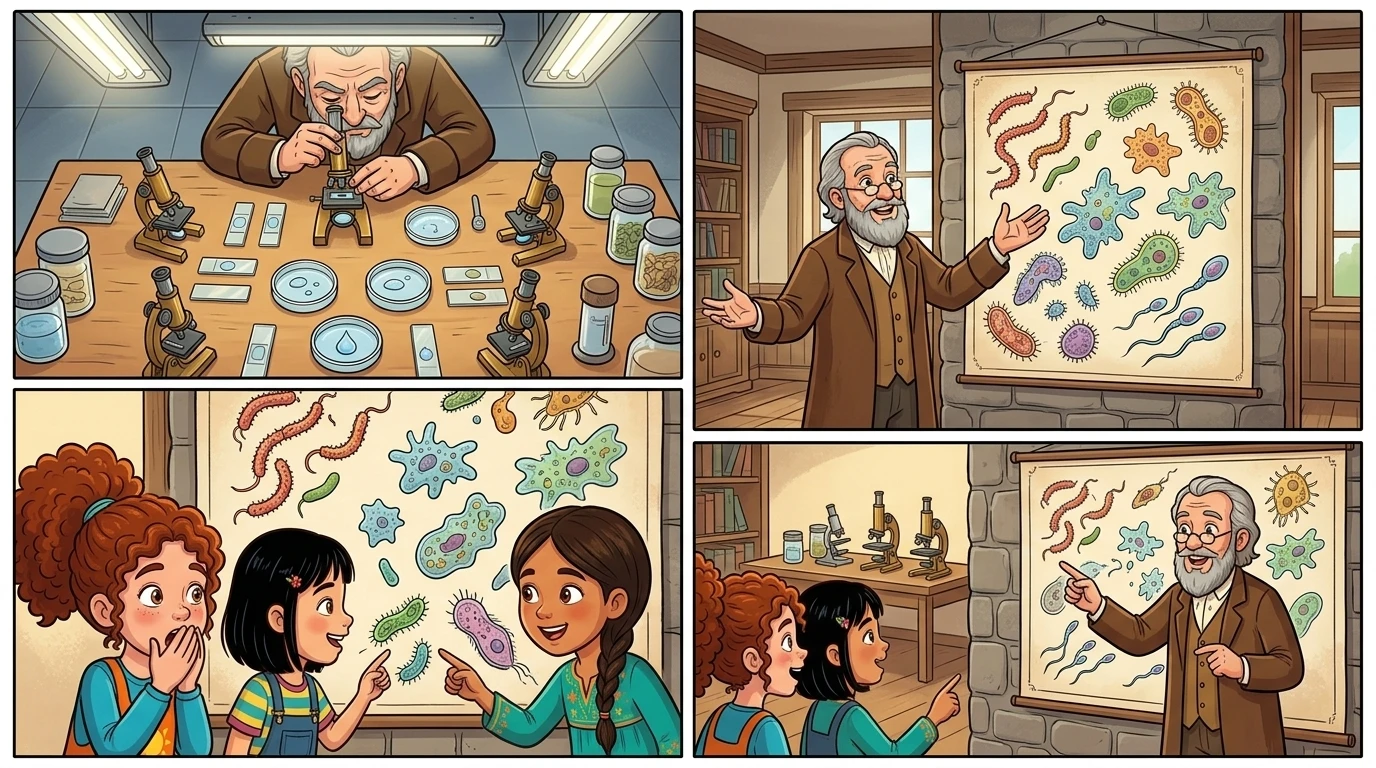
Leeuwenhoek's painstaking observations revealed the existence of single-celled organisms. This discovery overturned the understanding of life – proving that life existed far beyond what anyone imagined! He showed that life wasn't just plants and animals, but also countless microorganisms. His meticulous descriptions included drawings of bacteria, protozoa, and even sperm cells!
Page 7
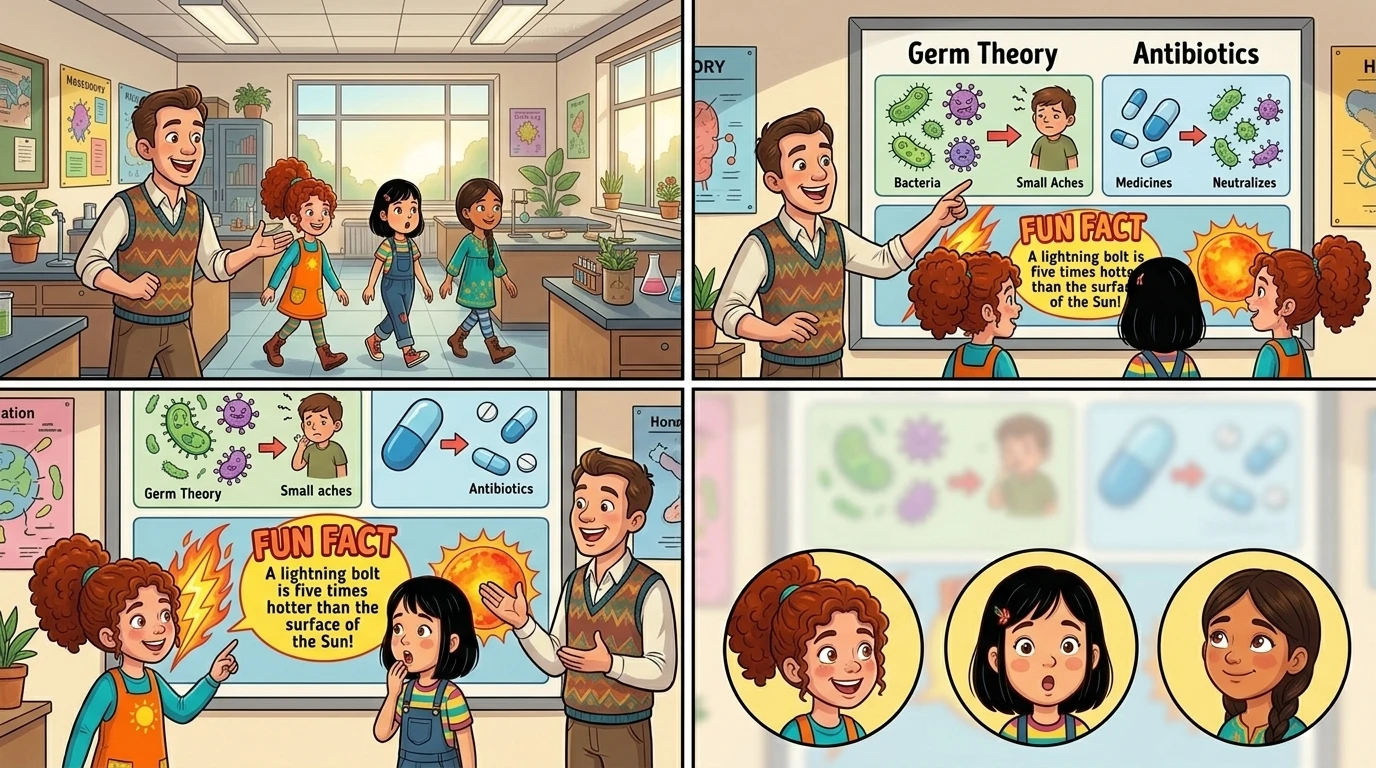
Leeuwenhoek's discovery paved the way for germ theory and revolutionized medicine. We now understand that microorganisms play crucial roles in everything from digestion to disease. "Without Leeuwenhoek, we wouldn't have antibiotics or understand how infections spread!" David explained, pointing to a chart on the wall. "A lightning bolt is five times hotter than the surface of the Sun, imagine those tiny organisms surviving in our bodies!"
Page 8
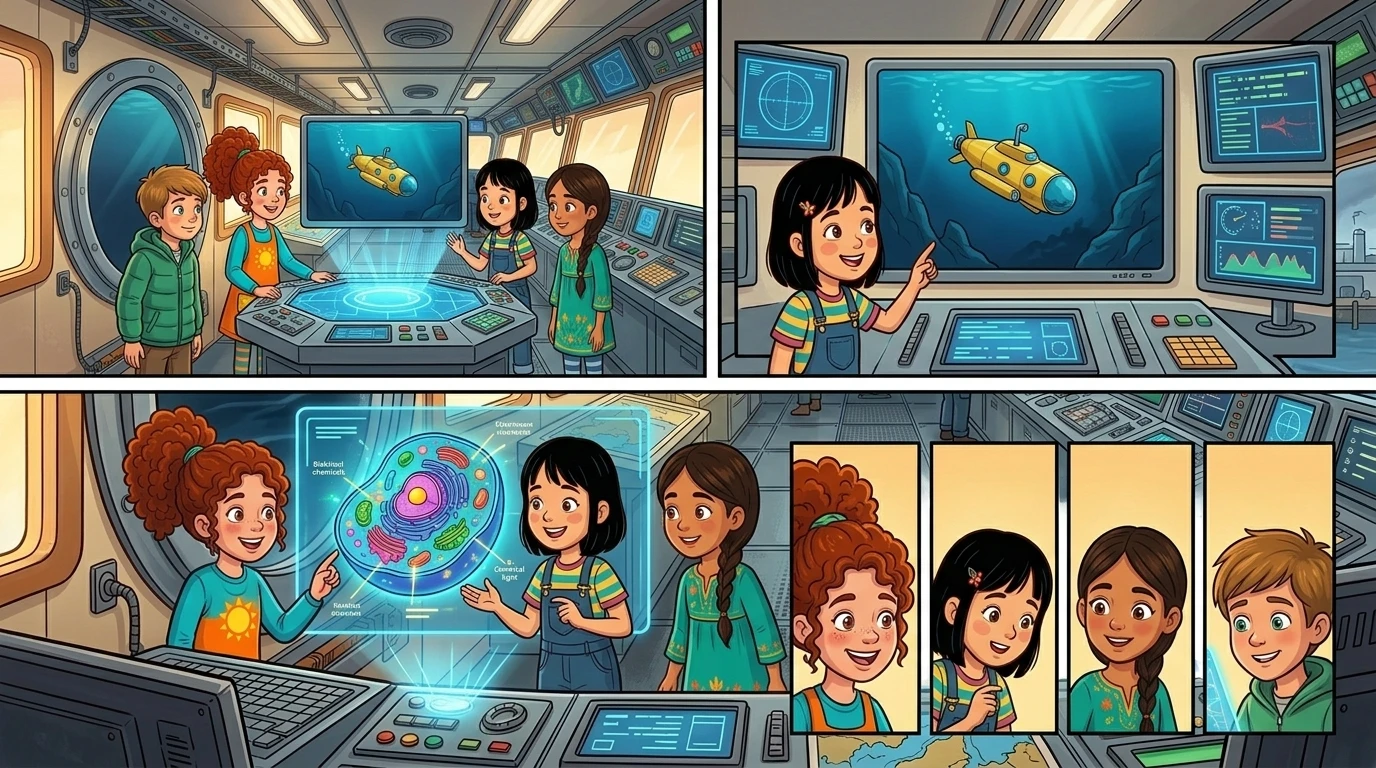
Back on the 'Deep Explorer', the submersible deployed. "So, the bioluminescent creatures... they have tiny cells like Leeuwenhoek's 'animalcules', but somehow produce light?" Erik asked, finally understanding. Alina nodded excitedly. "Exactly! Their cells contain special chemicals that react to create light. It's a chemical reaction!" Sama, who had sleek straight dark brown hair in a low braid, added, "So it's like a tiny, living lightbulb!"
Page 9
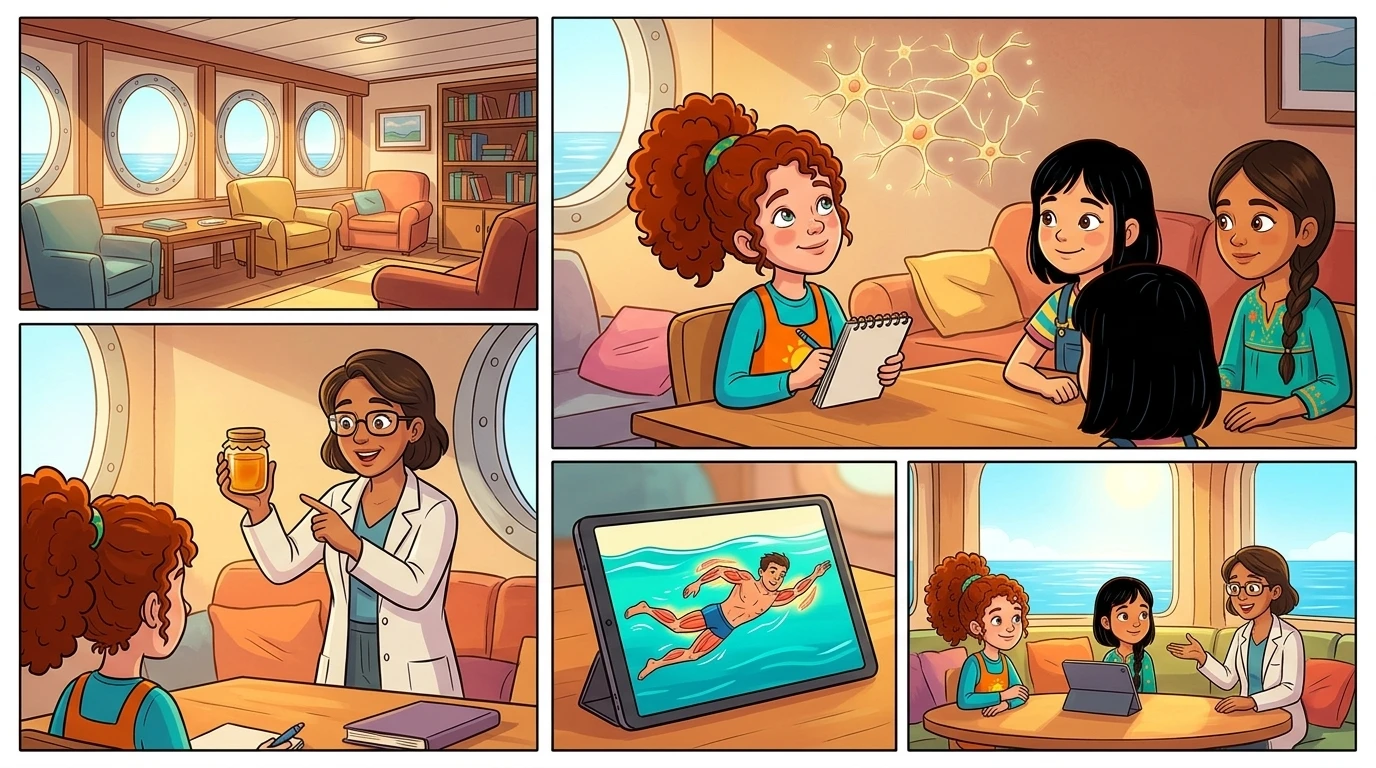
Sama pointed out, "Honey never spoils. The ancient Egyptians used to preserve and eat honey, and we still eat it! It's because of the cells it's made up of." "And muscle cells help me swim faster," chimed in Erik, remembering his swim practice. "And nerve cells let me think about all of this amazing stuff!" added Alina, holding her notebook.
Page 10
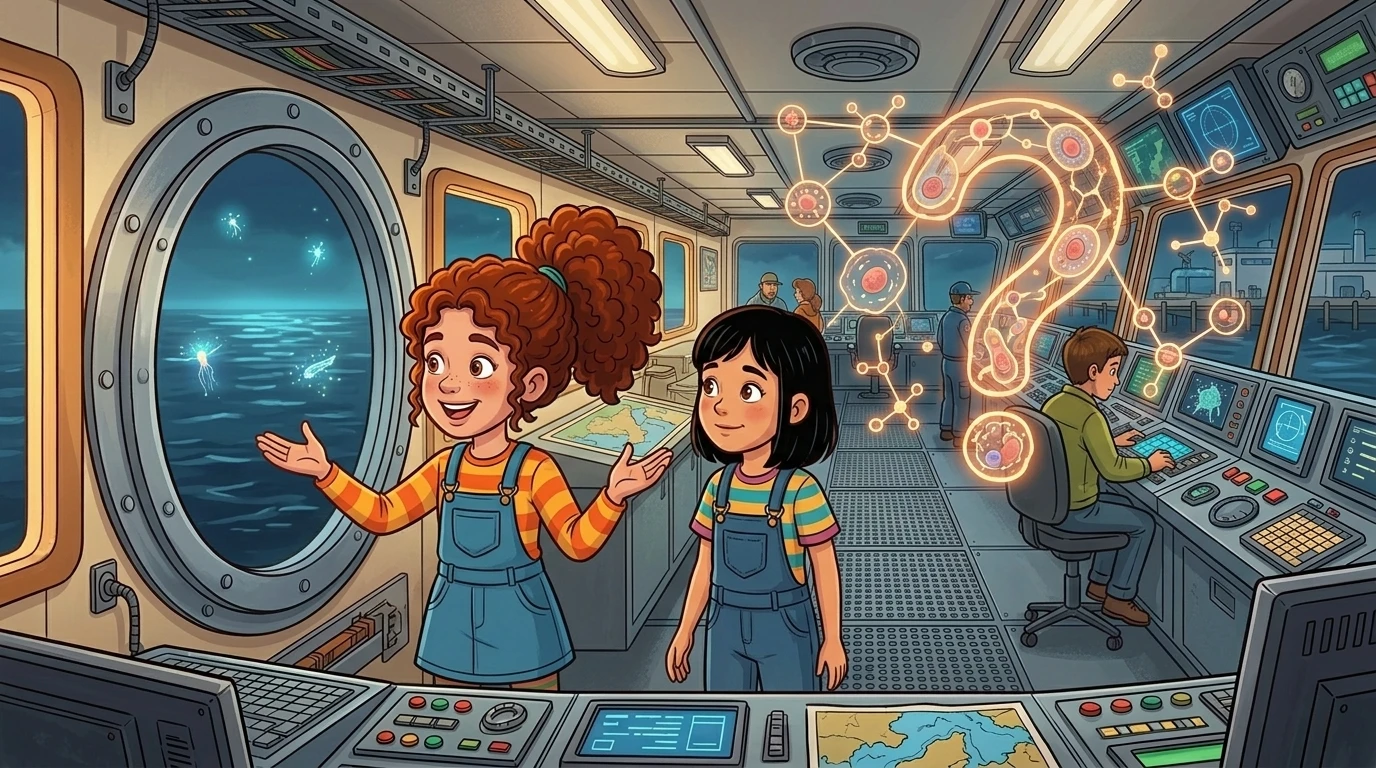
"So," Alina said, summarizing, "bioluminescence, muscle movement, and everything else comes from the tiny cells that make up all life!" "But," Sama asked, her sleek straight dark brown hair in a low braid swaying as she turned, "how do these cells actually work?"
About this story
- Audience: kids (ages 6–12)
Questions and answers
Read Wonder Books on your phone
Wonder Books is available on Android and iPhone and iPad. Get Wonder Books on Google Play · Get Wonder Books on the App Store.