Layla's Lightbulb Learning Lab
Layla's Lightbulb Learning Lab — an illustrated stories story. 10 illustrated pages, free to read on Wonder Books.
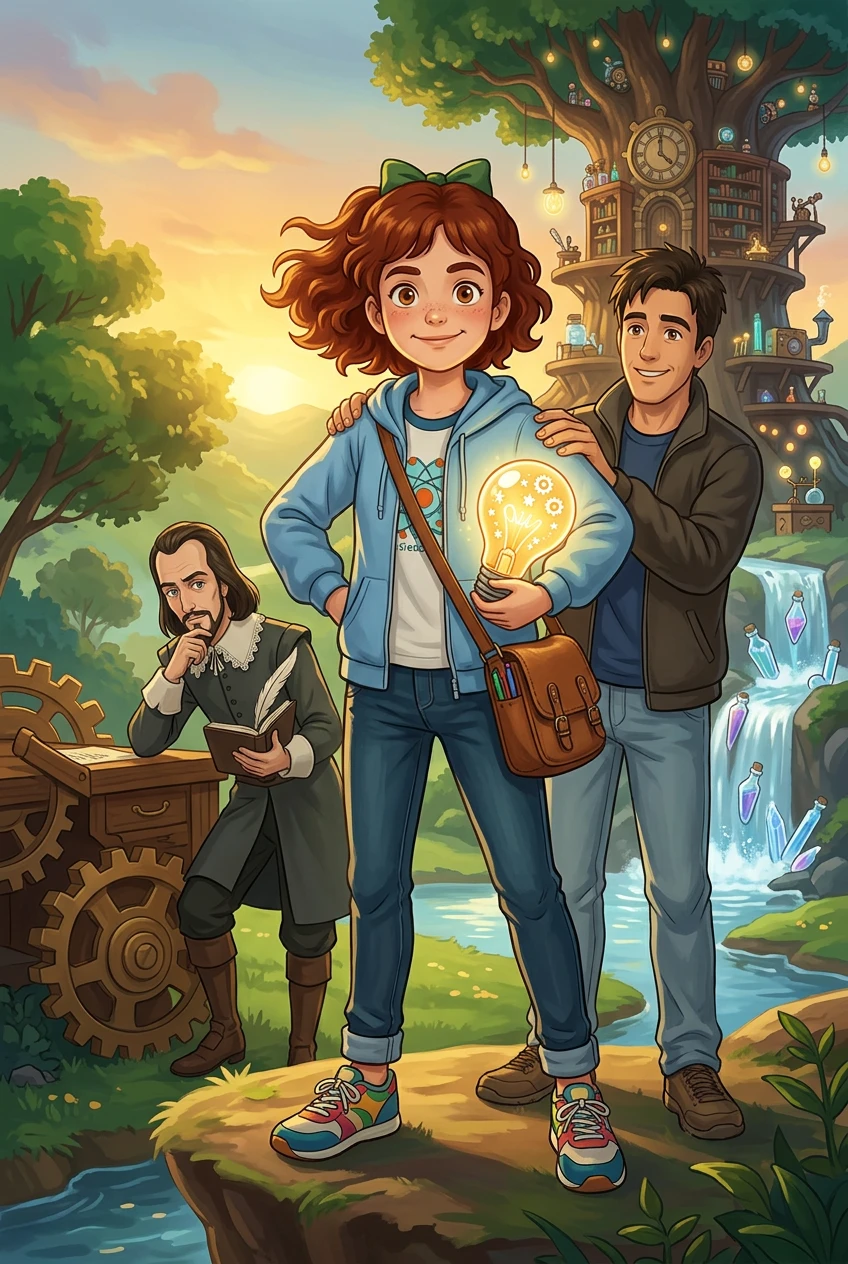
Page 1

Layla and her father were walking through a pedestrian tunnel near the Golden Gate Bridge. The sound of passing cars echoed strangely inside. "Did you hear that, Dad?" Layla asked, her voice bouncing off the curved walls. "It sounds like my voice is... repeating?"
Page 2
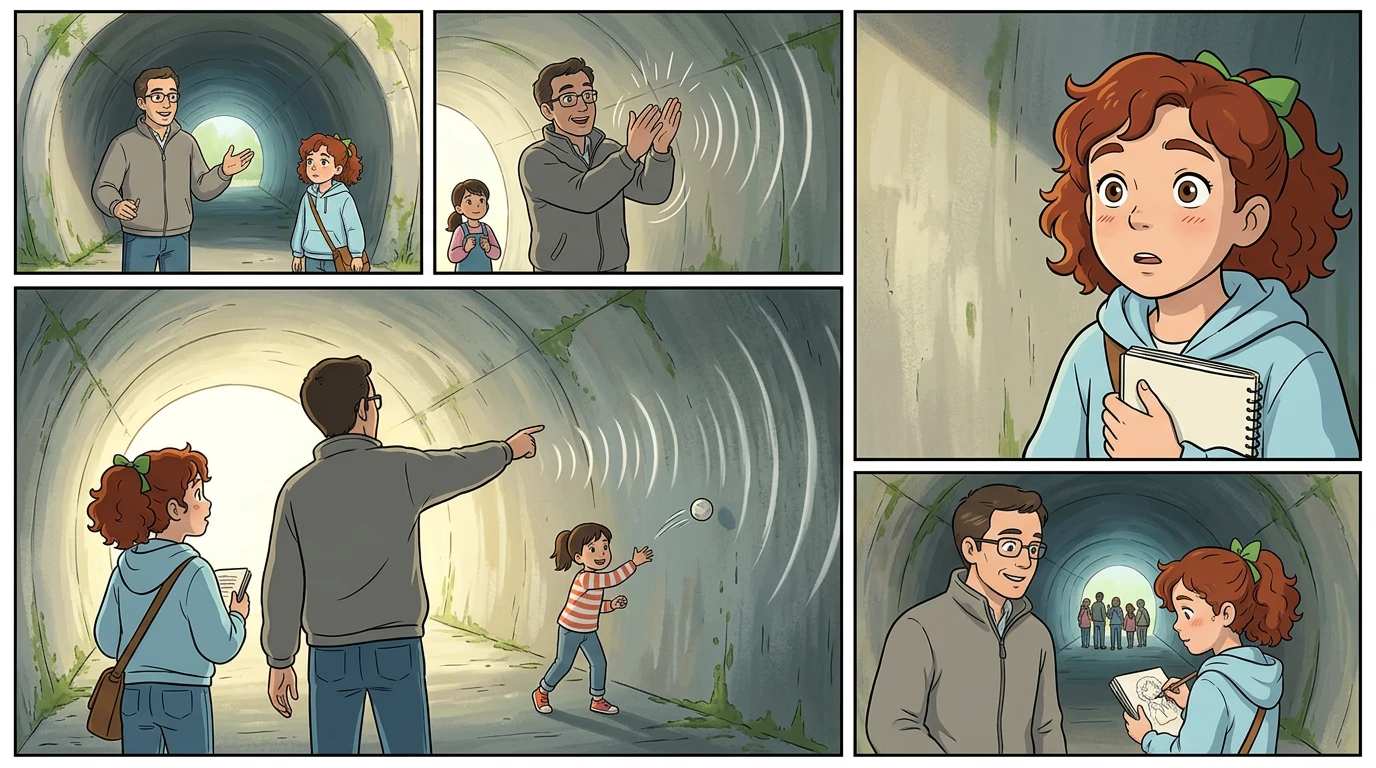
"That's called an echo, Layla," her father explained. "It happens when sound waves bounce off a surface and return to your ears." He clapped his hands, and a distinct echo reverberated. Sophie, Layla's younger sister, piped up, "So, it's like when I throw a ball against the wall, and it comes back to me?" "Exactly," her father replied. "But what is sound, really?" Layla wondered, holding her discovery notebook.
Page 3
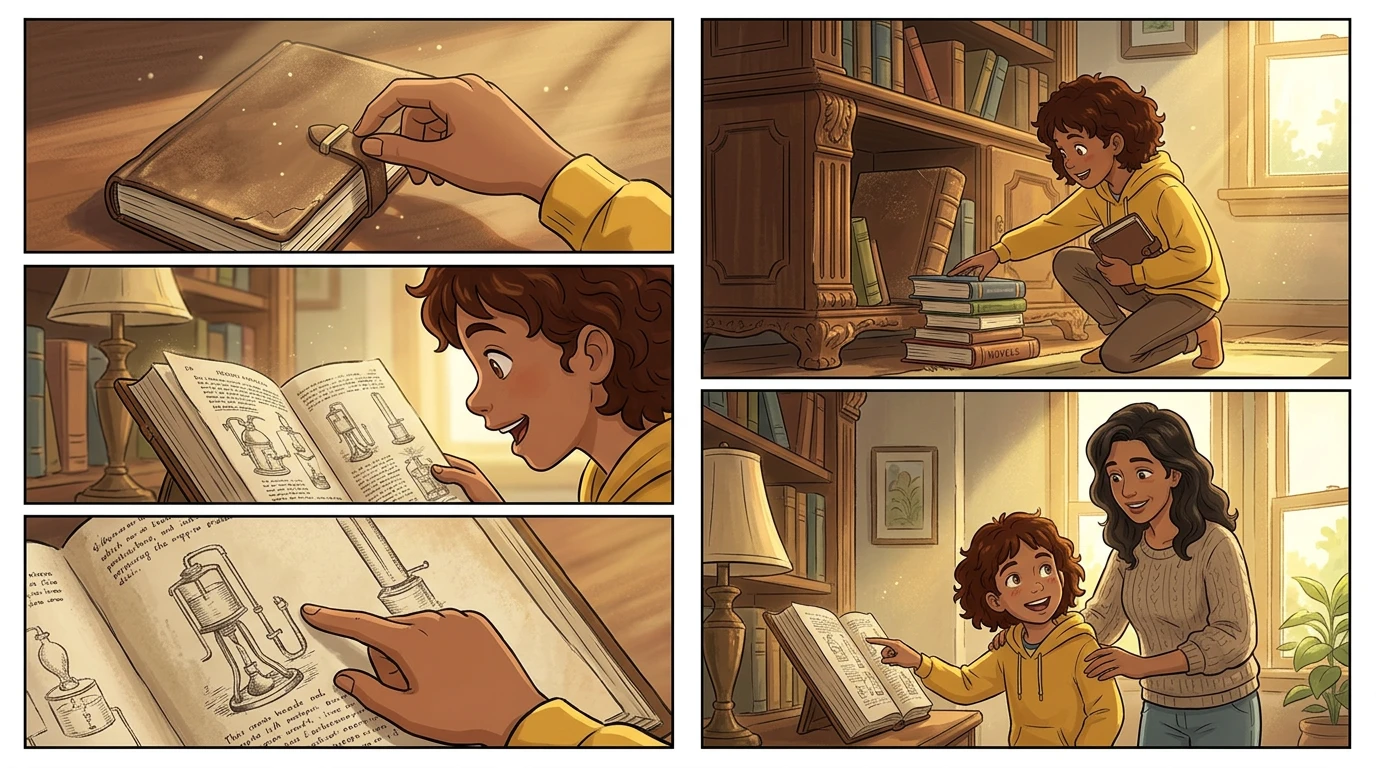
"If you want to understand sound better, why don't we look it up when we get home?" Claire, Layla's mother, suggested. "I think there's a section about it in one of Grandpa's old science books," she added, smiling. Back at home in Noe Valley, Layla eagerly flipped through the dusty pages. "Wow!" she exclaimed. "This book talks about how people started studying sound waves centuries ago!"
Page 4
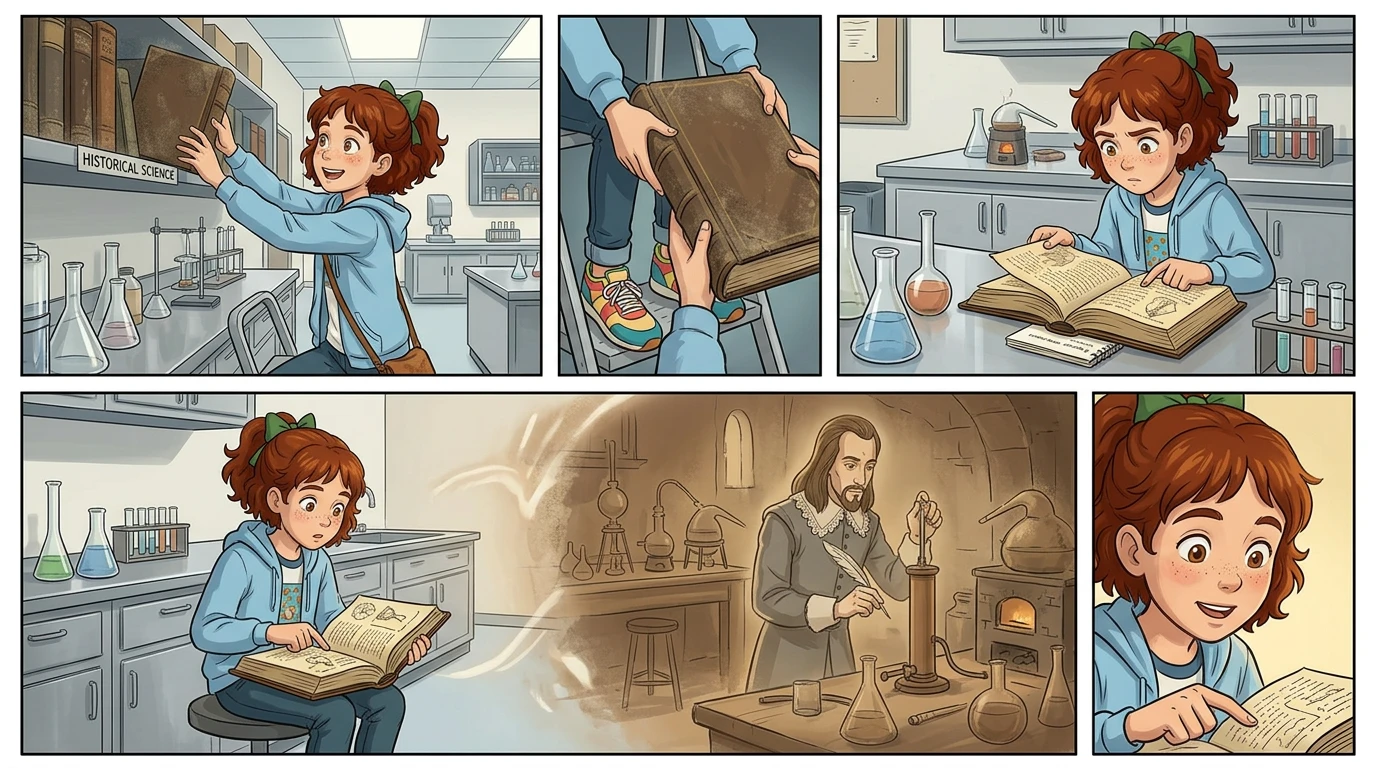
The book mentioned a scientist named Robert Boyle. "Robert Boyle?" Layla questioned aloud. "He lived way back in the 1600s," she read. "He was an Irish chemist and physicist who performed some really important experiments with air and sound." The book described how Boyle used a vacuum chamber to explore how sound travels.
Page 5
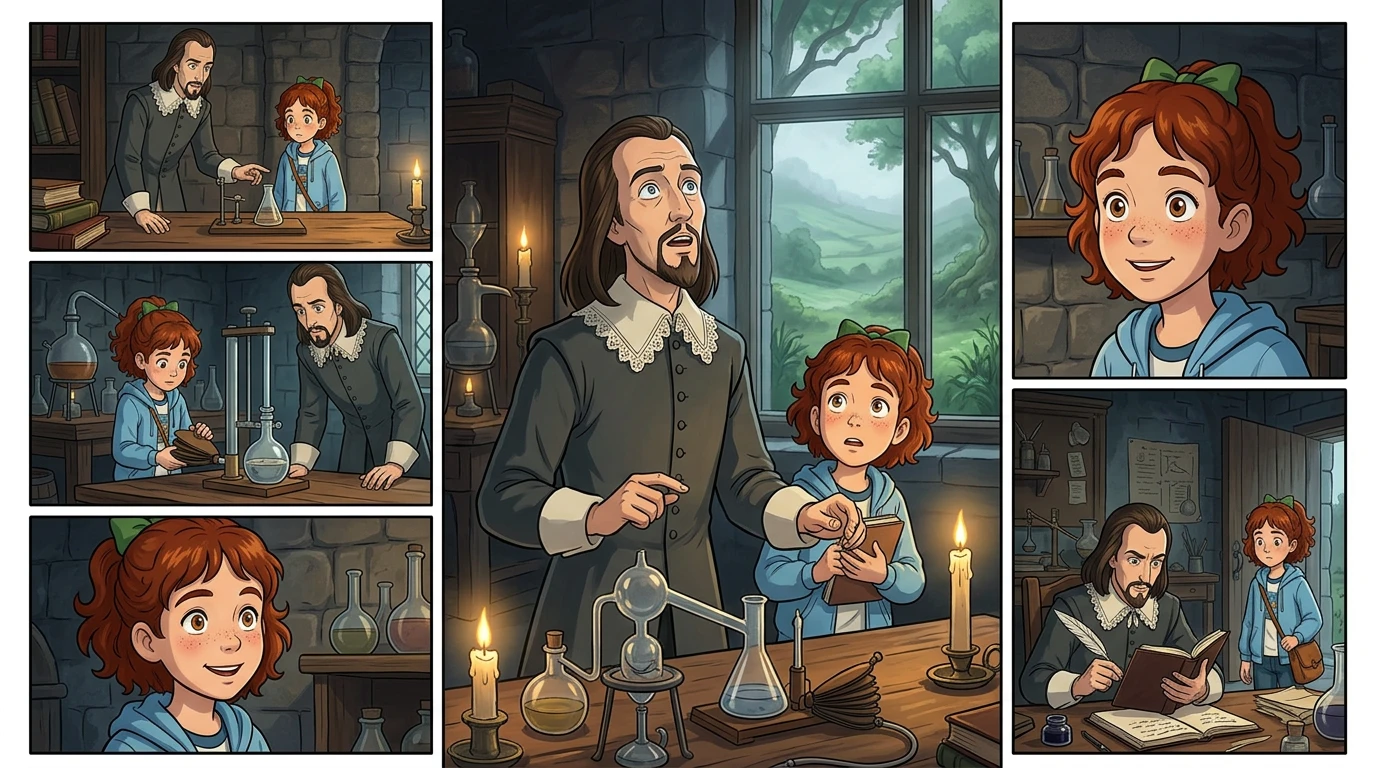
The scene shifted in Layla's mind to a dimly lit laboratory. "Robert Boyle," she imagined, "was born in 1627 in Lismore, Ireland. He was a curious young man, and he loved to tinker with things.
Page 6

One day, Boyle placed a ringing bell inside a glass jar connected to a pump. As he pumped the air out of the jar, the sound of the bell faded! "He realized that sound needs a medium, like air, to travel," Layla narrated to herself. "Without air, there's nothing for the sound waves to move through."
Page 7
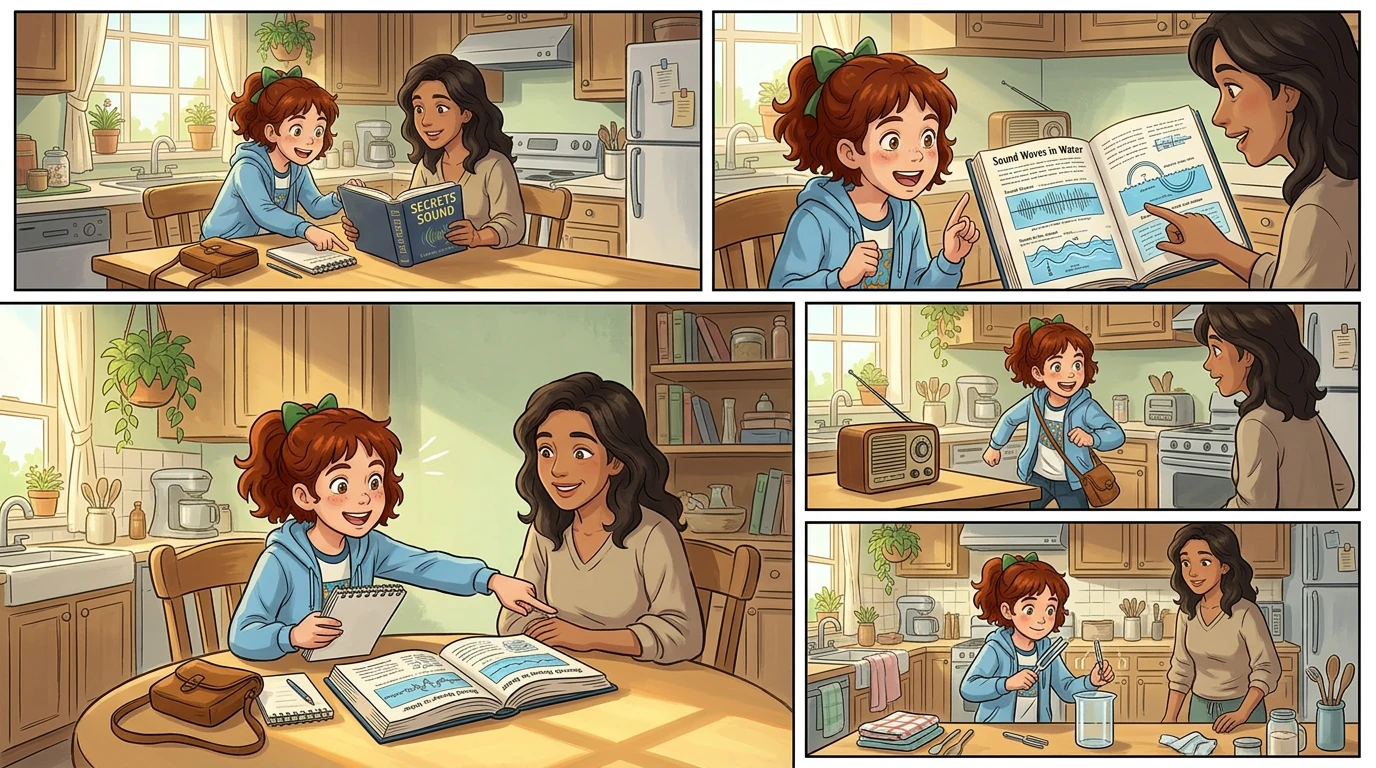
"Did you know that sound travels 4.3 times faster in water than in air?" Layla read, surprised. "And if you could fold a piece of paper 42 times, it would reach the Moon!" she exclaimed. "Boyle's experiments paved the way for understanding how microphones and speakers work," Claire added. "Think about how much that has changed the world!"
Page 8
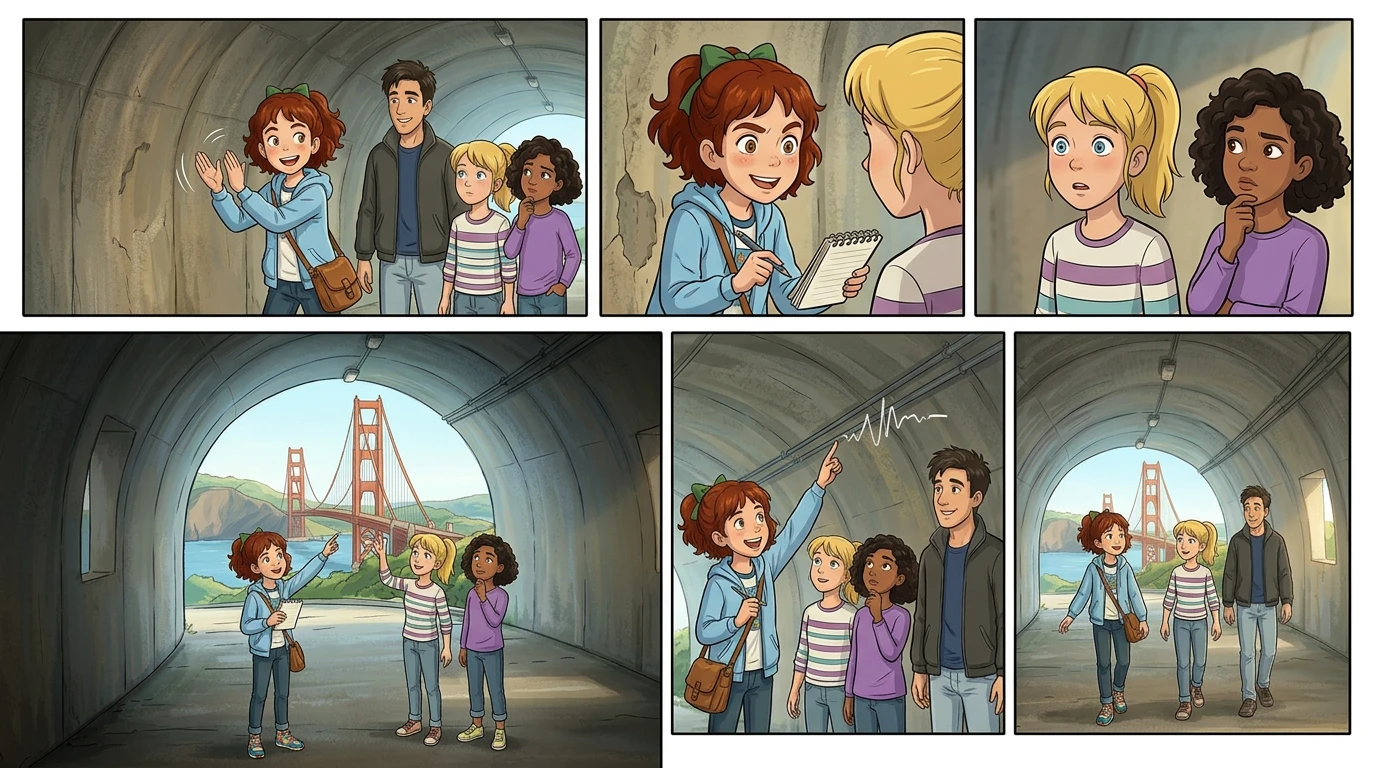
Back in the tunnel the next day, Layla explained to her friends, Chloe and Reem, "Remember the echo we heard? It's because sound waves need something to travel through, like air or the tunnel walls." Chloe blinked. "So, if there was no air, we wouldn't hear anything?" Reem nodded. "That's wild! So sound waves literally vibrate?"
Page 9
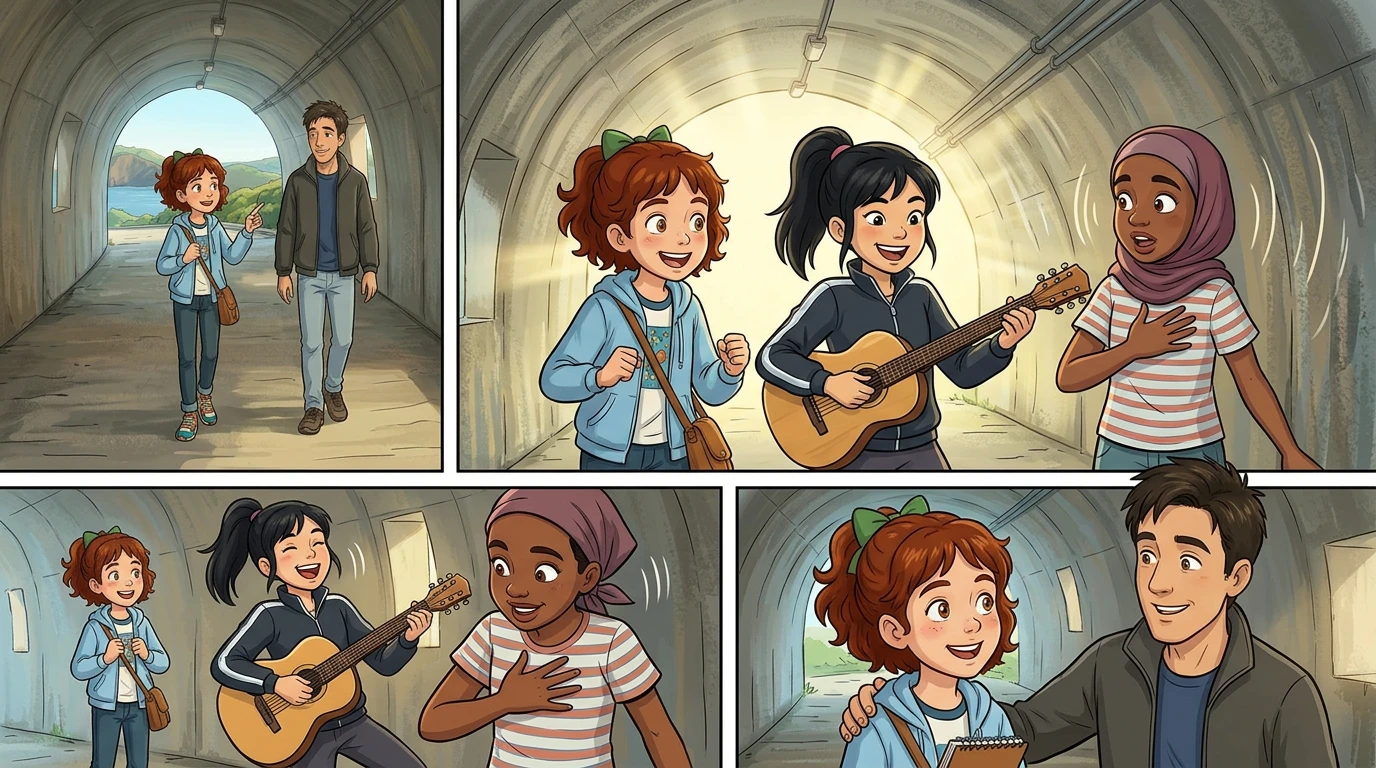
"Exactly!" Layla exclaimed. "That's why you can hear things underwater because water carries the vibrations!" Chloe added, "So, when I strum my guitar, those strings are vibrating the air?" Reem chimed in, "And that's why you can feel music at a concert—the speakers are making the air shake!" Layla beamed. "'We are all apprentices in a craft where no one ever becomes a master,' Ernest Hemingway once said, it is why we must keep on exploring and learning."
Page 10

"So, sound is just vibrations traveling through things!" Layla summarized, beaming. Reem asked, "If sound needs something to travel through, like air or water, how do astronauts talk to each other in space where there's no air?" Layla smiled, opening her notebook. "That's exactly what we will explore next time!" She wrote in the notebook: "Discovery #1: Sound needs a medium to travel, and understanding scientists like Robert Boyle helps us understand the world around us!".
About this story
- Audience: kids (ages 6–12)
Questions and answers
Read Wonder Books on your phone
Wonder Books is available on Android and iPhone and iPad. Get Wonder Books on Google Play · Get Wonder Books on the App Store.