The Chemistry of Space Dust
The Chemistry of Space Dust — an illustrated stories story. 10 illustrated pages, free to read on Wonder Books.
Page 1
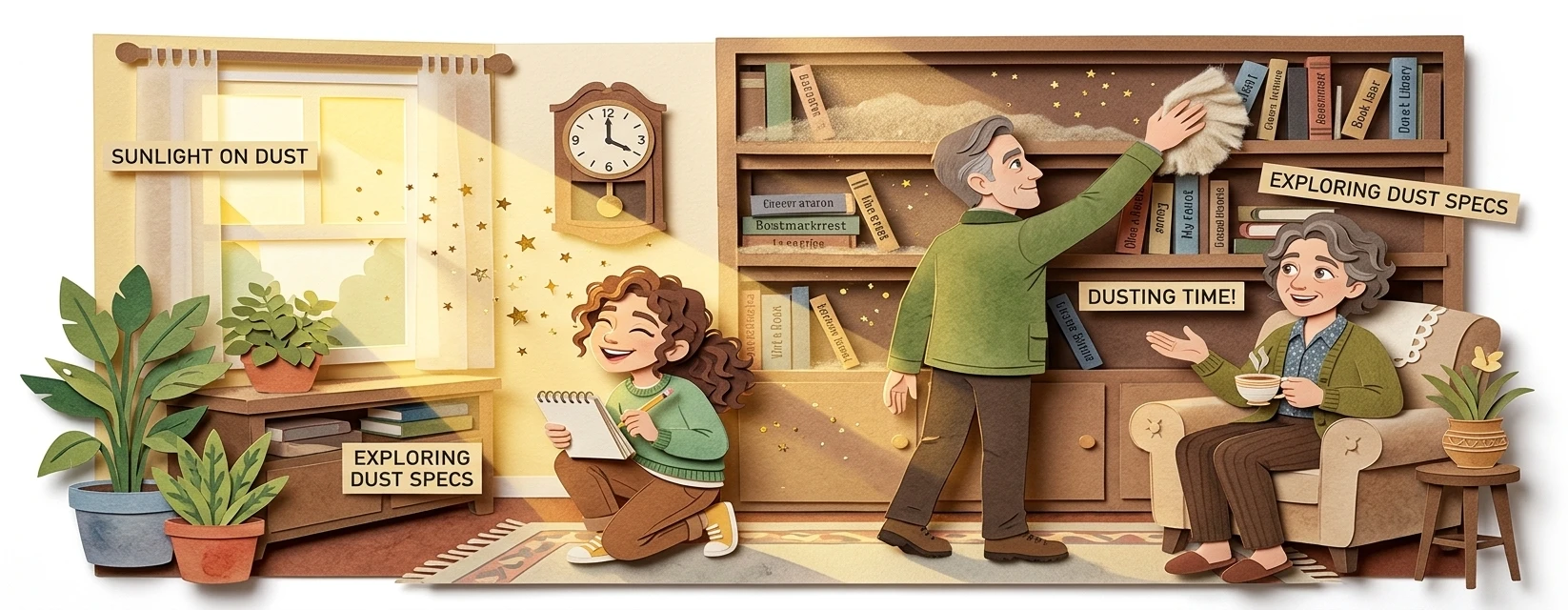
Sunlight streamed into the living room, illuminating a thick layer of dust on the highest bookshelf. Isabella's father sighed, grabbing a cloth. "Where does all this dust even come from?" Isabella looked up from her notebook and squinted at the floating specks. "It looks like tiny little stars twinkling in the sunbeam!"
Page 2
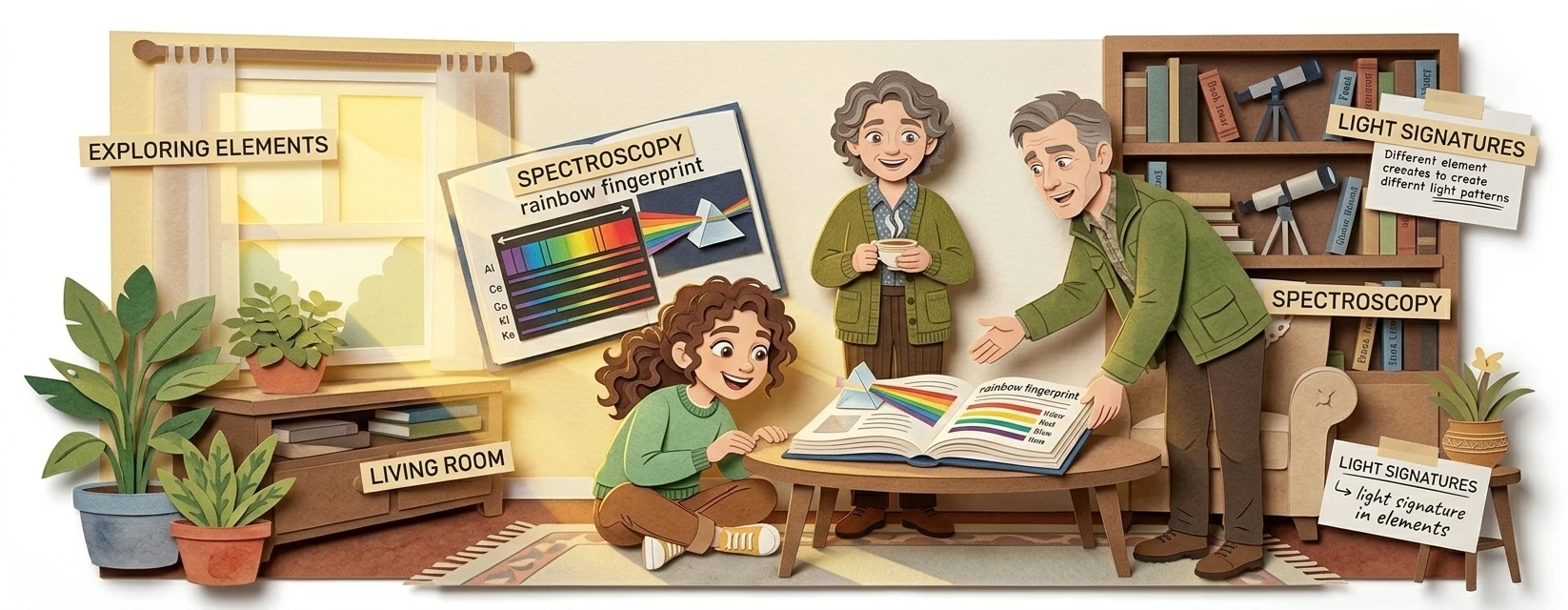
"Well, most house dust is just tiny bits of us and our stuff," said her mother, joining them with a smile. Isabella's father added, "But you're not wrong about space, Izzy. The universe is full of dust, too! We can even tell what it's made of using something called spectroscopy, which is like a rainbow fingerprint for every element."
Page 3
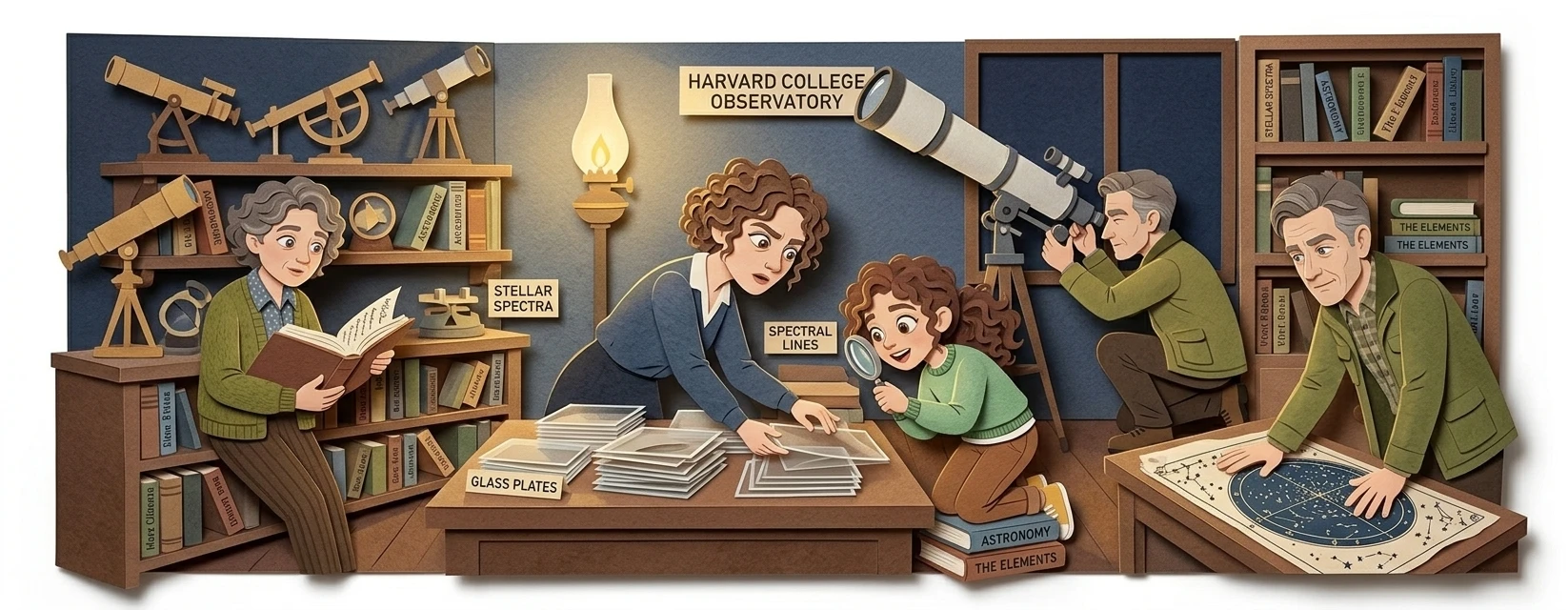
Isabella imagined what that must have been like, long ago. Her vision shifted to a quiet observatory in the 1920s, filled with the smell of old paper and the quiet ticking of clocks. Under the dim glow of a gas lamp, a young woman was leaning over a desk piled high with glass photographic plates. This was a place where the secrets of the stars were being captured on glass.
Page 4
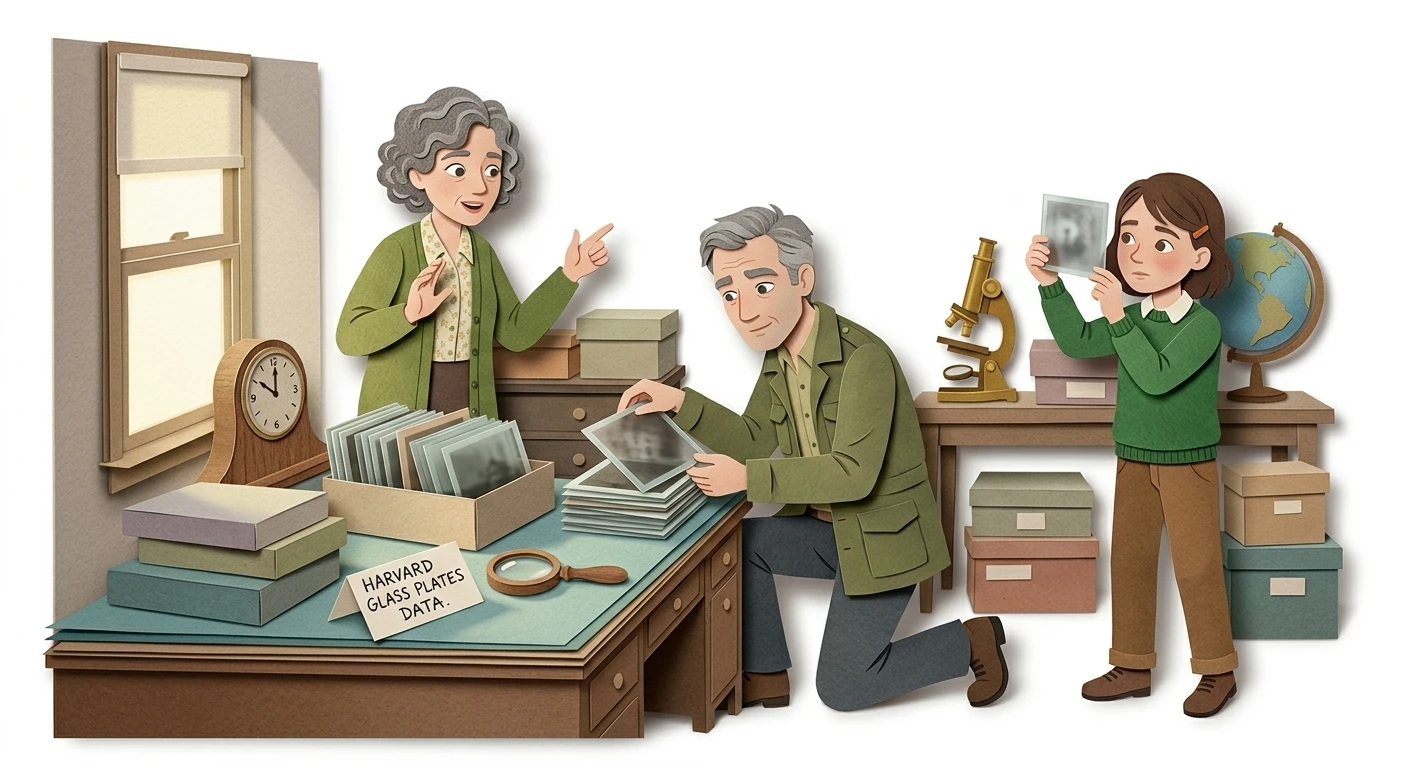
"That's Cecilia Payne-Gaposchkin," her father's voice seemed to narrate in her mind. "She moved from England to America to study astronomy at Harvard. She was one of the most brilliant minds of her time, determined to understand what stars were actually made of." Cecilia carefully picked up another glass plate, her focus absolute.
Page 5
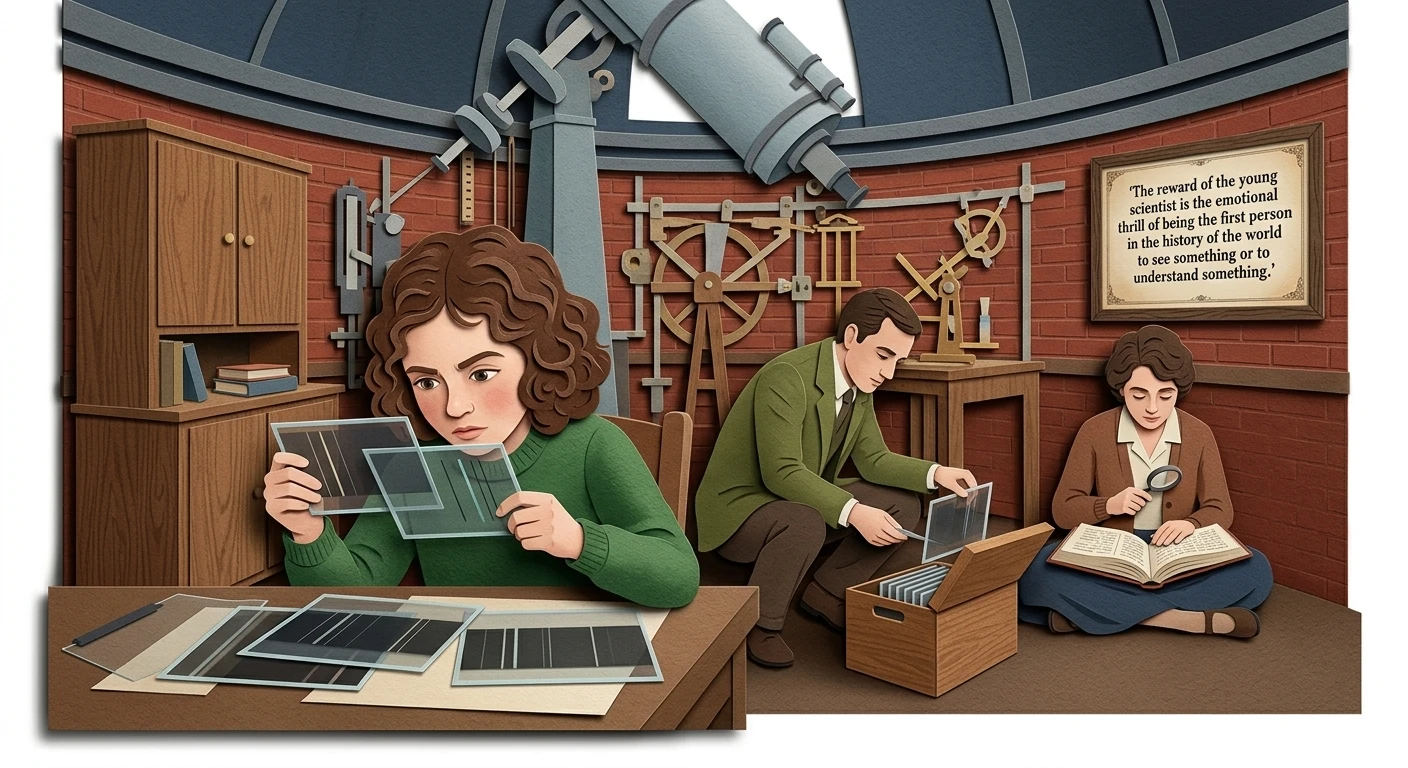
The work was slow and incredibly difficult, analyzing thousands of those 'rainbow fingerprints' from distant stars. As Cecilia worked, Isabella remembered a famous quote from her: 'The reward of the young scientist is the emotional thrill of being the first person in the history of the world to see something or to understand something.' Cecilia felt that thrill approaching as she connected the faint lines on the plates to the elements they represented.
Page 6
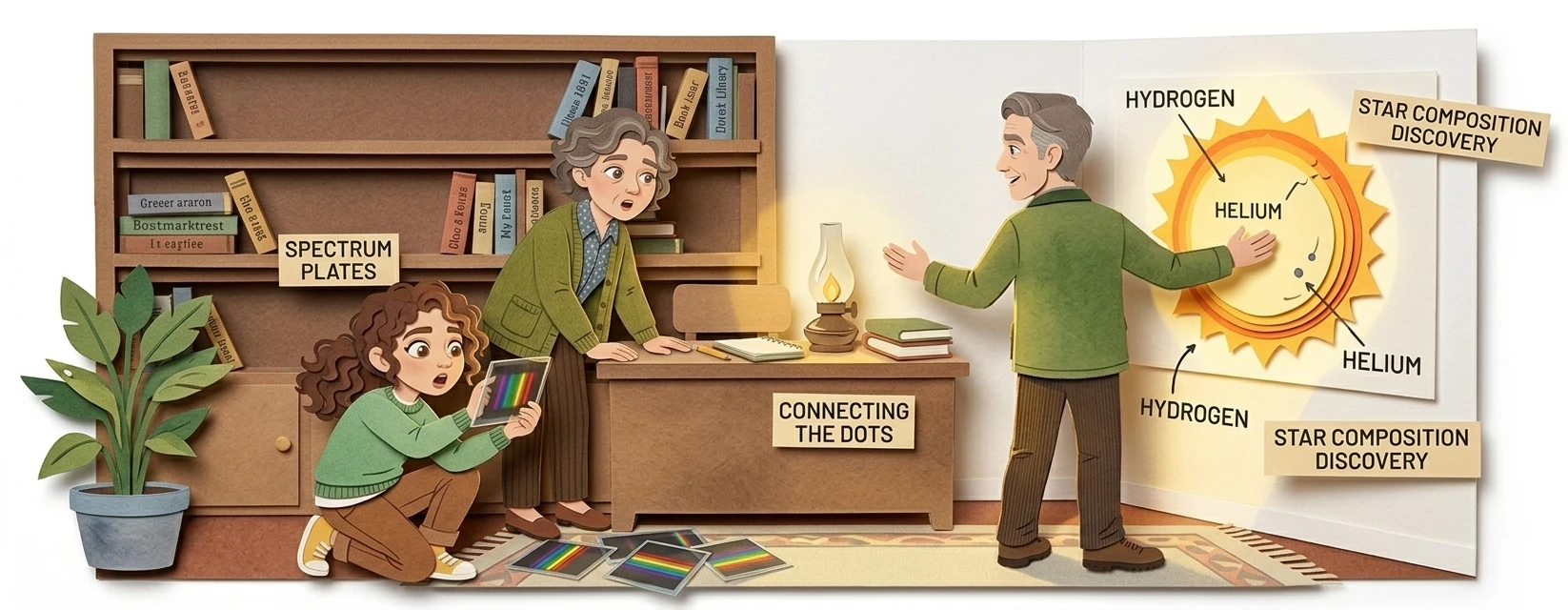
Suddenly, she saw it—a pattern nobody had seen before. The 'rainbow fingerprints' on plate after plate told an unbelievable story: stars weren't made of the same stuff as Earth. "They're almost entirely hydrogen and helium!" she must have whispered in amazement. Her discovery would completely change our understanding of the universe.
Page 7
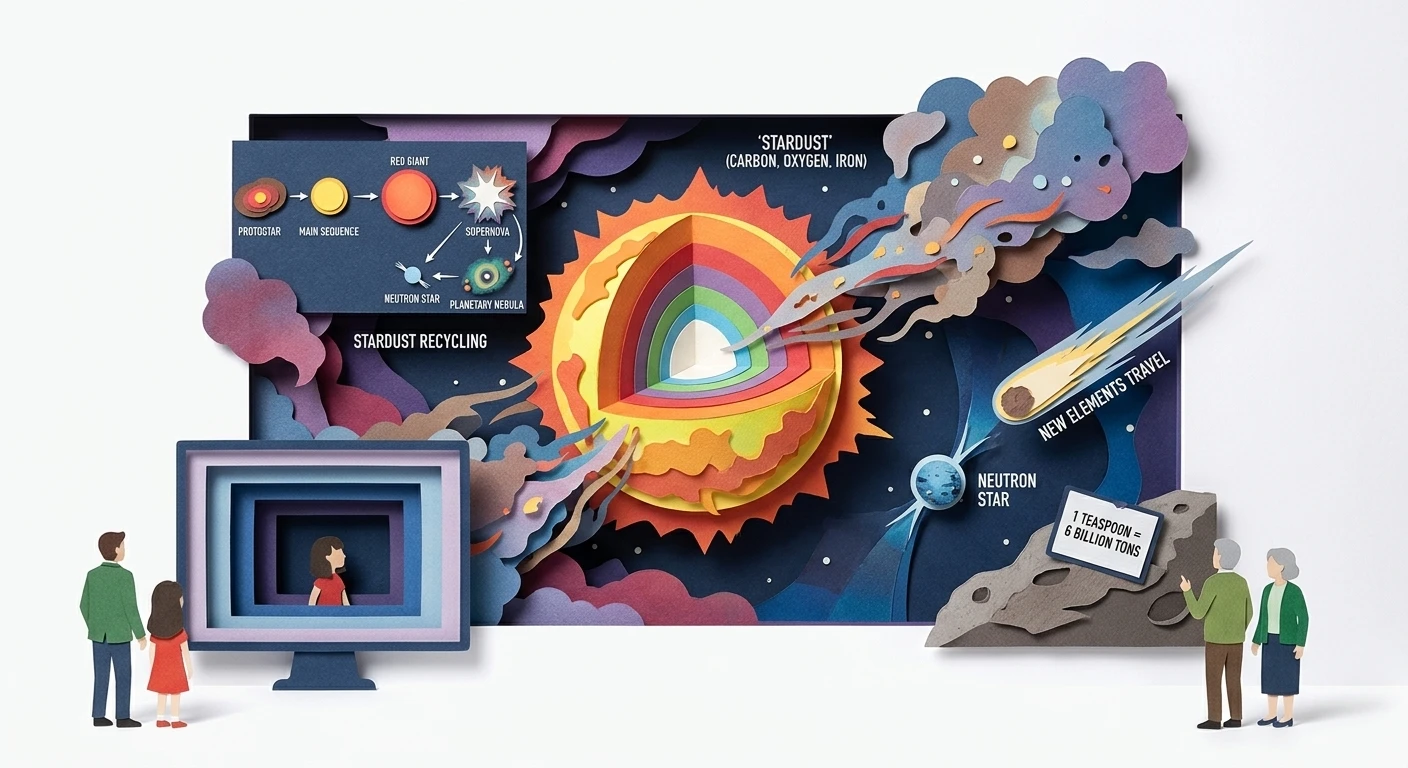
Cecilia's discovery proved that the universe is constantly recycling itself. Stars fuse hydrogen into heavier elements, and when they die, they scatter this stardust across space. "Some giant stars collapse into neutron stars," Isabella thought, remembering a fact, "and a single teaspoon of that stuff would weigh six billion tons!" That stardust, rich with carbon, oxygen, and iron, forms new stars, new planets, and everything on them.
Page 8
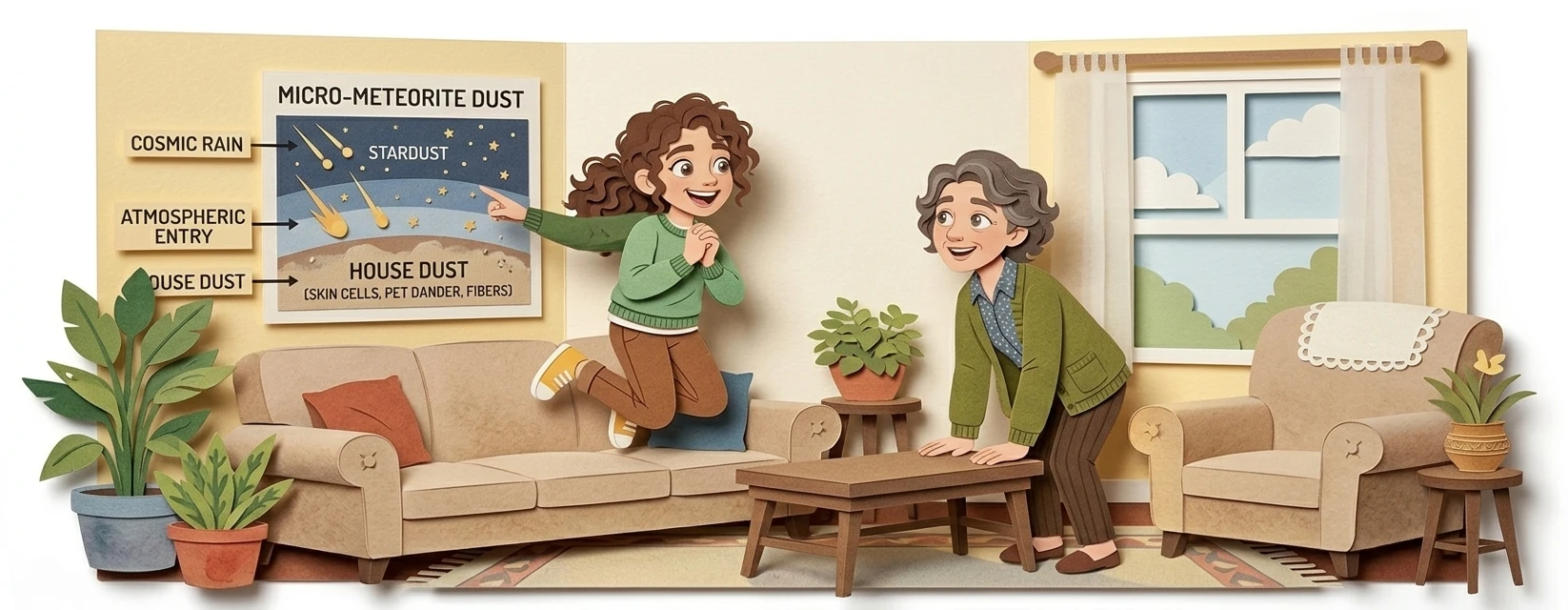
Isabella snapped back to her living room, her eyes wide with a new understanding. "So that's it!" she exclaimed, jumping to her feet. "The dust on our bookshelf is mostly from here, but the dust in space is the leftover bits from ancient stars that exploded!" Her mother's eyes lit up. "Oh, so when they say 'we are all stardust,' they mean it literally?"
Page 9
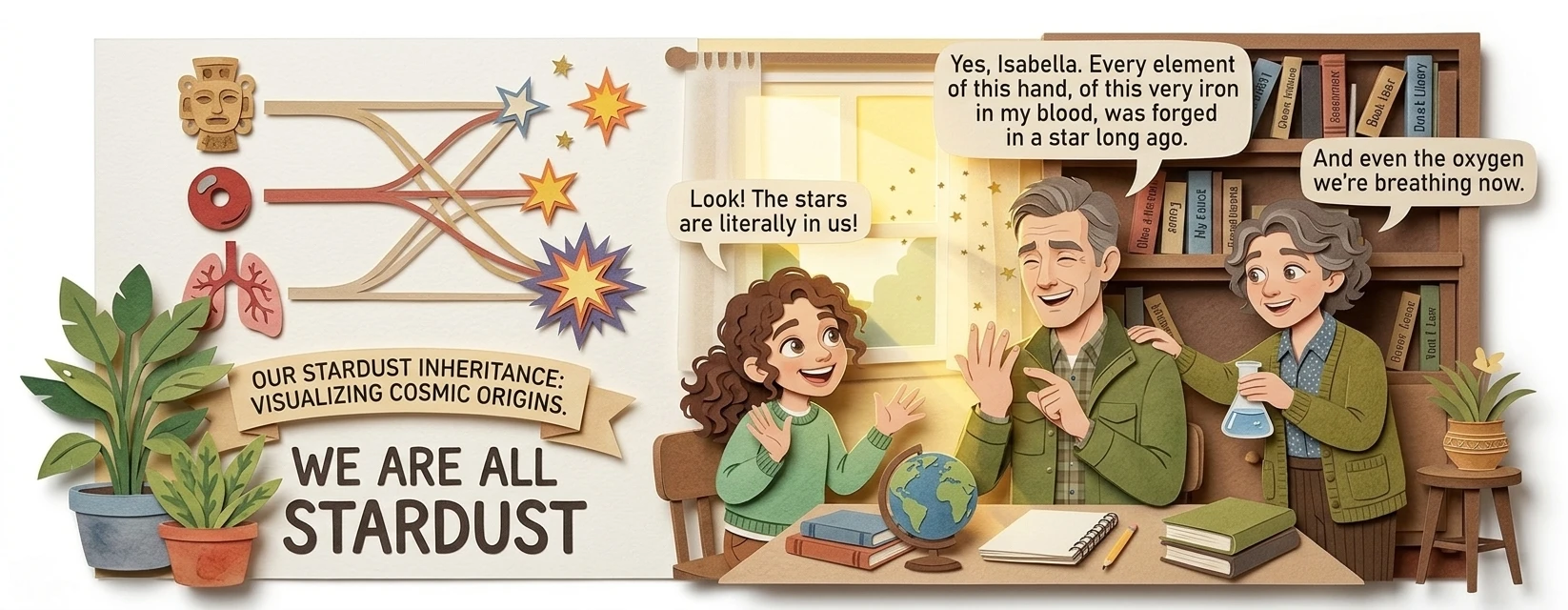
"Exactly!" Isabella beamed. "The calcium in our bones, the iron in our blood, the oxygen we breathe—it was all forged inside a star billions of years ago." Her father chuckled, looking at his hand. "So my hand is partly made of stardust? That's amazing." Her mother added, "It makes you feel so connected to everything, doesn't it?"
Page 10
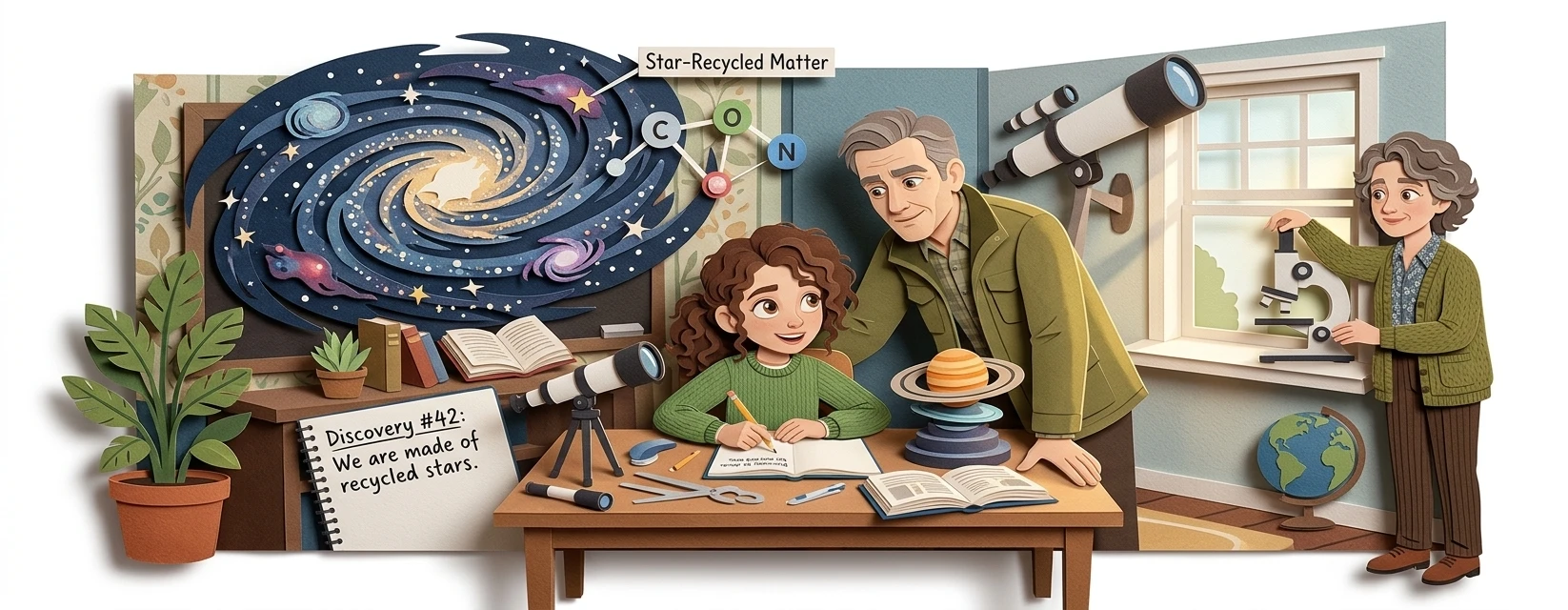
"It means every speck of dust tells a story that started in a star," Isabella said, picking up her pencil. She opened her notebook to a fresh page and wrote 'Discovery #42: We are made of recycled stars.' But as she wrote, her father asked a new question, "But if space is so big and empty, how do all those little dust particles ever find each other to build a planet?"
About this story
- Audience: kids (ages 6–12)
Questions and answers
Read Wonder Books on your phone
Wonder Books is available on Android and iPhone and iPad. Get Wonder Books on Google Play · Get Wonder Books on the App Store.