The Rings of Jupiter

The Rings of Jupiter — an illustrated stories story. 10 illustrated pages, free to read on Wonder Books.
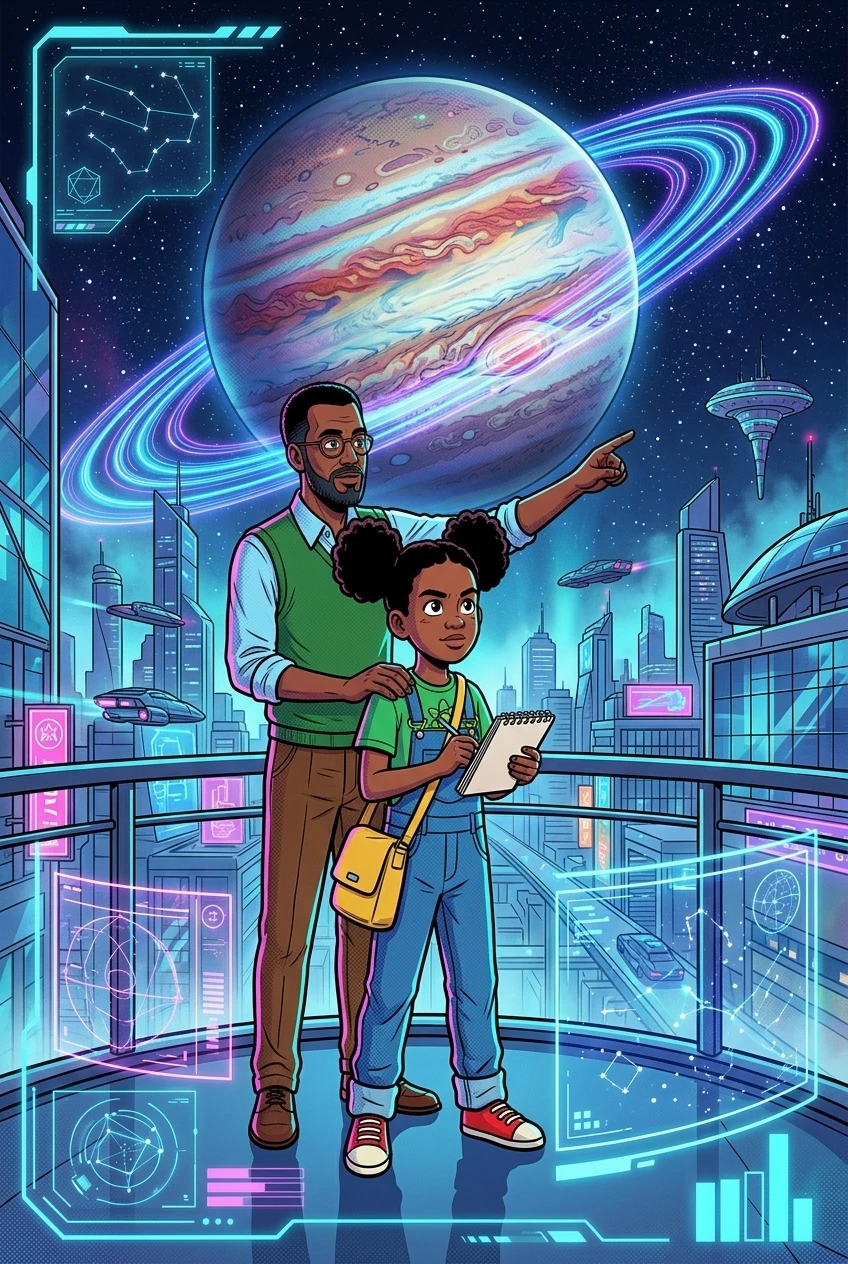
The Rings of Jupiter — book cover — Wonder Books
The Rings of Jupiter — an illustrated stories story. 10 illustrated pages, free to read on Wonder Books.

Page 1
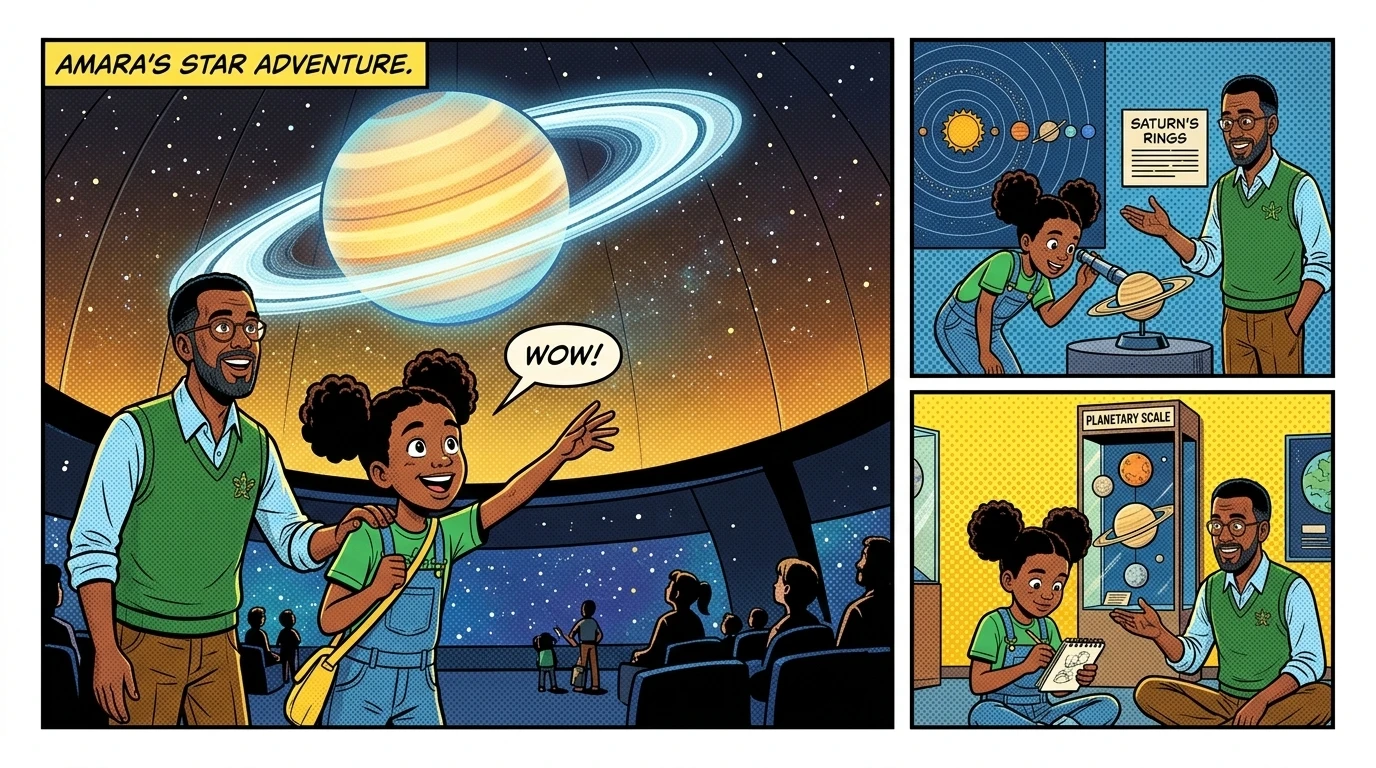
Inside the massive, dark dome of the Morrison Planetarium, glittering images of Saturn and its brilliant, icy rings filled the space above.
Inside the massive, dark dome of the Morrison Planetarium, glittering images of Saturn and its brilliant, icy rings filled the space above. "Wow," Amara whispered to her father, her eyes wide with wonder as the icy particles shimmered like a trillion tiny diamonds. "They're so bright and beautiful!" Her father smiled, pointing up at the projection. "They certainly are, Amara. They're made of almost pure water ice, which is why they reflect so much sunlight."

Inside the massive, dark dome of the Morrison Planetarium, glittering images of Saturn and its brilliant, icy rings filled the space above. "Wow," Amara whispered to her father, her eyes wide with wonder as the icy particles shimmered like a trillion tiny diamonds. "They're so bright and beautiful!" Her father smiled, pointing up at the projection. "They certainly are, Amara. They're made of almost pure water ice, which is why they reflect so much sunlight."

Page 2
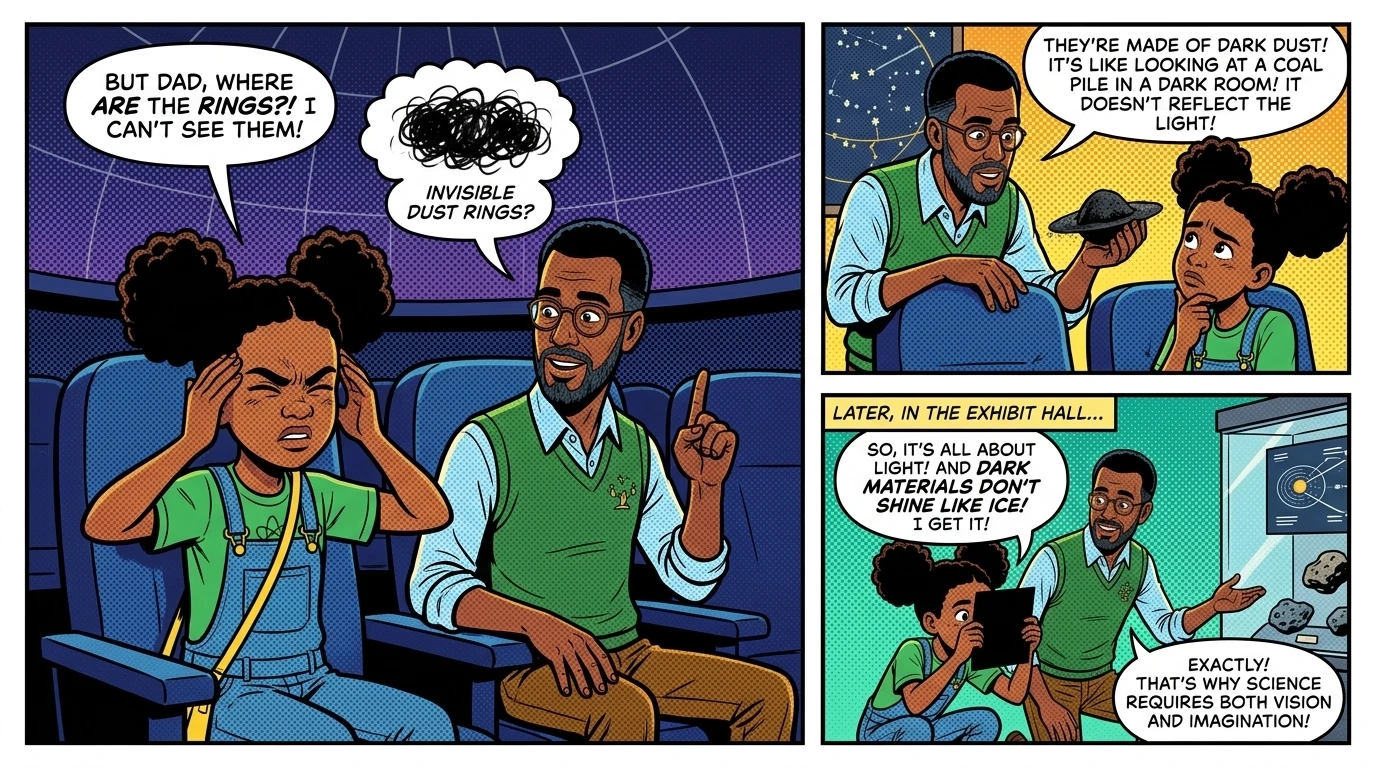
"Is Saturn the only planet with rings?" Amara asked, turning in her seat. Her father thought for a moment. "That's a great question!
"Is Saturn the only planet with rings?" Amara asked, turning in her seat. Her father thought for a moment. "That's a great question! For a long time, we thought so, because other rings would be nearly impossible to see. Imagine rings made of dark dust instead of bright ice; they wouldn't reflect sunlight, so how could we ever find them?" Amara scrunched her face in concentration, trying to picture invisible rings.

"Is Saturn the only planet with rings?" Amara asked, turning in her seat. Her father thought for a moment. "That's a great question! For a long time, we thought so, because other rings would be nearly impossible to see. Imagine rings made of dark dust instead of bright ice; they wouldn't reflect sunlight, so how could we ever find them?" Amara scrunched her face in concentration, trying to picture invisible rings.

Page 3
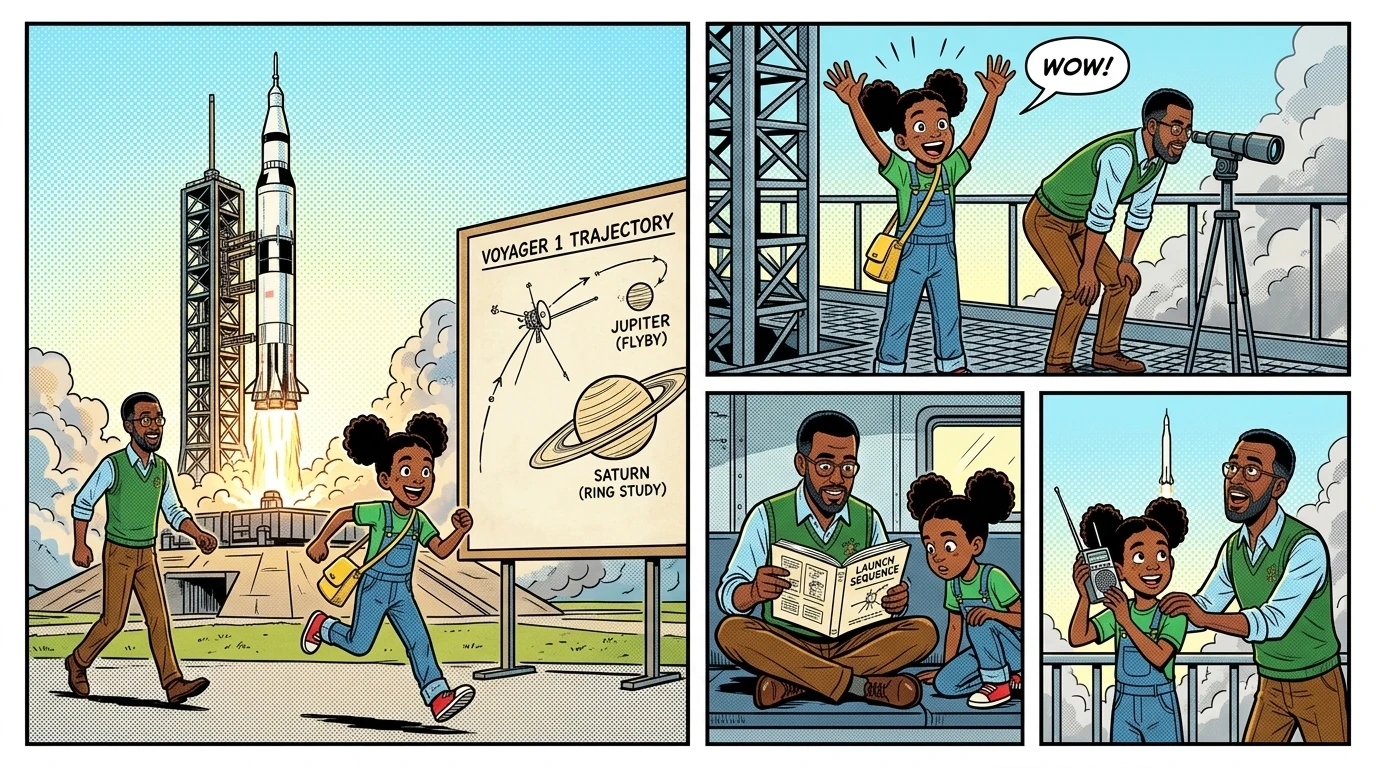
To find those invisible rings, scientists had to think differently. In 1977, a powerful rocket carrying the Voyager 1 space probe roared to life at Cape…
To find those invisible rings, scientists had to think differently. In 1977, a powerful rocket carrying the Voyager 1 space probe roared to life at Cape Canaveral, Florida. It trembled on the launchpad, a gleaming monument to human curiosity, ready to begin its grand tour of the outer solar system. Its mission was to visit Jupiter and Saturn, taking the first-ever close-up pictures of these mysterious worlds.

To find those invisible rings, scientists had to think differently. In 1977, a powerful rocket carrying the Voyager 1 space probe roared to life at Cape Canaveral, Florida. It trembled on the launchpad, a gleaming monument to human curiosity, ready to begin its grand tour of the outer solar system. Its mission was to visit Jupiter and Saturn, taking the first-ever close-up pictures of these mysterious worlds.

Page 4
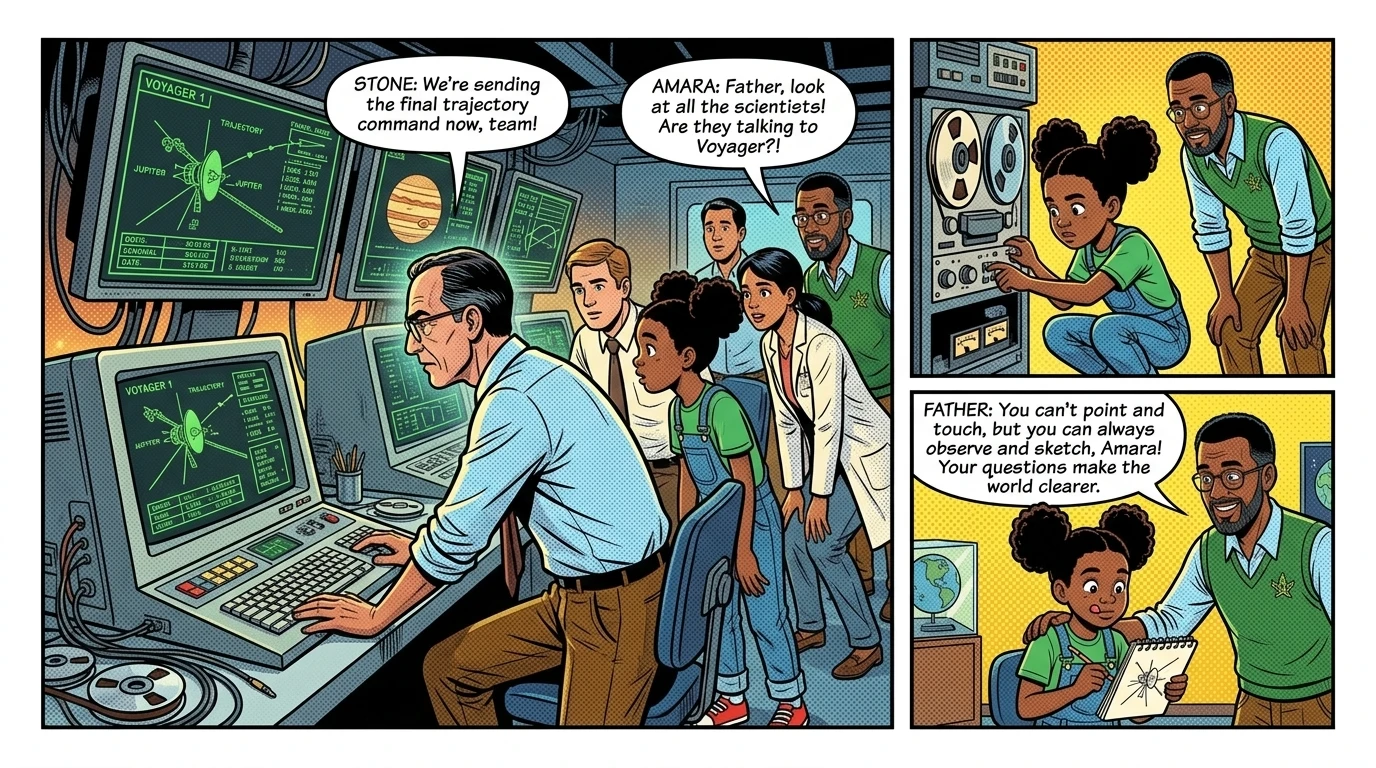
Inside NASA's Jet Propulsion Laboratory, a team of brilliant scientists and engineers huddled around computer consoles. This was Mission Control, the nerve…
Inside NASA's Jet Propulsion Laboratory, a team of brilliant scientists and engineers huddled around computer consoles. This was Mission Control, the nerve center for the entire Voyager program. Project Scientist Edward C. Stone and his team had spent years planning every detail of this journey, sending commands across millions of miles of empty space. Every signal, every piece of data, was a victory against the vast darkness.

Inside NASA's Jet Propulsion Laboratory, a team of brilliant scientists and engineers huddled around computer consoles. This was Mission Control, the nerve center for the entire Voyager program. Project Scientist Edward C. Stone and his team had spent years planning every detail of this journey, sending commands across millions of miles of empty space. Every signal, every piece of data, was a victory against the vast darkness.

Page 5
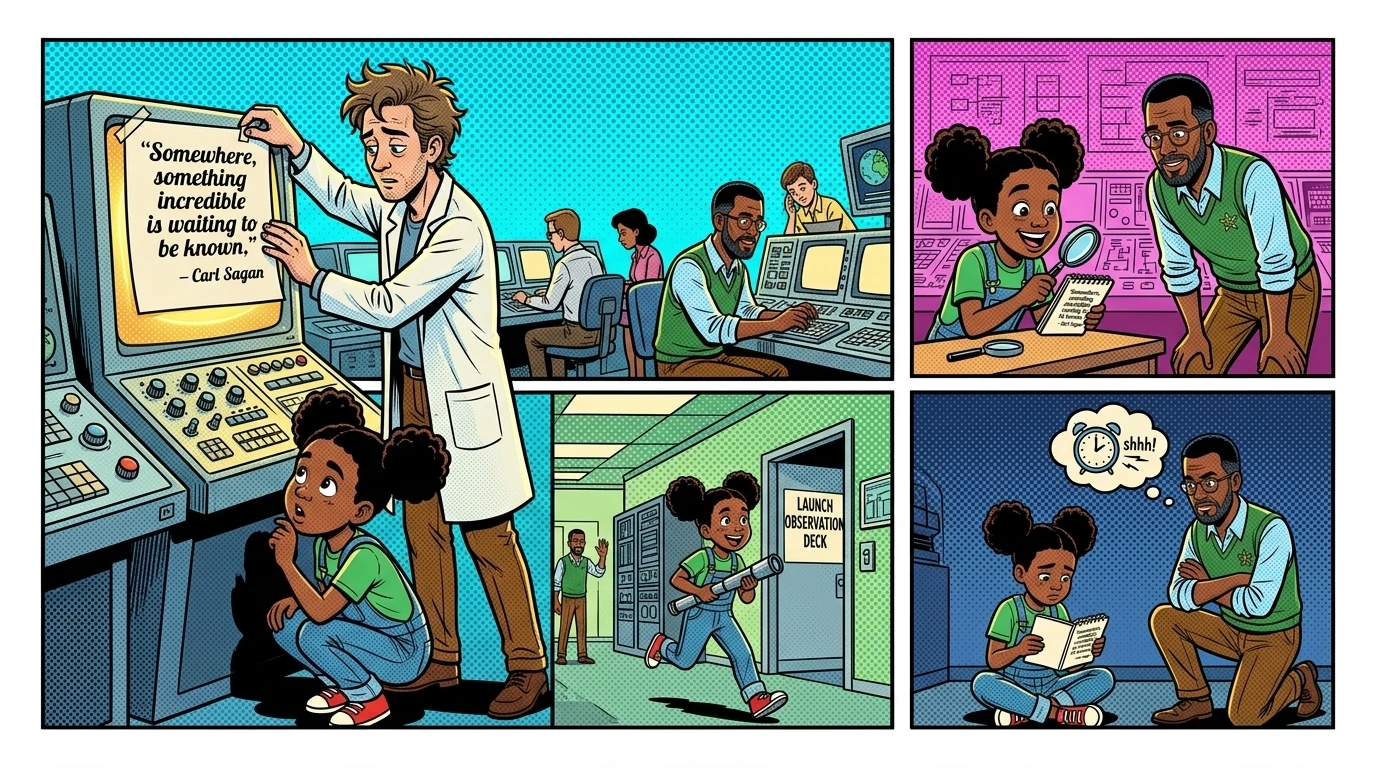
As Voyager 1 sped toward Jupiter, the team worked day and night, their anticipation growing with every mile the probe traveled.
As Voyager 1 sped toward Jupiter, the team worked day and night, their anticipation growing with every mile the probe traveled. One young engineer, looking tired but hopeful, taped a piece of paper to his console. It featured a quote from the famous astronomer Carl Sagan, who said, 'Somewhere, something incredible is waiting to be known.' That message reminded them all that any photograph, any measurement, could reveal a universe more amazing than they had ever imagined.

As Voyager 1 sped toward Jupiter, the team worked day and night, their anticipation growing with every mile the probe traveled. One young engineer, looking tired but hopeful, taped a piece of paper to his console. It featured a quote from the famous astronomer Carl Sagan, who said, 'Somewhere, something incredible is waiting to be known.' That message reminded them all that any photograph, any measurement, could reveal a universe more amazing than they had ever imagined.

Page 6
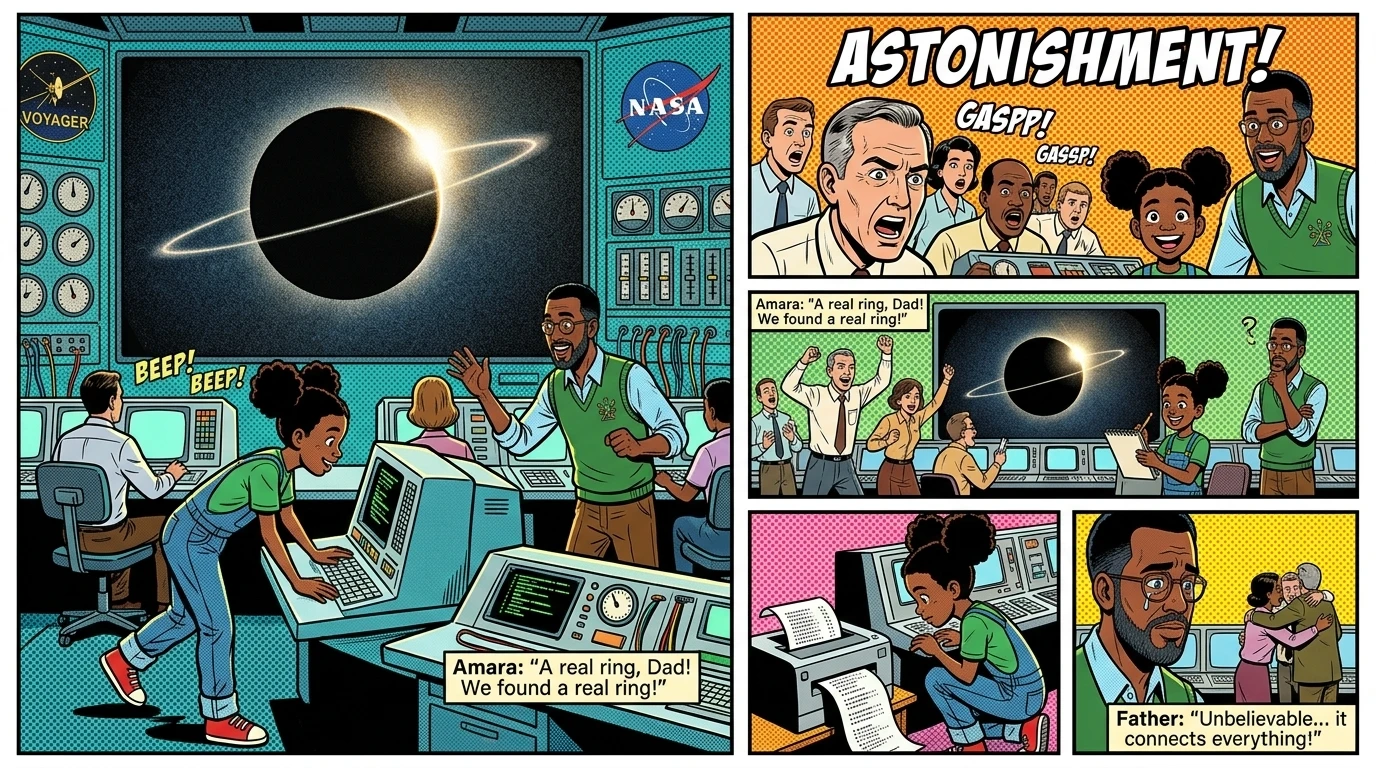
In March 1979, after passing Jupiter, the mission team programmed Voyager 1 to take one last, long-exposure picture looking back.
In March 1979, after passing Jupiter, the mission team programmed Voyager 1 to take one last, long-exposure picture looking back. The planet was now a dark silhouette, but it was backlit by the distant sun. When the grainy image finally arrived on Earth, a gasp went through the control room—a single, faint, glowing line encircled the planet. They had found it: a thin, dusty ring, completely invisible until they looked at it with the sun shining behind it.

In March 1979, after passing Jupiter, the mission team programmed Voyager 1 to take one last, long-exposure picture looking back. The planet was now a dark silhouette, but it was backlit by the distant sun. When the grainy image finally arrived on Earth, a gasp went through the control room—a single, faint, glowing line encircled the planet. They had found it: a thin, dusty ring, completely invisible until they looked at it with the sun shining behind it.

Page 7
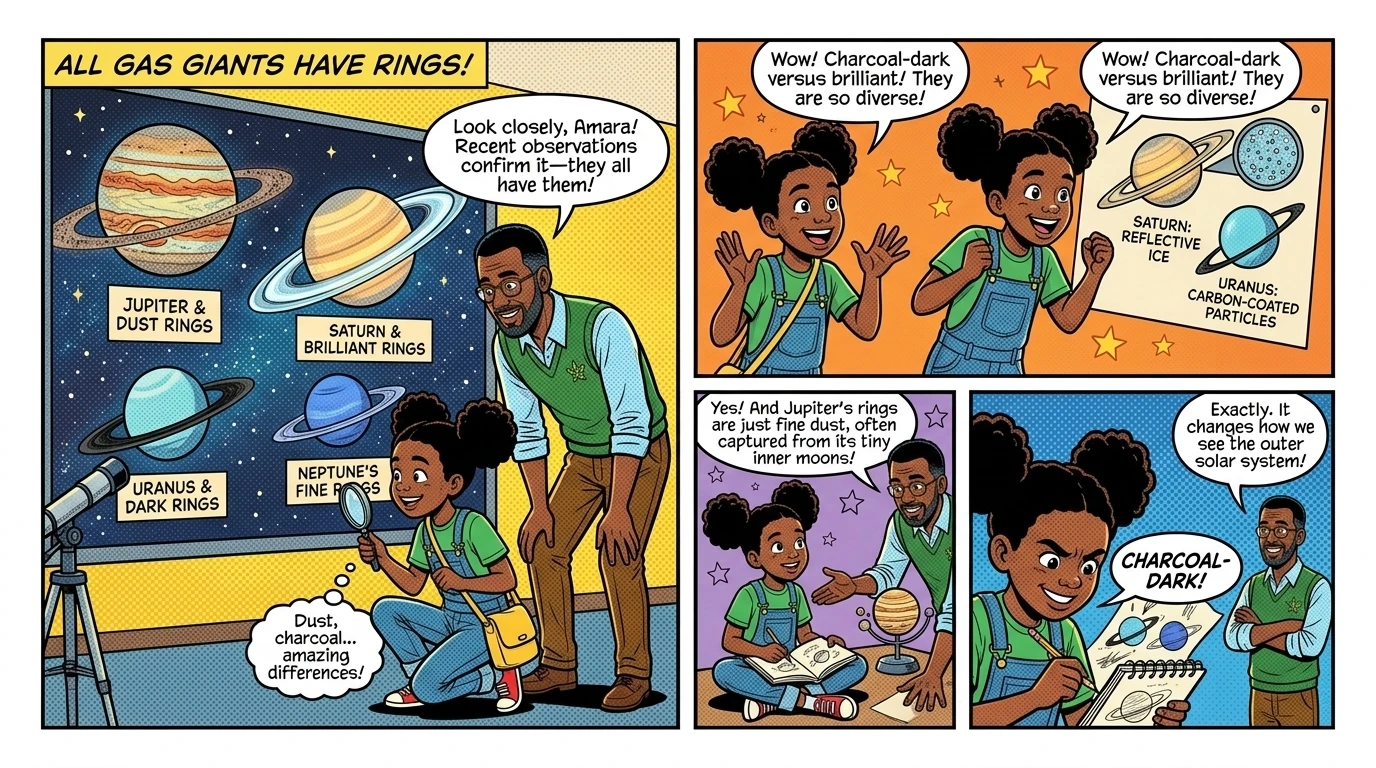
That single picture changed astronomy forever! Scientists realized that Saturn wasn't unique; all the gas giants in our solar system—Jupiter, Saturn, Uranus…
That single picture changed astronomy forever! Scientists realized that Saturn wasn't unique; all the gas giants in our solar system—Jupiter, Saturn, Uranus, and Neptune—have ring systems. Jupiter's are made of fine dust kicked up from its tiny inner moons, while Uranus's rings are as dark as charcoal. This discovery proved that our solar system was far more complex and beautiful than we knew.

That single picture changed astronomy forever! Scientists realized that Saturn wasn't unique; all the gas giants in our solar system—Jupiter, Saturn, Uranus, and Neptune—have ring systems. Jupiter's are made of fine dust kicked up from its tiny inner moons, while Uranus's rings are as dark as charcoal. This discovery proved that our solar system was far more complex and beautiful than we knew.

Page 8
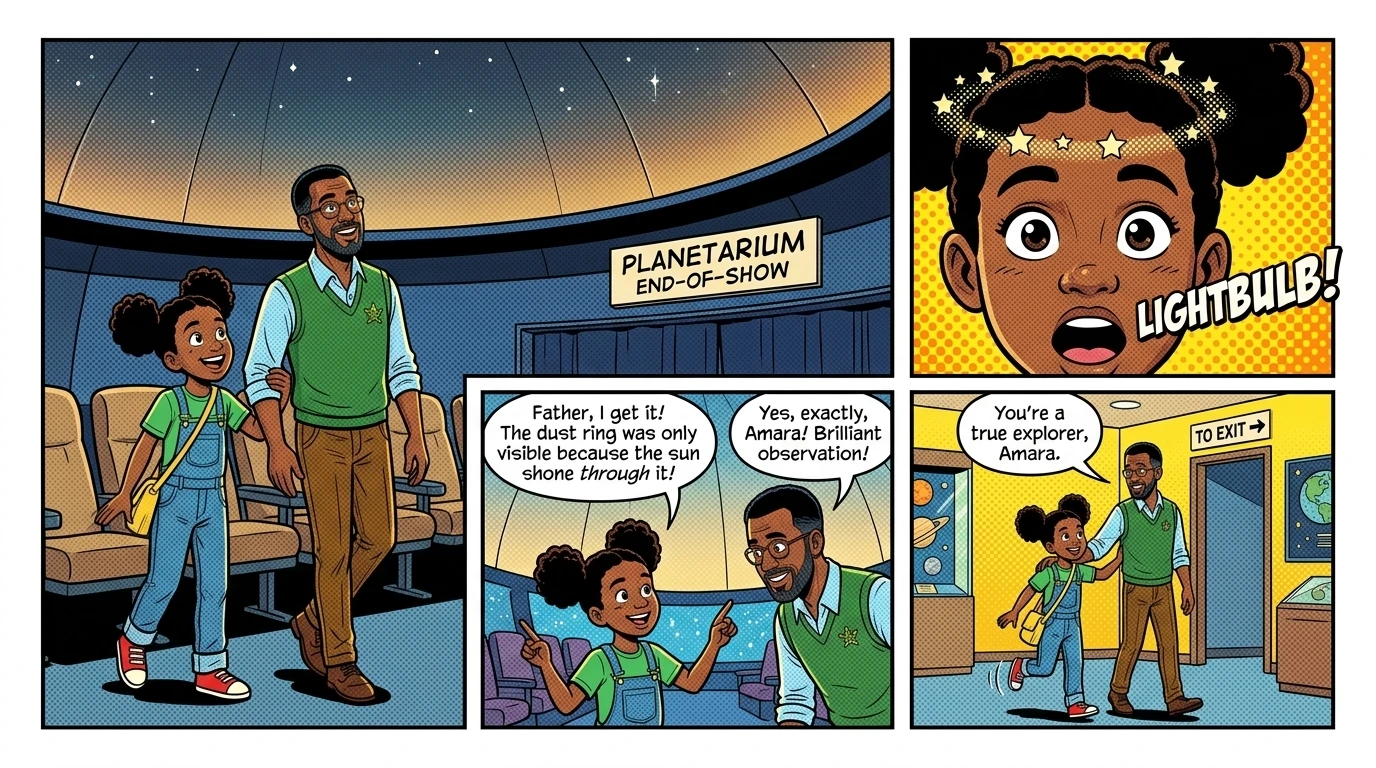
Back in the planetarium, Amara's eyes lit up as the lights slowly came on. "I get it!" she exclaimed, grabbing her father's arm.
Back in the planetarium, Amara's eyes lit up as the lights slowly came on. "I get it!" she exclaimed, grabbing her father's arm. "They couldn't see the dust ring when the sun was shining on it. They had to wait until the probe was on the other side so the sun would shine through it!" Her father nodded enthusiastically. "Exactly! It's like seeing dust motes dancing in a sunbeam that you can only see from the right angle."

Back in the planetarium, Amara's eyes lit up as the lights slowly came on. "I get it!" she exclaimed, grabbing her father's arm. "They couldn't see the dust ring when the sun was shining on it. They had to wait until the probe was on the other side so the sun would shine through it!" Her father nodded enthusiastically. "Exactly! It's like seeing dust motes dancing in a sunbeam that you can only see from the right angle."

Page 9
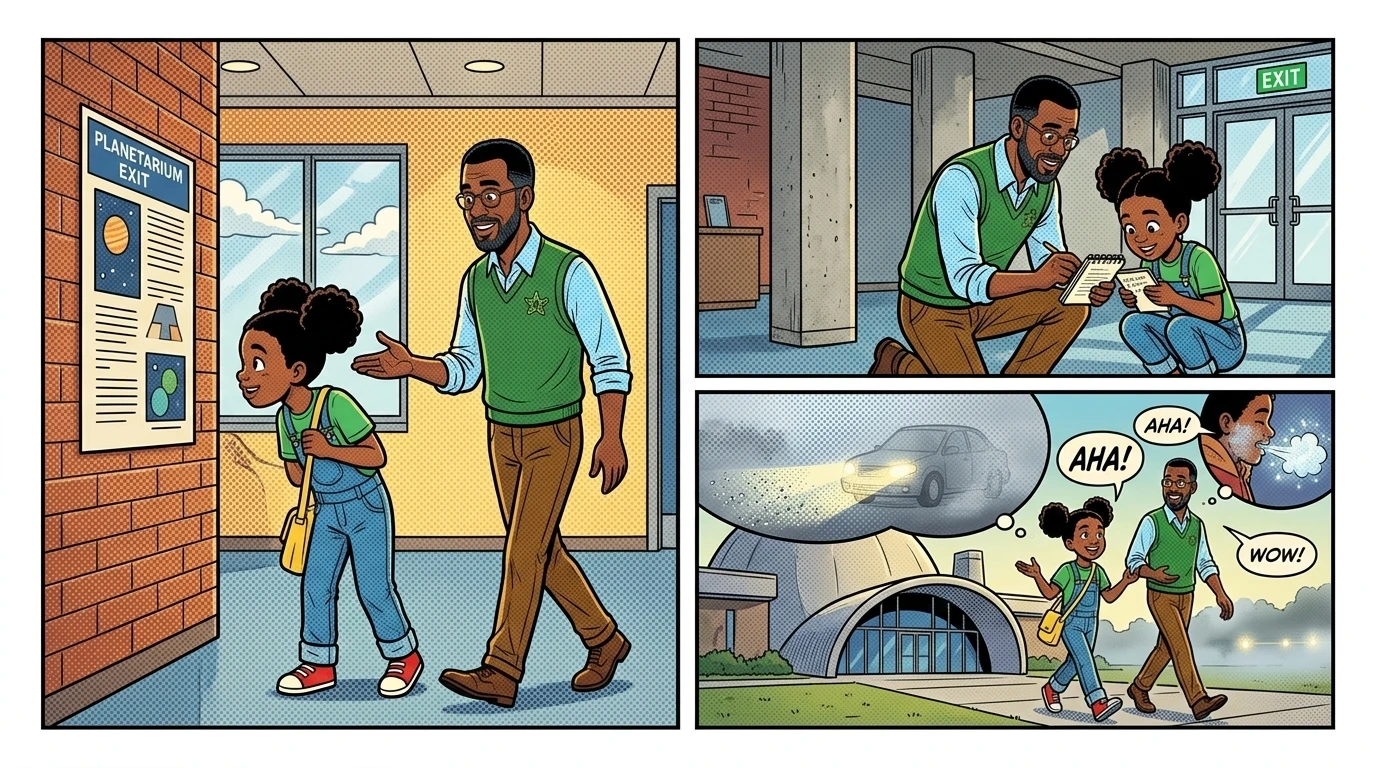
"Or like when you're driving through the fog at night," her father added, "and you can see the beams from the headlights only because the light is bouncing off…
"Or like when you're driving through the fog at night," her father added, "and you can see the beams from the headlights only because the light is bouncing off the tiny water droplets." Amara thought of another one. "It's also like seeing your breath on a freezing cold day! You can only see the little cloud of vapor when the light catches it just right." They were seeing Jupiter's hidden secret everywhere they looked.

"Or like when you're driving through the fog at night," her father added, "and you can see the beams from the headlights only because the light is bouncing off the tiny water droplets." Amara thought of another one. "It's also like seeing your breath on a freezing cold day! You can only see the little cloud of vapor when the light catches it just right." They were seeing Jupiter's hidden secret everywhere they looked.

Page 10
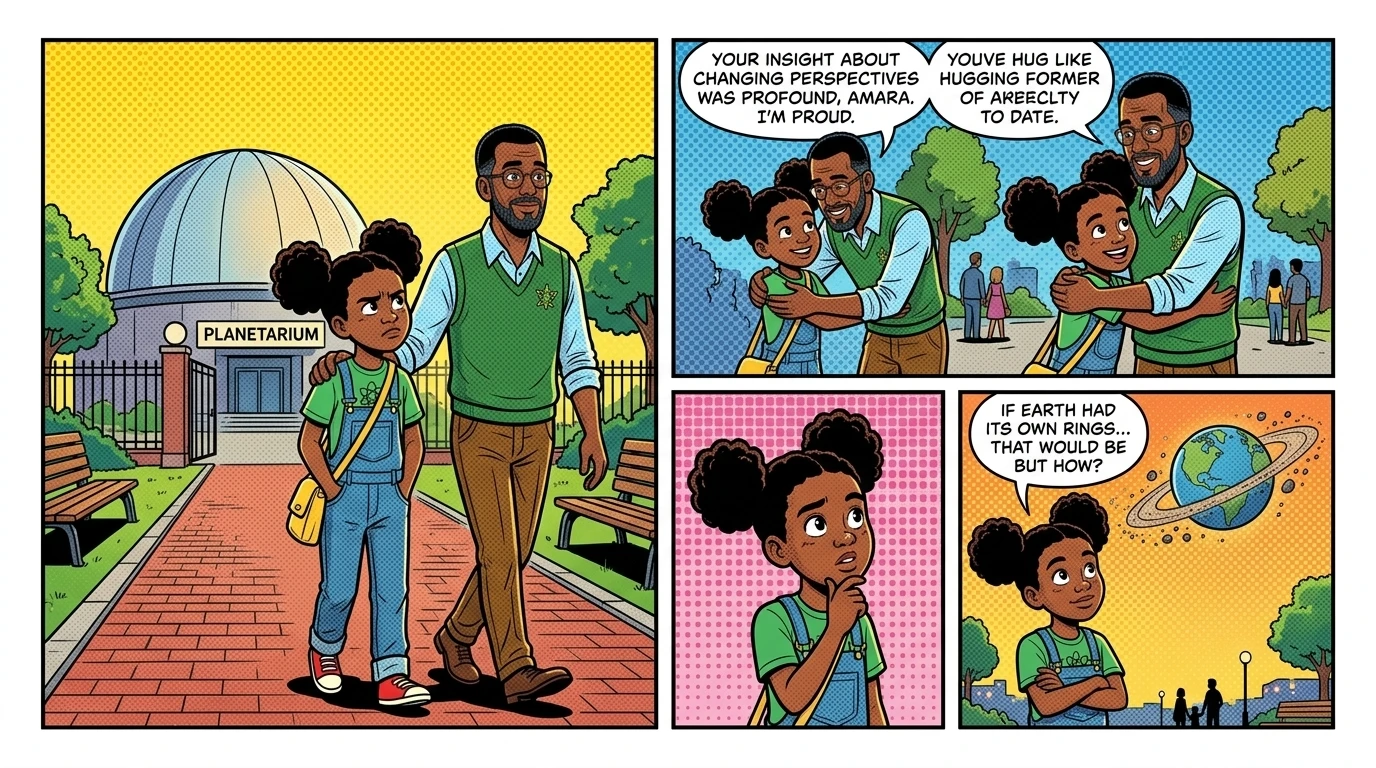
"So," Amara said thoughtfully, "even things that seem to be invisible can be discovered if you just change your perspective." Her father gave her a proud hug.
"So," Amara said thoughtfully, "even things that seem to be invisible can be discovered if you just change your perspective." Her father gave her a proud hug. As they walked towards the exit, Amara looked back at the dome and asked, "If tiny moons kicking up dust made Jupiter's rings, does Earth have enough space dust around it to ever form its own ring?"

"So," Amara said thoughtfully, "even things that seem to be invisible can be discovered if you just change your perspective." Her father gave her a proud hug. As they walked towards the exit, Amara looked back at the dome and asked, "If tiny moons kicking up dust made Jupiter's rings, does Earth have enough space dust around it to ever form its own ring?"

About this story

  • Audience: kids (ages 6–12)

More Wonder Books stories

All Wonder Books stories · Open the library