The Secret of Baking Soda Volcanoes
The Secret of Baking Soda Volcanoes — an illustrated stories story. 10 illustrated pages, free to read on Wonder Books.

Page 1
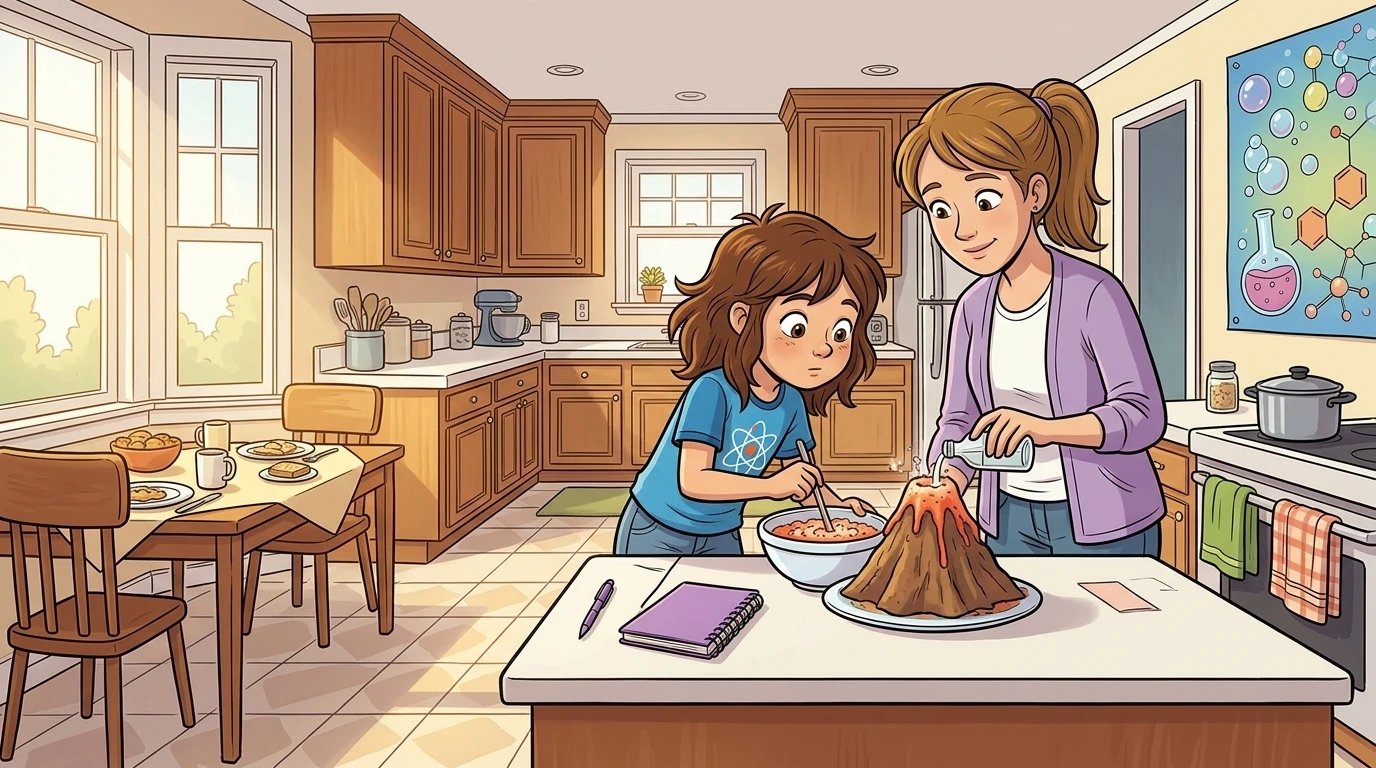
Celeste stirred the baking soda into the bowl. "Mom, why does baking soda make the volcano explode?" Celeste's mom chuckled, adding a dash of vinegar to the bowl. A foamy eruption bubbled over the sides. "That's some impressive chemistry right there, kiddo!"
Page 2

Sophie, Celeste's friend, bounced a basketball outside their Noe Valley home. "It's just a chemical reaction, right? Like, things mixing together?" Celeste frowned, scribbling in her notebook. "But what kind of reaction? Is it like when you mix paint?" Sophie dribbled, "I dunno. It seems like some kind of magic — but 'magic is just science we don't understand yet,' like Arthur C. Clarke said."
Page 3

England, 1770s. The air hung thick with coal smoke in the bustling city of Leeds. Narrow cobblestone streets wound between tall brick buildings, the sound of horses' hooves and merchants' cries echoing. Inside a humble laboratory, Joseph Priestley tinkered tirelessly with strange apparatus.
Page 4

Joseph Priestley, a minister and self-taught scientist, was endlessly curious about gases. Born in 1733, he was a bit of a rebel, questioning everything – even the existence of ghosts! He was fascinated by the 'airs' released from different substances. He was known for once saying that 'the more elaborate our means of communication, the less we communicate'.
Page 5

Priestley carefully heated mercuric oxide in a glass container. "What will happen, I wonder?" he mused, adjusting his spectacles. A colorless gas filled the vessel. He cautiously placed a lit candle inside. To his astonishment, the flame burned brighter than ever!
Page 6

Priestley had discovered oxygen! He called it 'dephlogisticated air,' believing it lacked phlogiston, a supposed substance that made things burn. Oxygen supports combustion – it's what makes fire burn so fiercely. FUN FACT: A lightning bolt is five times hotter than the surface of the sun! Without oxygen, that bolt would fizzle out.
Page 7

Priestley's discovery revolutionized chemistry! It helped Antoine Lavoisier understand combustion correctly – fire isn't releasing phlogiston, it's combining with oxygen. This led to modern chemistry, understanding how elements react and form new substances. Even rockets rely on rapid combustion fueled by oxygen!
Page 8
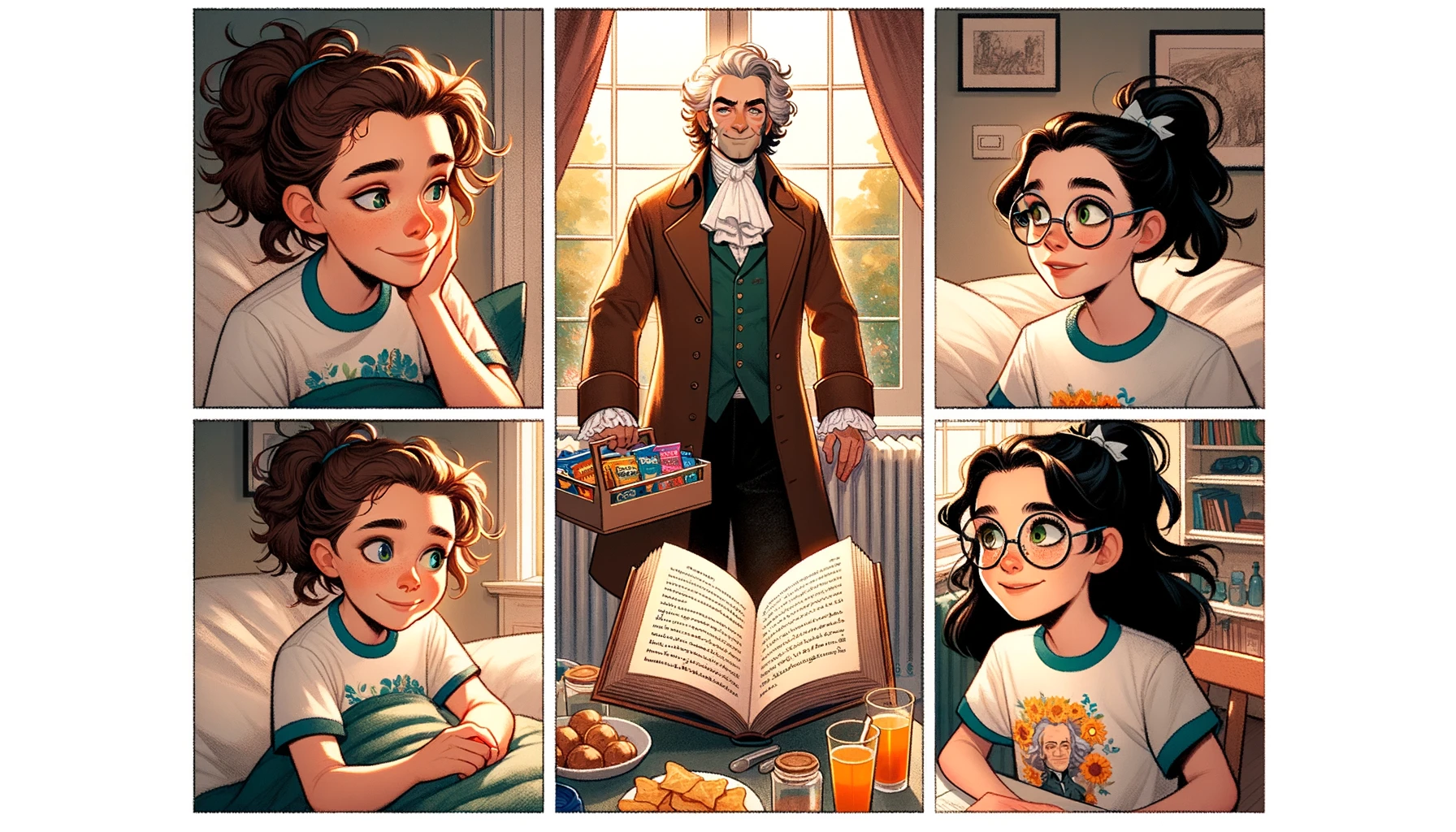
Back in Celeste's kitchen, the baking soda volcano still bubbled gently. "So," Celeste said, stirring the mixture, "the vinegar is like the mercuric oxide, and the baking soda makes a gas like Priestley's 'dephlogisticated air'?" Sophie grinned. "Exactly! The baking soda and vinegar make carbon dioxide gas, which pushes the foam up and out!"
Page 9
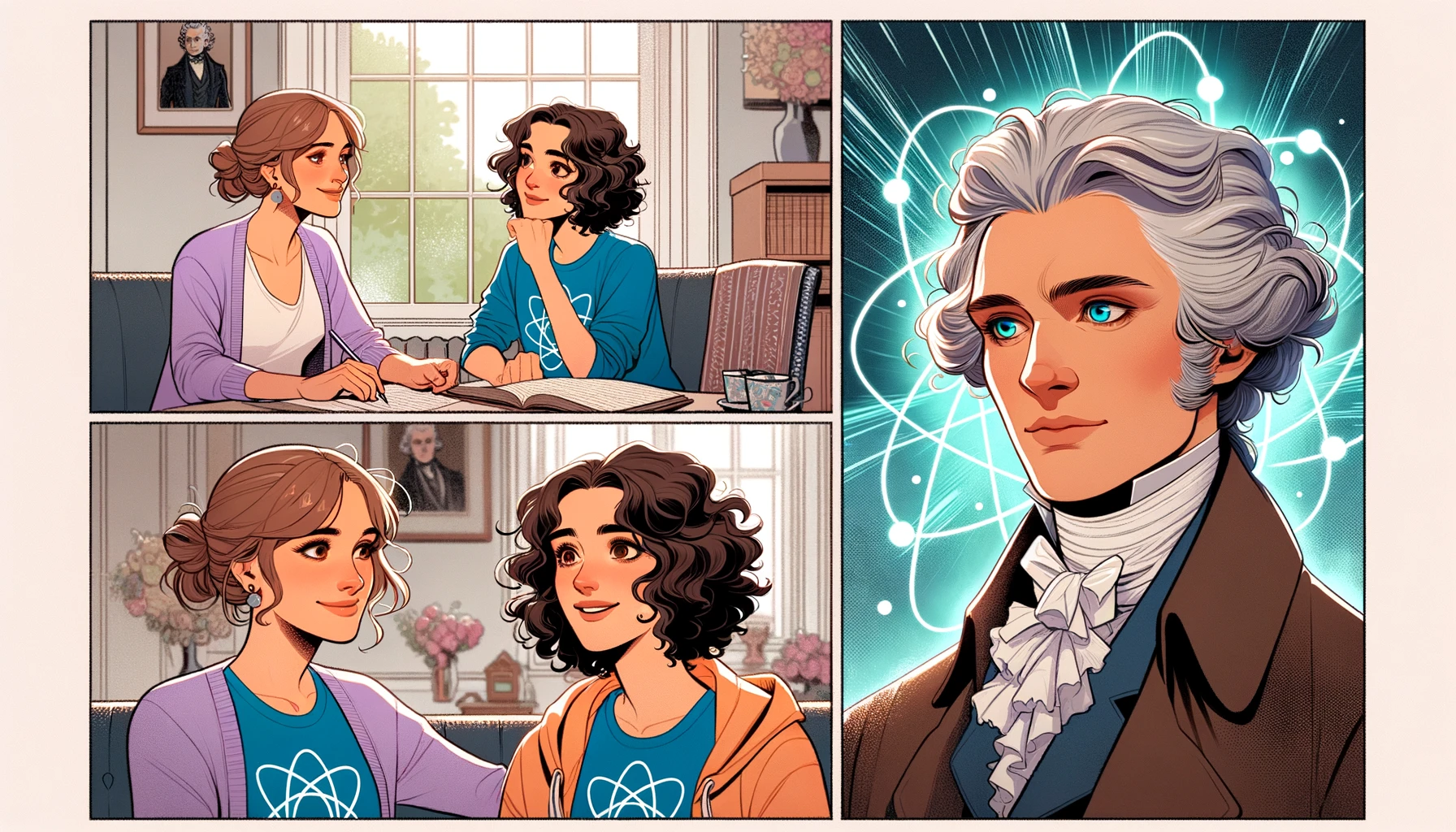
"So like when you add baking powder to cookies?" Celeste's mom asked, wiping the counter. "It makes them fluffy!" Sophie exclaimed. "And soda fountains use carbon dioxide to make drinks fizzy!" Celeste added. "Even those fire extinguishers use carbon dioxide to put out fires!"
Page 10

Celeste smiled. "So, a chemical reaction makes the volcano erupt because the gas builds up and pushes everything out!" Sophie pointed to the sky. "Hey, what makes clouds float? That seems even more like magic!"
About this story
- Audience: kids (ages 6–12)
Questions and answers
Questions and answers about The Secret of Baking Soda Volcanoes
Read Wonder Books on your phone
Wonder Books is available on Android and iPhone and iPad. Get Wonder Books on Google Play · Get Wonder Books on the App Store.