Why Metal Rusts
Why Metal Rusts — an illustrated stories story. 10 illustrated pages, free to read on Wonder Books.
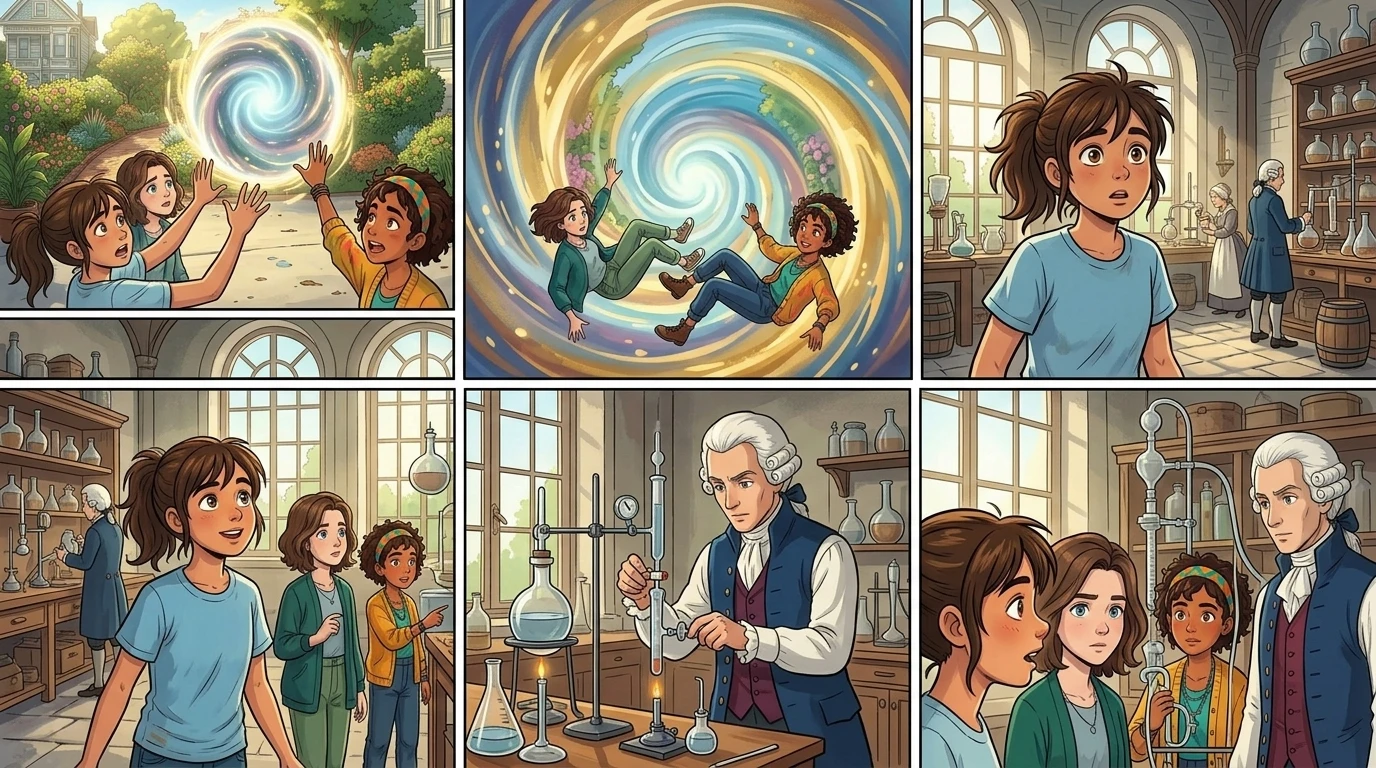
Page 1
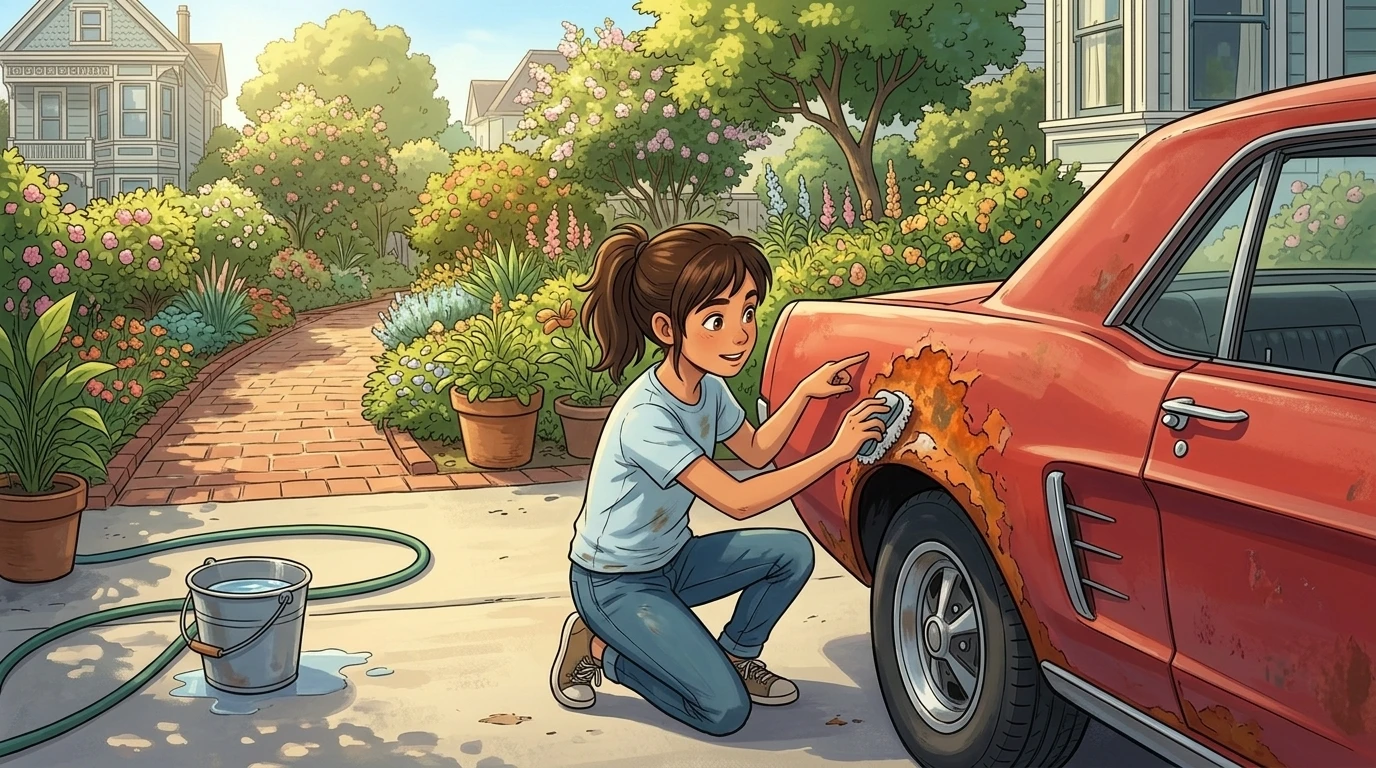
Clara was helping her father wash their vintage Mustang in their driveway in Noe Valley. The San Francisco sun warmed her face as she scrubbed a patch of rust near the rear fender. "Dad, what's this orange stuff?" she asked, pointing to the flaky blemish. Her father chuckled, "Ah, that's rust, Clara. It's what happens when metal gets old and tired."
Page 2
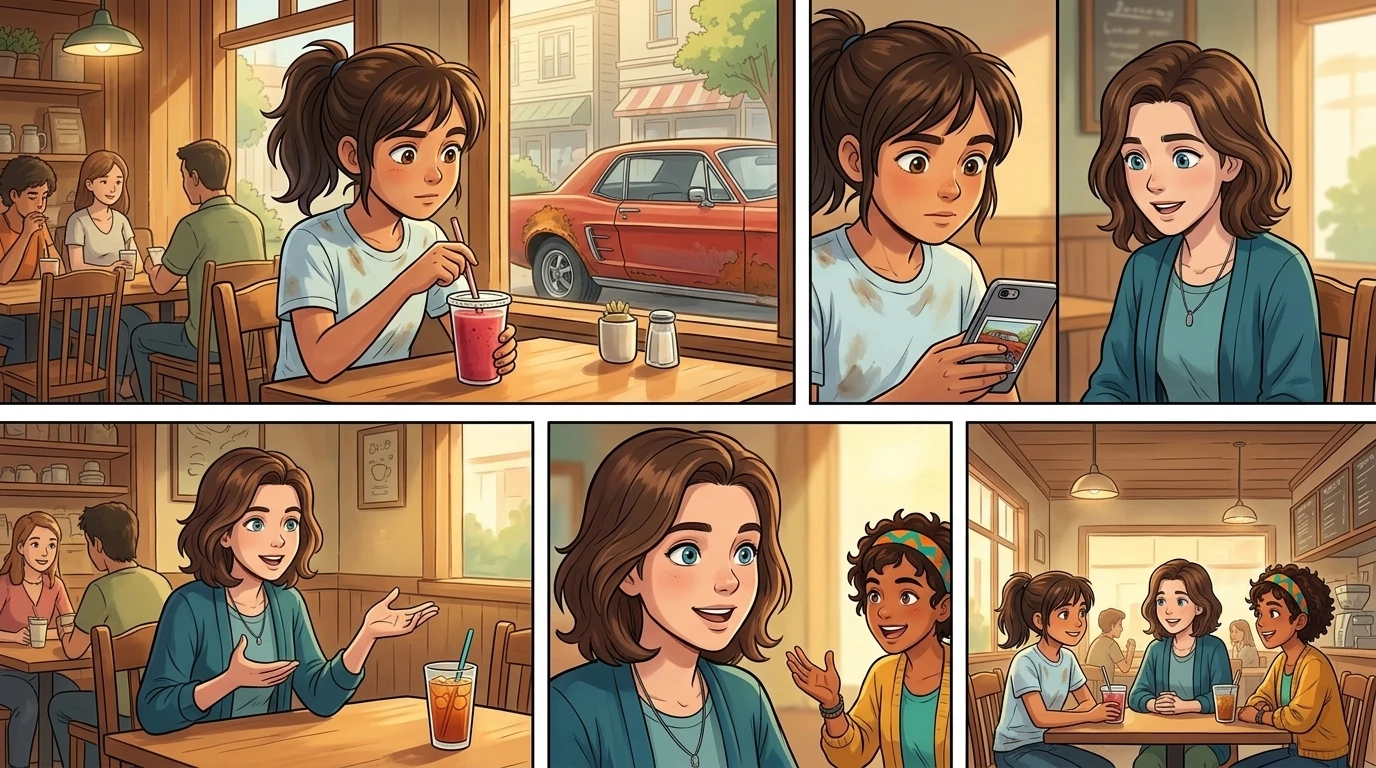
Later that day, Clara met her friend Alina at a café on 24th Street. "I saw rust on our car today," Clara explained, poking at her smoothie. "Dad said it's from old metal. Why does metal change like that?" Alina, stirring her iced tea, replied, "My aunt's a chemist. She says it's not just age. Oxygen and water are involved, right? Something about...oxidation?"
Page 3
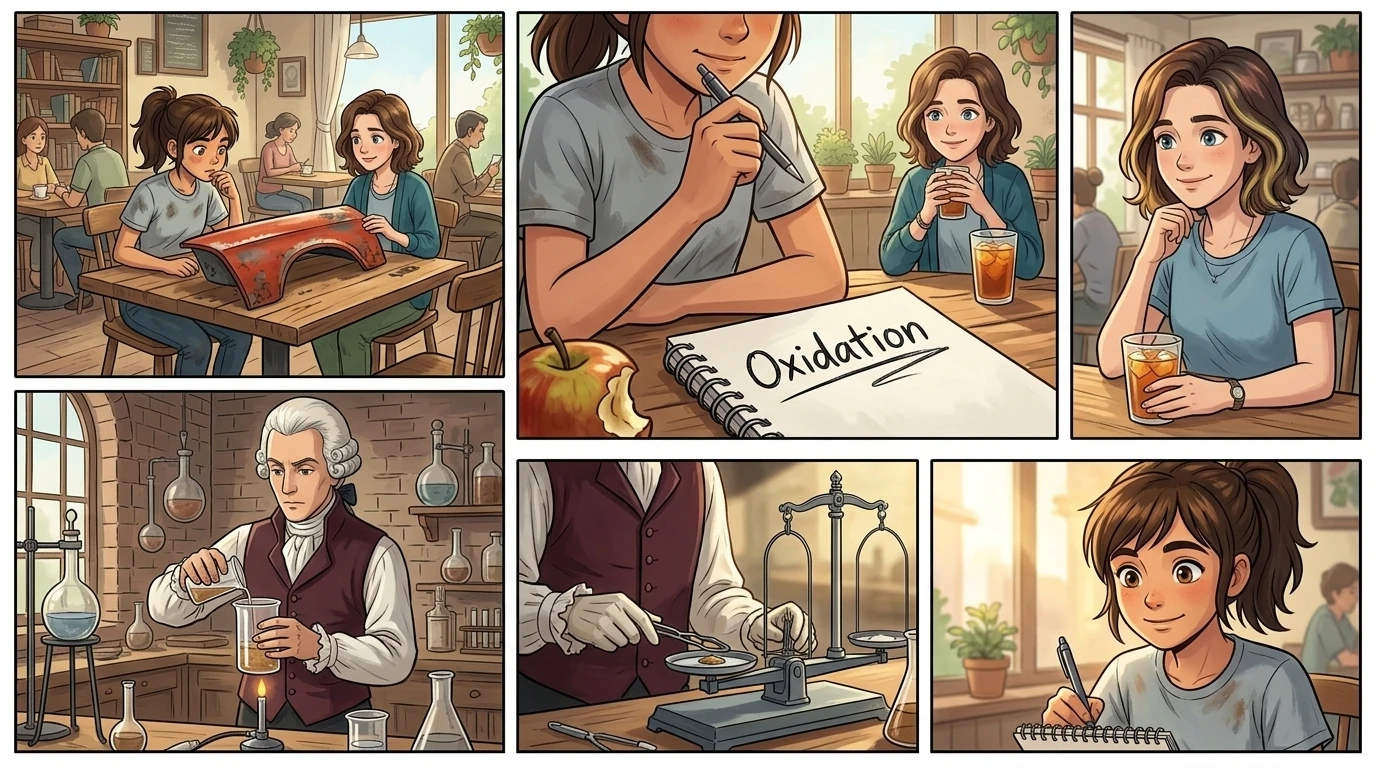
"Oxidation..." Clara pondered, scribbling the word in her notebook. "Like when an apple turns brown?" Alina nodded. "Exactly! It's a chemical reaction. It happens all the time!" Clara looked up thoughtfully, tapping her pen on her chin. "I wonder when people first started figuring all this out?"
Page 4
Suddenly, the scene dissolved into a bustling laboratory. Narration filled the space: "Paris, late 1700s. A time of scientific revolution, when curious minds began unlocking the secrets of matter..."
Page 5
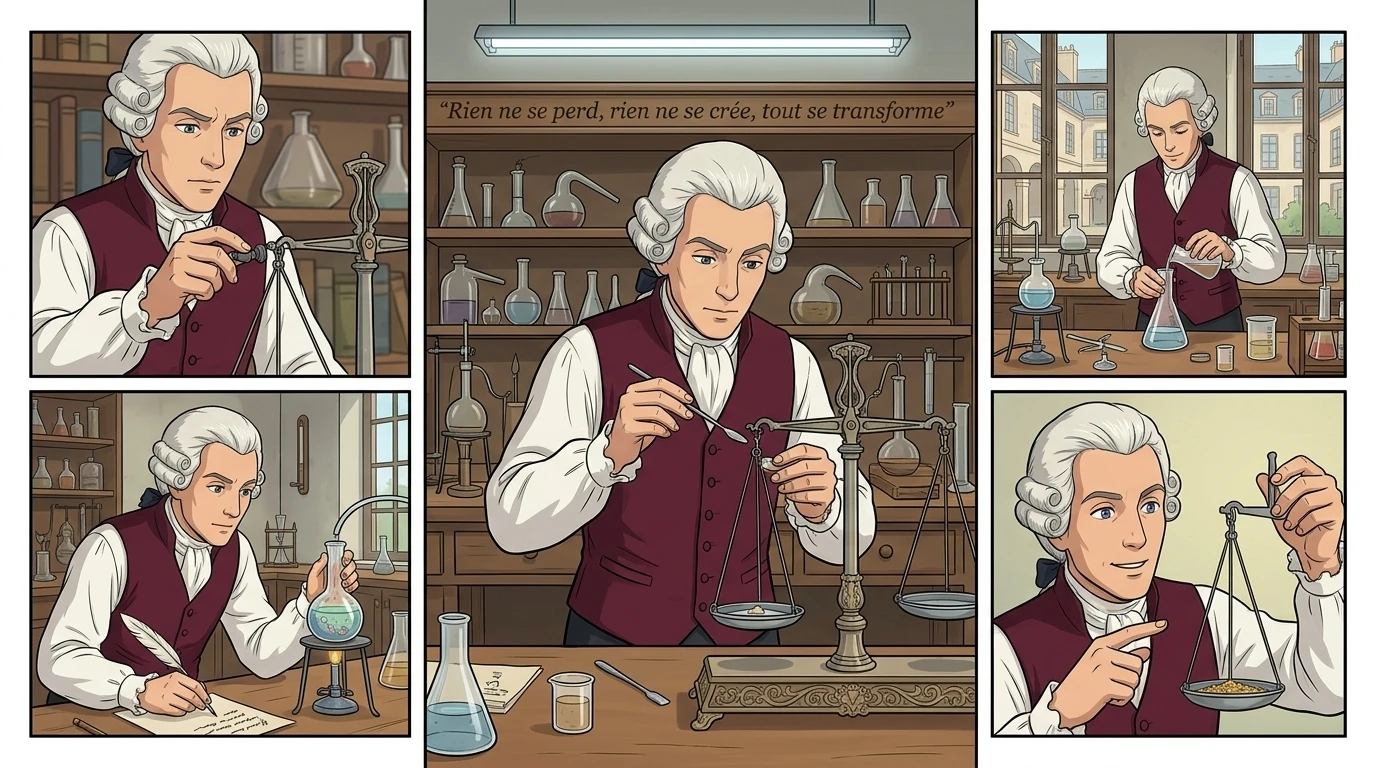
A distinguished gentleman in a powdered wig carefully weighed a sample on a balance scale. This was Antoine Lavoisier, a French chemist, often called the 'father of modern chemistry.' Lavoisier once said, 'Nothing is lost, nothing is created, everything is transformed,' a sentiment that drove his meticulous experiments.
Page 6
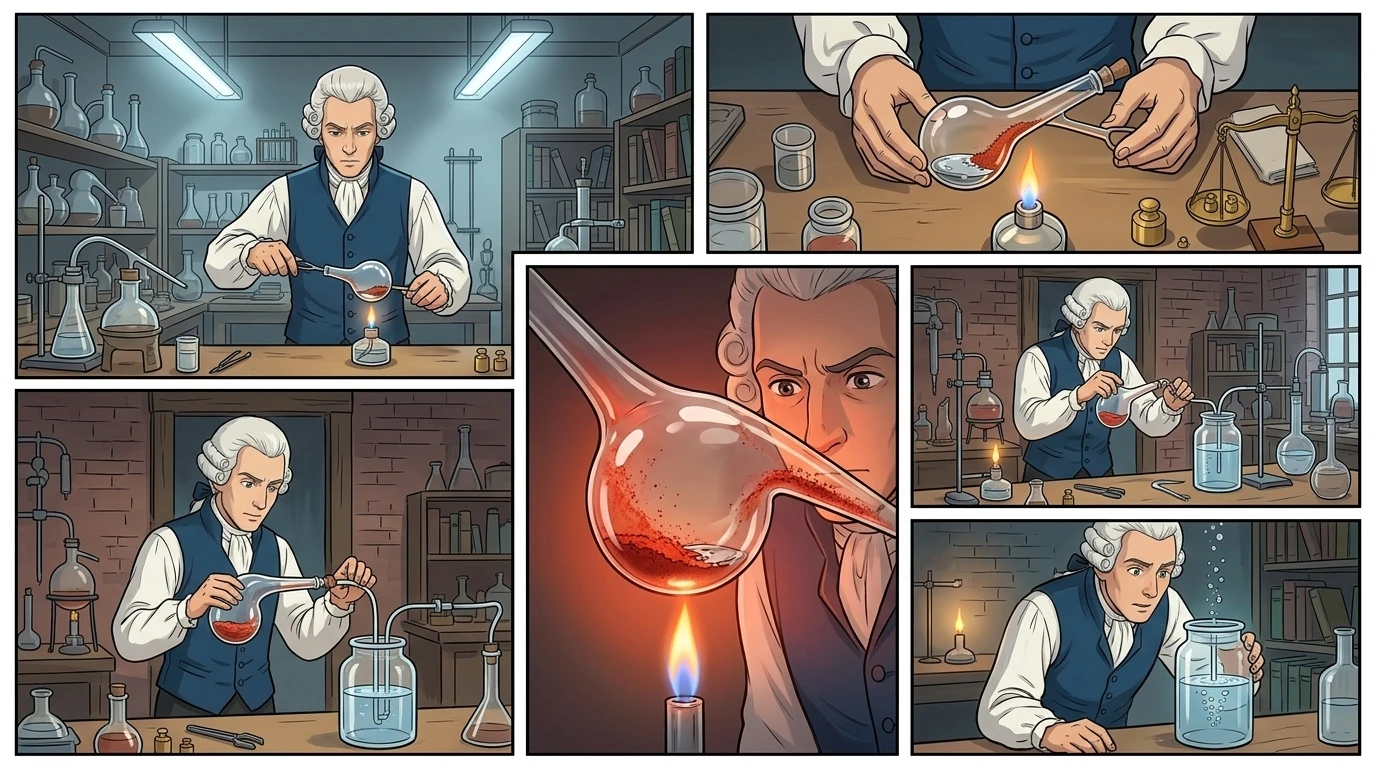
Lavoisier carefully heated mercury in a sealed container. He noticed it combined with air to form a red powder, mercury oxide. He weighed everything precisely. The mass of the mercury oxide EQUALED the mass of the original mercury PLUS the air it had absorbed. This was evidence that matter wasn't disappearing or appearing, but transforming!
Page 7
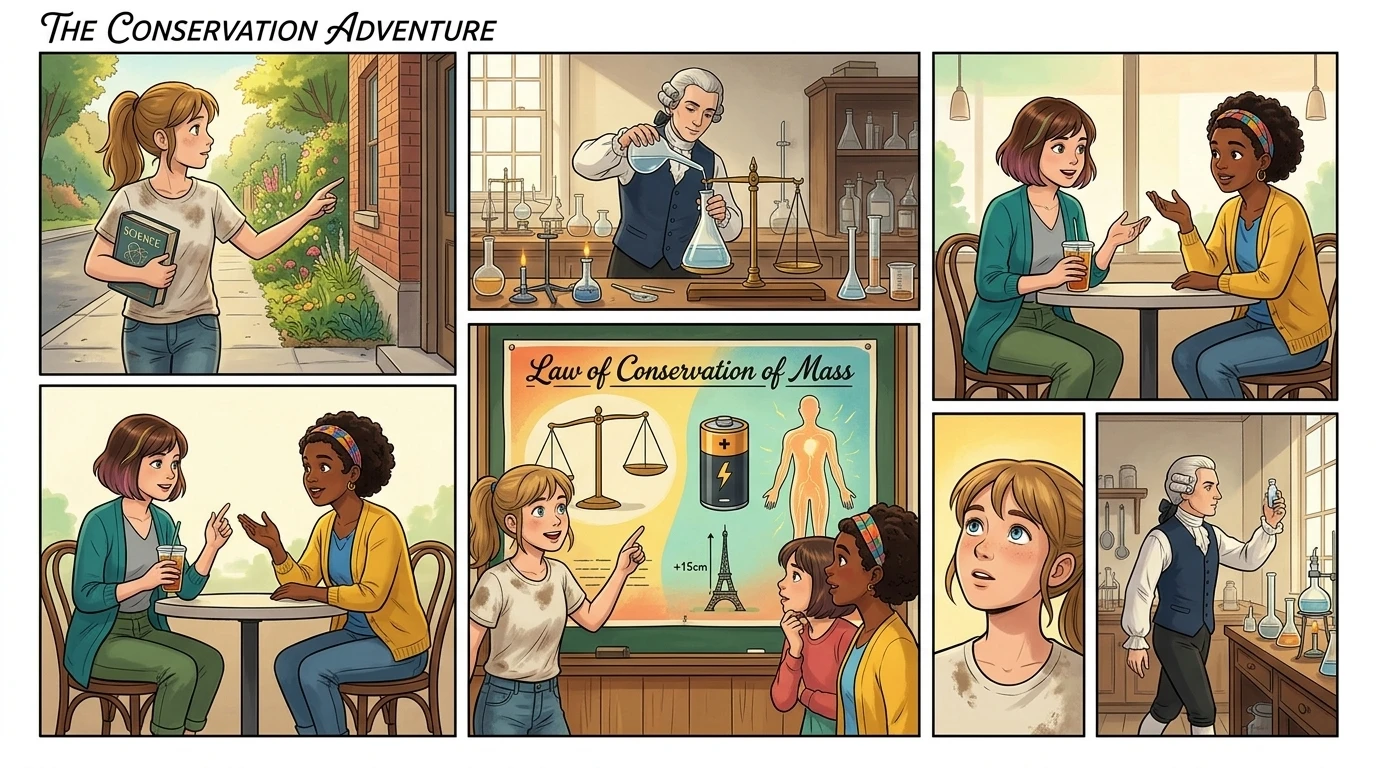
Lavoisier's careful measurements helped establish the Law of Conservation of Mass – a cornerstone of modern chemistry! This law is essential for developing all kinds of technologies, from designing batteries to making new medicines. It's also crucial for understanding how our own bodies use energy. Fun fact: the Eiffel Tower grows about 15 cm taller in summer due to thermal expansion!
Page 8
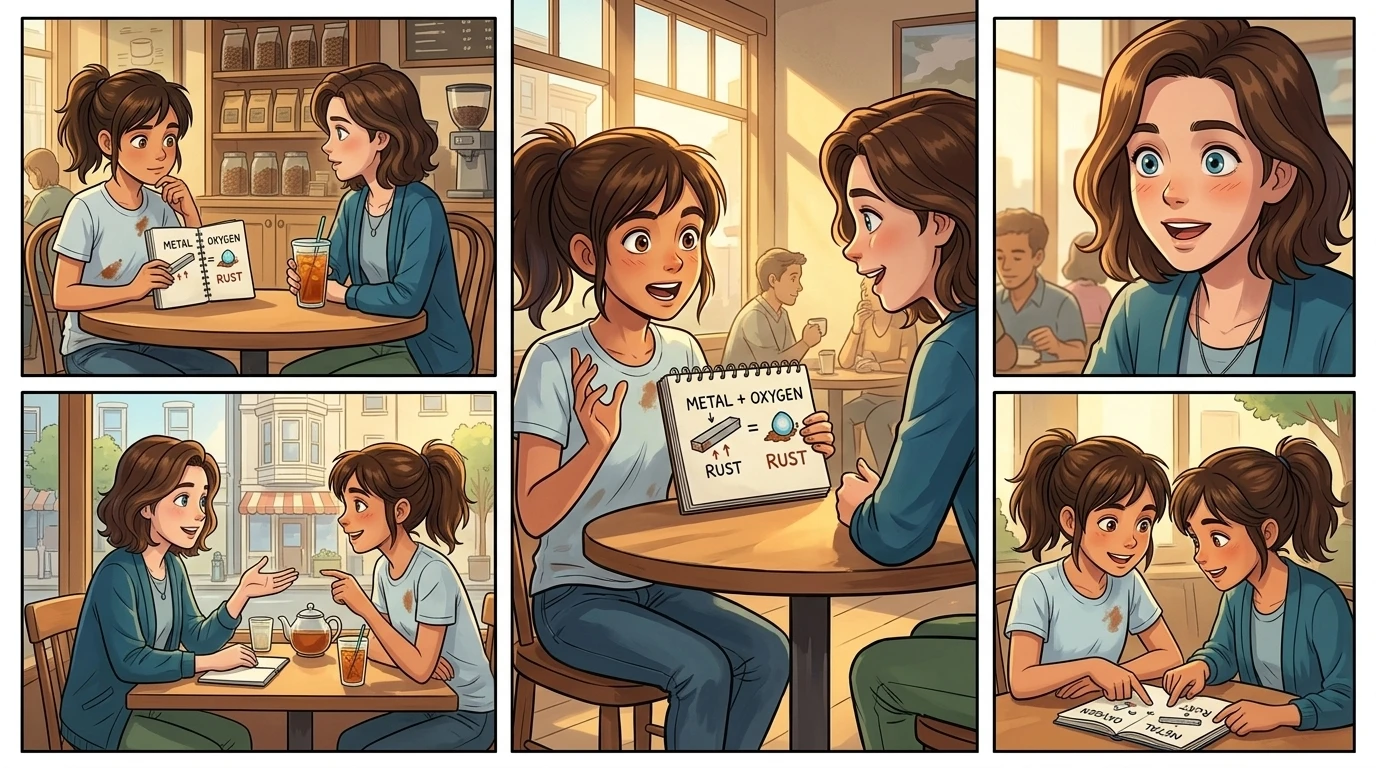
The scene shimmered, and Clara was back at the café with Alina. "Wow," Clara exclaimed, flipping through her notes. "So, Lavoisier showed that rust isn't just metal getting 'old,' but actually reacting with oxygen! That's why it only happens when air is around!" Alina's eyes widened. "So, the orange stuff is heavier than the metal underneath? Because it added oxygen?"
Page 9
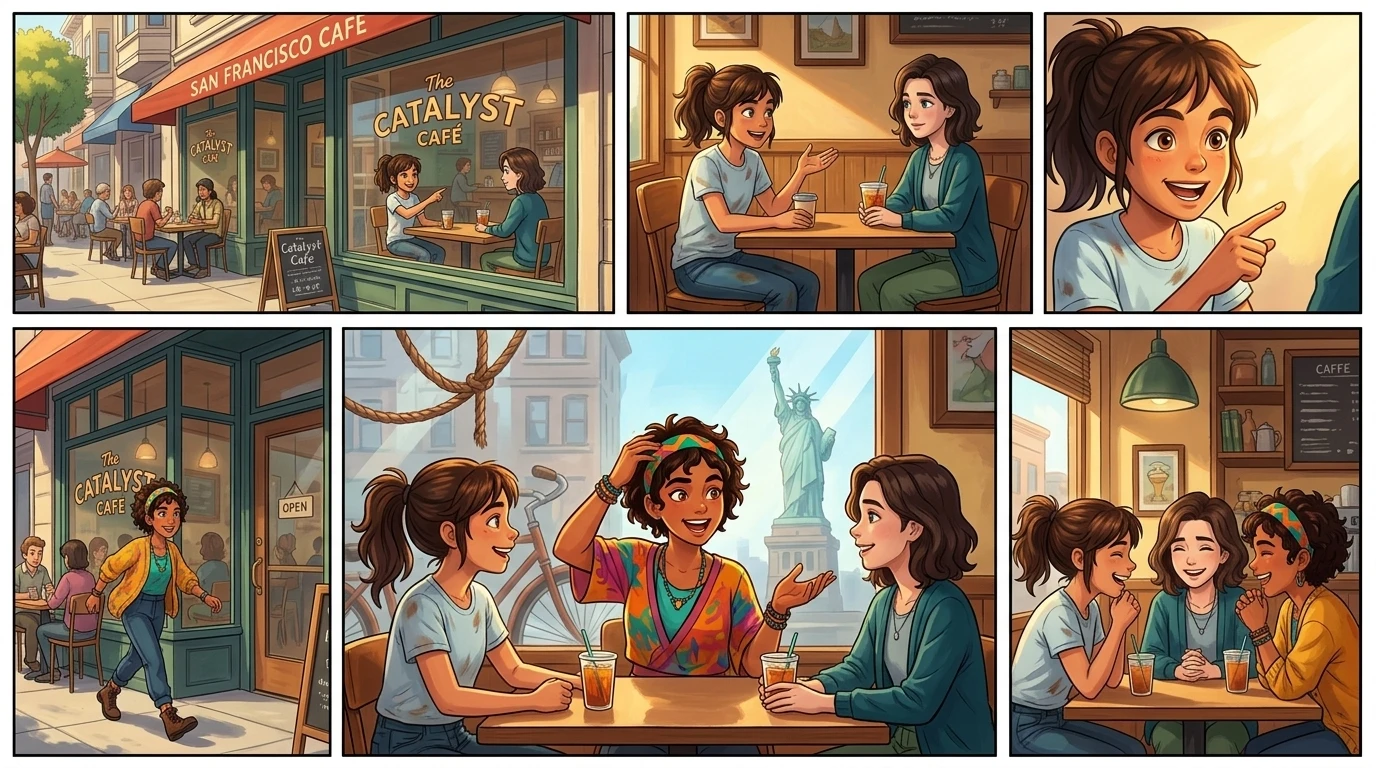
Sora, another friend, joined them at the table, overhearing the conversation. "That's like when a bike chain rusts," she added, adjusting her colorful headband. "Or when the Statue of Liberty turned green! That was also oxidation, right?" Clara nodded enthusiastically. "Exactly! The iron reacted with oxygen to form a new compound!"
Page 10
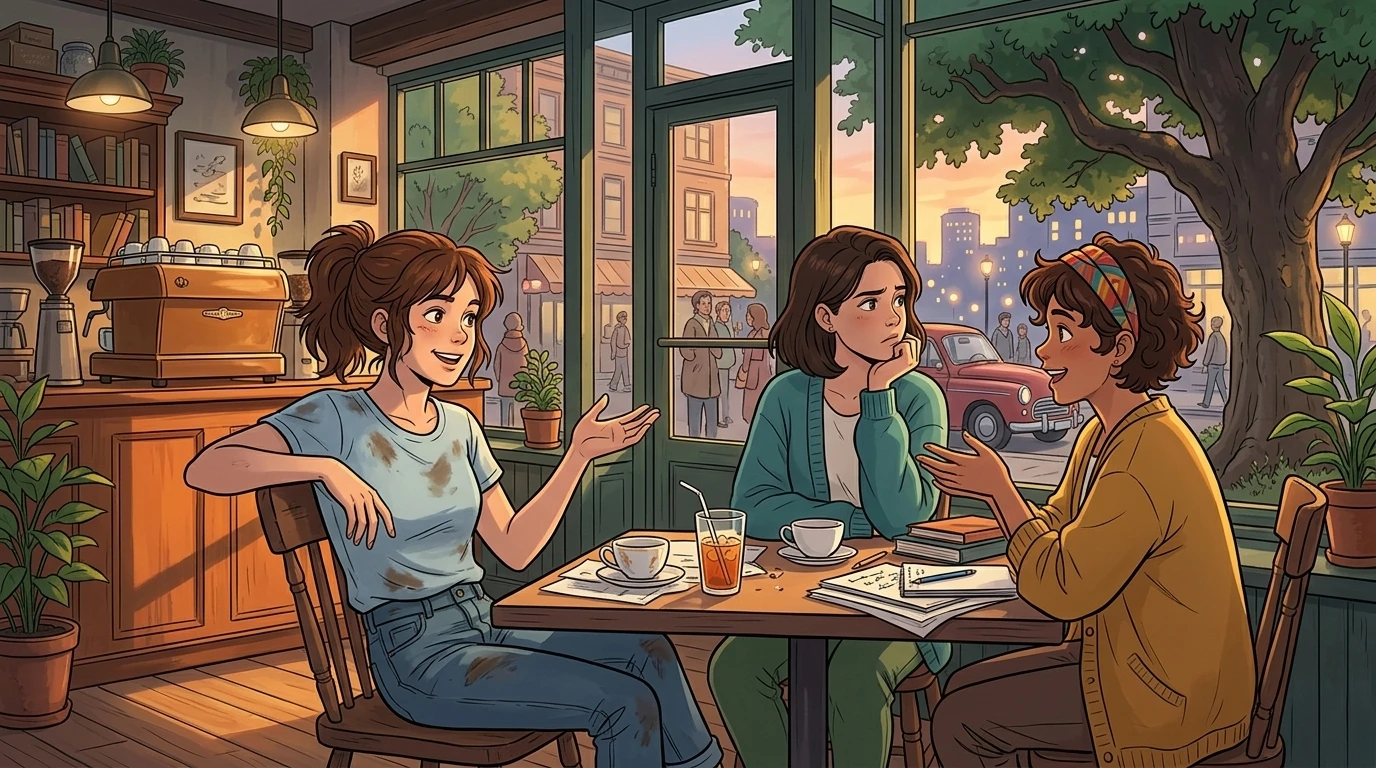
"So," Clara summarized, "rust happens because iron reacts with oxygen in the air to create something new!" Alina smiled. "That's amazing! But if oxygen is so reactive..." she began, pausing thoughtfully, "what stops things from burning up all the time?"
About this story
- Audience: kids (ages 6–12)
Read Wonder Books on your phone
Wonder Books is available on Android and iPhone and iPad. Get Wonder Books on Google Play · Get Wonder Books on the App Store.