Deir el-Medina: The Village of the Tomb Builders
Deir el-Medina: The Village of the Tomb Builders — an illustrated history story. 10 illustrated pages, free to read on Wonder Egypt.
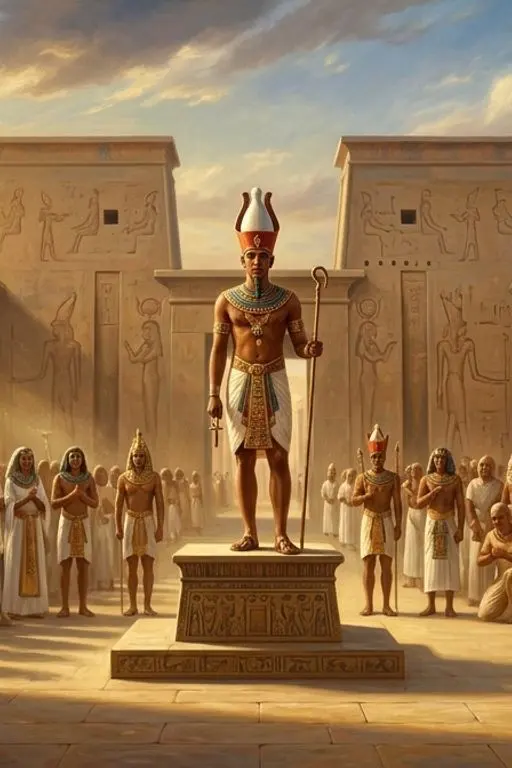
Page 1
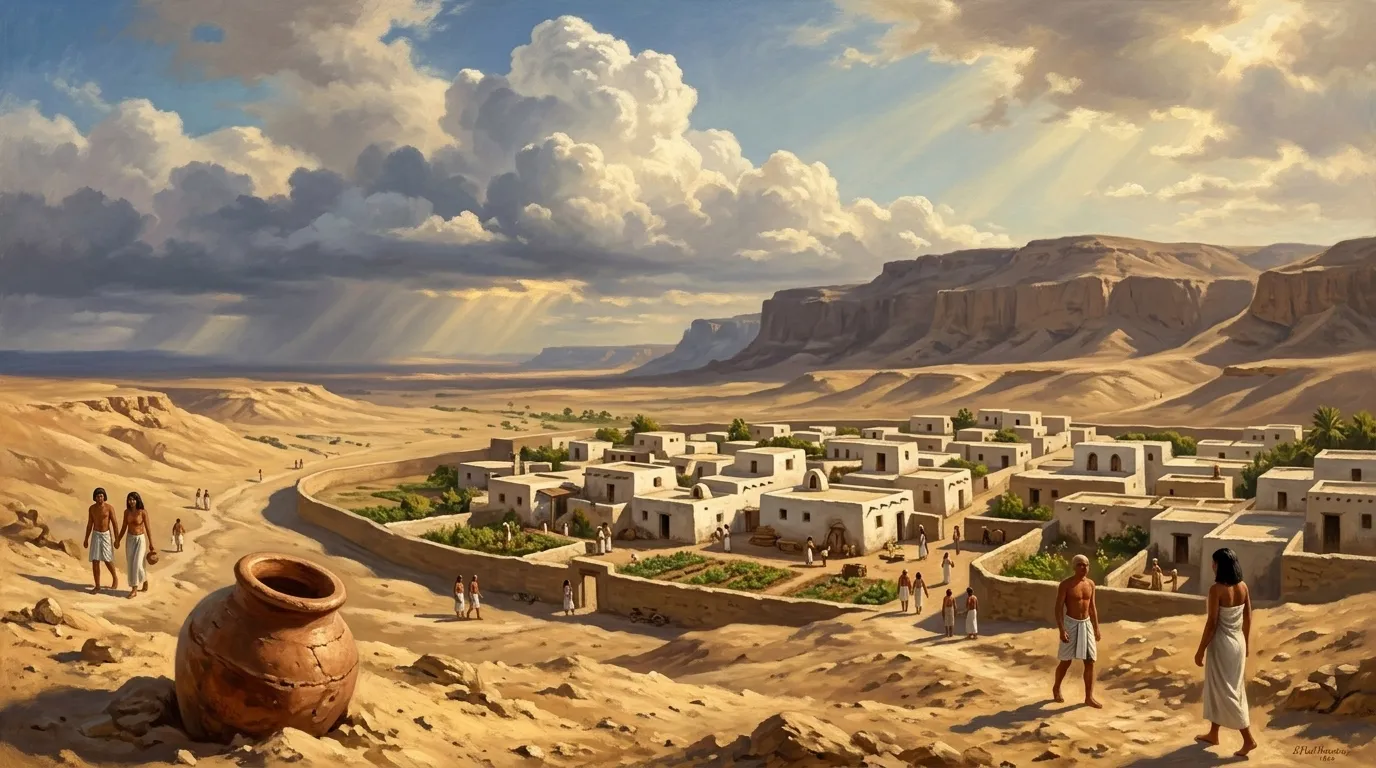
Three millennia ago, on the rugged West Bank of Thebes, a unique settlement rose from the desert dust, established around the fifteenth century before the common era. This was Deir el-Medina, the 'Place of Truth,' a carefully sequestered village housing the 'servants in the Place of Truth,' the chosen artisans who carved, decorated, and sealed the eternal resting places of Egypt's pharaohs in the Valley of the Kings. From the dawn of the New Kingdom under figures like Thutmose I, who likely formalized its purpose, through the grandeur of Seti I and Ramesses II, and into the challenging final years under Ramesses III, this community endured for over four hundred years. It was an age defined by the colossal ambition of royal tomb building, demanding unparalleled craftsmanship and a tightly administered social structure. Here, the everyday lives of scribes like Amennakht and foremen like Neferhotep intertwined with monumental tasks. What makes this era uniquely vivid is not only the scale of its creations, but the intimate, preserved record of its daily existence—a testament to human endeavor, devotion, and, ultimately, the strains that led to moments of profound social unrest, leaving behind an unparalleled archive for the ages.
Page 2
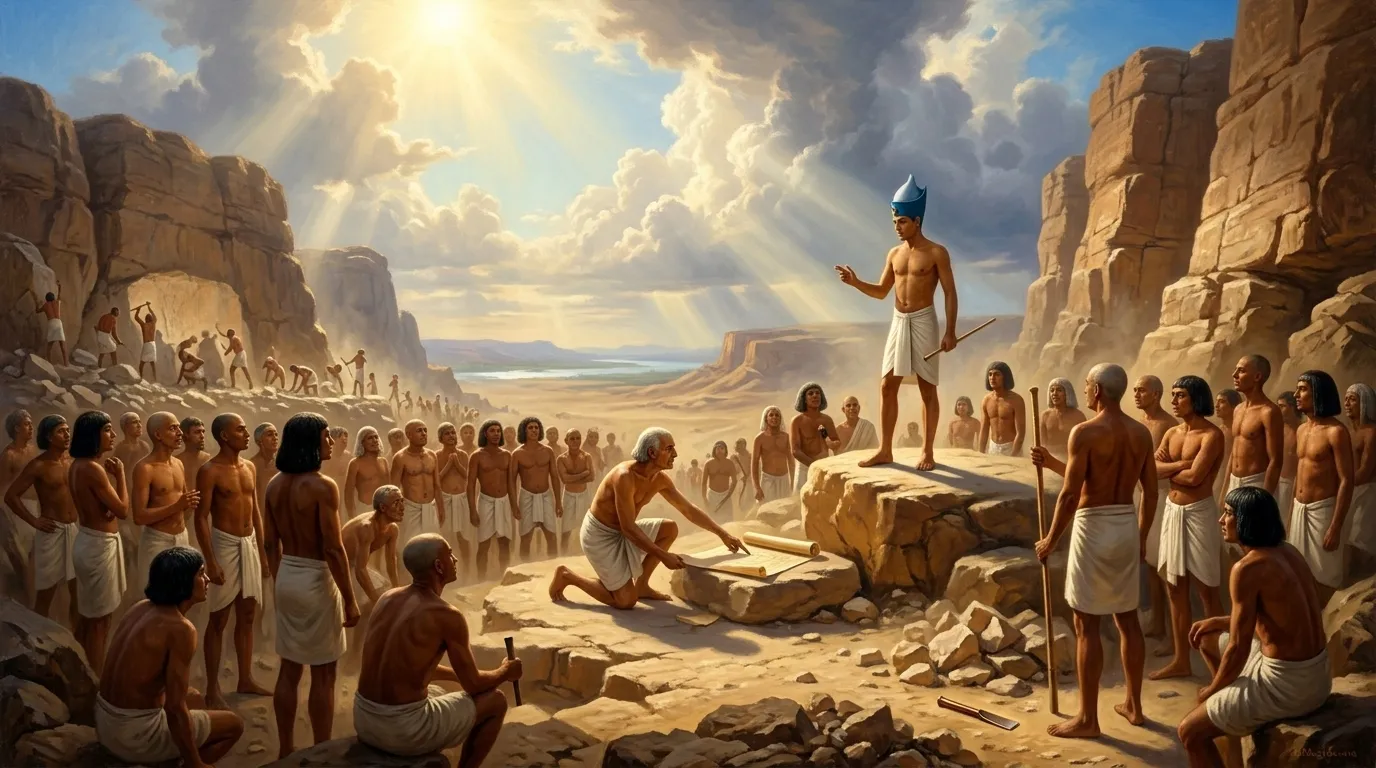
Around 1490 BC, a crisp morning wind carried the dust of fresh excavation through the newly designated Valley of the Kings. Thutmose I, a mature man in his early forties, stood on a rocky outcrop, his gaze sweeping across the burgeoning necropolis. His vision was clear: a hidden valley, its tombs inviolable, carved deep into the living rock, unlike the vulnerable pyramids of old. The chief of works, a formidable man named Ineni, an aged and respected official with decades of service, knelt beside a rolled papyrus plan, his finger tracing a rough schematic. The conversation was hushed, but its weight was profound; it charted the future of royal burial and the dedicated workforce needed to achieve it. This ambitious undertaking would require not just laborers, but skilled artisans, scribes, and administrators—a permanent community devoted solely to this sacred task, far from the bustling capital. The foundation of the 'Place of Truth' began with such moments, charting the unseen pathways to eternity.
“The mountain will yield, Ineni. Ensure secrecy, ensure provision. Their homes will rise from this very stone, their hands will shape eternity.”
Page 3
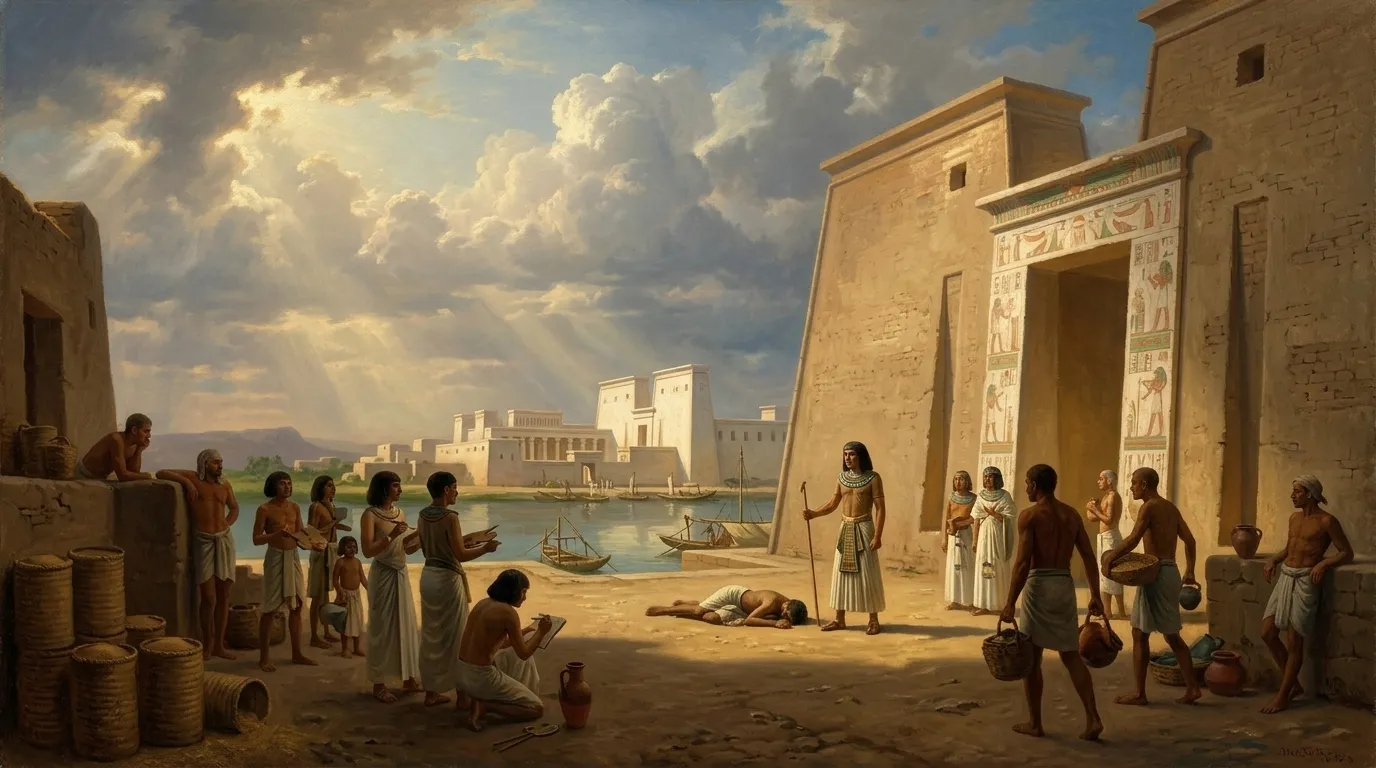
Centuries later, around 1280 BC, under the reign of Ramesses II, the administrative heart of the 'Place of Truth' was a place of constant scrutiny. Within the main administrative building of Deir el-Medina, Vizier Paser, a man of imposing presence in his early fifties, his face etched with the burdens of his office, stood before a high stack of clay tablets and papyri. His penetrating gaze fixed upon the Chief Scribe of the Tomb, a younger, nervous man in his late thirties, who presented a ledger detailing the village's provisions. The scent of dried grain and lamp oil hung in the air. Paser, known for his meticulousness, pointed a staff at a specific entry, demanding clarification on the deficit of emmer wheat, a staple. The integrity of the supply chain was paramount; a hungry workforce meant delayed royal tombs, a stain on the Pharaoh’s legacy. The vast granaries of Thebes fed this secluded community, but the intricate logistics often faltered, and accountability rested with men like these, under the stern eye of the Vizier.
“This shortfall in emmer… explain its presence. The King’s workers must not hunger. Their labor, and our standing, depend upon this reckoning.”
Page 4
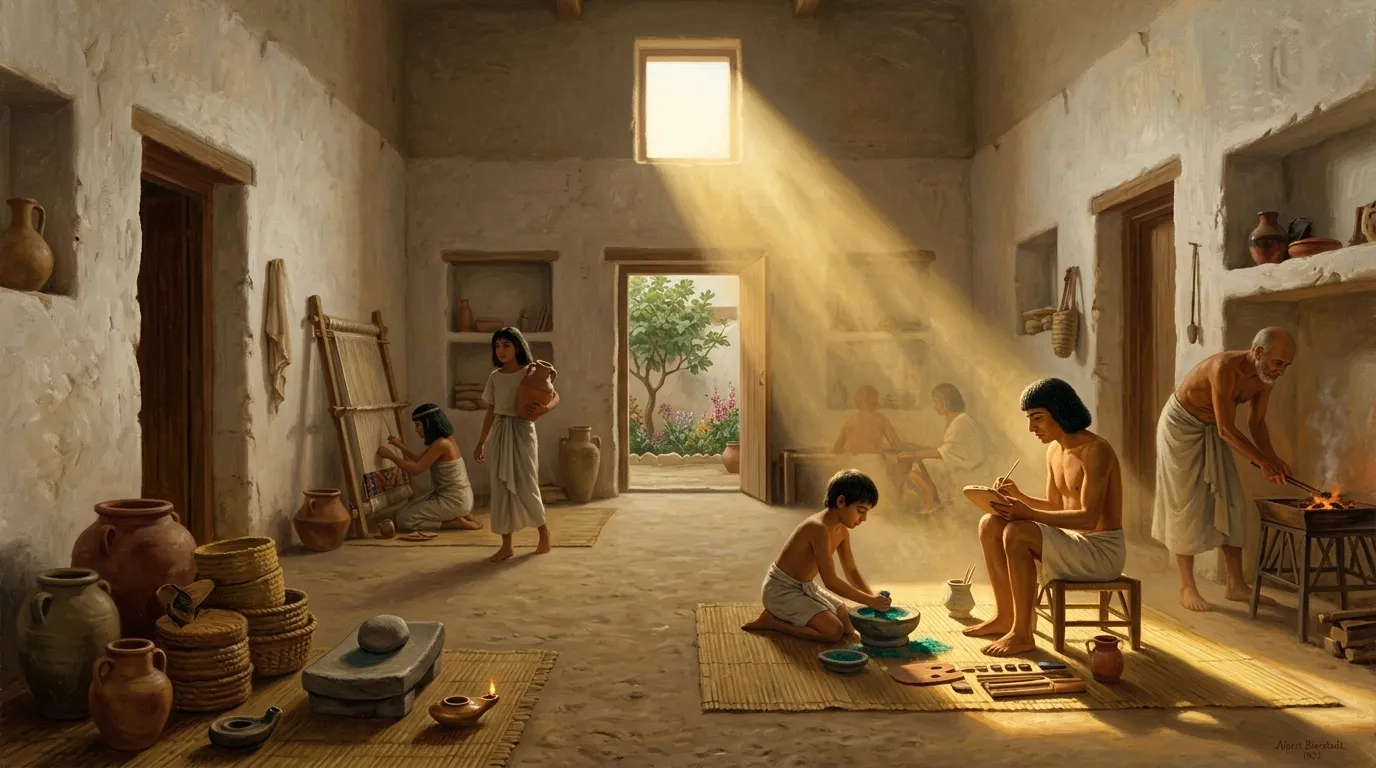
Within the ordered chaos of a scribe’s house in Deir el-Medina, around 1270 BC, Amennakht, the esteemed Scribe of the Tomb, a man in his early fifties with keen, intelligent eyes, sat cross-legged on a low stool. The late morning sun filtered through a high window, illuminating the fine dust motes in the air and highlighting the hieroglyphs he carefully inscribed onto a fresh ostracon. His eldest son, a boy of ten, sat beside him on a reed mat, diligently grinding pigments in a small stone mortar, learning the ancient craft. The rhythmic scrape of the pestle was the only sound, save for the occasional rustle of papyrus. Amennakht was not merely a record-keeper; he was a literate leader, a keeper of knowledge, and often an arbitrator of disputes within the community. His writings, on everything from daily attendance logs to legal documents and religious texts, formed the backbone of the village’s documented life, offering unparalleled insights into their world.
“Each stroke, my son, is a link in a chain of words. These marks shall speak long after our voices fade, bearing witness to the King’s will and our devotion.”
Page 5
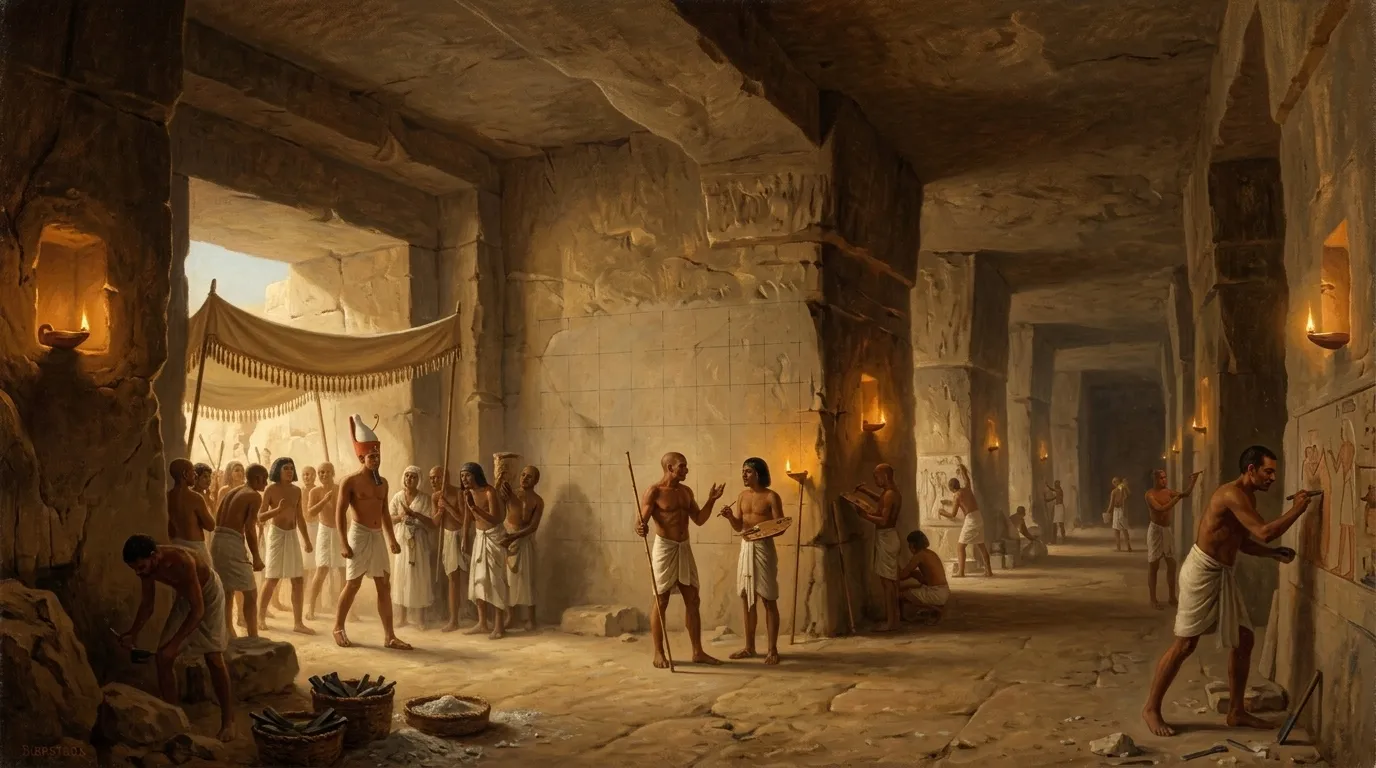
Deep within the cool, meticulously carved chambers of a royal tomb in the Valley of the Kings, around 1250 BC, the air hung heavy with the scent of rock dust and the sharp tang of mineral paints. Neferhotep, the respected Foreman of the Left Side, a powerful man in his late forties, his shoulders broad from years of arduous work, stood amidst a group of craftsmen. He wore a simple, dust-stained kilt, his strong hands, accustomed to the chisel, now held a papyrus plan. With a grave expression, he pointed towards a newly smoothed section of a wall, where a master draughtsman, in his early thirties, was outlining the initial grid for a scene. The constant tapping of mallets and chisels echoed from deeper within the tomb, where other workmen were still extending the galleries. Neferhotep's responsibility was immense: to translate the sacred texts and divine images from papyrus to stone, ensuring perfection and adherence to tradition, guiding the hands that would carve eternity for the King.
“The line must be true, brother. No deviation. The god-king’s journey depends upon the perfection of these images, just as the sun depends on its daily path.”
Page 6
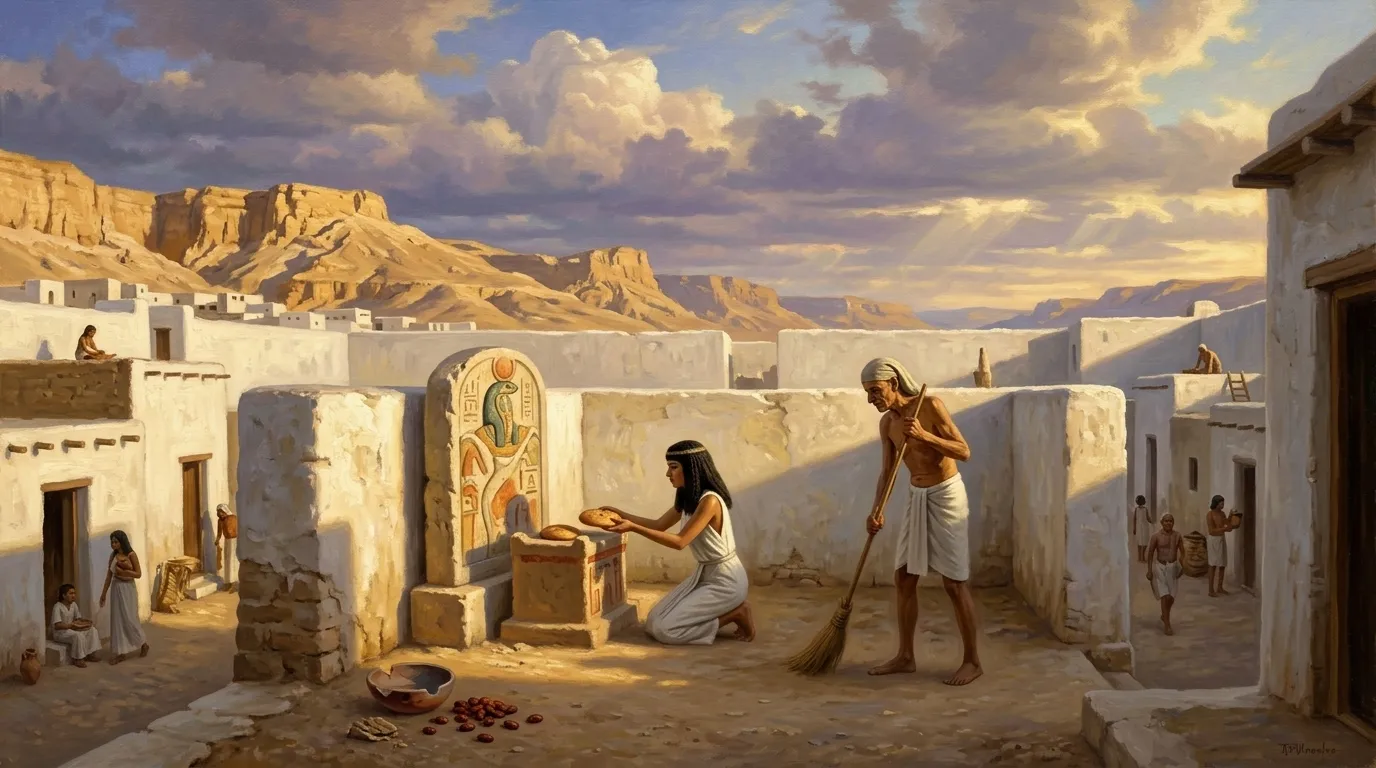
The sun, relentless even in the late afternoon, cast long shadows across the small, public shrine dedicated to Meretseger, 'She Who Loves Silence,' the patron goddess of the Theban necropolis. Within the enclosed courtyard of the Deir el-Medina village, around 1230 BC, a small group of villagers gathered. A woman, mid-thirties, in a simple white linen sheath dress, her hair bound in a dark wig, knelt before a small, carved stela, placing an offering of a small, fresh loaf of bread. Nearby, an older man, perhaps a retired workman, early sixties, frail but with a serene expression, meticulously swept the sandy ground with a palm frond broom. The air was filled with the quiet murmurs of prayer and the dry rustle of the broom. This personal piety, separate from the grand state temples, was a crucial part of life in the village, offering solace and protection from the perceived dangers of their sacred, yet isolated, world. Life here was a constant negotiation between the demanding royal work and the deeply held personal beliefs of its inhabitants.
“Mother Meretseger, protect our hands, guide our sons, and guard the secrets of the West. May our work be true, and our offerings pleasing.”
Page 7
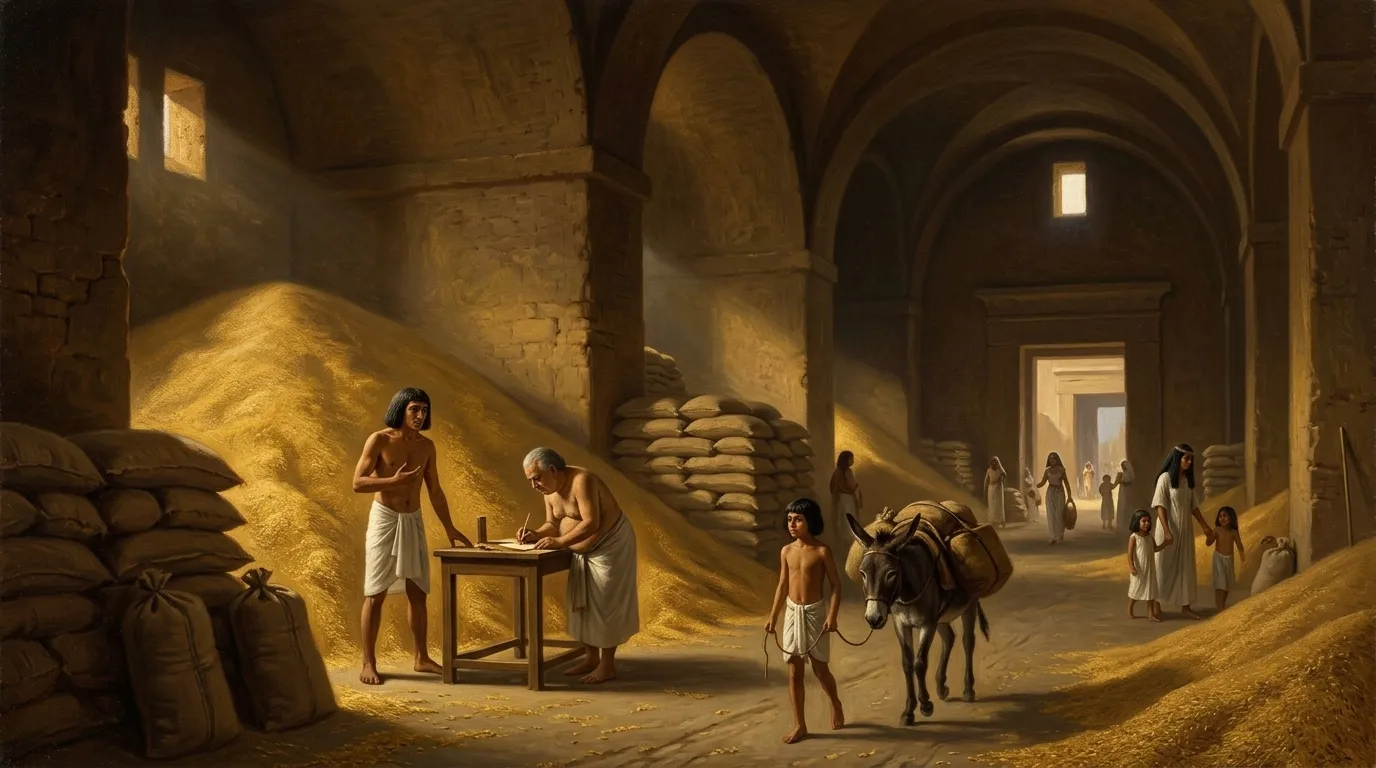
By the reign of Ramesses II, around 1220 BC, the vast enterprise of tomb construction, combined with the king's extensive building programs elsewhere, began to place significant strain on the state’s resources. Within the cavernous royal granary on the East Bank of Thebes, the air was thick with the scent of stored grain and the rustle of sacks. The Vizier, no longer Paser but a new, younger official, Overseer of the Royal Granaries, a man in his late thirties, stood before towering piles of harvested emmer and barley. His face was drawn with worry as he consulted with an older, corpulent scribe, early fifties, who meticulously tallied figures on a wax-covered tablet. The convoys of supplies destined for Deir el-Medina, once abundant and regular, now arrived with increasing delays and diminished quantities. The King's ambitious vision demanded more than the Nile could always provide, and the implications for the isolated workers were dire, foreshadowing a period of escalating hardship and discontent.
“The harvest reports are grim. The allocation for the West Bank artisans is insufficient once more. How long can their hunger be appeased with empty promises?”
Page 8
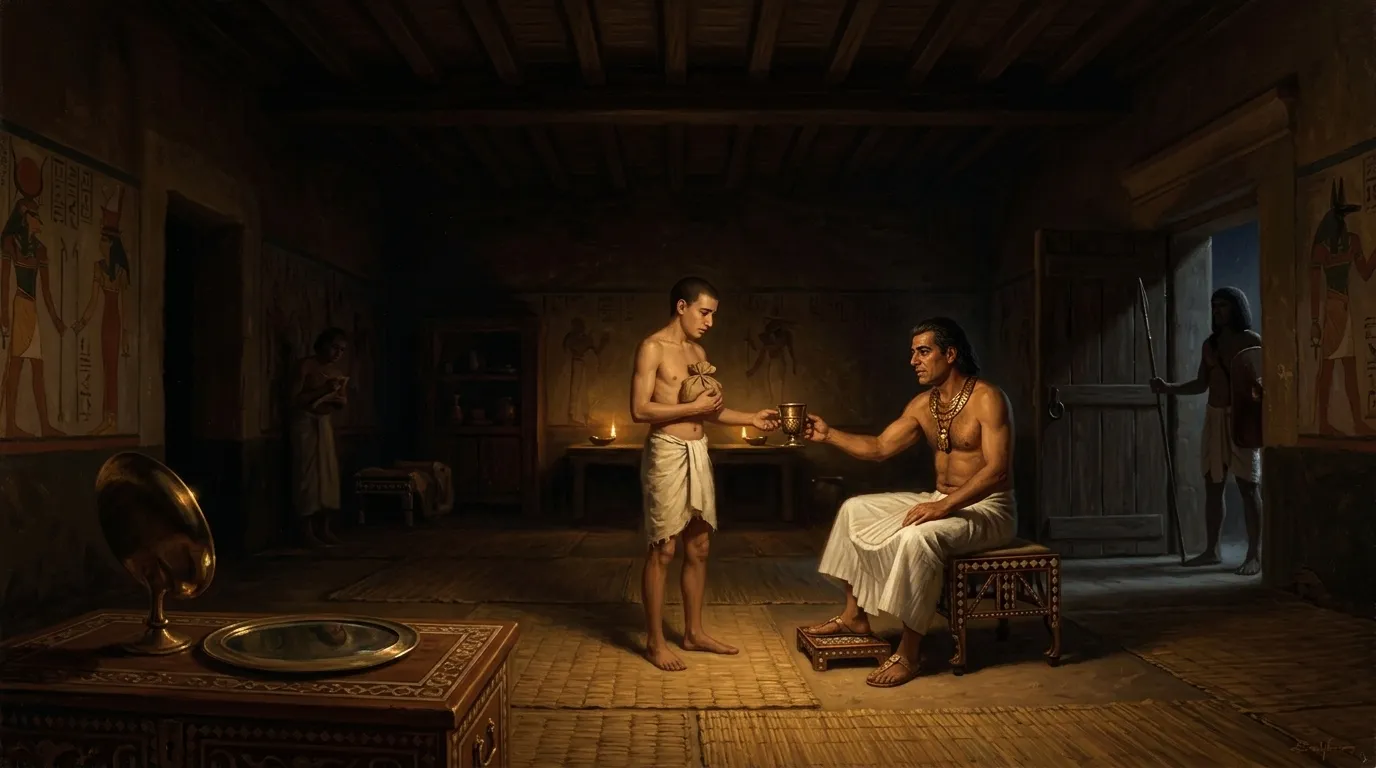
As the 19th Dynasty drew to a close, around 1190 BC, a darker current ran through Deir el-Medina. Within the private residence of Foreman Paneb, a powerful and controversial figure in his late forties, the air was thick with tension, despite the scent of perfumed oils. Paneb, a man of imposing physical presence but with a reputation for unscrupulous ambition, sat at a low table, his fingers toying with a heavy bronze scarab. Across from him, a younger, anxious worker, perhaps a relative or protégé, early twenties, stood nervously, clutching a small, linen-wrapped bundle. The foreman's gaze was piercing, calculating, as he listened to a whispered report concerning a rival. Paneb's ascent to power was marked by accusations of theft, assault, and even tomb desecration, a stark contrast to the integrity expected of a village leader. His presence fostered a climate of fear and internal strife, eroding the trust that once bound the community together, a foreshadowing of the wider corruption plaguing the state.
“So, the elder foreman dares to question my authority? His accusations are but whispers in the wind. Ensure they remain so, or he will find his voice lost in the desert.”
Page 9
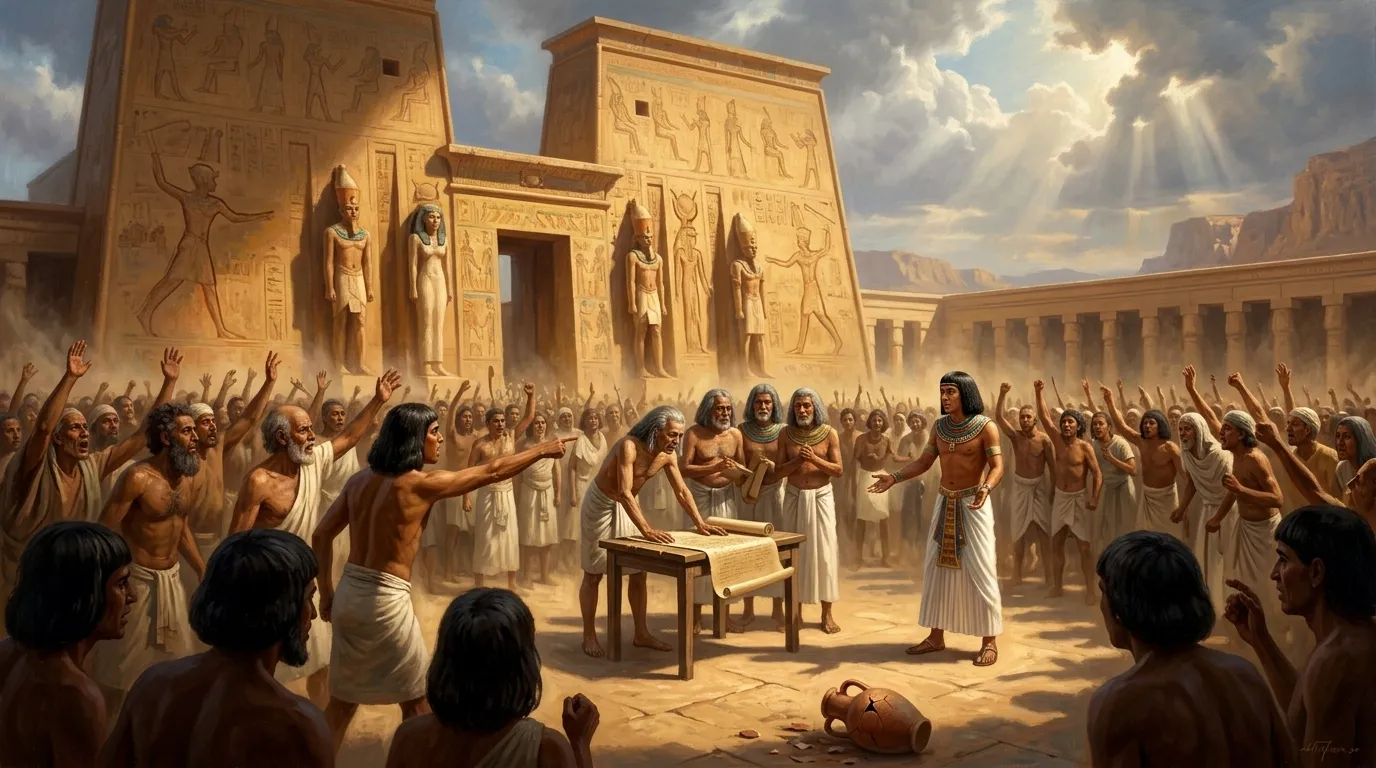
The morning of November 14, 1159 BC, broke not with the usual rhythm of chisels, but with an unprecedented silence from the Valley of the Kings. In the Year 29 of Ramesses III, a pharaoh nearing the end of a long, embattled reign, the 'servants in the Place of Truth' laid down their tools. Across a wide, dusty plaza before the grand mortuary temple of Medinet Habu, hundreds of workers, men and women, dark-haired and sun-baked, gathered, their anger palpable. A group of foremen and scribes, including figures like Qenherkhepeshef, the Scribe of the Tomb, a man in his sixties, stood at the forefront, their voices rising in protest over the lack of provisions and delayed wages. A distraught temple official, pale and sweating, in his fifties, attempted to calm the furious crowd, but his words were drowned out by shouts of 'We are hungry!' This was no mere grumbling; it was the world’s first documented labor strike, a profound moment that laid bare the failing administrative structure of a once-mighty empire.
“Our stomachs are empty, our families starve! No grain has come in days, and our wages are long overdue! We will not carve eternity on an empty belly!”
Page 10
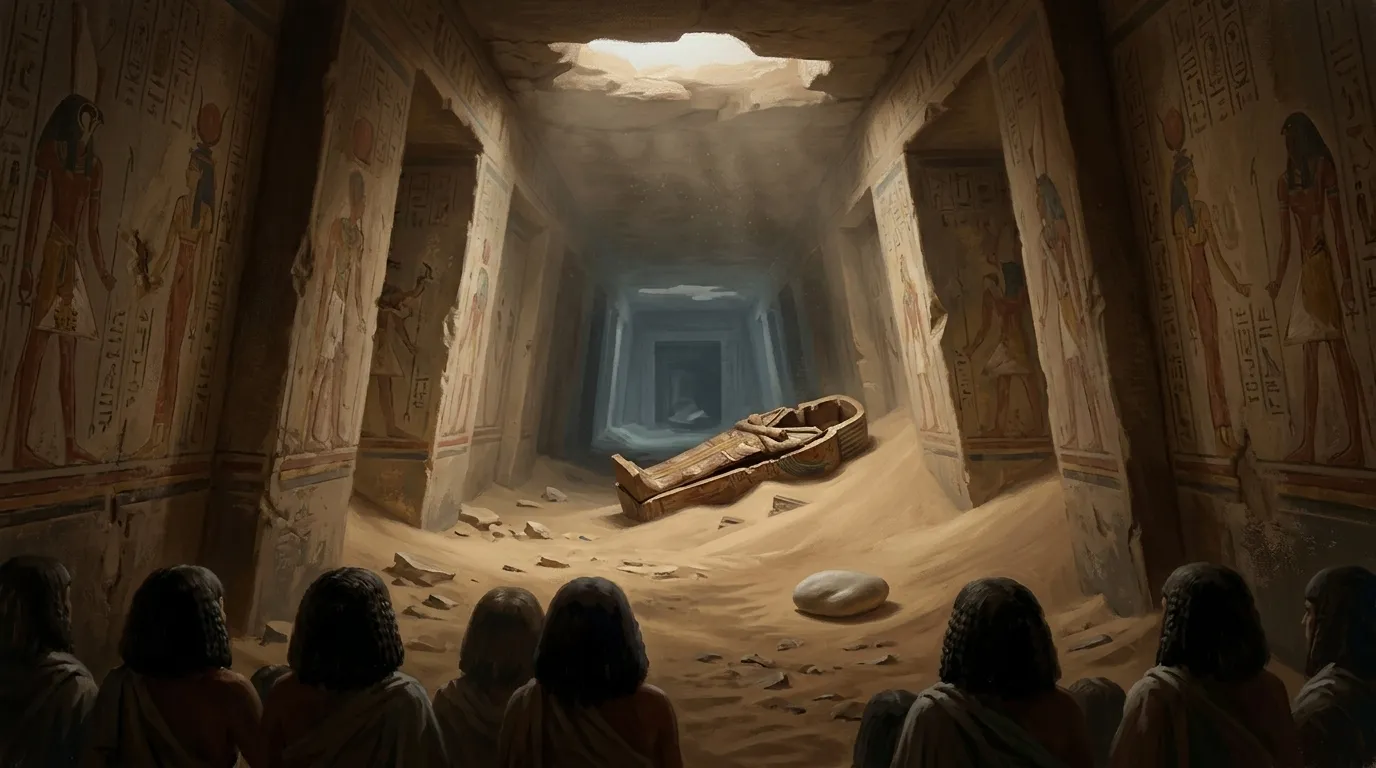
The strike of Ramesses III's reign was a harbinger of decline. By 1070 BC, as the 20th Dynasty faltered and the New Kingdom fragmented, the vibrant life of Deir el-Medina slowly ebbed away. The grand enterprise of royal tomb building ceased, its purpose rendered obsolete by a new era of vulnerable rulers and the widespread looting of the Valley of the Kings. Within a long-abandoned and sand-choked tomb in the Valley of the Queens, the wind whispered through dusty corridors. A single, broken wooden sarcophagus, its painted surface faded and peeling, lay half-buried in drifted sand. The meticulous work of generations of artisans, once considered eternal, now bore the marks of time and neglect. The unique social experiment of Deir el-Medina, with its unparalleled glimpse into ancient Egyptian daily life, had run its course. The 'Place of Truth' became a place of echoes, its legacy not in its continued existence, but in the extraordinary memory it left behind, preserved by the very desert that ultimately claimed it.
About this story
- Audience: general readers
Questions and answers
Questions and answers about Deir el-Medina: The Village of the Tomb Builders
Read Wonder Egypt on your phone
Wonder Egypt is available on Android. Get Wonder Egypt on Google Play.