The Trial
An ordinary man, an unknown accusation, and the crushing weight of an unseen court
Page 1
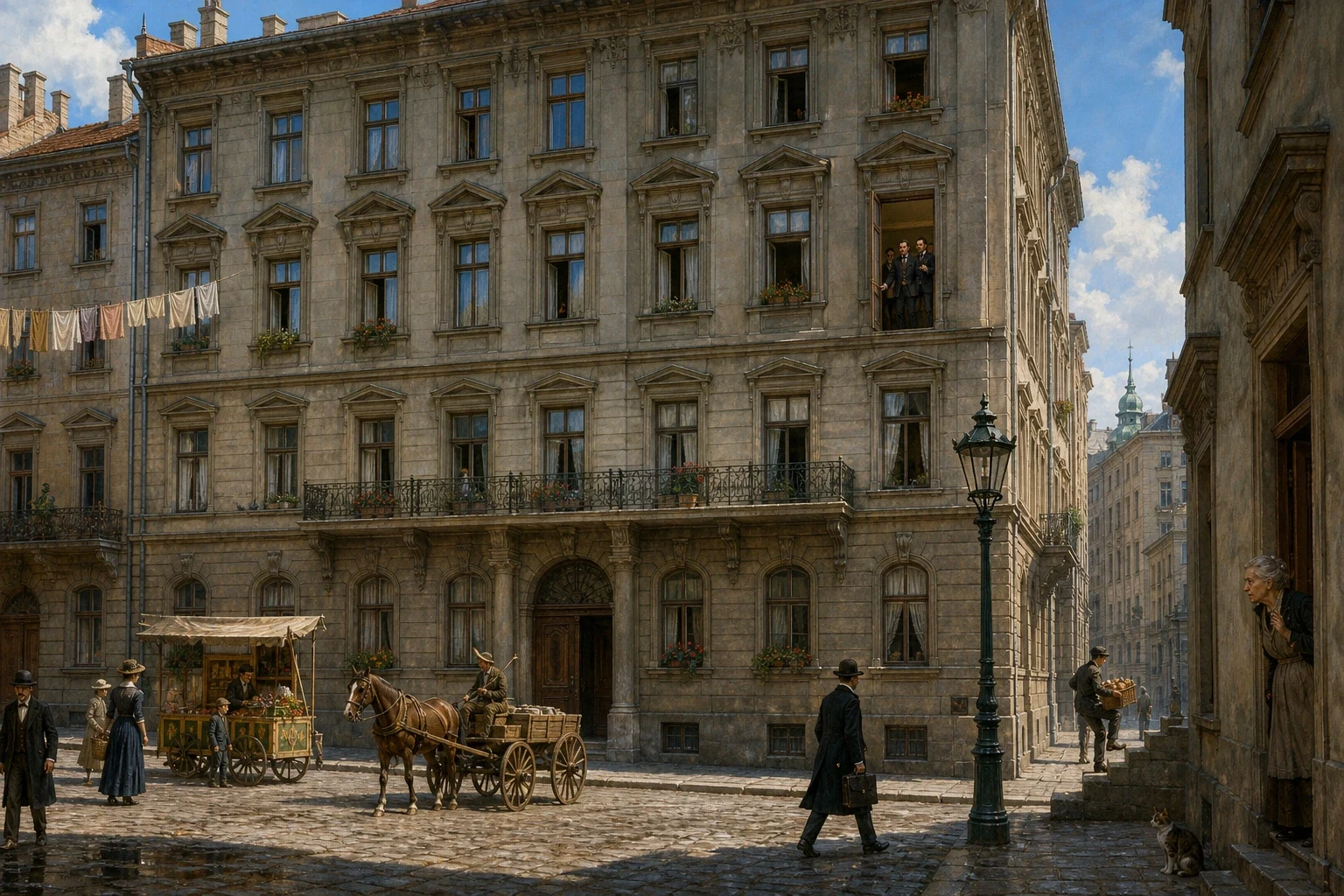
On his thirtieth birthday, Josef K., a chief clerk at a bank, awoke to an unexpected disturbance. He anticipated his housekeeper, Mrs. Grubach, to bring his breakfast, but instead, a stranger stood in his doorway. This man, Willem, announced to a bewildered K. that he was under arrest. Another man, Franz, waited nearby, equally uncommunicative. K. was stunned and demanded to know the charge, but they offered no explanation. Despite the declaration, they told him he was free to go to work and continue his life, though always under arrest. From his window, K. could see the bustling city life continuing as normal, entirely unaware of the strange, silent drama unfolding within his building’s walls. The court, it seemed, was everywhere and nowhere, its reach invisible yet undeniable.
Page 2
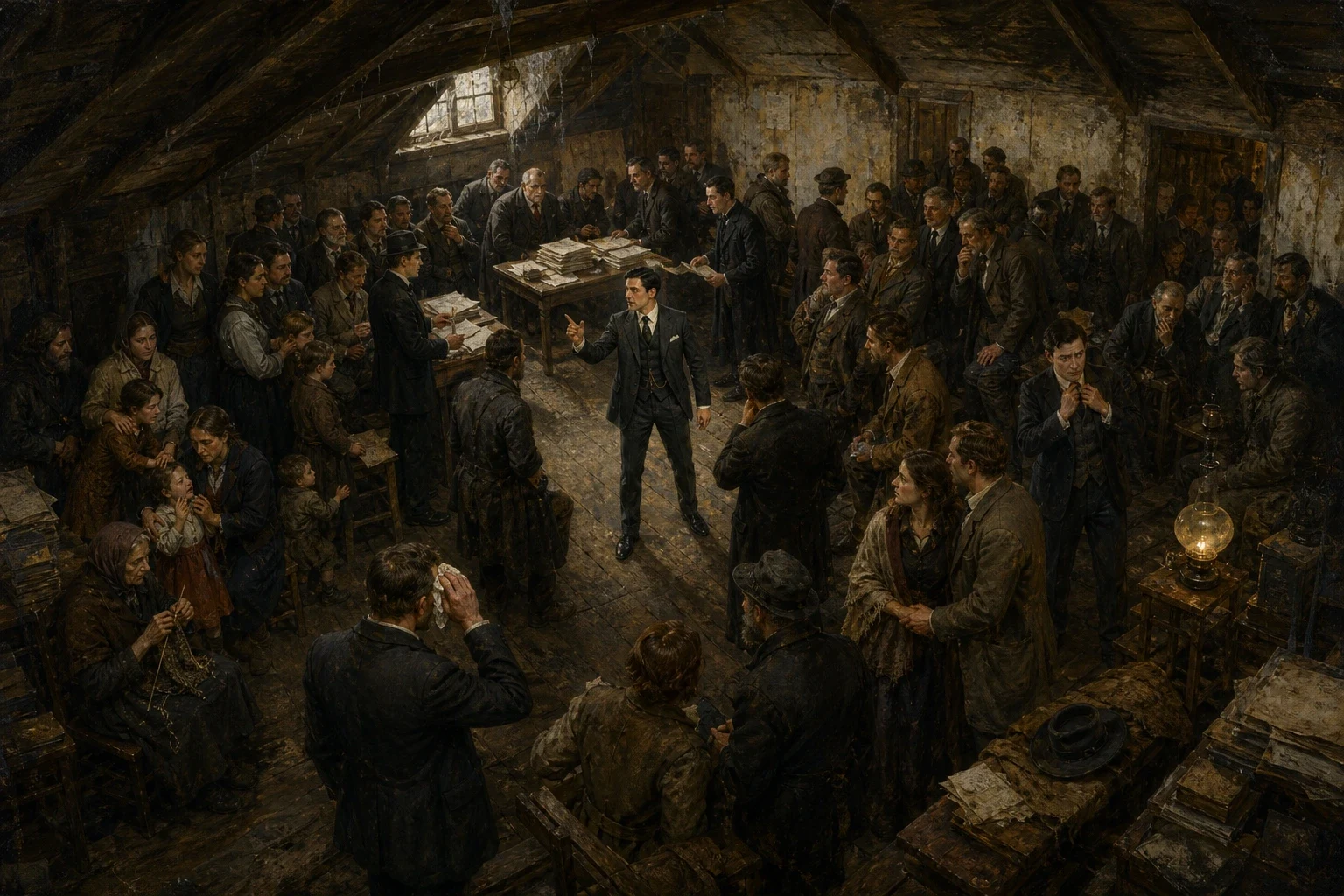
K. was instructed to attend his first inquiry the following Sunday. He arrived at a dingy, crowded tenement building in a poorer district of the city. He ascended many flights of creaking stairs, past crying children, cooking smells, and lines of laundry, until he found the court in a low-ceilinged attic room. It was packed with people, all eyes fixed on him. A judge sat at a small, rickety table. K. spoke forcefully, his voice ringing with indignation, declaring his absolute innocence and demanding justice. He scorned the court's secrecy and its absurd, baseless accusations. His impassioned words seemed to stir the crowded room, but the judge merely listened, his expression unreadable, his silence a heavy counterpoint to K.'s assertions. K. left feeling a fleeting sense of triumph, but also a profound unease at the court's bizarre operation.
Page 3
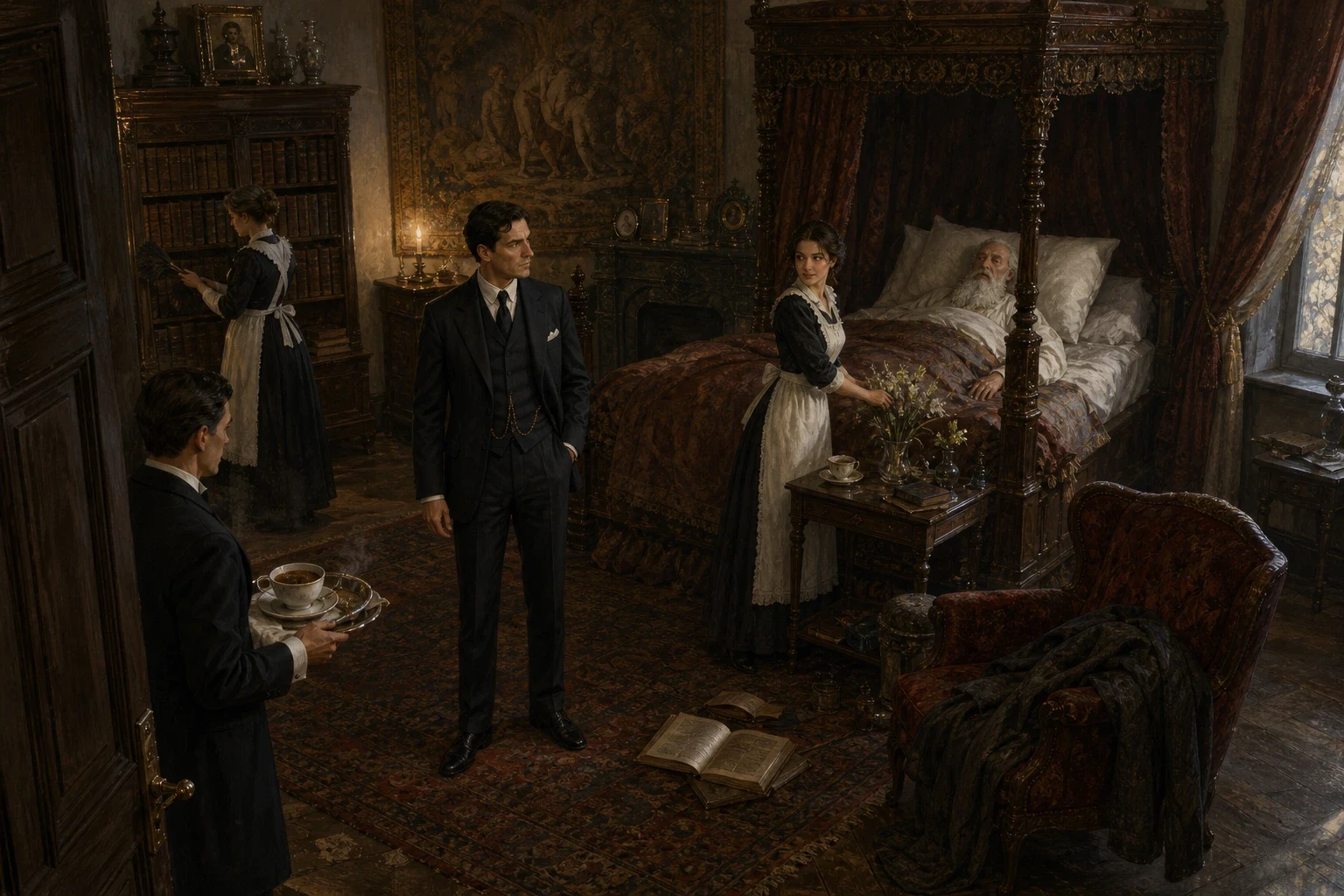
Weeks later, K.'s uncle, a worried landowner, arrived in the city, having heard disturbing rumors of K.'s trial. Convinced K. needed proper representation, he insisted on taking him to Advocate Huld, a lawyer known for his court connections, despite Huld's ailing health. They found Huld in his dimly lit bedroom, a sick, old man with a long, unkempt white beard, confined to his bed. Huld spoke in hushed, circuitous tones of the court’s bewildering, glacially slow process, its hidden rules, and its endless, exhausting delays. He suggested that a good advocate could only influence minor procedural details, as the main proceedings often remained frustratingly beyond reach. Huld’s young maid, Leni, a pale woman with dark, expressive eyes, moved quietly through the room, occasionally catching K.'s eye and offering him subtle, comforting gestures.
Page 4
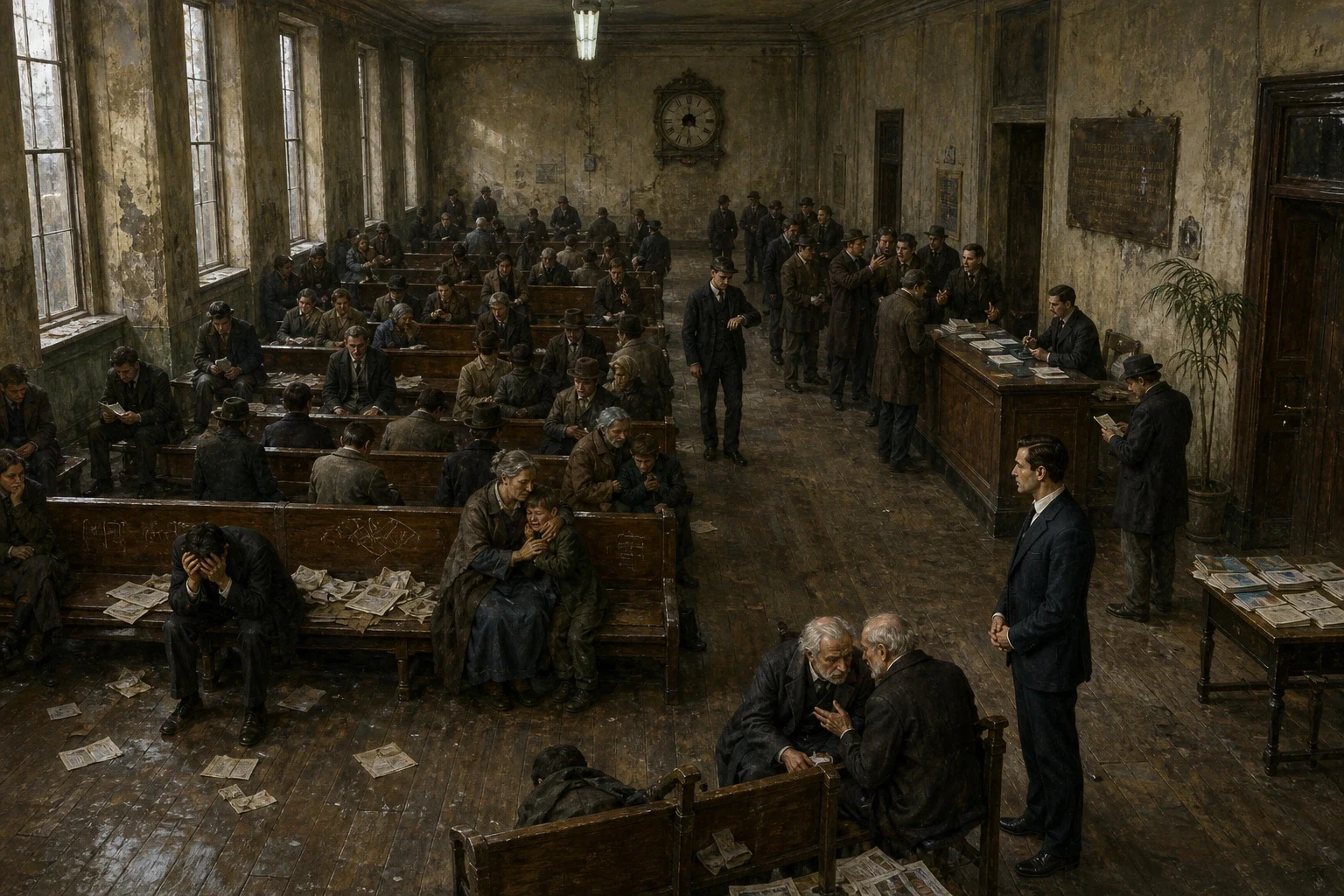
Growing increasingly impatient with Advocate Huld's lack of tangible progress, K. decided to investigate the court offices himself. He found them within a vast, labyrinthine administrative building, even more confusing and oppressive than the tenement court. The waiting rooms were packed with petitioners, all accused, all trapped in various stages of the court's slow grind, their faces etched with deep despair and exhaustion. The air was heavy, stale, and stifling, thick with unfulfilled hope and prolonged anxiety. K. saw men who had spent years, even decades, caught in the court's embrace, their lives entirely consumed by the endless, unfathomable process. He heard hushed whispers of corruption, of minor officials exploiting the desperate accused. The sheer bureaucracy and the profound hopelessness of the other men filled K. with a growing sense of dread, confirming the pervasive, invisible weight of the court's power.
Page 5
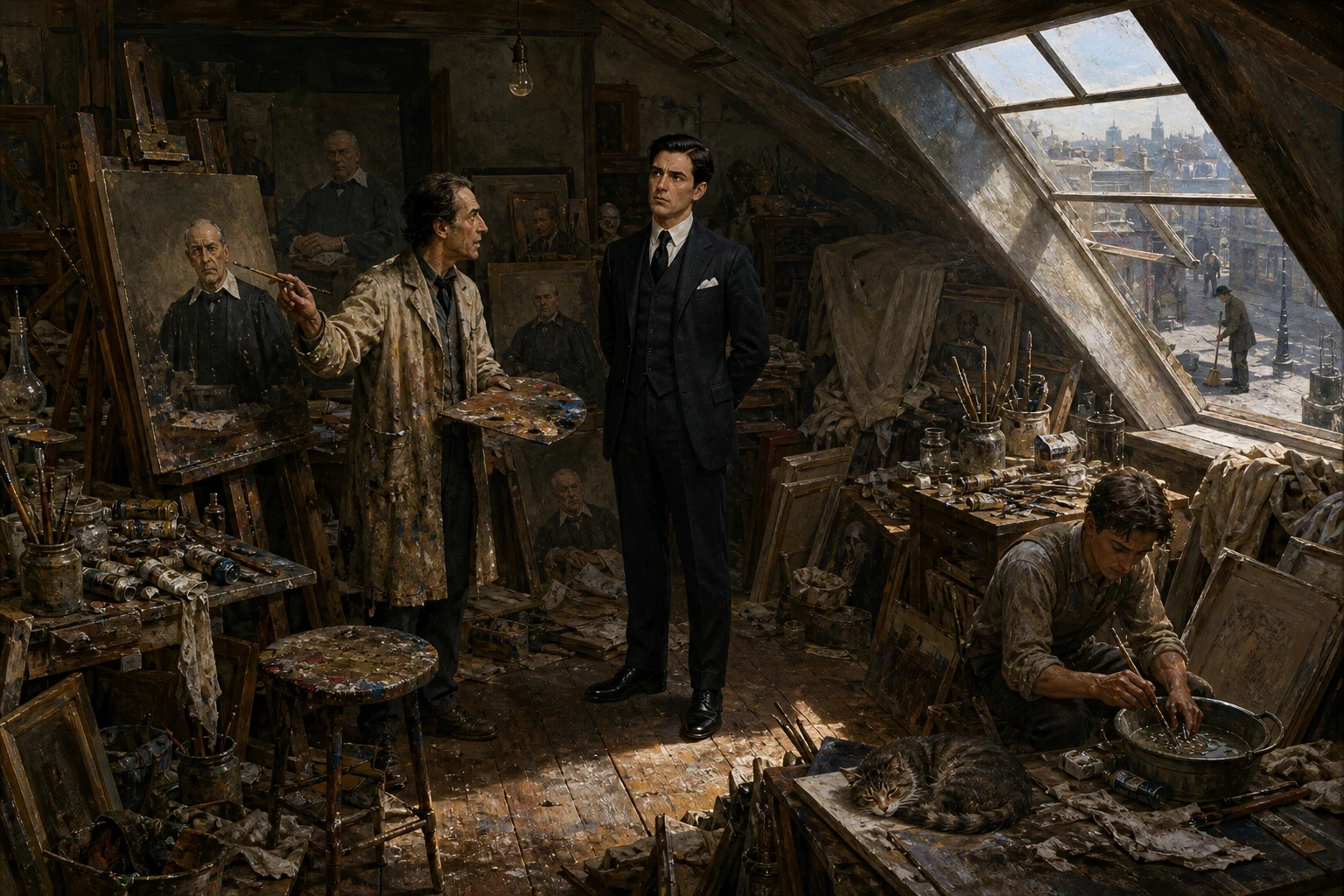
Frustrated by the futility of Advocate Huld's efforts, K. eventually dismissed him. Following a suggestion from a manufacturer, K. sought out a court painter named Titorelli, who lived in a cramped, stifling attic studio high above the very court offices K. had visited. Titorelli, a small, sickly man, earned his living by painting portraits of judges. In his stuffy garret, heavy with the smell of oil paint, he explained to K. the grim reality of the court: true, final acquittal was impossible. Instead, there were only two kinds of temporary release—'ostensible acquittal,' which could be revoked at any moment, and 'procrastination,' which simply meant the case was kept endlessly pending but never resolved. The court, Titorelli insisted, was a vast, unknowable entity, utterly beyond any human's power to genuinely influence or defeat.
Page 6
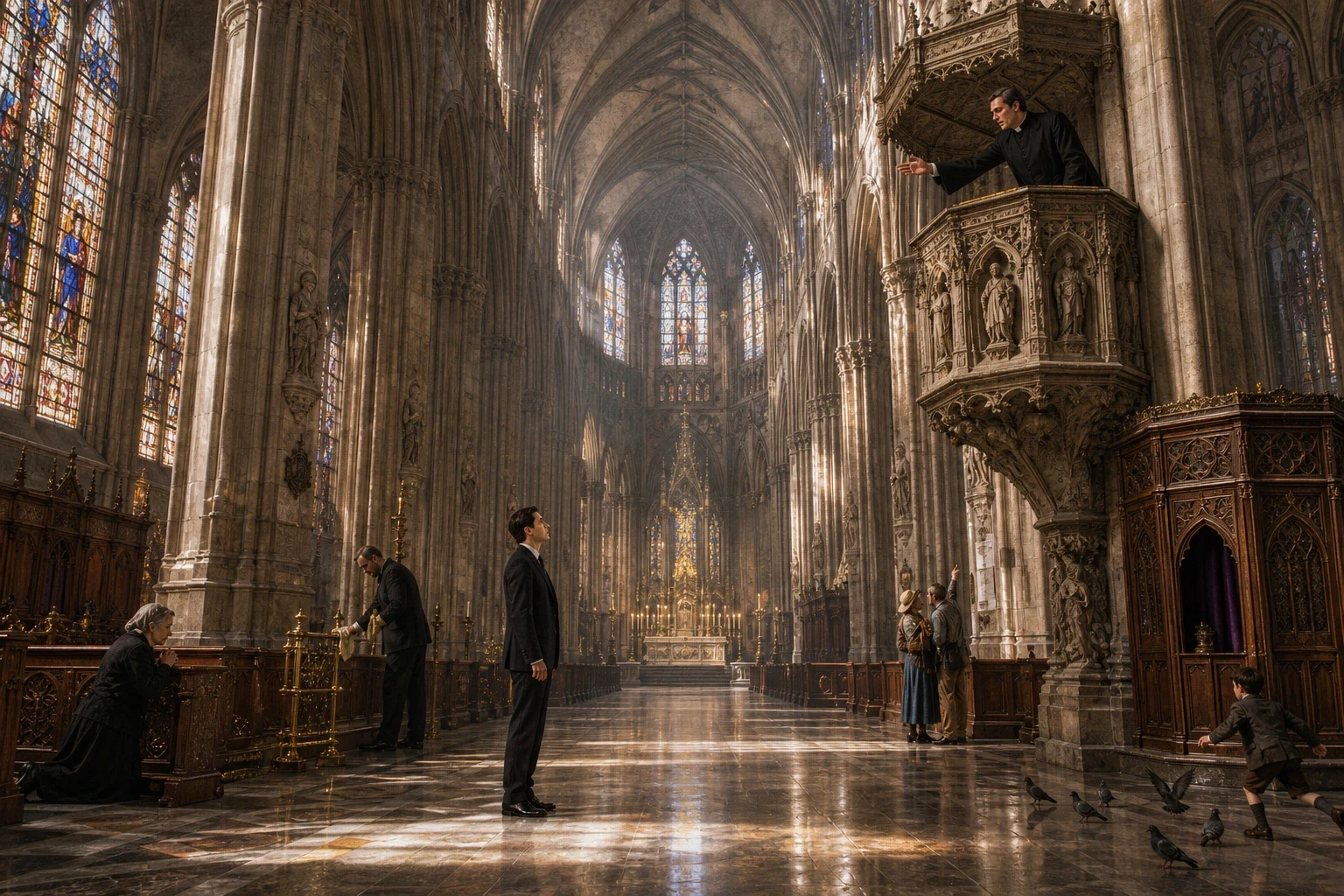
One day, K.'s bank manager (the manufacturer) strongly urged him to consider finding a different, more effective advocate, implying Huld was not serving him well. Soon after, K. was asked by his bank to accompany an important Italian client on a tour of the city's grand cathedral. When the client failed to appear, K. found himself alone in the vast, echoing nave, the space lit by the ethereal colors filtering through the magnificent stained-glass windows. As he wandered, deep in thought, he noticed a priest climbing into the pulpit. To K.'s utter surprise, the priest called out K.'s name, accusing him of being an 'accused man.' It was the prison chaplain, a tall, gaunt man in a dark cassock, who revealed he knew of K.'s case through his connections with the court.
Page 7
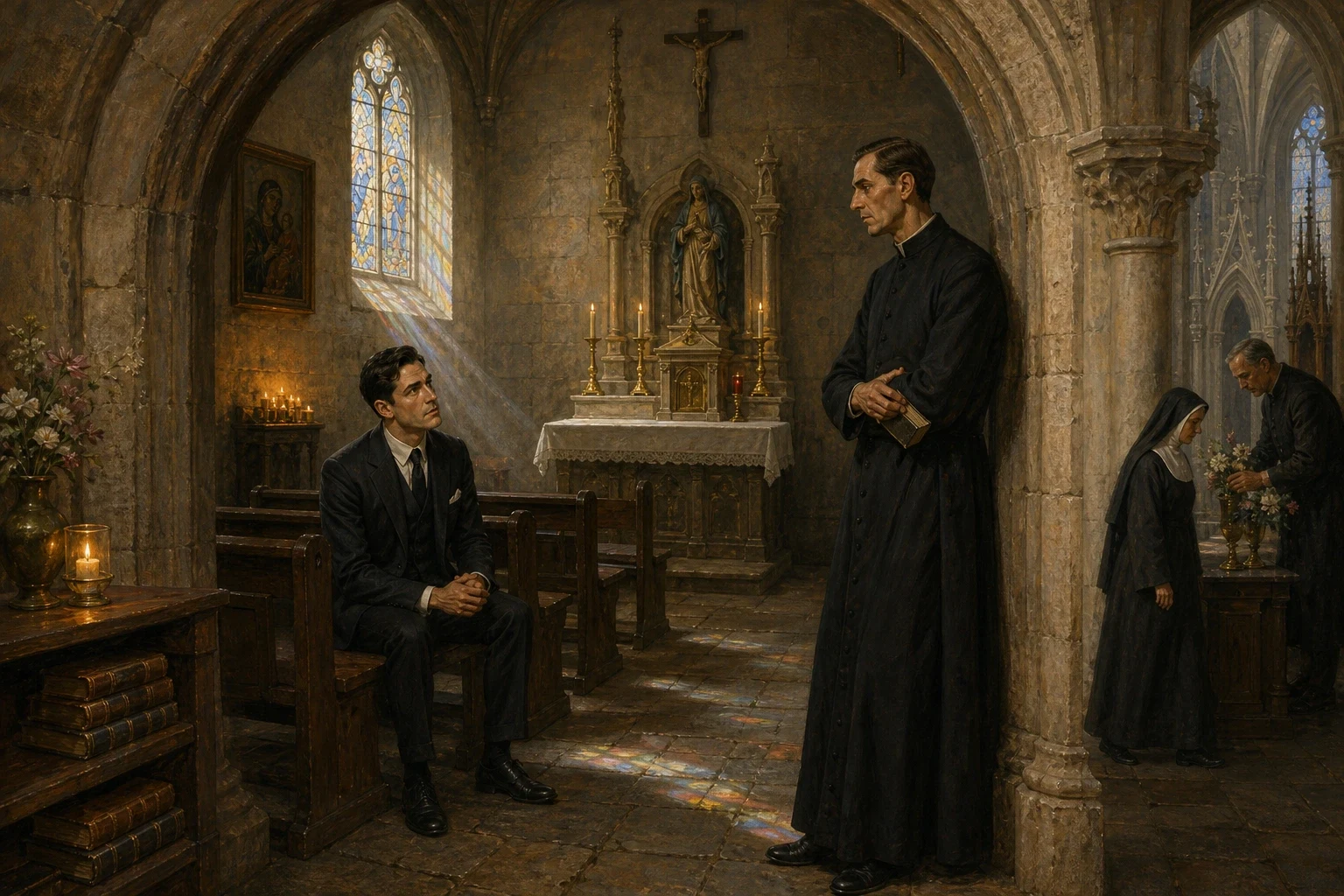
The chaplain, who was also the court's priest, led K. away from the grand nave into a quiet, more intimate side chapel within the cathedral. There, surrounded by the hushed reverence of the smaller space, the priest told K. the haunting parable 'Before the Law.' It recounted the story of a man who sought to enter the Law, but was perpetually blocked by a stern doorkeeper, always promising entry at a later time. The man waited for years, growing old and weak, only to be told on his deathbed that the gate had been meant solely for him, and now it would close forever. The priest then offered various, often contradictory, interpretations of the parable, which only served to deepen K.'s confusion. The Law, K. realized, remained distant, unknowable, and ultimately, forever just out of reach, its true nature an eternal mystery.
Page 8
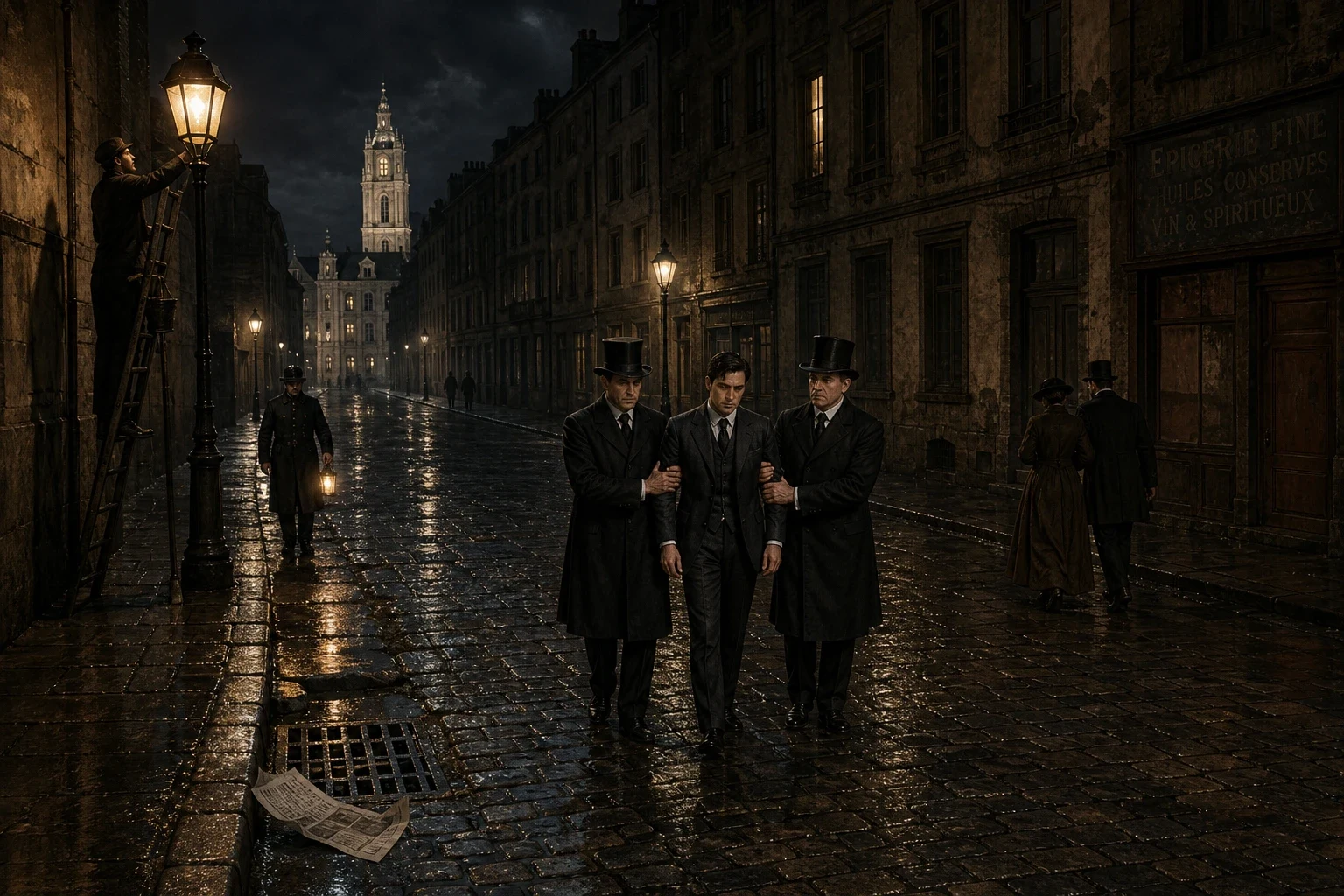
The evening before his thirty-first birthday, two men arrived at K.'s apartment. They were plump, clean-shaven, and dressed in formal black coats and top hats, their manners polite but chillingly firm. K. offered no resistance; he understood, with a dull certainty, why they were there. They led him out of his apartment building and into the dark, cobbled streets of the city. It was late, and few people were about, the city hushed and indifferent. K. walked between them, feeling a strange, heavy calm, a profound sense of resignation settling over him. He wondered fleetingly if he should have struggled, if there was some crucial step he had missed, some loophole he had failed to find. But the men held him by the arms, guiding him inexorably through the quiet, impersonal streets, away from his familiar world and towards an unknown destination.
Page 9
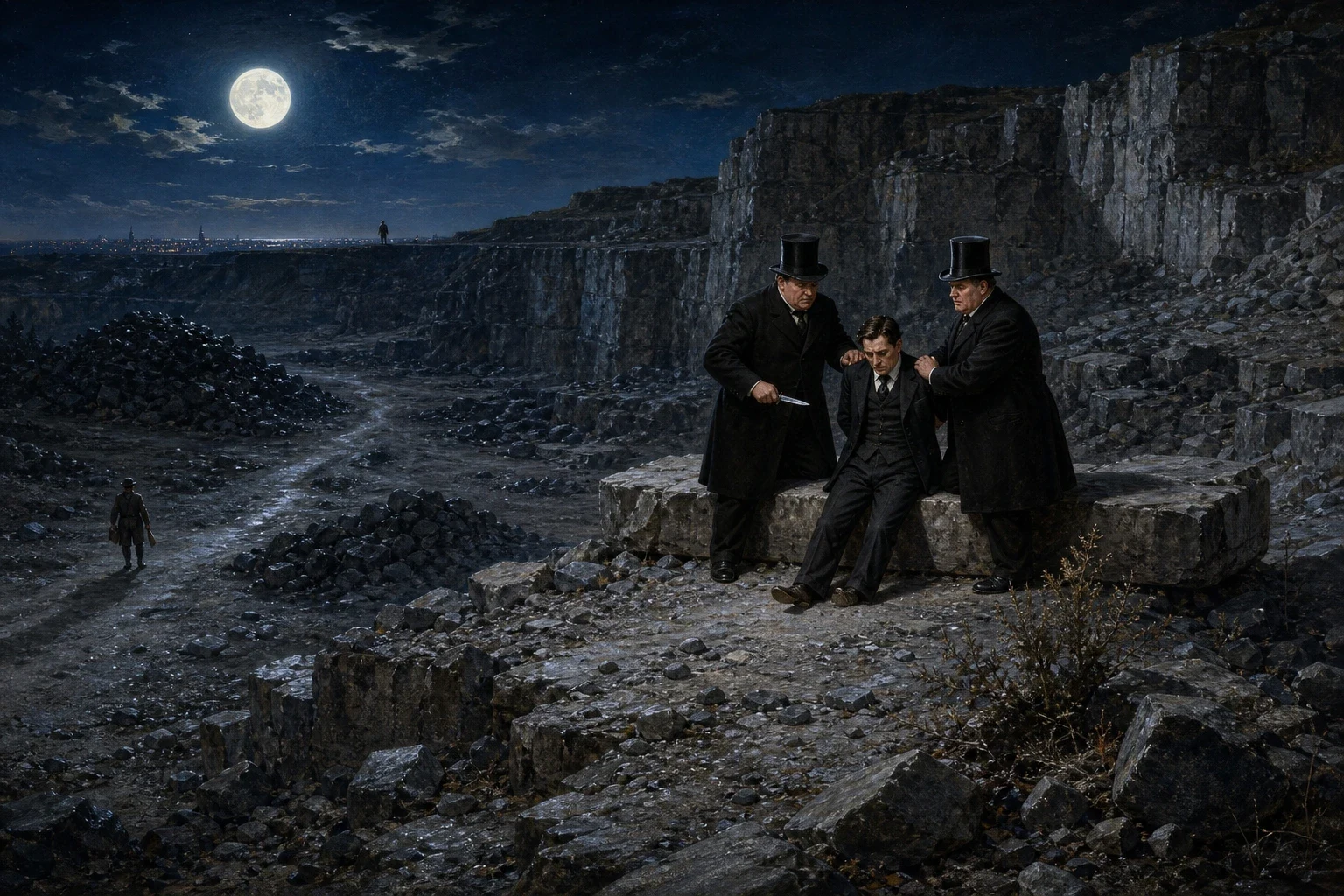
The two men led K. out of the city, to a desolate stone quarry on the lonely outskirts. It was a small, almost empty quarry, with rough-hewn stones scattered about under the cold moonlight. They placed K. against a large, flat stone, a natural altar for the grim ceremony. He looked up at the moon, which seemed to watch impassively, and thought of his mother, and of the profound shame he felt. The men held him down. One of them produced a butcher's knife. K. felt his life draining away, unable to resist, feeling like a burden to himself, a stranger in his own body. He wished, in that final moment, for someone to save him, for some unforeseen help to appear, but saw only the indifferent world. He died there, feeling a great, overwhelming wave of shame wash over him.
Page 10

His last thought, clear and sharp in the fading consciousness, was "Like a dog!" The two men, having completed their grim task in the quarry, silently turned and left the desolate place. The city lights twinkled in the distance, a myriad of indifferent pinpricks against the dark horizon, entirely unaware of the life that had just ended so brutally in its shadow. Josef K. was gone, but the court, unseen and unyielding, remained. Its pervasive power, its impenetrable mystery, its crushing weight on individuals, continued without pause, an eternal, indifferent force. The hill overlooked the silent city, which would continue its daily routines, its bustling life, entirely oblivious to the quiet, terrible judgment that had just been carried out. The trial, for K., was definitively over, but the Law itself stood eternal.
About this story
- Audience: general readers
Read Wonder Novels on your phone
Wonder Novels is available on Android. Get Wonder Novels on Google Play.