The Bell of Atri
A bell of justice hanging over an Italian hill town, and the old horse who rang it for himself
Page 1
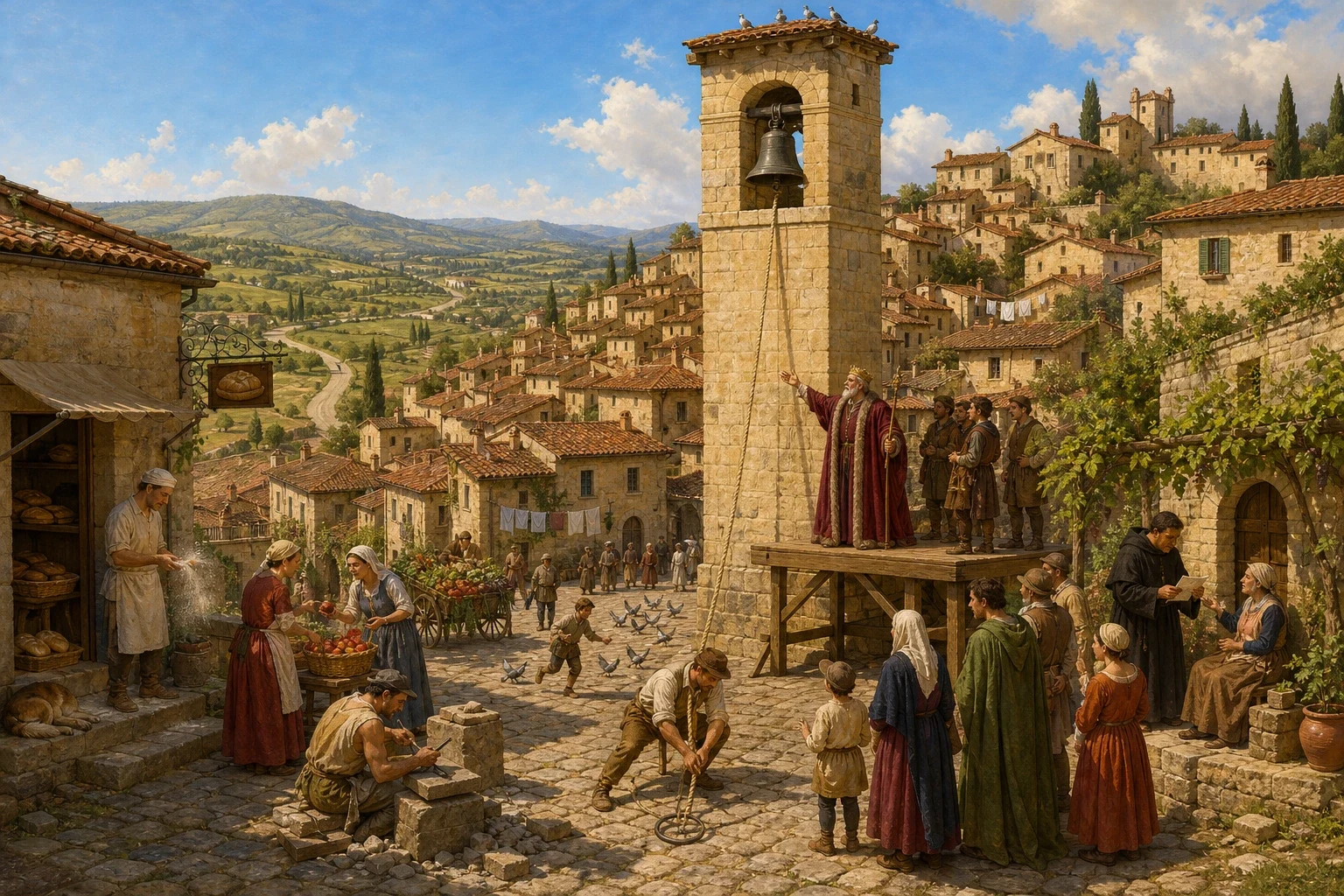
Long ago, in the hill country of Italy, there stood a little town called Atri. It had stone walls, red-tiled roofs, and a tall bell tower rising over the marketplace in the very middle of it. The king of that land believed that justice should be easy to ask for — that a poor farmer should be able to ask for it as easily as a rich lord, and a child as easily as a grown man. So he gave an order: a great bell should be hung in the tower, and a long rope should hang down from it, all the way to the ground, so that the smallest child in Atri could reach it and ring it. Whoever rang that bell would bring the judges running, and the judges would hear the case and set it right, whatever it was. The townspeople called it the Bell of Justice, and they hung it with great ceremony, and for many, many years it served them well.
Page 2
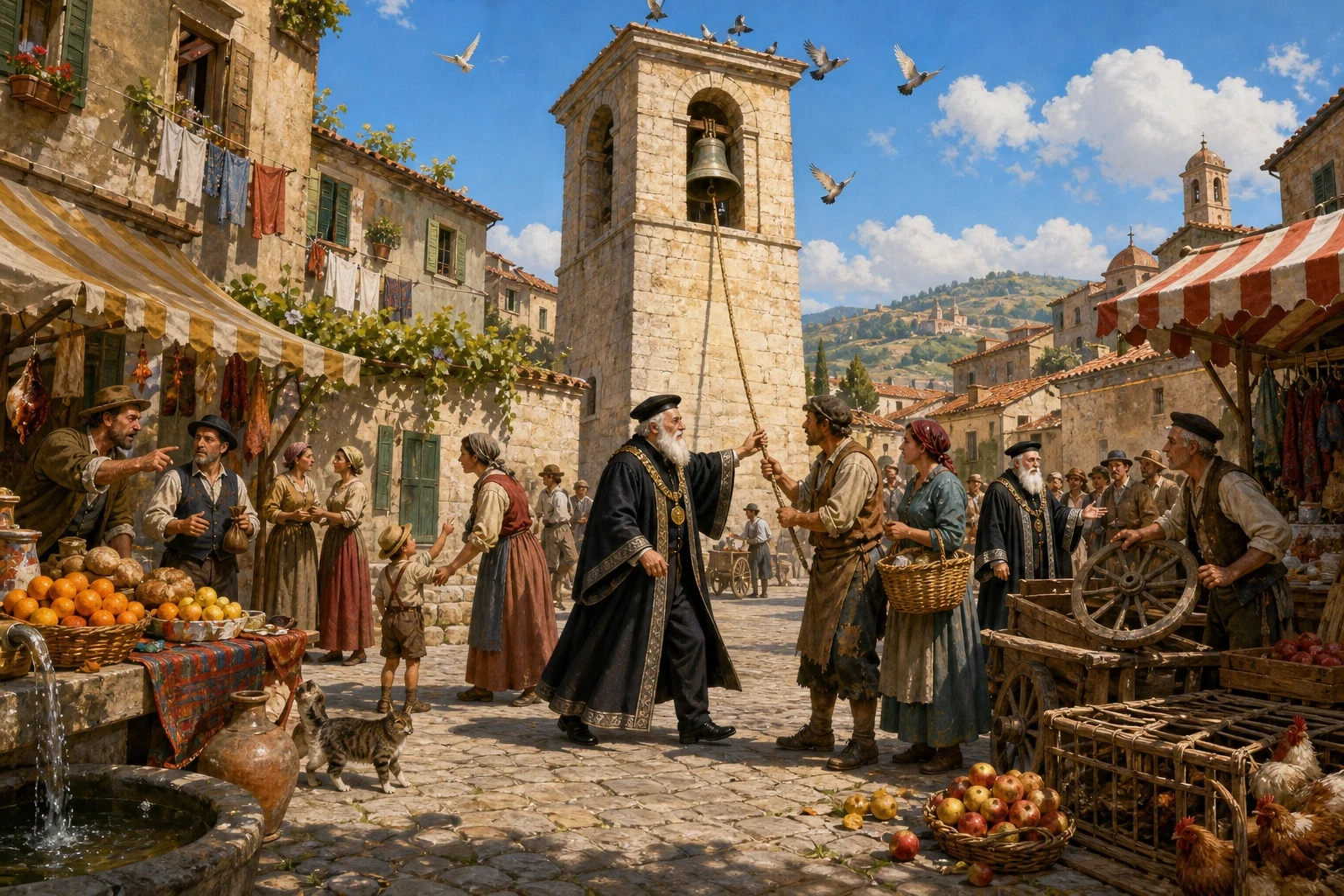
Year after year, the bell did exactly what the king had hoped. If a merchant cheated a farmer, the farmer rang the bell. If two neighbors quarreled over a wall or a field, whichever one felt wronged rang the bell. Even children rang it, for small things and for large ones, and no one ever laughed at them for it. Every single time, the moment the bell rang out over the rooftops, the judges of Atri dropped whatever they were doing and hurried to the marketplace to hear the case, and they always gave a fair answer, whether the person who rang it was rich or poor. In time the people of Atri grew so used to the bell's fairness that they hardly thought about it at all — it simply hung there above the market stalls, ready, the way the sun was ready to rise each morning.
Page 3
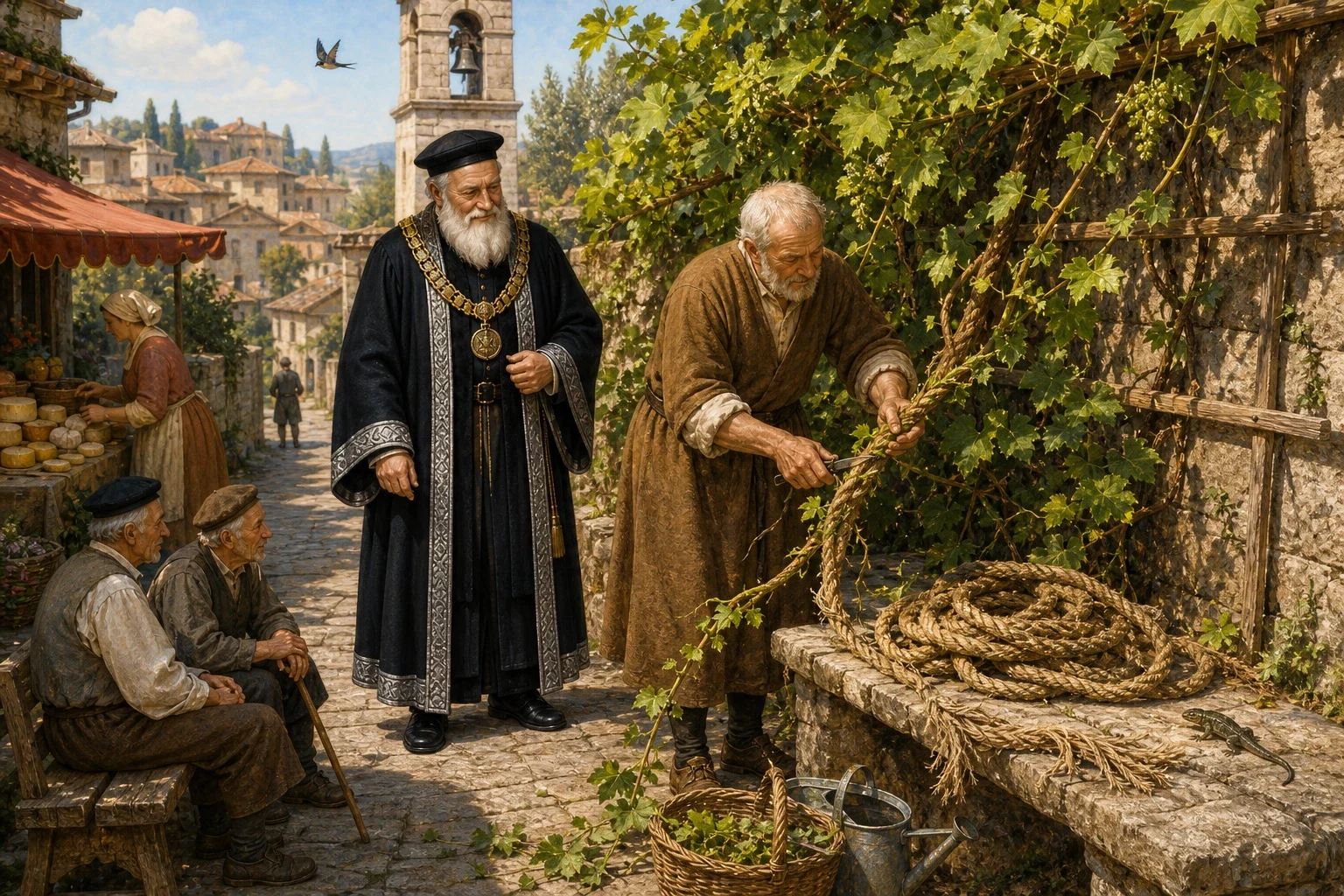
After so many years of ringing, the bell's rope wore thin. Strand by strand the old hemp frayed, until one day it finally snapped, a good two feet short of the bell itself. No one in Atri thought this was much of a problem — the bell had done its work so well, and so fairly, for so long, that the people had almost stopped needing it. Rather than ordering fine new rope all the way from the next town, the sexton who looked after the tower did the simplest thing he could think of: he cut a long, leafy tendril from the thick old grapevine that grew up the garden wall beside the tower, and he twisted it in among what was left of the hemp rope, tying the two together until the vine hung down low enough to reach the ground again. It was not a very dignified repair. But it held, and that was what mattered — for now.
Page 4
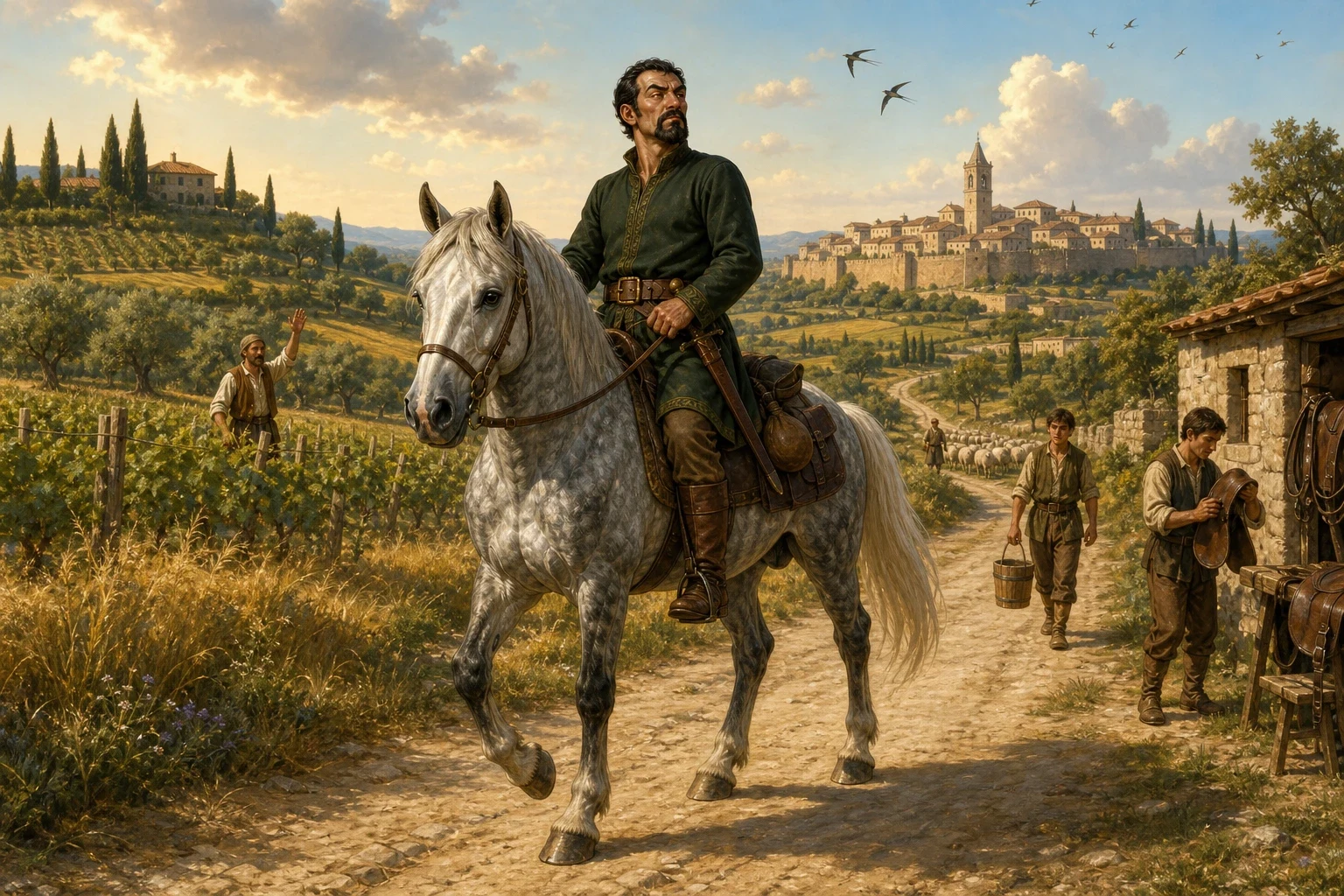
Years before any of this, long before the rope ever wore thin, there lived in the countryside near Atri a horse — a handsome dapple-grey with a long pale mane and a white blaze down his face — who belonged to a soldier. In his young days that horse had carried his master many long miles, through many a hard campaign, and had always brought him home safely in the end, tired but unharmed. The soldier used to say, half in joking and half in earnest, that he owed his life to that horse more than once over, for a horse that will not panic and will not stumble, even when the road is long and the going is rough, is worth more than gold. In those days the horse was fed well, brushed every morning, and given the best stall in the stable, and he carried his master proudly, as if he knew exactly how much he was needed.
Page 5
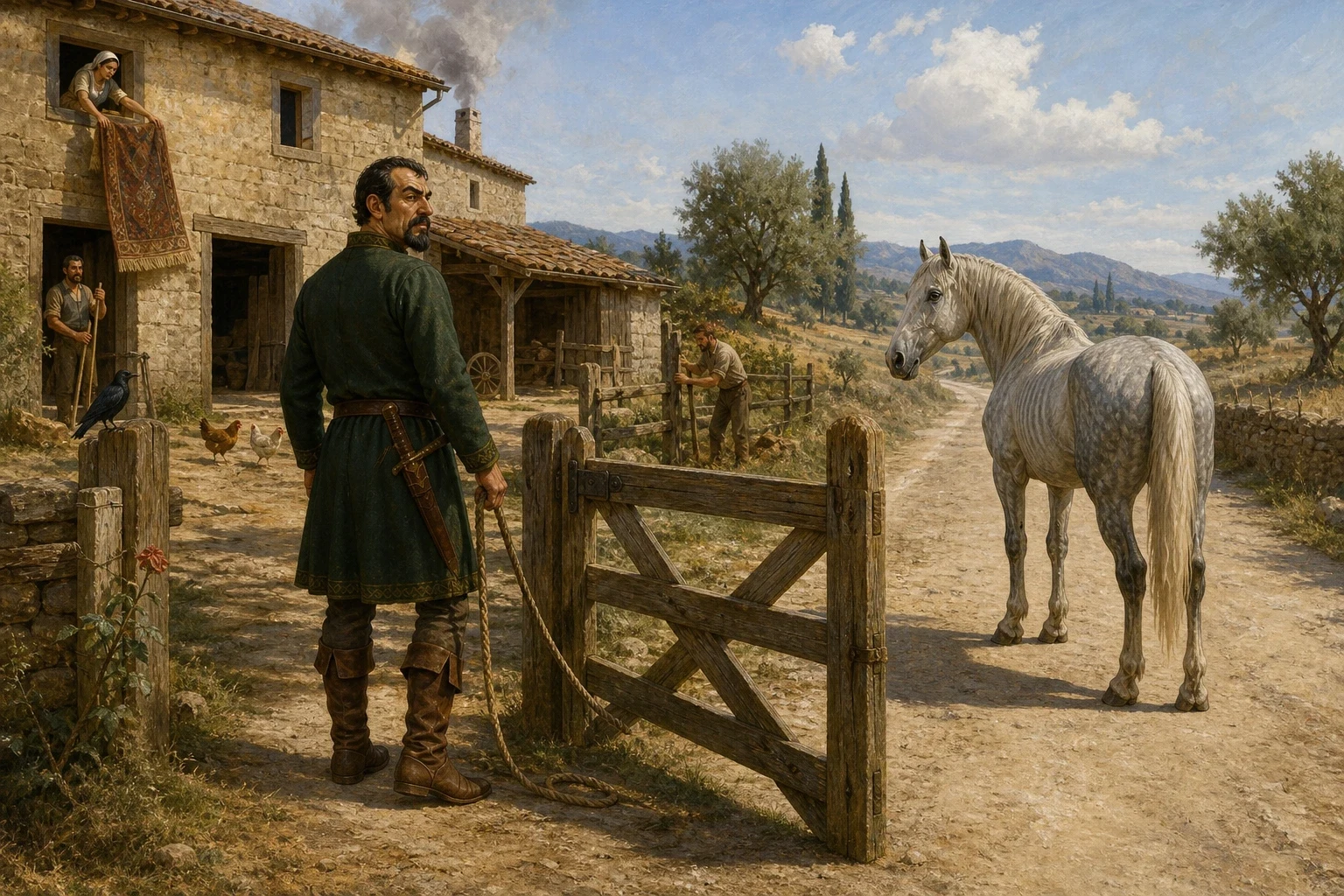
But years passed, as years do, and the horse grew old. His back sagged a little, his coat lost its shine, his legs grew stiff, and at last he could not be ridden very far at all. He could no longer carry his master anywhere, and he could no longer earn his keep, and his master — who had once called him the best horse in Italy — began to see him only as a mouth that needed feeding for nothing in return. One morning, without much ceremony, the master led the old horse out to the farmyard gate, slipped off his halter, and simply let him go. "Find your own grass from now on," the master said, not unkindly exactly, but not kindly either, and he turned and went back to his work, leaving the old horse standing alone at the open gate, blinking at the empty road ahead of him.
Page 6
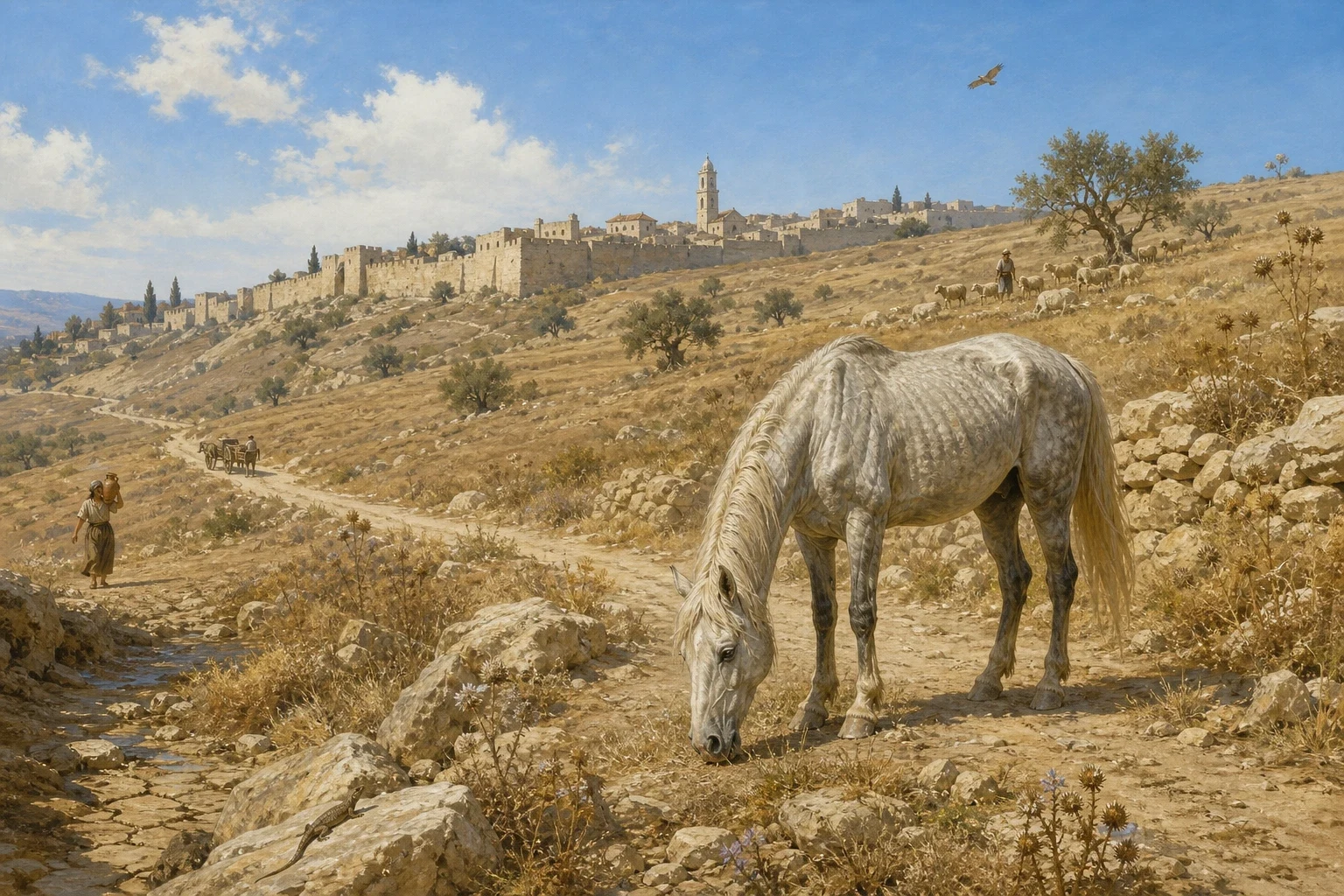
So the old horse wandered. He had no stable to go home to now, and no one to bring him hay or water, so he went looking for grass wherever he could find it — along the dusty roadside, in the ditches, on the dry hillsides outside the town walls, anywhere a few green blades might still be growing in the late summer heat. But it had been a hot, dry year, and the grass outside Atri was thin and brown and did not go very far. Days passed this way. The old horse grew thinner and more tired, and his steps grew slower, but he kept moving, because there was nothing else to do but keep looking. No one in the countryside seemed to notice one more hungry old horse wandering the roads — there were, after all, worse sights than that in a hard year — and so, step by step, hungrier each day, the horse wandered closer and closer to the town of Atri itself.
Page 7
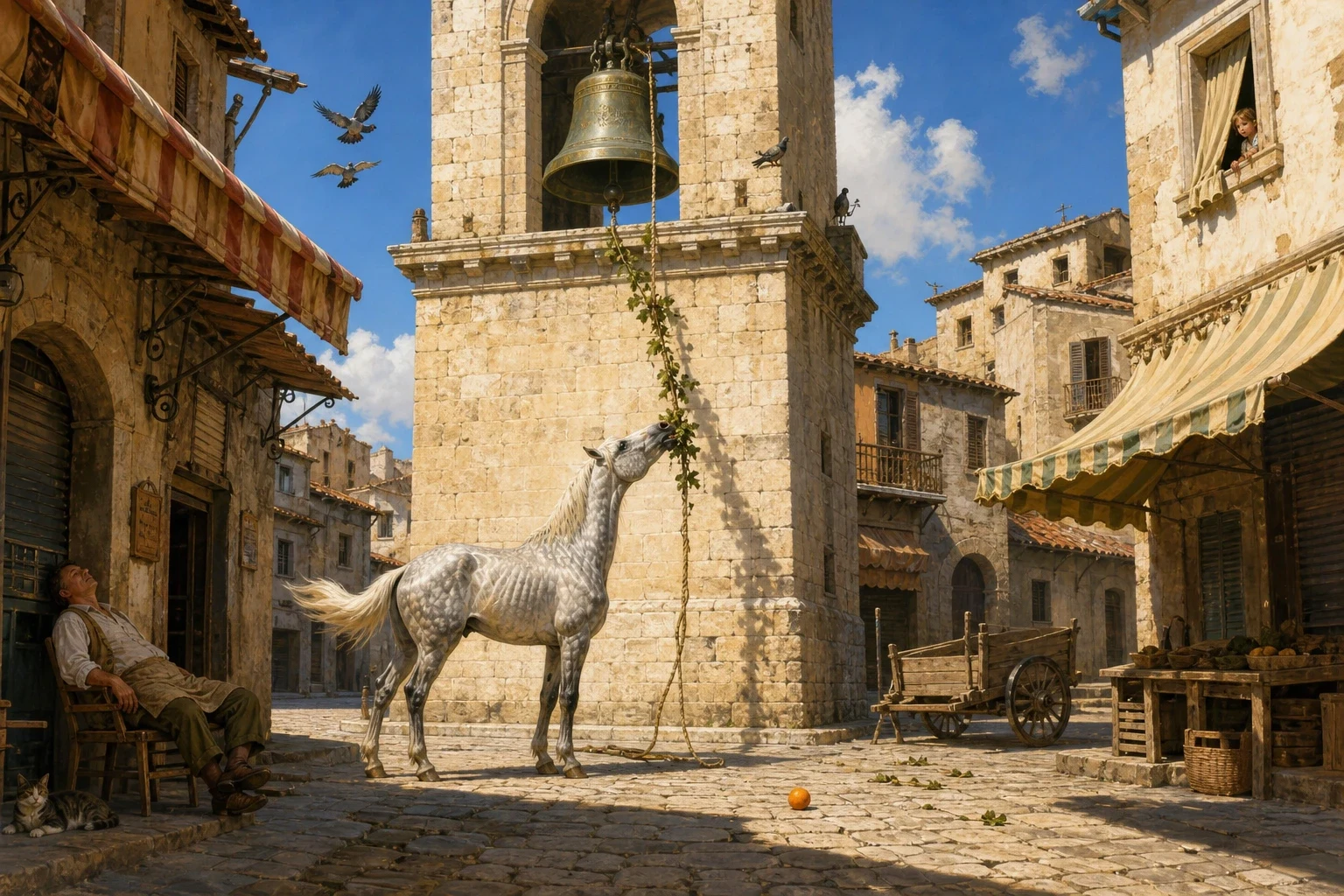
At last, in the hottest part of one long afternoon, the old horse's wandering brought him right into the marketplace of Atri itself, where the stalls stood empty and closed up for the midday heat and not a single person was about. There was no grass at all between the cobblestones — but something green did catch his eye, hanging down from the tower above the square. It was the bell rope, worn thin after all its years of use, mended partway up with a long leafy tendril of grapevine. To a hungry old horse, green leaves are green leaves, wherever they happen to be hanging, and he did not know or care that this particular vine was holding up the most important bell in Atri. He stretched his neck toward it, took the leafy end gently between his teeth, and began to pull and chew, tugging the rope down as he did.
Page 8
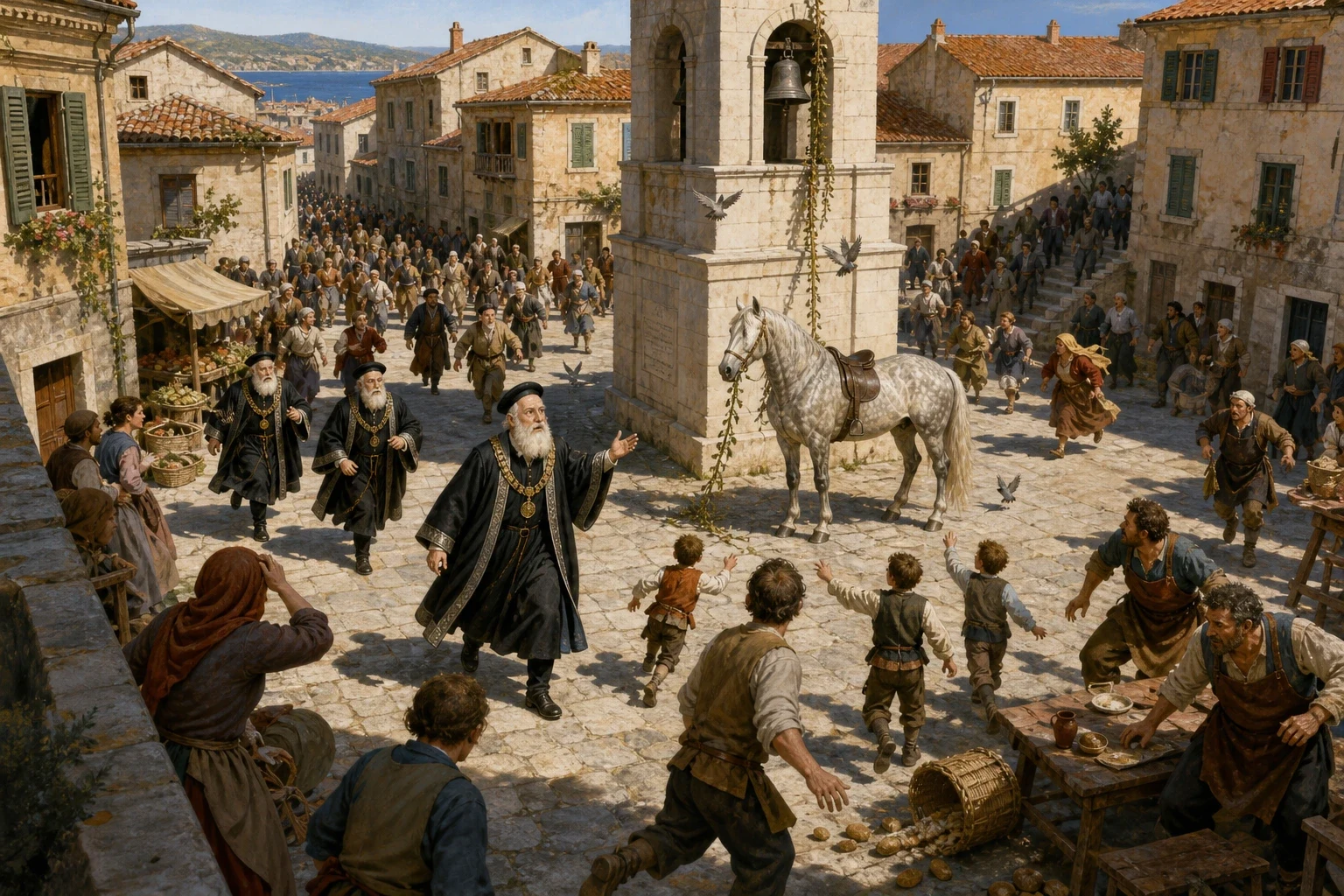
High above the square, the great bell swung and rang out — not loudly, for an old horse pulling a vine is no match for a child pulling a proper rope, but clearly enough to carry over the rooftops of Atri, just as it always had. And just as it always had, the bell's ring brought the town running. Shopkeepers left their counters. Children left their games. And the Chief Judge, who was in the middle of his midday meal, set down his spoon at once and hurried out into the street, calling the other judges to come with him, exactly as he had done a hundred times before for a hundred different wrongs. They all converged on the marketplace from every side at once, certain they were about to meet some poor, wronged person standing at the foot of the tower, waiting for justice. Instead, when they arrived, they found something that made every one of them stop in their tracks.
Page 9
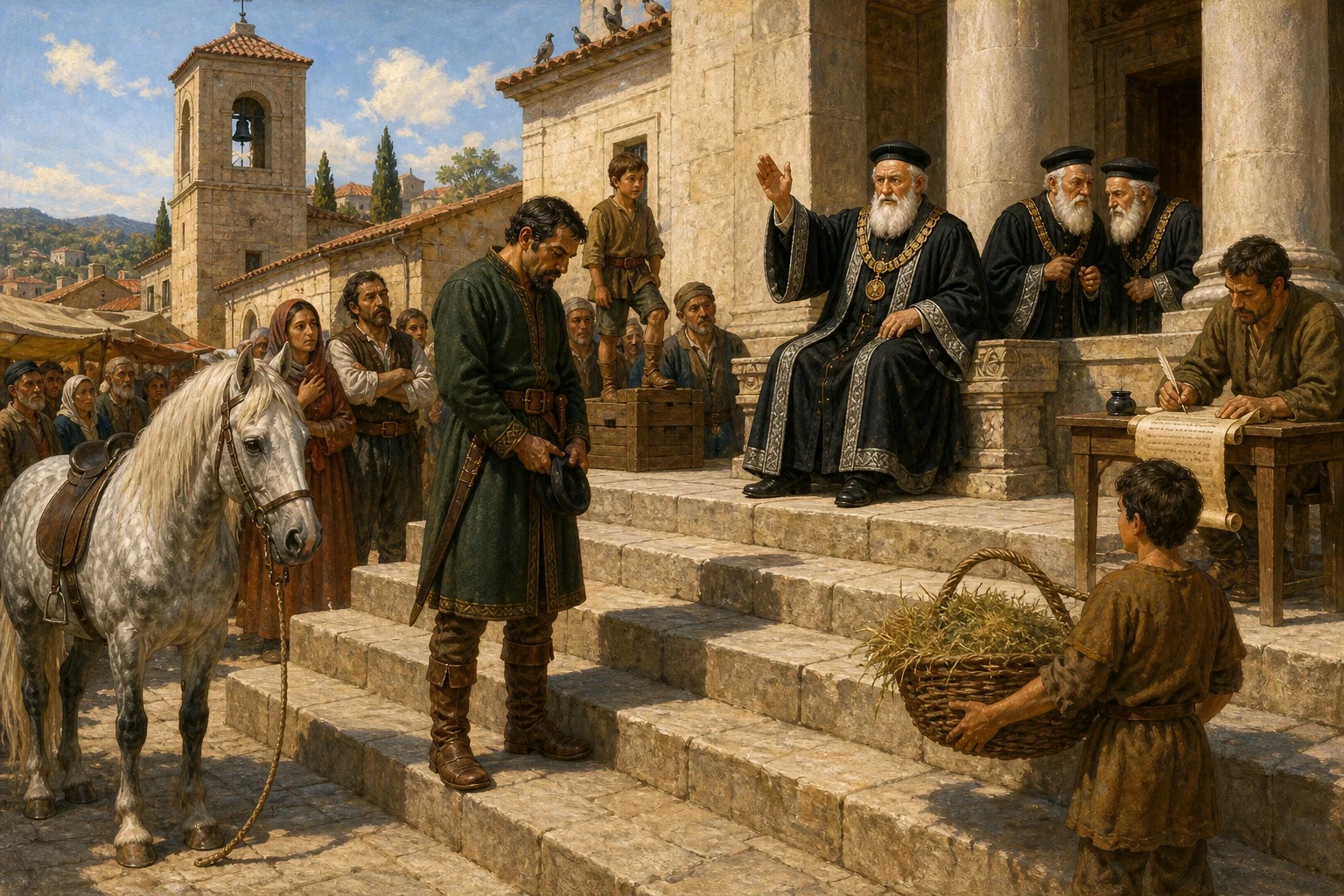
The Chief Judge looked at the thin old horse for a long moment, and then he recognized him. "Why, this is the very horse that used to belong to the soldier who lives at the edge of town," he said. "I remember this horse well — he carried his master through more hard roads than I can count, and never once failed him. And now look at him — turned out to fend for himself, with no one left to feed him, so that the only green thing he could find to eat was the very rope of our bell of justice." He sent for the master at once, and when the man came and stood before the judges on the courthouse steps, he could not deny a word of it. So the judges gave their ruling, plainly and firmly: from that day on, the master must feed the old horse, stable him properly, and care for him for as long as the horse should live — for a horse that has given its whole life in service has rung this bell as truly as any person ever did.
Page 10
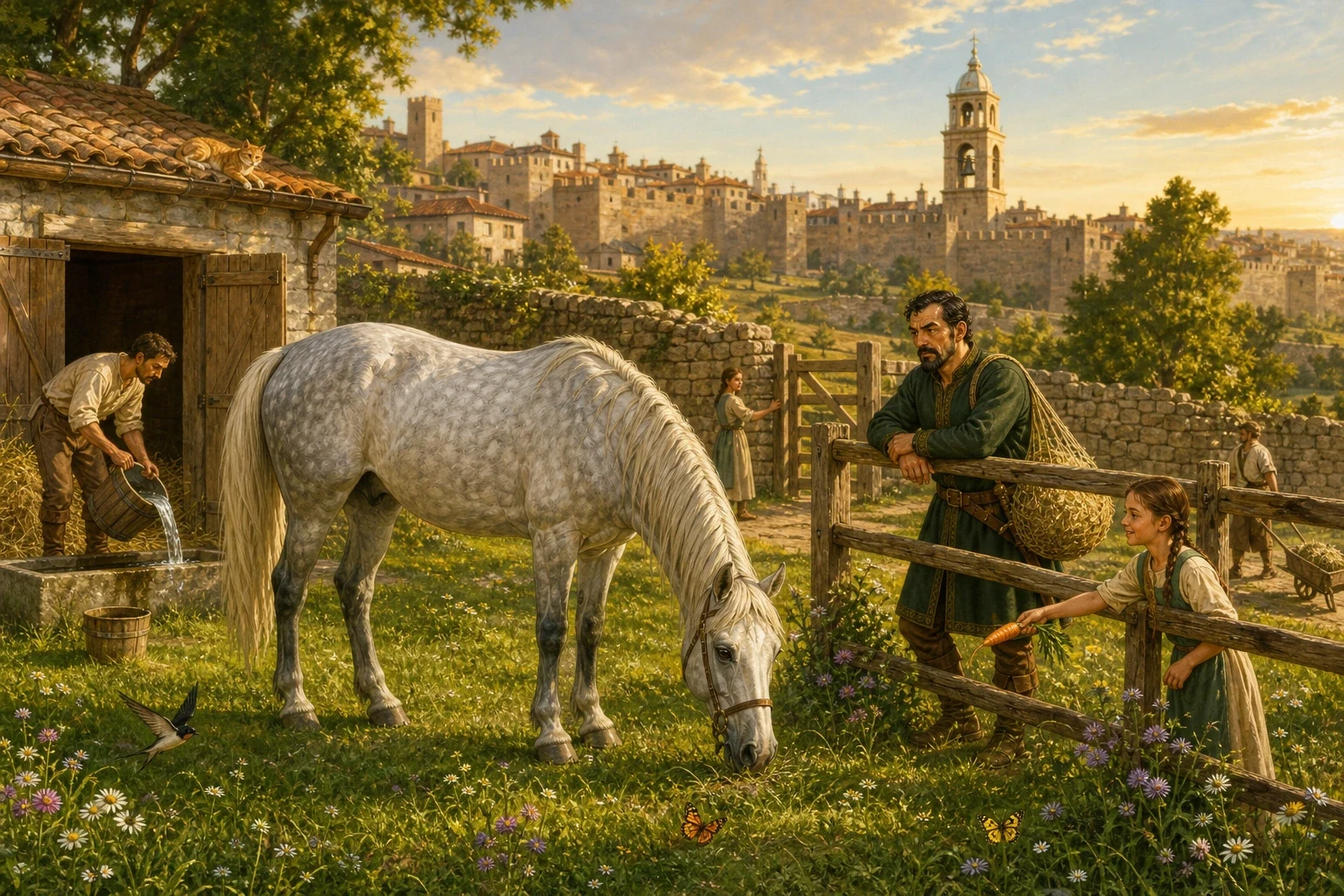
And so it was done. From that day on, the master kept his word — he built the old horse a warm, dry stall with fresh straw every night, filled his manger with good hay and oats, and brought him out each morning to graze in the green pasture just beyond the farmyard, where the grass was soft and plentiful and there was no need to go looking for a single green leaf anywhere else. The old horse's coat grew glossy again, his sides filled out, and he lived out the rest of his days exactly as the judges had ordered — fed, sheltered, and cared for, with nothing more asked of him than to rest in the sun. The people of Atri never forgot the day their bell of justice rang out for an animal instead of a person, and they still called it, from then on, the Bell of the Horse as well as the Bell of Justice — for it had proved, once and for all, that the bell would answer anyone who truly needed it.
About this story
- Audience: kids (ages 6–12)
Read Wonder Tales on your phone
Wonder Tales is available on Android. Get Wonder Tales on Google Play.