The Crane Wife
A crane freed from a snare, a woman at a loom, and the one door that was not to be opened
Page 1
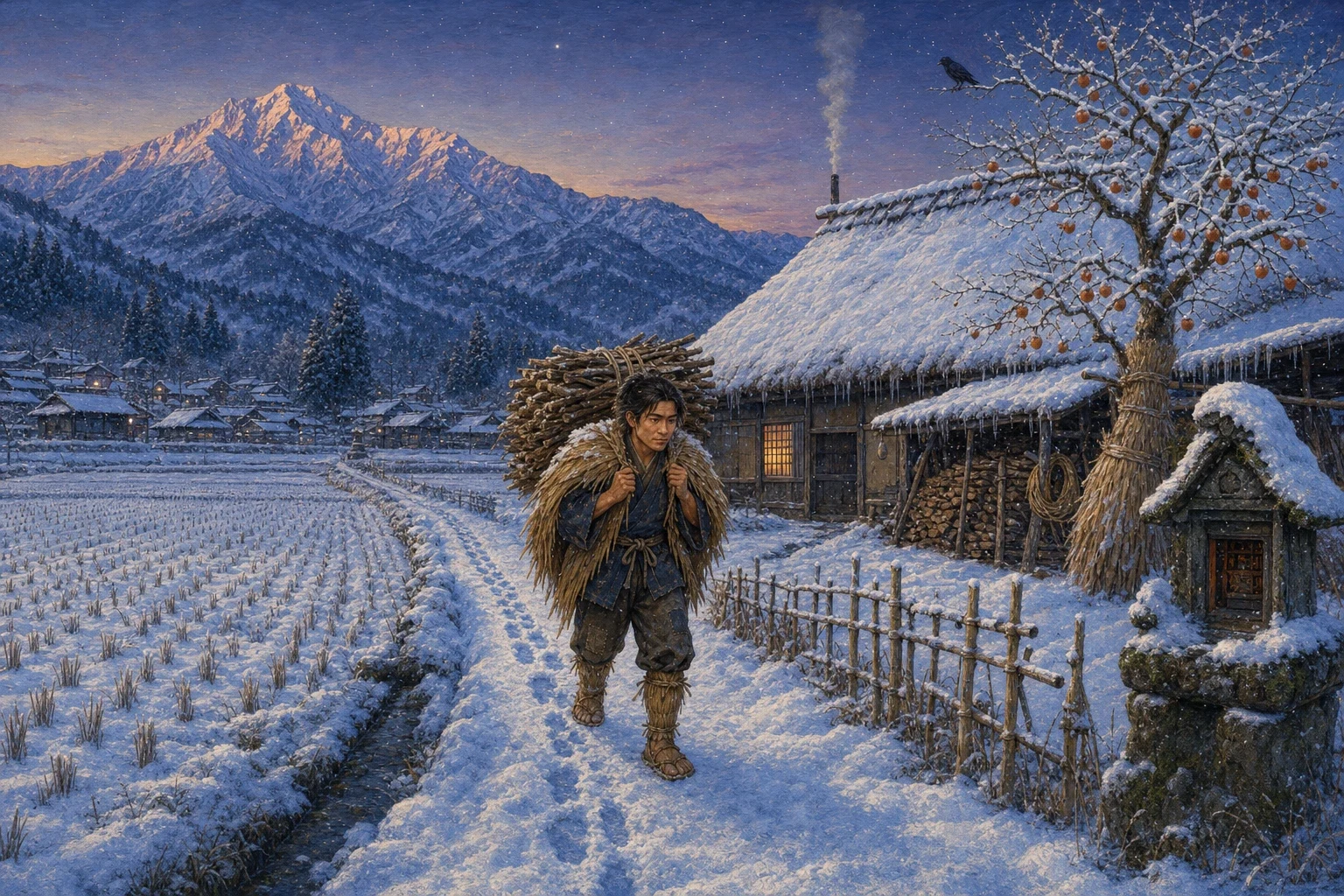
In the snow country of northern Japan, where the winter comes early and stays late, there was a small farm at the end of a track with one thatched house on it. A young man lived there by himself. His parents were dead, the farm was small and poor, and in the winter there was nothing to do with the fields but wait for them, so he made his living cutting and selling firewood and ate a great deal of millet and very little else. He was not an unhappy man. He was simply a man with nobody to talk to, which is a different thing, and he had got so used to it that he talked to the kettle instead. On the evening this story begins he was coming home along the track from the woods with a bundle of firewood on his back, in the blue light after sunset, with the snow coming down steadily and the whole valley quiet.
Page 2
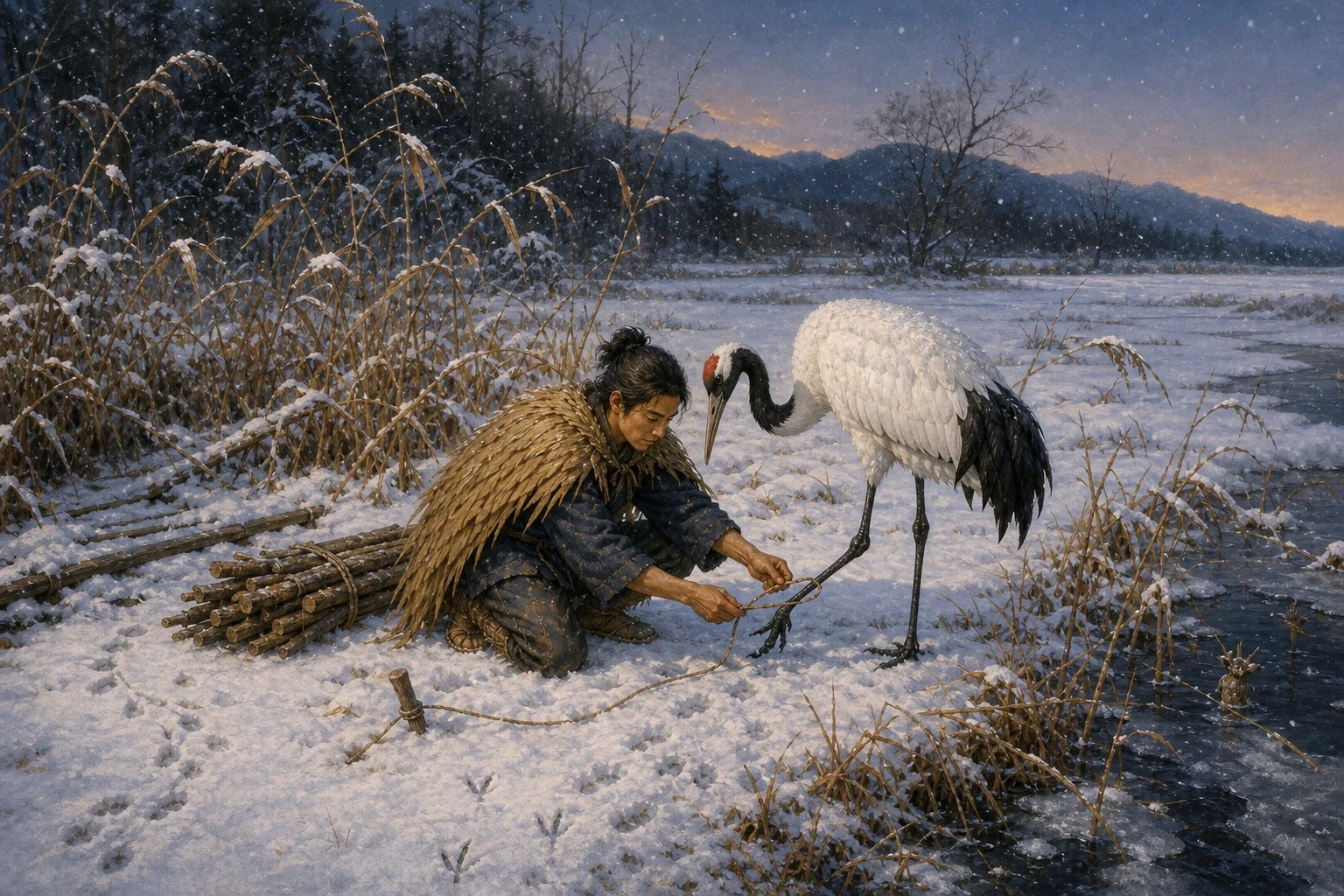
Where the track crossed the frozen marsh he heard a sound he did not recognise and went in through the dead reeds to find it. A crane was standing in the snow with one foot caught — a red-crowned crane, white as the snow itself, taller than his chest, with a long black neck and a crimson crown — and somebody had left a snare of cord in the reeds for wildfowl and the bird had put its leg into the loop. It did not run. It stood perfectly still and watched him come, which he thought afterwards was the strangest part. He put down his firewood and knelt in the snow and worked the cord loose with his cold fingers, very slowly, talking the whole time so that she would know where he was, and it took a long while. Then the loop came away, and the crane stepped back, and looked at him. It looked at him for a long moment. Then it opened its enormous wings and went up over the reeds and away north over the white fields, and he stood watching it until he could not see it any more.
Page 3
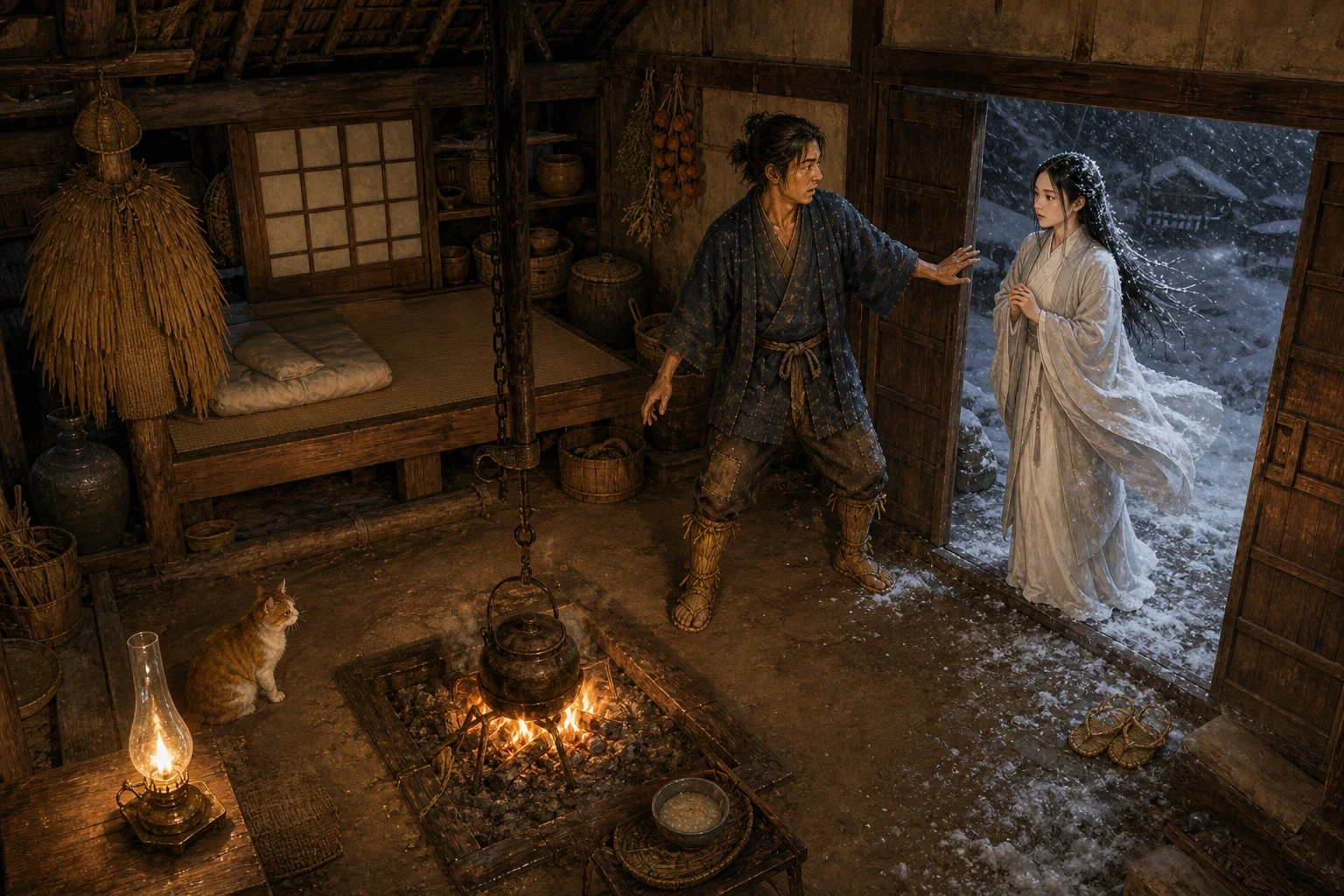
That night the snow turned into a blizzard, the worst in years, and at the very worst of it somebody knocked at his door. He opened it and there was a young woman standing in the snow with no lantern, no baggage, no cloak worth the name, and snow in her hair, and she said in a quiet voice that she had lost her way and asked whether she might come in out of the weather. He got her inside and shut the door against the wind and put her by the fire, and gave her the hot millet he had been about to eat himself and did not mention that he had been about to eat it. She stayed that night, because nobody could have gone out into that. She stayed the next day, because it did not stop. And on the third day, when the sky cleared, she did not go, and he found he could not think of any way to ask her to.
Page 4
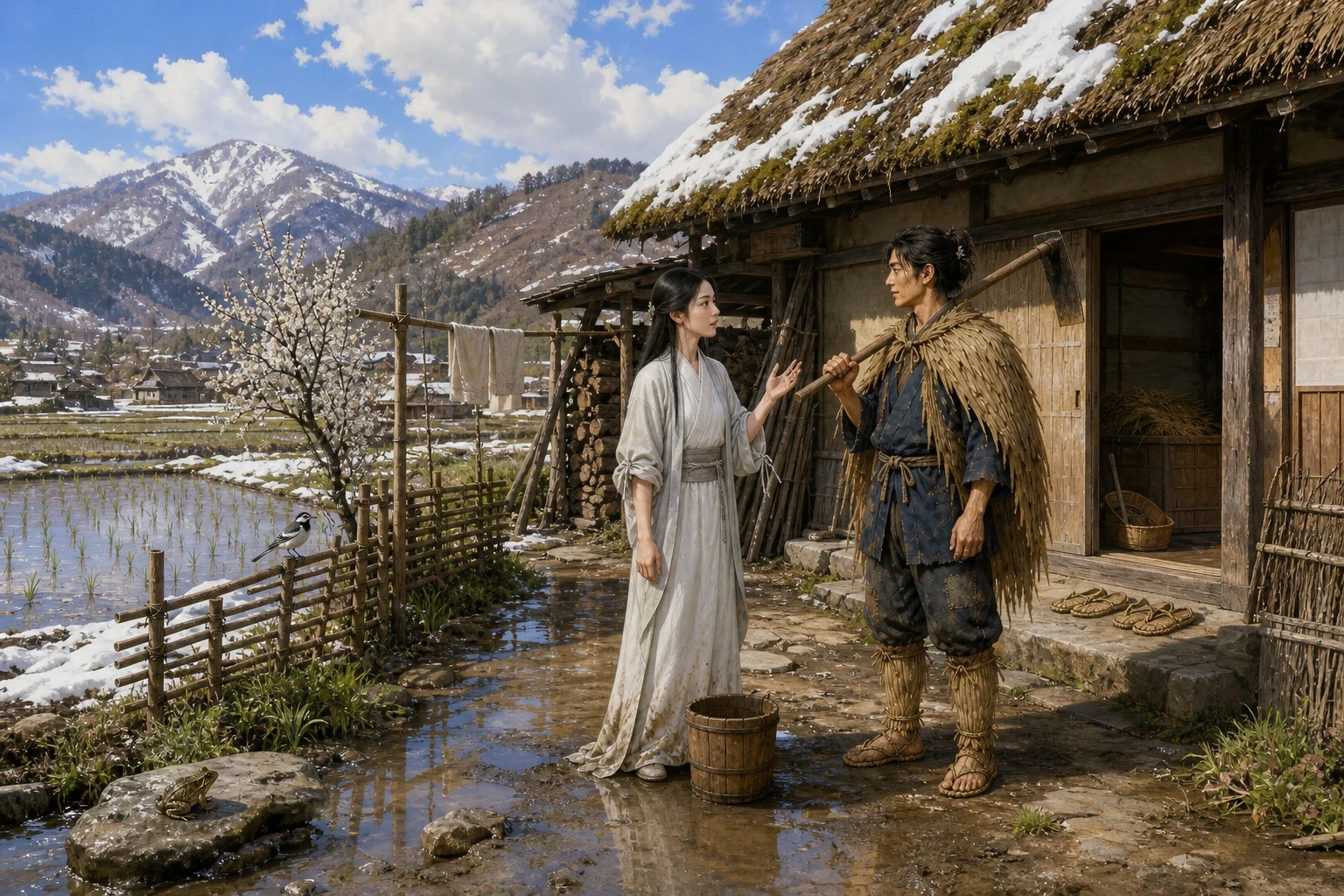
They were married in the spring. She worked as hard as he did and she never once said where she had come from, and he found after a while that he had stopped wondering, which is what happens when a person is simply there every morning. They were poor. They were extremely poor — the winter had taken everything, the rice store was empty, and there was no money at all to buy seed with for the coming year. He did not say this out loud, because he did not want to frighten her, but she had looked in the rice store herself and she could count. And one morning in the yard she said that she could weave, and that if he would build her a loom and give her the little room at the back, she would make cloth they could sell. He said that they had nothing to weave with, no thread and nothing to buy thread with. She said she would manage. And then she said the thing the whole story turns on.
Page 5
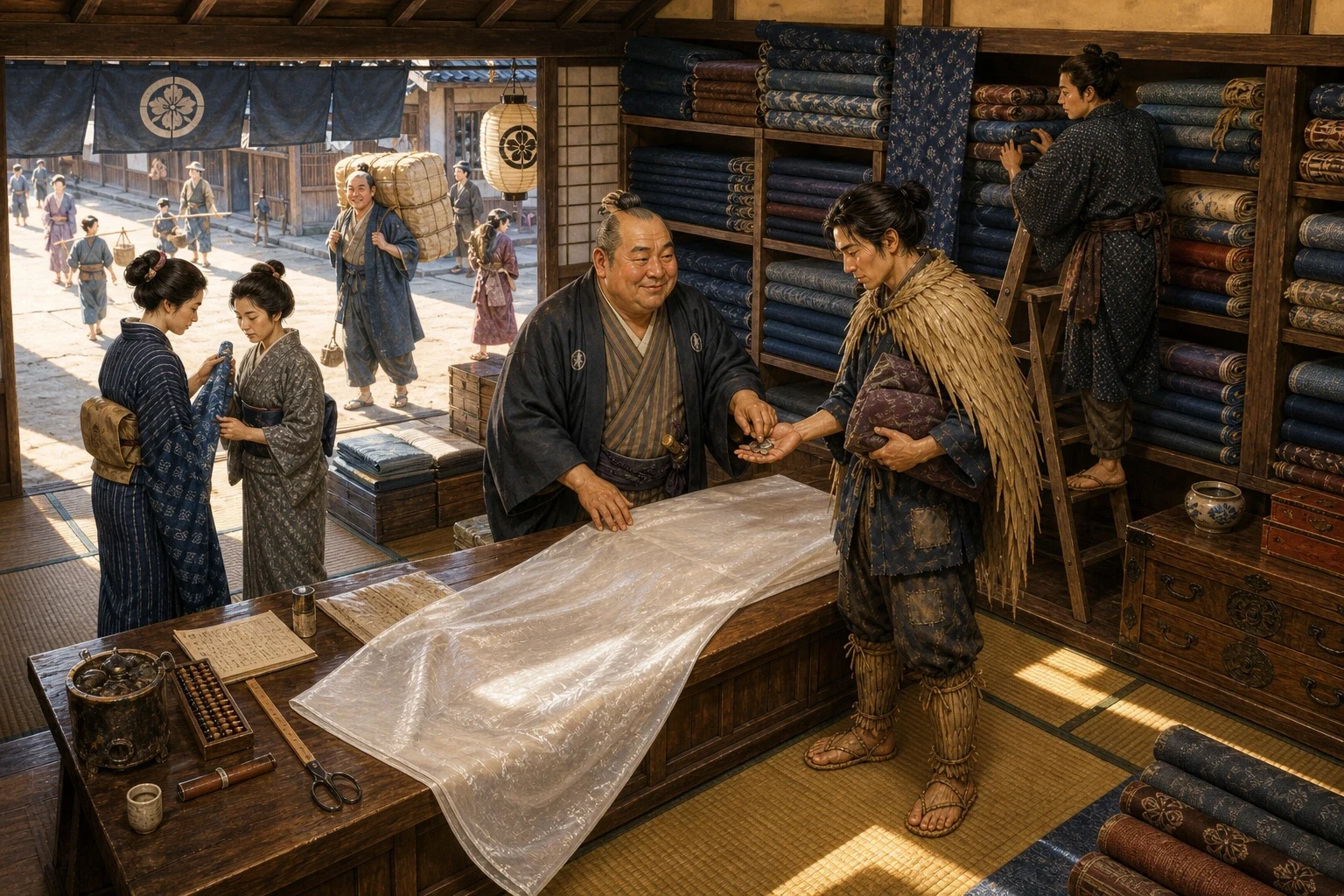
She was in that room for three days and three nights, and he did not look, and he did not sleep much either, listening to the loom going. On the fourth morning she came out, grey in the face and so thin that it frightened him, and put into his hands a length of cloth. He had never seen anything like it. It was white and it was light as smoke and it seemed to have a shine moving through it, and when he carried it into the town the cloth merchant unrolled a hand's width of it on his counter and went silent, and then asked him where he had got it, and then paid him more for that one bolt than the whole farm had earned in two years. The merchant walked him out to the street afterwards with a hand on his shoulder, in the friendliest possible way, and asked him — as a favour, as a matter of business between men who understood each other — to bring another one. And another after that. And in fact, as many as his wife could possibly make.
Page 6
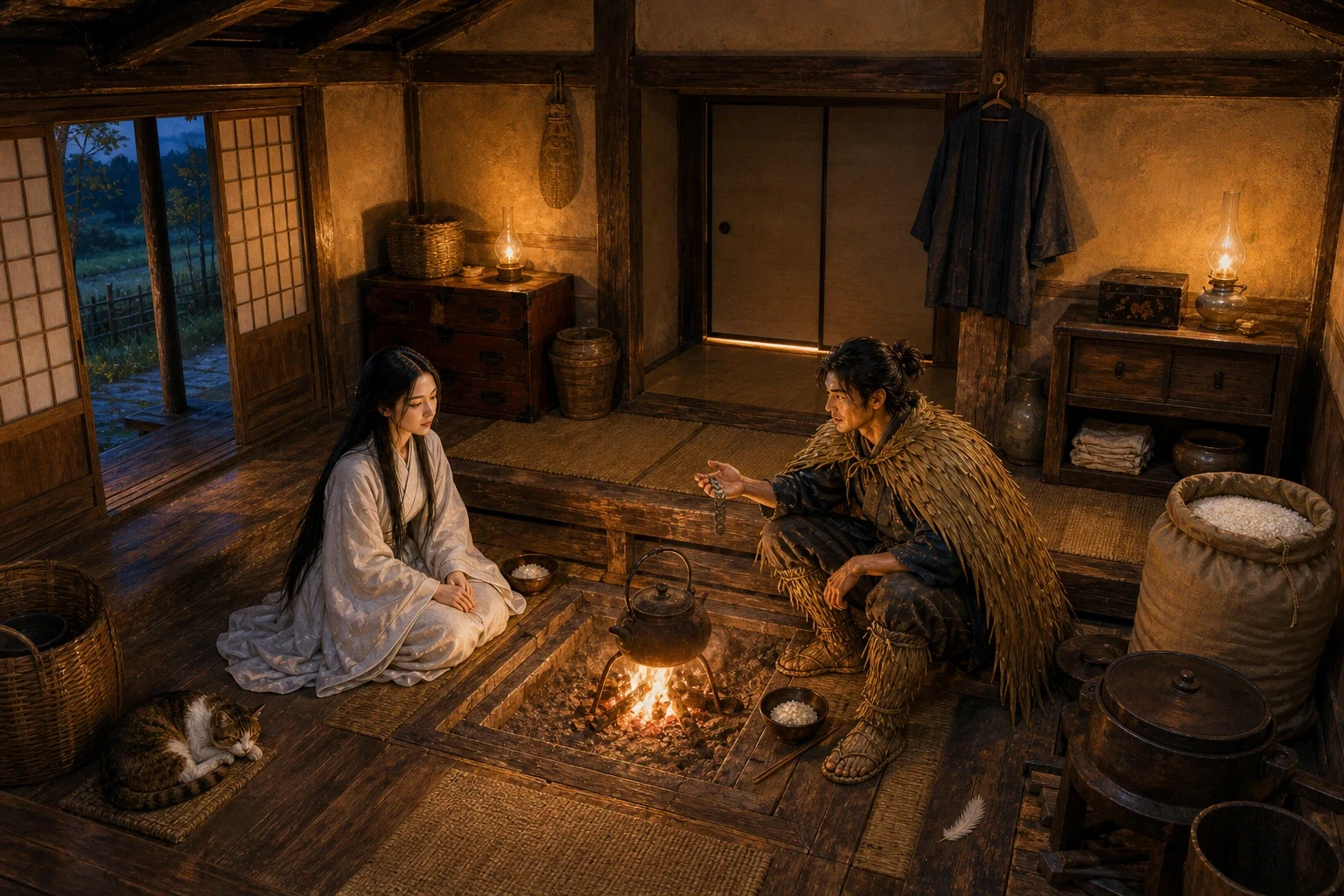
The money changed things, and it changed them fast. The roof was mended and the rice store was full and there was a new coat and there were two good cooking pots, and for the first time in his life nobody in that house was going to be hungry in February. And so of course he asked her to weave again. She said yes. She wove a second bolt, and it sold for even more than the first, and he asked her for a third. That time she sat looking at the fire for a while before she answered. She did not say no — she never once said no — but she said that each bolt took more out of her than the last, and that she could not go on with it for ever, and would he please remember that. He said he would. He meant it when he said it. And then, because the merchant had promised a sum of money that was more than he had ever held in his life, he asked her for one more after that.
Page 7
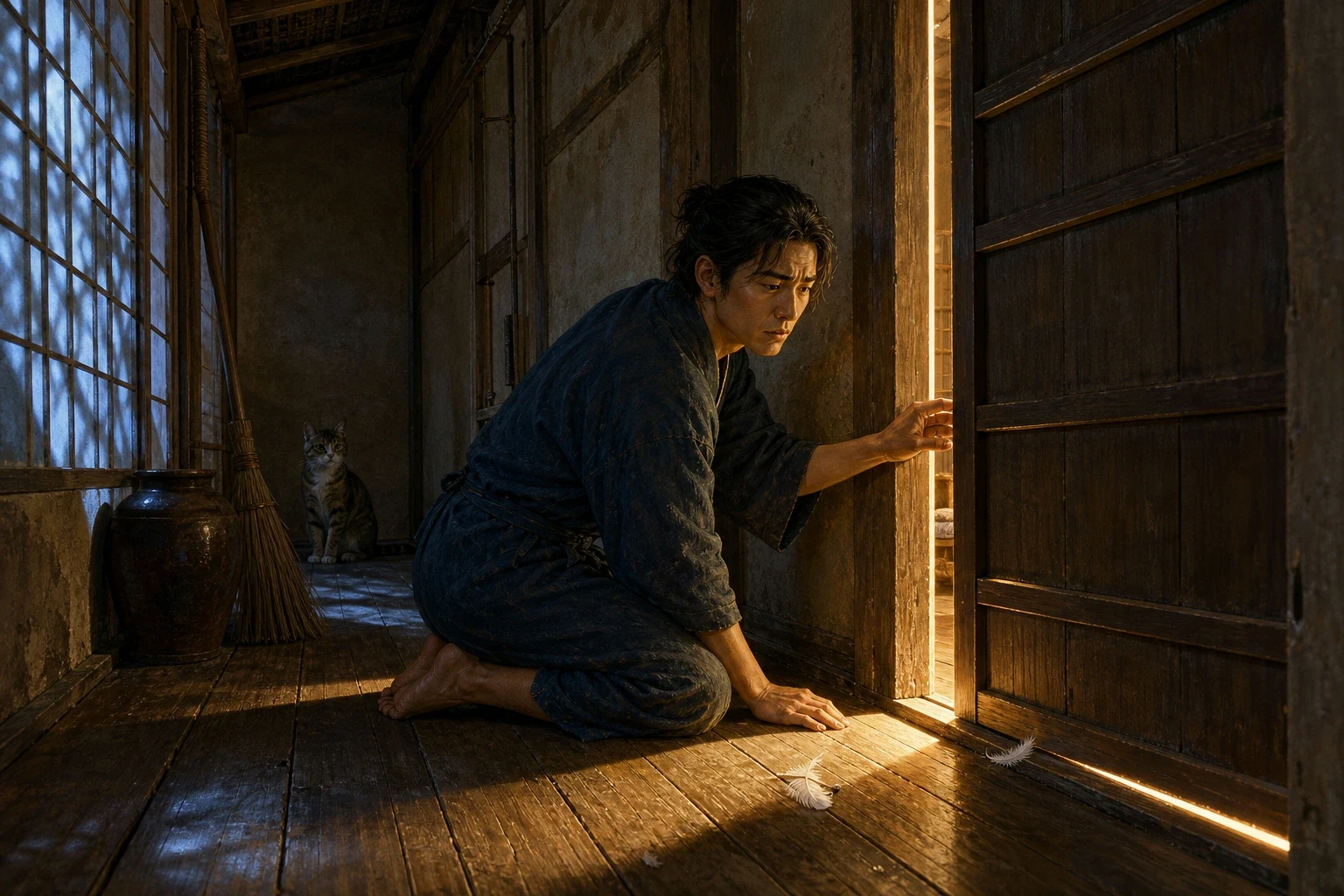
She was in the room four days that time, and the loom went day and night, and by the fourth night it was going very slowly. He sat outside the door in the dark and listened to it, and the thing that had been growing in him all autumn finally got the better of him. It was not greed, by then. It was that he did not know what was happening on the other side of that door to the person he loved, and he had been told not to know, and he could not bear it any longer — which is a far better reason than greed, and it makes no difference at all, because a promise does not care why it is broken. He knelt down in front of the door. He told himself he would look for one second only, and that she would never know. Then he put his fingers in the edge of the frame and slid it open a hand's width.
Page 8
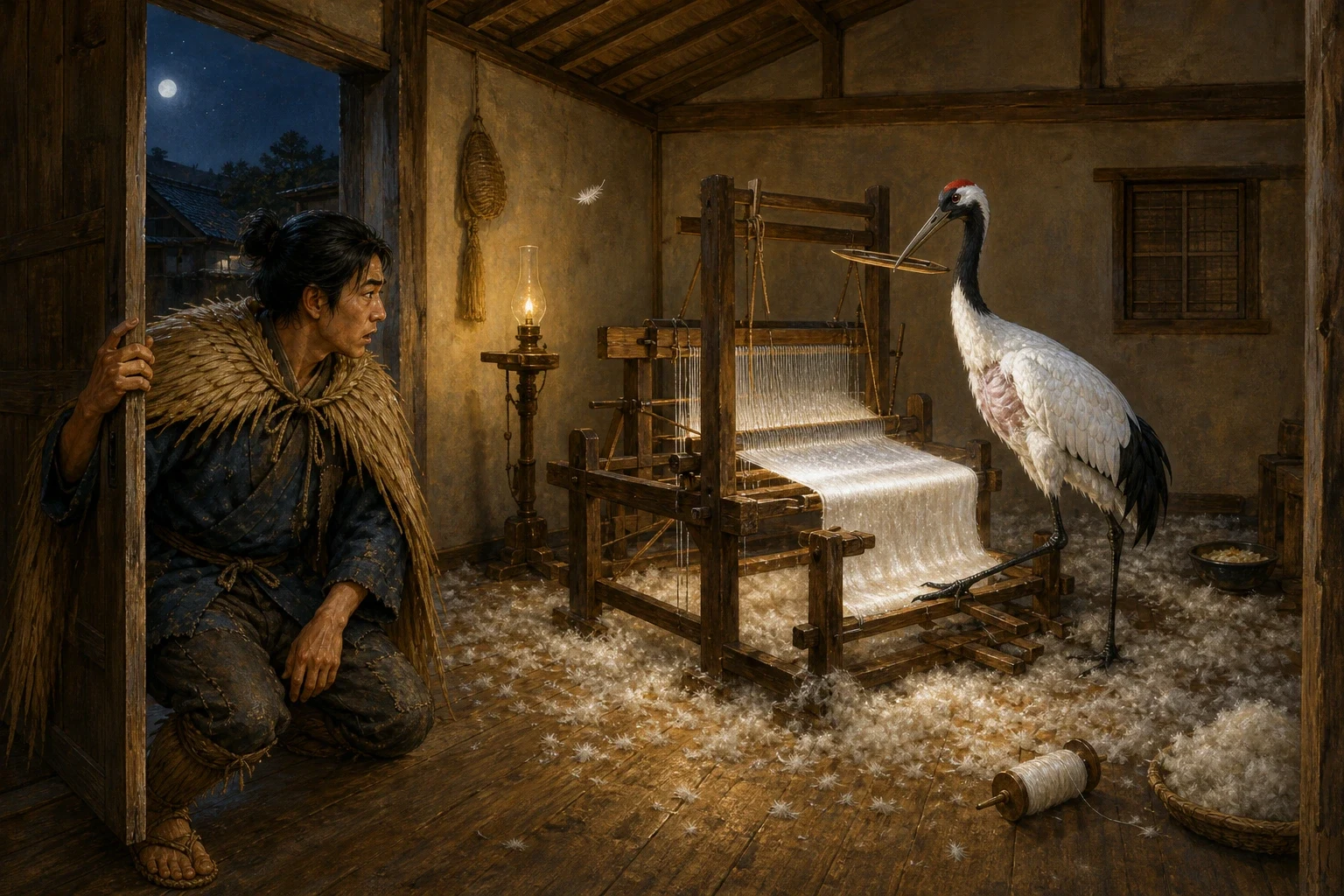
There was no woman in the room. At the loom, working the heddles with her long black legs and passing the shuttle with her beak, stood a crane — a red-crowned crane, white, taller than his chest, with a crimson crown and a long black neck. She was pulling the soft down from her own breast, a feather at a time, and spinning it into the thread, and weaving the thread into the cloth; and the cloth on the loom shone, and the crane was very thin, and the floor all round her was white with the down she had already used. She stopped. She turned her head and looked at him in the doorway, with exactly the same look she had given him in the reeds on the frozen marsh, a long time ago. And he understood everything at once, and he would have given back every coin in the house to be standing anywhere else in the world.
Page 9

The crane folded her wings and came out past him into the main room, and he followed her, saying her name and then saying anything at all. She went to the door and waited, and he opened it because there was nothing else he could do, and the cold came in. Then she said — and he always swore afterwards that she said it, and that it was in her own voice — that she was the crane he had freed from the snare on the frozen marsh, and that she had come to repay him, and that she would gladly have stayed for the whole of his life; but that now he had seen her, and that was the end of it, and she could not stay. He said that he was sorry. She said she knew. Then she went out into the blue snow of the yard, and opened those enormous white wings, and went up over the paddies and the bamboo fence and away north over the white fields, climbing, until she was a mark against the mountains and then nothing at all.
Page 10

She never came back. The cloth he had sold made him comfortable for the rest of his life, and he was never hungry again, and he would have given all of it away in a moment, and everybody in that valley knew it. He kept the farm. He mended the roof and worked the paddies and grew old there by himself, and the one thing he always did, every winter, was walk out along the track to the frozen marsh where the snare had been, and stand in the reeds for a while, and watch the cranes come down onto the white fields to feed — the big white birds with the crimson crowns, dropping out of a grey sky one after another with their legs reaching. He never knew which one she was. He never once saw any of them put a foot wrong. And every year he went through the reeds first and looked, carefully, for snares, and cut every one he found.
About this story
- Audience: kids (ages 6–12)
Read Wonder Tales on your phone
Wonder Tales is available on Android. Get Wonder Tales on Google Play.