The Marsh King's Daughter
An Egyptian princess flies north for a magic flower, and is never seen again above the water — but her daughter grows up between two worlds
Page 1
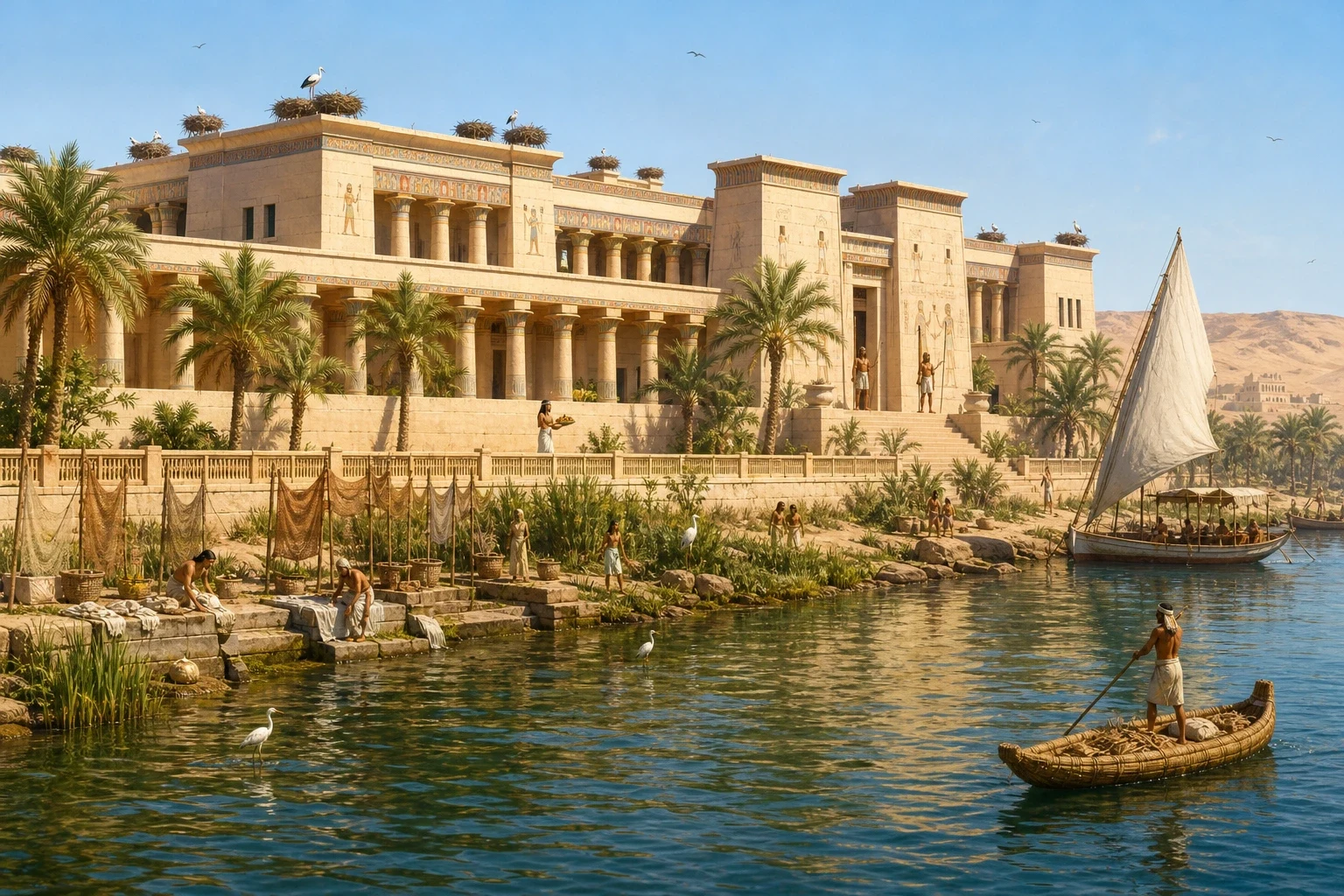
Far to the south, in the hot land of Egypt, there stood a great stone palace on the banks of the river Nile, and storks nested every year along its flat rooftop. Inside that palace the king of Egypt lay sick in his bed, and nothing his wise men tried could make him well again. But an old traveller had once told the king's daughter of a magic flower that grew only in a cold, wild marsh far to the north, in the land of the Vikings, and that whoever picked it and carried it home could cure any sickness in the world. The princess thought of nothing else, day or night. At last she went to the storks nesting on her own rooftop and asked them the way north, for they flew there and back every single year, and surely they knew that cold green marsh better than anyone in Egypt.
Page 2
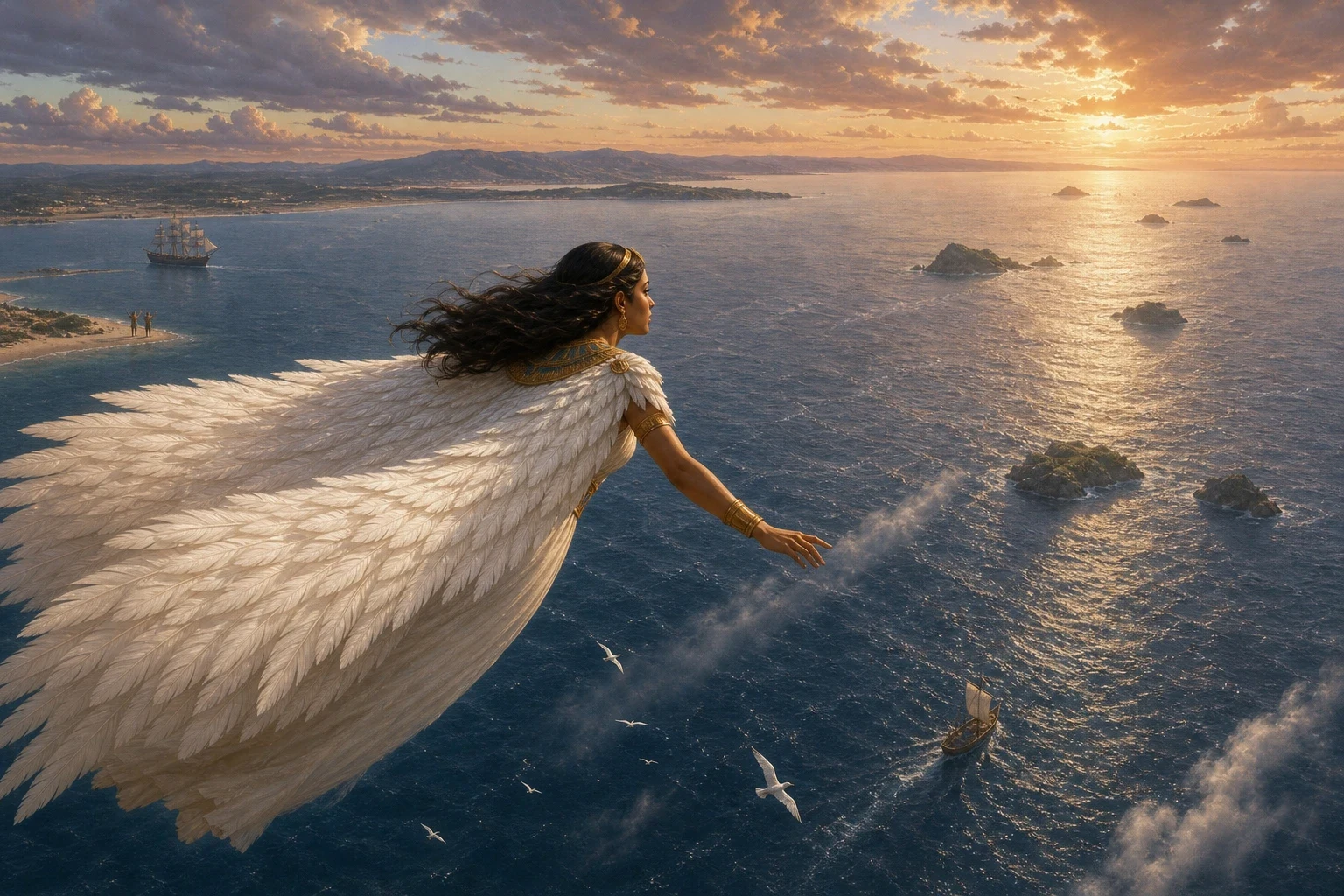
The storks could not carry a whole princess themselves, but they told her of a cloak of swan feathers, kept since ancient times in the palace treasury, that would let its wearer fly as swiftly as any bird. The princess put it on, and found she could rise into the air as lightly as a swan takes off from still water. She flew north for days and nights together, over the desert, over the blue sea, over strange coastlines she had never seen, following the same path the storks themselves flew every spring. The farther north she went, the colder the wind grew, and the stranger the land below her looked — grey rock, dark pine forest, and at last, far ahead, a wide flat stretch of green and brown that could only be the marsh she had come so far to find.
Page 3
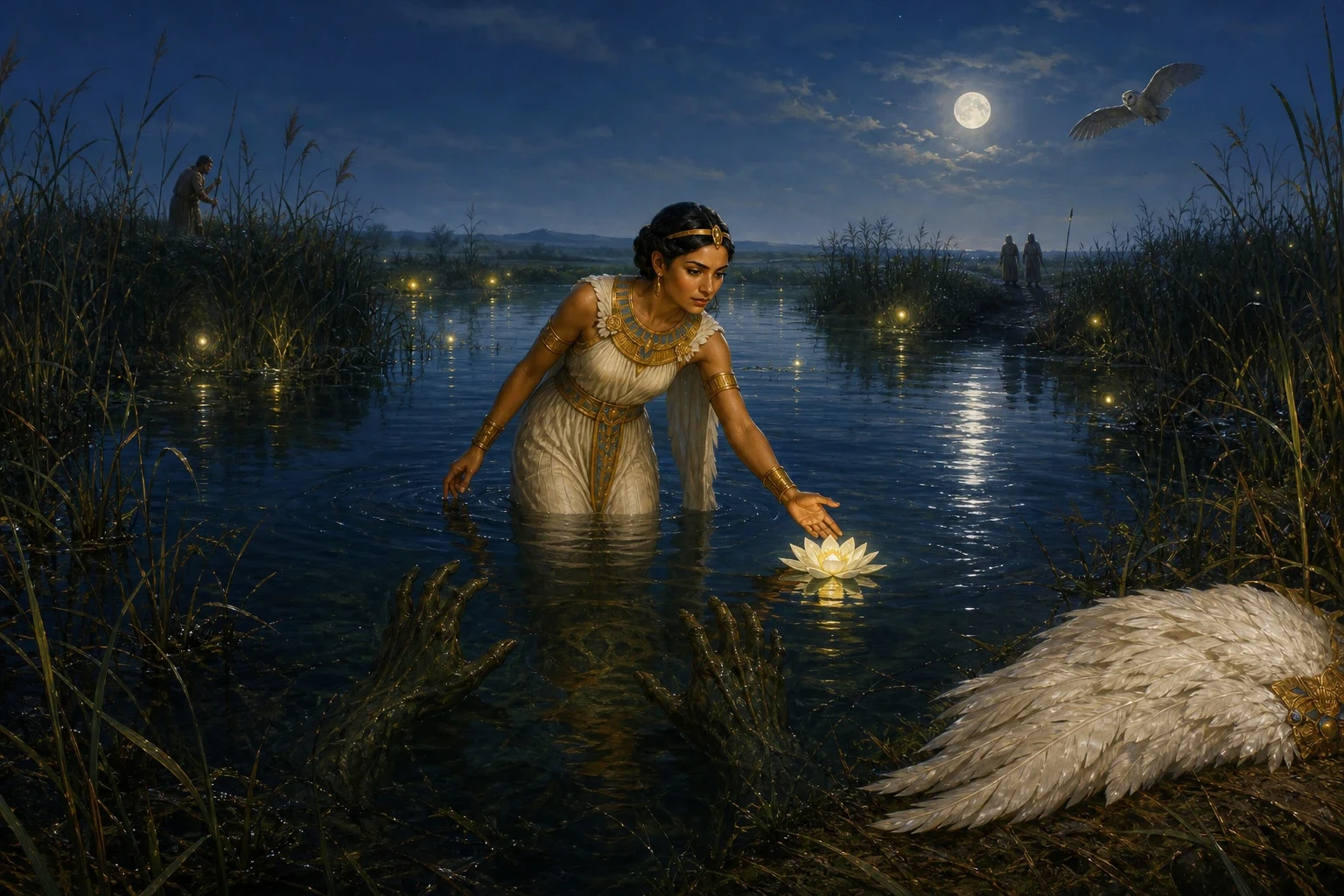
She found the marsh at last — a vast, flat, silent place of black water and tall reeds, lit only by pale drifting lights that the Vikings called will-o'-the-wisps. In the very middle of it, in a still dark pool, grew one single flower, pale and glowing faintly on the water. The princess folded her feather cloak and laid it on the bank, and waded out barefoot through the cold water toward it, her heart beating fast with hope for her father. She had almost closed her hand around the stem when the water beneath her stirred — not wind, not fish, but something vast and old moving far below. Hands rose out of the black water and closed gently but firmly around her. Before she could cry out more than once, the dark water closed over her head, and the marsh above was still and silent again, as though nothing at all had happened.
Page 4
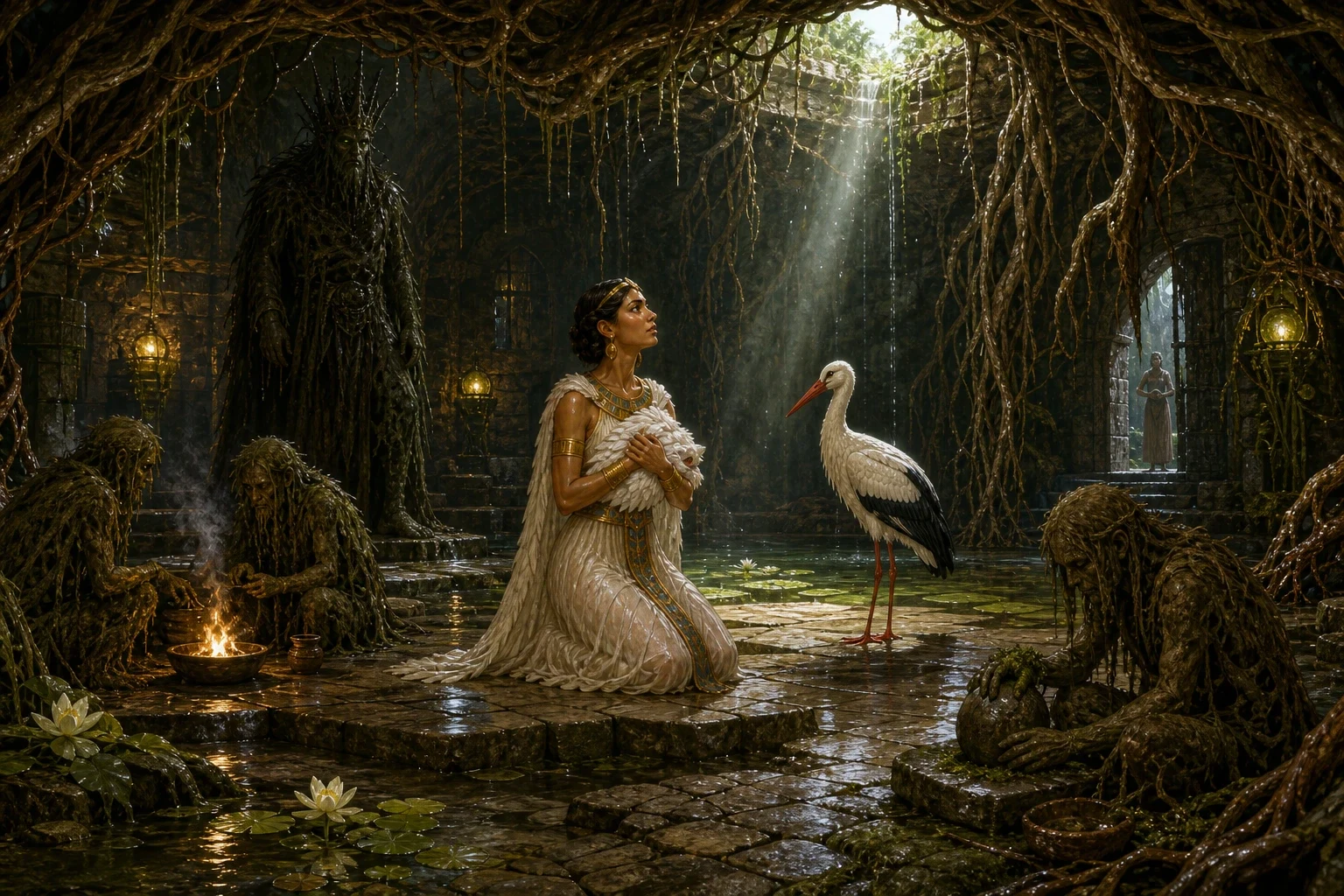
Deep beneath the marsh, in a dim hall roofed with roots and walled with wet stone, the Marsh King kept the princess as his bride, and there she lived a long, sunless year. In time she had a daughter, and she loved that child more than anything in the water or the world above it — but she saw at once that the baby carried two natures inside her, one from each parent, wild and fierce like her father, gentle and sorrowful like her mother. The princess knew her daughter would have a better life above, in the light, than down in the dark with her. So she wrapped the baby in her own white swan feathers, kissed her once, and asked an old stork who sometimes flew down through a crack in the marsh to carry her child up to the sunlit world, and never to tell whose daughter she truly was.
Page 5
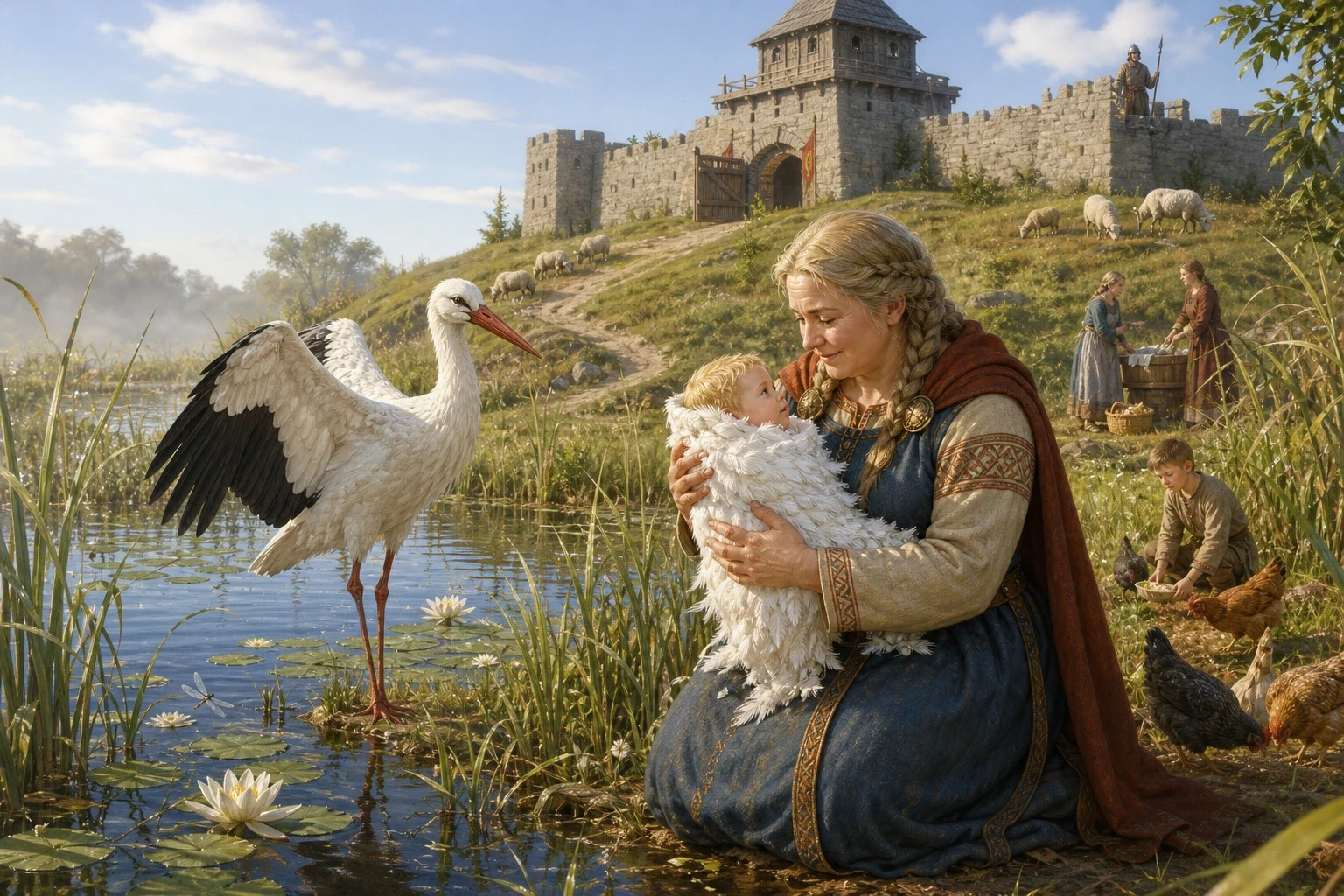
The stork carried the baby up through the dark water and laid her gently among the lily pads at the shallow edge of the marsh, where the morning sun could reach her, and then flew off toward the stone castle that stood at the edge of the moor. In that castle lived a Viking lord and his lady, who had long wished for a child of their own and never had one. The stork circled the castle tower until the lady herself came out to see what the fuss was, and so she came down to the marsh, and there among the reeds she found the baby, wrapped in white feathers, crying in the morning light. She lifted the child into her arms at once, and took her home, and named her Helga, and loved her as though she had always been her own.
Page 6
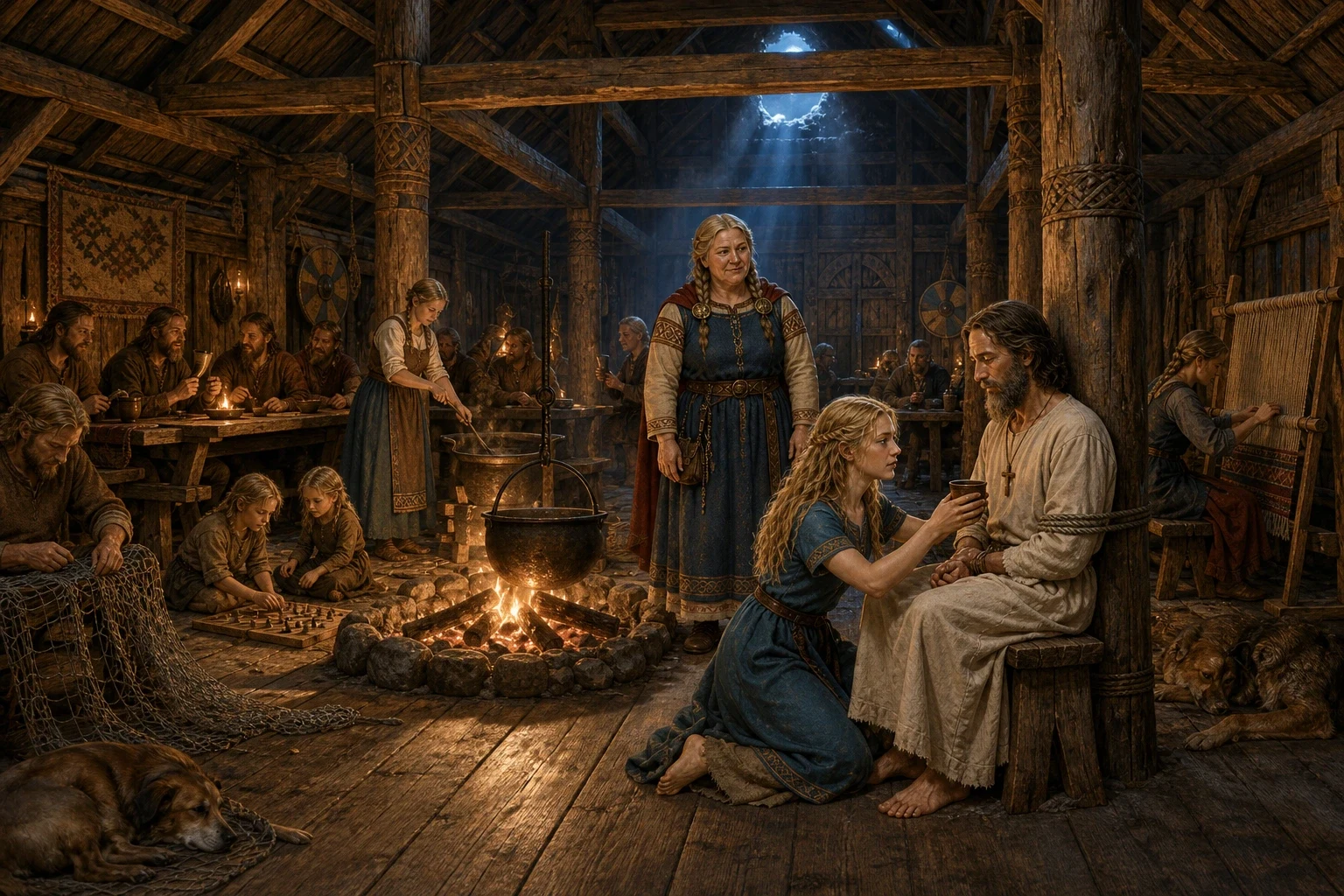
Helga grew up strong and strange. By day she was beautiful but fierce — quick to anger, careless of others' feelings, and cold even to the kind lady who had raised her, so that the Viking lady often sighed over her and wondered what she had brought home from the marsh. But at night a curious change came over Helga: her wildness drained away, her shape grew small and plain, and her heart turned gentle and sorrowful, though no one in the castle ever saw it happen. In those years the Vikings also kept a captive — a Christian priest, bound with rope, held for the old gods' sacrifice. By day, wild Helga mocked him and slammed doors near him to frighten him. But at night, small and gentle, she crept to his side, loosened his ropes a little for comfort, and sat quietly listening as he spoke of a God who asked for love instead of blood.
Page 7
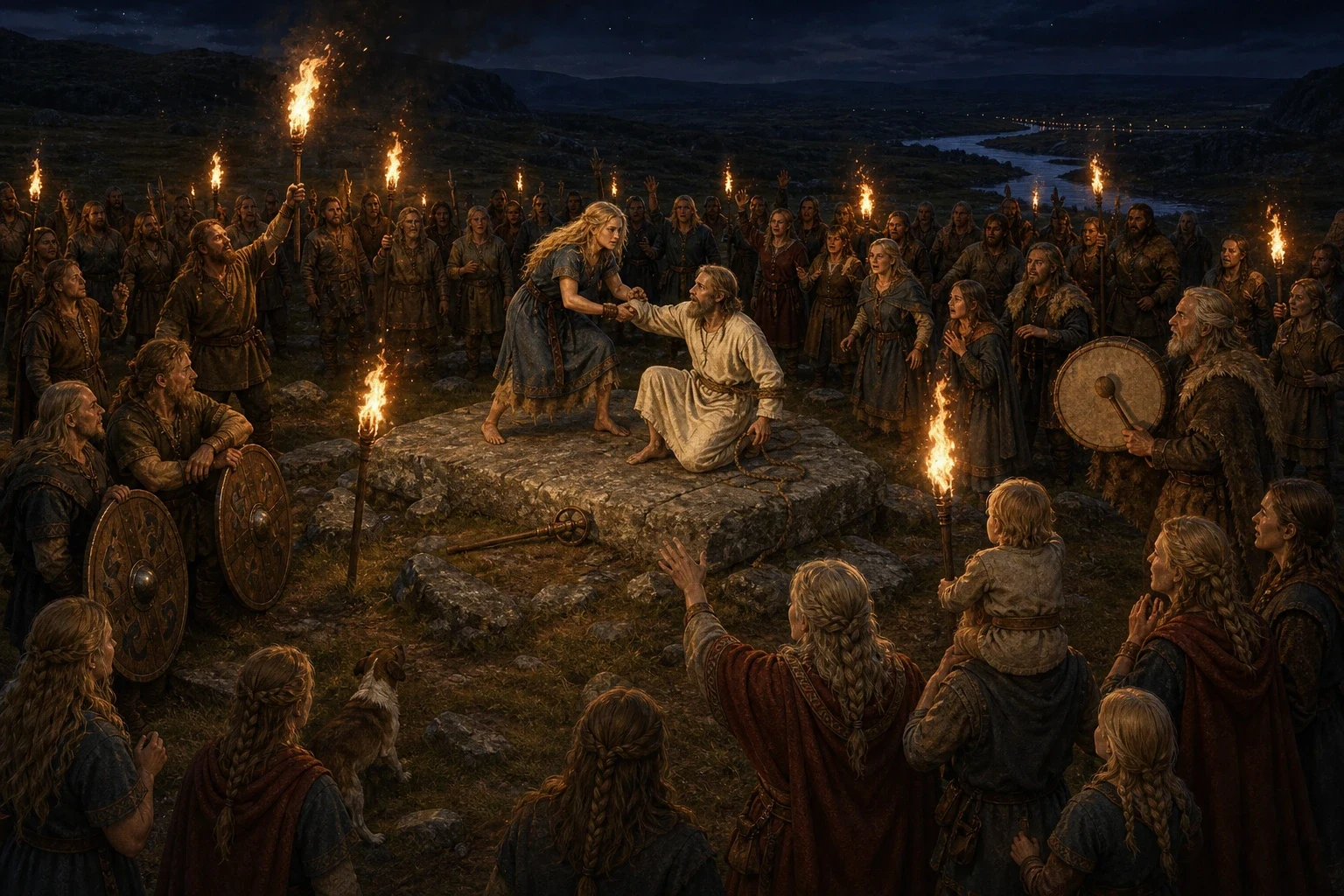
The day came at last when the Vikings led the priest out to the great flat Sacrifice Stone on the open moor, torches lit all around it, to offer him to their old gods as they had always done. The whole castle turned out to watch, and even Helga's foster mother stood among them, uneasy but unable to stop it. As the priest was laid upon the stone and the crowd grew still, something in Helga broke open at last — the gentleness she had always hidden by night rose up in her even under the open sky, in daylight, for the very first time. Before the blow could fall, she pushed through the crowd, cut the priest's bonds with a single stroke of her knife, and pulled him free. The crowd shouted in surprise, but by the time anyone moved to stop them, Helga and the priest were already running hard across the dark moor toward the river, and away.
Page 8
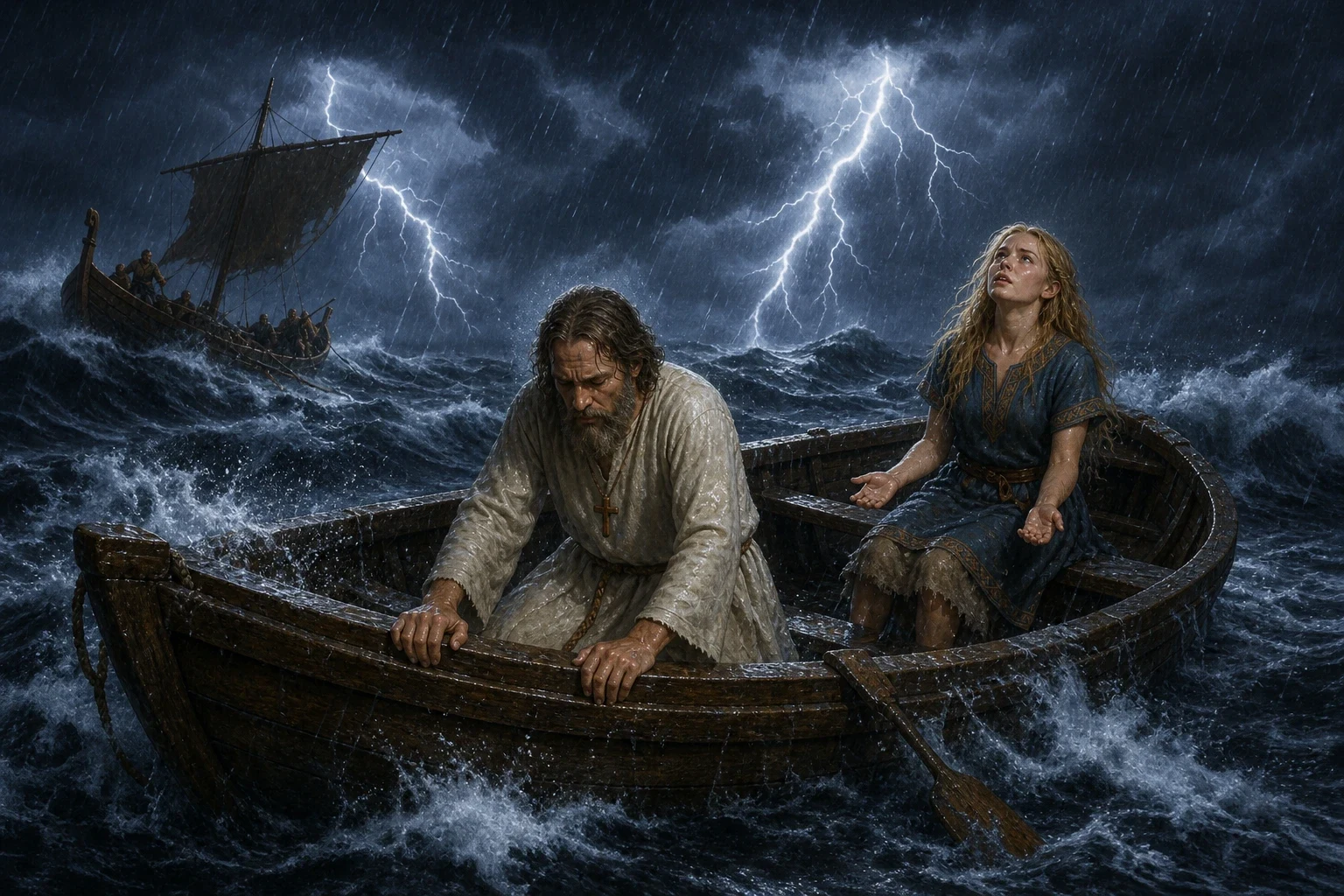
They found a small boat at the river's mouth and pushed out onto open water, hoping to put the sea between themselves and the angry Vikings. But a great storm rose almost at once, black clouds rolling in, waves lifting the little boat high and dropping it hard, rain lashing down so thick they could barely see each other. The priest held fast to the boat's side and prayed aloud, not for himself, but for Helga, asking that whatever was wild and unhappy in her might finally find peace. Helga, who had never in her life been afraid of anything, found herself afraid now — not of the storm, but of something breaking open inside her own heart. Slowly, as the night wore on, the wind dropped, the waves grew gentle, and the boat drifted on quiet water under a clearing sky, and Helga wept for the first time in her life, in broad open daylight.
Page 9
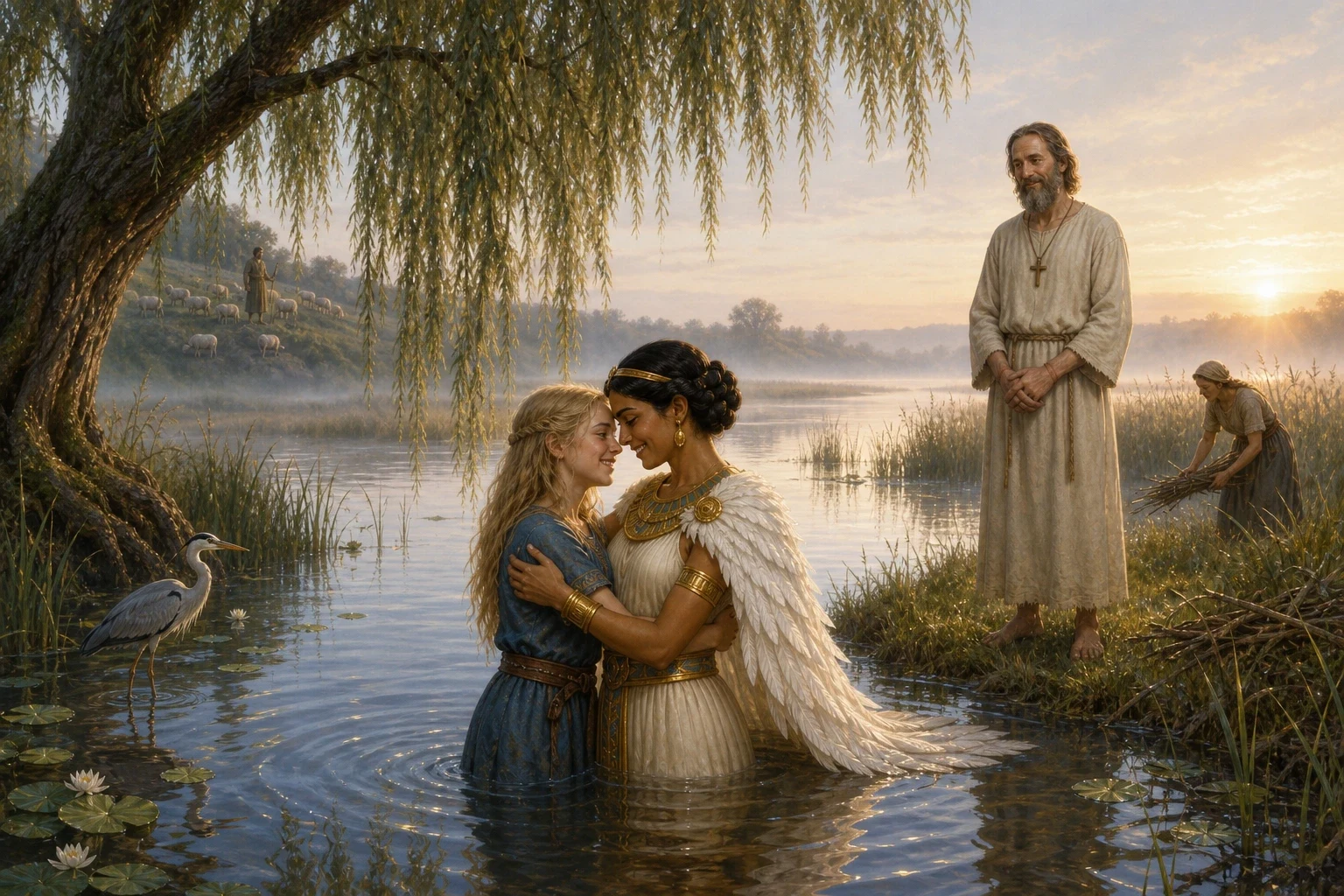
The boat washed ashore at last near the old willow tree that grew at the far edge of the Wild Moor, close to the very marsh where Helga had been born. Something pulled her down the bank toward the quiet water, and there, where the morning mist still lay thin over the reeds, the water stirred, and her true mother rose up out of it one last time, still wearing a single white swan feather at her shoulder. For the first time, mother and daughter looked at each other and knew one another, and Helga ran into the shallow water and was held close. In that embrace, with the priest looking on and praying softly, the two natures that had torn at Helga all her life came together at last into one whole, gentle self — neither wild by day nor sorrowful by night any longer, but simply, truly herself.
Page 10
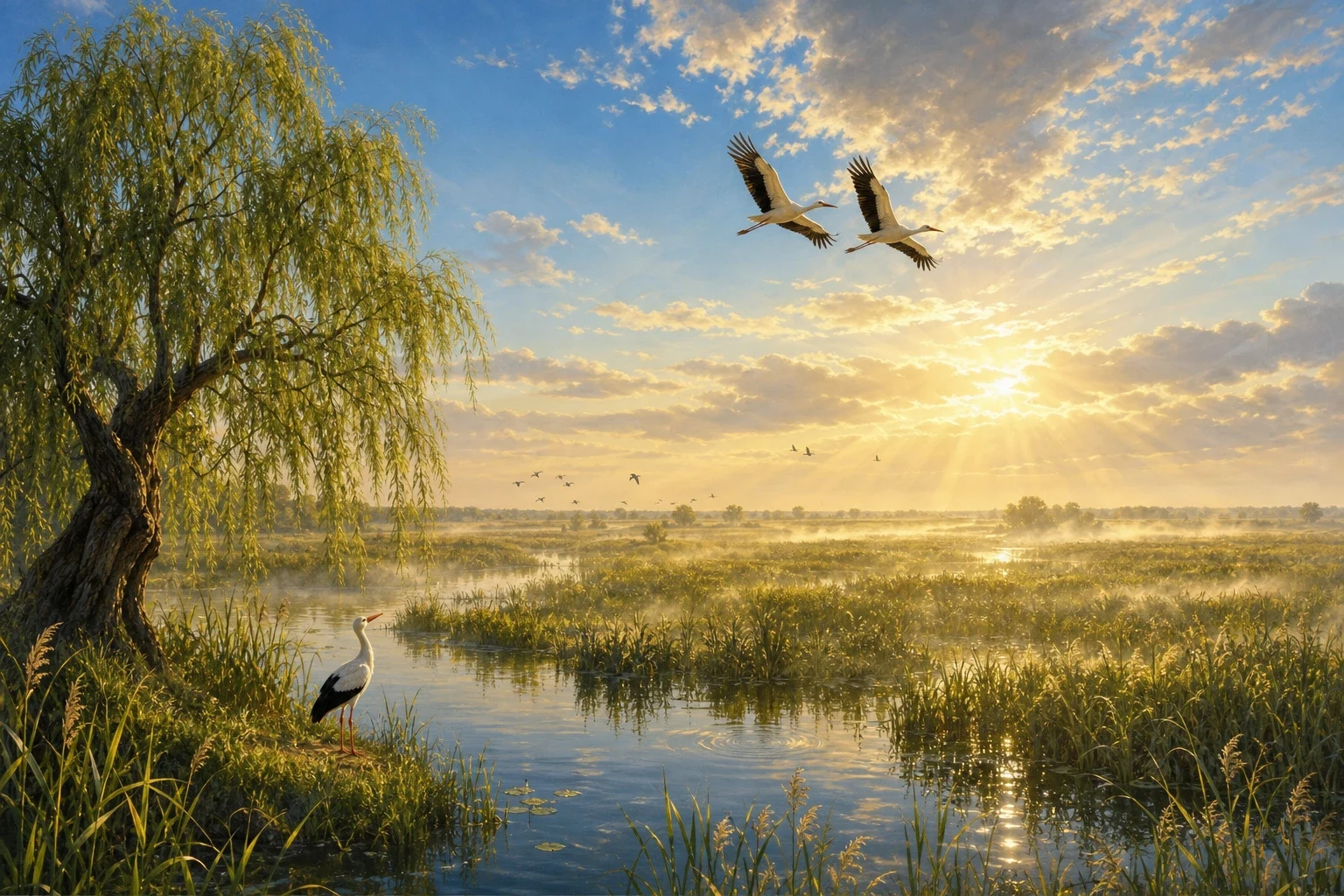
As the sun rose fully over the Wild Moor, Helga and her mother rose with it, their forms turning to light as two white birds climbing together into the brightening sky, free at last of the marsh and the curse and all the long sorrow that had bound them. The priest stood on the bank and watched them go, his heart full and quiet. And far to the south, on a rooftop above the river Nile, the old storks were just finishing the very same story to their own young, who had listened to every word without moving, their eyes wide in the morning light. "And that," said the father stork, folding his wings, "is what became of the Marsh King's daughter."
About this story
- Audience: kids (ages 6–12)
Read Wonder Tales on your phone
Wonder Tales is available on Android. Get Wonder Tales on Google Play.