The Nightingale
A plain little bird whose true song was worth more than all the emperor's jewels

Page 1
In a far Eastern land long ago, there lived an emperor whose palace was the most splendid in all the world, built entirely of the finest, most delicate porcelain, and surrounded by a garden so vast and so beautiful that even the gardener did not know where it ended. Travellers came from every corner of the earth to marvel at the palace and the garden — yet when they returned home, what they wrote and spoke of most of all was not the porcelain or the flowers or the emperor's great riches, but a plain little grey bird, a nightingale, that sang in the woods by the sea at the garden's farthest edge. 'That,' they all agreed, 'is the most wonderful thing of all.'
Page 2

When the emperor read in a book that his own nightingale was the most wonderful thing in his empire, he was astonished, for he had never even heard of it. He commanded his pompous Lord Chamberlain to find the bird at once and bring it to court — on pain of the whole court being punished. But none of the grand lords and ladies had ever been to the far end of the garden, and none of them knew what a nightingale was. At last a humble little kitchen-maid spoke up: she knew the nightingale well, for she heard it sing each evening on her long walk home. And so the whole splendid court, in their silks and jewels, went trooping after the little kitchen-maid down to the woods by the sea.
Page 3
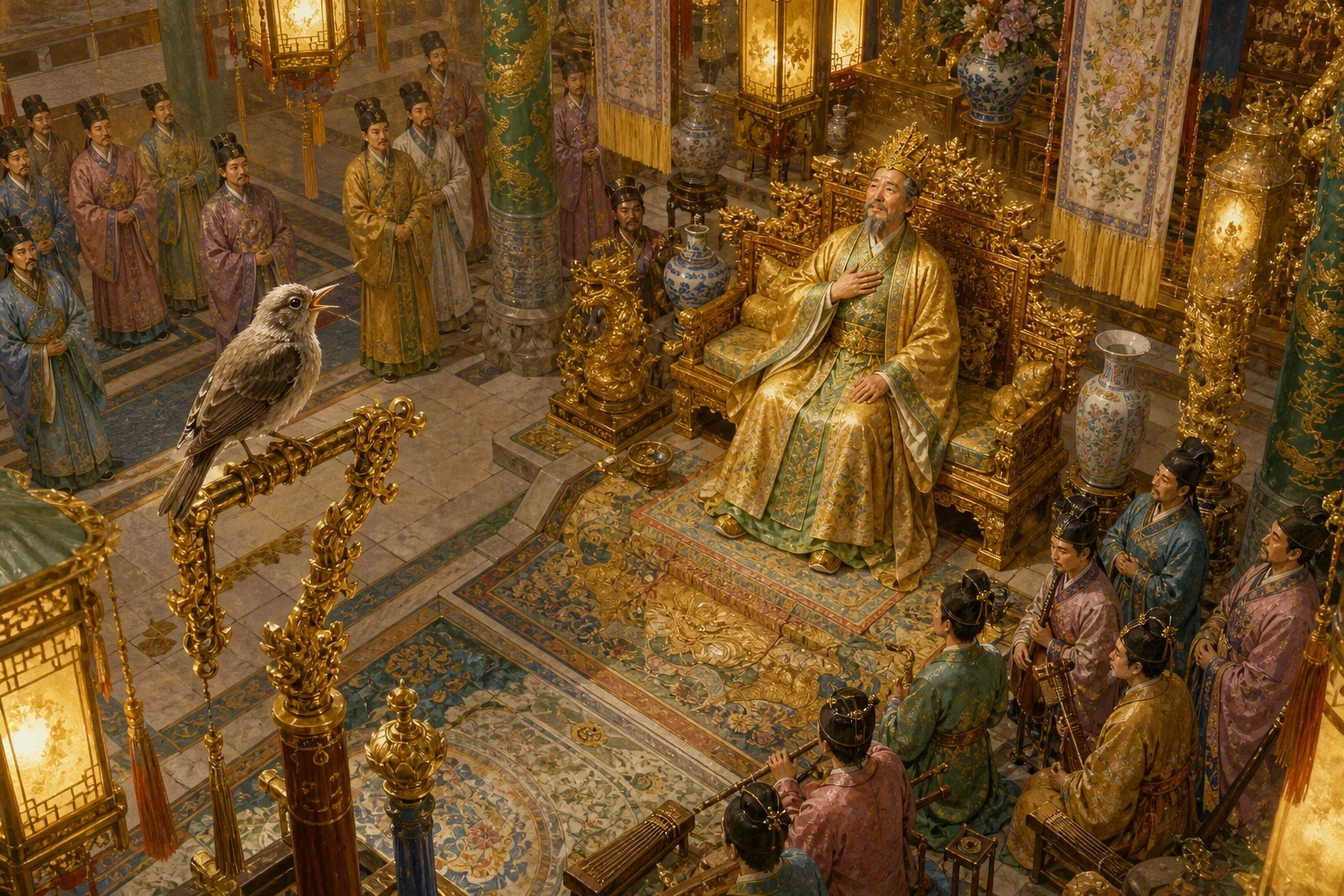
The plain little grey nightingale was brought to the palace and set upon a golden perch in the great hall, before the emperor and all his glittering court. And when it opened its small throat and began to sing, its song was so pure and so lovely that it seemed to speak straight to the heart of everyone who heard it. The proud emperor himself was so deeply moved that tears came into his eyes and ran down his cheeks — and there is no greater praise a song can win than the tears of an emperor. He wished to reward the little bird with his golden slipper to wear about its neck, but the nightingale gently declined, saying that the emperor's tears were reward enough, for a singer asks no finer treasure than a heart truly touched.
Page 4

The little nightingale became the treasure of the whole court, kept in a golden cage and much admired. But one day a great gift arrived from a distant emperor: a mechanical nightingale, made all of gold and silver and set with glittering diamonds and sapphires, that sang a pretty tune when it was wound up with a key, and sparkled dazzlingly as its jewelled tail went round and round. The court was delighted with the shiny new toy — it was so much grander to look at than the plain little grey bird, and it would sing the very same tune over and over again exactly as commanded, which the courtiers thought wonderfully convenient. Amid all the fuss over the dazzling mechanical bird, no one noticed the real nightingale quietly slip out of an open window and fly away home to its woods.
Page 5

When at last the court noticed that the real nightingale had flown away, they were most offended at its ingratitude, and declared it a faithless, ungrateful creature. But no matter, they said — they still had the far more beautiful mechanical bird! The real nightingale was officially banished from the empire, and the jewelled mechanical one was given the place of honour, set upon a silken cushion beside the emperor's own bed, and wound up to sing its single tune again and again. The whole court agreed the clockwork bird was in every way superior: it was prettier, it was obedient, and one always knew exactly what it would do. And so, for a time, the plain true song was quite forgotten in favour of the dazzling, predictable machine.
Page 6

For a whole year the mechanical bird sang its one tune, until everyone at court knew it by heart — and then, one evening, just as it was singing for the emperor, something inside it went 'whizz' and 'crack', and all the wheels ran down and the jewelled bird fell silent. The court watchmaker was sent for in haste, but he could only shake his head: the delicate works were quite worn out, and he dared only to let the precious thing be wound up and sung but once a year, for fear it should break beyond all mending. And so the dazzling mechanical bird, for all its gold and diamonds, grew nearly silent — and the court began, too late, to miss the warm and living song of the plain little nightingale they had so carelessly sent away.
Page 7
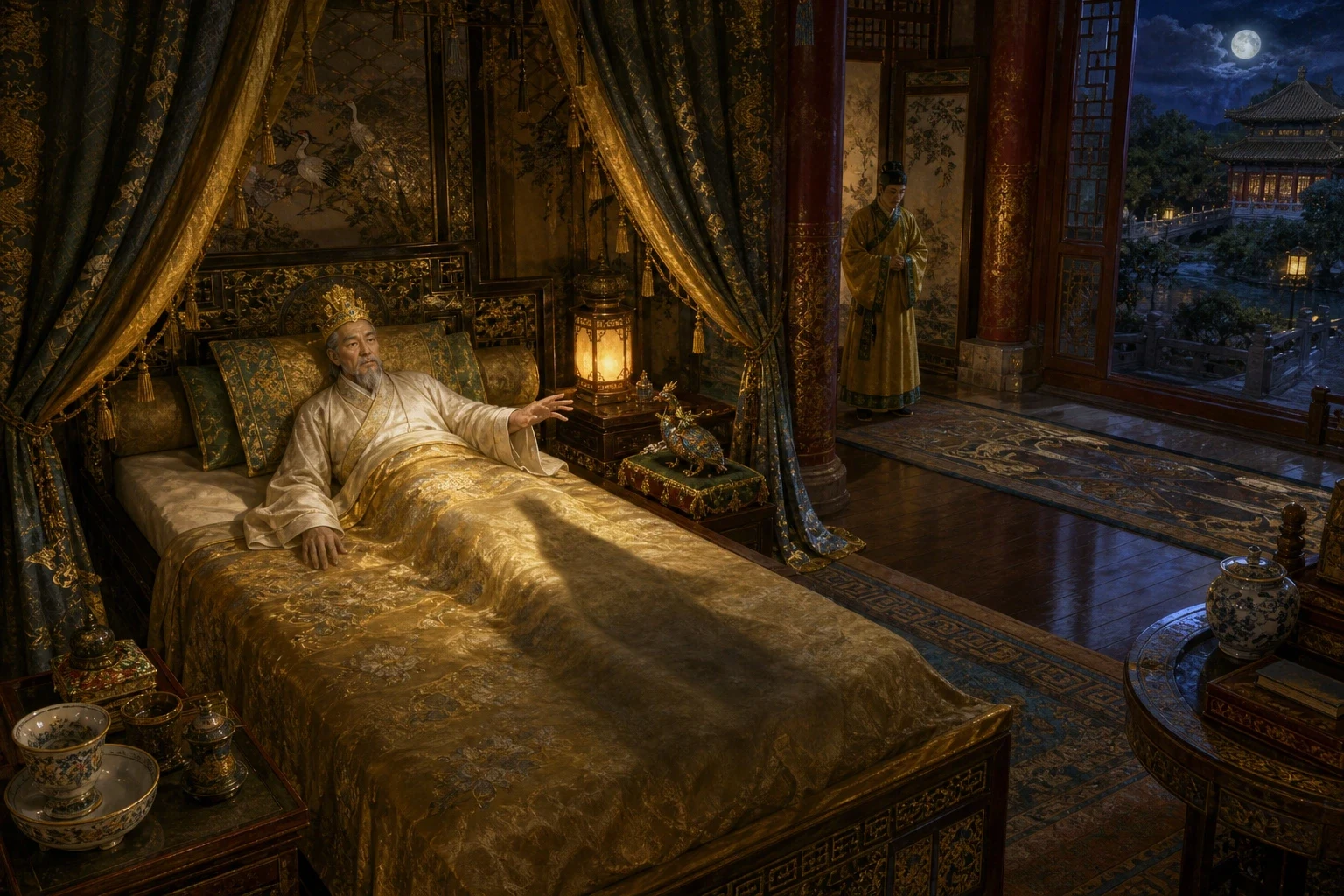
Several years passed, and the great emperor fell gravely ill, until at last he lay pale and weak upon his magnificent bed, and the whole court believed he would not live. A new emperor was already being spoken of in the corridors. In the cold, quiet night, the sick old emperor lay almost too weak to move, and it seemed to him that a soft, grey, heavy shadow sat upon his chest — the quiet shadow of Death itself, come to carry him away. Longing with all his failing heart for some comfort, the emperor gazed at the silent jewelled bird beside his bed and whispered for music, for a song, anything to lighten the long dark hours — but the broken mechanical bird had no one to wind it, and could not sing a single note.
Page 8
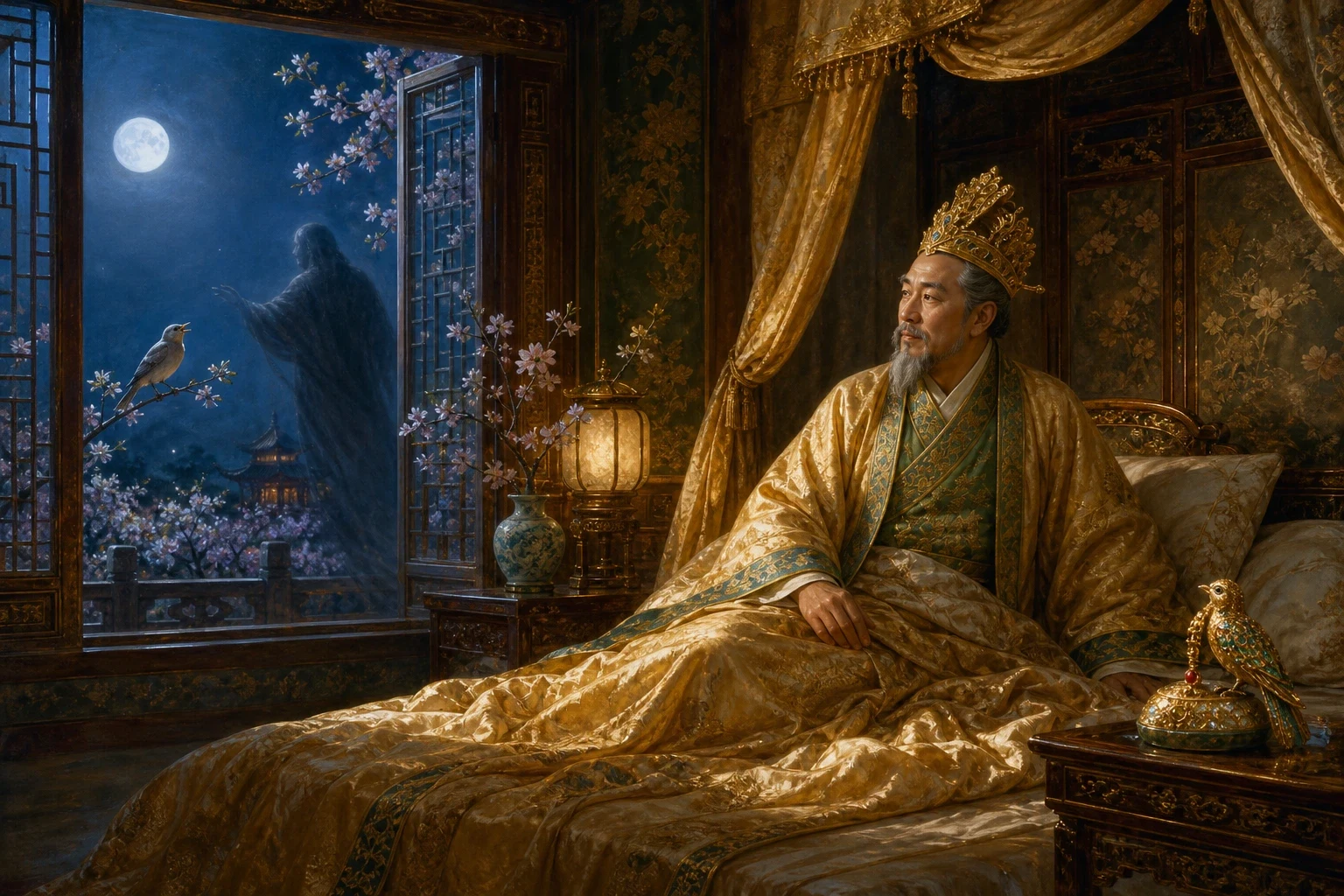
Then, all at once, through the open window came the sweetest sound in the world — for the plain little nightingale, hearing of its old emperor's illness, had flown back from its woods to sit on a branch outside and sing for him. And oh, how it sang! It sang of the quiet green garden and the fresh morning dew, of peace and of kindness and of all the gentle good things of life, until the song filled the whole room with warmth and hope. And as it sang, the soft grey shadow of Death upon the emperor's chest grew lighter and lighter, and then, as if the music itself gently bid it go, it faded quite away and drifted out of the window into the night, leaving the emperor to live.
Page 9
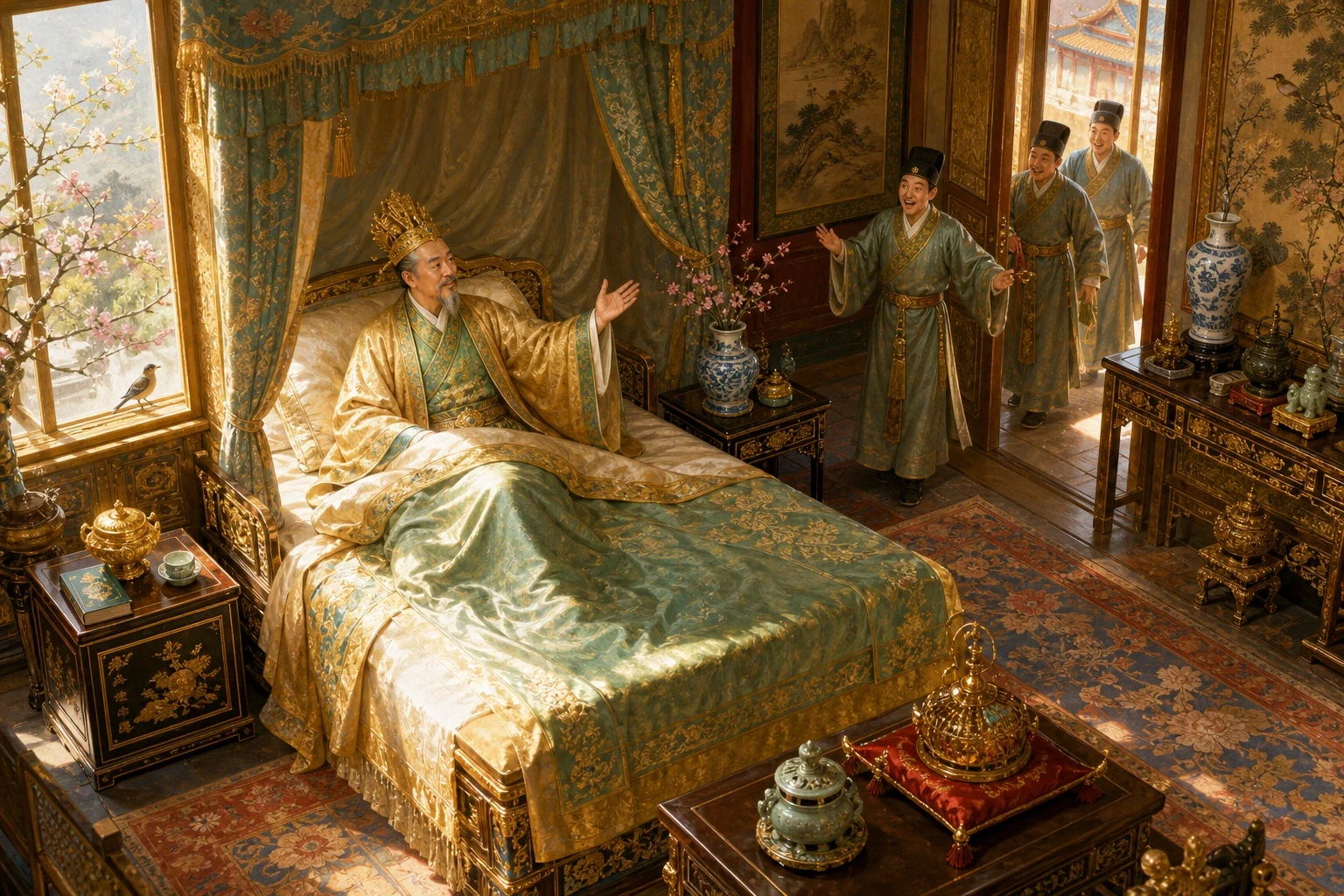
When morning came, the servants crept in expecting to find their emperor dead — and were astonished to see him sitting up in bed, well and strong again, bidding them good morning! The little nightingale still sat singing softly on the windowsill. The emperor, humbled and grateful, begged the bird to stay and live at the palace in a golden cage for ever. But the nightingale gently refused. It could not live shut in a cage, it said; but it would come freely of its own accord, to perch on the emperor's window of an evening and sing to him — of the happy and the suffering of his whole wide empire, of the good and the sorrowful alike — so that a wise emperor might hear the truth of his people in a little bird's honest song. And the emperor, wiser now, agreed with all his heart.
Page 10

And so the emperor was well again, and the whole empire rejoiced. But the emperor was changed — for he had learned a lesson worth more than all his porcelain and gold: that the plain and true and living song of a free little bird was worth more than the finest jewelled machine ever made. From that day the nightingale came freely each evening to sing at the emperor's window, and the emperor listened, and grew wiser and kinder in his ruling. The humble little kitchen-maid who had first found the bird was honoured at court; the dazzling mechanical bird was kept only as a curiosity; and the real nightingale, free as the air, filled the emperor's beautiful garden with the sweetest and truest song in all the world, for the rest of his long and happy days.
About this story
- Audience: kids (ages 6–12)
Read Wonder Tales on your phone
Wonder Tales is available on Android. Get Wonder Tales on Google Play.