The Tiger, the Brahmin and the Jackal
A cage opened out of kindness, three witnesses who all said the same thing, and one jackal who could not follow the argument
Page 1
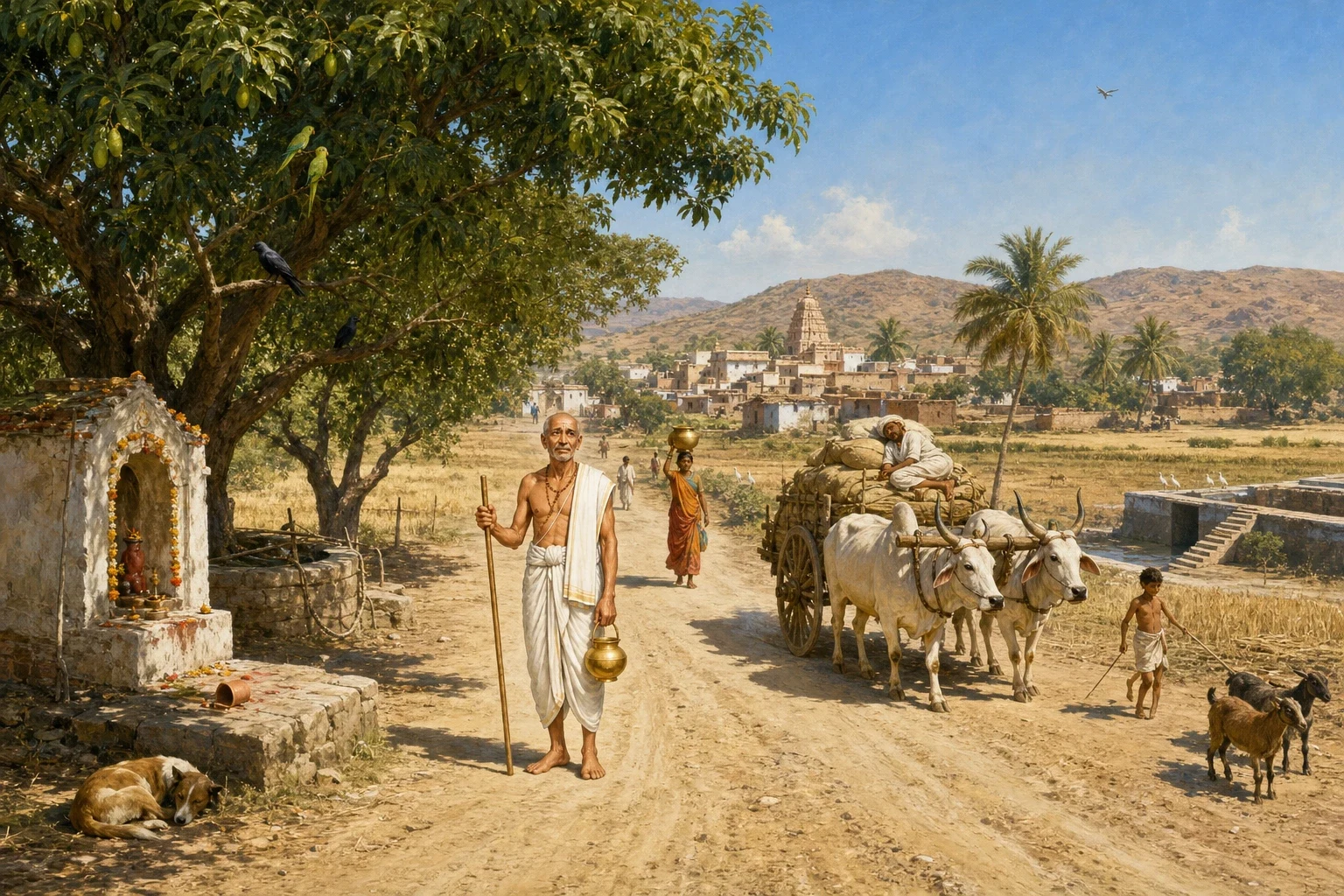
In India, in the hot part of the year, when the dust on the road is as fine as flour and the air over the fields shakes with the heat, a Brahmin was walking home from the next village along a road he had walked all his life. He was a thin, elderly, soft-hearted man, and he was carrying a brass pot of water and thinking about nothing in particular. He passed the mango trees and the dry tank and the shrine at the corner. He stopped once to let a bullock cart go by. He was about half a mile from his own village and perfectly content, and this is the last page of the story on which anything is simple.
Page 2
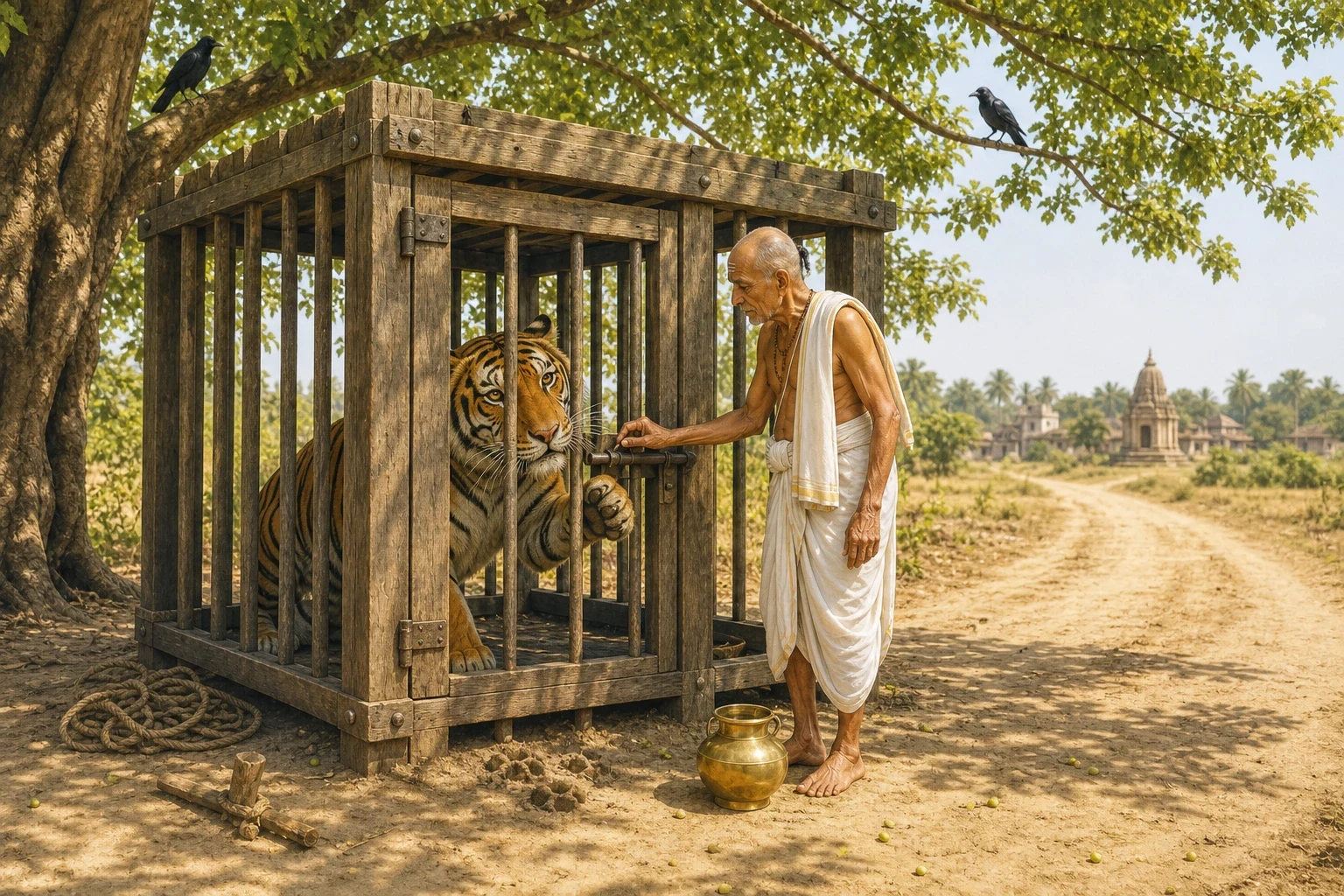
And there, at the side of the road under a neem tree, stood a cage with a tiger in it. Somebody had trapped him and gone away, and he had been in there a long time; and when he saw the Brahmin he put his great face against the bars and begged. He begged beautifully. He said he was dying of thirst, that he had not drunk for two days, that the heat was killing him, and that if the Brahmin would only open the door he would be grateful for the rest of his life and would never, never forget it. The Brahmin said he was sorry, but that if he opened the door the tiger would certainly eat him. The tiger said that this was a terrible thing to say to anybody. He wept — actual tears, on both sides of his nose — and he swore by everything a tiger can swear by, and he went on doing it in the heat of the afternoon until the Brahmin, who had never in his life been able to walk away from anybody asking for help, put down his water pot and pulled back the bolt.
Page 3
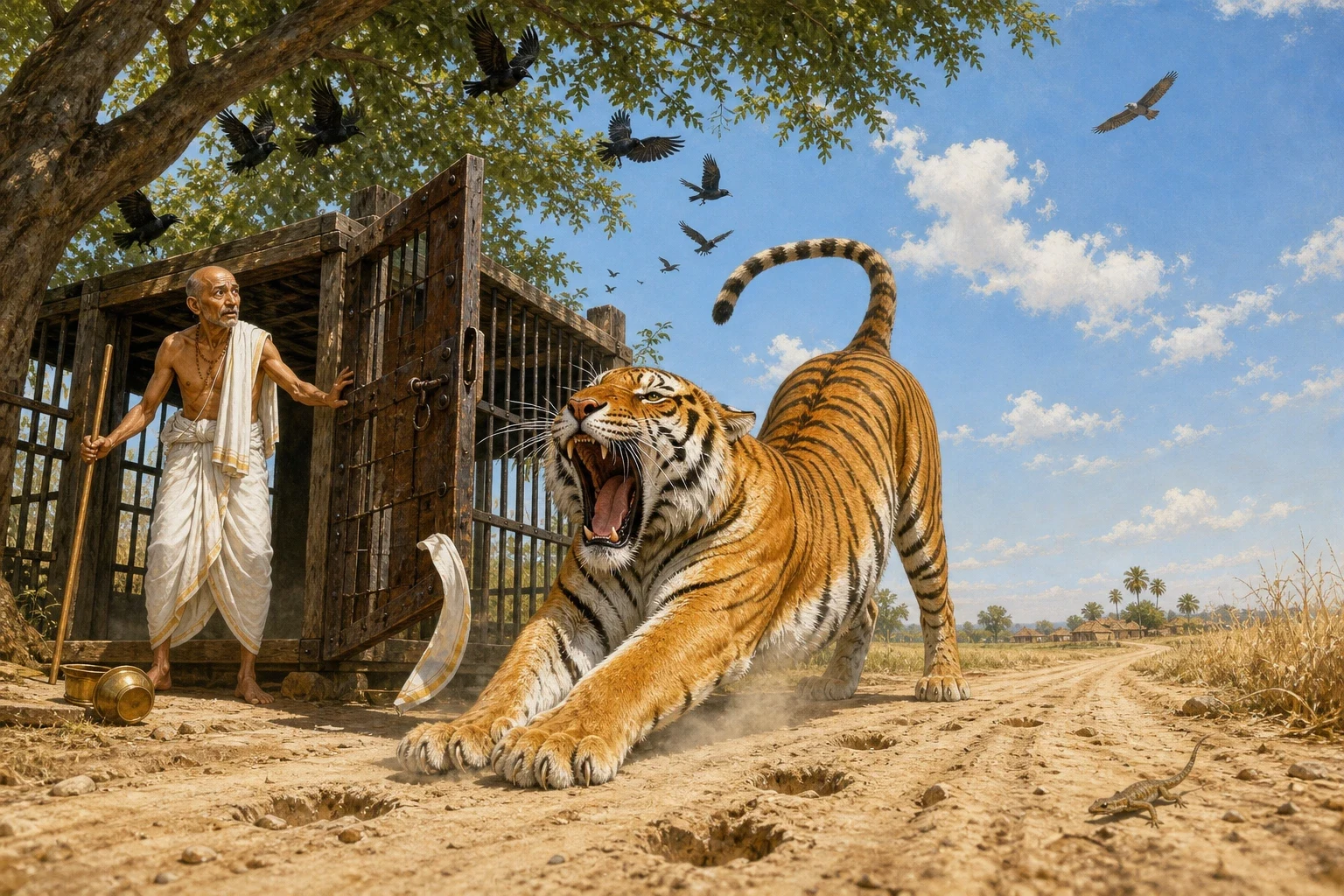
The door swung open. The tiger came out of that cage like water out of a broken jar, stretched himself from his nose to the end of his tail, and said that the first thing he was going to do, now that he was free, was eat the Brahmin. The Brahmin said that this was exactly what he had been afraid of, and that the tiger had sworn. The tiger said that he had been inside a cage at the time, and that promises made inside a cage do not count. The Brahmin said that it was a wicked thing to say and that the tiger must know it. And the tiger, who was enjoying himself, said that if the Brahmin felt so strongly about it they would ask the first three things they met on the road whether or not it was wicked — and that if all three said he was in the wrong, he would let the Brahmin go. The Brahmin agreed at once, because he could not think of anything else to do.
Page 4
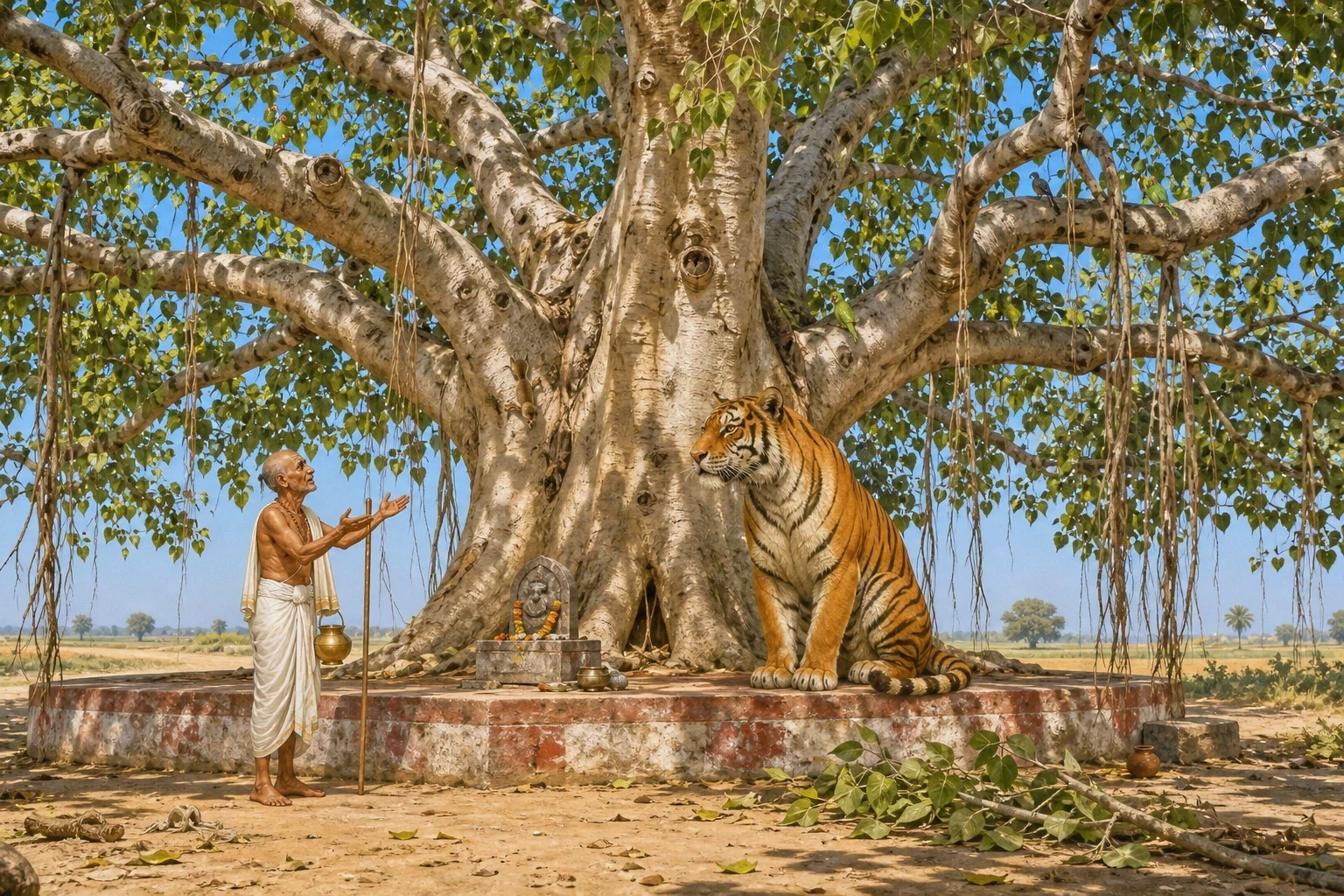
The first thing they met was a pipal tree, the great spreading kind with leaves that never stop moving, standing by itself where three fields met. The Brahmin put the question to it carefully and fairly, and the tree heard him out, and then rustled all over and gave its judgement. It said that it stood there all year giving shade to every traveller on that road, and that in return they broke its branches to feed their cattle and cut its bark and tied their goats to it and left their rubbish in its roots; and that if the Brahmin expected gratitude from anybody he had clearly not been paying attention. Eat him, said the tree. And the tiger looked at the Brahmin, and the Brahmin said that one was only one, and that there were two more to go.
Page 5
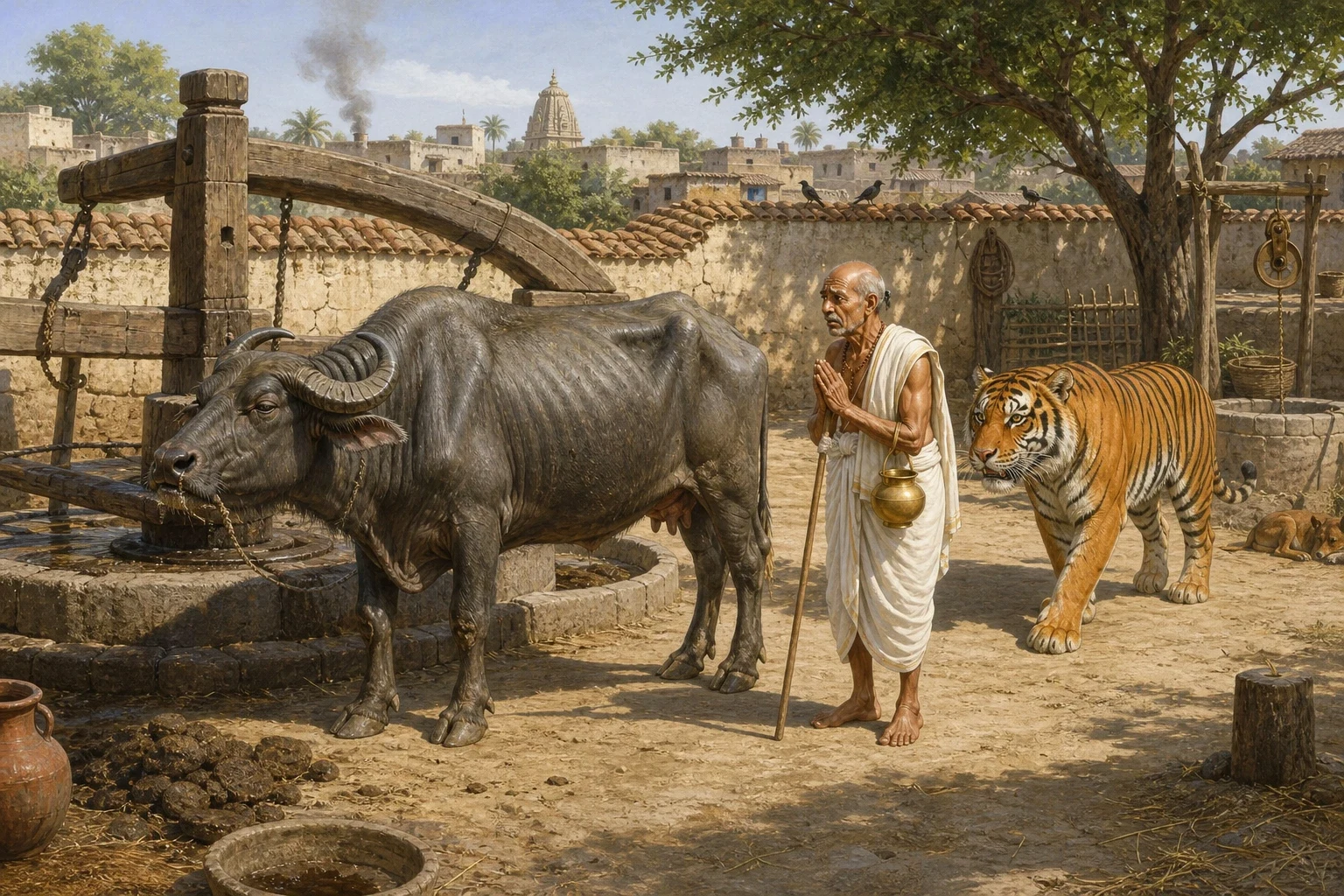
The second thing they met was an old buffalo, standing by herself in a yard beside a broken oil-press with a frayed rope through her nose. The Brahmin asked her the question. The buffalo chewed for a while and then said that when she was young and strong she had turned that press from before sunrise until after dark, every day, for twenty years, and they had fed her well and rubbed her down and called her by her name; and that when she grew too old to turn it they had taken the harness off her and put her out in this yard and had not brought her so much as a handful of grass since. She said she could see the house from where she stood. Then she said that the Brahmin should not expect anything from anybody, and went back to chewing, and did not look at either of them again.
Page 6
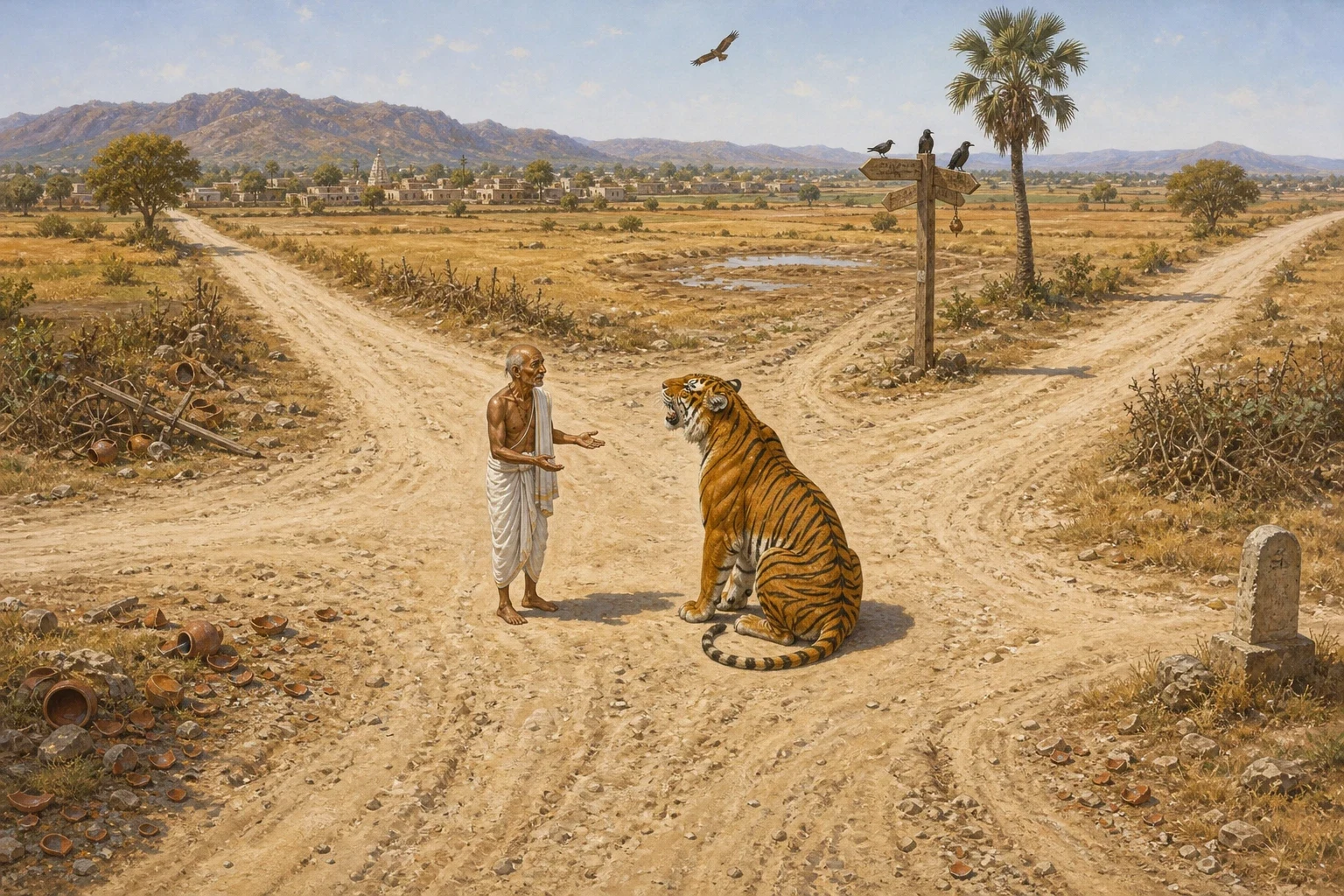
The third thing they met was the road. They were standing on it at the crossroads when the Brahmin thought of it, and he asked it, and the road answered in a dry, flat, enormously tired voice. It said that it ran from one end of the district to the other and that every soul in it used the road every day of their lives, and that in return they threw their broken pots on it, and dug it up, and let the carts cut it to pieces in the rains, and never once mended it, and never once thought about it at all except to complain. Then it said what the other two had said. And that was three. The tiger sat down in the middle of the crossroads and said that the Brahmin was a fair man and had taken his judgement well, and asked whether he had any last remarks.
Page 7
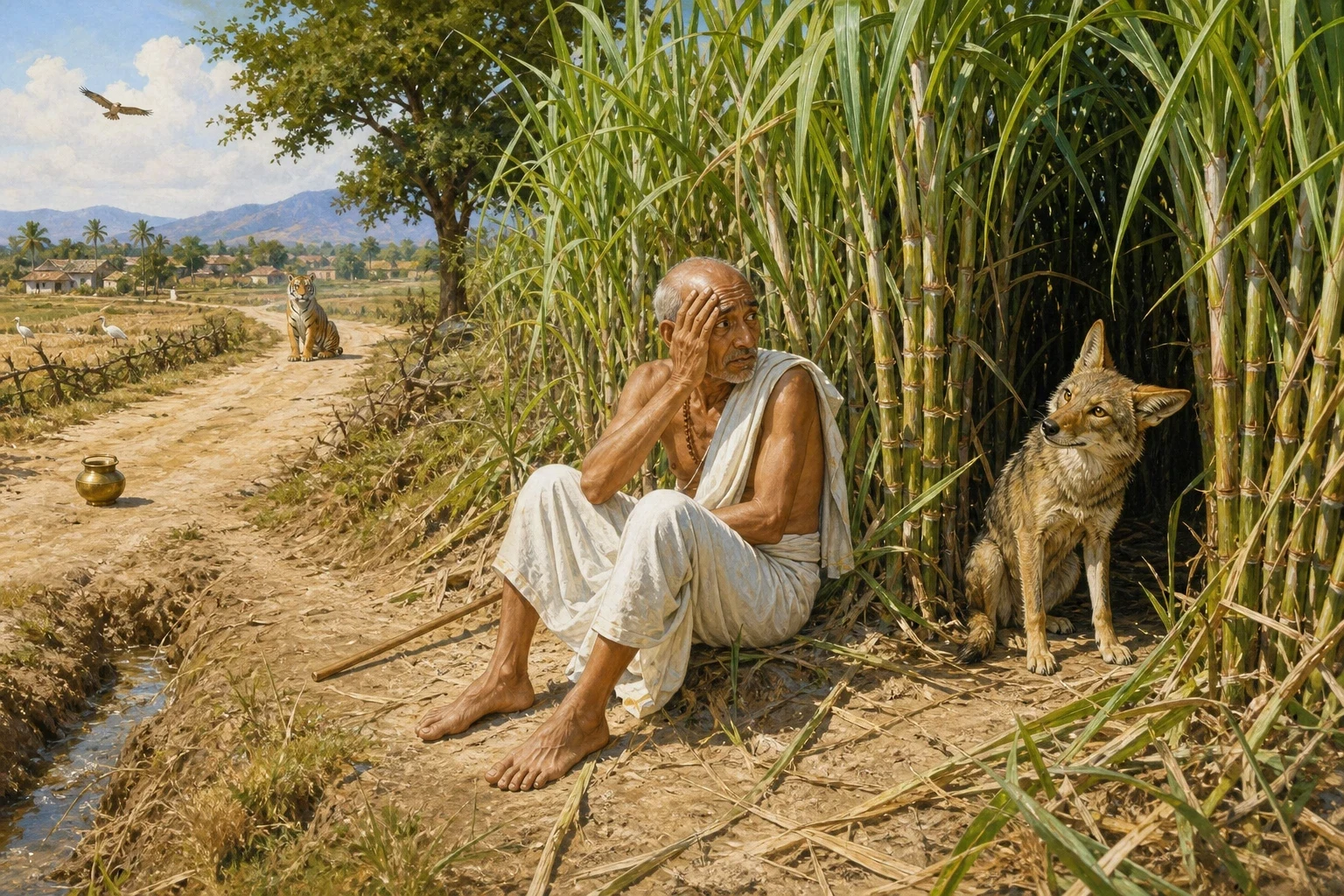
The Brahmin asked for one moment to say his prayers, which the tiger allowed, being in a good mood; and he walked a few steps to the edge of a sugarcane field and sat down with his face in his hands. And out of the cane came a jackal — a lean, scruffy, bright-eyed jackal — who sat down beside him and asked, in the friendliest way, what the matter was. The Brahmin told him the whole thing from the beginning: the cage, the bolt, the promise, the tree, the buffalo, the road. The jackal listened to all of it with his head on one side. Then he said he was terribly sorry but he had not followed it. The Brahmin told it again. The jackal said that he was getting muddled about who had been in the cage. The Brahmin, who had very little time, told it a third time — and the jackal shook his head and said that there was nothing for it: he would have to be shown.
Page 8
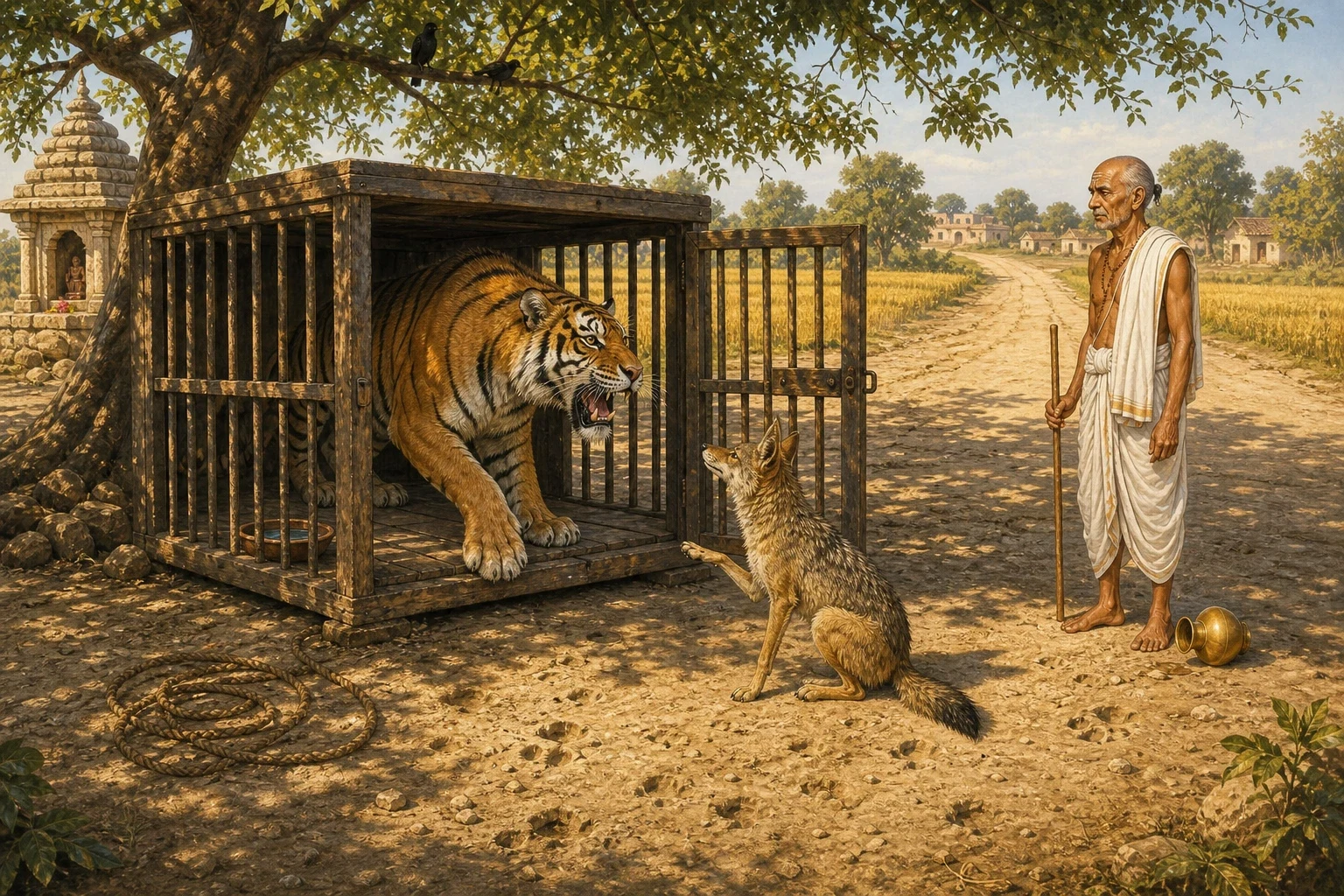
So they all walked back along the road to the neem tree and the cage, and the jackal stood in front of it and frowned at it for a long time. He said that he thought he had it now: the Brahmin was in the cage, and the tiger came along the road. No, said the tiger. The jackal apologised and tried again: the cage was walking along the road and met the Brahmin. The tiger said that this was the most ridiculous thing he had ever heard and that it was perfectly simple. The jackal said he was very sorry, that he was only a jackal, and that he could not get it into his head where the tiger had been at the start of it. And the tiger, who had explained it four times and was now extremely annoyed, said that he had been HERE — and walked into the cage and stood in the middle of it and asked whether that was clear enough.
Page 9
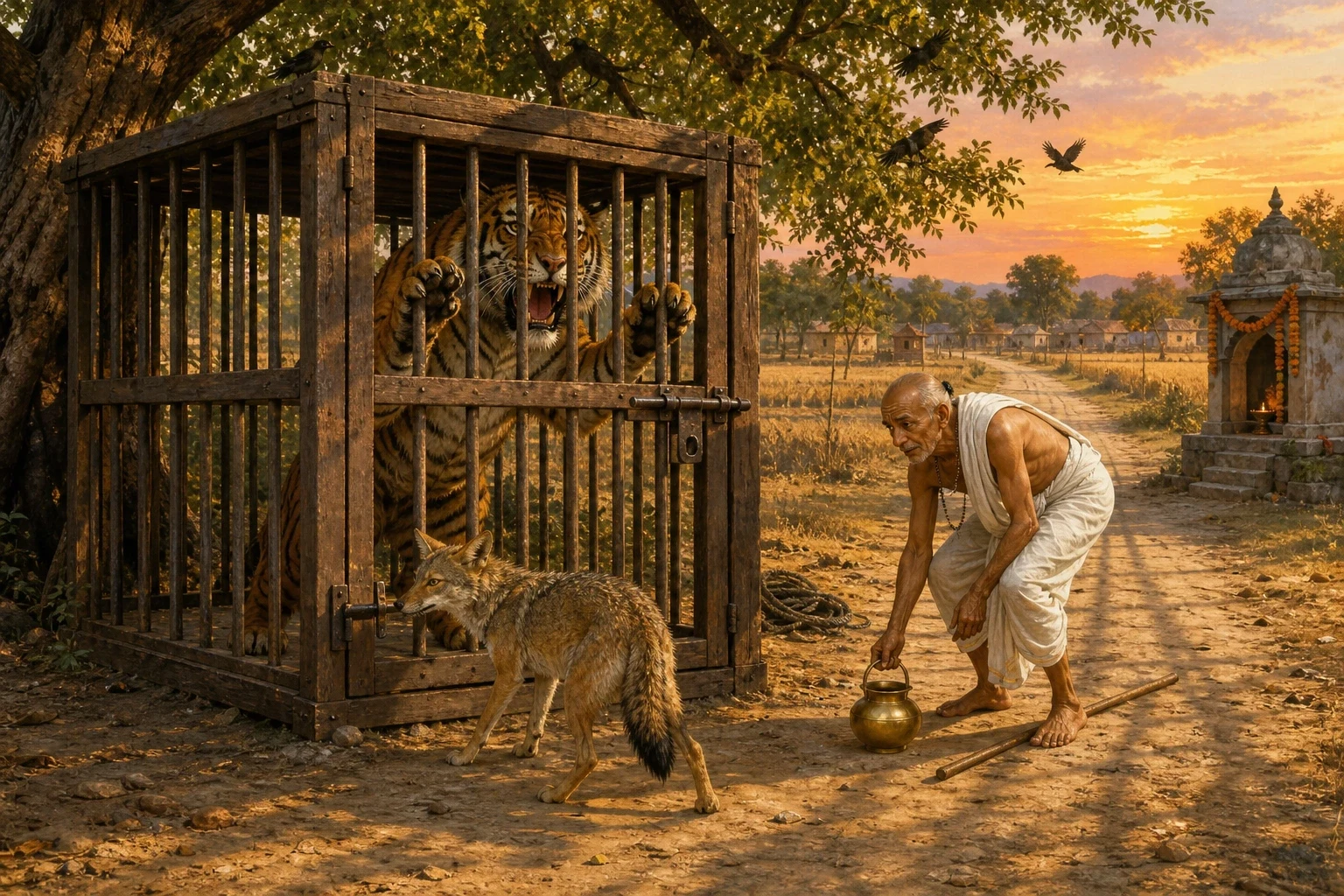
"Oh," said the jackal. "In the cage. Like that." And he put his nose under the door and pushed it shut, and knocked the bolt home with one paw. Then he sat down and said that he thought he understood the whole thing now, and that as far as he could see the only question left was whether the Brahmin would be so foolish as to open it a second time — and that he rather thought not. The tiger said a great many things through the bars. The jackal listened politely to all of them and did not answer any. And then he and the Brahmin walked away down the road together in the evening light, and left the tiger exactly where they had found him, which is precisely where this story began, and precisely where it ends.
Page 10
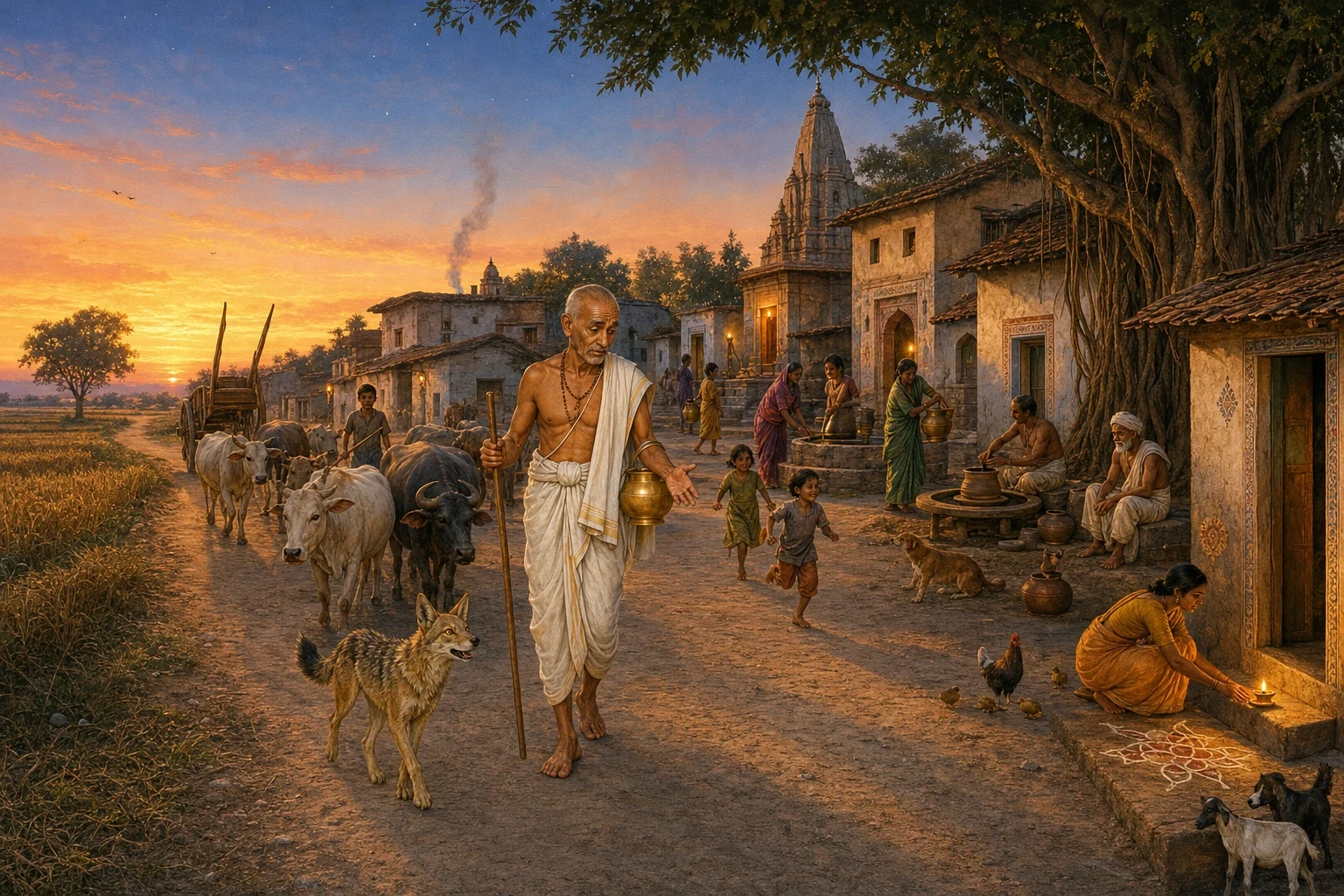
They came into the village at dusk, when the cooking fires were lit and the cattle were coming in along the lane, and the Brahmin tried to thank the jackal and could not find anything big enough to say. The jackal said that there was no need, and that it had been an interesting afternoon, and asked whether he might have the chickens' leavings at the back of the house occasionally — which he got, for years. And afterwards, whenever the Brahmin told the story, people in that village would ask him what the lesson was, and he would think about the pipal tree with its broken branches, and the old buffalo standing in her empty yard, and the road full of everybody's rubbish, and he would say that he was not entirely sure the tiger had been wrong about people. And then he would say that he would open the cage again anyway. And everybody always said that he would, too.
About this story
- Audience: kids (ages 6–12)
Read Wonder Tales on your phone
Wonder Tales is available on Android. Get Wonder Tales on Google Play.