Cebu City, Philippines

Cebu City, Philippines — an illustrated travel story, set in Cebu City. 10 illustrated pages, free to read on Wonder Travel.
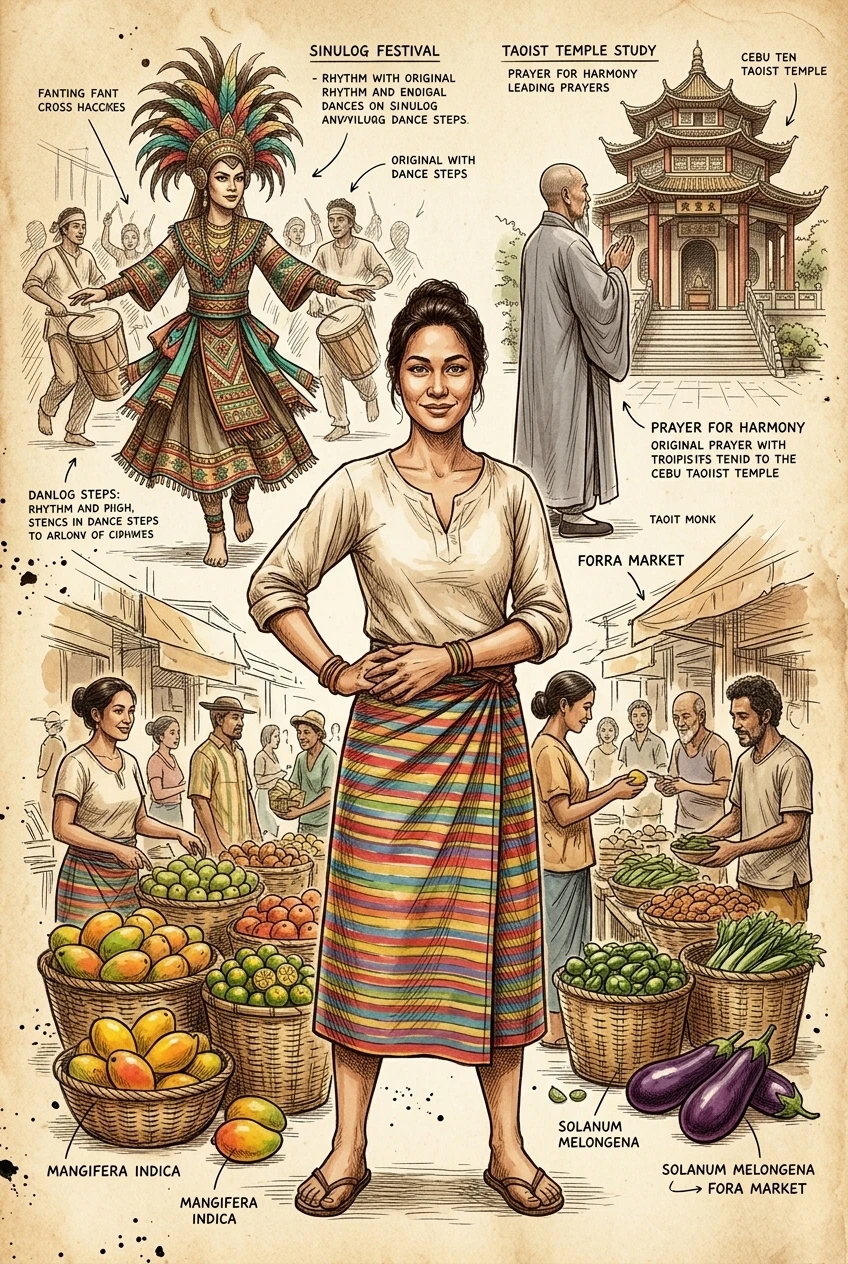
Cebu City, Philippines — book cover — Wonder Travel
Cebu City, Philippines — an illustrated travel story, set in Cebu City. 10 illustrated pages, free to read on Wonder Travel.

Page 1
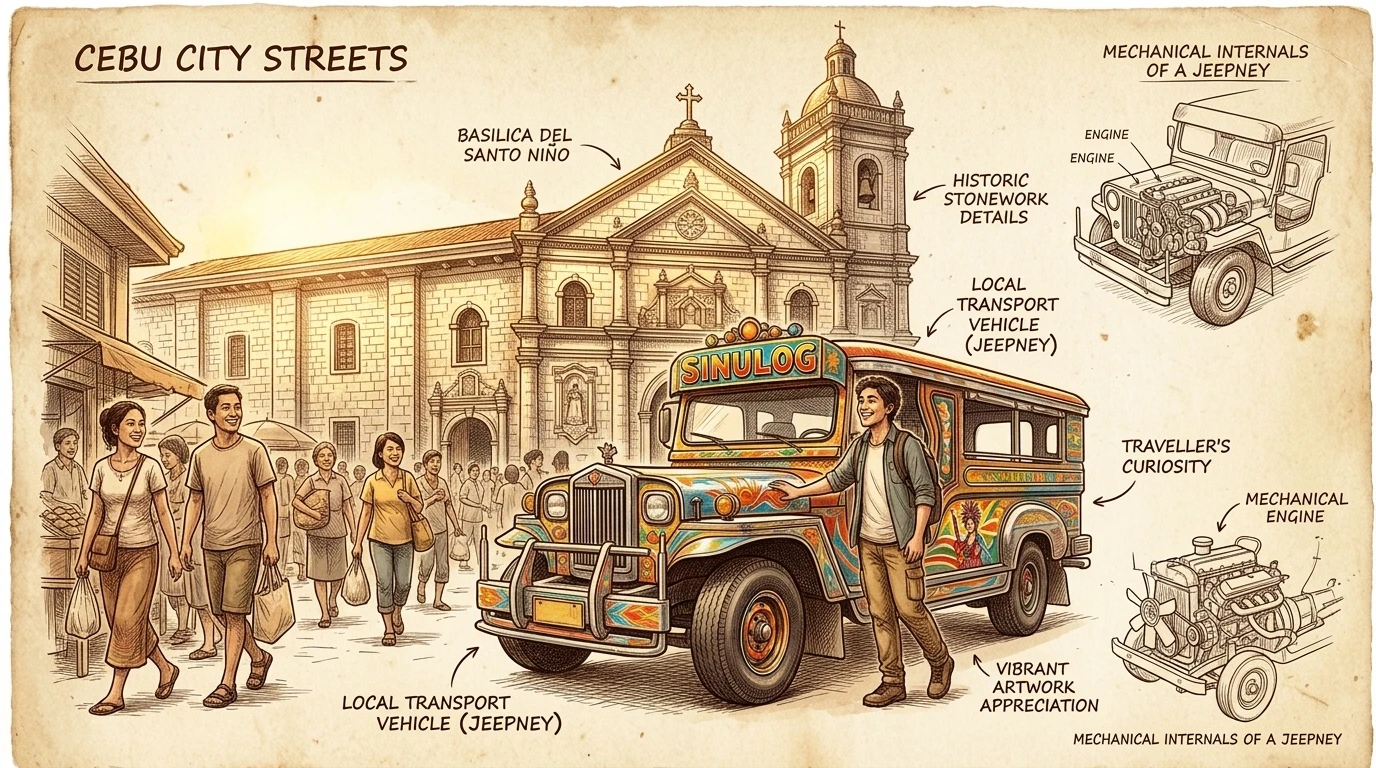
Cebu City, located in the Central Visayas region of the Philippines, is the oldest city in the archipelago, established by the Spanish in 1565.
Cebu City, located in the Central Visayas region of the Philippines, is the oldest city in the archipelago, established by the Spanish in 1565. The Basilica del Santo Niño, a historic church, stands as a testament to the city's rich religious heritage. Jeepneys, colorfully decorated public transport vehicles, weave through the bustling streets around the Basilica.

Cebu City, located in the Central Visayas region of the Philippines, is the oldest city in the archipelago, established by the Spanish in 1565. The Basilica del Santo Niño, a historic church, stands as a testament to the city's rich religious heritage. Jeepneys, colorfully decorated public transport vehicles, weave through the bustling streets around the Basilica.

Travel Fact: The Basilica del Santo Niño houses the image of the Santo Niño de Cebú, the oldest Christian relic in the Philippines.

Page 2
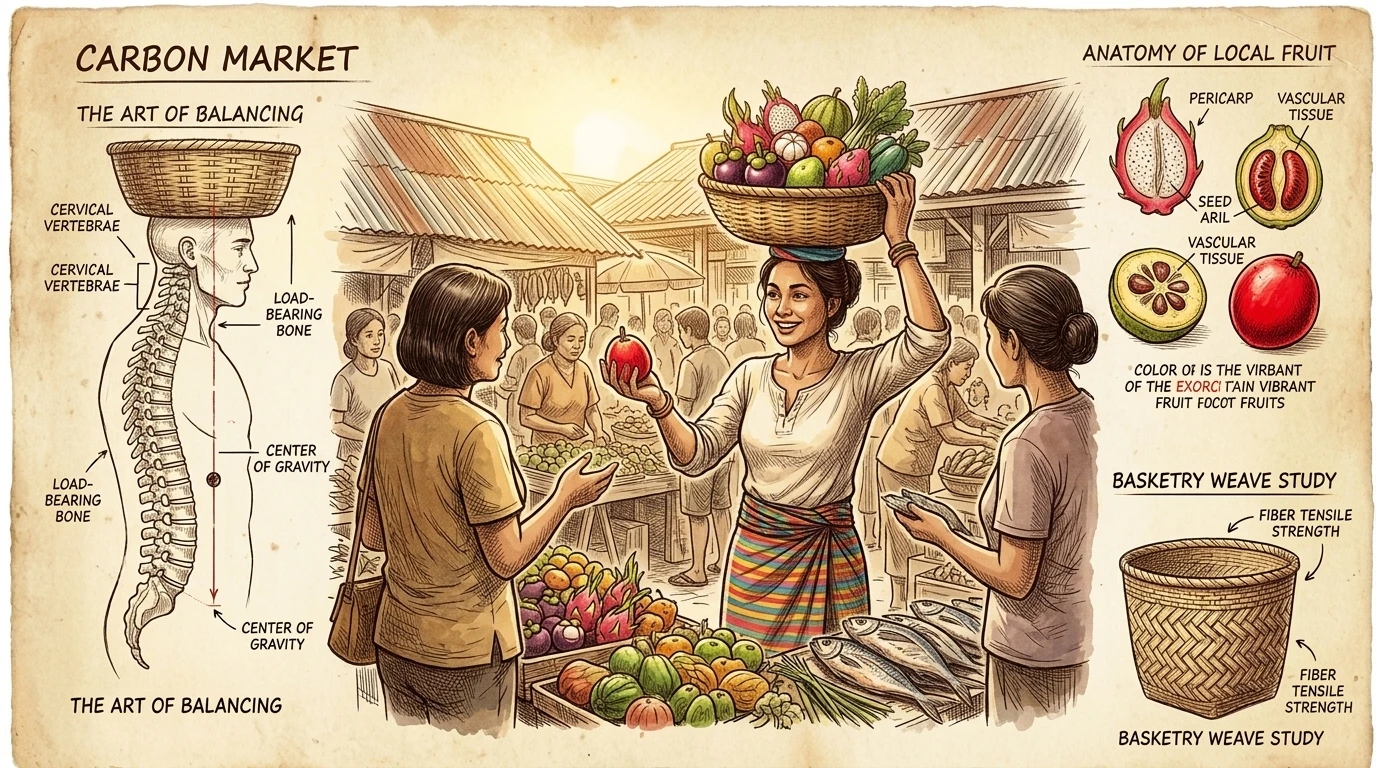
The Carbon Market is a sprawling hub where vendors sell everything from fresh produce to dried fish, embodying the essence of Cebuano commerce.
The Carbon Market is a sprawling hub where vendors sell everything from fresh produce to dried fish, embodying the essence of Cebuano commerce. Here, one can find an array of unique fruits and vegetables native to the Philippines. Many women wear colorful tapis—traditional wraparound skirts—while haggling for the best prices. Travel Fact: Carbon Market is named after the coal depot once located nearby.

The Carbon Market is a sprawling hub where vendors sell everything from fresh produce to dried fish, embodying the essence of Cebuano commerce. Here, one can find an array of unique fruits and vegetables native to the Philippines. Many women wear colorful tapis—traditional wraparound skirts—while haggling for the best prices.

Travel Fact: Carbon Market is named after the coal depot once located nearby.

Page 3
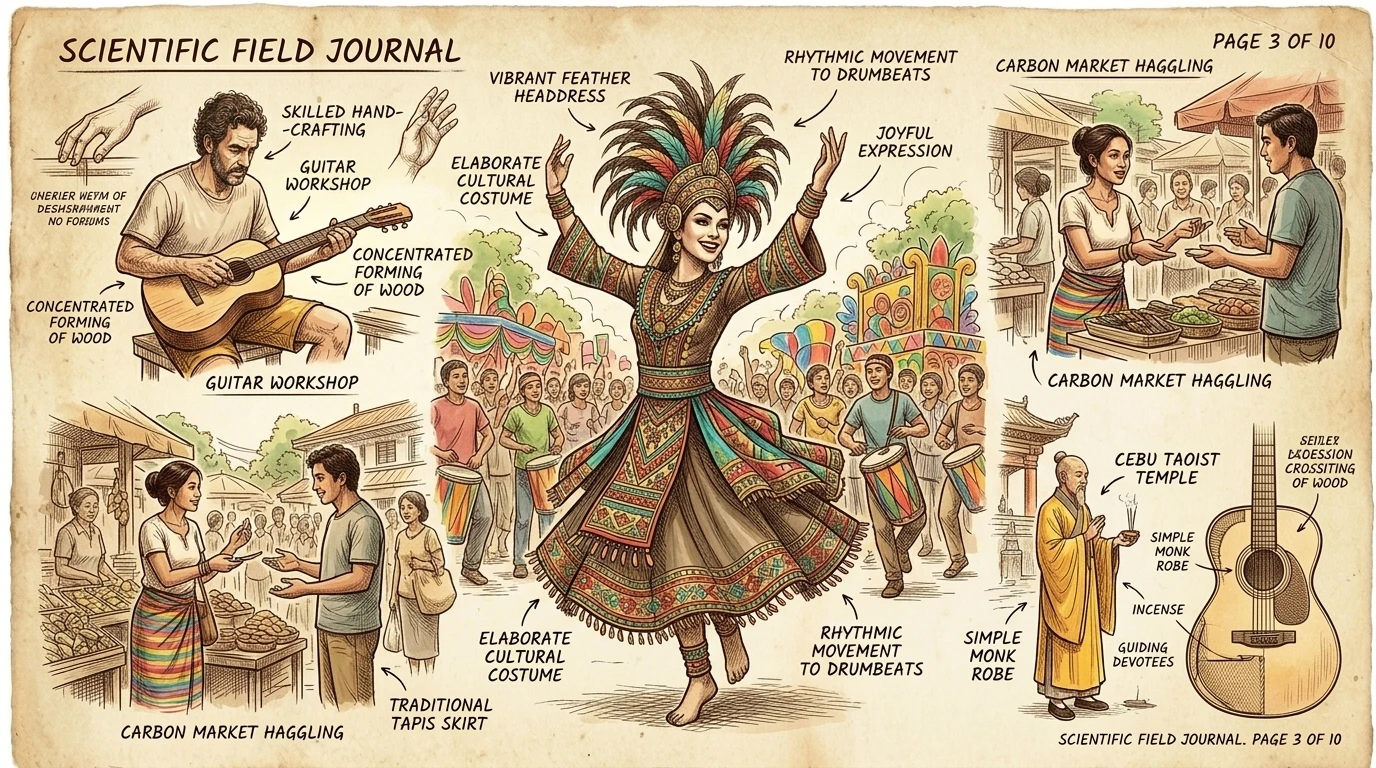
The Sinulog Festival honors the Santo Niño (Child Jesus) through vibrant street parades, traditional dances, and rhythmic drumbeats.
The Sinulog Festival honors the Santo Niño (Child Jesus) through vibrant street parades, traditional dances, and rhythmic drumbeats. Dancers clad in colorful costumes move to the mesmerizing rhythm of drums and gongs. The air is filled with shouts of 'Pit Señor!', a prayer-chant for the Santo Niño. Travel Fact: The Sinulog dance steps mimic the 'sulog' or current of the Pahina River.

The Sinulog Festival honors the Santo Niño (Child Jesus) through vibrant street parades, traditional dances, and rhythmic drumbeats. Dancers clad in colorful costumes move to the mesmerizing rhythm of drums and gongs. The air is filled with shouts of 'Pit Señor!', a prayer-chant for the Santo Niño.

Travel Fact: The Sinulog dance steps mimic the 'sulog' or current of the Pahina River.

Page 4
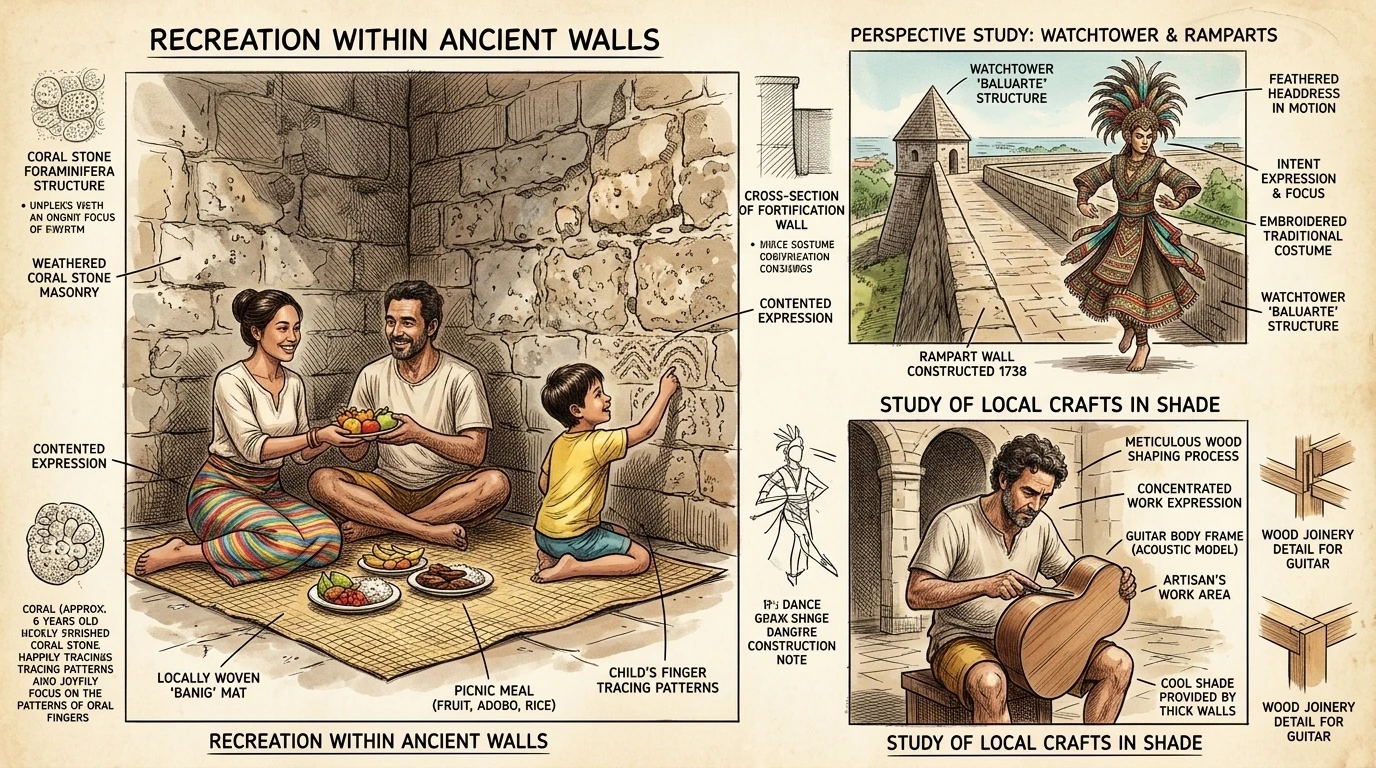
Fort San Pedro, the smallest and oldest fort in the Philippines, stands as a reminder of Cebu's Spanish colonial past. Locals often gather within its walls…
Fort San Pedro, the smallest and oldest fort in the Philippines, stands as a reminder of Cebu's Spanish colonial past. Locals often gather within its walls, using the historical site as a place for relaxation and recreation. The fort's aged stone walls offer shade from the tropical sun. Travel Fact: Fort San Pedro was originally built from wood but later reconstructed using stone.

Fort San Pedro, the smallest and oldest fort in the Philippines, stands as a reminder of Cebu's Spanish colonial past. Locals often gather within its walls, using the historical site as a place for relaxation and recreation. The fort's aged stone walls offer shade from the tropical sun.

Travel Fact: Fort San Pedro was originally built from wood but later reconstructed using stone.

Page 5
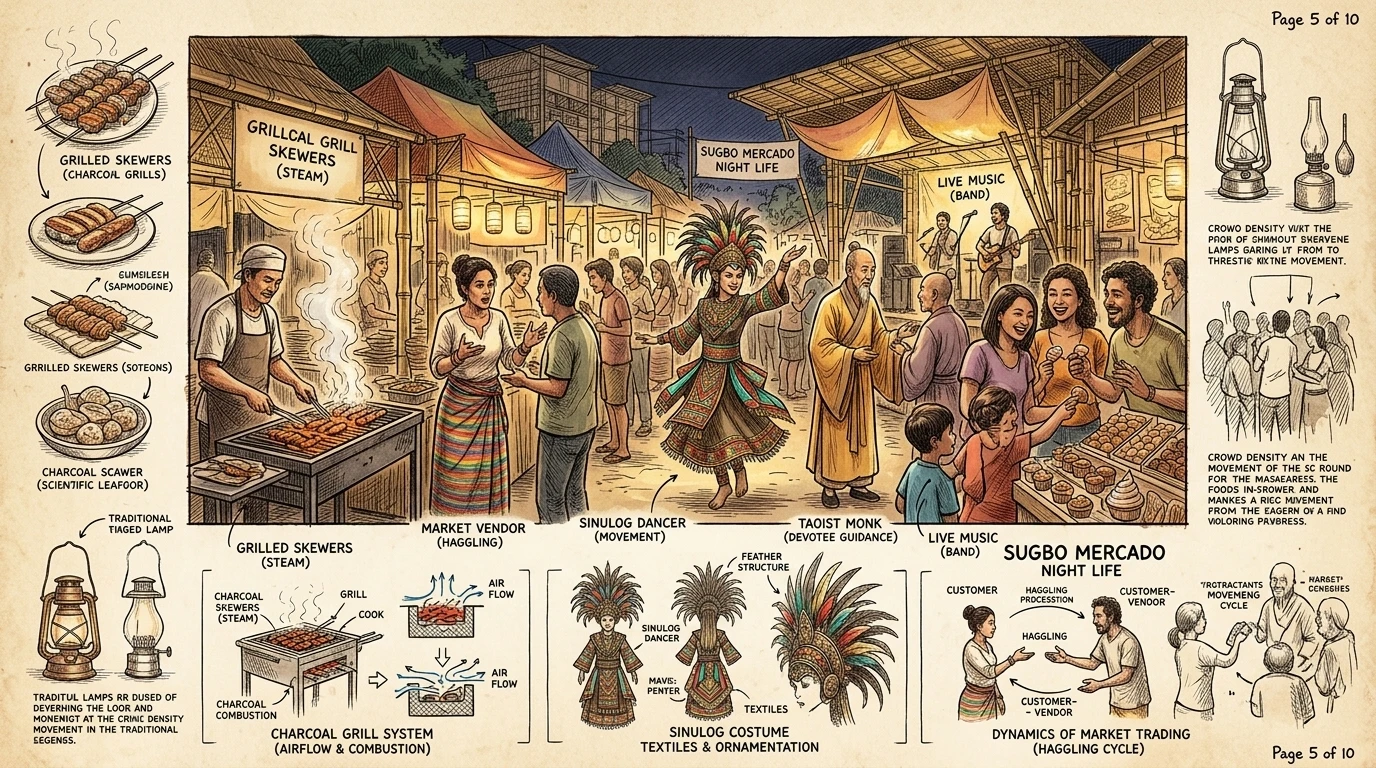
Sugbo Mercado comes alive at night, offering a variety of Cebuano delicacies and international cuisine. Live music fills the air as people gather to enjoy the…
Sugbo Mercado comes alive at night, offering a variety of Cebuano delicacies and international cuisine. Live music fills the air as people gather to enjoy the vibrant atmosphere. The smell of sizzling meats and sweet treats permeates the market. Travel Fact: Sugbo Mercado provides a platform for local entrepreneurs to showcase their culinary creations.

Sugbo Mercado comes alive at night, offering a variety of Cebuano delicacies and international cuisine. Live music fills the air as people gather to enjoy the vibrant atmosphere. The smell of sizzling meats and sweet treats permeates the market.

Travel Fact: Sugbo Mercado provides a platform for local entrepreneurs to showcase their culinary creations.

Page 6
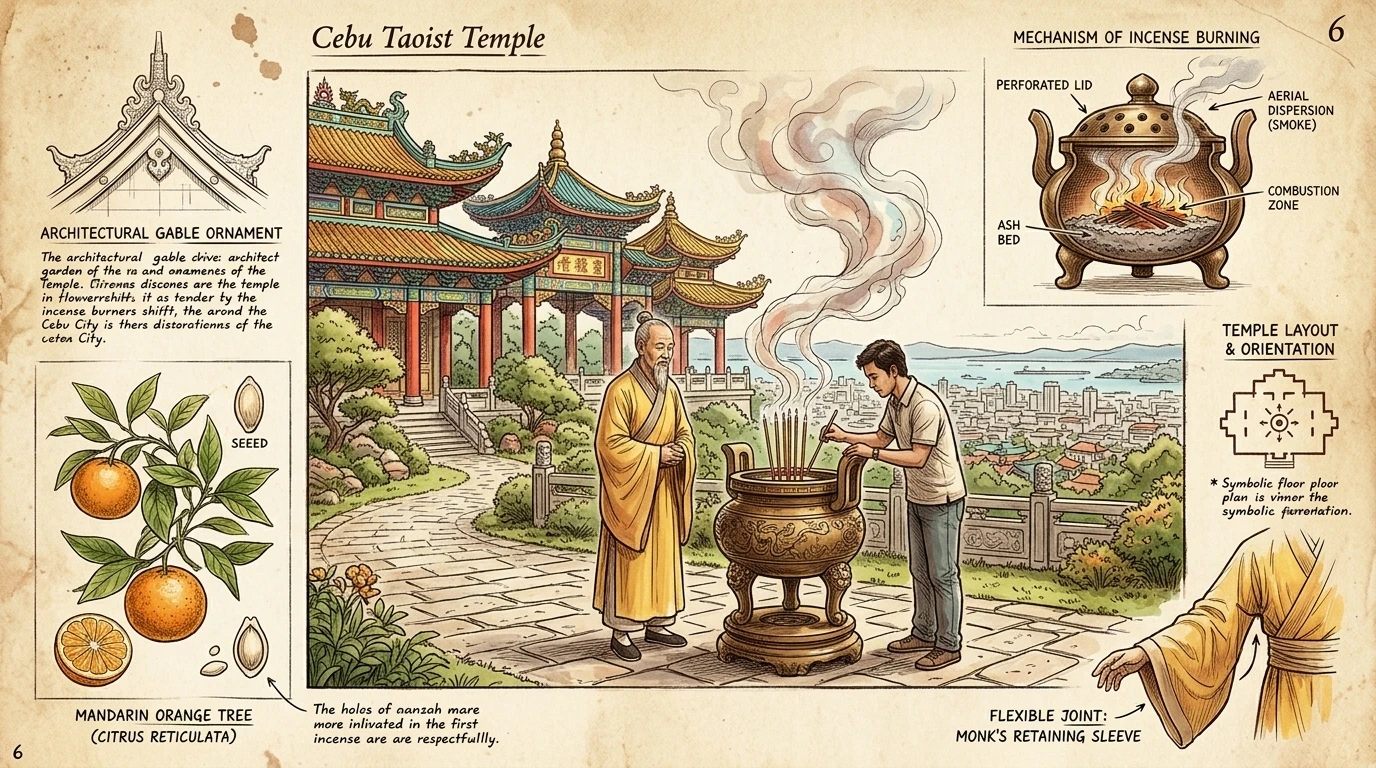
The Taoist Temple offers a tranquil escape from the city's hustle, with its intricate architecture and serene gardens. Devotees come to pray and seek guidance…
The Taoist Temple offers a tranquil escape from the city's hustle, with its intricate architecture and serene gardens. Devotees come to pray and seek guidance, lighting incense and consulting with monks. The temple provides s of Cebu City from its elevated location. Travel Fact: The Cebu Taoist Temple was built in 1972 by Cebu's substantial Chinese community.

The Taoist Temple offers a tranquil escape from the city's hustle, with its intricate architecture and serene gardens. Devotees come to pray and seek guidance, lighting incense and consulting with monks. The temple provides s of Cebu City from its elevated location.

Travel Fact: The Cebu Taoist Temple was built in 1972 by Cebu's substantial Chinese community.

Page 7
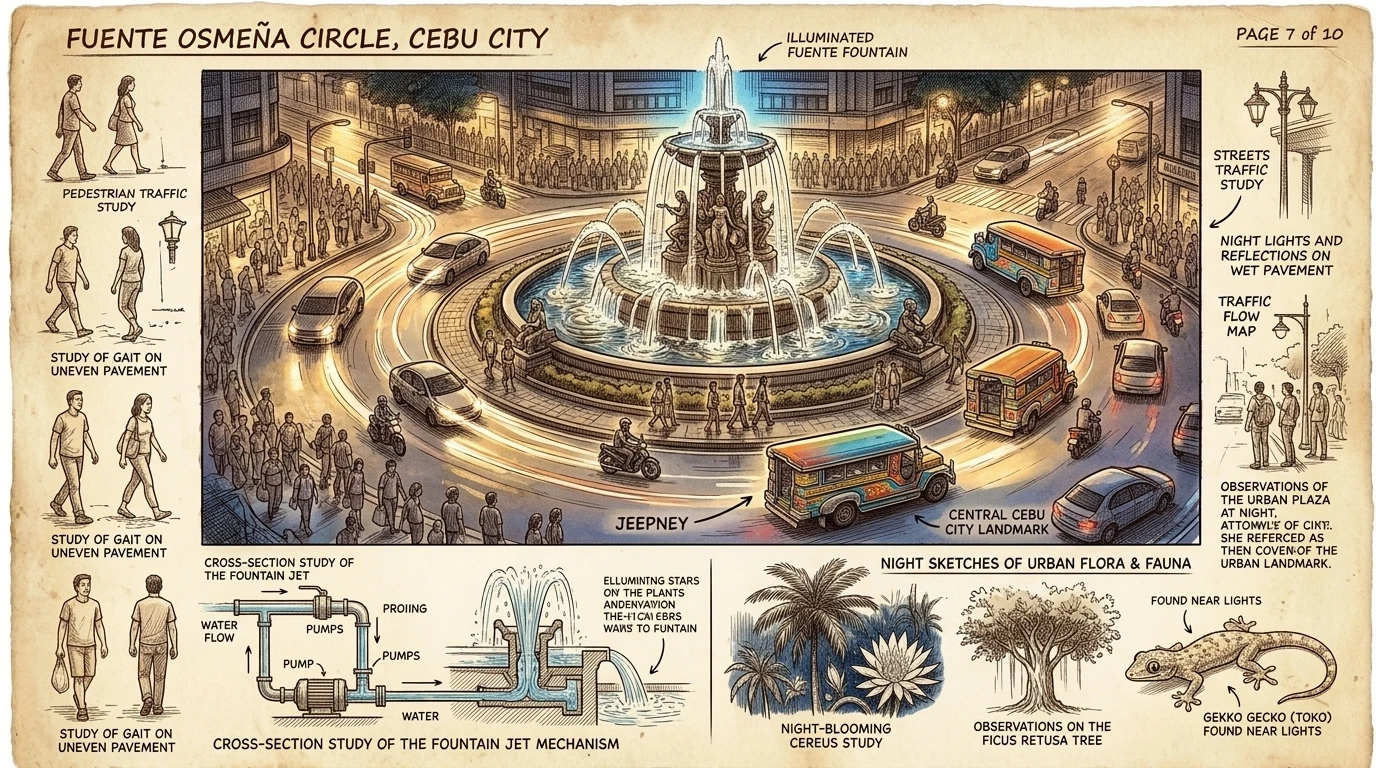
Fuente Osmeña Circle, a prominent roundabout, serves as a central landmark in Cebu City. Locals and commuters pass through this bustling area daily, with its…
Fuente Osmeña Circle, a prominent roundabout, serves as a central landmark in Cebu City. Locals and commuters pass through this bustling area daily, with its illuminated fountain providing a focal point. The circle often hosts public events and celebrations. Travel Fact: Fuente Osmeña Circle is named after former Philippine President Sergio Osmeña.

Fuente Osmeña Circle, a prominent roundabout, serves as a central landmark in Cebu City. Locals and commuters pass through this bustling area daily, with its illuminated fountain providing a focal point. The circle often hosts public events and celebrations.

Travel Fact: Fuente Osmeña Circle is named after former Philippine President Sergio Osmeña.

Page 8

Cebu is known for its skilled guitar makers, who meticulously craft instruments by hand in small workshops. The process involves shaping wood, applying varnish…
Cebu is known for its skilled guitar makers, who meticulously craft instruments by hand in small workshops. The process involves shaping wood, applying varnish, and carefully tuning the strings. These guitars are treasured for their quality and craftsmanship. Travel Fact: Many guitar makers in Cebu are based in the town of Lapu-Lapu City.

Cebu is known for its skilled guitar makers, who meticulously craft instruments by hand in small workshops. The process involves shaping wood, applying varnish, and carefully tuning the strings. These guitars are treasured for their quality and craftsmanship.

Travel Fact: Many guitar makers in Cebu are based in the town of Lapu-Lapu City.

Page 9
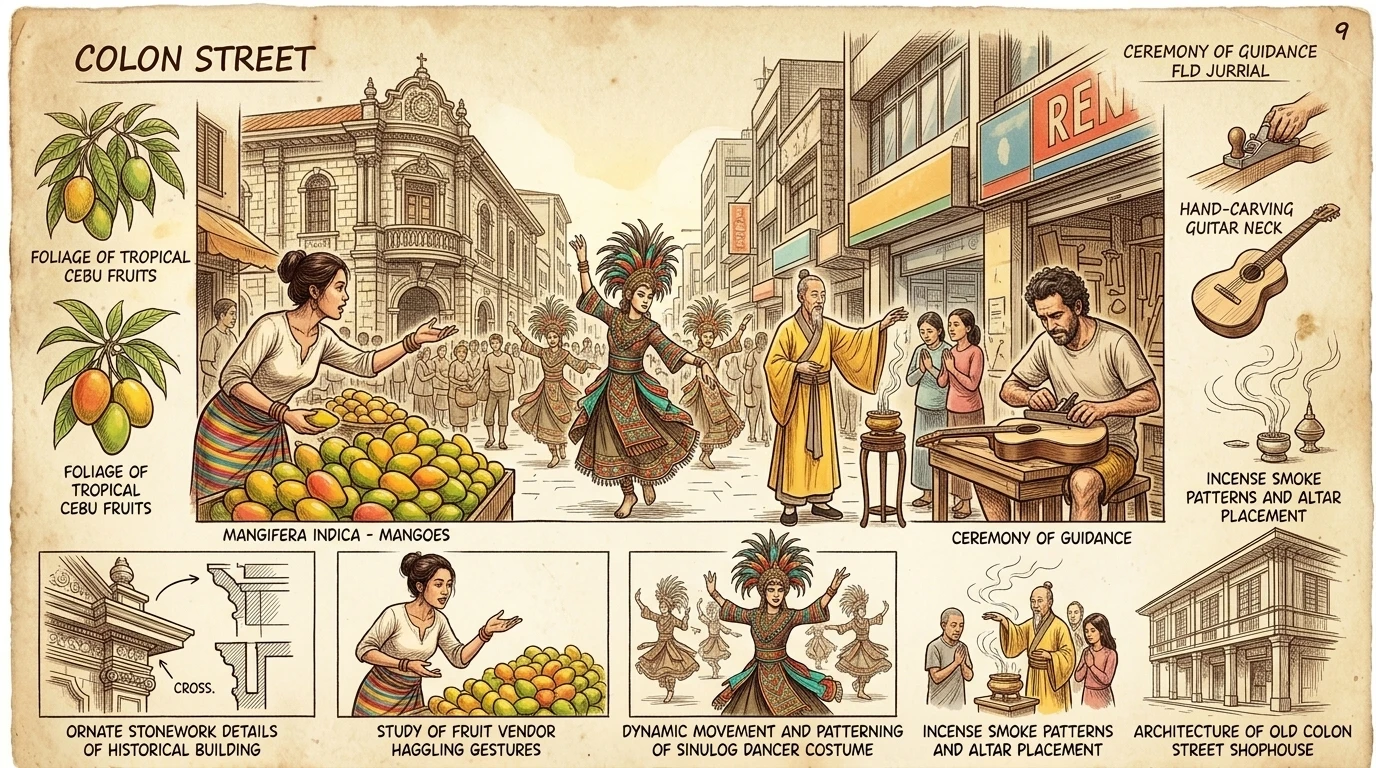
Colon Street is recognized as the oldest street in the Philippines, dating back to the Spanish colonial period. Today, it remains a vibrant commercial hub…
Colon Street is recognized as the oldest street in the Philippines, dating back to the Spanish colonial period. Today, it remains a vibrant commercial hub filled with shops, vendors, and commuters. The street's historical buildings blend with modern establishments. Travel Fact: Colon Street is named after Christopher Columbus (Cristóbal Colón in Spanish).

Colon Street is recognized as the oldest street in the Philippines, dating back to the Spanish colonial period. Today, it remains a vibrant commercial hub filled with shops, vendors, and commuters. The street's historical buildings blend with modern establishments.

Travel Fact: Colon Street is named after Christopher Columbus (Cristóbal Colón in Spanish).

Page 10
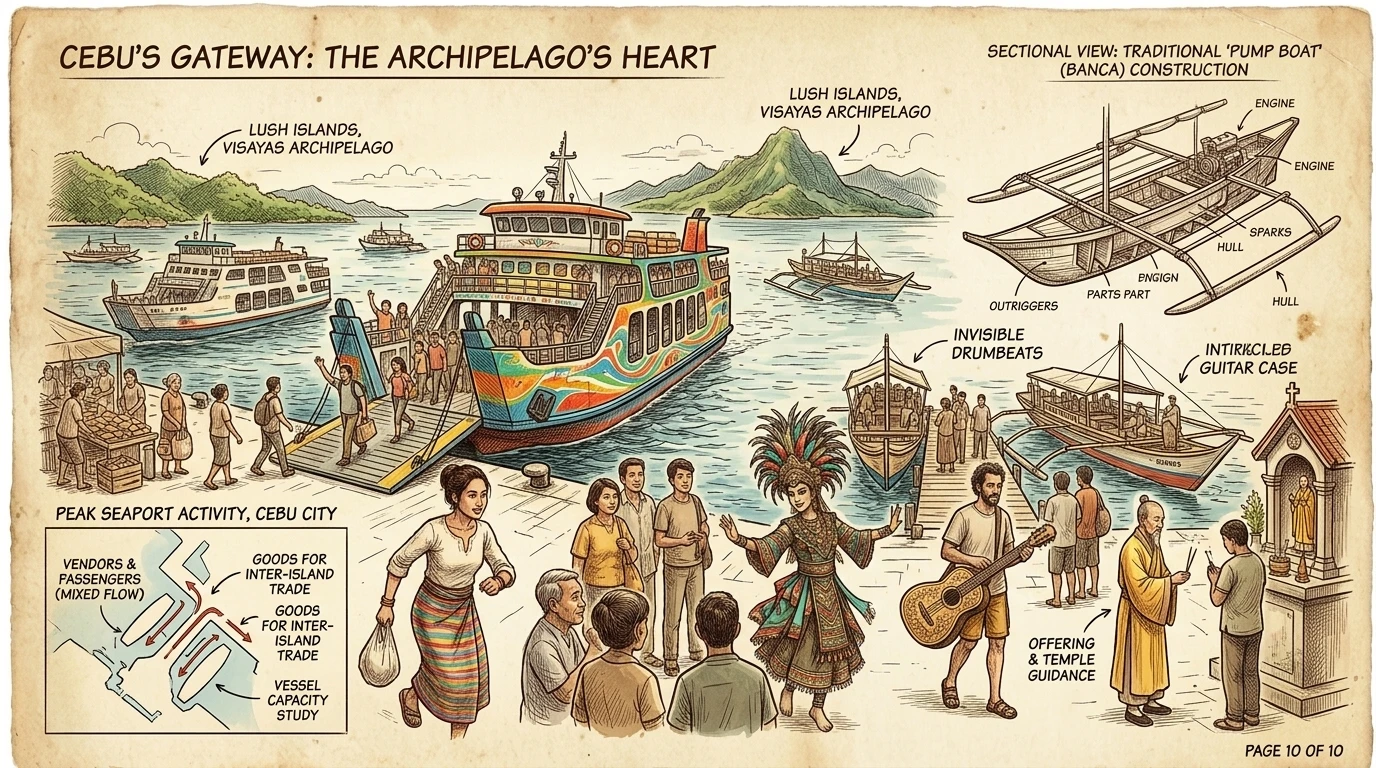
As a major seaport, Cebu City serves as a gateway to numerous stunning islands in the Philippines. Ferries and boats regularly transport passengers and goods…
As a major seaport, Cebu City serves as a gateway to numerous stunning islands in the Philippines. Ferries and boats regularly transport passengers and goods, connecting Cebu to neighboring provinces. The port is alive with activity as people embark on journeys to explore the archipelago's beauty. Travel Fact: Cebu City's strategic location makes it a vital hub for trade and tourism in the Philippines.

As a major seaport, Cebu City serves as a gateway to numerous stunning islands in the Philippines. Ferries and boats regularly transport passengers and goods, connecting Cebu to neighboring provinces. The port is alive with activity as people embark on journeys to explore the archipelago's beauty.

Travel Fact: Cebu City's strategic location makes it a vital hub for trade and tourism in the Philippines.

About this story

  • Location: Cebu City
  • Audience: general readers

Read Wonder Travel on your phone

Wonder Travel is available on Android. Get Wonder Travel on Google Play.

More Wonder Travel stories

All Wonder Travel stories · Open the library