Chefchaouen, Morocco

Chefchaouen, Morocco — an illustrated travel story, set in Global. 10 illustrated pages, free to read on Wonder Travel.
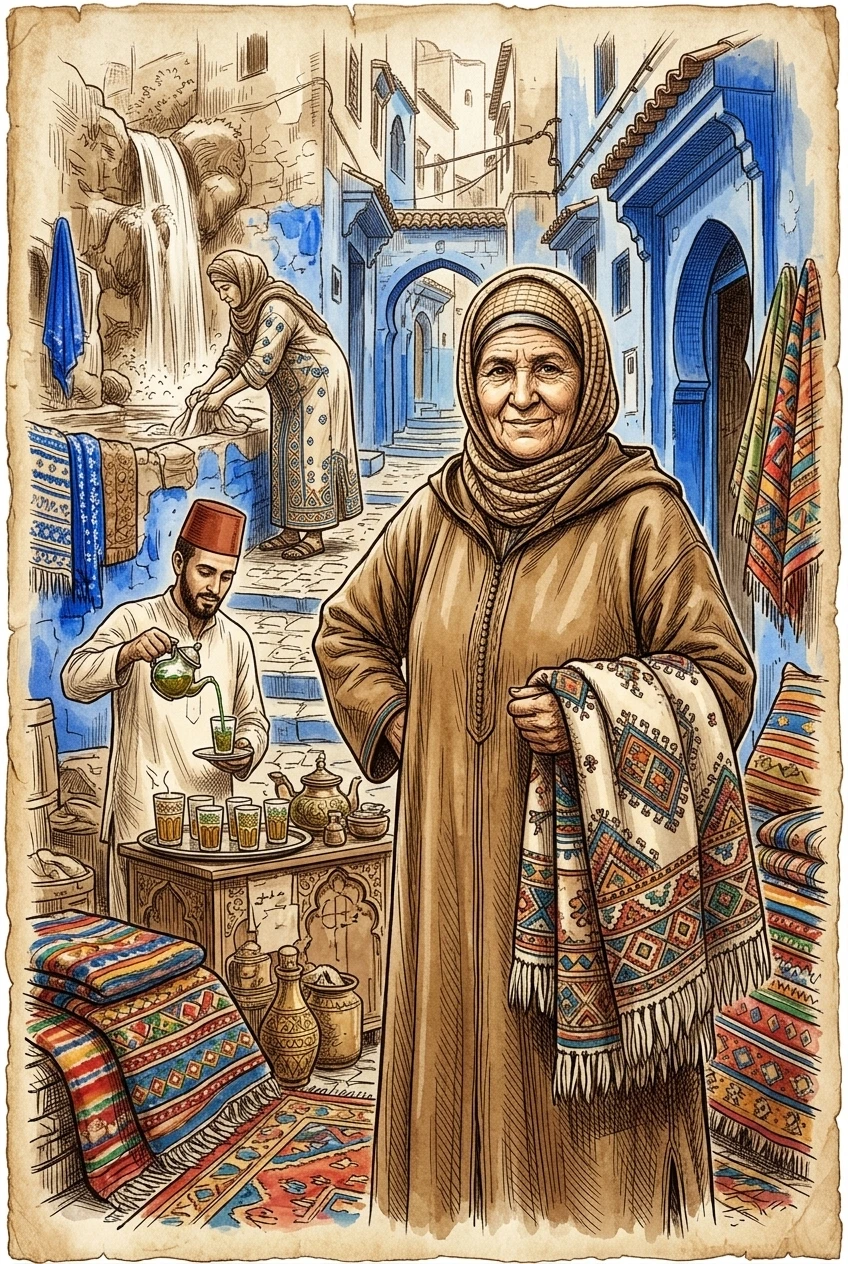
Chefchaouen, Morocco — book cover — Wonder Travel
Chefchaouen, Morocco — an illustrated travel story, set in Global. 10 illustrated pages, free to read on Wonder Travel.

Page 1
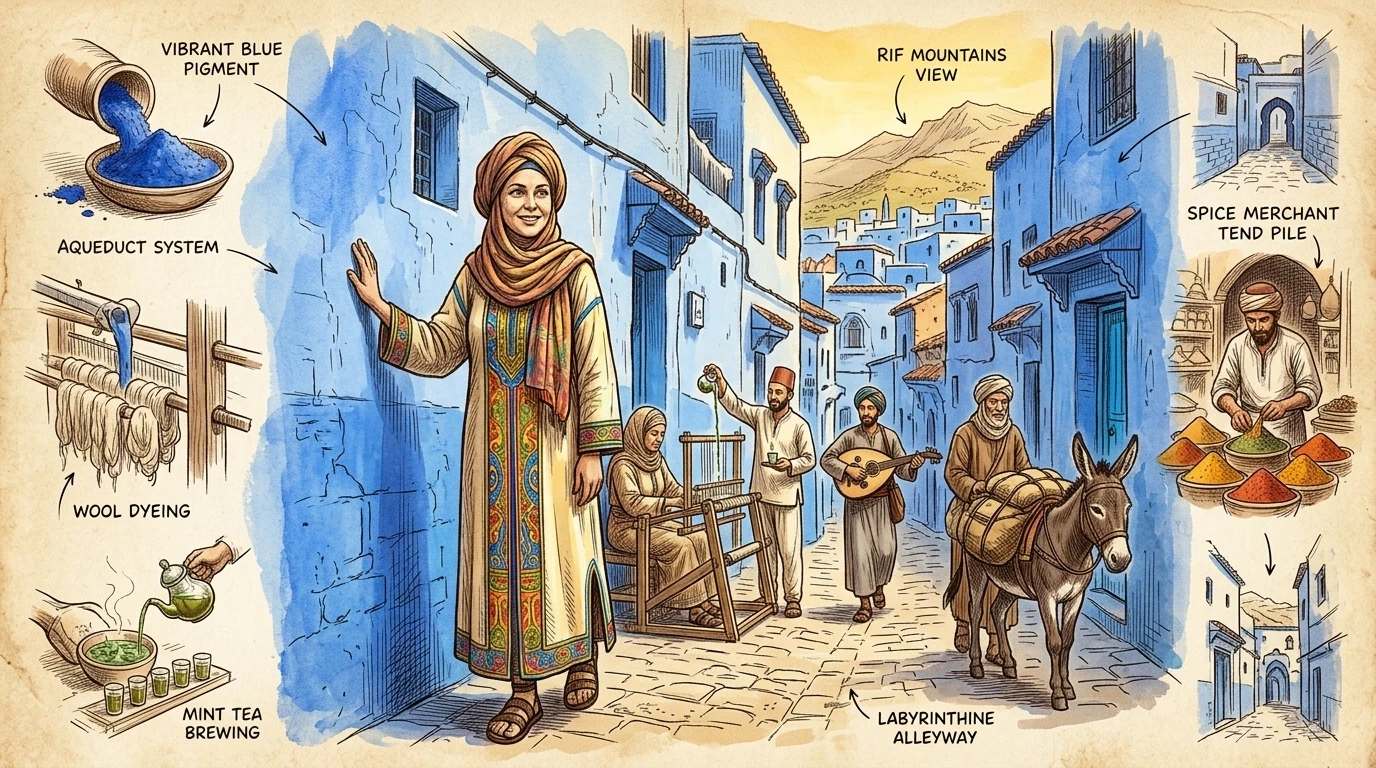
Chefchaouen, nestled in Morocco's Rif Mountains, is famous for its striking blue-washed buildings, a tradition started by Jewish refugees in the 1930s.
Chefchaouen, nestled in Morocco's Rif Mountains, is famous for its striking blue-washed buildings, a tradition started by Jewish refugees in the 1930s. The medina, a UNESCO World Heritage site, invites visitors to wander through its labyrinthine alleyways and discover the town's peaceful charm. Approximately 40,000 residents call this enchanting city home, continuing the traditions of artistry and hospitality.

Chefchaouen, nestled in Morocco's Rif Mountains, is famous for its striking blue-washed buildings, a tradition started by Jewish refugees in the 1930s. The medina, a UNESCO World Heritage site, invites visitors to wander through its labyrinthine alleyways and discover the town's peaceful charm. Approximately 40,000 residents call this enchanting city home, continuing the traditions of artistry and hospitality.

Travel Fact: The blue color is believed to repel mosquitoes and symbolize the sky and heaven.

Page 2
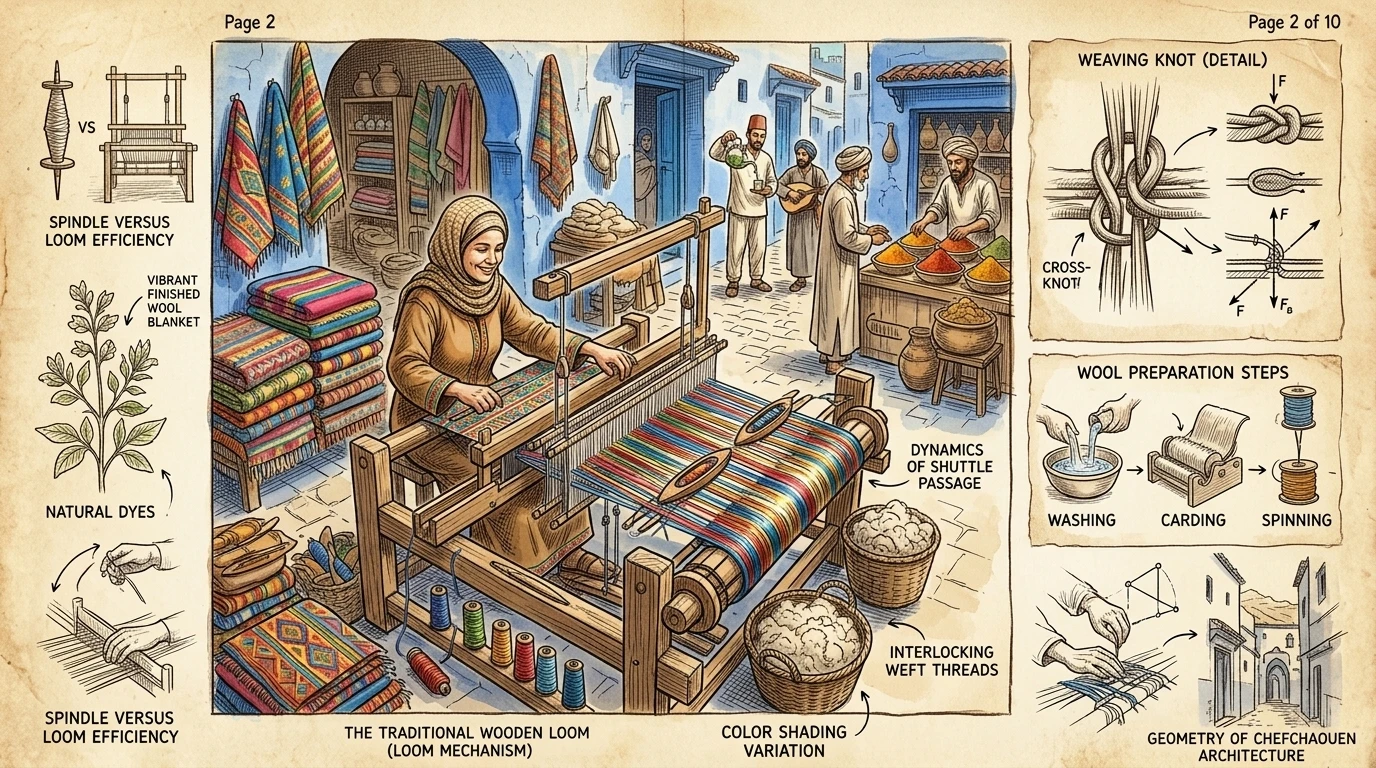
The local markets in Chefchaouen showcase the rich weaving traditions of the region. Artisans create colorful textiles, from wool blankets to intricate carpets…
The local markets in Chefchaouen showcase the rich weaving traditions of the region. Artisans create colorful textiles, from wool blankets to intricate carpets, using techniques passed down through generations. The scent of freshly dyed wool hangs in the air, blending with the sounds of bartering and laughter. Travel Fact: Chefchaouen is known for its high-quality wool products.

The local markets in Chefchaouen showcase the rich weaving traditions of the region. Artisans create colorful textiles, from wool blankets to intricate carpets, using techniques passed down through generations. The scent of freshly dyed wool hangs in the air, blending with the sounds of bartering and laughter.

Travel Fact: Chefchaouen is known for its high-quality wool products.

Page 3
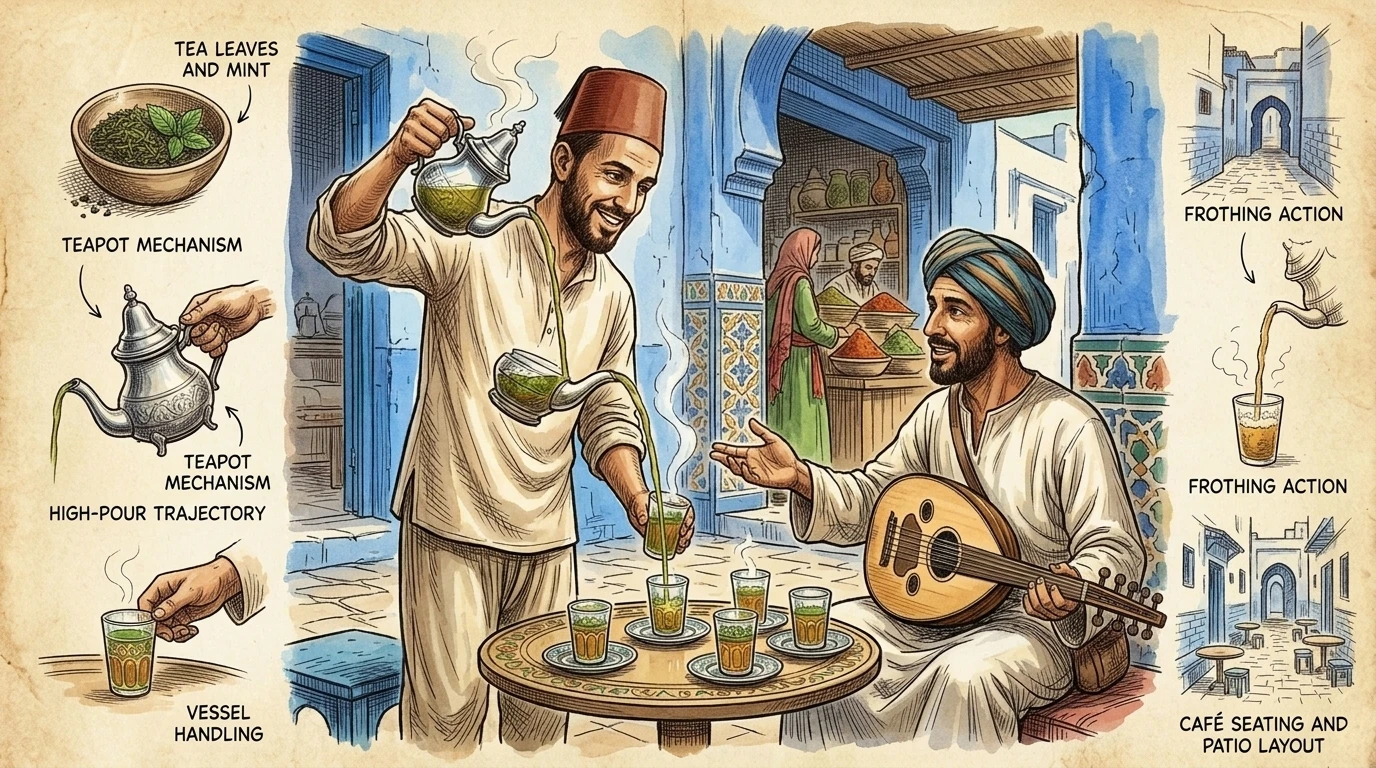
Mint tea is a cornerstone of Moroccan hospitality, and Chefchaouen is no exception. Served hot in ornate glasses, the sweet, fragrant beverage is offered as a…
Mint tea is a cornerstone of Moroccan hospitality, and Chefchaouen is no exception. Served hot in ornate glasses, the sweet, fragrant beverage is offered as a sign of welcome and friendship. Locals gather in cafes and homes to share tea and conversation, cementing bonds and enjoying the simple pleasures of life. Travel Fact: Mint tea is traditionally poured from a height to create a frothy top.

Mint tea is a cornerstone of Moroccan hospitality, and Chefchaouen is no exception. Served hot in ornate glasses, the sweet, fragrant beverage is offered as a sign of welcome and friendship. Locals gather in cafes and homes to share tea and conversation, cementing bonds and enjoying the simple pleasures of life.

Travel Fact: Mint tea is traditionally poured from a height to create a frothy top.

Page 4
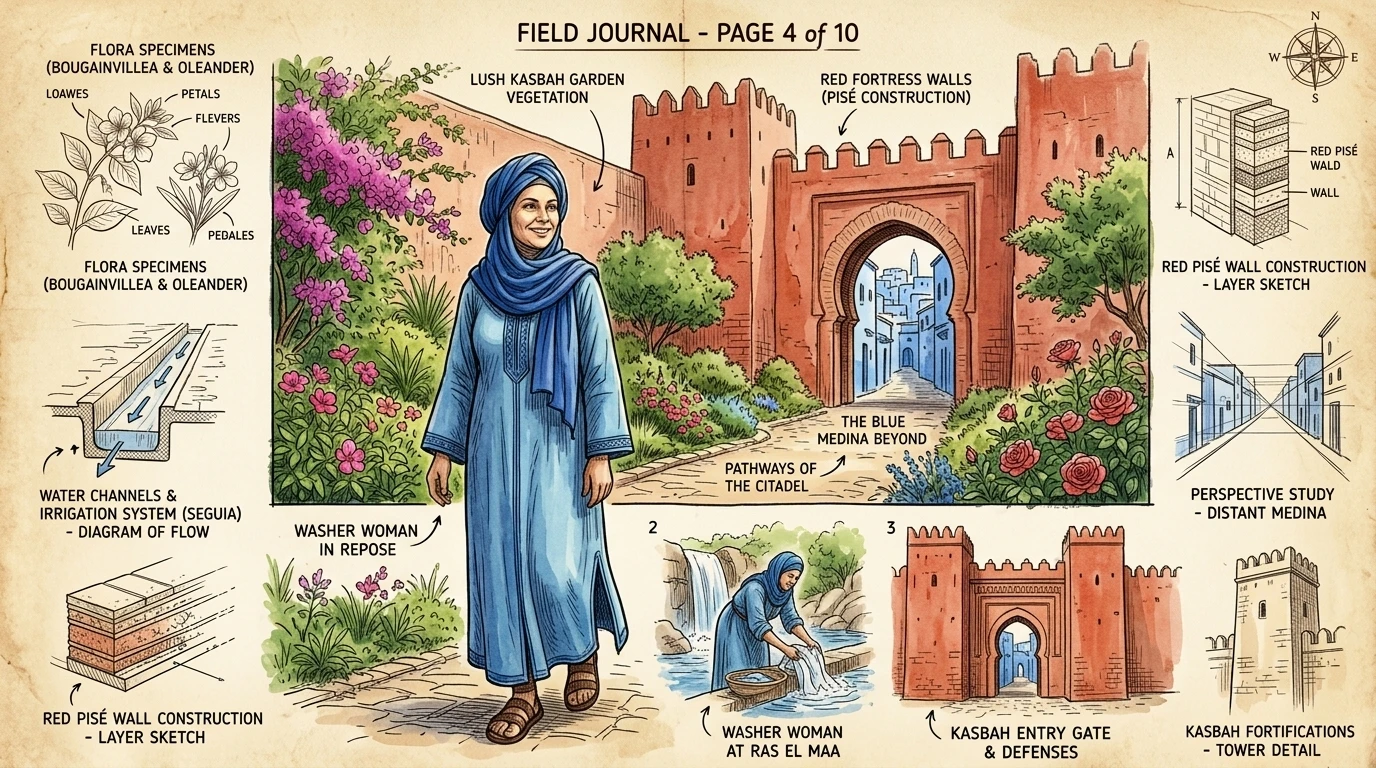
The Kasbah, a restored fortress in the heart of Chefchaouen, offers a glimpse into the city's past. Its red-walled structure contrasts with the blue of the…
The Kasbah, a restored fortress in the heart of Chefchaouen, offers a glimpse into the city's past. Its red-walled structure contrasts with the blue of the medina, providing a visual reminder of the region's complex history. Lush gardens within the Kasbah provide a peaceful respite from the bustling streets. Travel Fact: The Kasbah was built in the 17th century by Moulay Ismail.

The Kasbah, a restored fortress in the heart of Chefchaouen, offers a glimpse into the city's past. Its red-walled structure contrasts with the blue of the medina, providing a visual reminder of the region's complex history. Lush gardens within the Kasbah provide a peaceful respite from the bustling streets.

Travel Fact: The Kasbah was built in the 17th century by Moulay Ismail.

Page 5
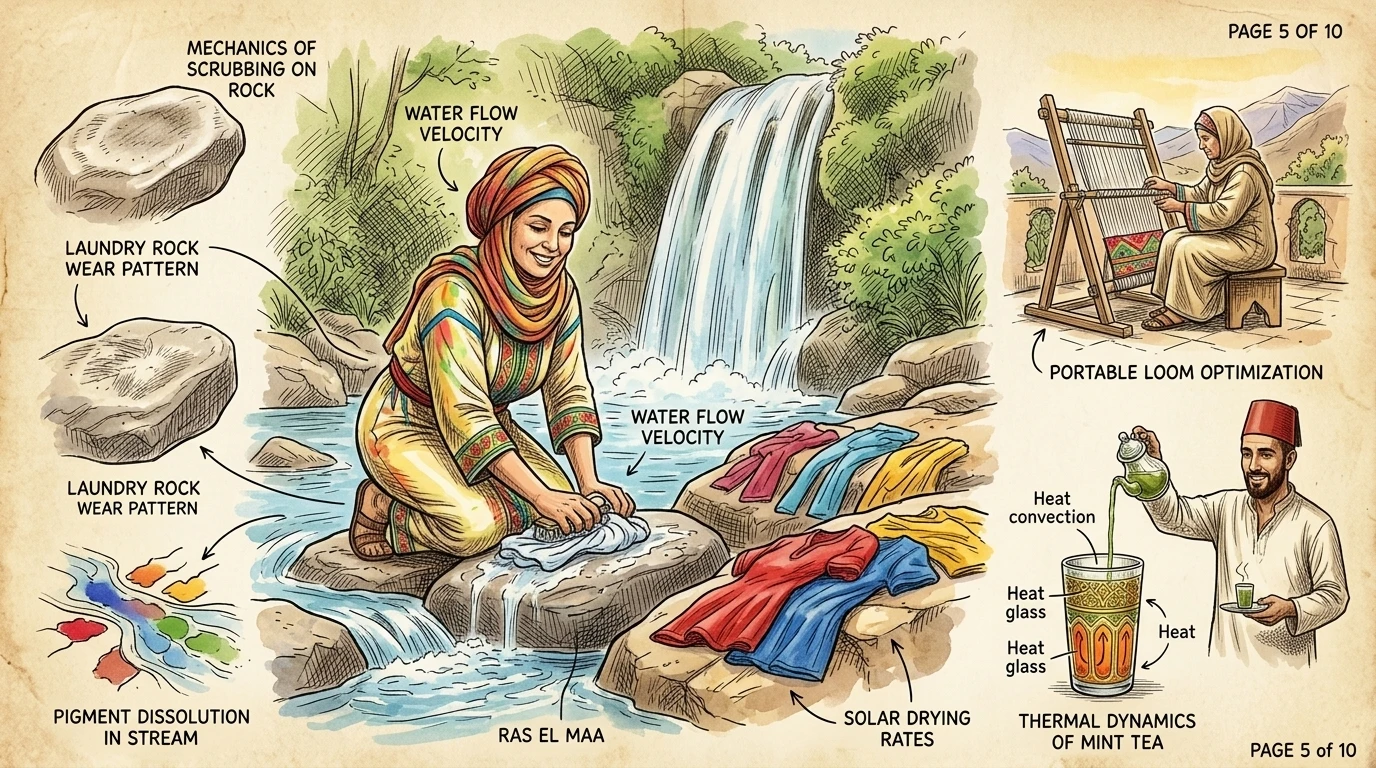
The Ras El Maa waterfall, just outside the city, is a source of fresh water and a gathering place for locals. Women traditionally wash clothes in the river…
The Ras El Maa waterfall, just outside the city, is a source of fresh water and a gathering place for locals. Women traditionally wash clothes in the river, spreading them out to dry on the rocks. The rhythmic sound of the water mixes with the chatter of voices, creating a vibrant scene of daily life. Travel Fact: The Ras El Maa waterfall provides drinking water for the city.

The Ras El Maa waterfall, just outside the city, is a source of fresh water and a gathering place for locals. Women traditionally wash clothes in the river, spreading them out to dry on the rocks. The rhythmic sound of the water mixes with the chatter of voices, creating a vibrant scene of daily life.

Travel Fact: The Ras El Maa waterfall provides drinking water for the city.

Page 6
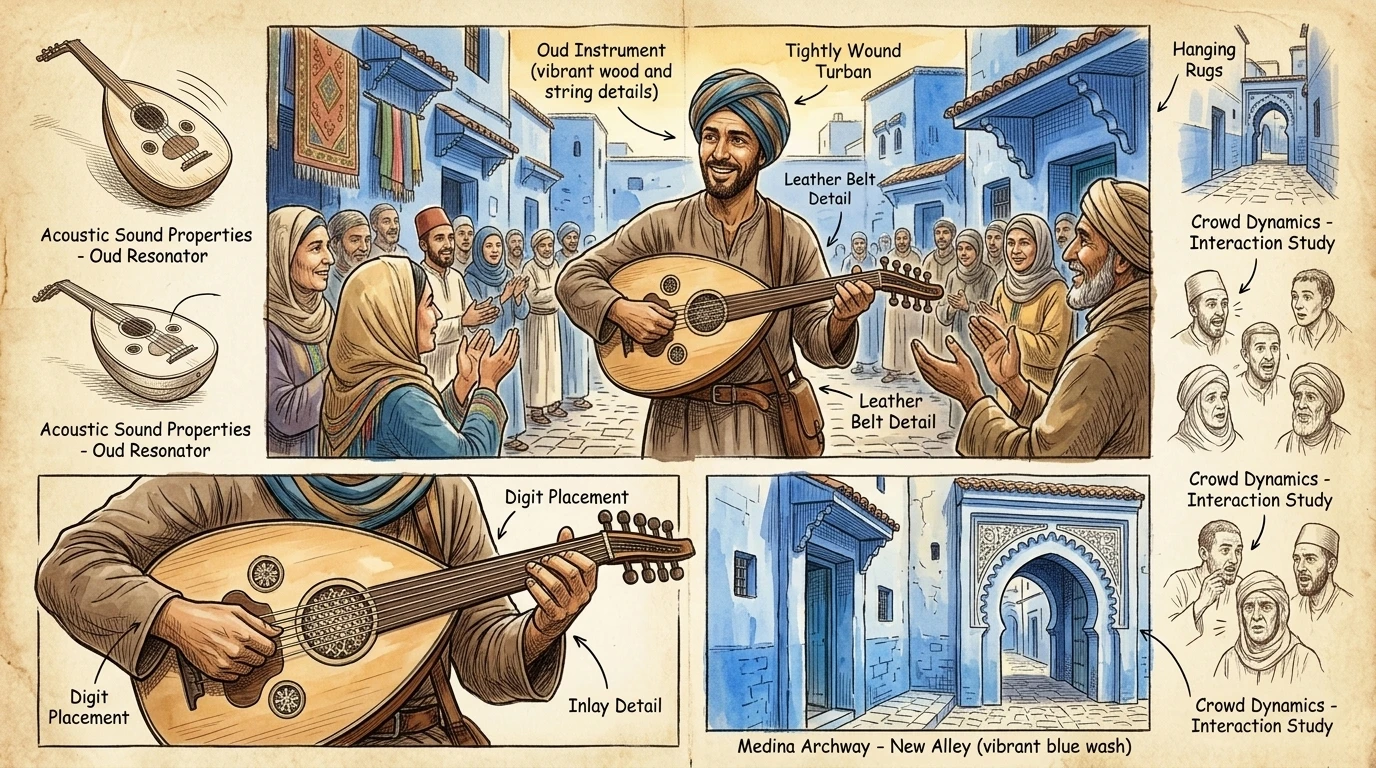
The sounds of traditional music often fill the streets of Chefchaouen. Musicians play the oud and the drums, drawing crowds with their captivating melodies.
The sounds of traditional music often fill the streets of Chefchaouen. Musicians play the oud and the drums, drawing crowds with their captivating melodies. Street performers add to the city's vibrant atmosphere, showcasing local talent and adding to the sensory experience. Travel Fact: The oud is a pear-shaped stringed instrument common in Middle Eastern music.

The sounds of traditional music often fill the streets of Chefchaouen. Musicians play the oud and the drums, drawing crowds with their captivating melodies. Street performers add to the city's vibrant atmosphere, showcasing local talent and adding to the sensory experience.

Travel Fact: The oud is a pear-shaped stringed instrument common in Middle Eastern music.

Page 7
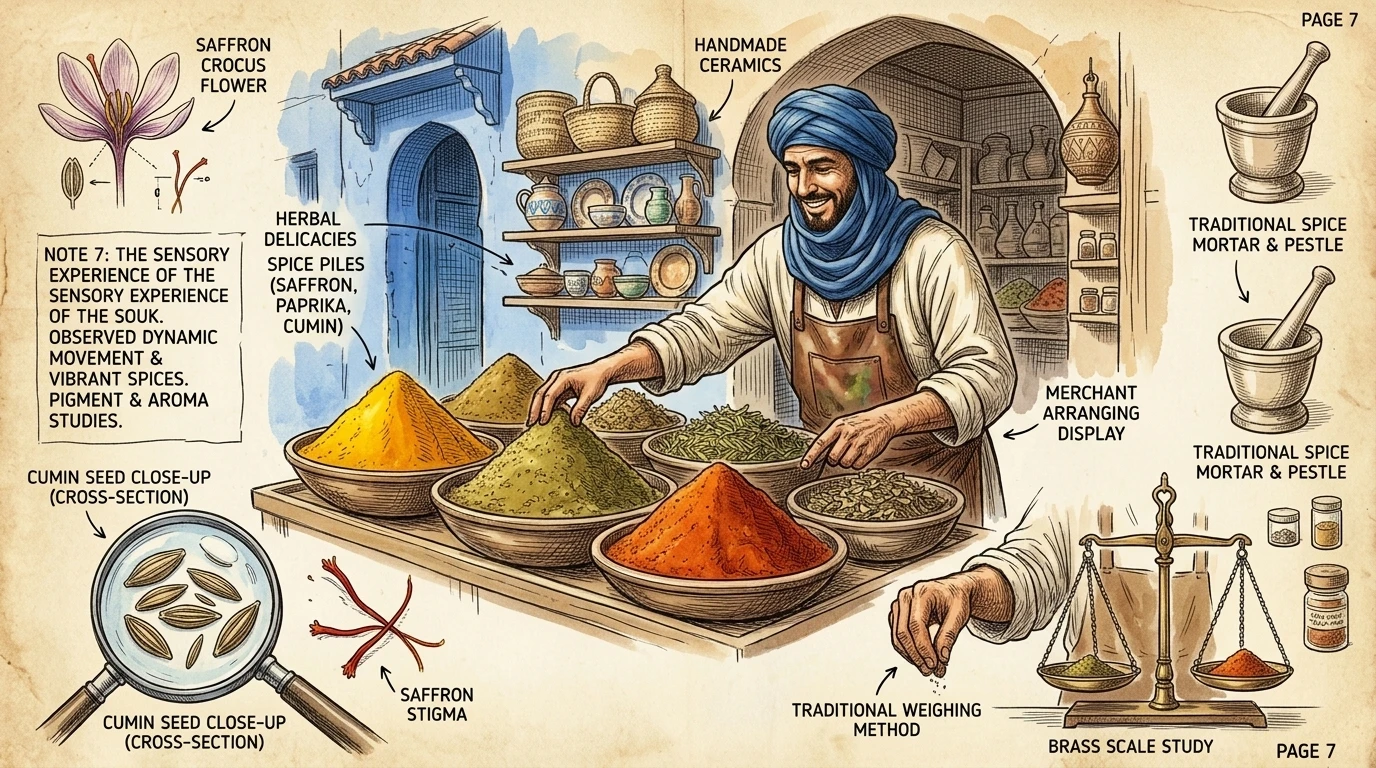
The souks of Chefchaouen offer a sensory explosion of colors and aromas. Spices, herbs, and local delicacies are piled high, enticing visitors to sample the…
The souks of Chefchaouen offer a sensory explosion of colors and aromas. Spices, herbs, and local delicacies are piled high, enticing visitors to sample the flavors of Morocco. Handmade crafts and souvenirs are also abundant, providing a tangible reminder of the city's unique culture. Travel Fact: Spices like saffron, cumin, and paprika are essential ingredients in Moroccan cuisine.

The souks of Chefchaouen offer a sensory explosion of colors and aromas. Spices, herbs, and local delicacies are piled high, enticing visitors to sample the flavors of Morocco. Handmade crafts and souvenirs are also abundant, providing a tangible reminder of the city's unique culture.

Travel Fact: Spices like saffron, cumin, and paprika are essential ingredients in Moroccan cuisine.

Page 8
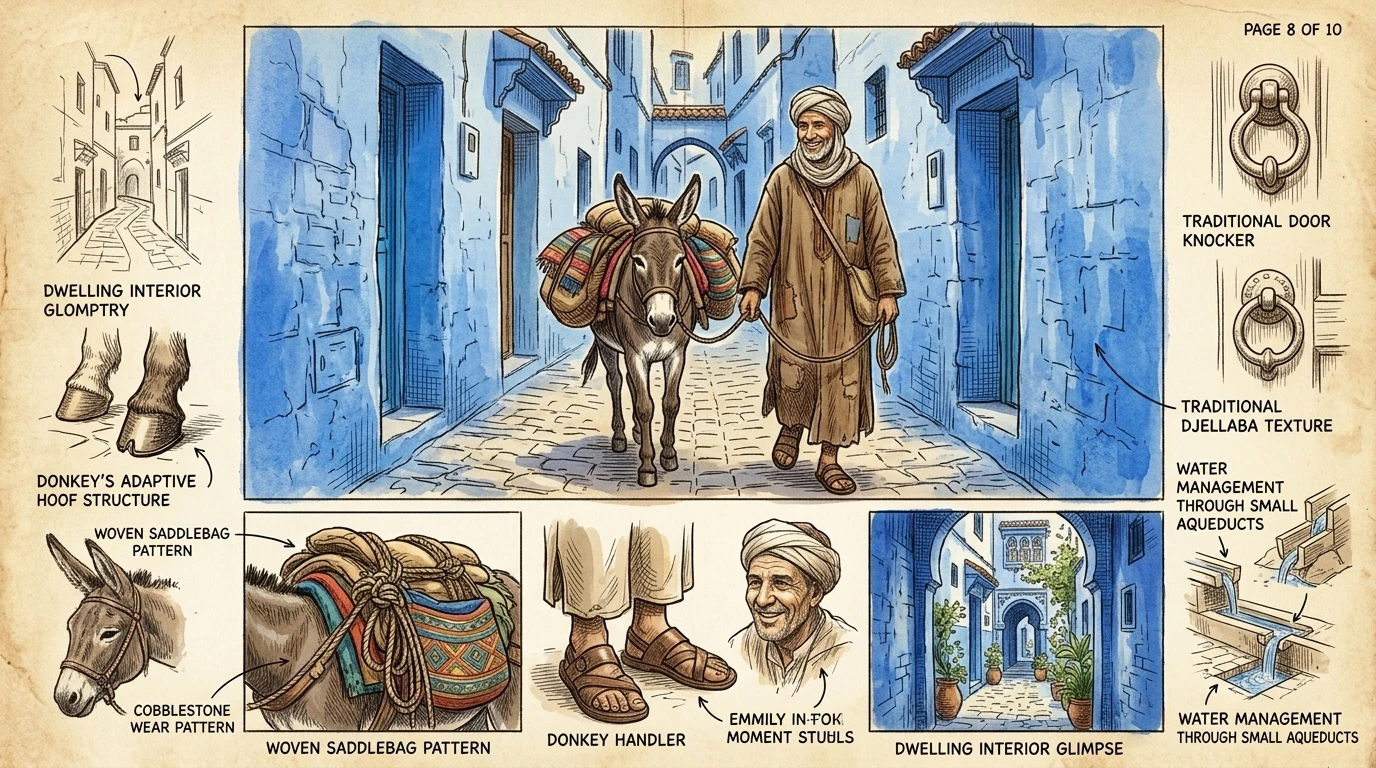
The narrow, winding alleys of Chefchaouen's medina are best explored on foot. Each turn reveals a new perspective, a hidden courtyard, or a glimpse of local…
The narrow, winding alleys of Chefchaouen's medina are best explored on foot. Each turn reveals a new perspective, a hidden courtyard, or a glimpse of local life. Donkeys laden with goods navigate the labyrinthine streets, adding to the charm and character of the old city. Travel Fact: The medina is a UNESCO World Heritage site.

The narrow, winding alleys of Chefchaouen's medina are best explored on foot. Each turn reveals a new perspective, a hidden courtyard, or a glimpse of local life. Donkeys laden with goods navigate the labyrinthine streets, adding to the charm and character of the old city.

Travel Fact: The medina is a UNESCO World Heritage site.

Page 9
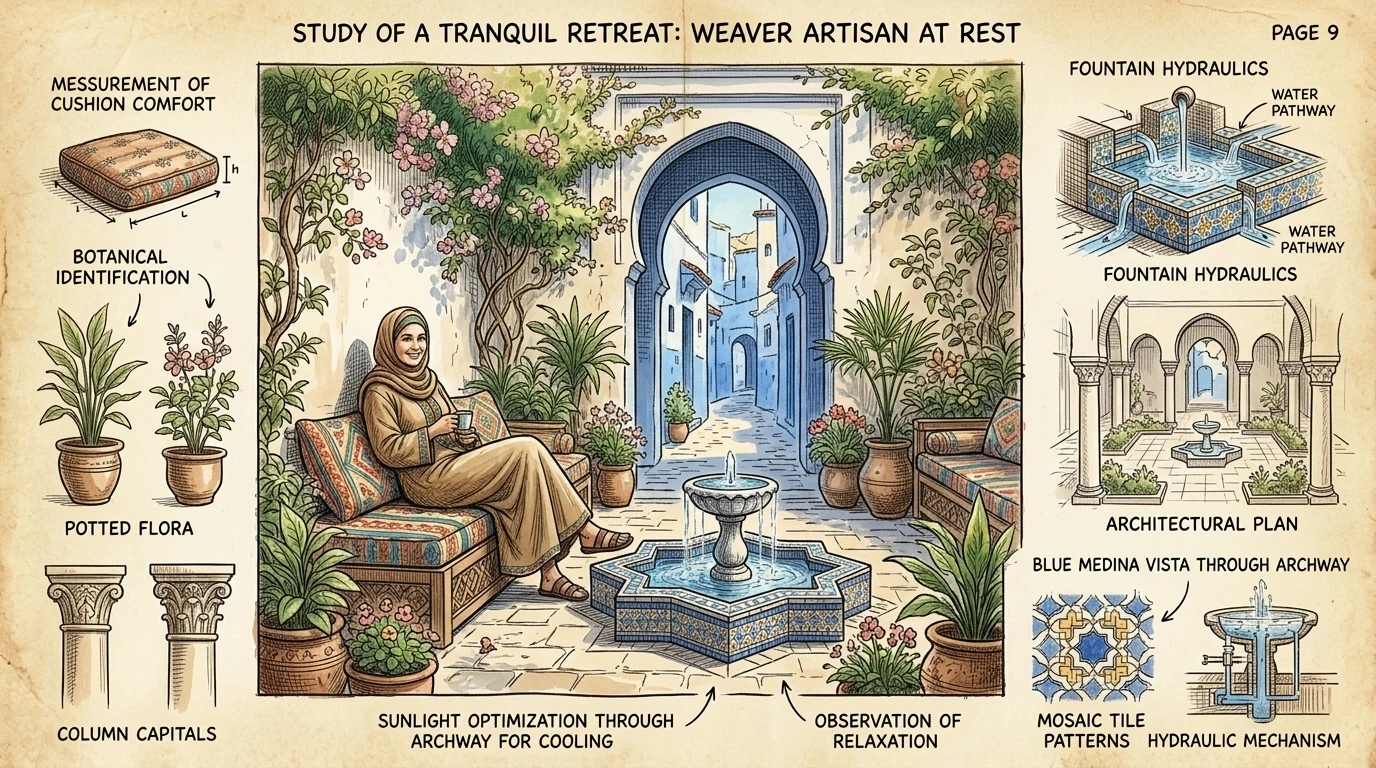
Many of Chefchaouen's homes feature hidden courtyards, providing a private oasis from the bustling streets. These tranquil spaces are often filled with plants…
Many of Chefchaouen's homes feature hidden courtyards, providing a private oasis from the bustling streets. These tranquil spaces are often filled with plants, fountains, and comfortable seating. Locals gather in these courtyards to relax, read, and enjoy the cool shade. Travel Fact: Courtyards are a common feature in traditional Moroccan homes.

Many of Chefchaouen's homes feature hidden courtyards, providing a private oasis from the bustling streets. These tranquil spaces are often filled with plants, fountains, and comfortable seating. Locals gather in these courtyards to relax, read, and enjoy the cool shade.

Travel Fact: Courtyards are a common feature in traditional Moroccan homes.

Page 10
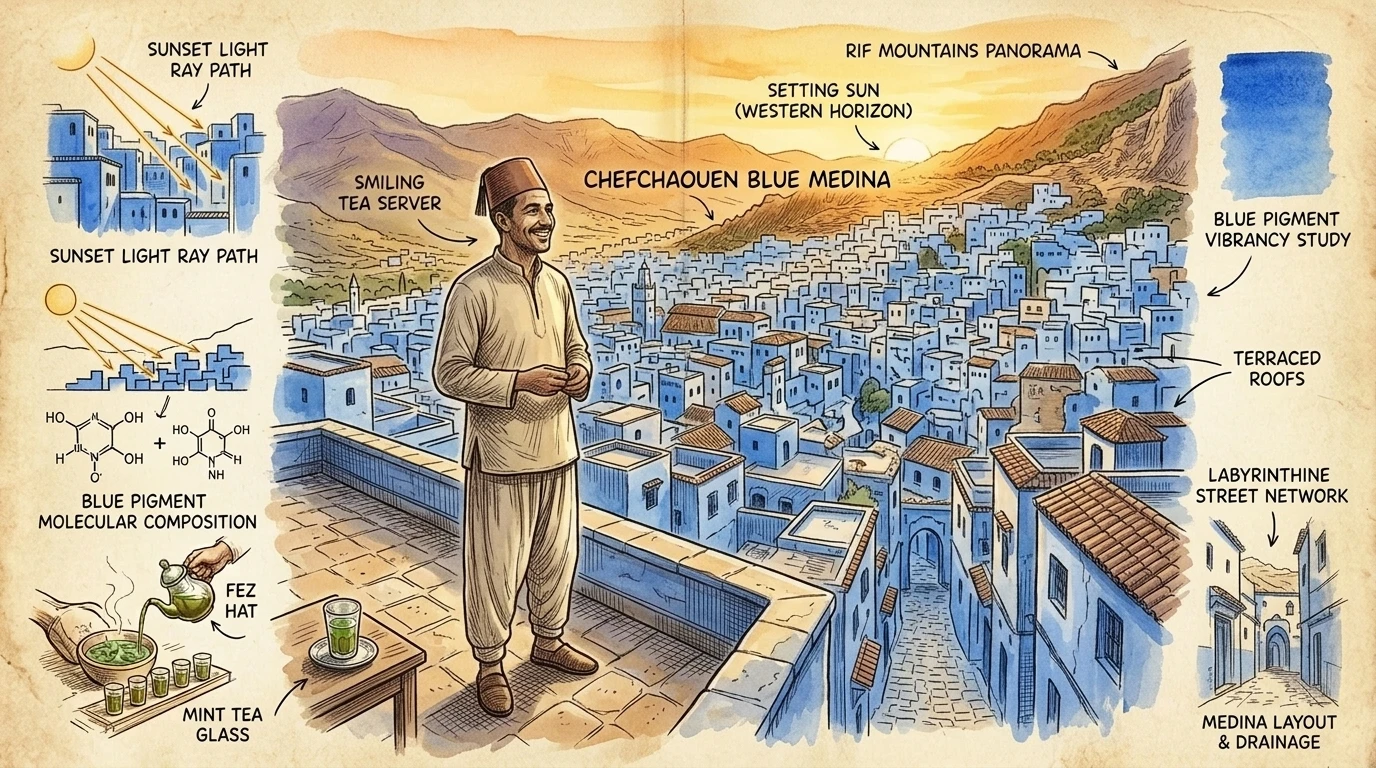
Chefchaouen's timeless beauty and relaxed atmosphere make it a truly special place. The city's unique blue-washed buildings, combined with the warmth and…
Chefchaouen's timeless beauty and relaxed atmosphere make it a truly special place. The city's unique blue-washed buildings, combined with the warmth and hospitality of its people, create an unforgettable experience. Discover a world where tradition and tranquility blend seamlessly, inviting you to slow down and savor every moment. Travel Fact: Chefchaouen is often called the 'Blue Pearl of Morocco'.

Chefchaouen's timeless beauty and relaxed atmosphere make it a truly special place. The city's unique blue-washed buildings, combined with the warmth and hospitality of its people, create an unforgettable experience. Discover a world where tradition and tranquility blend seamlessly, inviting you to slow down and savor every moment.

Travel Fact: Chefchaouen is often called the 'Blue Pearl of Morocco'.

About this story

  • Location: Global
  • Audience: general readers

Read Wonder Travel on your phone

Wonder Travel is available on Android. Get Wonder Travel on Google Play.

More Wonder Travel stories

All Wonder Travel stories · Open the library