Fez, Morocco
Fez, Morocco — an illustrated travel story, set in United Kingdom. 10 illustrated pages, free to read on Wonder Travel.
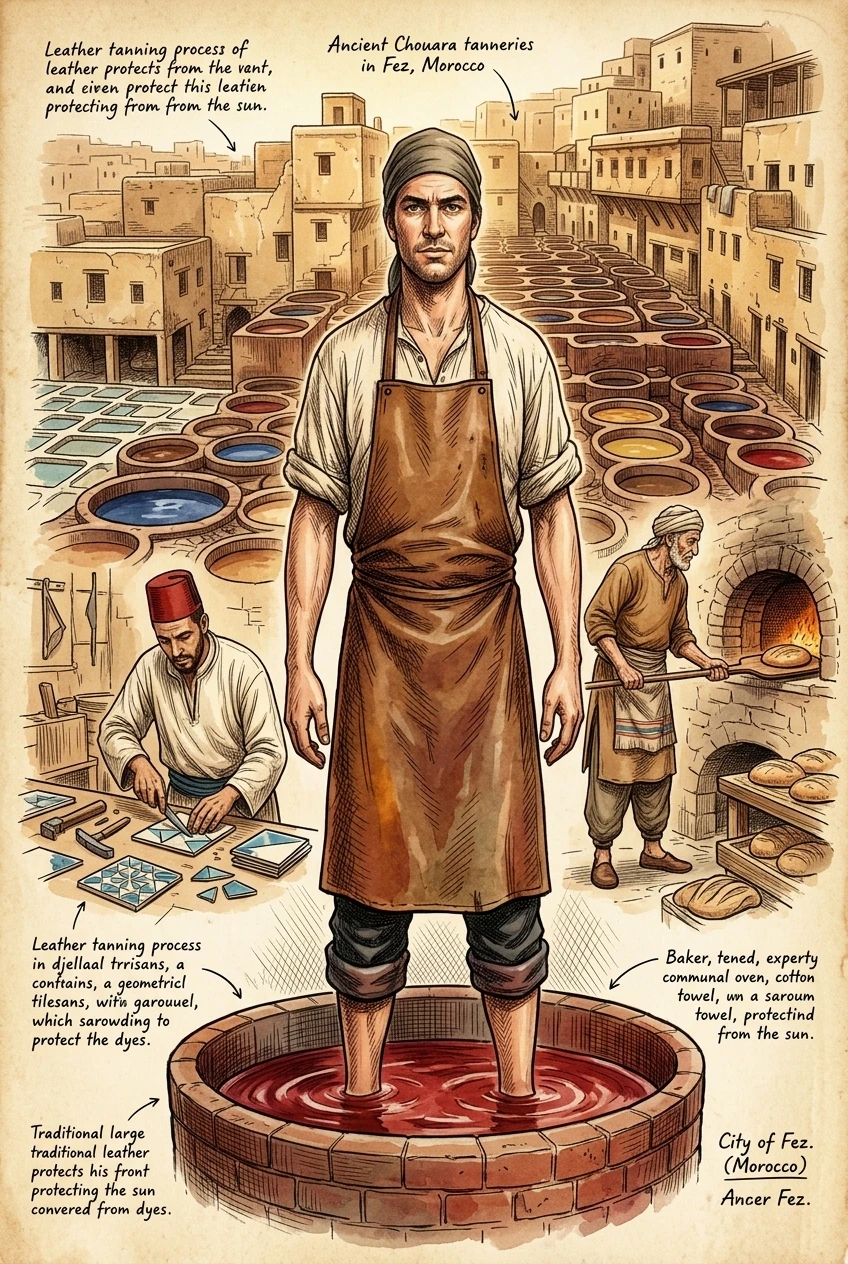
Page 1
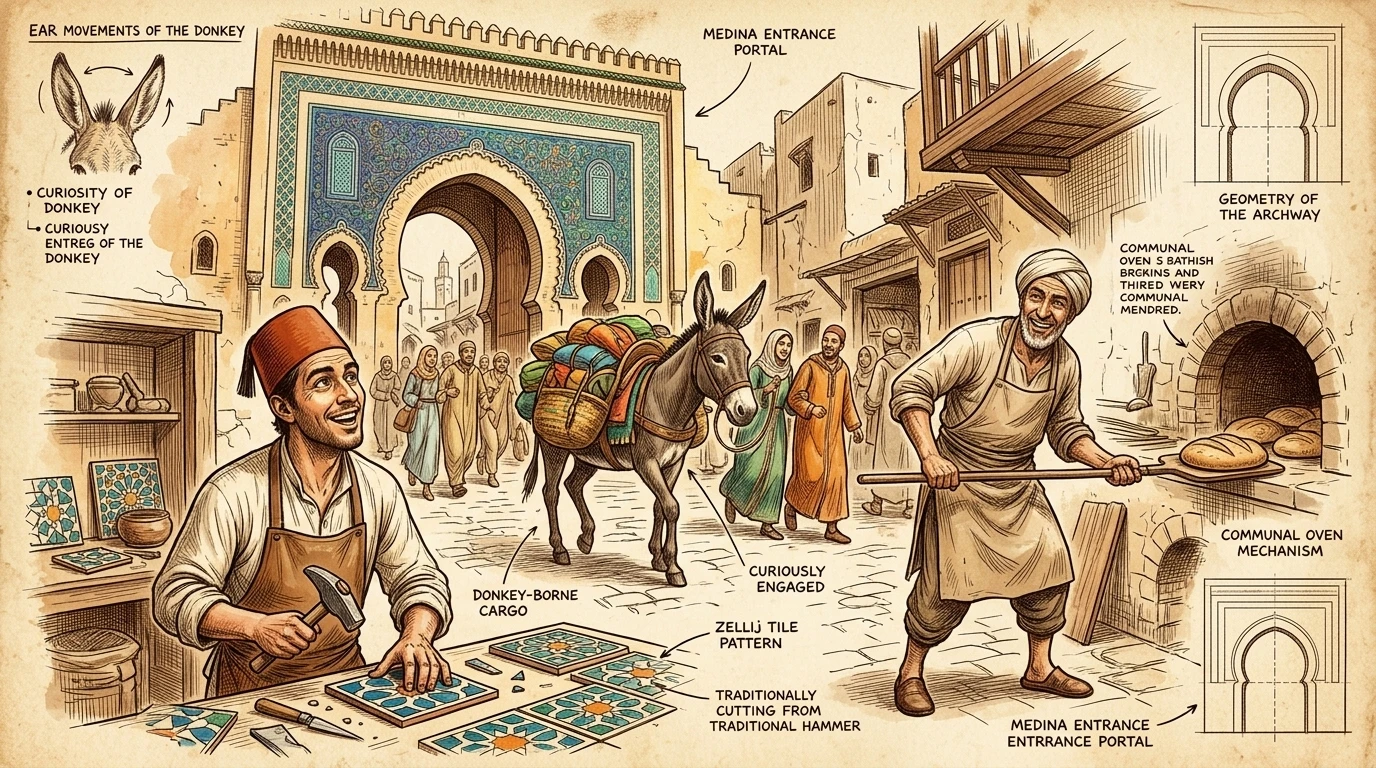
Fez, Morocco, a city of over one million people, is renowned for its ancient walled medina, a UNESCO World Heritage site. Bab Bou Jeloud, the iconic blue gate, marks the entrance to a labyrinth of winding alleyways and vibrant souks. Donkeys laden with goods navigate the narrow streets, a timeless scene amidst the bustling commerce.
Travel Fact: Bab Bou Jeloud, also known as the Blue Gate, is one of the most famous entrances to Fes el Bali, the old city of Fez. Its striking blue color on the exterior (facing the city) is a hallmark of Fassi pottery.
Page 2
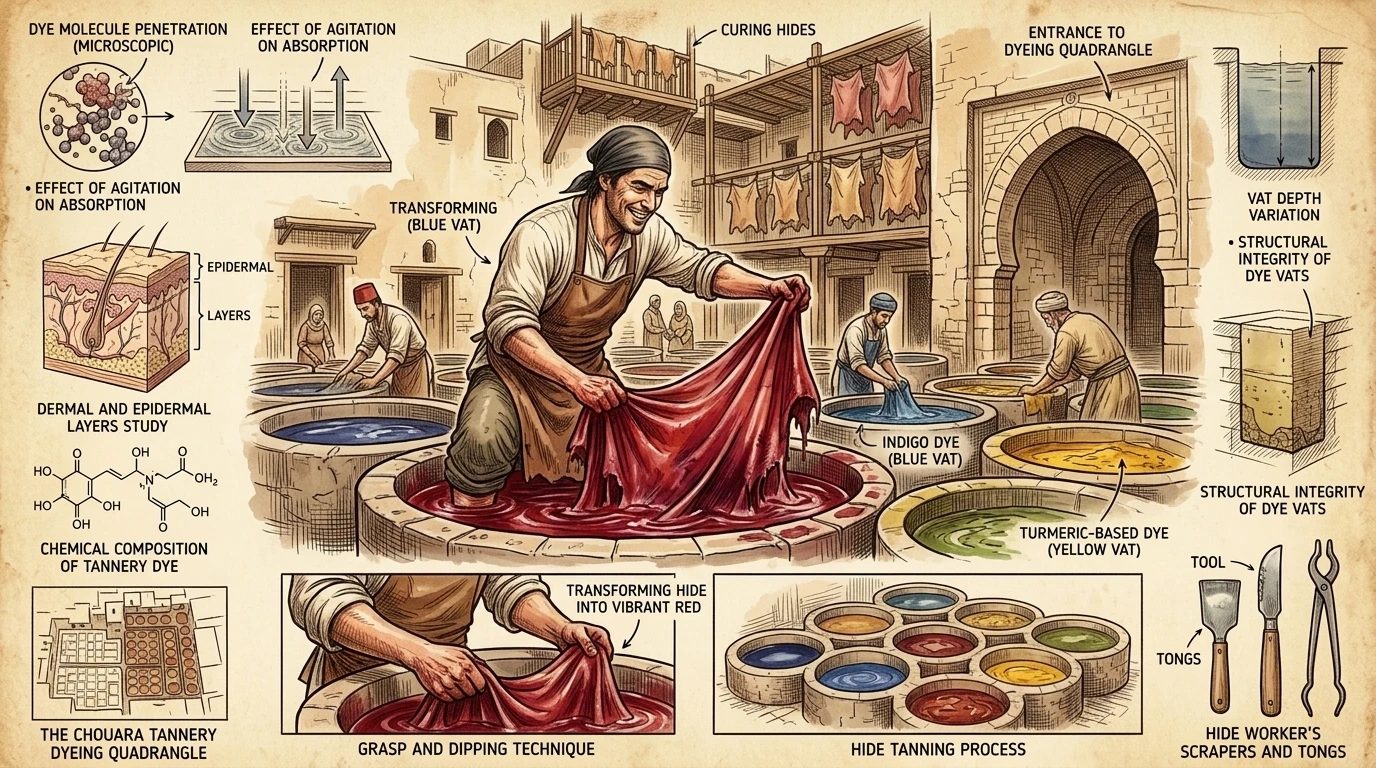
The Chouara tanneries of Fez are a visceral spectacle, where leather is dyed using ancient methods. Workers stand knee-deep in stone vats filled with natural dyes derived from plants and minerals. The pungent aroma hangs heavy in the air as hides are transformed into vibrant colors, a testament to centuries of craftsmanship.
Travel Fact: The tanneries are one of the most iconic sights in Fez, dating back to the medieval period. The process involves soaking hides in a mixture of pigeon excrement and lime to soften them before dyeing.
Page 3
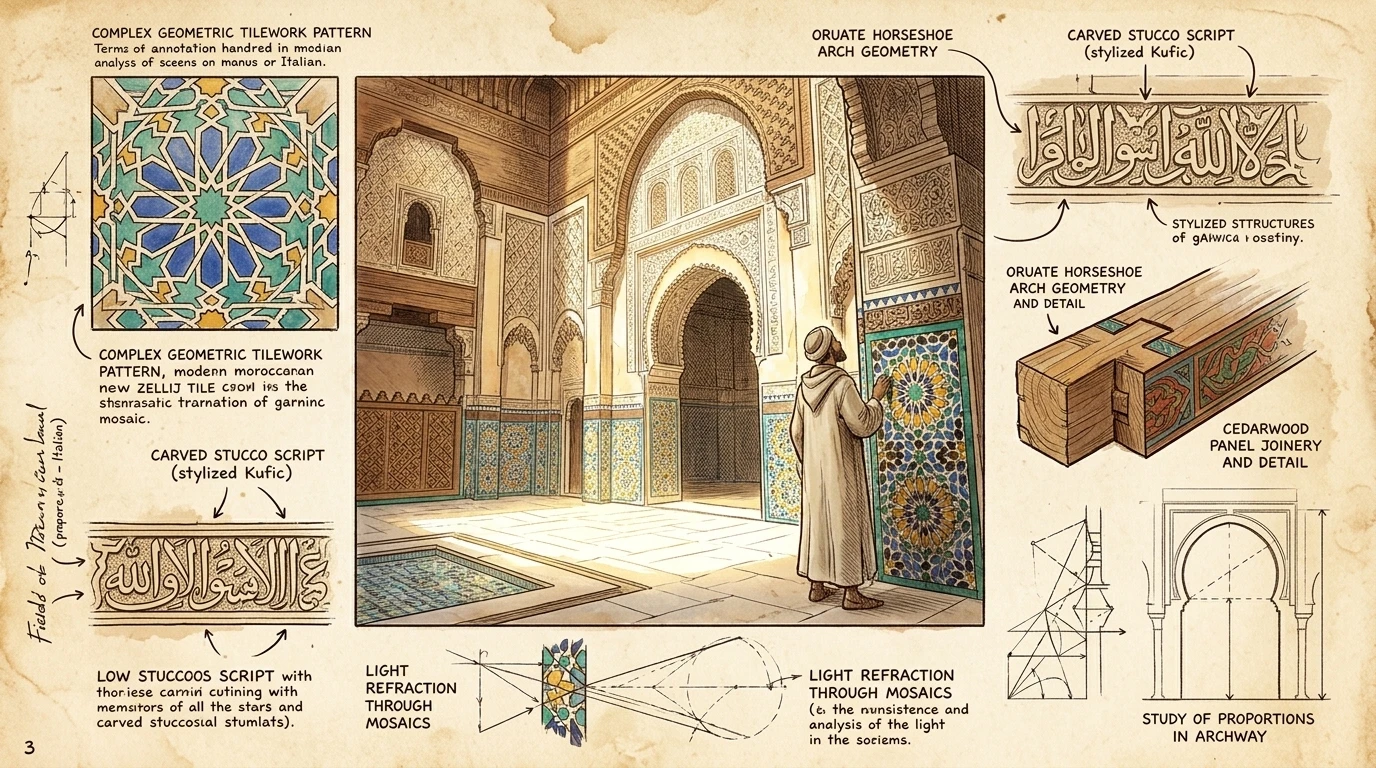
The Al-Attarine Madrasa, a 14th-century theological college, showcases the intricate artistry of Islamic architecture. Its courtyard is adorned with zellij tilework, carved stucco, and cedarwood, a testament to the skill of Fassi artisans. Sunlight streams through the ornate arches, illuminating the delicate details of this sanctuary of learning.
Travel Fact: The Madrasa was built by Sultan Uthman II Abu Said in 1323-1325. It is considered one of the most beautiful examples of Marinid architecture, known for its intricate tilework and detailed carvings.
Page 4
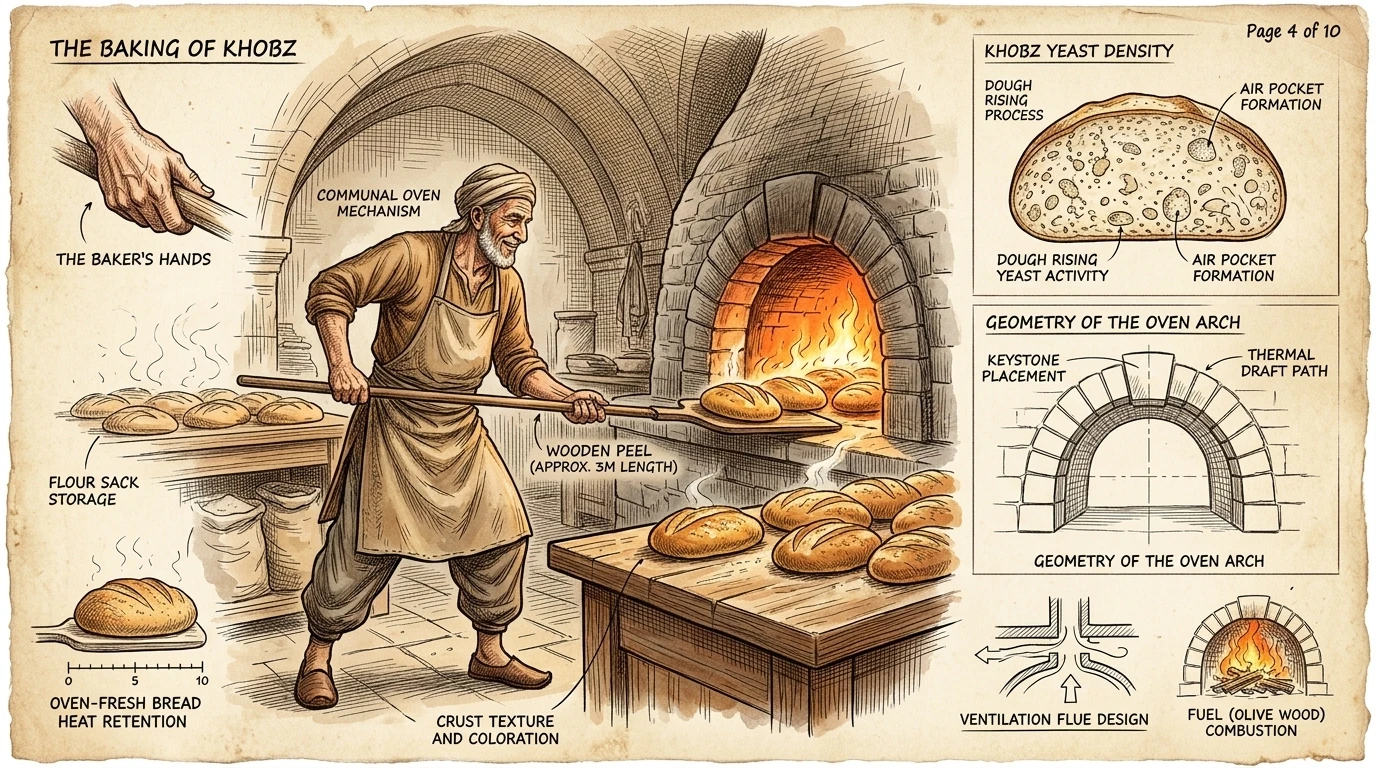
Throughout the medina, communal ovens bake loaves of khobz, the staple bread of Morocco. Families bring their dough to these ovens, marked by the distinctive aroma of baking bread wafting through the streets. The baker expertly slides the loaves in and out of the fiery oven, a daily ritual that nourishes the community.
Travel Fact: Communal ovens are a common feature in Moroccan cities, especially in the medinas, where residents bring their homemade bread to be baked. This system fosters community interaction and ensures everyone has access to freshly baked bread.
Page 5
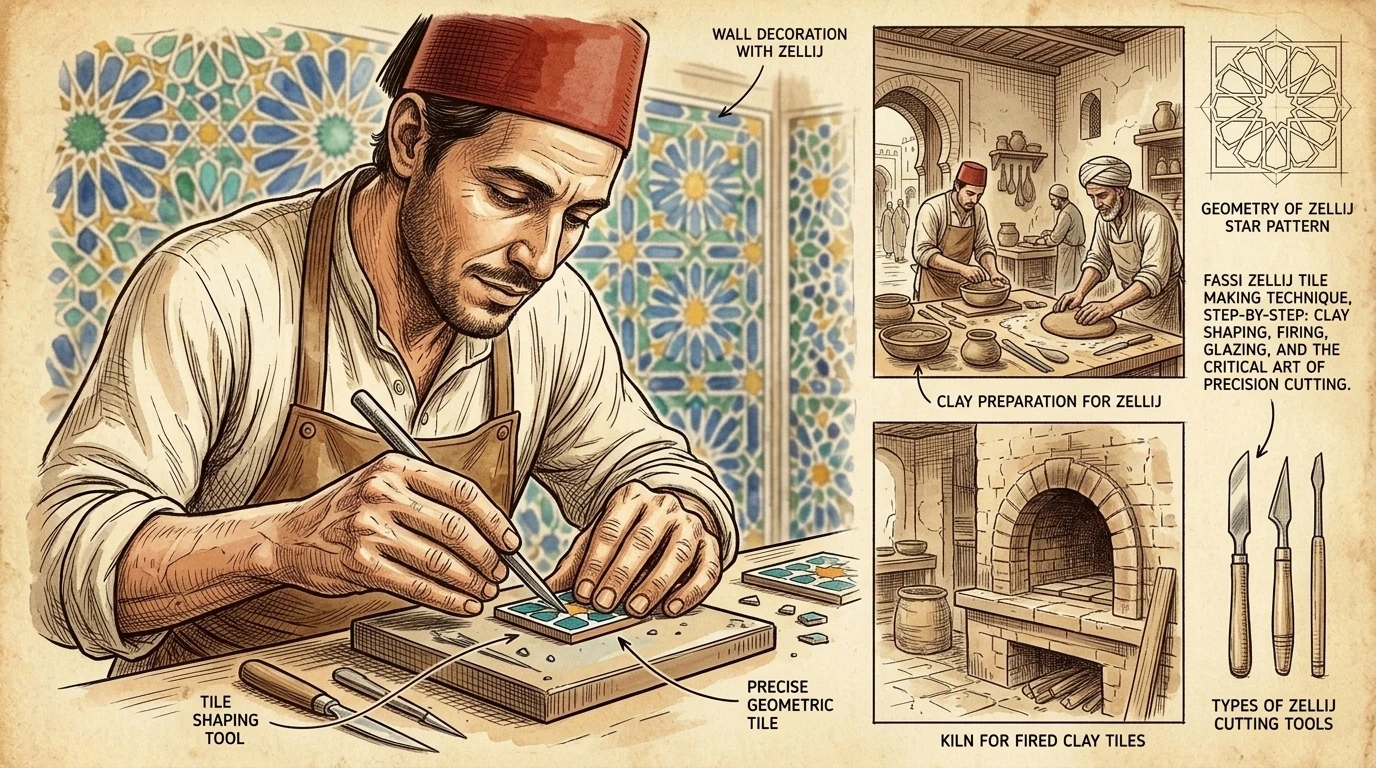
Zellige, the art of mosaic tilework, is a hallmark of Fassi craftsmanship. Artisans meticulously cut and arrange individual glazed tiles into intricate geometric patterns. These vibrant mosaics adorn walls, fountains, and floors, a testament to the enduring beauty of this traditional art form.
Travel Fact: Zellige is a traditional Moroccan art form that dates back to the 10th century. It involves creating intricate geometric patterns from individually hand-cut and glazed tiles.
Page 6
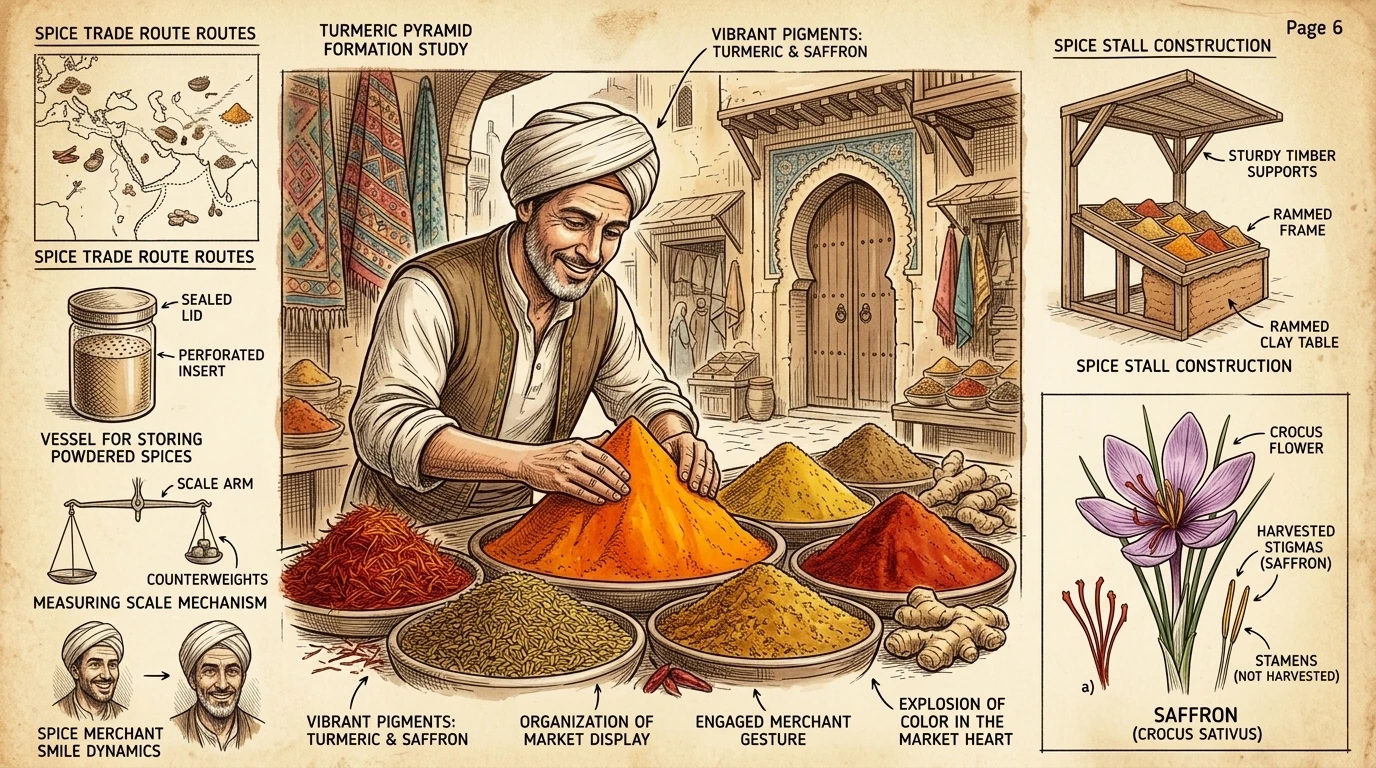
The spice souk of Fez is a sensory explosion of colors and aromas. Saffron, cumin, ginger, and turmeric are piled high in vibrant pyramids. The air is thick with the scent of exotic spices, a testament to the rich culinary heritage of Morocco.
Travel Fact: The spice souk is a key part of the traditional Fassi market, offering a vast array of spices essential for Moroccan cuisine. These spices have been traded for centuries, connecting Fez to various parts of the world.
Page 7
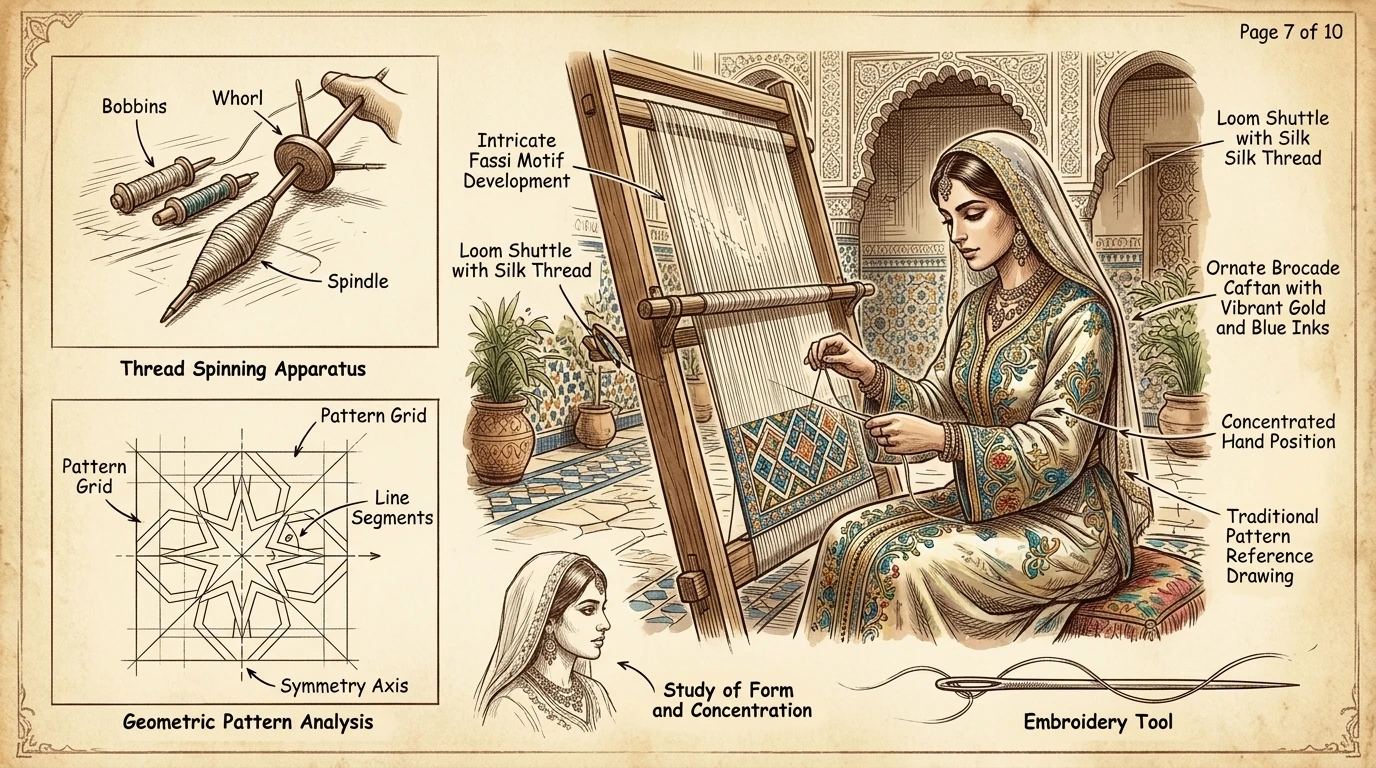
Fassi embroidery, known for its intricate geometric patterns, adorns clothing and household linens. Skilled artisans use silk threads to create stunning designs, a tradition passed down through generations. These exquisite textiles are a symbol of Fassi elegance and artistry.
Travel Fact: Fassi embroidery is a unique style of embroidery characterized by intricate geometric designs, often using silk threads on cotton or linen. This art form has been practiced in Fez for centuries and is a symbol of Fassi culture and craftsmanship.
Page 8
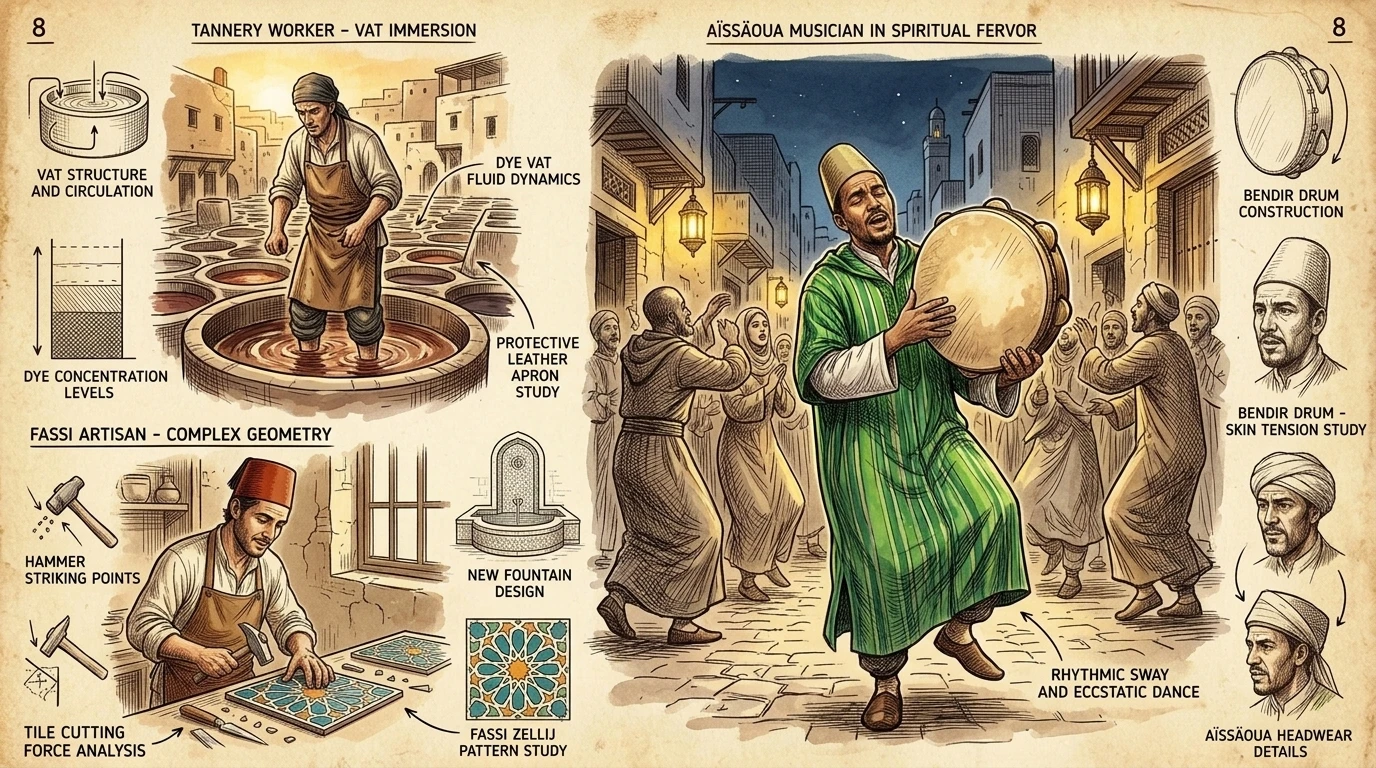
The Aïssaoua Sufi brotherhood performs devotional music and rituals in Fez. Their rhythmic drumming, chanting, and dancing create an atmosphere of spiritual fervor. These ceremonies reflect the deep-rooted Sufi traditions of the city, blending music, faith, and cultural identity.
Travel Fact: The Aïssaoua are a Sufi brotherhood founded in the 15th century. They are known for their ecstatic rituals, which often involve music, chanting, and dance, as a means of achieving spiritual connection.
Page 9
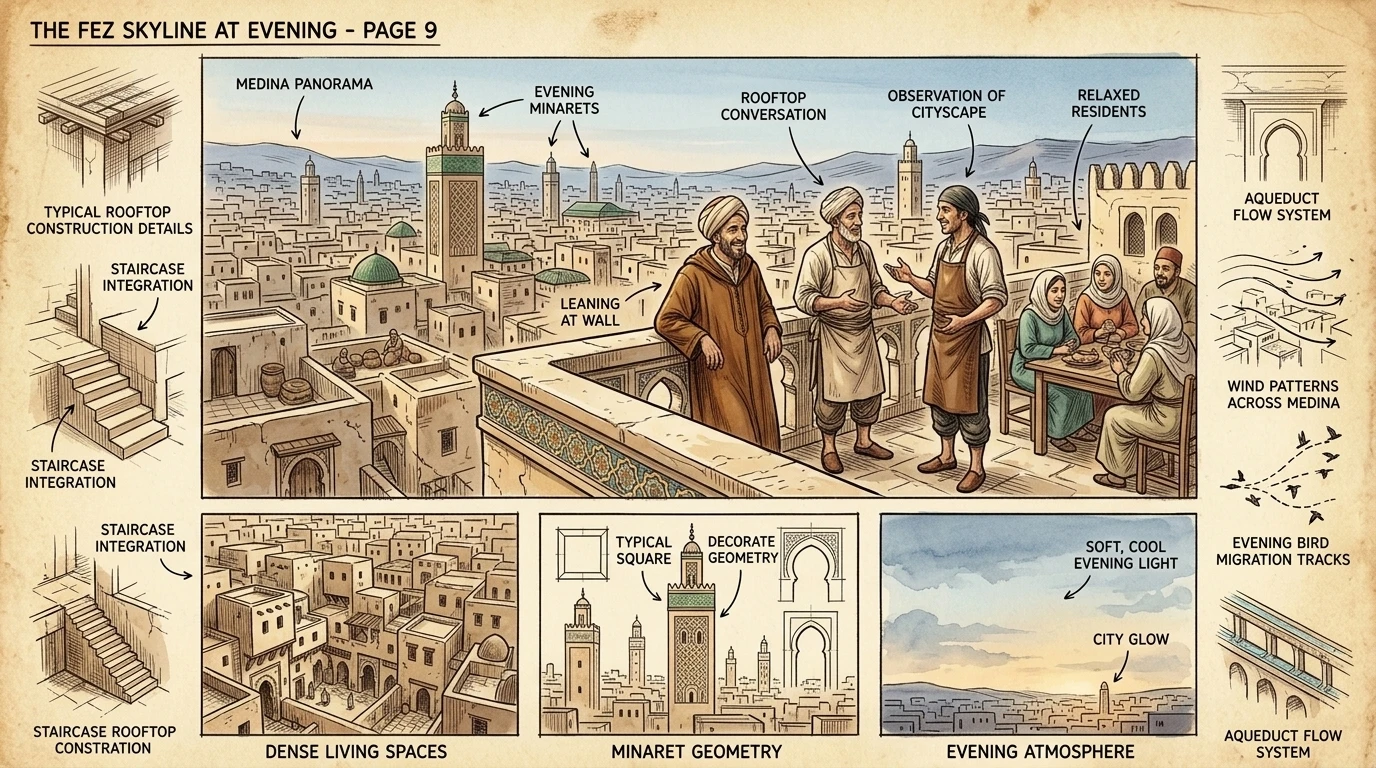
From the rooftops of Fez, the medina unfolds in a breathtaking panorama of densely packed buildings and minarets. Residents gather on these rooftops to enjoy the cool evening air, socialize, and savor the views. This aerial perspective reveals the city's unique urban fabric and its enduring charm.
Travel Fact: Rooftop gatherings are a common practice in Fez, providing residents with a space to socialize, enjoy the views, and escape the heat of the city. These rooftops offer a unique perspective of the medina's architecture and urban layout.
Page 10
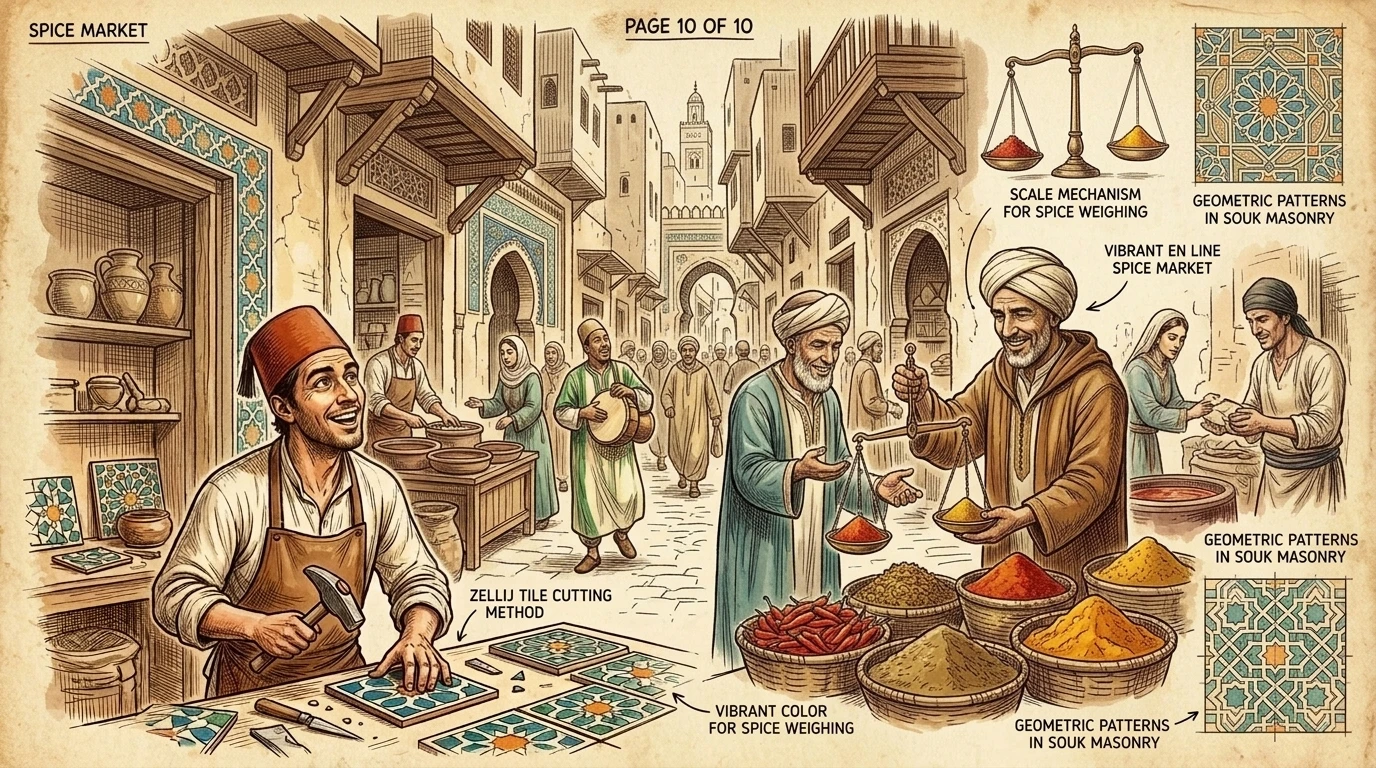
Fez, with its ancient medina, vibrant souks, and enduring traditions, embodies the soul of Morocco. The city's rich artistic heritage, spiritual depth, and culinary delights continue to captivate visitors. Explore the labyrinthine alleys and immerse yourself in a city where history and culture come alive.
Travel Fact: Fez remains a vital center of Moroccan culture, preserving its historical and artistic heritage while embracing the modern world. The city's commitment to tradition and its unique blend of influences make it a compelling destination for cultural exploration.
About this story
- Location: United Kingdom
- Audience: general readers
Questions and answers
Read Wonder Travel on your phone
Wonder Travel is available on Android. Get Wonder Travel on Google Play.