Sintra, Portugal
Sintra, Portugal — an illustrated travel story, set in Sintra. 10 illustrated pages, free to read on Wonder Travel.
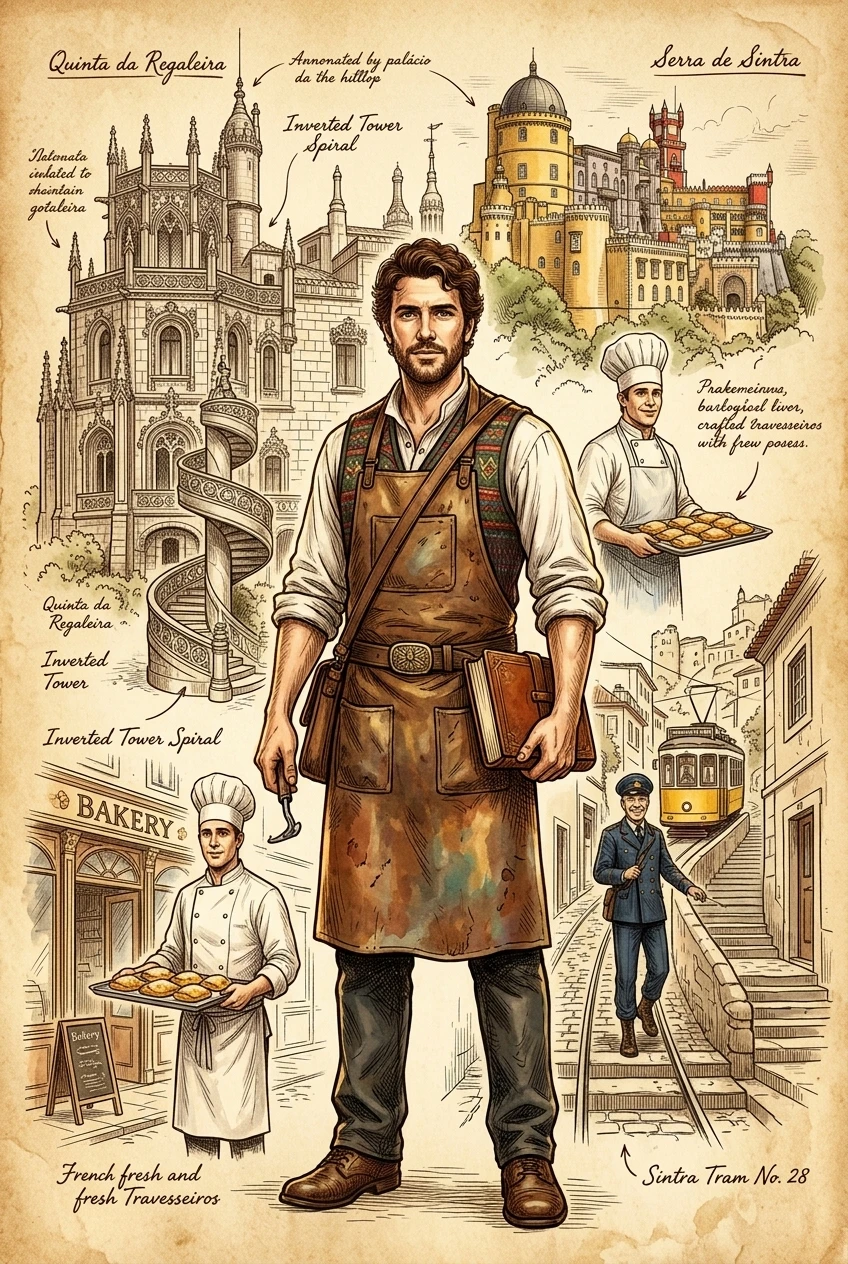
Page 1
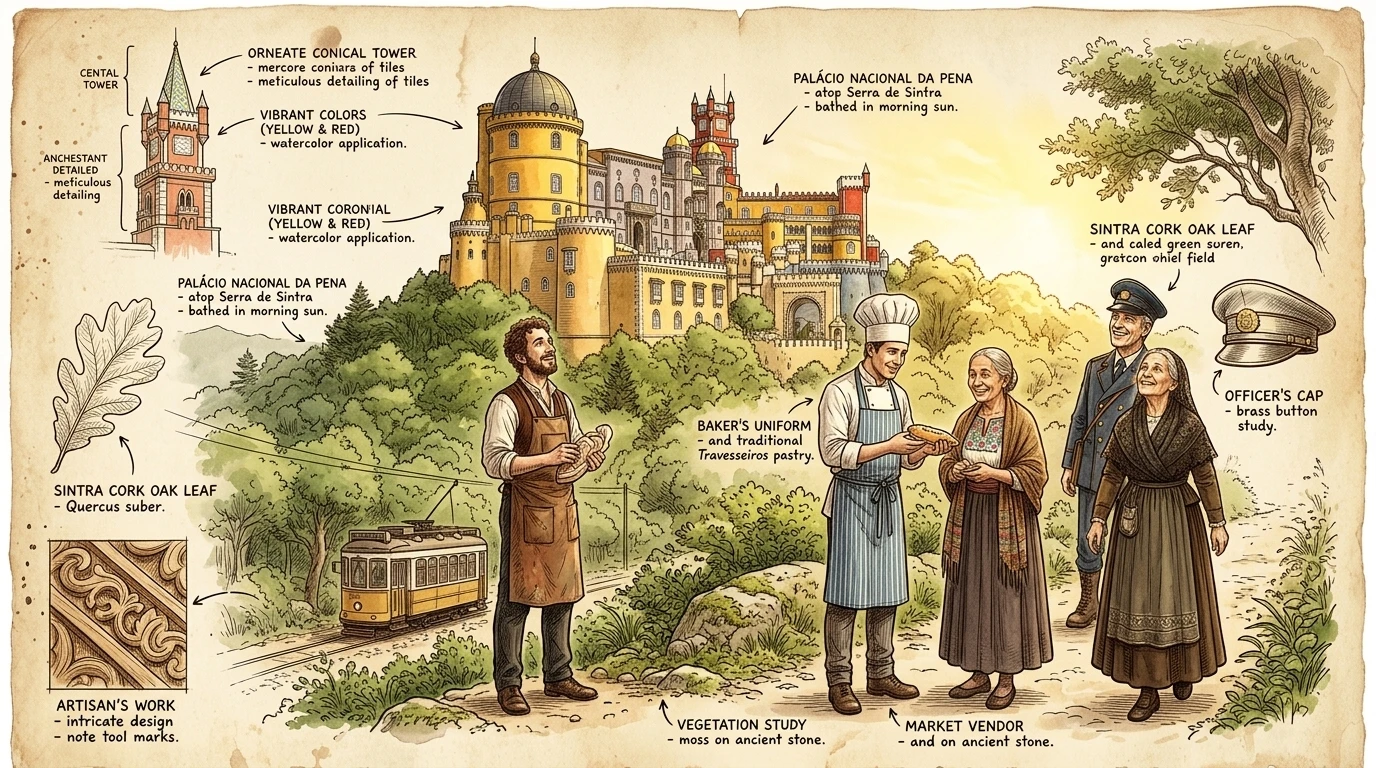
The Palácio Nacional da Pena, a Romanticist castle in Sintra, Portugal, stands vividly atop a hill overlooking the town. Its colorful walls and intricate details embody the artistic exuberance of the 19th century. Home to approximately 33,000 people, Sintra blends history with its natural park.
Travel Fact: The Palácio Nacional da Pena is a prime example of 19th-century Romanticism in Portugal.
Page 2
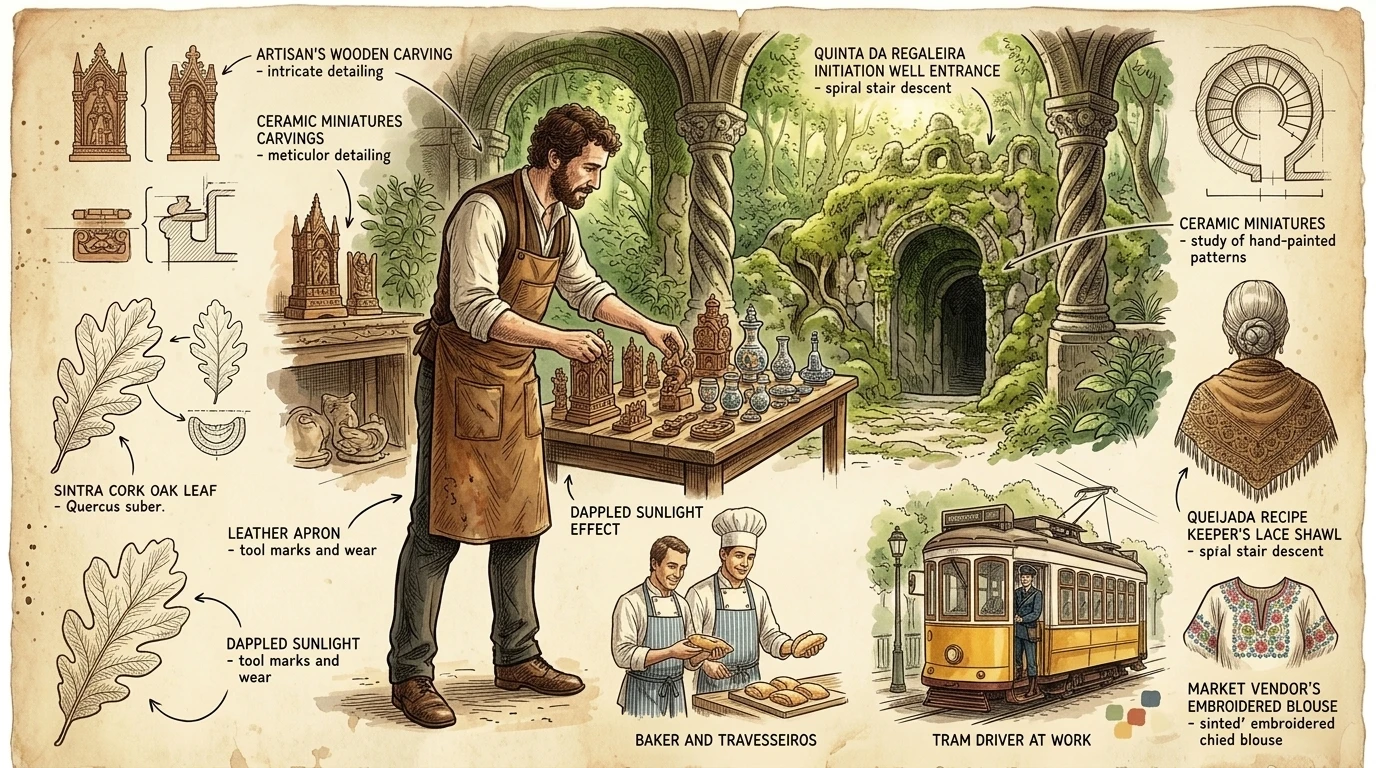
Quinta da Regaleira, a mysterious estate near Sintra's historic center, features enigmatic wells and grottoes. Local artisans sell handmade crafts near the entrance, blending history with contemporary artistry. The estate's Initiation Well descends into the earth, symbolizing a journey of transformation.
Travel Fact: The Initiation Well at Quinta da Regaleira was never used for water collection, but rather for ceremonial purposes.
Page 3

The aroma of freshly baked Travesseiros fills the air of a Sintra bakery. These crescent-shaped pastries, filled with almond cream, are a local specialty cherished by residents and visitors alike. Bakeries bustle as locals pick up their daily treats.
Travel Fact: Travesseiros are named for their pillow-like shape ('travesseiro' means 'pillow' in Portuguese).
Page 4
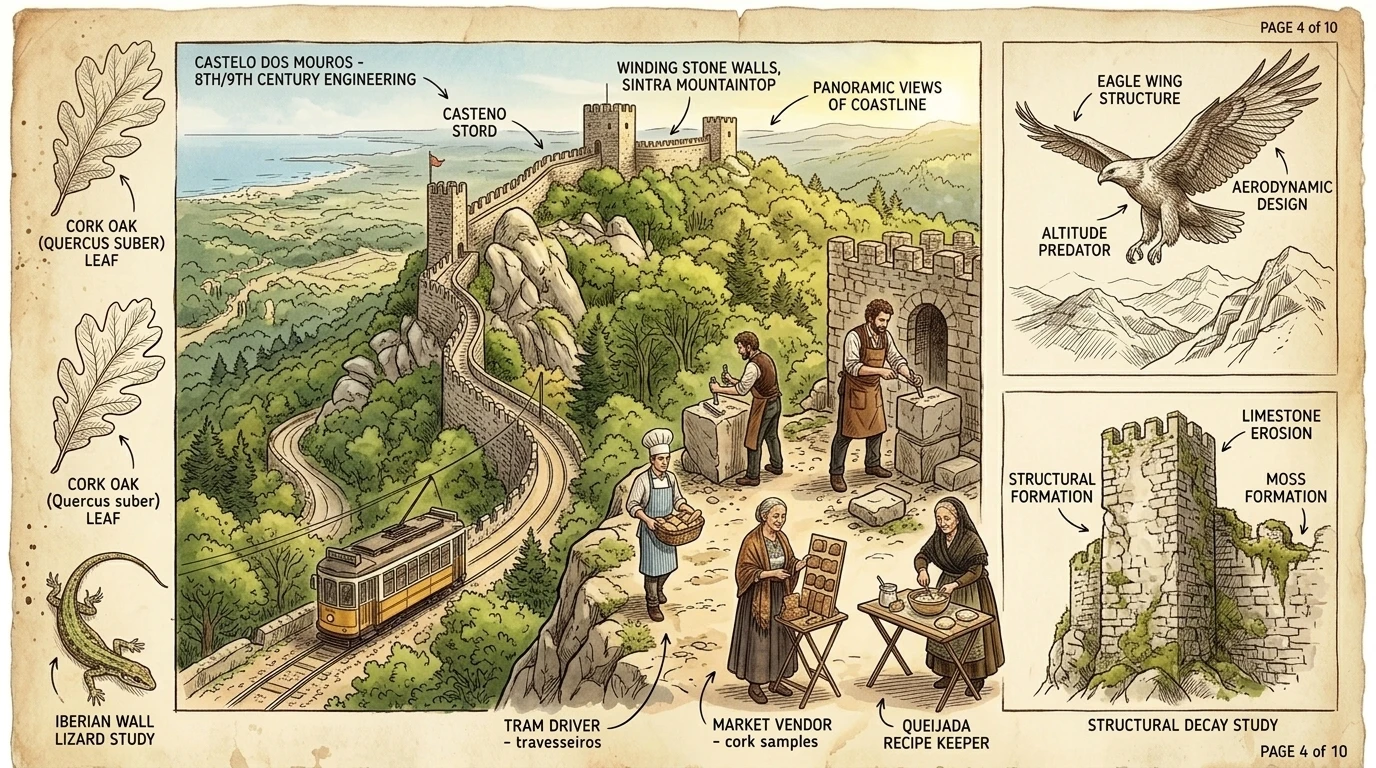
The Castelo dos Mouros, or Moorish Castle, offers s of Sintra's landscape. This medieval fortress, built in the 8th and 9th centuries, stands as a testament to the region's diverse history. The castle walls wind along the mountaintops, offering strategic views.
Travel Fact: The Moorish Castle was strategically important during the Reconquista.
Page 5
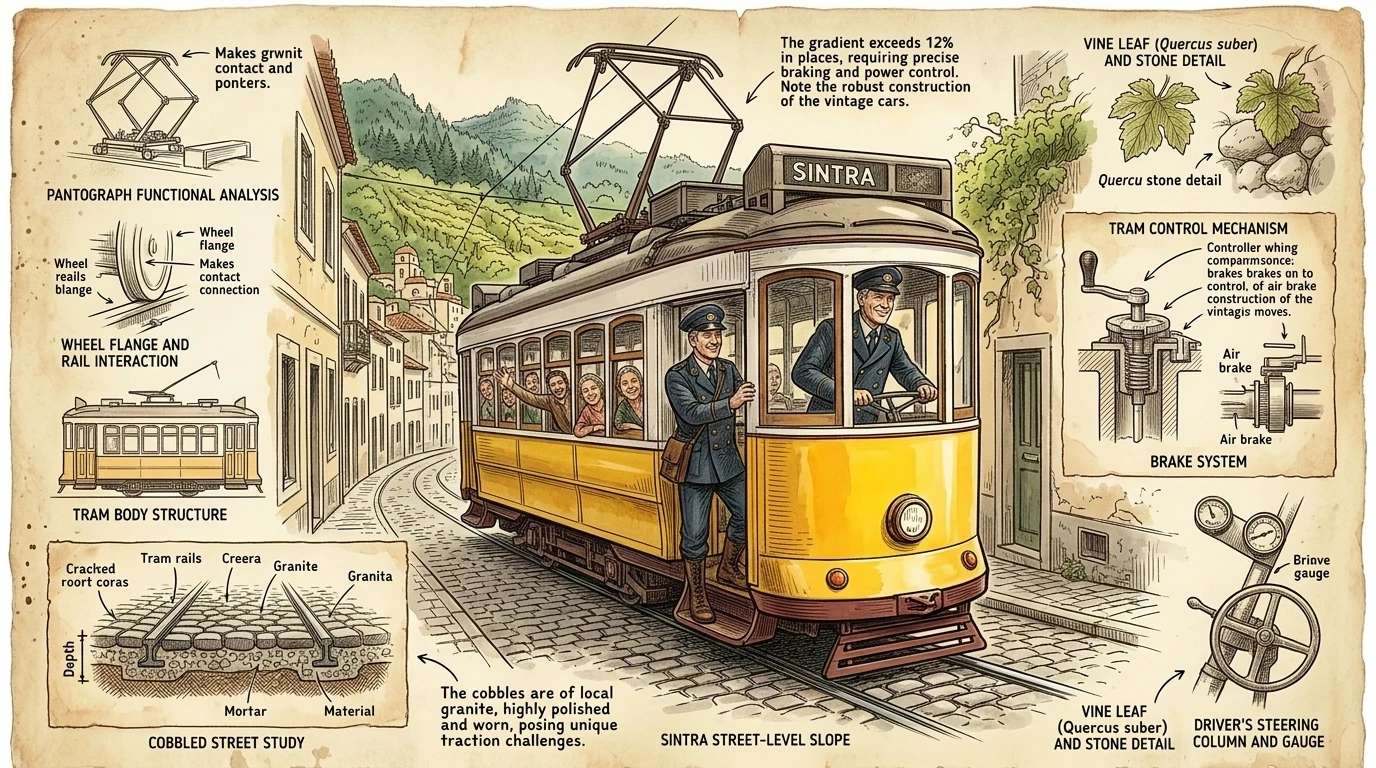
A classic tram rumbles through the narrow, winding streets of Sintra. Locals use this vintage form of transportation to navigate the steep hills and reach various points in the town. The tram lines connect the historic center to the surrounding areas.
Travel Fact: Sintra's tram system has been operating since the early 20th century.
Page 6
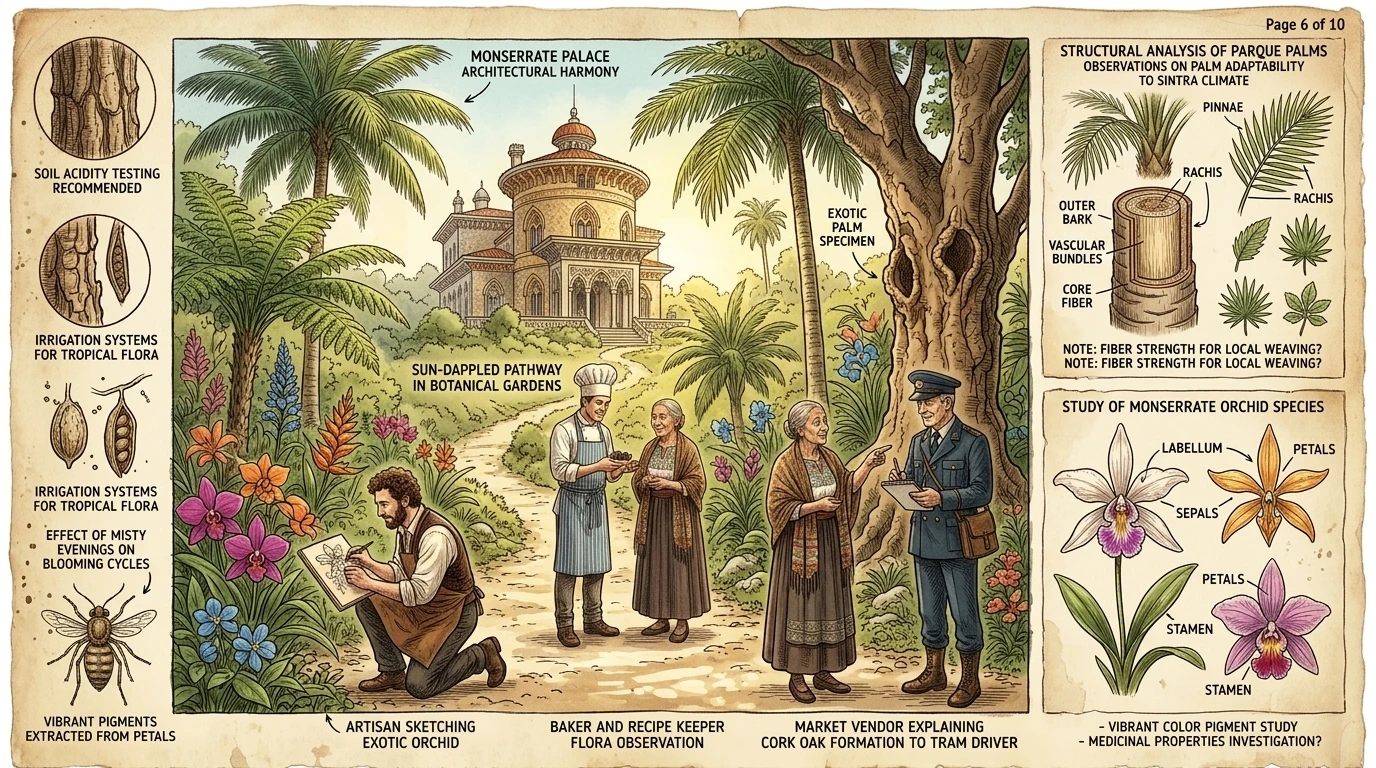
The Parque de Monserrate showcases exotic plants from around the world. This botanical garden, coupled with its stunning palace, represents a fusion of architectural and natural beauty. The gardens' winding paths invite exploration and discovery.
Travel Fact: The Parque de Monserrate was once owned by Sir Francis Cook, who transformed it into a Victorian-era botanical paradise.
Page 7
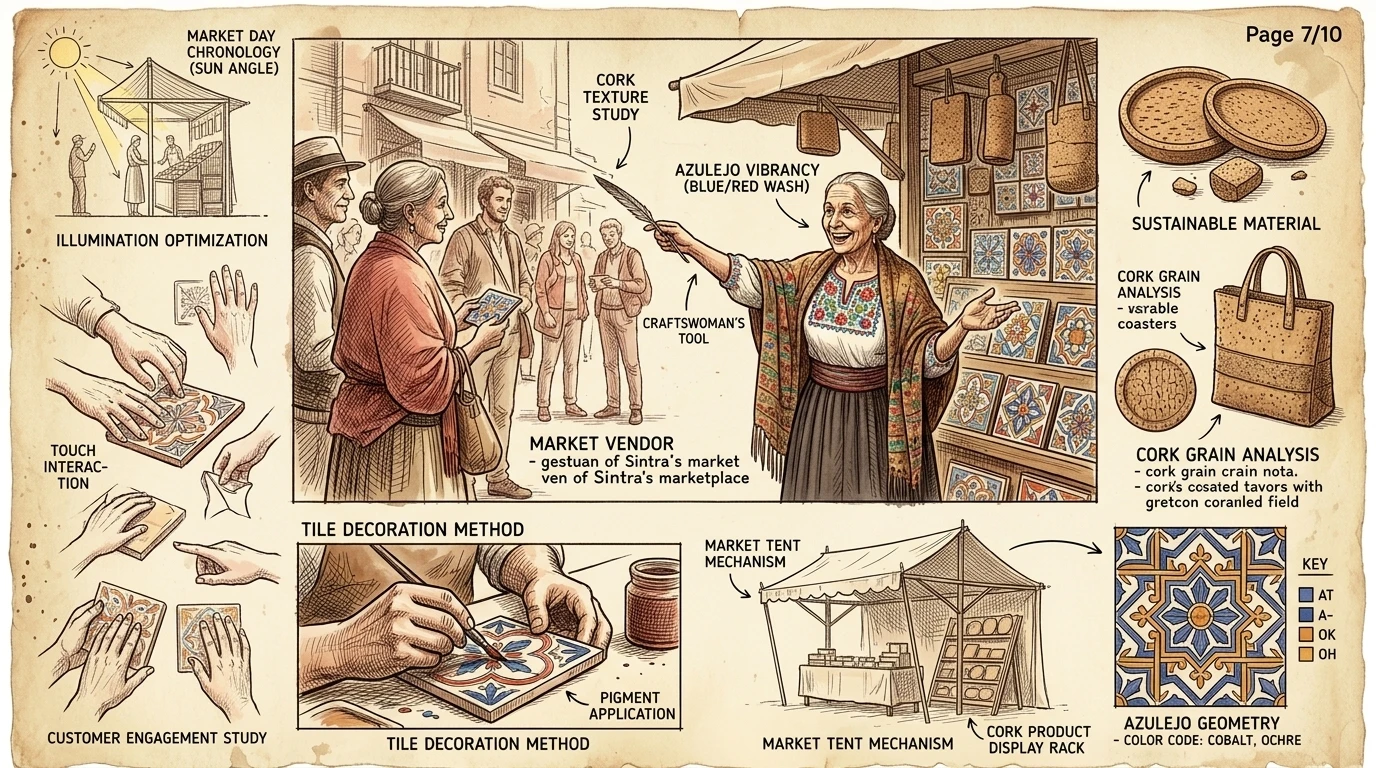
Handmade ceramic tiles and cork products line the stalls in Sintra's marketplace. These local crafts provide a glimpse into the region's artistic traditions. Tourists and locals alike browse through the colorful displays.
Travel Fact: Cork is a major export of Portugal, and Sintra is known for its cork handicrafts.
Page 8
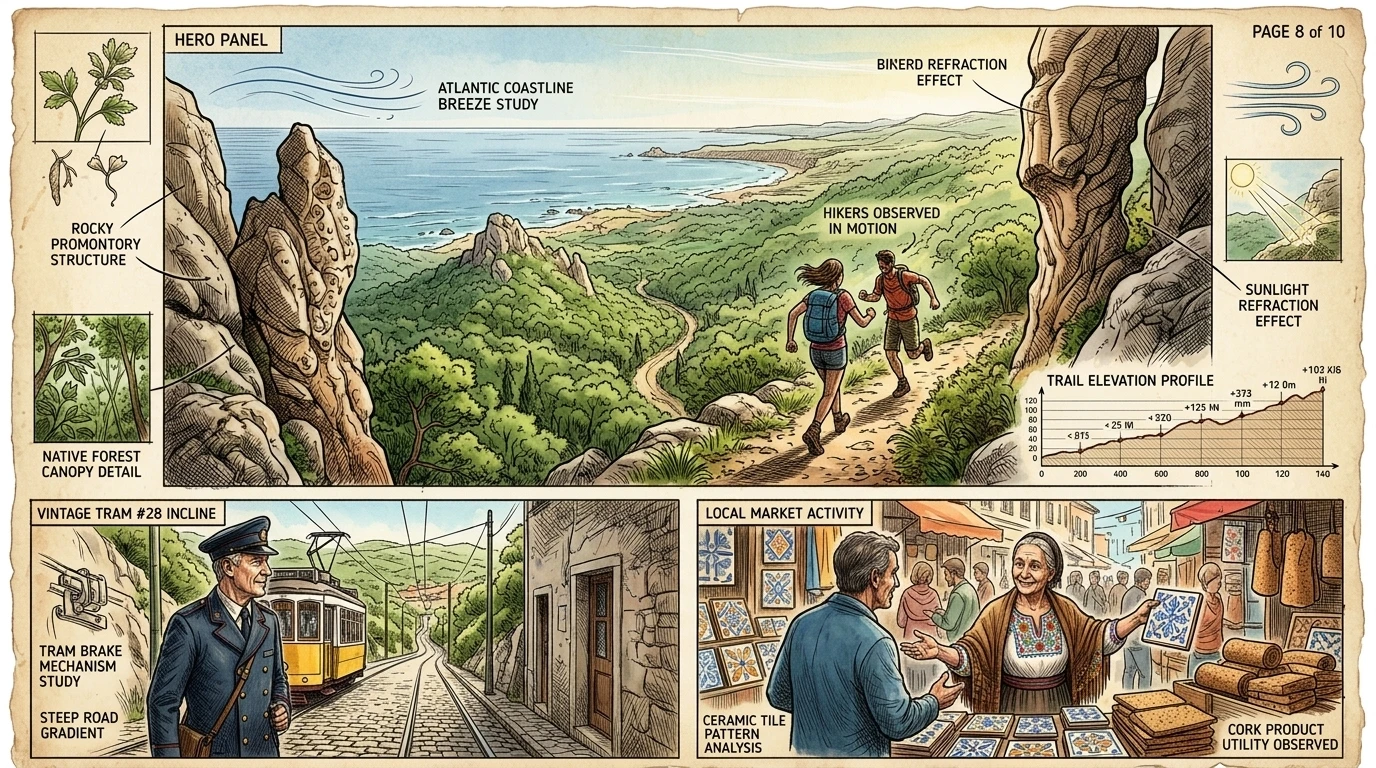
Hikers traverse the trails of the Serra de Sintra, surrounded by lush forests and dramatic rock formations. These trails offer breathtaking views of the coastline and the surrounding countryside. The natural park is home to unique species of flora and fauna.
Travel Fact: The microclimate of the Serra de Sintra supports a unique ecosystem.
Page 9
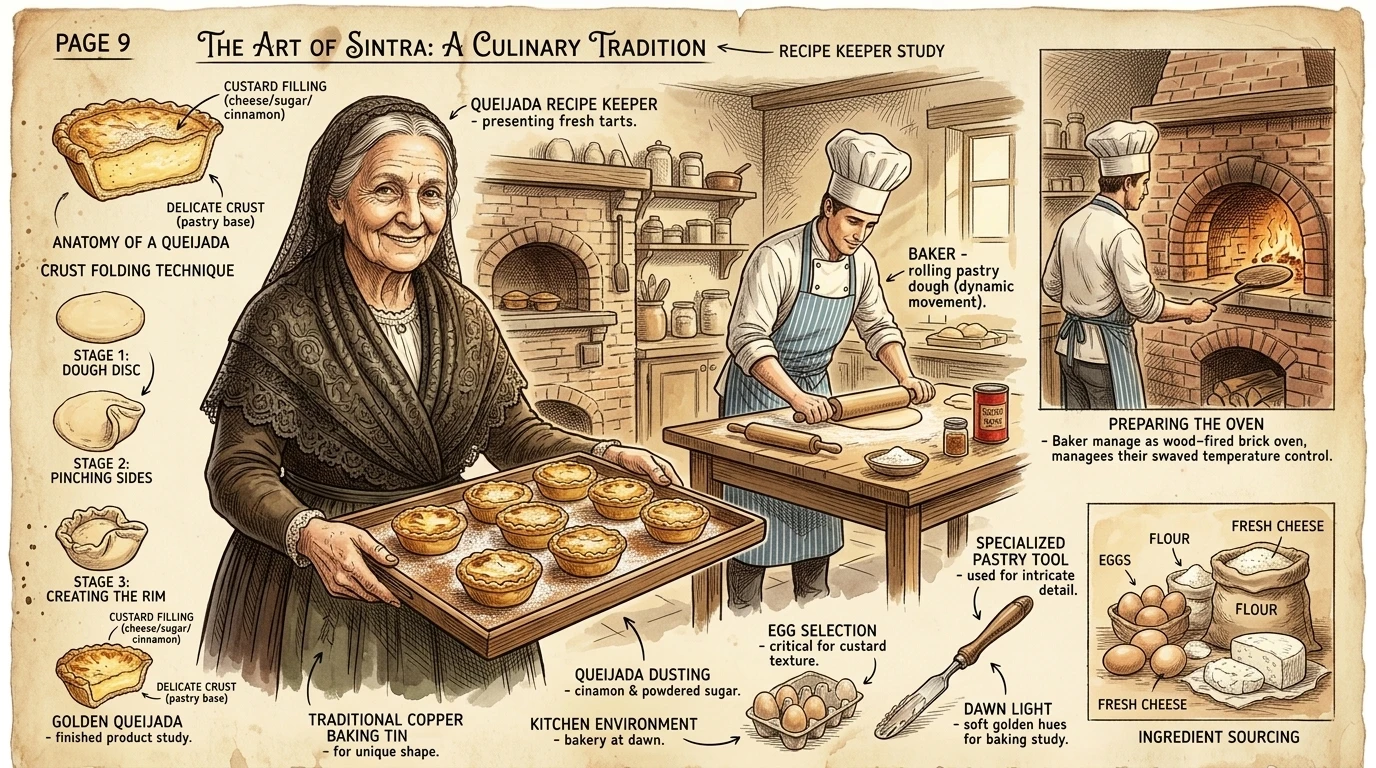
Queijadas, small cheese tarts, are a beloved treat enjoyed during local festivals. Families pass down their recipes through generations, keeping this culinary tradition alive. The tarts are often served with cinnamon and powdered sugar.
Travel Fact: Each village in the Sintra region has its own unique variation of the Queijada recipe.
Page 10
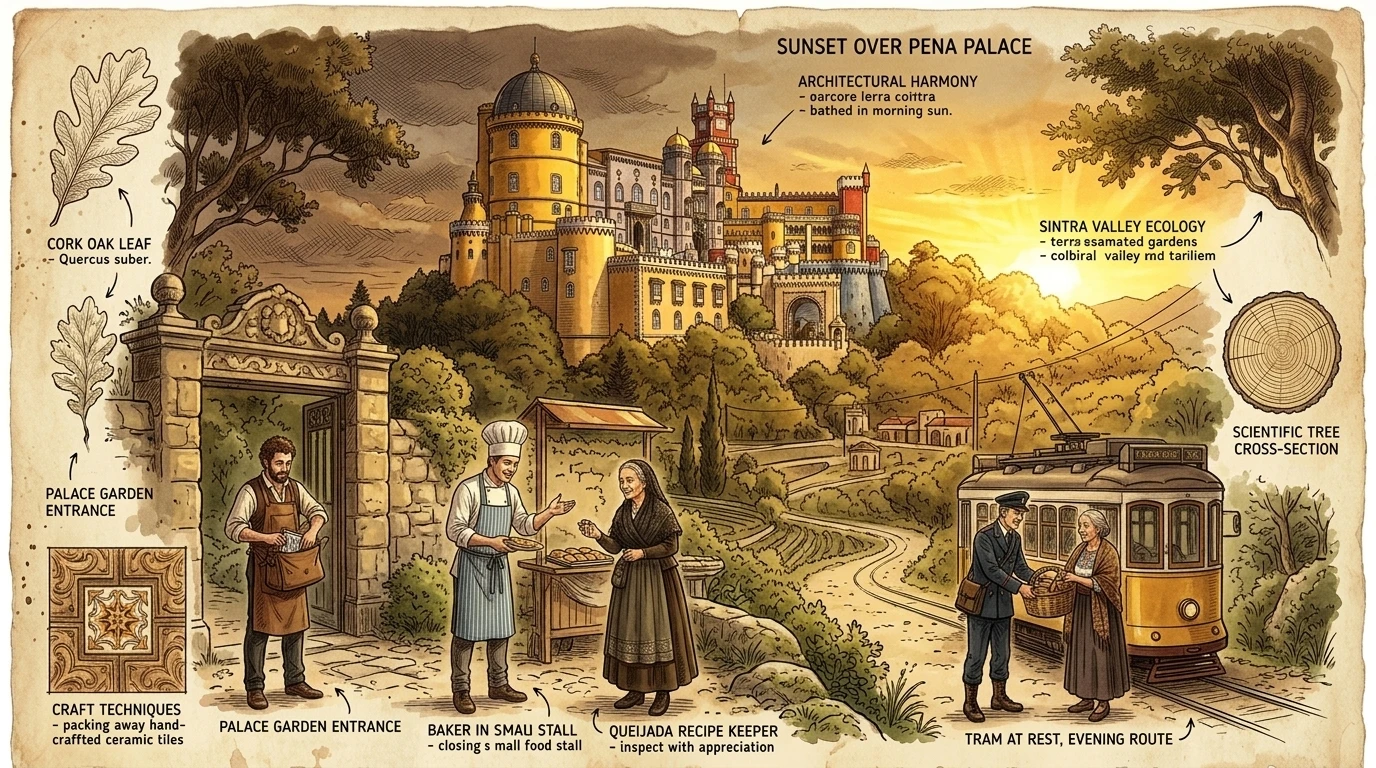
As the sun sets over Sintra, the Palácio Nacional da Pena glows with golden light, illuminating the surrounding landscape. This magical moment captures the essence of Sintra's beauty, blending history with nature. The vista inspires awe and wonder.
Travel Fact: The sunset view from the Palácio Nacional da Pena is considered one of the most beautiful in Portugal.
About this story
- Location: Sintra
- Audience: general readers
Questions and answers
Read Wonder Travel on your phone
Wonder Travel is available on Android. Get Wonder Travel on Google Play.