Achille Mbembe: Beyond the Surface of Postcolonial Thought
Dive into the work of Achille Mbembe, a leading intellectual challenging conventional views on power, history, and the human condition in the postcolonial era.
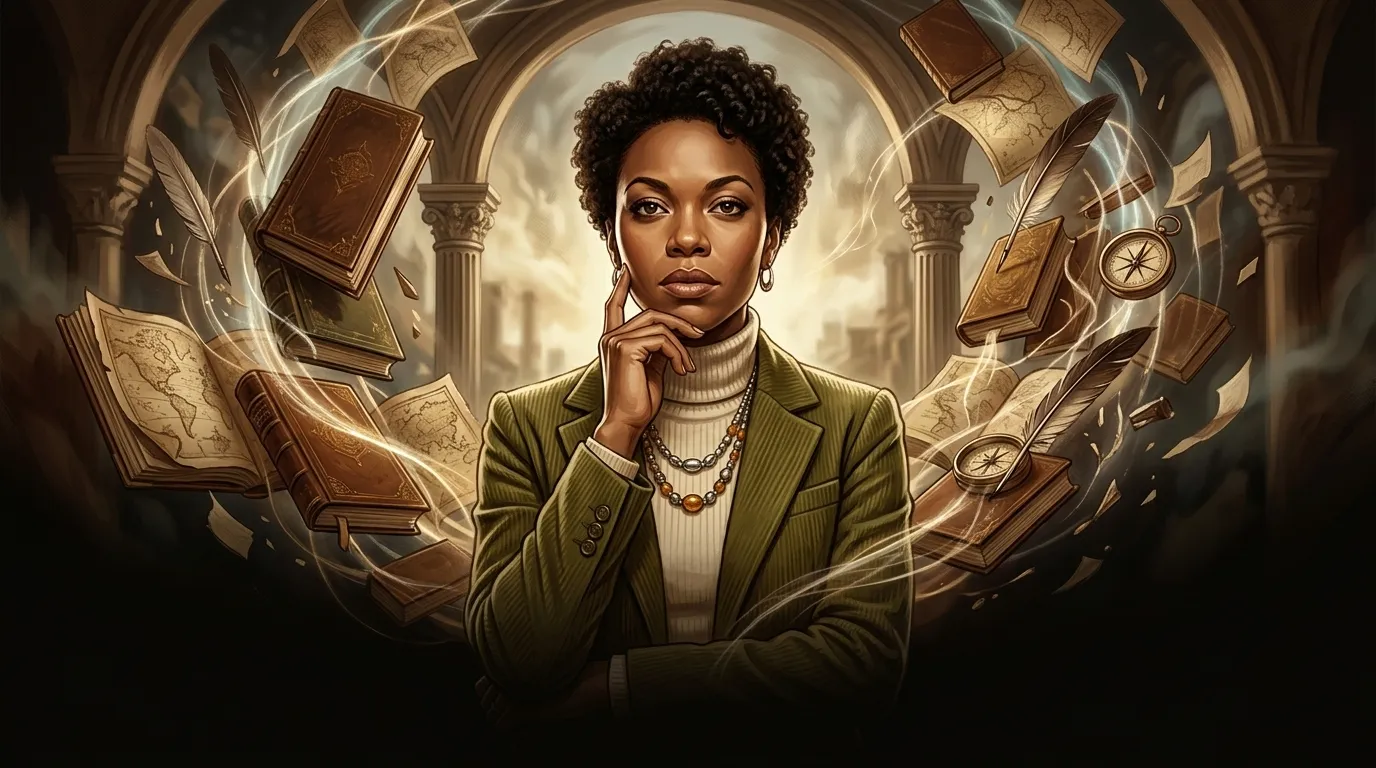
Many people searching for “who is Achille Mbembe” likely have some awareness of his name in relation to modern philosophy, particularly around ideas of postcolonialism, Africa, and power. They might associate him with complex academic concepts, perhaps even seeing him as a figure who challenges traditional Western thought. This general understanding is a good starting point, but it often simplifies the depth and breadth of his contributions.
- Mbembe is primarily an African philosopher.
- His work is only about colonialism and its aftermath.
- He is solely a critic of Western ideas.
- His ideas are too abstract to be relevant to everyday life.
Is Mbembe Exclusively an African Philosopher?
While Achille Mbembe is indeed a prominent Cameroonian philosopher, and his work is deeply rooted in African experiences and intellectual traditions, to label him only an African philosopher would be an oversimplification. His scholarship draws from a vast range of global thought, including European philosophy, critical theory, and American political science. He uses these diverse lenses to analyze power, race, and the human condition, making his insights relevant far beyond the African continent. His concepts, such as necropolitics, have been applied to understanding violence and sovereignty in various global contexts, demonstrating their universal resonance.
Is His Work Only About Colonialism?
It’s true that colonialism and its enduring legacies are central to Mbembe's writing. He meticulously examines how colonial power structures continue to shape contemporary societies, economies, and political systems. However, his work extends far beyond a simple critique of the colonial past. He explores themes like the nature of sovereignty, the meaning of the human in an age of biopolitics, and the possibilities for new forms of community and belonging. He delves into the complexities of globalization, technology, and the environment, often linking these to historical power dynamics but always looking towards future transformations. His focus is on understanding power in its many forms, not just the colonial one.
Is He Only a Critic of Western Ideas?
Mbembe is undoubtedly a rigorous critic of certain aspects of Western thought, particularly its historical role in justifying colonialism and racial hierarchies. He challenges universalizing claims and eurocentric perspectives. However, his engagement with Western philosophy is not purely critical. He draws heavily on thinkers like Michel Foucault, Hannah Arendt, and Frantz Fanon, reinterpreting their ideas to illuminate new dimensions of power and subjectivity. His approach is more about re-evaluation and expansion than outright rejection. He seeks to decenter, rather than simply dismiss, Western intellectual traditions, integrating them into a broader, more inclusive global intellectual dialogue. For more on how philosophers engage with diverse traditions, you might explore articles on Wonder Philosophy.
To govern means to create a world where some can breathe and others cannot.
Are His Ideas Irrelevant to Everyday Life?
While Mbembe's language can sometimes be academic, the core of his ideas is profoundly relevant to everyday life. His concept of 'necropolitics,' for example, describes how states and other powers determine who may live and who must die, or be exposed to death. This concept helps us understand contemporary issues ranging from migration policies and public health crises to environmental injustices and police brutality. His work encourages us to question the underlying power structures that shape our societies and influence our personal experiences. Understanding these concepts can provide a deeper framework for interpreting daily news and social events, connecting individual experiences to larger global forces. You can find more articles on current events and their philosophical underpinnings on articles.
What to Remember About Achille Mbembe
Achille Mbembe is a groundbreaking thinker whose work transcends simple categories. He is a philosopher who uses African experiences as a lens to understand global power dynamics, not just a critic of colonialism but an analyst of complex modern sovereignty and the human condition. His ideas, while challenging, offer crucial tools for understanding our interconnected world and the subtle ways power shapes our lives.
Frequently Asked Questions
What is 'necropolitics'?
Necropolitics, a concept developed by Mbembe, describes how political power can be used to dictate who lives and who dies. It extends beyond traditional biopolitics (managing life) to the active production of death or exposure to death, often through war, state violence, or neglect.
Has Achille Mbembe received any major awards or recognition?
Yes, Achille Mbembe has received significant recognition for his contributions to philosophy and critical theory. He was awarded the Ernst Bloch Award in 2018 for his work on the critique of reason and the future of humanity, and the Holberg Prize in 2024 for his groundbreaking research in African political thought, postcolonial studies, and the philosophy of history.
Where does Achille Mbembe currently teach or research?
Achille Mbembe is currently a Research Professor in History and Politics at the Wits Institute for Social and Economic Research (WISER) at the University of the Witwatersrand in Johannesburg, South Africa. He also holds visiting professorships and fellowships at various institutions worldwide, contributing to global intellectual discourse.