Alan Shepard: More Than Just the First American in Space
Explore the life and legacy of Alan Shepard, the pioneering astronaut often remembered for his historic suborbital flight. What else did he achieve?
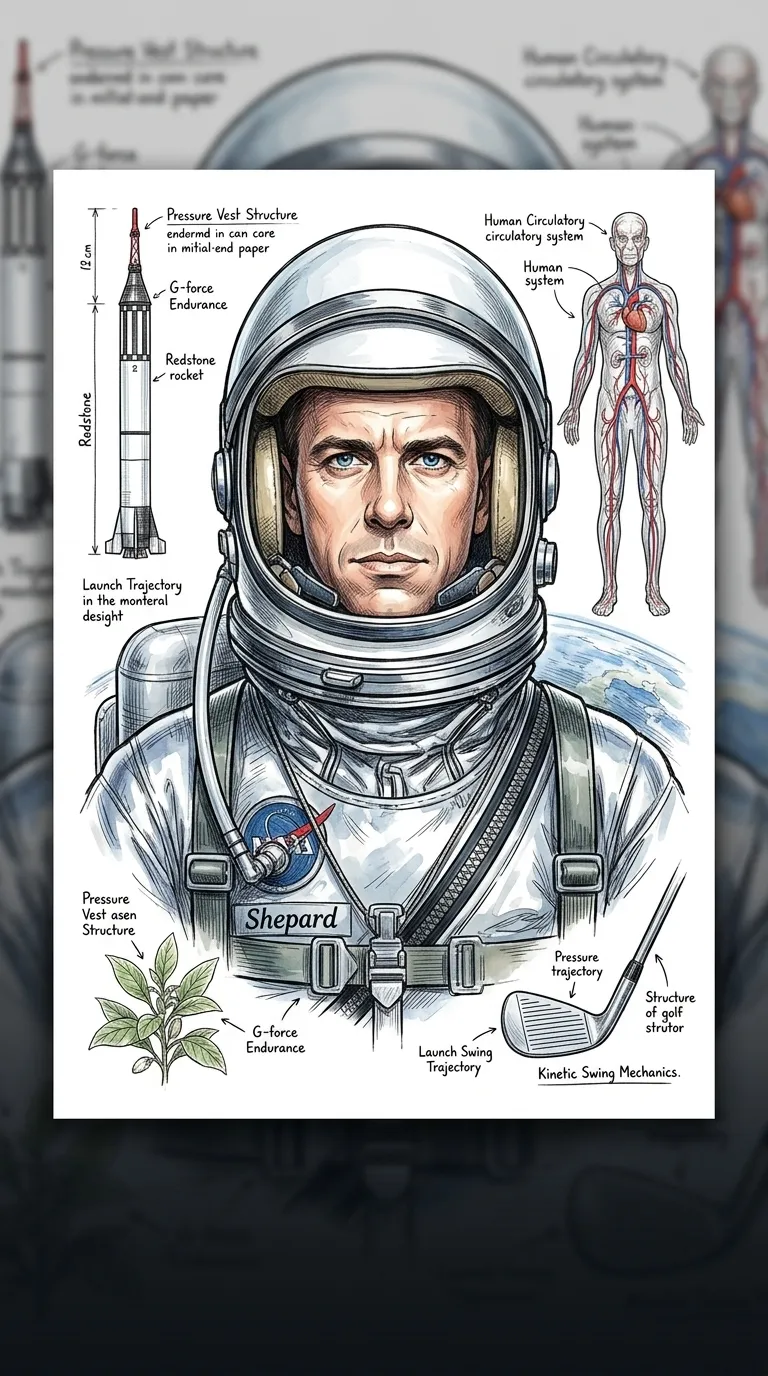
When we think of Alan Shepard, one image often comes to mind: a determined astronaut, clad in a bulky silver suit, being launched into the vast unknown. He holds a significant place in history as the first American to travel into space, a feat that captured the imagination of a nation and marked a pivotal moment in the space race. Yet, like many historical figures, the popular understanding of Shepard might simplify or even miss some of the complexities of his remarkable career and personality.
- Shepard was the very first person in space.
- His flight was a full orbit around Earth.
- He was a quiet, serious, and by-the-book military man.
- Shepard only flew one mission into space.
Was He the First Person in Space?
While Alan Shepard was indeed the first American in space, he was not the first human to achieve this monumental milestone. That distinction belongs to Soviet cosmonaut Yuri Gagarin, who made a full orbital flight on April 12, 1961, aboard Vostok 1. Shepard's historic flight followed less than a month later, on May 5, 1961, as part of Project Mercury. His mission, Freedom 7, was a suborbital flight, meaning it went into space but did not complete an orbit around Earth. Both missions were critical steps in humanity's journey beyond our planet, showcasing the incredible bravery and ingenuity of these early space pioneers. You can read more about these early space efforts in the Wonder Science library.
Did His First Flight Orbit Earth?
As mentioned, Shepard's initial journey into space was a suborbital flight. This means his spacecraft, Freedom 7, traveled upwards into space and then returned to Earth, much like a very high ballistic trajectory. The flight lasted approximately 15 minutes, reaching an altitude of 116 miles (187 kilometers) and traveling 302 miles (486 kilometers) downrange. While it didn't circle the globe, it proved that humans could survive the stresses of launch, weightlessness, and re-entry, paving the way for longer, orbital missions. The experience gathered from this flight was invaluable for NASA's subsequent space programs.
Was Shepard Always a Serious Military Man?
Alan Shepard certainly had a distinguished military background, serving as a naval aviator and test pilot before joining NASA. This experience instilled in him a disciplined, focused, and competitive nature, which was essential for the high-stakes environment of early spaceflight. However, to label him as only a quiet, serious military man would be an oversimplification. Shepard was known for his sharp wit, a strong sense of humor, and a competitive streak that sometimes bordered on mischievous. He was also a highly capable leader who commanded respect, not just through rank but through his actions and expertise. His personality was complex, a blend of intense professionalism and a lighter, more personable side that emerged among his peers. Discover more about the human element of space exploration in other articles on this site.
It's a very sobering feeling to be up in space and realize that one's safety factor is about zero.
Did He Only Fly One Mission?
This is another common misconception. While his Freedom 7 flight was his first and most famous, Alan Shepard went on to command the Apollo 14 mission in 1971. This made him the fifth man to walk on the Moon, a remarkable achievement that came nearly ten years after his initial spaceflight. His participation in Apollo 14 was particularly notable because he had been grounded for several years due to Ménière's disease, an inner ear disorder. After undergoing corrective surgery, he returned to flight status, demonstrating incredible resilience and determination. During his lunar extravehicular activities, he famously hit two golf balls on the Moon, a moment of levity that showcased his enduring personality.
What to Remember About Alan Shepard
Alan Shepard was a true pioneer, not just for being the first American in space, but for his enduring spirit and his later command of an Apollo lunar mission. He embodied the courage and innovation of the early space program, demonstrating that the path to the stars was built on both groundbreaking first steps and tenacious follow-through. His legacy is one of a determined astronaut who pushed boundaries, faced personal challenges, and ultimately left his footprints on the Moon.
Frequently Asked Questions
What was Alan Shepard's rank in the Navy?
Alan Shepard retired from the Navy with the rank of Rear Admiral. He had a distinguished career as a naval aviator and test pilot before joining NASA, which prepared him for the challenges of spaceflight.
How long was Alan Shepard's first space flight?
His historic suborbital flight aboard Freedom 7 on May 5, 1961, lasted approximately 15 minutes. During this time, he traveled into space and returned to Earth, demonstrating the feasibility of human spaceflight for Americans.
Did Alan Shepard have any children?
Yes, Alan Shepard had three daughters with his wife, Louise. They were Laura, Julie, and Alice. He was a family man in addition to his demanding career as an astronaut.