Antoni van Leeuwenhoek Is Not Only for Cancer Research
Antoni van Leeuwenhoek's pioneering work with microscopes extended far beyond cancer, revealing a hidden world of microbes.
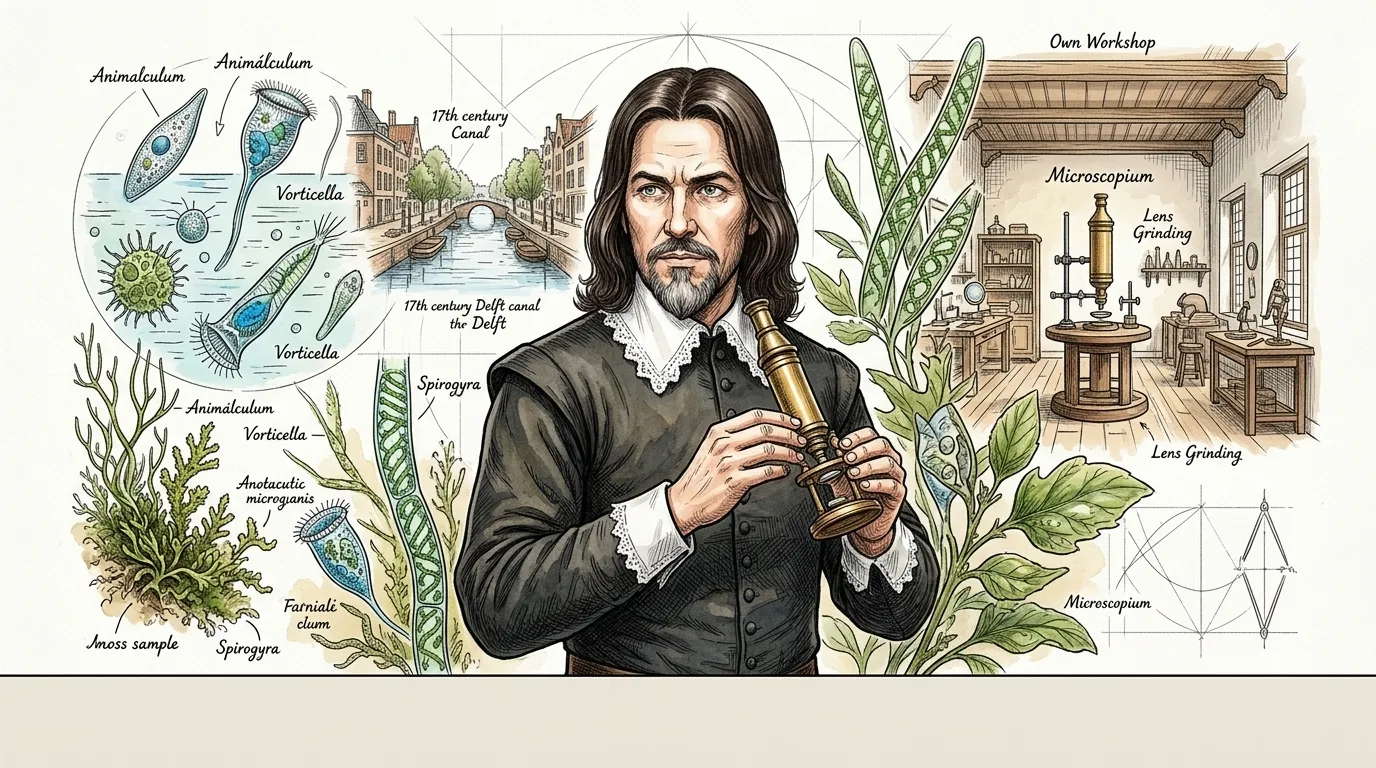
The 17th-century Dutch scientist Antoni van Leeuwenhoek, often called the "Father of Microbiology," is renowned for his groundbreaking work with microscopes. Yet, a common misconception, perhaps fueled by the seriousness of modern diseases, is that his work was only for cancer research. This article will clarify that while his discoveries laid foundational groundwork for understanding disease, including cancer, his initial explorations were much broader and driven by pure curiosity.
- He was the first to observe and describe single-celled organisms, which he called "animalcules."
- His microscopic observations included muscle fibers, bacteria, spermatozoa, and blood flow in capillaries.
- Van Leeuwenhoek made over 500 microscopes in his lifetime, each handcrafted to achieve unprecedented magnification for his time.
The Man Behind the Magnifying Lenses
Antoni van Leeuwenhoek was not a trained scientist in the traditional sense. Born in Delft, Netherlands, in 1632, he made his living as a draper, a surveyor, and a chamberlain for the Delft sheriffs. His interest in optics began with magnifying glasses used to count threads in fabric. Unsatisfied with the commercially available lenses, he taught himself to grind and polish tiny, powerful lenses, creating simple, single-lens microscopes that could magnify objects up to 200 to 300 times. This was far superior to the compound microscopes of his era. His dedication to crafting these instruments allowed him to peer into worlds no human had ever seen, leading to discoveries that would reshape biological understanding.
My work, which I've done for a long time, was not pursued in order to gain the praise I now enjoy, but chiefly from a craving after knowledge, which I notice resides in me more than in most other men. And therewithal, whenever I found out anything remarkable, I have thought it my duty to write down my discovery, so that all ingenious people might be informed thereof.
Discovering the "Animalcules" and Beyond
Van Leeuwenhoek's initial observations were driven by an insatiable curiosity about the everyday world around him. He examined rainwater, pond water, spittle, and even plaque scraped from his own teeth. It was in these seemingly mundane samples that he first encountered what he called "animalcules" – tiny, swimming creatures that we now know as bacteria and protozoa. This was a revolutionary discovery, proving that an entire unseen world existed. He meticulously documented their movements and forms, sending detailed letters to the Royal Society of London. His work also included the first accurate descriptions of red blood cells, the structure of muscle fibers, and the life cycles of fleas and other insects. While these discoveries are fundamental to understanding human health and disease, including cancer, they were not specifically aimed at studying cancer itself, which was not understood at a cellular level in his time. Instead, his work established the very concept of microorganisms and cellular structures, paving the way for future medical and scientific breakthroughs. You can explore more about the history of scientific discovery in Wonder Science.
The Link to Cancer: An Indirect Legacy
The idea that Antoni van Leeuwenhoek's work was only for cancer likely stems from the profound impact his discoveries eventually had on medicine. Cancer, at its core, is a disease of uncontrolled cell growth. Van Leeuwenhoek's observations of individual cells and microscopic organisms provided the foundational knowledge needed to later understand cellular pathology. By revealing the existence of cells and microorganisms, he indirectly contributed to the development of germ theory, cellular biology, and eventually, the understanding of disease processes at a microscopic level. Without his pioneering work, the path to identifying cancerous cells or understanding their aberrant behavior would have been significantly delayed. Therefore, while he didn't study cancer directly, his legacy is deeply intertwined with the entire field of medicine, including oncology. Learning about such historical figures helps us understand how scientific knowledge builds over time, as explored in many articles on historical topics.
What Leeuwenhoek's Broad Research Tells Us About Scientific Inquiry
Antoni van Leeuwenhoek's journey from a draper to a groundbreaking scientist highlights the power of unfettered curiosity. His work was not dictated by a specific medical problem like cancer, but by a desire to see and understand the unseen. This approach, driven by fundamental observation and meticulous documentation, reveals a crucial aspect of scientific inquiry: that many profound discoveries arise from exploring the unknown without an immediate practical application in mind. His story reminds us that basic research, even when seemingly unrelated to immediate health concerns, often lays the essential groundwork for future applied sciences, including those that tackle complex diseases like cancer. His legacy is not just about what he saw, but the spirit of inquiry he embodied, proving that observation and dedication can unlock entirely new realms of knowledge.
Frequently Asked Questions
Did Antoni van Leeuwenhoek invent the microscope?
While van Leeuwenhoek did not invent the microscope, he significantly improved its capabilities. He developed simple, single-lens microscopes that achieved much higher magnifications than the compound microscopes of his time, enabling him to make unprecedented discoveries.
How did van Leeuwenhoek share his discoveries?
Van Leeuwenhoek communicated his findings primarily through letters to the Royal Society of London. These letters, often accompanied by detailed drawings, were then published in the Society's Philosophical Transactions, making his observations known to the wider scientific community.
What is the most significant impact of van Leeuwenhoek's work?
His most significant impact was the discovery of microorganisms, which he called "animalcules." This revelation proved the existence of an invisible world of life, fundamentally changing our understanding of biology and paving the way for fields like microbiology and germ theory.