The Artificial Heart: Why It Was Invented, and What It Achieved
The artificial heart was invented to save lives when no other options remained, offering a bridge to transplant or a permanent solution.
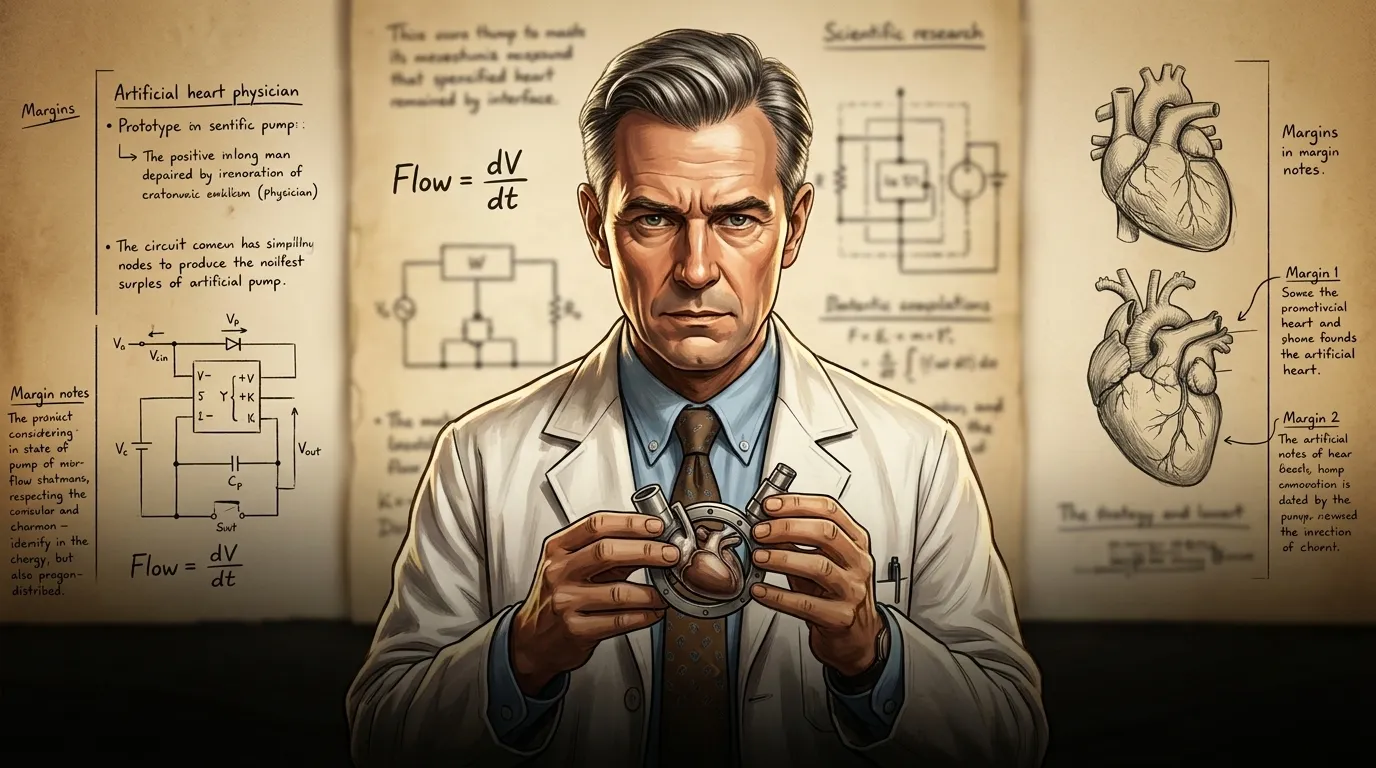
Many people believe the artificial heart was a groundbreaking invention that immediately solved the problem of heart failure. They imagine a clear path from early experiments to the sophisticated devices we see today, providing a perfect replacement for a failing human organ. The story of its invention, however, is far more complex, filled with challenges, setbacks, and a gradual understanding of what such a device could realistically achieve.
- The artificial heart was invented primarily to replace a diseased heart when a human donor heart wasn't available.
- Early artificial hearts were intended as permanent solutions for patients.
- The first artificial hearts were highly successful and led to many long-term survivors.
- The technology for artificial hearts advanced quickly and smoothly once the first one was implanted.
Replacing a Diseased Heart: The Primary Goal
It is largely true that the primary motivation behind inventing the artificial heart was to offer an alternative when a patient's own heart was failing, and a human heart transplant was not an option. For many years, severe heart disease meant certain death once medical treatments could no longer sustain the patient. The idea was to create a mechanical pump that could take over the function of the heart, allowing the body to continue receiving oxygenated blood. This was seen as a last resort, a way to extend life where no other medical intervention could. You can learn more about how different inventions have shaped medicine in Wonder Inventions.
The heart is the first organ to form, and the last to die.
From Permanent Solution to Bridge to Transplant
While early inventors certainly hoped for a permanent solution, the reality of the first artificial hearts quickly shifted this perspective. Devices like the Jarvik-7, implanted in Barney Clark in 1982, were indeed designed with the intention of being a long-term replacement. However, the early devices faced significant challenges, including blood clots, infections, and mechanical failures. These complications often led to a poor quality of life and limited survival times for patients. Over time, the role of the artificial heart evolved. Instead of a permanent replacement, it became more commonly used as a "bridge to transplant." This meant the device would keep a patient alive and stable until a suitable human donor heart became available. For some, it also served as a "destination therapy" for those ineligible for a transplant, providing a few more months or years of life, even if not a permanent cure.
Success and Survival: A Mixed Record
The belief that early artificial hearts led to many long-term survivors is not entirely accurate. While the first implants were significant medical achievements, the survival rates and quality of life were often challenging. Barney Clark, the first recipient of a permanent artificial heart, lived for 112 days. While this was a remarkable feat at the time, it also highlighted the many difficulties. Patients required extensive care, and the devices were prone to complications. The initial goal of widespread, long-term survival with a good quality of life was not immediately met. However, each implant provided invaluable data, pushing the research and development forward. You can find more articles on medical breakthroughs in our articles section.
The Slow, Difficult Path of Technological Advancement
The idea that artificial heart technology advanced quickly and smoothly is a myth. The journey has been slow, painstaking, and often frustrating. Early designs were bulky, noisy, and required external power sources. Materials science, engineering, and surgical techniques all had to evolve significantly. Researchers faced problems like preventing blood from clotting on artificial surfaces, making devices small enough to fit inside the body, and developing batteries that could power the heart for extended periods. It has been a continuous process of incremental improvements, learning from each patient and each device, rather than a rapid, uninterrupted march of progress.
What to Remember About the Artificial Heart's Invention
The artificial heart was invented out of a desperate need to save lives when natural hearts failed. While its initial promise as a permanent replacement was tempered by early challenges, its role as a bridge to transplant and, for some, a form of destination therapy, has been invaluable. The invention was not a single moment of triumph but a long, arduous process of scientific inquiry, engineering innovation, and medical dedication, constantly striving to improve patient outcomes against immense odds.
Frequently Asked Questions
What is the difference between an artificial heart and a ventricular assist device (VAD)?
An artificial heart replaces both lower chambers of the heart, taking over its full pumping function. A VAD, on the other hand, assists a failing heart by helping one of its chambers pump blood, but the natural heart remains in place and still performs some function.
Are artificial hearts still used today?
Yes, artificial hearts and VADs are still used today, primarily as a bridge to heart transplantation or as a long-term solution for patients who are not candidates for a transplant. Modern devices are much smaller, more reliable, and offer a better quality of life than earlier versions.
What are the main challenges for artificial heart technology today?
Current challenges include improving device durability, reducing the risk of infection and blood clots, and developing fully implantable systems that don't require external components. Making devices smaller and more energy-efficient for pediatric patients is also a significant goal.