What Caused the Battle of Tsushima? Two Sides of a Defining Naval Clash
The Battle of Tsushima was a pivotal naval battle. What led to this conflict between Russia and Japan in 1905?
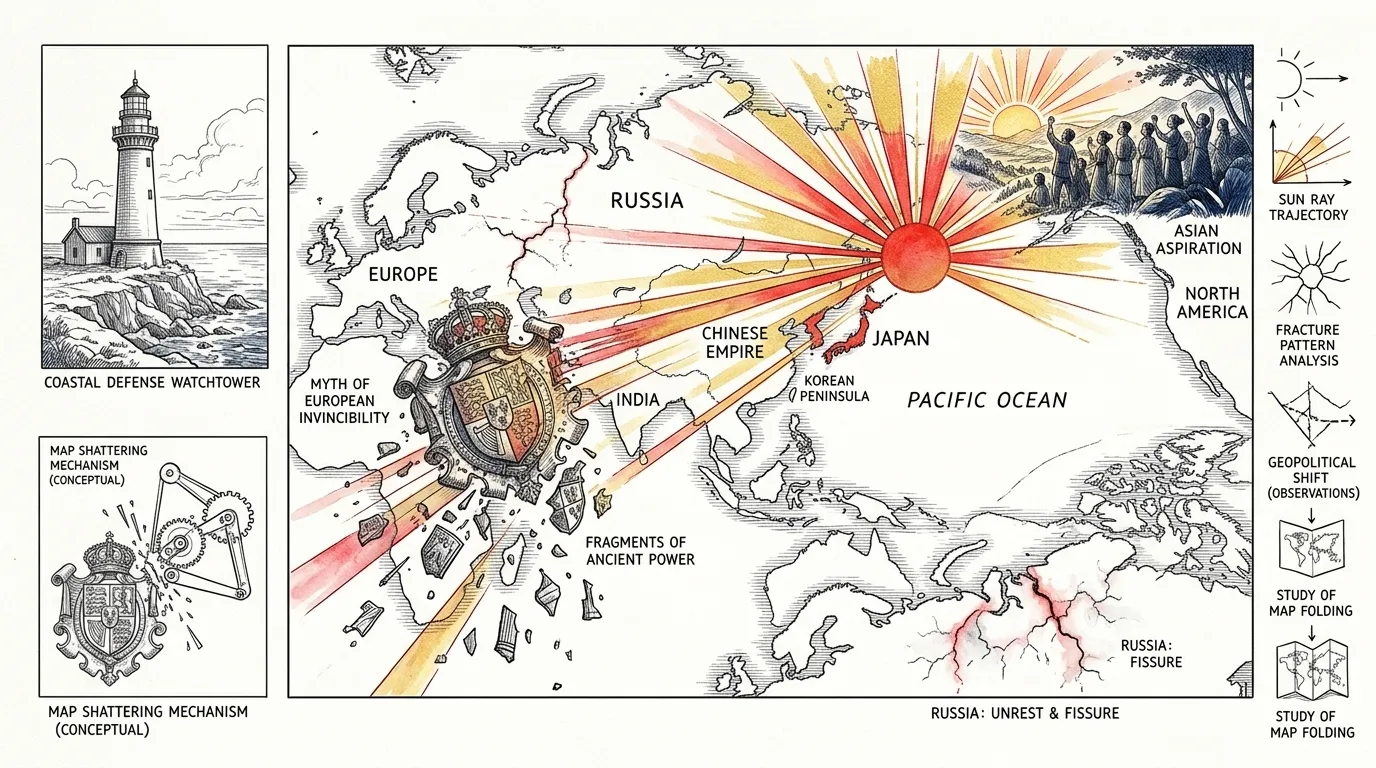
The Battle of Tsushima, fought in May 1905, remains one of the most decisive naval engagements in history. It pitted the Imperial Russian Navy's Baltic Fleet against the Imperial Japanese Navy, with devastating consequences for Russia. Understanding why this battle happened requires looking at the escalating tensions and strategic ambitions of both empires, particularly their competition for influence in East Asia. This conflict wasn't just a clash of ships; it was the culmination of years of diplomatic failures and military miscalculations.
At its core, the battle was a critical moment in the larger Russo-Japanese War (1904-1905), a conflict that reshaped the global balance of power and signaled the rise of Japan as a major world power. For Russia, the battle represented a desperate gamble to reverse its fortunes in a war it was already losing. For Japan, it was an opportunity to secure its strategic dominance in the region and force Russia to the negotiating table. The reasons behind the battle are complex, involving both immediate triggers and long-standing geopolitical rivalries.
The sea was calm, the sky clear, and the wind light. It was a perfect day for a battle, and for a disaster.
Russia's Desperate Gambit for Manchuria and Korea
Russia's primary motivation for engaging in the Battle of Tsushima stemmed from its imperial ambitions in East Asia, specifically its desire for warm-water ports and control over Manchuria and Korea. Russia had been expanding eastward for decades, constructing the Trans-Siberian Railway and establishing a naval base at Port Arthur (Lüshunkou) in Manchuria. This expansion directly threatened Japan's own burgeoning influence and security interests in the region. When war broke out in 1904, Russia's Pacific Fleet, based at Port Arthur, was quickly blockaded and eventually destroyed or captured by the Japanese.
In a desperate attempt to reinforce its forces and turn the tide of the war, Russia dispatched its Baltic Fleet on an epic, eight-month journey halfway around the world. This fleet, though formidable on paper, was ill-prepared, poorly maintained, and crewed by inexperienced sailors. Its mission was to break the Japanese blockade of Port Arthur or, failing that, to engage and defeat the Japanese fleet in a decisive battle. The Battle of Tsushima was not an accidental encounter; it was the intended, albeit disastrous, culmination of this audacious, last-ditch effort to assert Russian dominance and protect its strategic interests. You can learn more about this period of history in Wonder History's collection on global empires.
Japan's Defense of Regional Hegemony
Japan viewed Russia's expansion into Manchuria and Korea as an existential threat to its national security and economic prosperity. Having recently emerged from isolation and undergoing rapid modernization, Japan was determined to establish itself as the dominant power in East Asia. The Japanese government saw Russian control over Korea, in particular, as a dagger pointed at the heart of their homeland. This fear of Russian encroachment led Japan to launch a pre-emptive strike against Russia's Pacific Fleet at Port Arthur, initiating the Russo-Japanese War.
For Japan, the Battle of Tsushima was the crucial naval engagement needed to secure its victory in the war. Admiral Tōgō Heihachirō, commander of the Japanese Combined Fleet, meticulously planned to intercept and annihilate the approaching Russian Baltic Fleet. A decisive victory would not only eliminate the last significant Russian naval threat but also solidify Japan's control over the seas around Korea and Manchuria, forcing Russia to concede defeat and recognize Japanese hegemony. The battle was a strategic imperative for Japan to achieve its war aims and confirm its status as a major regional power. Insights into such strategic conflicts are often found in articles about military history.
When Each Side's Strategy Made Sense
- Russian leadership: Dispatching the Baltic Fleet was seen as necessary when all other options for relieving Port Arthur had failed.
- Japanese naval command: Intercepting the Russian fleet in a decisive battle was key to ending the war quickly and favorably.
- Russian domestic politics: A naval victory was hoped to bolster morale and quell growing unrest at home.
- Japanese national pride: A victory would confirm Japan's status as a modern, powerful nation on the world stage.
The Verdict: Imperial Ambition and Strategic Imperatives
The Battle of Tsushima happened due to a confluence of factors, but primarily it was the direct result of Russia's desperate attempt to salvage its war effort and Japan's unwavering determination to secure its regional dominance. It depended heavily on the long-standing imperial rivalry over Manchuria and Korea, which escalated into open conflict. Russia's decision to send its Baltic Fleet was a high-stakes gamble born of strategic necessity and a refusal to concede defeat, despite the logistical challenges and the poor condition of the fleet. For Japan, the battle was a calculated and brilliantly executed move to decisively end the war on its terms, protecting its newly won influence and asserting its position as the preeminent power in East Asia. The battle's outcome was not just about naval tactics; it reflected the deep-seated geopolitical tensions that defined the era.
Why the Battle of Tsushima Happened: FAQ
Frequently Asked Questions
What was the broader conflict that led to the Battle of Tsushima?
The Battle of Tsushima was a key engagement within the larger Russo-Japanese War (1904-1905). This war was fought over rival imperial ambitions in Manchuria and Korea, with both Russia and Japan seeking to expand their influence in the region.
Who were the main commanders during the Battle of Tsushima?
The Russian Baltic Fleet was commanded by Admiral Zinovy Rozhestvensky, while the Imperial Japanese Navy's Combined Fleet was led by Admiral Tōgō Heihachirō. Tōgō's strategic brilliance played a significant role in the Japanese victory.
What was the significance of the Battle of Tsushima's outcome?
The battle resulted in a catastrophic defeat for the Russian navy, effectively ending their ability to continue the war at sea. It secured Japanese victory in the Russo-Japanese War, established Japan as a major world power, and contributed to significant political unrest within Russia, foreshadowing future revolutions.