Why the Battle of Tsushima Was Important: Two Views of a Naval Revolution
The Battle of Tsushima in 1905 marked a turning point in naval warfare, but its importance is seen differently by historians.
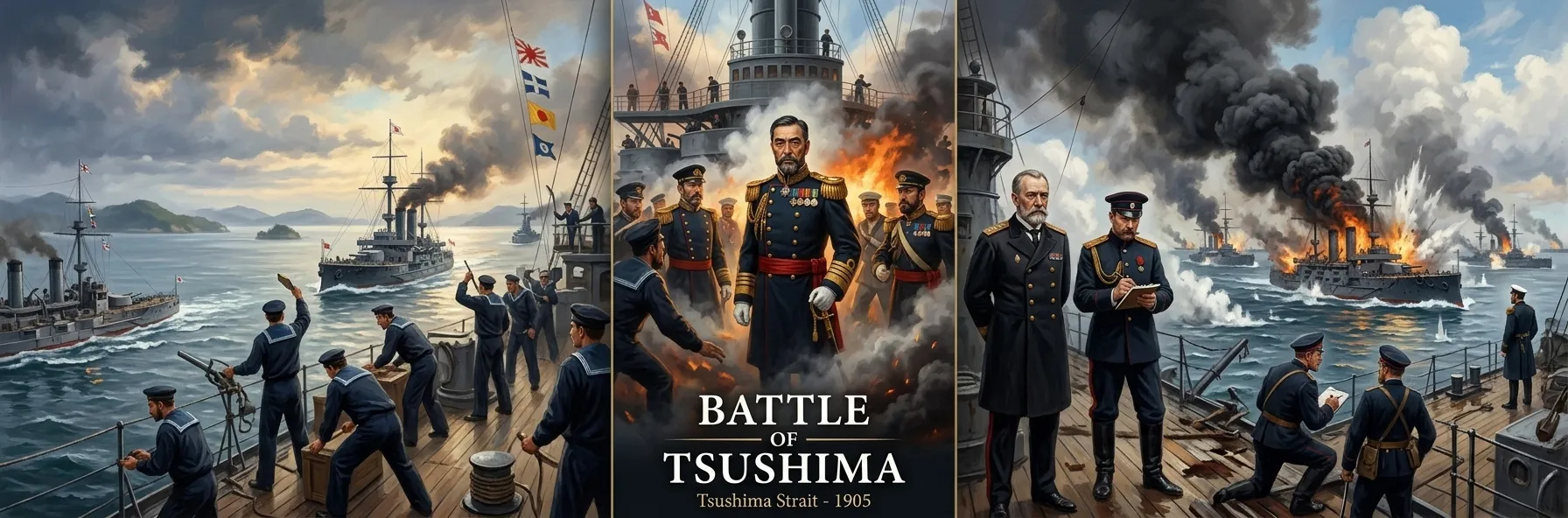
The Battle of Tsushima, fought in May 1905, is often cited as one of the most decisive naval battles in history. But exactly why it was so important can be viewed from different angles. For some, it was a clear demonstration of new naval technologies and tactics, forever changing how wars would be fought at sea. For others, its importance lies more in its political and psychological impact, particularly on the global balance of power and the future of empires. Understanding these two perspectives helps us grasp the full weight of this pivotal event.
This battle saw the Japanese Imperial Navy, under Admiral Togo Heihachiro, virtually annihilate the Russian Baltic Fleet. The Russian fleet had sailed halfway around the world, only to meet a devastating end in the straits between Korea and Japan. The scale of the defeat was unprecedented for a major European power.
Side One: A Revolution in Naval Technology and Tactics
One prominent view is that Tsushima was a watershed moment for naval warfare itself. The Japanese victory was attributed to superior training, tactics, and the effective use of modern warships. Japanese ships, primarily built in British shipyards, were faster and carried more powerful, rapid-firing guns. Their gunnery was also remarkably accurate, a result of extensive training and the use of better rangefinding equipment. The battle showcased the dominance of the 'all big gun' battleship concept, even before the launch of HMS Dreadnought a year later. It proved that speed, firepower, and coordinated maneuvers were paramount.
Side Two: A Political and Psychological Earthquake
Another perspective emphasizes the profound political and psychological impact of Tsushima. This was the first time in modern history that an Asian power had decisively defeated a European great power. This stunned the world and had far-reaching consequences. It significantly boosted Japanese national pride and confidence, solidifying its status as a major world power. Conversely, it dealt a crippling blow to Russian prestige and contributed directly to the unrest that fueled the 1905 Russian Revolution, laying groundwork for future political upheaval. The defeat also inspired anti-colonial movements across Asia, showing that European dominance was not invincible. You can explore more about the rise of Japan as a global power in our historical articles.
Which Side Fits Which Situation?
- When studying military strategy: The battle's impact on naval design and tactics is key.
- When analyzing geopolitical shifts: Its role in changing the global balance of power is most relevant.
- When examining national identity: The psychological boost for Japan and blow to Russia are central.
- When looking at the causes of revolution: The Russian defeat's contribution to internal unrest is vital.
The Battle of Tsushima was not just a naval engagement; it was a thunderclap that echoed across continents, reshaping the 20th century.
The Verdict: Tsushima's Importance Depends on the Lens
The importance of the Battle of Tsushima is not a matter of choosing one side over the other, but rather understanding that its significance is multi-layered and depends on the specific historical lens applied. If one is focused on the evolution of military technology and doctrine, Tsushima is a crucial milestone in naval history, demonstrating the decisive power of modern battleships and gunnery. If the focus is on international relations, the decline of empires, or the rise of new world powers, then Tsushima stands as a monumental political event that shifted the global order and inspired future movements. Both aspects are deeply intertwined, as the technological superiority demonstrated by Japan directly enabled its political ascent. To truly grasp its importance, one must consider both the tactical brilliance and the geopolitical fallout. For more insights into military and political history, you can always explore the extensive collection at Wonder History.
The Lasting Echoes of Tsushima
The Battle of Tsushima remains a powerful case study for military strategists and historians alike. It underscored the profound impact of industrialization on warfare and the potential for a non-Western power to challenge and defeat an established European empire. Its lessons influenced naval architects for decades, leading to the rapid development of dreadnoughts and pre-dreadnoughts. On the political front, it was a harbinger of the weakening of European colonial power and the rise of Asian nationalism. The battle's legacy is a testament to how a single, decisive military engagement can ripple through multiple spheres of influence, from the design of warships to the course of global politics.
Frequently Asked Questions
What was the main cause of the Russo-Japanese War?
The main cause was the rivalry between Russia and Japan over imperial ambitions in Korea and Manchuria. Both nations sought to expand their influence and control over these strategically important territories, leading to increasing tensions and ultimately open conflict.
How did the Battle of Tsushima affect Russia internally?
The devastating defeat at Tsushima significantly weakened the Tsarist regime and contributed to widespread public discontent. It fueled the 1905 Russian Revolution, which forced Tsar Nicholas II to make concessions and establish a limited constitutional monarchy, though it did not prevent future upheavals.
Did the Battle of Tsushima influence World War I naval strategies?
Yes, the battle had a significant influence. It confirmed the importance of long-range gunnery, speed, and coordinated fleet maneuvers. The lessons learned at Tsushima directly impacted the design of battleships, leading to the 'all big gun' concept, and shaped the naval doctrines adopted by major powers leading into World War I.