Is It True the Brooklyn Bridge Was Engineered by a Woman?
Many believe a woman engineered the Brooklyn Bridge. We check the truth behind this enduring story about a monumental achievement.
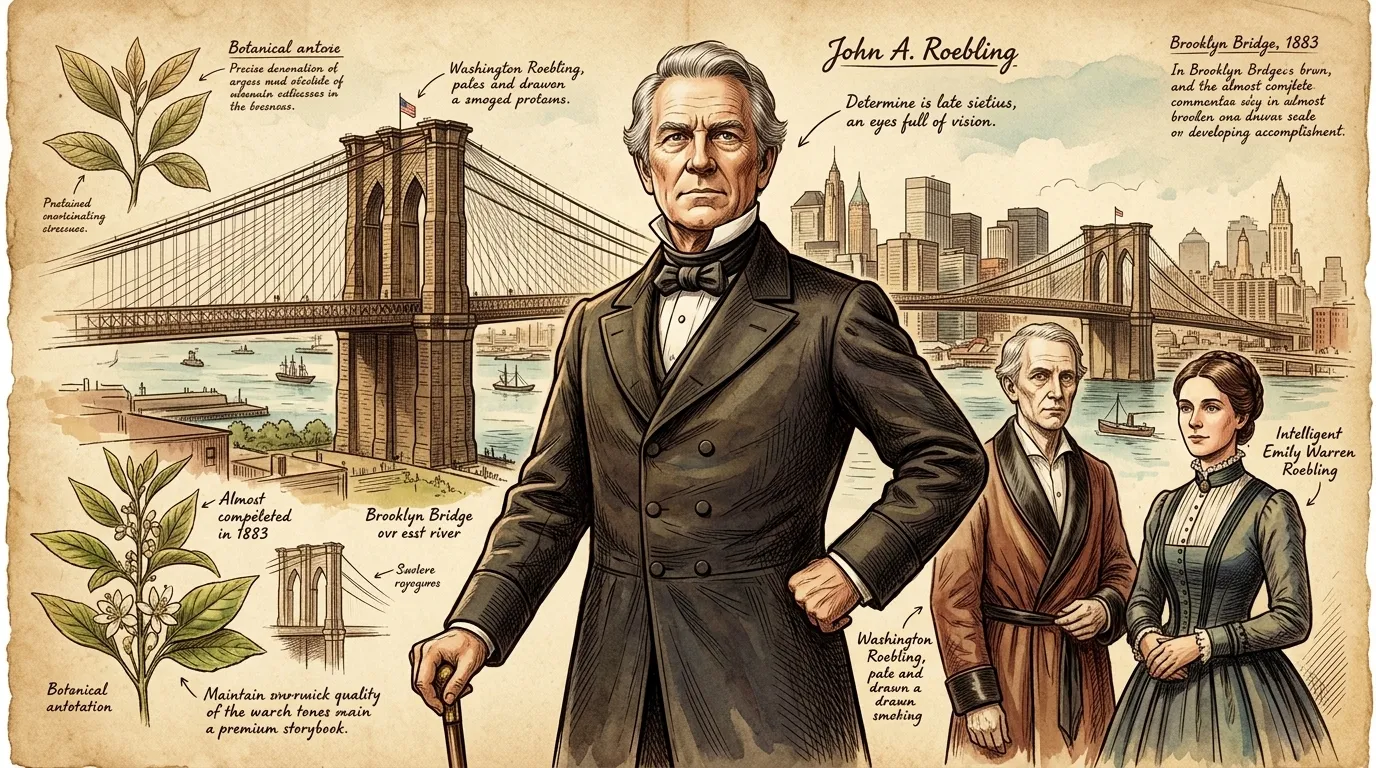
The story of the Brooklyn Bridge is one of the most compelling in American history, a tale of ambition, innovation, and immense human cost. Part of its enduring legend involves a woman, Emily Warren Roebling, who is often credited with completing the engineering work after her husband, Washington Roebling, became incapacitated. This narrative has become widely accepted, celebrating her as a pioneer in a male-dominated field. But how much of this popular belief is supported by historical evidence, and how much is a romanticized myth?
- Emily Warren Roebling took over as chief engineer of the Brooklyn Bridge.
- She performed complex engineering calculations and solved construction problems.
- She designed parts of the bridge herself.
- She was the first woman to speak before the American Society of Civil Engineers.
I have always been better at mathematics than any man I ever met.
Did Emily Roebling Take Over as Chief Engineer?
After the project's original chief engineer, John A. Roebling (Emily’s father-in-law), died of tetanus, his son Washington Roebling took over. However, Washington developed decompression sickness, often called "caisson disease" or "the bends," from working in the pressurized underwater caissons. This left him severely debilitated and largely confined to his home. Emily did not officially become the chief engineer; that title remained with her husband. However, she became his indispensable liaison to the construction site, conveying his instructions and reporting on progress. Her role was certainly unprecedented for a woman of her era, effectively managing communications and operations for one of the largest engineering projects in the world.
Did She Perform Complex Engineering Calculations and Solve Problems?
Yes, this belief holds significant truth. Emily Roebling dedicated herself to studying higher mathematics, strength of materials, stress analysis, and cable construction, all under her husband’s tutelage. She was not merely a messenger; she possessed a deep understanding of the bridge's intricate engineering. She was capable of performing complex calculations, reviewing specifications, and understanding the project's technical challenges. She is credited with solving numerous problems that arose during construction, acting as a crucial intellectual partner to Washington. Her contributions were vital in bringing the bridge to completion. You can explore more about historical figures like Emily in the Wonder Arts section.
Did She Design Parts of the Bridge Herself?
While Emily Roebling was deeply involved in the engineering aspects and could understand and interpret designs, there is no direct evidence to suggest she independently designed major structural components of the Brooklyn Bridge. The overall design and primary engineering plans were established by John A. Roebling and then meticulously executed and managed by Washington Roebling. Emily's genius lay in her ability to comprehend, communicate, and oversee the complex engineering work, ensuring her husband's vision was realized despite his illness. Her role was more akin to a highly skilled project manager and technical consultant, rather than a primary designer.
Was She the First Woman to Speak Before the American Society of Civil Engineers?
This is a widespread claim, but it is not entirely accurate. Emily Warren Roebling did attend meetings of the American Society of Civil Engineers (ASCE) on behalf of her husband, and she was certainly a prominent figure in engineering circles. However, historical records do not indicate that she formally presented a paper or delivered a speech before the ASCE. Her presence and influence were significant, though. She was a respected figure who corresponded with engineers and politicians, advocating for the project. Her impact was felt through her actions and correspondence, rather than a formal presentation to the society. For more historical insights, you might enjoy other articles in our articles section.
Frequently Asked Questions
When was the Brooklyn Bridge completed?
The Brooklyn Bridge was officially opened on May 24, 1883. Its construction spanned 14 years, beginning in 1869, and was considered an engineering marvel of its time.
How long is the Brooklyn Bridge?
The total length of the Brooklyn Bridge is 5,989 feet (1,825 meters), including approaches. The main span over the East River is 1,595.5 feet (486.3 meters) long.
What materials were used to build the Brooklyn Bridge?
The Brooklyn Bridge was primarily built using steel for its cables, and granite and cement for its towers and anchorages. It was the first steel-wire suspension bridge and a testament to material innovation.