Don Quixote: More Than Just a Wild Imagination
Many believe Don Quixote's adventures are purely fictional. We explore the inspirations and historical context behind the enduring tale.
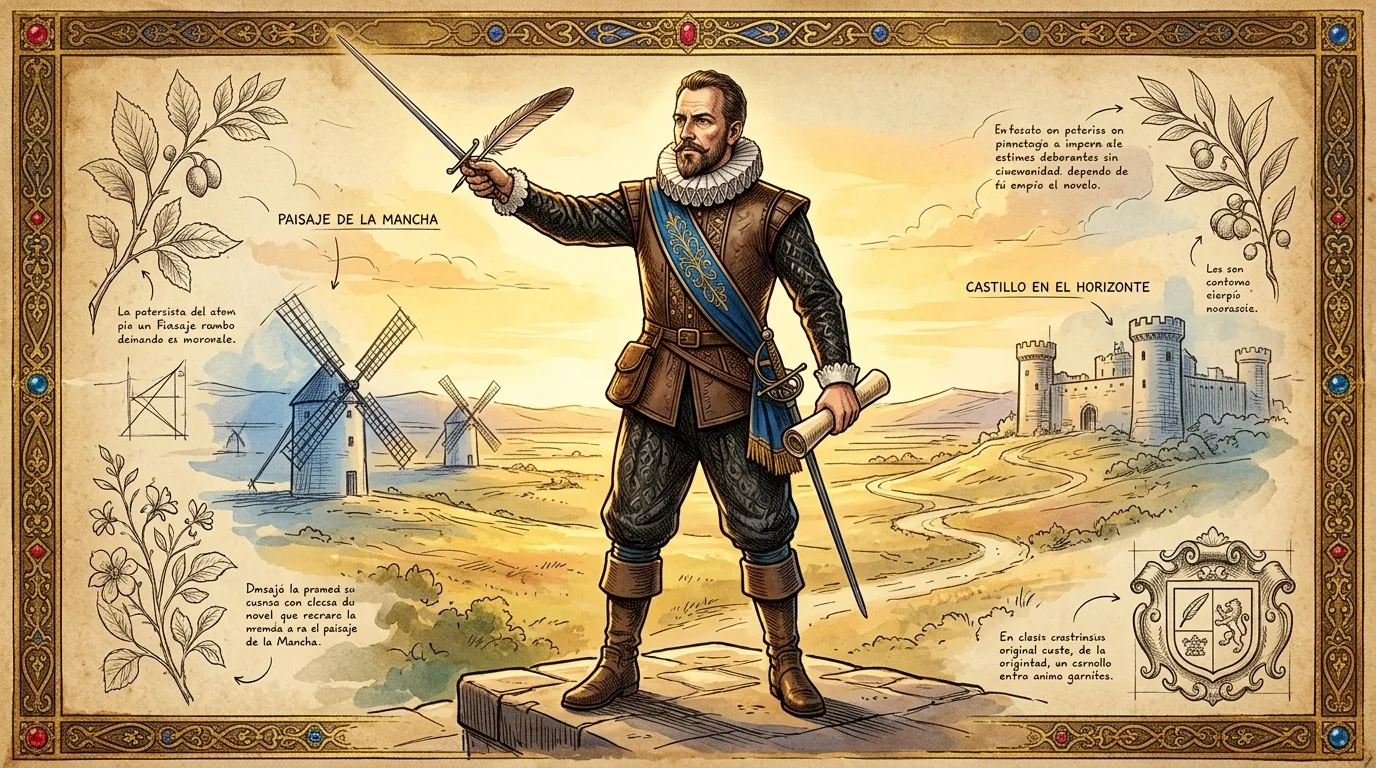
Many people encounter Don Quixote and assume it's a straightforward work of fiction, a whimsical tale of a deluded knight errant. They might imagine the author, Miguel de Cervantes, simply dreamed up the character and his adventures from scratch. While the story is indeed a work of fiction, the idea that it sprung from a vacuum overlooks the rich tapestry of influences and real-world elements that inspired one of the most famous novels ever written.
- Don Quixote was a real person.
- The story is a direct parody of popular knightly romances of the time.
- Cervantes drew on his own life experiences to create parts of the narrative.
- The places Don Quixote visits are entirely fictional.
Was Don Quixote a Real Person?
The belief that Don Quixote himself was a historical figure is a common misconception. The character of Don Quixote, or Alonso Quijano, is entirely fictional. Cervantes created him as a central figure for his satirical novel. However, the type of person Don Quixote represents – a hidalgo (minor nobleman) obsessed with chivalric ideals – was very much a part of Spanish society during Cervantes' time. Cervantes used this archetype to comment on the social and cultural trends of his era, particularly the lingering fascination with outdated knightly tales.
Parodying Popular Knightly Romances
This belief is largely true. One of Cervantes' primary motivations for writing Don Quixote was to satirize the hugely popular chivalric romances of his day. Books like Amadís de Gaula were widely read, often uncritically, and Cervantes felt they presented an unrealistic and even harmful view of the world. He deliberately crafted Don Quixote's adventures to expose the absurdities and dangers of taking these fictional tales too literally. The novel's structure, its language, and the very situations Don Quixote finds himself in are all designed to mock the conventions of these older stories. You can explore many classic narratives, including those Cervantes parodied, through Wonder Novels.
Cervantes' Life and the Story
This belief also holds a significant amount of truth. Miguel de Cervantes had an incredibly eventful life, filled with adventure, hardship, and travel, and he wove many of these experiences into his narrative. He was a soldier, captured by Barbary pirates and held for ransom in Algiers, and later worked as a tax collector. The vivid descriptions of Spanish landscapes, the diverse characters Don Quixote encounters – from innkeepers to dukes – and the underlying themes of freedom, illusion, and reality all echo Cervantes' own observations and struggles. His experiences provided a rich wellspring for the world he created.
Hunger is the best sauce.
Are Don Quixote's Locations Real?
This belief is partially true, partially false. While the specific inns, castles (often windmills in Don Quixote's mind), and precise roads Don Quixote travels are fictionalized or imagined, the broader geographical setting is very real. The story takes place in La Mancha, a region in central Spain. Cervantes meticulously describes the landscape, the villages, and the customs of the area, grounding his fantastical tale in a recognizable reality. This blend of the real and the imagined is part of what makes Don Quixote so enduring. Many articles exploring the interplay of fiction and reality can be found in WonderBooks' editorial section.
The Enduring Legacy of *Don Quixote*
Don Quixote is not a true story in the sense of being a historical account, but it is deeply rooted in the realities of 17th-century Spain and the literary traditions of its time. Cervantes used his own life and the world around him to craft a fictional narrative that critiques, entertains, and explores universal themes of idealism, disillusionment, and the power of imagination. Its genius lies in how it uses fiction to reflect and comment on what is real.
Frequently Asked Questions
What does 'tilting at windmills' mean?
This famous phrase comes directly from Don Quixote and means to attack imaginary enemies or to fight against perceived threats that are not real. Don Quixote famously mistakes windmills for giants and charges at them, epitomizing a futile or misguided effort.
When was *Don Quixote* written?
The first part of Don Quixote was published in 1605, and the second part followed ten years later in 1615. These dates place the novel squarely in the Spanish Golden Age of literature.
Is *Don Quixote* considered an important book?
Don Quixote is widely regarded as one of the most influential works of literature in the Western canon. It is often cited as the first modern novel and has had a profound impact on subsequent literature, art, and philosophy.