Why the Great Sphinx of Giza Was Built: Unraveling Its True Purpose
Many theories explain why the Great Sphinx of Giza was built. We explore the evidence behind its construction and original meaning.
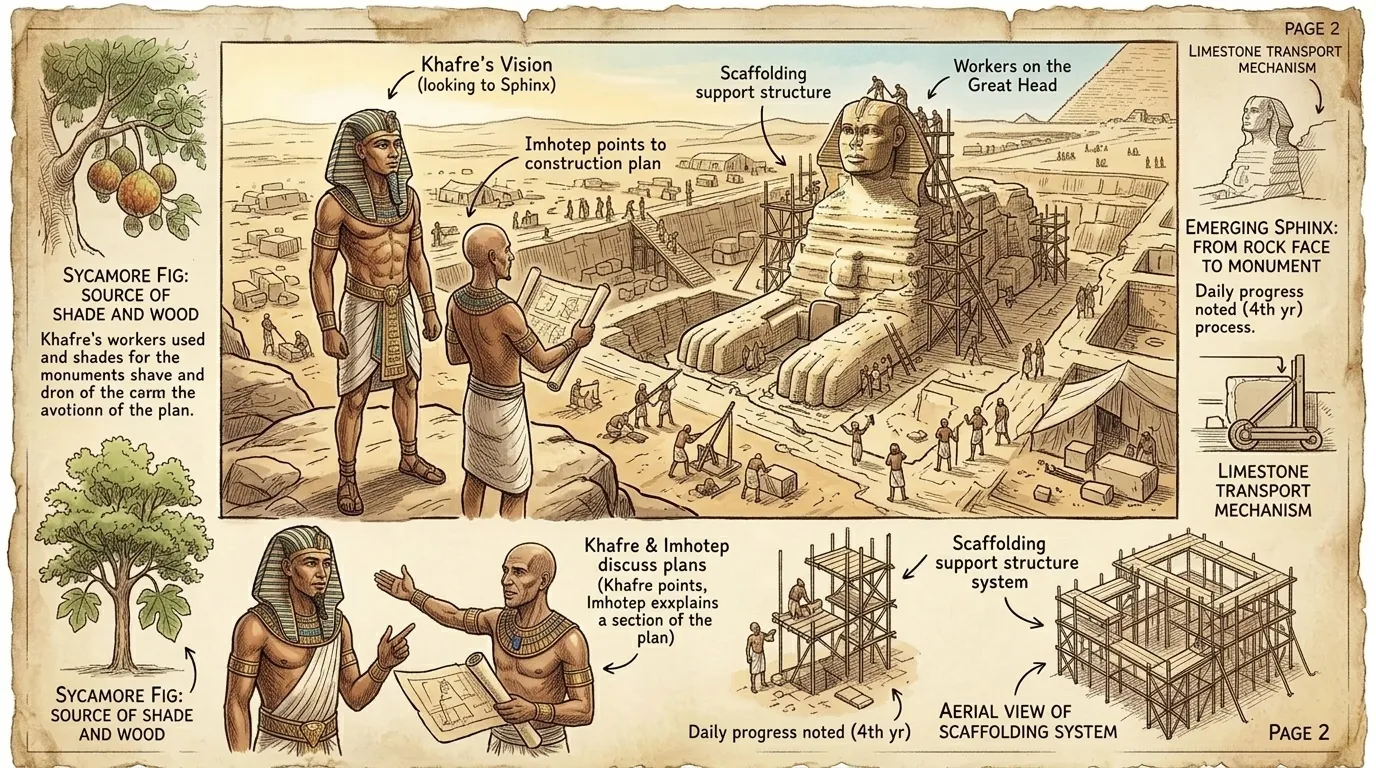
The Great Sphinx of Giza is one of the world's most enduring mysteries. This colossal statue, with its lion's body and human head, has captivated imaginations for thousands of years. For many, its very existence begs a fundamental question: why was it built? Popular culture and ancient legends have offered many explanations, from alien construction to hidden chambers of wisdom. The truth, however, is rooted in the beliefs and practices of ancient Egypt, even if some details remain elusive.
- It was built to guard hidden treasures or secret knowledge.
- It was built by an advanced, lost civilization.
- It represents a god or a pharaoh, serving a religious purpose.
- It served as an astronomical marker or calendar.
Was It Built to Guard Secrets or by a Lost Civilization?
The idea that the Sphinx guards hidden treasures or secret knowledge is a persistent myth, often fueled by fictional stories and films. While ancient Egyptians did bury treasures with their dead and guard sacred texts, there's no archaeological evidence to suggest the Sphinx itself was designed as a vault. Extensive geological and archaeological surveys around and beneath the Sphinx have found no secret chambers or vast libraries of knowledge. Similarly, the notion of a lost, advanced civilization building the Sphinx is unsupported by evidence. All archaeological data points to the Old Kingdom of Egypt, specifically the reign of Pharaoh Khafre, as the period of its construction. The tools and techniques used align perfectly with known ancient Egyptian engineering capabilities.
Its Role as a Divine or Royal Symbol
The most widely accepted theory among Egyptologists is that the Great Sphinx was built as a representation of Pharaoh Khafre, embodying his power and divine connection. The human head is believed to be a portrait of Khafre, and the lion's body symbolizes strength and royal authority. Lions were often associated with royalty and divine protection in ancient Egypt. Its location, directly east of Khafre's pyramid complex, further supports this link. The Sphinx faces the rising sun, connecting it to the sun god Ra and the pharaoh's role as a divine intermediary. It likely served as a monumental guardian, protecting the pharaoh's eternal rest and asserting his divine right to rule. You can explore more about the pharaohs and their monuments in Wonder Egypt.
Man fears time, but time fears the pyramids.
An Astronomical Marker or Calendar?
The theory that the Sphinx served as an astronomical marker or calendar has gained some traction, particularly with its east-facing orientation. Its alignment with the rising sun on the equinoxes is a notable observation. Ancient Egyptians were keen observers of the sky, and their architecture often incorporated astronomical alignments. However, while the Sphinx's orientation is certainly significant, its primary purpose is generally understood to be religious and commemorative, rather than solely a precise calendrical device. The alignment reinforces its connection to the sun god and the cycle of rebirth, vital concepts in Egyptian religion. Many ancient structures, like Stonehenge, also align with celestial events, showcasing humanity's long-standing connection to the cosmos. You can learn more about ancient cultures and their understanding of the world by browsing other articles.
What to Remember About the Sphinx's Purpose
While the Great Sphinx of Giza continues to inspire wonder and speculation, archaeological evidence strongly suggests it was built as a monumental effigy of Pharaoh Khafre. Its purpose was to symbolize his divine power, protect his mortuary complex, and connect him to the powerful sun god. It was a statement of eternal royalty and a testament to the might of the Old Kingdom. The Sphinx wasn't built by aliens or to hide secrets, but by the skilled hands and profound beliefs of ancient Egyptians, whose legacy continues to fascinate us today.
What Is Worth Remembering
The Great Sphinx of Giza stands as a powerful symbol of ancient Egyptian pharaonic power and religious belief. Its construction during the reign of Khafre firmly places it within the context of the Old Kingdom. While its exact, nuanced purpose may still hold some small mysteries, its role as a guardian and a representation of the pharaoh's divine authority is well-supported by historical and archaeological findings. It is a testament to the Egyptians' advanced architectural and artistic capabilities.
Frequently Asked Questions
How old is the Great Sphinx of Giza?
The Great Sphinx is estimated to be around 4,500 years old. It was carved during the reign of Pharaoh Khafre, who ruled Egypt from approximately 2558 to 2532 BC, placing its construction in the Old Kingdom period.
What is the Great Sphinx made of?
The Great Sphinx is carved primarily from a single, massive piece of bedrock limestone. This limestone was part of the natural plateau where the pyramids were also constructed, making it an integral part of the Giza landscape.
Who was Pharaoh Khafre?
Pharaoh Khafre was a king of the Fourth Dynasty of ancient Egypt during the Old Kingdom. He is traditionally credited with building the second largest pyramid at Giza, as well as the Great Sphinx, which is believed to bear his likeness.