The Long Decline of Ancient Mesopotamia
Ancient Mesopotamia, a cradle of civilization, did not fall in a single dramatic event. Its decline was a complex process influenced by many factors over centuries.
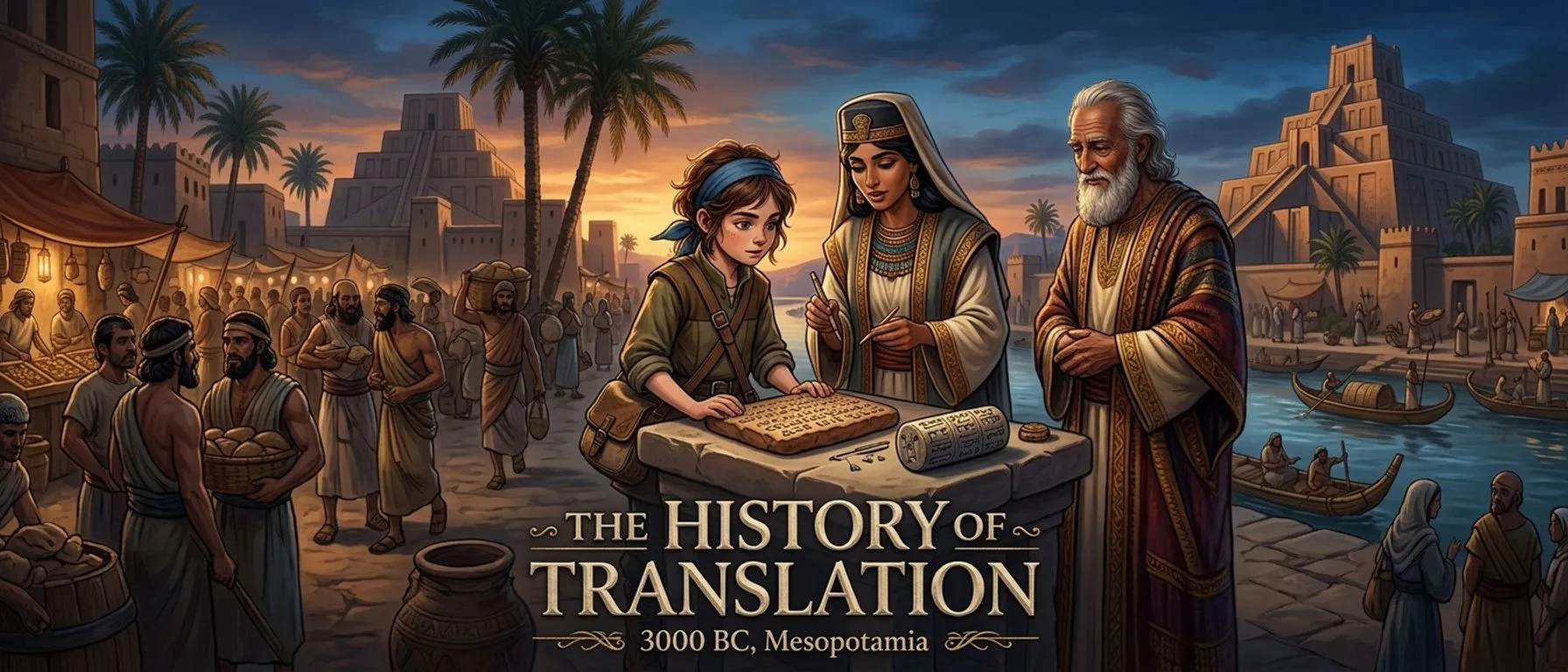
When we think of the end of great ancient civilizations, dramatic images often come to mind: sudden invasions, catastrophic natural disasters, or swift, decisive collapses. For a region as influential and long-lasting as Mesopotamia, the "fall" seems like it should have been equally sudden and impactful. However, the story of Mesopotamia is far more nuanced than a single, dramatic event. It was a region that saw many empires rise and fall, with power shifting between different groups over thousands of years. The idea of a singular "fall" often oversimplifies a complex historical process.
- Mesopotamia fell due to a single, devastating invasion.
- Climate change, particularly drought, was the sole cause of its demise.
- The people of Mesopotamia lost their advanced knowledge and skills.
- The region became entirely uninhabited after its decline.
Myth: A Single, Devastating Invasion Caused the Fall
Many people imagine a powerful outside force sweeping in and destroying Mesopotamian civilization. While invasions and conquests were common throughout Mesopotamia's long history, no single event wiped out the entire region or its culture. Different empires, like the Akkadians, Babylonians, Assyrians, and Persians, each had their time ruling the fertile crescent. Each conquest brought changes, but the core cultural and technological achievements often persisted, adapted, or were absorbed by the new rulers. For instance, the Neo-Babylonian Empire, famous for its Hanging Gardens, eventually fell to the Persian Achaemenid Empire in 539 BCE. However, Babylonian culture, cuneiform writing, and scientific knowledge continued under Persian rule for centuries. The influence of Mesopotamian innovations, like writing and city planning, spread far beyond its borders, as you can explore in Wonder History.
Myth: Climate Change Was the Only Factor
Environmental factors certainly played a significant role in the challenges faced by Mesopotamian societies. Evidence suggests periods of prolonged drought and shifts in river courses, particularly in the later centuries of some empires. These environmental changes could severely stress agricultural systems, leading to famine, internal strife, and migrations. However, it's rarely the only factor. Political instability, internal rebellions, economic issues, and the rise of competing powers often combined with environmental pressures to weaken states. It was a complex interplay of forces, rather than one single cause, that led to the decline of specific cities or empires within the broader Mesopotamian region.
Those who cannot remember the past are condemned to repeat it.
Myth: Mesopotamians Lost Their Knowledge
The idea that the advanced knowledge of Mesopotamia simply vanished is incorrect. While specific cities or libraries might have been destroyed, much of the intellectual legacy endured. Cuneiform writing, astronomy, mathematics, and legal codes were adopted and further developed by successor civilizations like the Persians, Greeks, and later the Islamic caliphates. For example, Greek astronomers relied heavily on Babylonian astronomical observations. The "fall" was not a sudden loss of knowledge but a gradual shift in centers of power and the evolution of cultural practices. Many of these ancient ideas continue to influence us today, a fascinating journey you can follow in many articles about ancient cultures.
What to Remember About Mesopotamia's Transformation
Instead of a singular "fall," it's more accurate to view the end of ancient Mesopotamia as a long process of transformation and absorption. The region gradually lost its political independence to larger, external empires like the Persians, Greeks, and Romans. Its unique cultural identity slowly blended with these new influences, eventually giving way to other dominant cultures. The decline of its distinct civilization was a slow, complex process spanning many centuries, marked by shifting power dynamics, environmental challenges, and the enduring legacy of its innovations.
Frequently Asked Questions
What is considered the end of ancient Mesopotamian civilization?
There isn't one definitive end date. Many historians point to the conquest by the Achaemenid Persian Empire in 539 BCE as the end of independent Mesopotamian rule. Others might consider the Hellenistic period after Alexander the Great's conquests, when Greek culture became dominant, as the true end.
Did people stop living in Mesopotamia after its decline?
No, people continued to live in the region. The area that was once ancient Mesopotamia is still inhabited today. What changed was the political structure, the dominant cultures, and the language spoken, not that the land became deserted.
What were the most important contributions of Mesopotamia?
Mesopotamia gave us many fundamental aspects of civilization. Key contributions include the invention of writing (cuneiform), the wheel, advanced irrigation techniques, the first cities, early forms of law (like the Code of Hammurabi), and significant developments in mathematics and astronomy.