Making AI Storytelling Videos: What Creators Need to Know
Curious about making AI storytelling videos? Discover the current landscape, the tools involved, and the creative decisions that shape these new narratives.
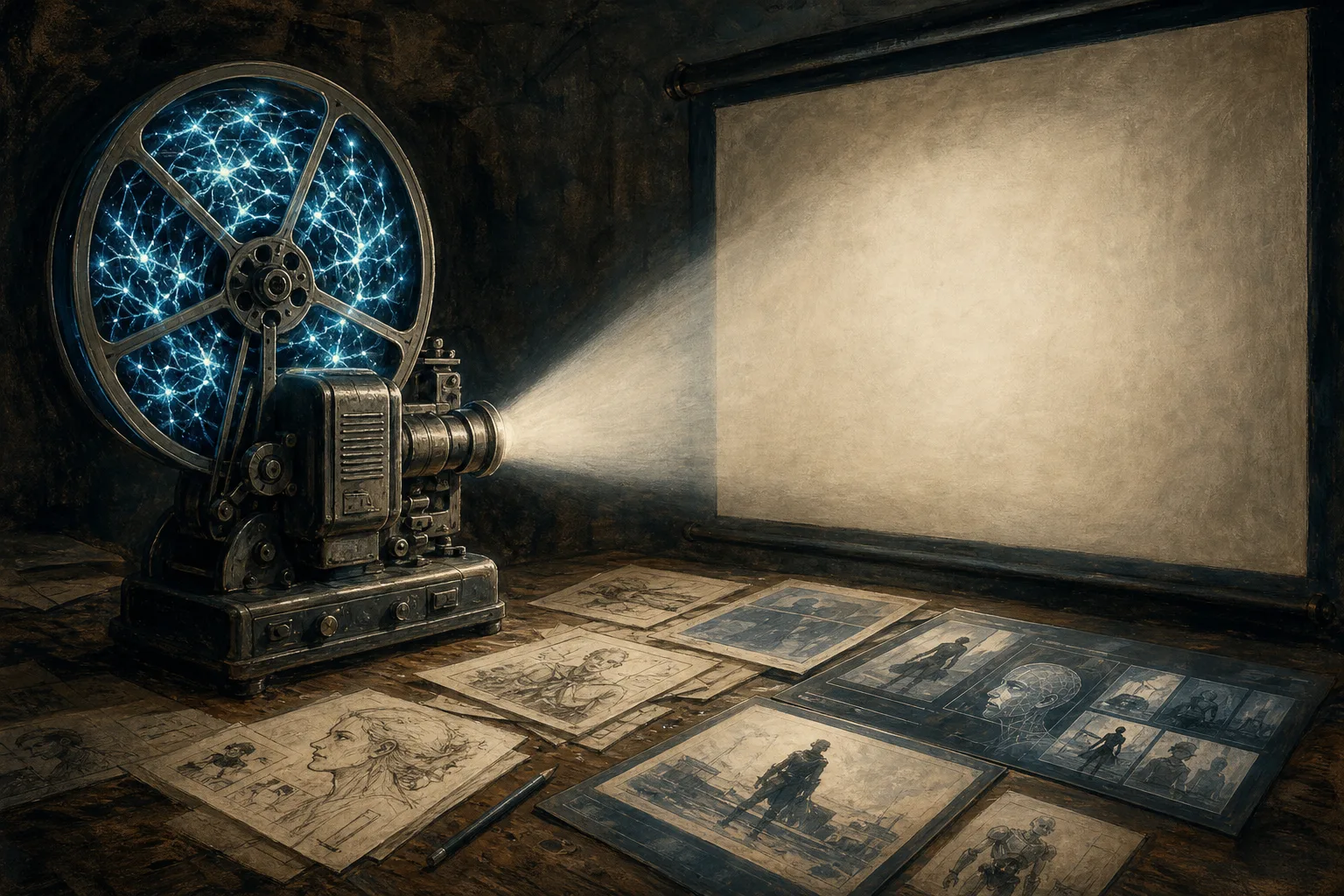
To make AI storytelling videos, you combine different generative AI tools for scriptwriting, image generation, voice narration, and video editing. The honest short answer is that while the tools exist and are becoming more accessible, the art of compelling storytelling still requires significant human direction and creative input.
The real state of things is a rapidly evolving landscape where creators can indeed produce visual narratives with AI assistance. This development affects independent artists, small studios, and even larger media companies, all exploring how these new capabilities can integrate into their workflows. The tension often lies between the speed and scale AI offers versus the unique artistic vision and ethical considerations traditionally associated with human-made content. Many creators are experimenting with AI to generate initial concepts, character designs, background scenes, or even full animation sequences. The challenge is often in maintaining a consistent style and narrative flow across different AI-generated elements, and in refining outputs to match a specific creative intent. For instance, a storyteller might use one AI to draft a script, another to create character art, and a third for voiceovers, then stitch these together with traditional editing software. This process highlights that AI acts as a powerful assistant, not a fully autonomous creator, requiring human oversight at every stage.
The Tools and the Trade-offs
The journey of making an AI storytelling video typically involves several distinct steps, each with its own set of considerations. While the technology promises efficiency, it also introduces new forms of creative challenges. Understanding these trade-offs is key for anyone looking to enter this space.
- Script Generation: AI can draft narratives, dialogues, and plot outlines based on prompts, but human editors are crucial for refining tone, character consistency, and thematic depth.
- Visual Creation: Tools generate images or animations from text descriptions, offering a wide range of styles. Achieving a cohesive visual identity across an entire story often requires careful prompting and selection.
- Voice Narration: AI voices can read scripts with various accents and emotions. Directing these voices to convey specific nuances and pacing remains a human task.
- Music and Sound Effects: AI can compose background music or generate sound effects. Integrating these elements effectively to enhance the story's mood requires a keen ear and editorial judgment.
- Video Assembly: The final step involves bringing all these AI-generated components together in a video editor, where human skill in pacing, transitions, and overall direction is indispensable.
From Prototype to Production: A Publisher's Approach
The evolution of generative AI has allowed publishers to revisit long-held creative visions. One such example is WonderBooks, a library of illustrated books for readers of every age. The founder’s journey began with a prototype in 2016, called My Wonder Books, which featured eighteen hand-made stories. This early venture, built with human writers, illustrators, translators, and narrators, demonstrated the appeal of illustrated, narrated stories across languages. It gathered 975 ratings and 255,988 downloads on Google Play, showing that the idea resonated with readers. However, the cost of producing each page by hand proved prohibitive, and the project paused. When generative AI matured, the founder saw an opportunity to continue this work, directing AI through every job the library needs, from writing to illustration and narration. This approach emphasizes direction—what the story is for, what the camera sees in an illustration, and what gets rejected—as the core work. The publisher focuses on retelling known material, such as real history, real science, and famous tales, with a chosen treatment and strict structure, ensuring that the telling itself is what is judged. Facts are rigorously researched before writing, and any page or draft falling short is remade. The publisher even ensures that Arabic, as a founding language, is checked first due to its complexity, reflecting a commitment to quality across all thirteen languages offered. The legacy app remains live as a testament to the artists who contributed to its beginnings.
I am not the one who wrote a famous novel. I am presenting it in an original way: with illustration, rewritten in ten simple pages, translated, narrated. All of that is original work.
The Direction of Storytelling
For the publisher, the value lies in the directed output, not just the raw AI generation. Every story in the library adheres to a ten-page structure, each with a unique painting, consistent characters, and specific illustrative rules. This rigorous framework ensures that even with AI assistance, the final product reflects a distinct artistic vision. The library, which launched in August 2026, now offers 2,341 illustrated books with 29,179 painted pages, each available in thirteen languages and narrated in fifteen, with audio synced to the text. This extensive catalog demonstrates that AI, when expertly directed, can facilitate the creation of a vast and diverse collection of illustrated stories, making them accessible to a global audience. The essence of storytelling, in this context, shifts from solely creating original plots to expertly curating and presenting known narratives in compelling new forms. To explore more about how storytelling evolves with technology, you can visit our articles section.
Frequently Asked Questions
Can AI create a full video from a single prompt?
While some advanced tools can generate short video clips from text prompts, creating a cohesive, feature-length storytelling video with a consistent narrative and visual style still requires significant human intervention. AI can generate components, but a director assembles and refines them.
What are the ethical considerations when using AI for storytelling?
Ethical concerns often revolve around originality, copyright, and the potential impact on human creators. Questions arise about the source of AI training data, the uniqueness of AI-generated content, and fair compensation for human artists whose styles might be emulated by AI.
How does AI impact the role of a traditional storyteller or filmmaker?
AI is transforming these roles by automating repetitive tasks and offering new creative avenues. Storytellers and filmmakers can leverage AI for rapid prototyping, visual exploration, and efficient production, allowing them to focus more on high-level creative direction and unique narrative choices rather than manual execution.