Ramses II: A Legacy of Power and Propaganda
Ramses II, also known as Ramses the Great, is one of ancient Egypt's most famous pharaohs. But why does his name still echo through history?
When we think of ancient Egypt, certain names immediately come to mind. Tutankhamun, Cleopatra, and of course, Ramses II. He’s often presented as the ultimate pharaoh: a mighty warrior, a prolific builder, and a ruler who left an indelible mark on the landscape and history of his kingdom. His name is synonymous with power and grandeur, a figure who seems to embody the very essence of ancient Egyptian might. But how much of this popular image is truly accurate, and what might be a result of his own carefully crafted legacy?
Many people hold a strong impression of Ramses II, often based on archaeological discoveries and stories passed down through generations. These common beliefs paint a vivid picture of his reign.
- Ramses II was the greatest warrior-king of Egypt, winning every battle.
- He built more monuments than any other pharaoh, decorating them all with his image.
- He had a massive family, including hundreds of children.
- He lived for an extraordinarily long time, ruling for over six decades.
The Warrior Pharaoh: Fact or Fiction?
Ramses II certainly engaged in significant military campaigns, most famously against the Hittites. The Battle of Kadesh, fought around 1274 BCE, is perhaps his most well-known military exploit. Egyptian accounts depict a glorious victory, with Ramses himself single-handedly turning the tide of battle. However, historical evidence from both Egyptian and Hittite sources suggests a more complex outcome. While Ramses managed to avoid a crushing defeat, the battle was more of a stalemate, leading to the world's first recorded peace treaty. This treaty, signed roughly 15 years later, indicates that neither side achieved a decisive victory. While he was a capable military leader who defended Egypt's borders and expanded its influence, the idea of him as an undefeated, all-conquering warrior is largely a product of his own royal propaganda, carved into the walls of his temples.
A Builder Without Equal?
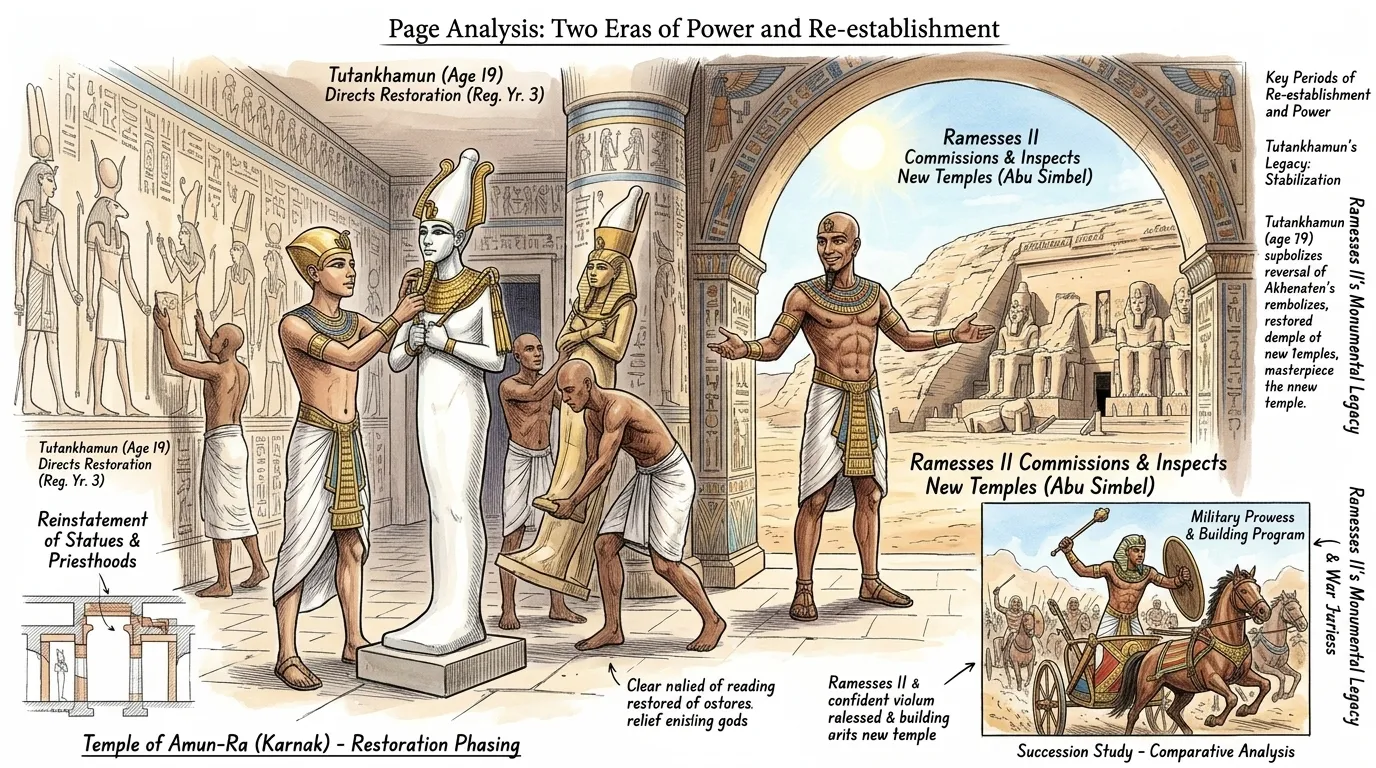
It is undeniably true that Ramses II was a prolific builder. His reign saw the construction of numerous temples, monuments, and cities across Egypt and Nubia. The Ramesseum, his mortuary temple, and the awe-inspiring temples of Abu Simbel are prime examples of his architectural ambition. He also completed many projects started by earlier pharaohs, often adding his own name and image to them, sometimes even replacing the original builder's name. This practice of 'usurping' monuments was not uncommon in ancient Egypt, but Ramses II did it on an unprecedented scale. His desire to leave a lasting mark was immense, and his building projects were a powerful tool for projecting his authority and divinity. Many of these structures still stand today, contributing significantly to his enduring fame. You can explore some of these wonders and the stories behind them in the Wonder Egypt library.
My might is more powerful than any other king; my name will be remembered for eternity.
Longevity and a Large Family
Ramses II did indeed live to a remarkable age for his time, estimated to be around 90 or 91 years old. He ruled for an astonishing 66 years, from 1279 to 1213 BCE. This long reign allowed him ample time to execute his ambitious building projects and military campaigns, and to solidify his image as a divine ruler. His extensive family is also well-documented. He had several Great Royal Wives, including Nefertari and Isetnofret, and many secondary wives and concubines. While the exact number is debated, it is estimated that he fathered over 100 children, possibly as many as 150. This large progeny helped ensure the stability of the royal line and provided many officials and priests for his administration. His long life and numerous descendants were seen as signs of divine favor, further enhancing his reputation and power. For more historical accounts, you might find articles on ancient rulers interesting within the articles section.
Frequently Asked Questions
Was Ramses II the pharaoh during the Biblical Exodus?
While some theories suggest Ramses II as the pharaoh of the Exodus story, there is no definitive archaeological or historical evidence outside of the biblical narrative to confirm this. The dating of the Exodus is highly debated among scholars, and no specific pharaoh has been conclusively identified.
Where is Ramses II's mummy now?
Ramses II's mummy is currently housed in the National Museum of Egyptian Civilization (NMEC) in Cairo, Egypt. It was famously moved there in 2021 as part of the 'Pharaohs' Golden Parade' from the Egyptian Museum in Tahrir.
What does 'Ramses the Great' mean?
Ramses the Great is an epithet given to Ramses II by modern historians due to his long and impactful reign, his extensive building projects, and his military endeavors. It reflects the significant legacy he left on ancient Egypt and the enduring fame he achieved.