Seven Inventions That Transformed Twentieth-Century Life
Explore the most impactful inventions of the 20th century that fundamentally changed how people lived, worked, and connected globally.
The twentieth century was a period of unprecedented technological advancement, fundamentally reshaping daily life across the globe. This article ranks seven inventions that had the most significant impact on ordinary people's lives, chosen for their widespread adoption and the profound, irreversible changes they brought about. We consider how life was before each invention and how it changed after its introduction, focusing on those innovations that redefined human experience rather than incremental improvements to existing technologies. We've focused on innovations that became broadly accessible and dramatically altered social structures, health, communication, and commerce.
- Powered Flight: Connecting the world
- Antibiotics: Conquering infectious disease
- The Transistor: Miniaturizing electronics
- The Contraceptive Pill: Empowering personal choice
- The Shipping Container: Revolutionizing global trade
- The Integrated Circuit: Enabling modern computing
- The Internet: Uniting information and communication
Powered Flight: The Wright Brothers' Triumph
Before 1903, long-distance travel was arduous and time-consuming, limited to land and sea. The idea of human flight had been a dream for centuries. On December 17, 1903, Orville and Wilbur Wright achieved the first sustained, controlled flight of a powered aircraft near Kitty Hawk, North Carolina. This momentous event, though initially a short hop, heralded an era where continents would become accessible in hours rather than weeks. Life before was geographically constrained; after, the world began to shrink, making global travel and commerce a reality. The impact on military strategy, tourism, and logistics was immense, irreversibly altering the scale of human interaction.
Antibiotics: Penicillin's Life-Saving Power
Infectious diseases were once a leading cause of death, with even minor injuries or common illnesses often proving fatal. The discovery of penicillin by Alexander Fleming in 1928, though its mass production and widespread use didn't begin until the 1940s, marked a turning point in medicine. Before antibiotics, bacterial infections like pneumonia, tuberculosis, and sepsis were often death sentences. After their introduction, these diseases became treatable, dramatically increasing life expectancy and transforming surgical practices. Millions of lives have been saved, and the fear of common infections was largely alleviated, leading to a profound shift in public health and medical care. The development of new antibiotics continues to be a vital field, as explored in articles about Wonder Inventions.
One sometimes finds what one is not looking for. When I woke up on September 28, 1928, I certainly didn't plan to revolutionize all medicine by discovering the world's first antibiotic, or bacteria killer. But I suppose that is exactly what I did.
The Transistor: The Heart of Modern Electronics
Early electronics relied on bulky, power-hungry, and fragile vacuum tubes. This limited the size and reliability of electronic devices. In 1947, John Bardeen, Walter Brattain, and William Shockley at Bell Labs invented the transistor. This tiny semiconductor device could amplify and switch electronic signals, performing the same functions as vacuum tubes but far more efficiently. Before the transistor, computers filled entire rooms, and radios were large, heavy appliances. After, electronics could be miniaturized, leading to portable radios, calculators, and eventually personal computers and smartphones. This invention made the digital revolution possible, paving the way for nearly all subsequent electronic advancements. The transistor's ability to shrink and conserve power was a critical enabler for the integrated circuit, which would follow.
The Internet: Connecting the Global Village
Communication across vast distances was once slow and expensive, relying on postal services, telegraphs, or long-distance phone calls. Access to information was often limited to physical libraries or published media. While its origins trace back to ARPANET in the late 1960s, the Internet, as we know it, began to take shape with the World Wide Web in 1990, developed by Tim Berners-Lee. Before the Internet, information was decentralized, and global communication was not instantaneous. After, information became universally accessible, and people could communicate across continents in real-time. This ushered in an era of unprecedented global connectivity, transforming commerce, education, social interaction, and political discourse. The Internet has arguably had the broadest and most pervasive impact on daily life, changing how we learn, work, and socialize. Other significant inventions, such as television and plastics, also profoundly shaped the century, but the seven listed here were selected for their fundamental, irreversible, and widespread impact across multiple aspects of daily human existence. For more on how technology has shaped our world, explore other articles on WonderBooks.
The Integrated Circuit: Enabling the Digital Age
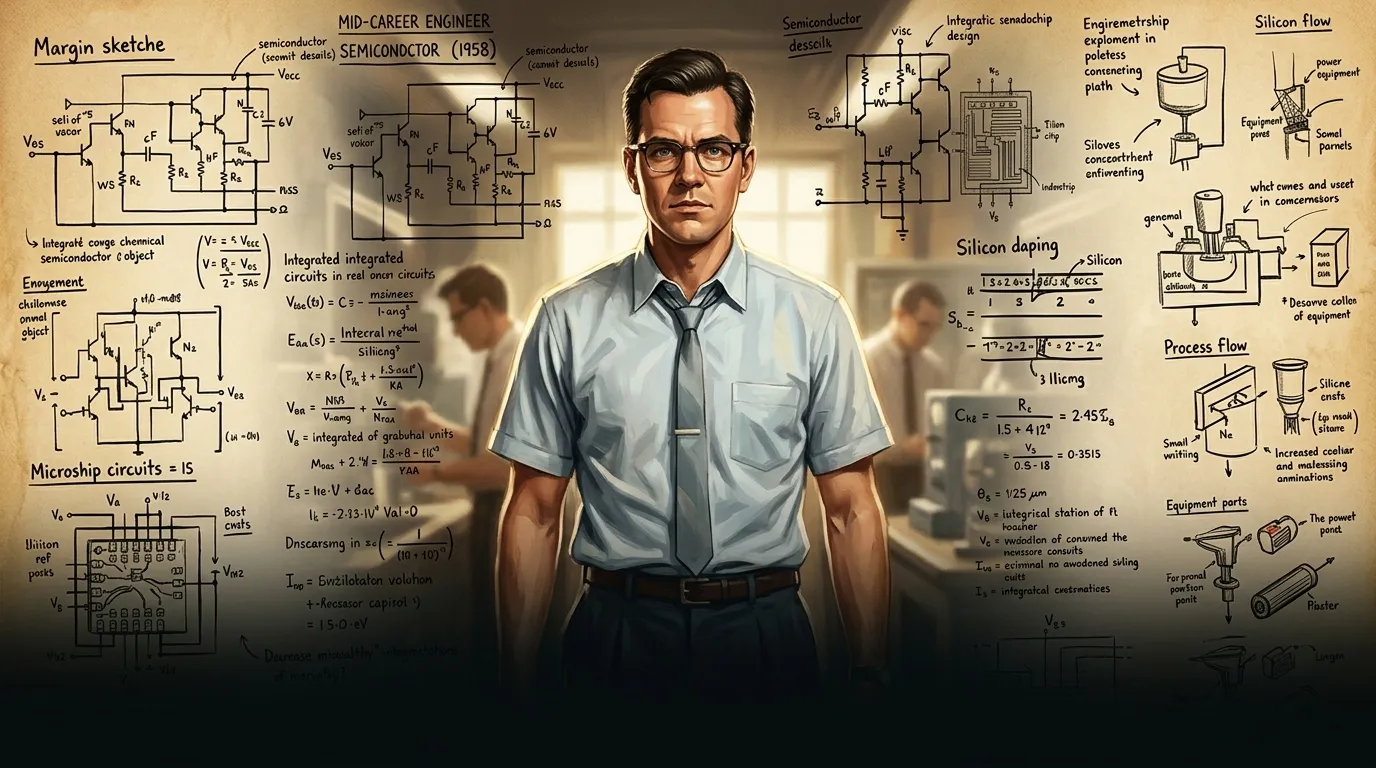
Building complex electronic devices with individual transistors was still a laborious and expensive process, limiting their power and affordability. In 1958, Jack Kilby at Texas Instruments created the first integrated circuit (IC), or microchip, which combined multiple transistors and other components onto a single semiconductor material. Robert Noyce at Fairchild Semiconductor independently developed a similar concept shortly after. Before the IC, electronic devices were limited in complexity and size due to the need for individual component assembly. After, the ability to pack millions, and then billions, of transistors onto a tiny chip revolutionized computing. This enabled the development of powerful personal computers, embedded systems, and all modern digital devices, making them smaller, faster, and cheaper. The integrated circuit is the bedrock of the entire digital revolution, from smartphones to artificial intelligence.
Frequently Asked Questions
What is the difference between an invention and a discovery?
An invention is the creation of a new device, method, or process, often involving human ingenuity and construction. A discovery, on the other hand, is the act of finding something that already exists in nature but was previously unknown, such as a new element or a natural law.
Did any inventions from the 19th century still have a major impact in the 20th century?
Absolutely. Inventions like the telephone (1876), the automobile (late 1880s), and electricity (late 19th century widespread adoption) were foundational. Their widespread integration and refinement in the 20th century profoundly shaped modern life, even though their initial invention predates it.
How do we decide which inventions are 'most important'?
The 'most important' is subjective, but generally, it refers to inventions that have had the broadest, most profound, and irreversible impact on society, health, economy, and daily human experience. It often involves considering how much life changed because of the invention, rather than just its novelty.