Unpacking Dostoevsky: Is Crime and Punishment for Young Readers?
Many wonder if Dostoevsky's classic novel, Crime and Punishment, is suitable for kids. We dive into common beliefs about its themes and complexity.
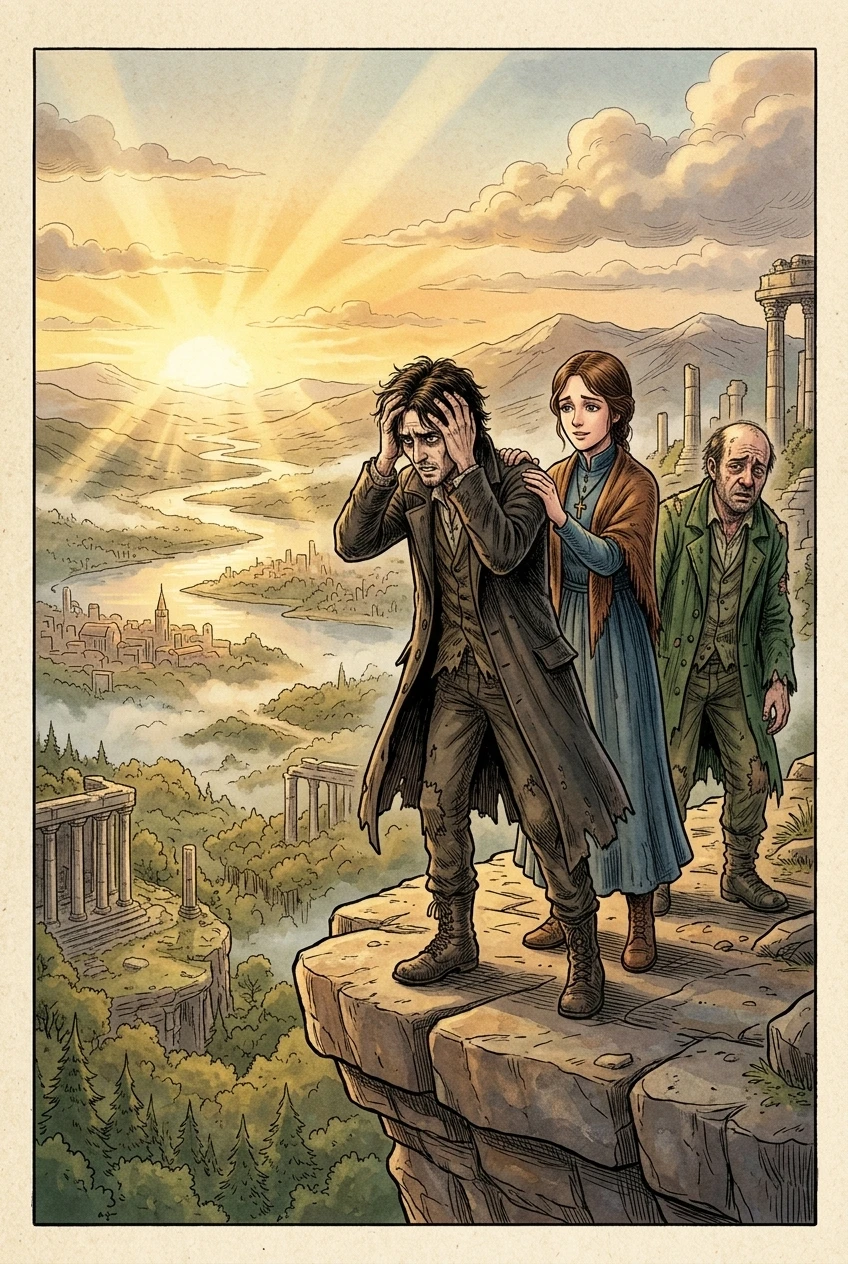
The idea of a young person tackling a literary classic like Fyodor Dostoevsky’s Crime and Punishment often sparks a lively debate. For many, the novel conjures images of dense prose, dark themes, and a challenging narrative that feels far removed from typical children's or even young adult literature. It's a book often encountered in high school or college, suggesting a certain level of maturity is required to appreciate its depth. But is this widely held view truly accurate, or is there more to the story of this profound work and its potential accessibility?
- The book is too violent or disturbing for children.
- Its philosophical themes are too complex for young minds.
- The language and writing style are too difficult for younger readers.
- It's a story about crime, making it inherently unsuitable for kids.
The Nature of Violence and Disturbing Content
One of the most immediate concerns people raise about Crime and Punishment is its depiction of violence and its exploration of a murderer's psyche. The novel does indeed feature a brutal act at its core, and Dostoevsky doesn't shy away from the psychological aftermath. However, the violence is not glorified or presented gratuitously. Instead, it serves as a catalyst for deeper exploration into guilt, morality, and redemption. For very young children, the explicit act and its consequences might be overwhelming. For older children, perhaps 14 and up, who are starting to grapple with complex moral questions, the novel can be a powerful, albeit challenging, text. It's less about the act itself and more about the internal struggle and societal implications, which can be a valuable lens through which to understand human nature. Parents often consider their child's individual sensitivity when choosing reading material that touches on difficult topics, and this is certainly a book that benefits from that consideration.
Complexity of Philosophical Themes
Crime and Punishment delves deeply into themes of justice, morality, free will, and the nature of good and evil. These are indeed profound philosophical questions that have puzzled thinkers for centuries. It's true that a young child might not grasp the nuances of Raskolnikov's 'extraordinary man' theory or the theological debates embedded in the text. However, older adolescents, particularly those in their mid-to-late teens, are often at a stage where they are beginning to question the world around them and develop their own moral frameworks. For these readers, the novel can be an incredibly stimulating and thought-provoking experience, encouraging critical thinking about fundamental human dilemmas. It offers a rich tapestry for discussion and can spark an interest in philosophy and ethics. Exploring such themes can also be a way for young people to understand different perspectives and historical contexts, which is a key part of learning through literature. Many articles discuss how best to introduce complex ideas to young learners.
The longer I live, the more I am convinced that the only thing that separates us from the beasts is our ability to think and to think about the consequences of our actions.
Navigating Language and Style
Dostoevsky's writing style is famously intricate, with long sentences, extensive internal monologues, and a narrative pace that can feel demanding to modern readers accustomed to faster-moving plots. For young children, this would undoubtedly be a significant hurdle. However, for many teenagers, encountering challenging prose can be an important step in developing advanced reading comprehension skills and expanding vocabulary. It encourages patience and careful reading, skills that are invaluable for academic success and lifelong learning. There are also many annotated versions and study guides available that can help bridge the gap, making the text more accessible without diluting its power. Reading such works can be a pathway to appreciating the artistry and depth of classic literature, and many platforms, including WonderNovels, offer classic texts in various formats to aid comprehension.
Is it About Crime?
While the title explicitly mentions 'Crime and Punishment,' the novel is far from a simple crime story. It uses a criminal act as a narrative device to explore profound psychological, social, and spiritual questions. It's not a 'how-to' guide for crime, nor does it glorify it. Instead, it meticulously dissects the motivations, the guilt, and the societal impact of such an act. For young readers, understanding that literature can use challenging scenarios to explore universal human experiences is a crucial lesson. It teaches them to look beyond the surface plot and engage with the deeper meanings and moral questions a story presents. The focus is less on the 'crime' itself and more on the 'punishment' – both internal and external – and the journey towards potential redemption.
What to Remember About This Classic
Ultimately, whether Crime and Punishment is suitable for a young person depends heavily on the individual child's maturity, reading level, and interest in complex themes. It is generally not recommended for young children due to its mature subject matter and demanding prose. However, for thoughtful and advanced teenagers, particularly those in their mid-to-late teens, it can be a profoundly enriching and transformative reading experience. It’s a book that challenges, educates, and invites deep reflection, offering insights into human psychology and morality that resonate across generations.
Frequently Asked Questions
What other books by Dostoevsky are considered classics?
Fyodor Dostoevsky wrote several other highly regarded novels beyond "Crime and Punishment." Some of his most famous works include "The Brothers Karamazov," which explores themes of faith, doubt, and morality, and "The Idiot," which delves into the life of a truly good man in a corrupt society. "Notes from Underground" is another influential work, often cited as a precursor to existentialist literature.
Are there any modern adaptations of Crime and Punishment?
Yes, "Crime and Punishment" has been adapted into various forms across different media. There have been numerous film adaptations, both Russian and international, as well as television series, stage plays, and even graphic novels. These adaptations often attempt to capture the psychological intensity and philosophical depth of Dostoevsky's original work for contemporary audiences.
What literary movements influenced Dostoevsky's writing?
Dostoevsky's writing was significantly influenced by several literary and philosophical movements of his time. He is often associated with Realism, particularly psychological realism, for his deep exploration of human psychology and societal issues. He also engaged with elements of Romanticism, especially in his focus on intense emotions and individual struggles, and his work foreshadowed aspects of existentialism due to its emphasis on free will, moral responsibility, and the search for meaning.