Why Was the Analytical Engine Invented? For More Than Just Math
The Analytical Engine, a groundbreaking machine, was invented for complex calculations and to automate tasks far beyond simple arithmetic.
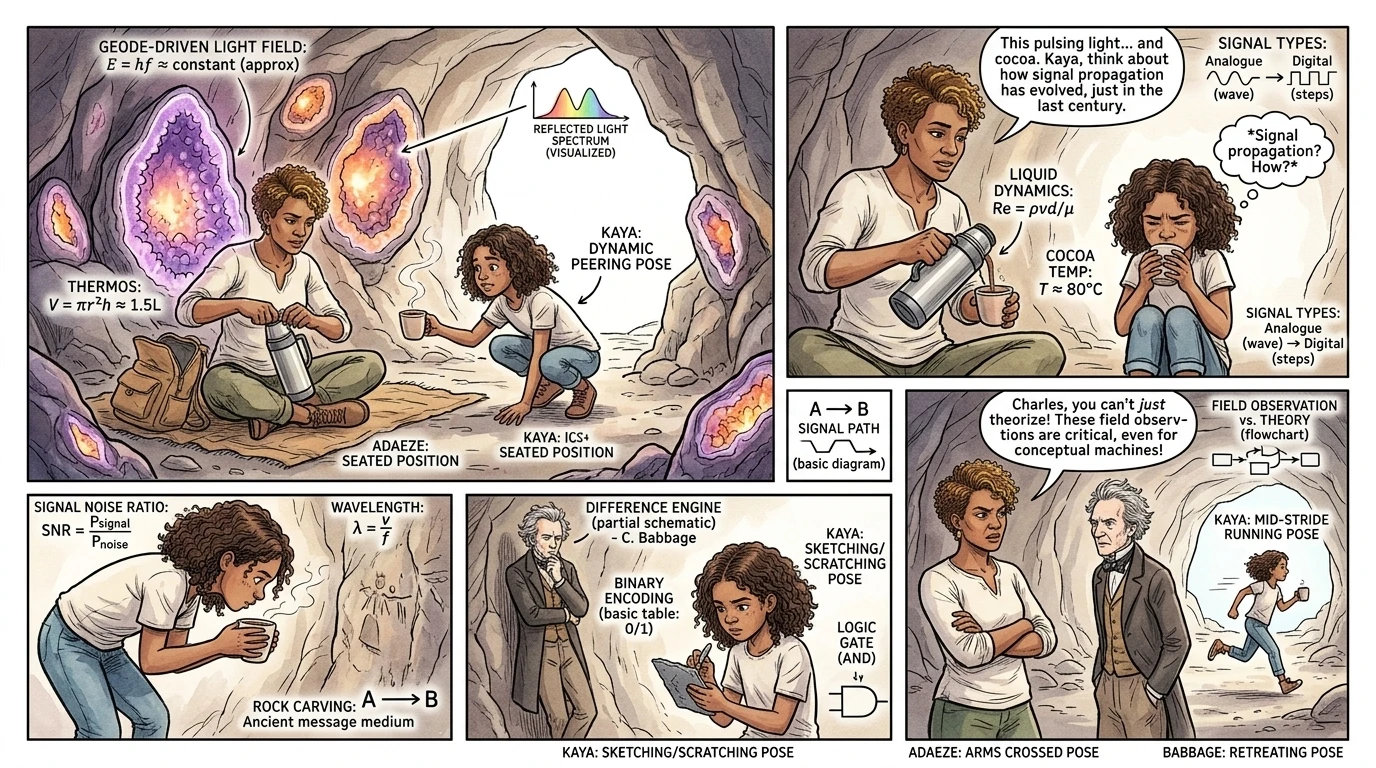
The Analytical Engine is often hailed as a conceptual ancestor to modern computers. But why was this complex machine invented in the first place? The answer lies in the growing need for efficient calculation and the vision of its inventor, Charles Babbage, to automate intellectual tasks. This vision contrasts sharply with the earlier, more limited calculating machines that came before it, highlighting a significant leap in ambition and design.
Understanding the Analytical Engine's purpose requires looking at two key aspects: the limitations of human calculation and Babbage's desire to create a machine with true programmability. These two sides show us how a need for accuracy met a grander vision for automated intelligence.
The Need for Accurate and Faster Calculations
Before the Analytical Engine, complex calculations, especially for navigation tables, astronomy, and engineering, were done by hand. This process was incredibly slow and prone to human error. Teams of clerks, often called "computers," would spend countless hours performing arithmetic. Even with careful checking, mistakes were common, leading to potentially serious consequences in fields like navigation. Charles Babbage first designed the Difference Engine to solve this specific problem. It was meant to automatically calculate and print mathematical tables, eliminating human error. However, Babbage soon realized he could design something far more powerful, something that wasn't limited to just one type of calculation.
Babbage's Vision: A General-Purpose Programmable Machine
The Analytical Engine was a profound step beyond the Difference Engine. Babbage envisioned a machine that could perform any mathematical calculation, provided it could be broken down into a series of basic operations. This was its revolutionary aspect: it was designed to be general-purpose and programmable. It had several features that foreshadow modern computers: a "mill" (the processing unit), a "store" (memory), a reader for input (punch cards), and a printer for output. Ada Lovelace, a brilliant mathematician, recognized the machine's potential beyond mere number crunching. She famously suggested it could process symbols as well as numbers, opening the door for music composition and other non-numerical tasks. Her insights into the machine's capabilities are often considered the first computer programs. You can explore more about these early ideas by looking into early computing concepts.
- For simple, repetitive calculations: The Difference Engine was a better fit.
- For complex, variable calculations: The Analytical Engine offered the necessary flexibility.
- When error reduction was the sole goal: The Difference Engine provided a direct solution.
- When exploring the limits of automation and logic: The Analytical Engine was the visionary prototype.
The Analytical Engine Was Invented to Automate Complex Logic, Not Just Arithmetic
The Analytical Engine was invented not just to do math faster or more accurately, but to automate complex logical processes. It represented a fundamental shift from machines that performed fixed tasks to one that could be instructed to perform an almost infinite variety of tasks. It wasn't built to solve one specific problem, but to solve a class of problems. Its invention depended on Babbage's frustration with the limitations of existing methods and his ambitious leap of imagination to create a machine that could follow instructions. While it was never fully built in his lifetime, its detailed designs and the writings of Ada Lovelace laid the theoretical groundwork for the digital age. This story is a great example of how necessity and vision combine to push the boundaries of what is possible. You can read more about historical innovations and their impact on society in various history articles.
Frequently Asked Questions
Was the Analytical Engine ever built?
No, the Analytical Engine was never fully built during Charles Babbage's lifetime. The technology and funding of the Victorian era were insufficient to complete such an ambitious project. However, Babbage left behind extensive designs and notes.
What is the main difference between the Difference Engine and the Analytical Engine?
The Difference Engine was designed to calculate and print mathematical tables using a fixed method of differences. The Analytical Engine, on the other hand, was a general-purpose programmable machine capable of performing any calculation by following a sequence of instructions, much like a modern computer.
Who was Ada Lovelace and what was her contribution?
Ada Lovelace was a mathematician and daughter of Lord Byron. She is widely recognized for her work on Babbage's Analytical Engine, where she wrote notes that included what many consider to be the first algorithm intended to be carried out by a machine, making her the first computer programmer.