Why Saint Augustine of Hippo Became a Saint: A Conversion Story
Augustine of Hippo's journey to sainthood began with a profound intellectual and spiritual conversion. Discover the key moments that shaped his transformation.
The year is 386 CE, and a young man named Augustine is in a garden in Milan, deeply troubled. He hears a child's voice chanting, "Tolle, lege! Tolle, lege!" — "Take up and read! Take up and read!" This specific, concrete detail — the child's voice and the command to read — marks a pivotal moment in the life of Augustine, who would later become Saint Augustine of Hippo. This article explores the profound reasons behind his eventual recognition as a saint, focusing on this singular event and its aftermath.
- Augustine's early life was marked by intellectual curiosity and a search for truth.
- He struggled with Manichaeism, a dualistic religion, before finding satisfaction in Christianity.
- His conversion experience in the Milanese garden was a turning point, described vividly in his Confessions.
- After his conversion, he dedicated his life to God, becoming a priest and then a bishop.
From Troubled Youth to Intellectual Seeker
Augustine was born in 354 CE in Thagaste, North Africa, into a family with mixed religious backgrounds. His mother, Monica, was a devout Christian, while his father, Patricius, was a pagan. Augustine received an excellent education, excelling in rhetoric, and initially pursued a career as a teacher. However, he was deeply restless, searching for meaning and truth. He explored various philosophies and religions, including Manichaeism, which offered a seemingly rational explanation for the problem of evil. For a time, he found this satisfying, but intellectual doubts eventually led him away. His mother, Monica, prayed constantly for his conversion, a testament to her enduring faith and influence on his life. You can learn more about the philosophical traditions that shaped this era in Wonder Philosophy.
Late have I loved you, O Beauty ever ancient, ever new, late have I loved you! You were within me, but I was outside, and there I sought for you.
The Milan Garden: A Moment of Divine Intervention
The turning point for Augustine came in Milan, where he served as a professor of rhetoric. He had been grappling with his desires and intellectual doubts, particularly after hearing the sermons of Bishop Ambrose, which introduced him to a more sophisticated understanding of Christian thought. In that fateful garden, overwhelmed by his internal conflict, he cried out to God. The child's voice, seemingly from a nearby house, commanded him to "Take up and read." He interpreted this as a divine message, picked up a copy of the Apostle Paul's letters, and his eyes fell upon Romans 13:13-14, which spoke against revelry and urged putting on the Lord Jesus Christ. This passage, he wrote, brought a sudden light of assurance into his heart, and all the darkness of doubt vanished. This wasn't merely an intellectual assent; it was a profound spiritual conversion that reoriented his entire being.
From Convert to Bishop: A Life Dedicated to God
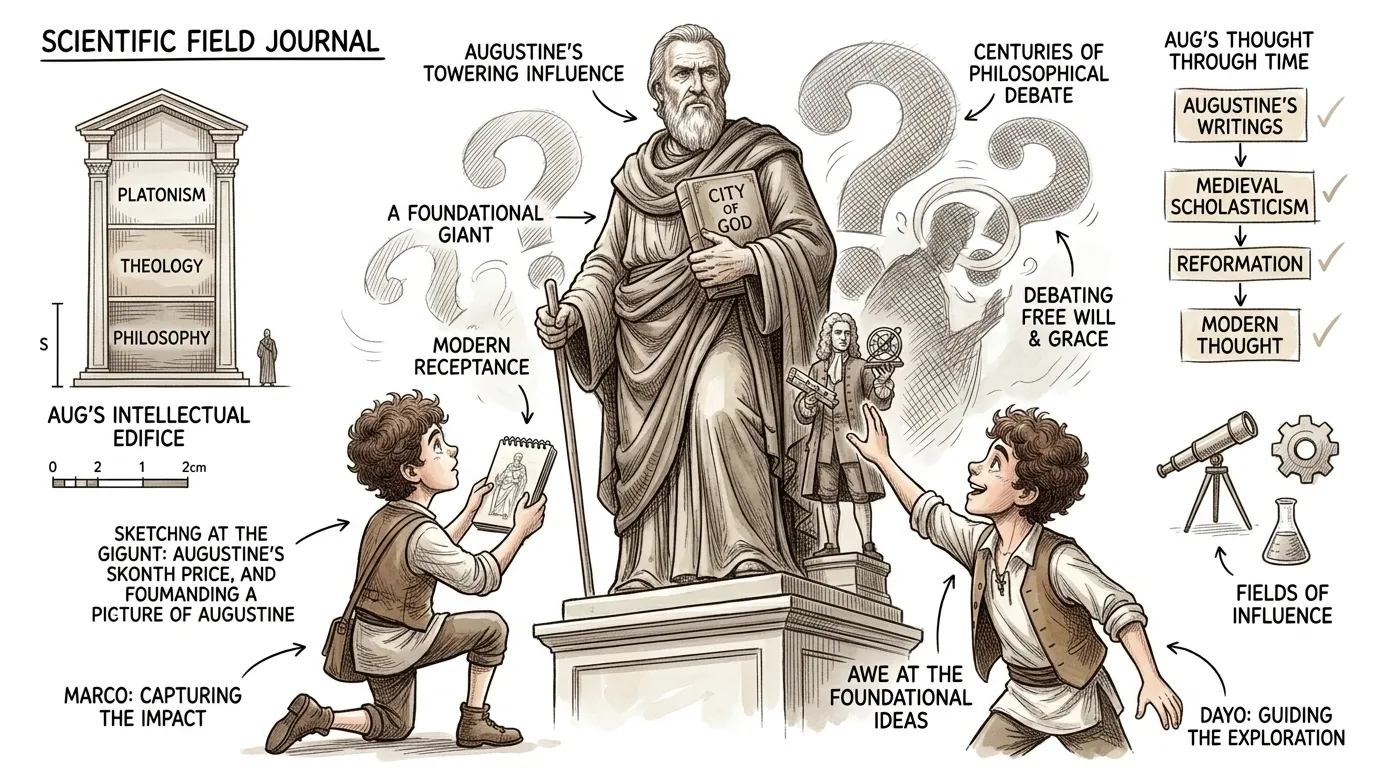
Following his conversion, Augustine renounced his secular career and lifestyle. He was baptized by Bishop Ambrose in 387 CE and returned to North Africa. He soon established a monastic community and was ordained a priest in 391 CE, much against his initial wishes. In 395 CE, he became the Bishop of Hippo Regius, a position he held until his death in 430 CE. As bishop, Augustine became one of the most influential figures in Christian theology. He wrote extensively, producing works like Confessions, City of God, and numerous commentaries, sermons, and letters. His writings shaped Western Christian thought for centuries, addressing issues of grace, free will, original sin, and the nature of God. His intellectual rigor, profound spiritual insights, and tireless dedication to the Church were foundational to his eventual recognition as a saint and Doctor of the Church. He wasn't just a convert; he was a profound thinker and shepherd of his flock.
What Augustine's Sainthood Tells Us About Faith and Intellect
The story of why Saint Augustine of Hippo became a saint is a powerful illustration of the interplay between intellectual inquiry and spiritual transformation. His journey wasn't a sudden, unthinking leap of faith, but a long, arduous process of questioning, searching, and ultimately, surrendering to a truth he found compelling both intellectually and spiritually. His sainthood acknowledges not only his personal holiness but also his immense contributions to Christian doctrine and philosophy. It demonstrates that faith can engage with the deepest philosophical questions and that intellectual honesty can lead one to profound spiritual conclusions. Augustine's life shows that sainthood is often about a radical reorientation of one's life towards God, accompanied by significant intellectual and moral growth. For more articles on historical figures and their impact, explore our articles.
Frequently Asked Questions
Was Augustine of Hippo always a Christian?
No, Augustine was not always a Christian. He was raised with some Christian influence from his mother, Monica, but he spent many years exploring other philosophies and religions, particularly Manichaeism, before his conversion to Christianity in his early thirties.
What is Augustine of Hippo known for besides becoming a saint?
Beyond his sainthood, Augustine is renowned as one of the most influential theologians and philosophers in Western history. He is known for his autobiographical Confessions, his philosophical work City of God, and his deep theological explorations of grace, free will, original sin, and the nature of God, which profoundly shaped Christian doctrine.
How did Augustine's mother, Monica, influence his path to sainthood?
Monica was a devout Christian who prayed constantly for Augustine's conversion and spiritual well-being. Her unwavering faith, persistent prayers, and moral example were significant influences throughout his life, ultimately playing a crucial role in his decision to embrace Christianity and dedicate himself to God.