Snow Storm by J.M.W. Turner (London, UK — 1842)
Snow Storm by J.M.W. Turner (London, UK — 1842) — an illustrated arts story, set in United Kingdom. 10 illustrated pages, free to read on Wonder Arts.
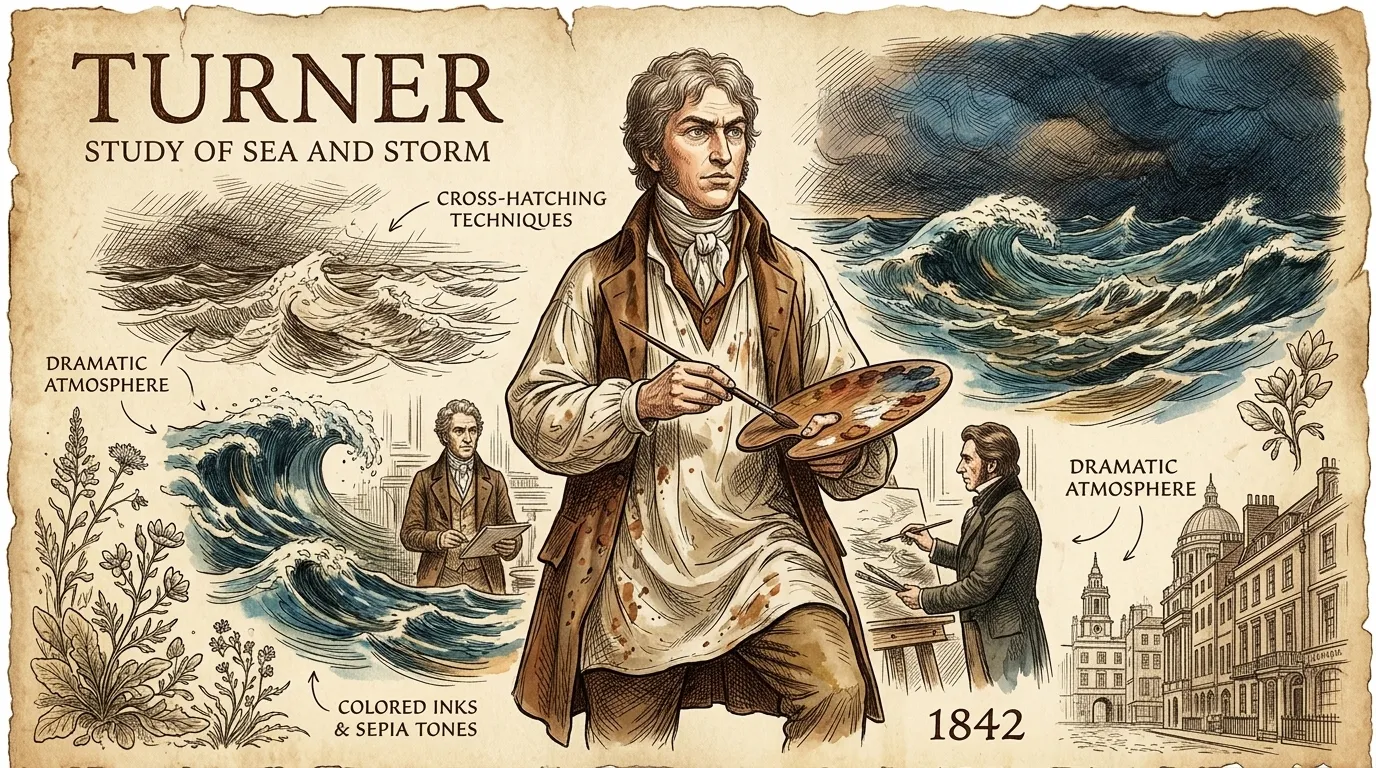
Page 1
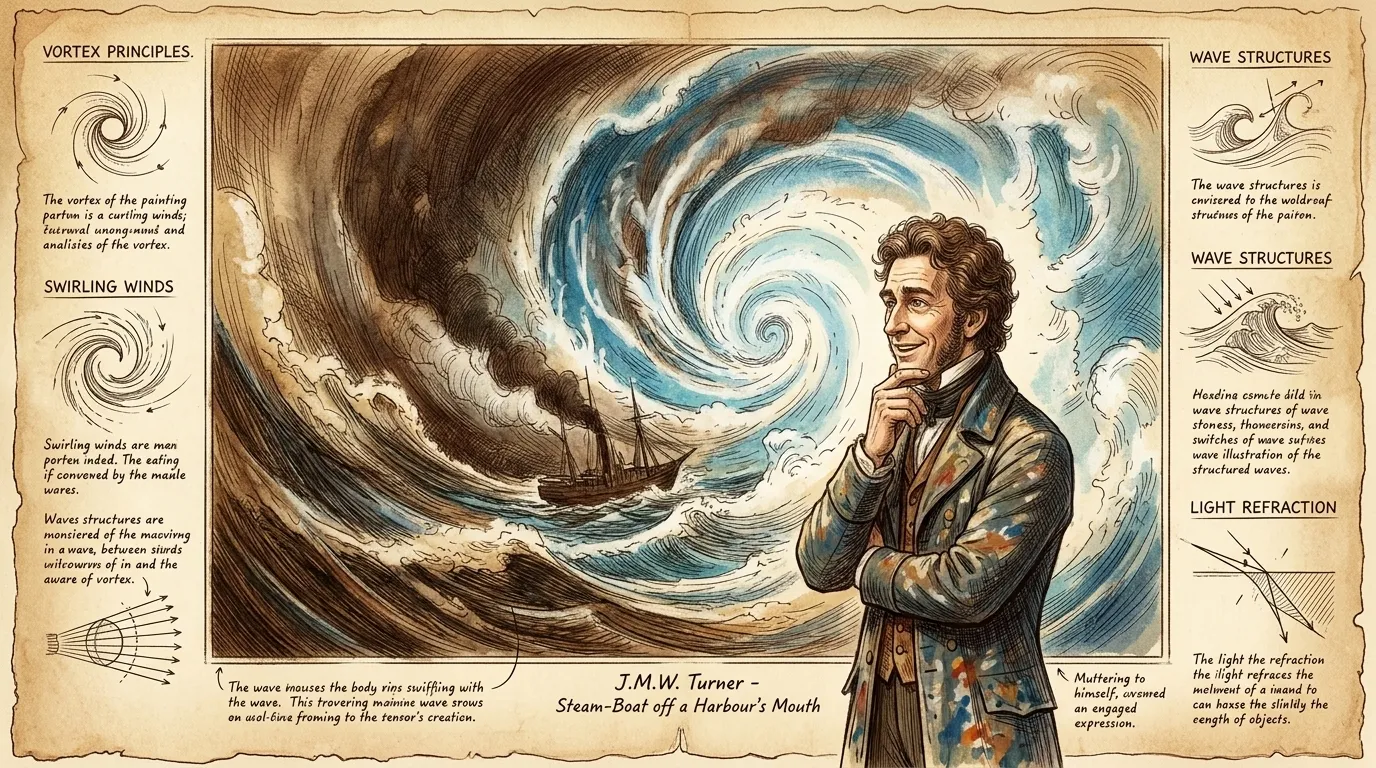
Joseph Mallord William Turner, stands before his masterpiece, "Snow Storm - Steam-Boat off a Harbour's Mouth," painted in 1842. The artwork, now residing in the Tate Britain, measures 914 mm 1219 mm, a testament to Turner's ambition. It was inspired by a real-life experience: Turner reputedly asked to be lashed to the mast of a ship during a storm to truly understand its power.
"Turner mutters, half to himself, "I did not paint it to be understood, but I wished to show what such a scene was like.""
Art Fact: J.M.W. Turner's 'Snow Storm' faced criticism upon release for its chaotic appearance, but now it's celebrated for its innovative approach to capturing the sublime power of nature.
Page 2
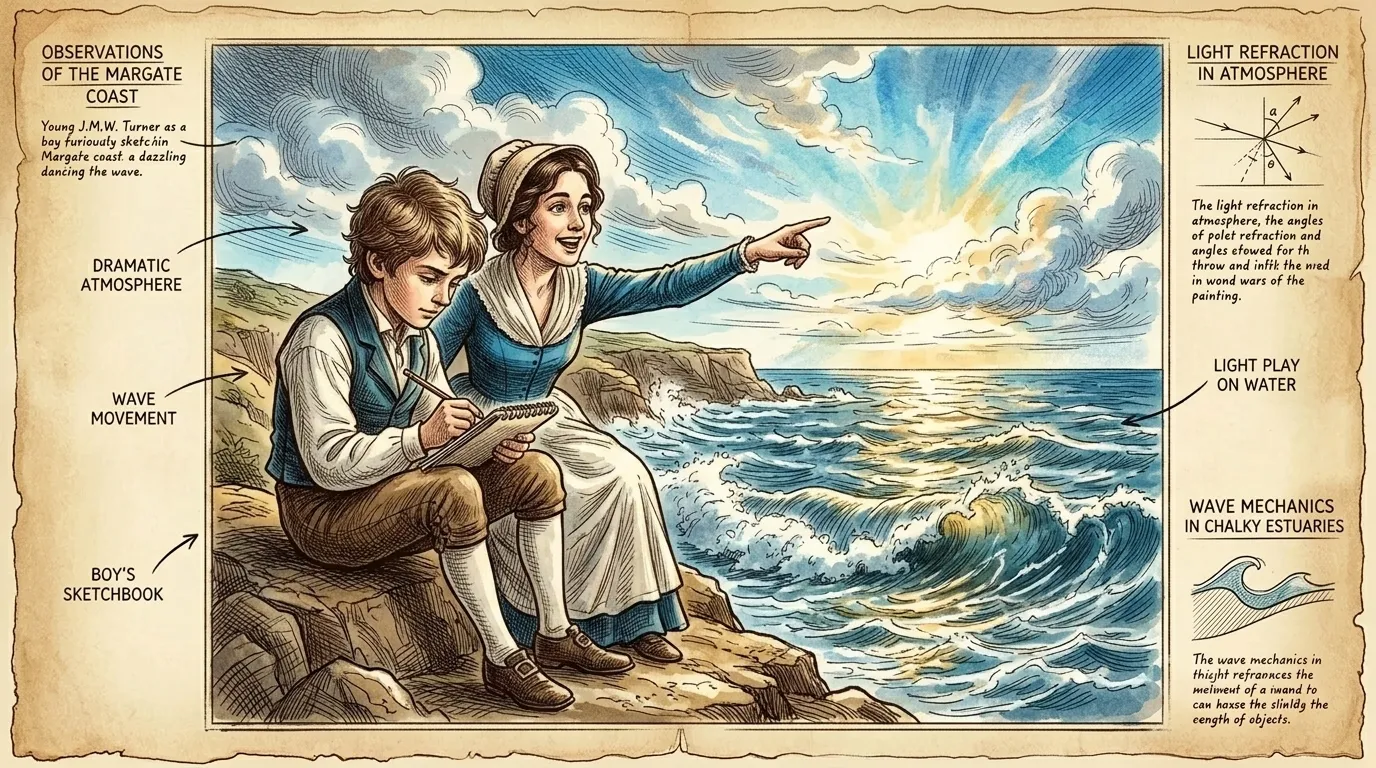
A young Turner spent much of his childhood in Margate, a coastal town. He absorbed the ever-changing moods of the sea. He would later recall these early experiences as fundamental to his artistic development.
"Turner's aunt, Mary Mallord, exclaims, "Joseph, look at that sky! The way the light dances on the water!" Young Turner replies, sketching furiously, "Indeed, Aunt. It's a symphony of light and shadow.""
Art Fact: Margate's dramatic coastline played a crucial role in shaping Turner's fascination with the sea and its raw power, elements that would later define his mature style.
Page 3
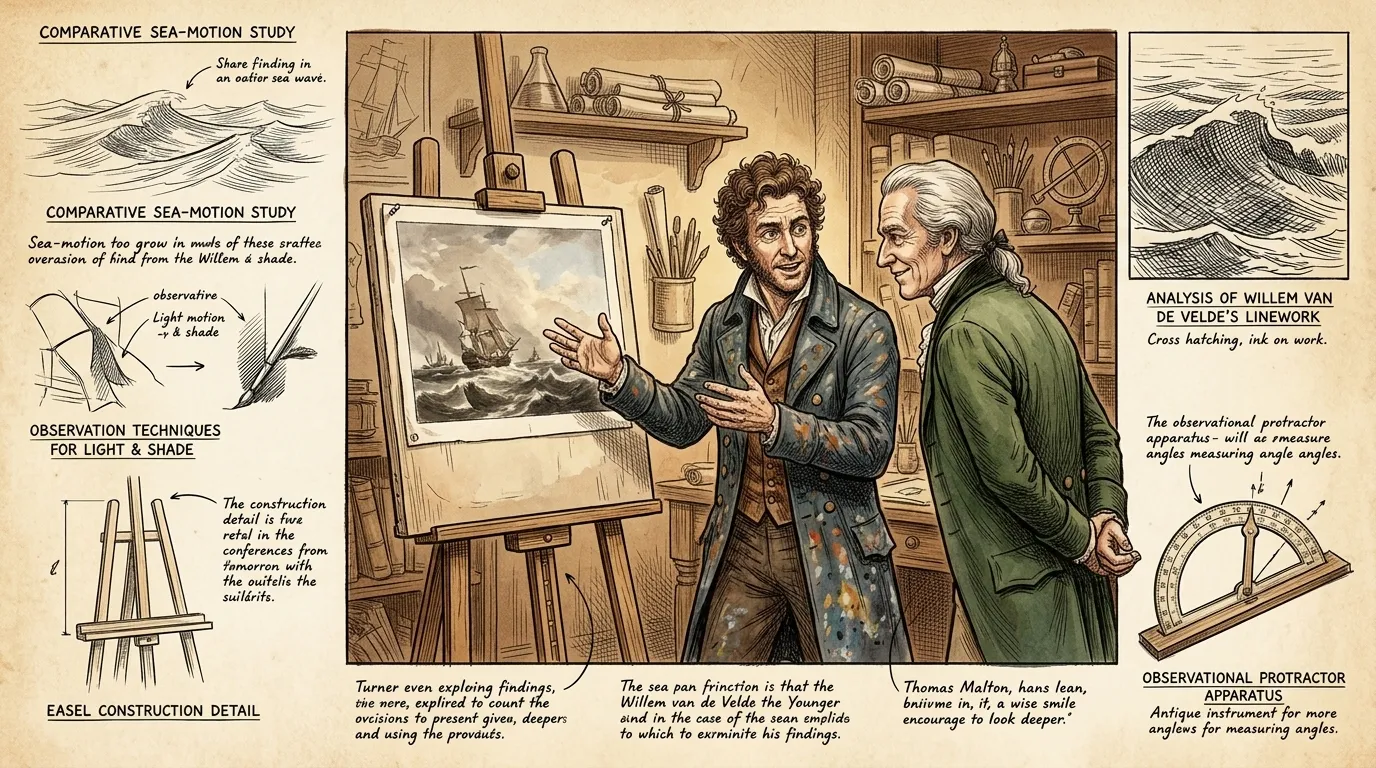
Turner studies the works of Willem van de Velde the Younger. He admired the Dutch master's ability to depict naval scenes with both accuracy and drama. This inspired Turner to pursue maritime subjects.
"Turner remarks to his mentor, Thomas Malton, "Van de Velde captures the essence of the sea. The movement, the light... it's all there!" Malton replies, "Observe closely, Joseph. But find your own voice. Don't merely imitate.""
Art Fact: Van de Velde's detailed and dramatic seascapes provided a benchmark for Turner, pushing him to explore the genre with increasing ambition.
Page 4
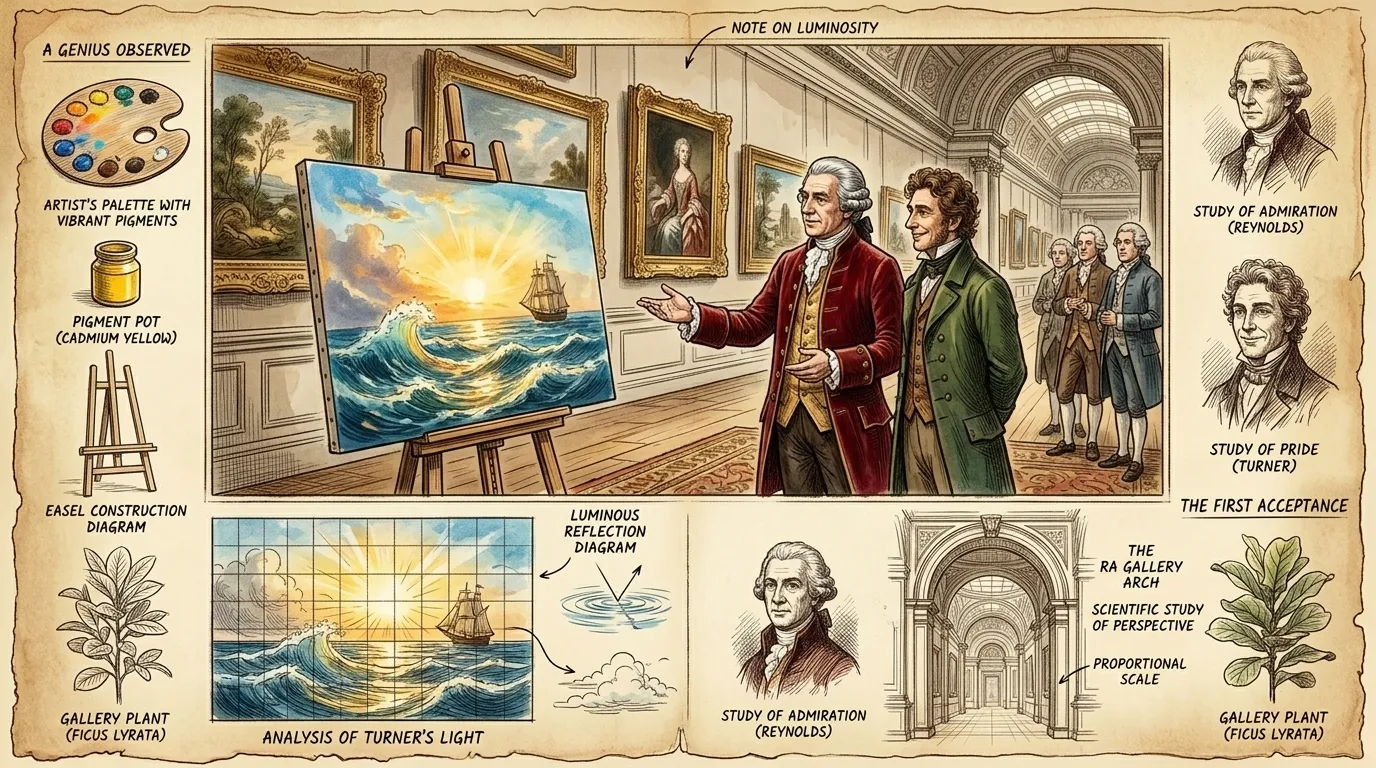
Turner exhibited his early works at the Royal Academy. He quickly gained recognition for his talent. This acceptance provided him with the platform and financial support to pursue his artistic vision.
"Sir Joshua Reynolds, then President of the Royal Academy, observes, "Young Turner, your talent is undeniable. Your use of light... remarkable!" Turner replies humbly, "Thank you, Sir. I strive to capture the truth of nature as best I can.""
Art Fact: Early acceptance by the Royal Academy propelled Turner into the spotlight, allowing him to develop his unique artistic voice.
Page 5
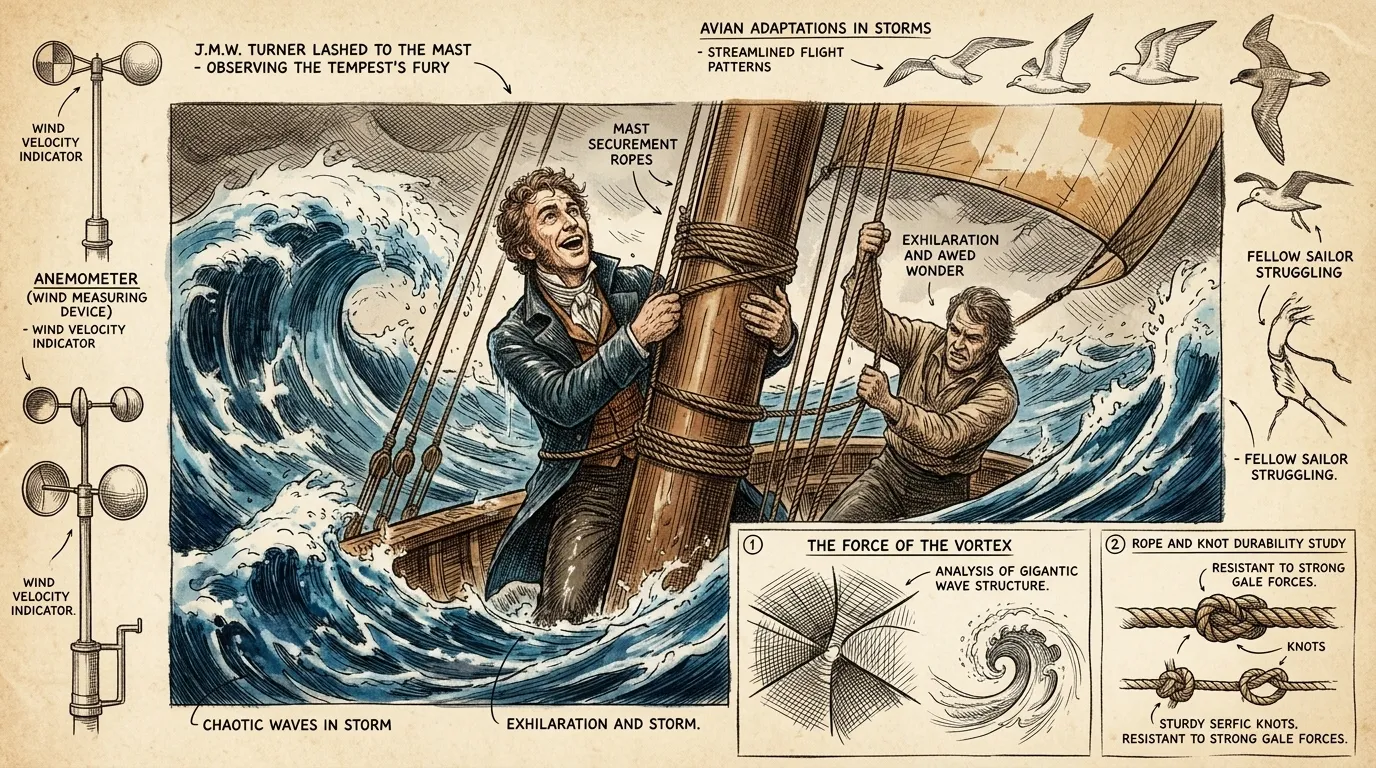
Turner's desire for authenticity led him to seek direct experiences of extreme weather. He believed that only by witnessing nature's fury could he truly capture its essence in his paintings.
"Turner exclaims to a fellow sailor, battling against the wind, "We are insignificant against this mighty force! But it is magnificent!" The sailor replies, "Are you mad, Turner? We're trying to survive, not admire the view!""
Art Fact: Turner's decision to endure a real storm firsthand demonstrates his commitment to experiencing and portraying nature's power with unwavering intensity.
Page 6
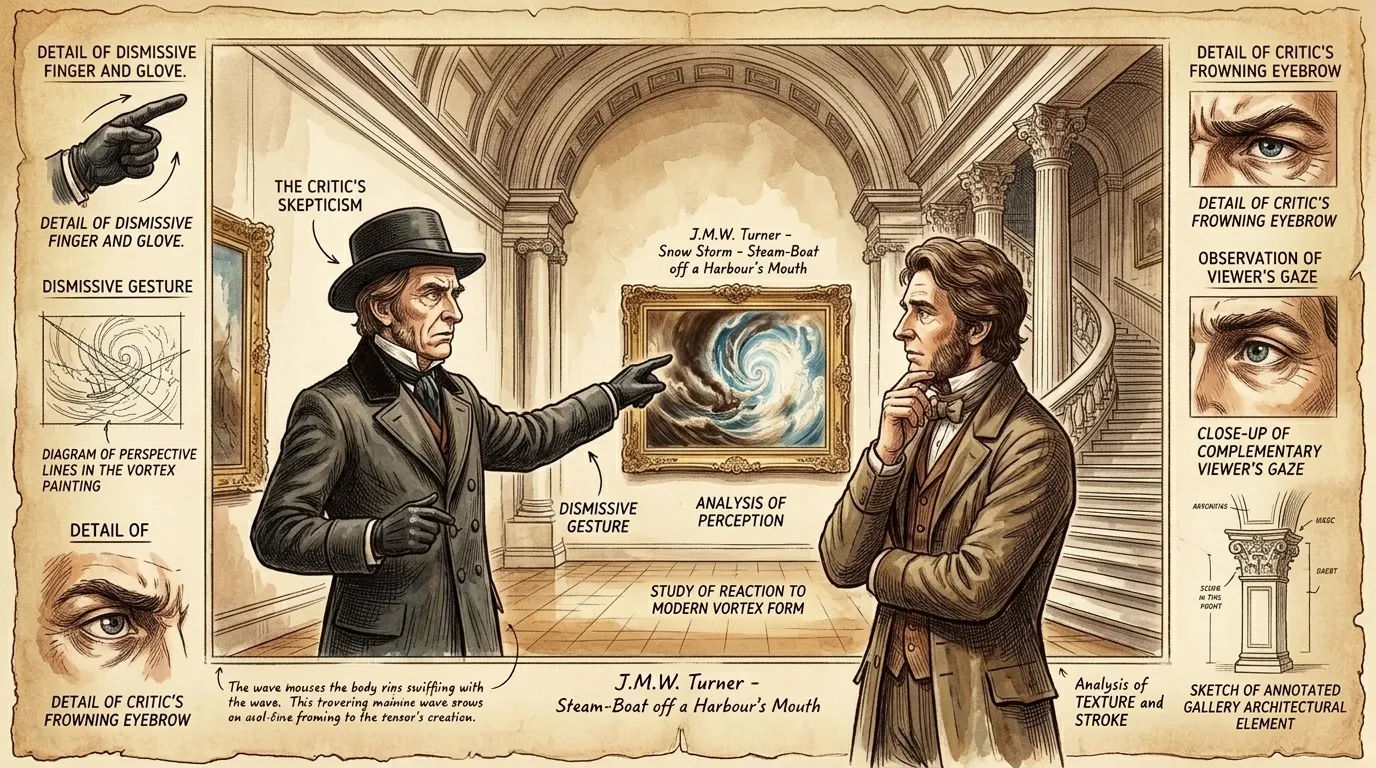
When "Snow Storm" was first exhibited, it was met with mixed reactions. Some critics dismissed it as 'tinted steam,' while others recognized its innovative approach to capturing the sublime. The painting challenged conventional notions of beauty and representation.
"A critic remarks to a fellow viewer, "Is this art, or a chaotic mess? I see no discernible form!" The other replies, "Perhaps that is the point. It captures the feeling of being engulfed by the storm, not just its appearance.""
Art Fact: Initial reactions to 'Snow Storm' highlighted the tension between traditional artistic expectations and Turner's radical exploration of subjective experience.
Page 7
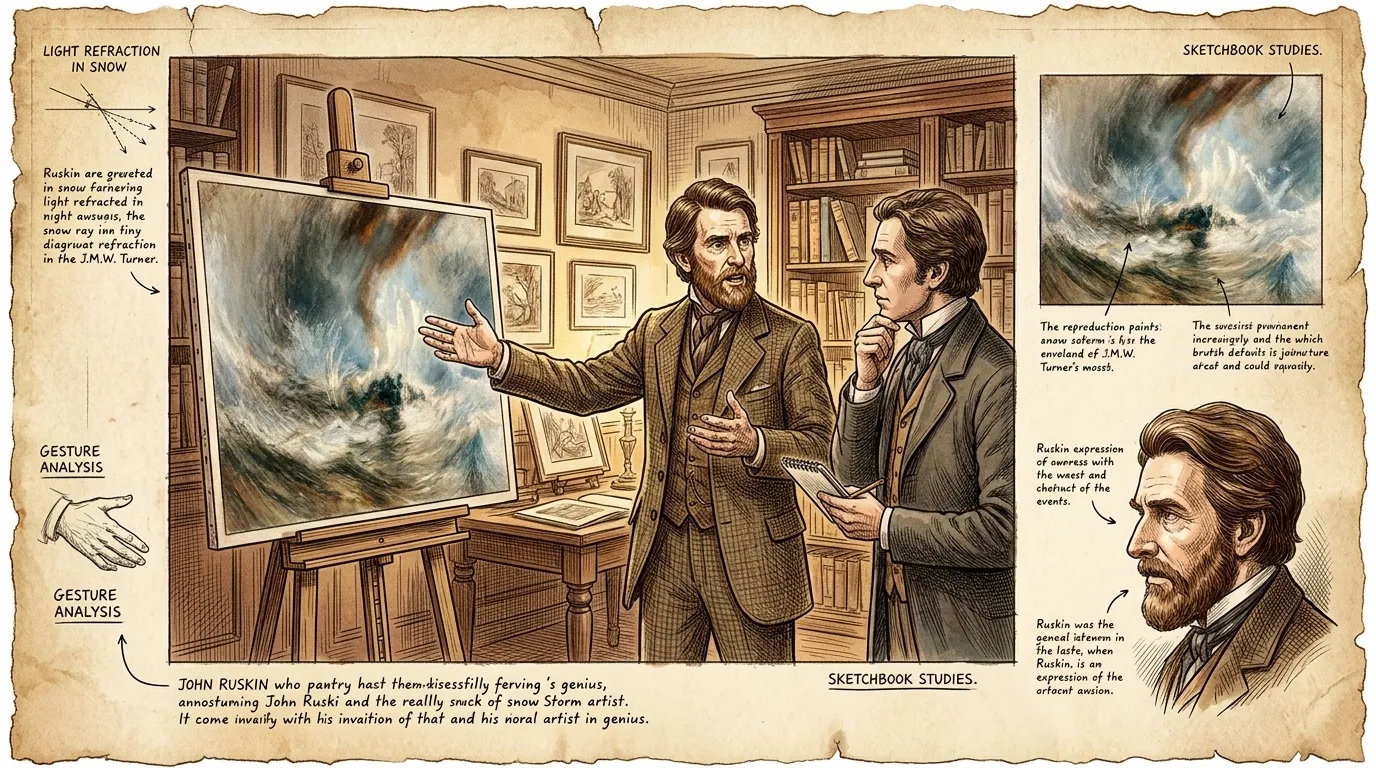
The art critic John Ruskin became a champion of Turner's work. He praised Turner's ability to convey the emotional impact of nature, arguing that his apparent chaos reflected the true complexity of the natural world. Ruskin stated that he had "seen the painting, and from the stern of the vessel felt the gale, exactly as Turner has given it."
"Ruskin says to an acquaintance, "Turner is a visionary who looks beyond the surface to discover inner feelings. Don't ever despise the genius of Turner. The man is one of the greatest of his age; by far the greatest in the whole range of landscape art.""
Art Fact: Ruskin's eloquent and passionate defense of Turner's work helped to shift public opinion and secure his place in art history.
Page 8
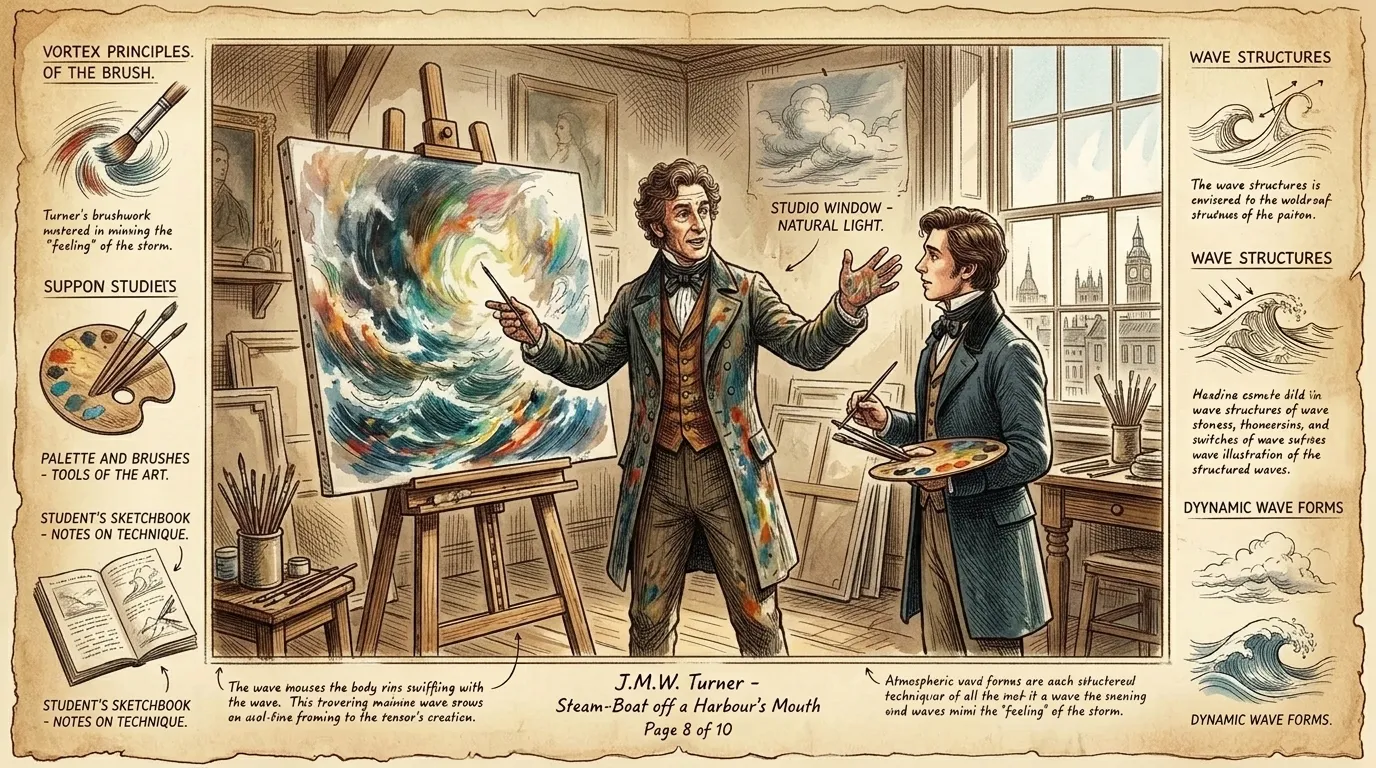
Turner's innovative use of color and form created a sense of immersion. His works evoked the feeling of being enveloped by the sea. He aimed to capture the essence of the storm, not its literal appearance.
"Turner explains to a student, "The point is not to paint every detail, but to suggest the feeling, the energy. Let the viewer's imagination fill in the blanks.""
Art Fact: Turner's willingness to prioritize emotional impact over precise representation marked a significant departure from traditional landscape painting.
Page 9
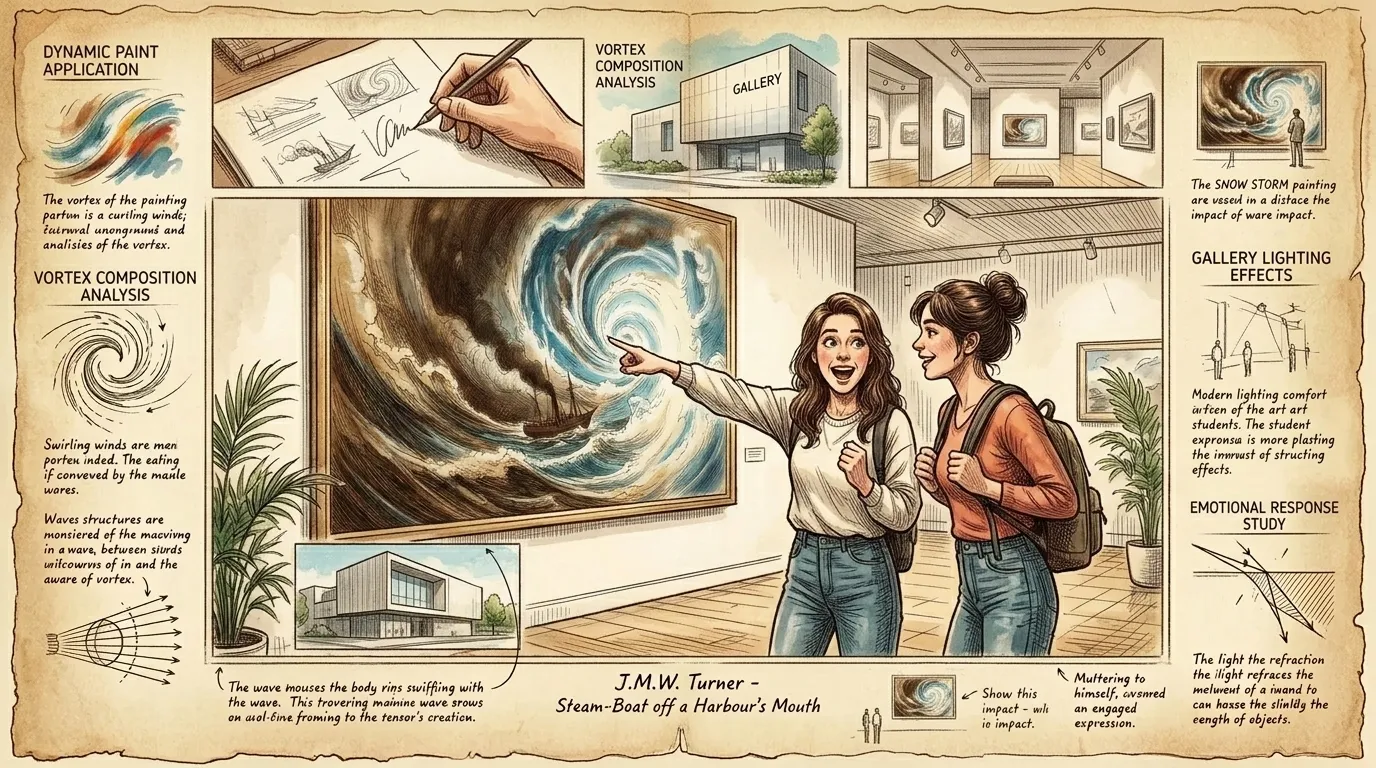
Turner's "Snow Storm" continues to inspire awe. It is regarded as a groundbreaking example of Romantic painting. Its influence can be seen in the works of later artists who sought to capture the sublime power of nature.
"A modern art student says to a classmate, looking at a reproduction of "Snow Storm", "The chaos is beautiful! It's not just a storm, it's a feeling!" The classmate replies, "It makes you wonder what would happen if Turner got his hands on the Titanic.""
Art Fact: Turner's bold artistic experimentation paved the way for future generations of artists to embrace abstraction and subjective expression.
Page 10
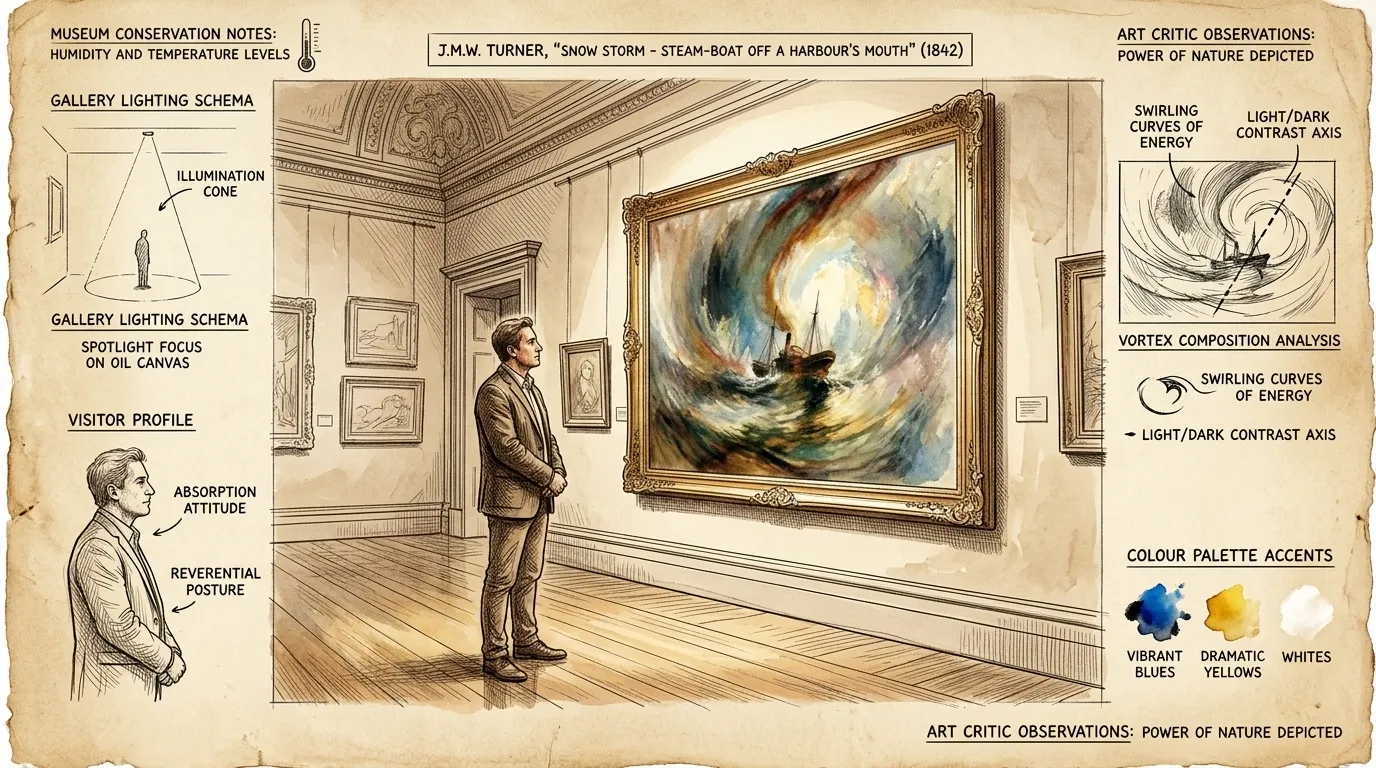
Today, J.M.W. Turner's "Snow Storm - Steam-Boat off a Harbour's Mouth" hangs in the Tate Britain, London. It continues to draw visitors from around the world. Turner once proclaimed, 'Light is therefore colour.' His vision of light and color remains eternal. His revolutionary spirit survives through his art.
"A visitor in the Tate Britain, standing before the painting, remarks, "It's like stepping into the storm itself!""
Art Fact: Turner's fearless exploration of light, color, and emotional intensity ensures that his 'Snow Storm' continues to captivate and inspire audiences for generations to come.
About this story
- Location: United Kingdom
- Audience: general readers
Questions and answers
Questions and answers about Snow Storm by J.M.W. Turner (London, UK — 1842)
Read Wonder Arts on your phone
Wonder Arts is available on Android. Get Wonder Arts on Google Play.
More Wonder Arts stories
- St. Mark’s Basilica (Venice, Italy — 1094)
- St. Peter’s Basilica (Vatican City — 1626)
- Statue of Liberty by Frédéric Auguste Bartholdi (New York City, USA — 1886)
- Statue of Zeus at Olympia by Phidias (Olympia, Greece — c. 435 BC)
- Still Life with Apples by Paul Cézanne (France — 1890)
- Suleymaniye Mosque (Istanbul, Turkey — 1557)