Flora's Fantastic Plant Predicament
Flora's Fantastic Plant Predicament — an illustrated stories story. 10 illustrated pages, free to read on Wonder Books.
Page 1
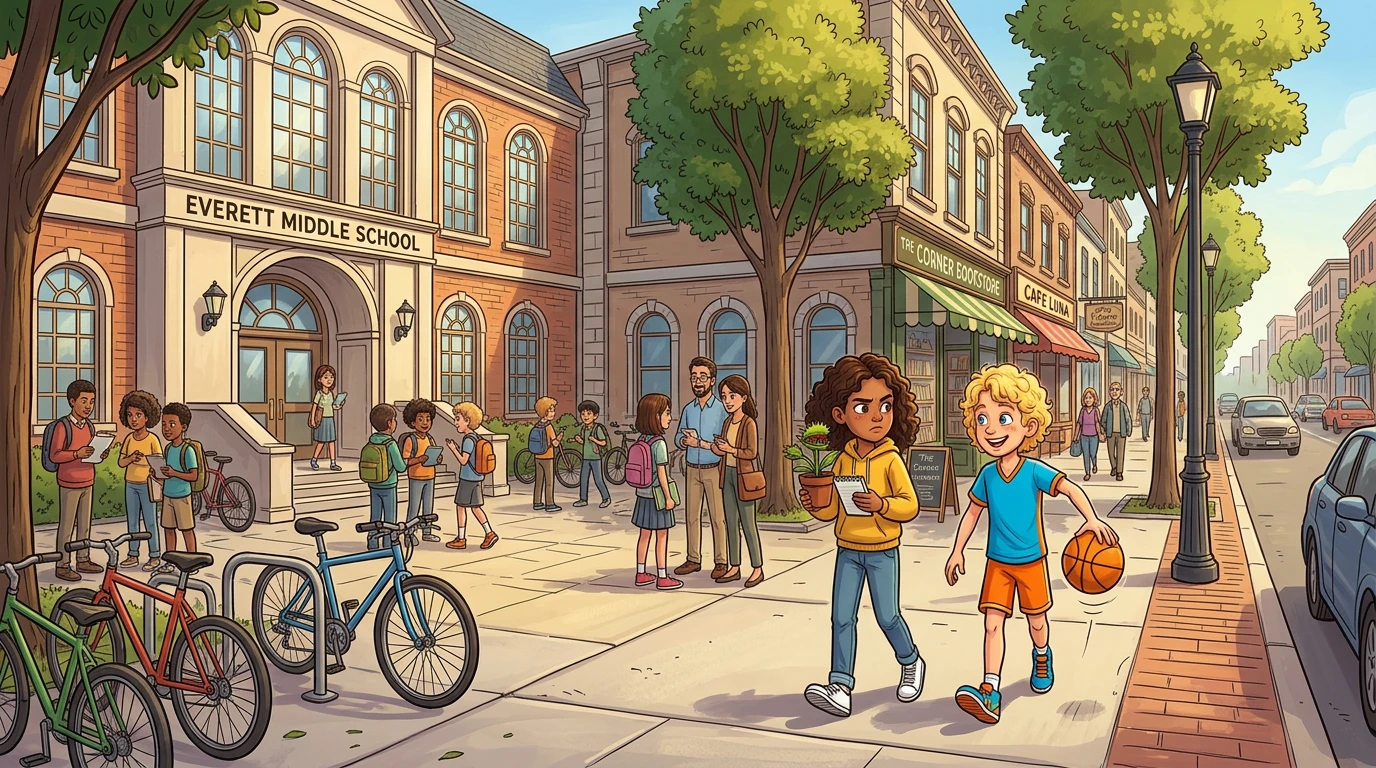
Layla walked with her friend Jess past Everett Middle School, heading towards the bustling Church Street. "My geraniums are growing like crazy, but my Venus flytrap just sits there," Layla said, frowning. Jess, bouncing a basketball, grinned. "Maybe it's broken?" Layla shook her head. "It's supposed to eat flies, but it hasn't caught a single one. Why isn't it working?"
Page 2
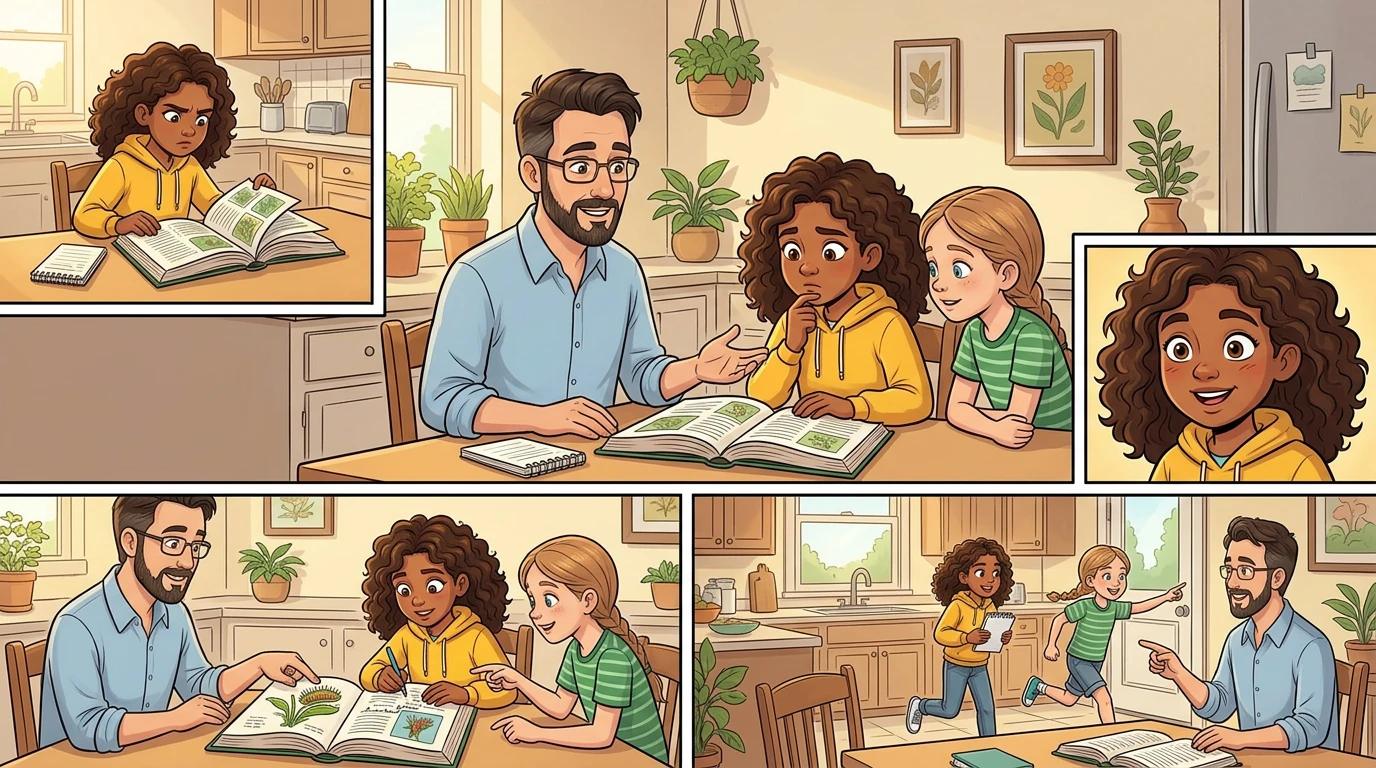
Later that afternoon, Layla sat at the kitchen table with her father and little sister, Sophie. "It's not broken, Sophie," Layla said, flipping through a plant book. "It's just... not catching anything. But why?" Her father, a calm and friendly man in his 40s with glasses, a neat short beard, short dark hair with slight graying at the temples, smiled. "Well, Layla, those kinds of plants use special adaptations to get their food. It's a clever system that relies on attracting and trapping its prey."
Page 3
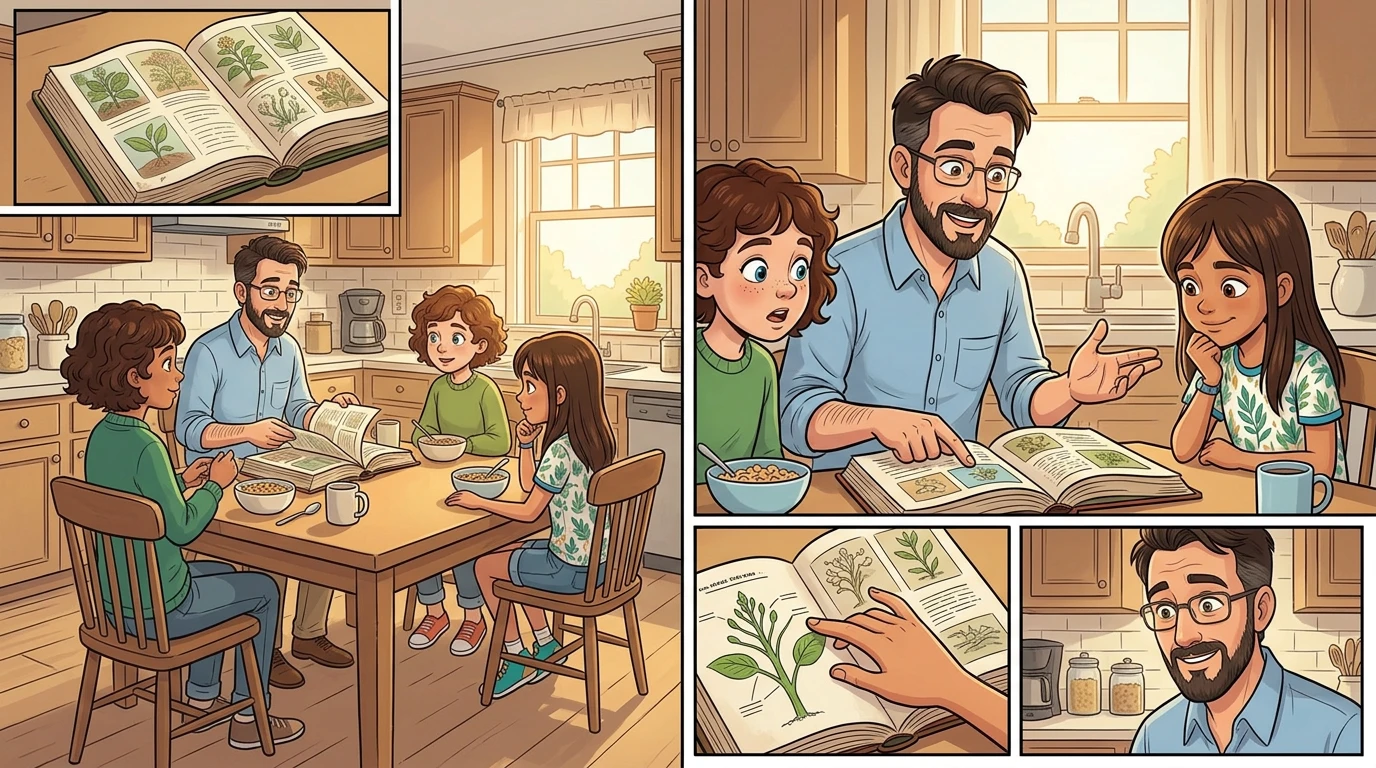
"So, it's like a plant detective?" Sophie asked, her eyes wide. Layla nodded. "Kind of! But people have been studying this for a long time. It makes me think of a quote, Dad." Her father raised an eyebrow, intrigued. "Go on." Layla continued, "Louis Pasteur, a famous French chemist, said, 'Chance favors the prepared mind.' These plants have special abilities, but they need the right conditions to use them."
Page 4
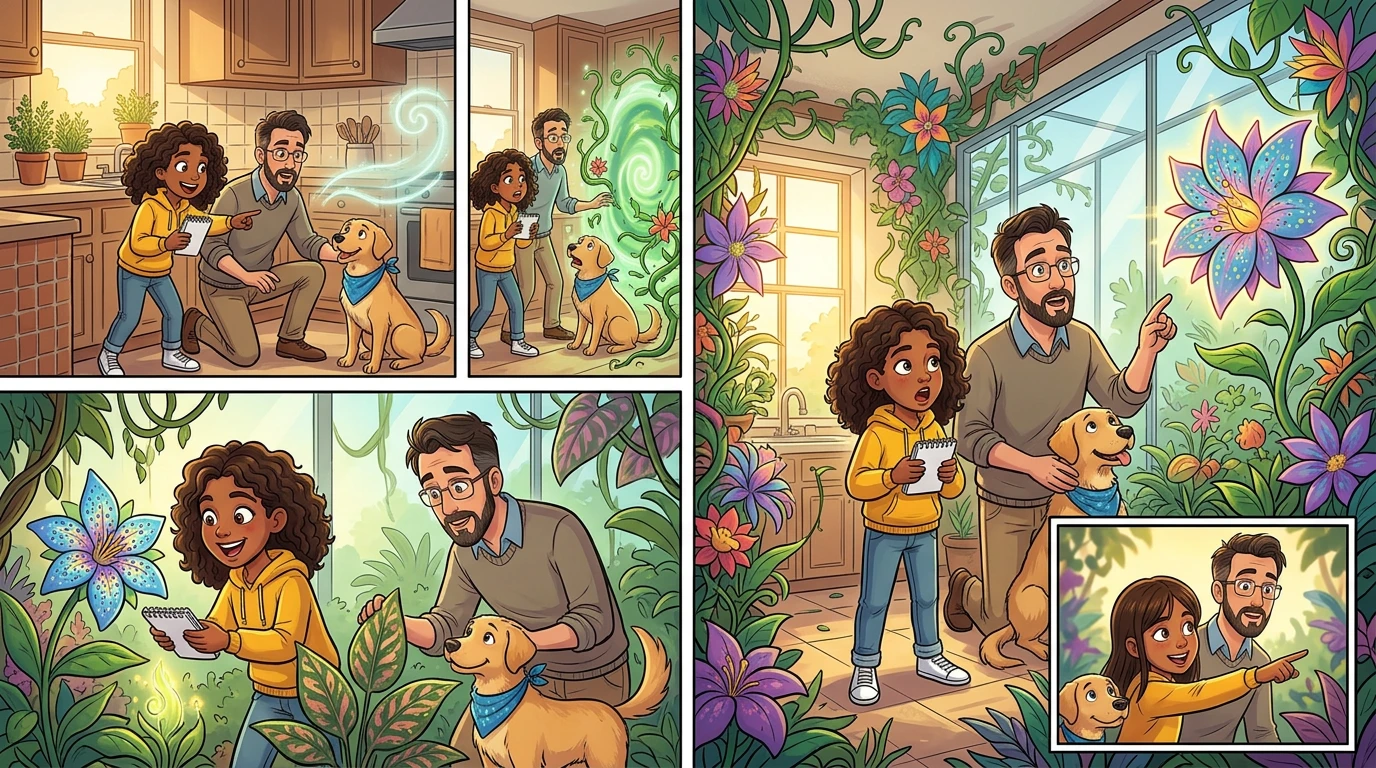
Her dad chuckled softly. "Exactly. Speaking of prepared minds, let's travel back in time to see one of the greatest plant scientists of all time: Charles Darwin!" Suddenly, the kitchen dissolved into a lush, overgrown greenhouse. Vines covered the walls, and exotic flowers bloomed everywhere. It was Victorian England, a world brimming with exploration and scientific curiosity.
Page 5
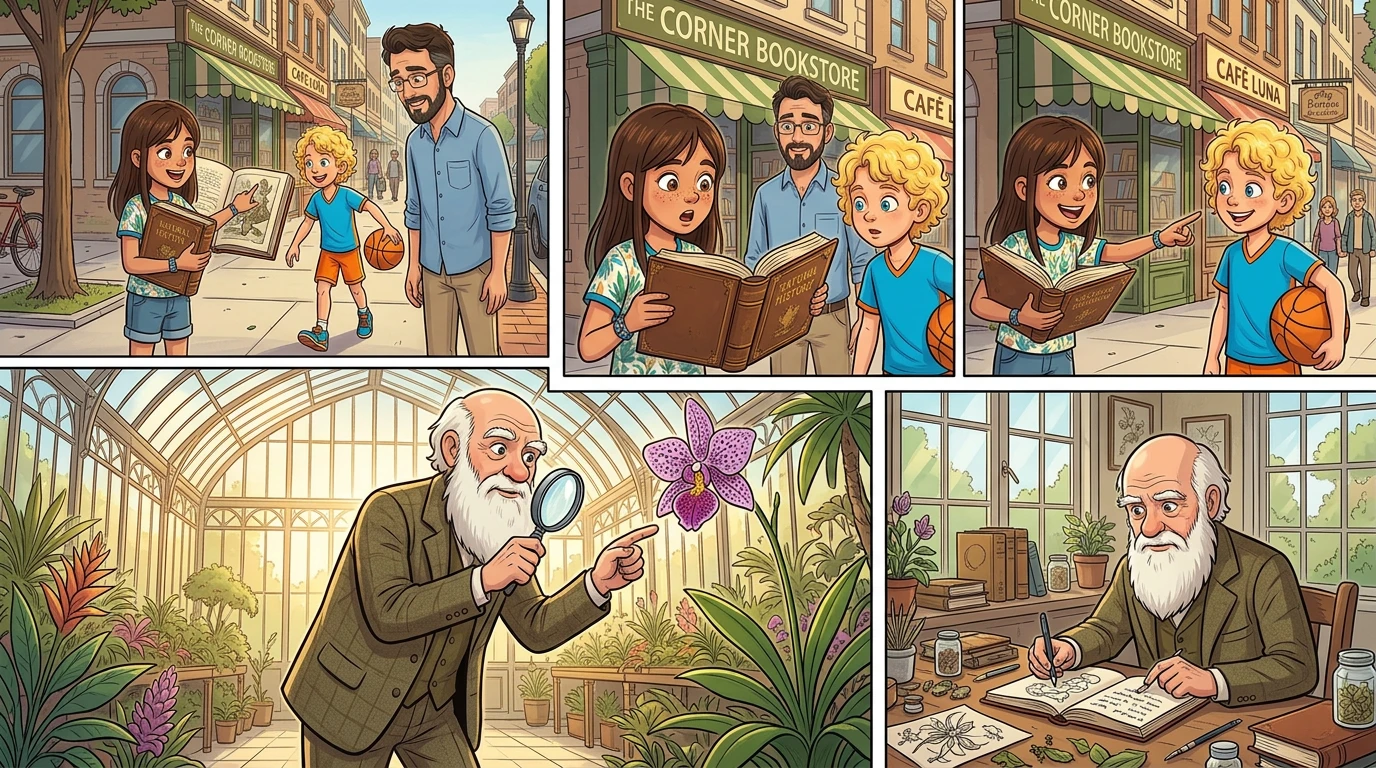
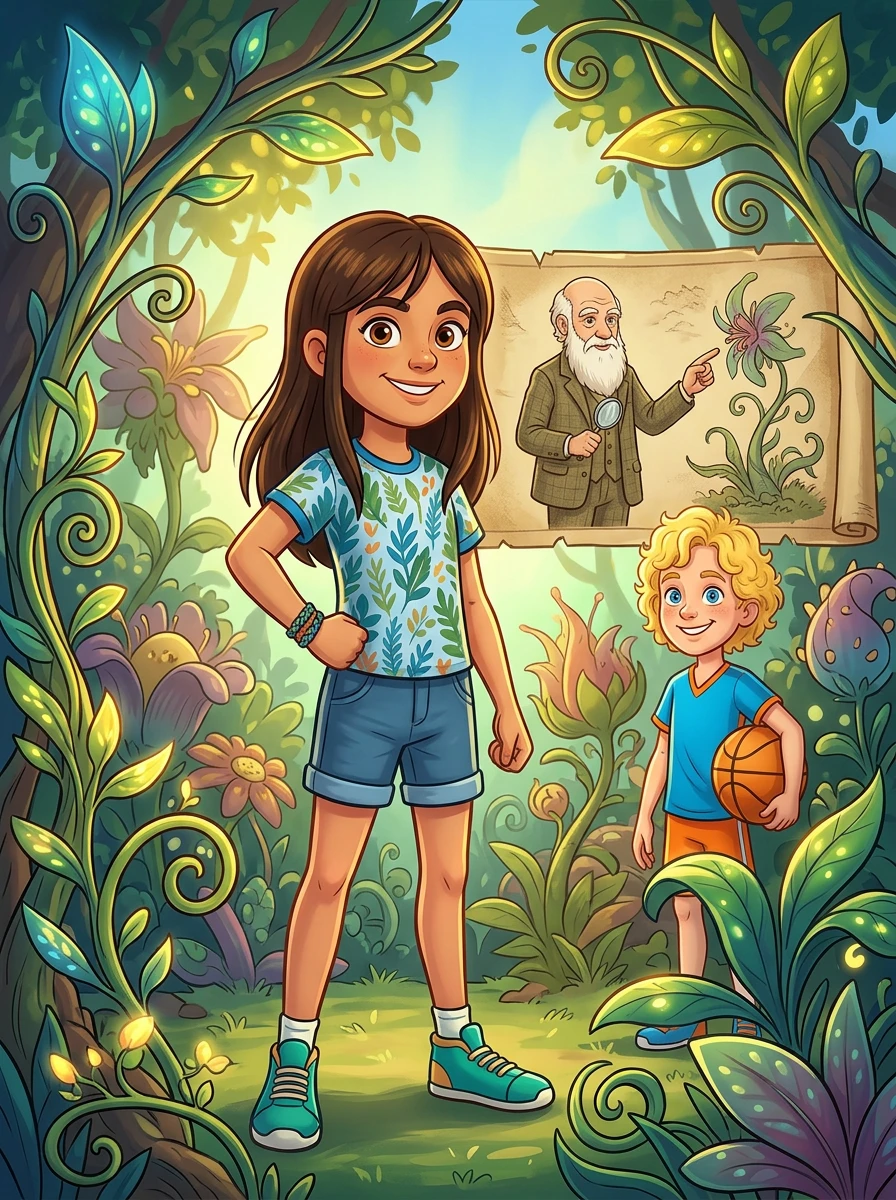
A man with a long, bushy beard and twinkling eyes, Charles Darwin himself, stood examining a peculiar plant. He wore a tweed suit and carried a magnifying glass. Charles Darwin, the famous naturalist, was fascinated by the way plants adapted to their environments. He even wrote a whole book about carnivorous plants! Darwin muttered, "These plants are nature's most beautiful traps."
Page 6
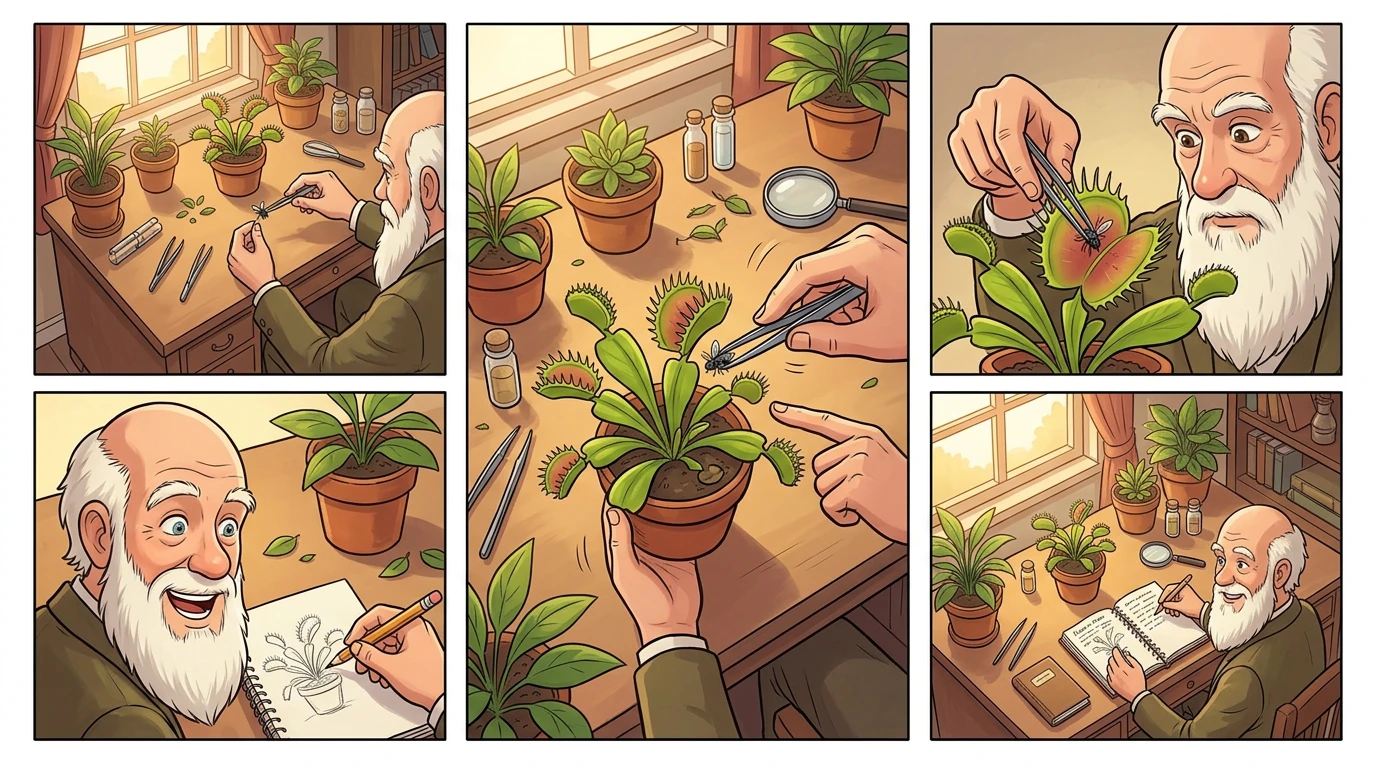
Darwin carefully placed a small insect onto the sensitive hairs inside a Venus flytrap. Instantly, the trap snapped shut! "Aha!" Darwin exclaimed. "The touch of the insect triggers the plant's response. It's like a tiny, natural spring!" Darwin discovered that these plants use electrical signals to quickly close their traps.
Page 7
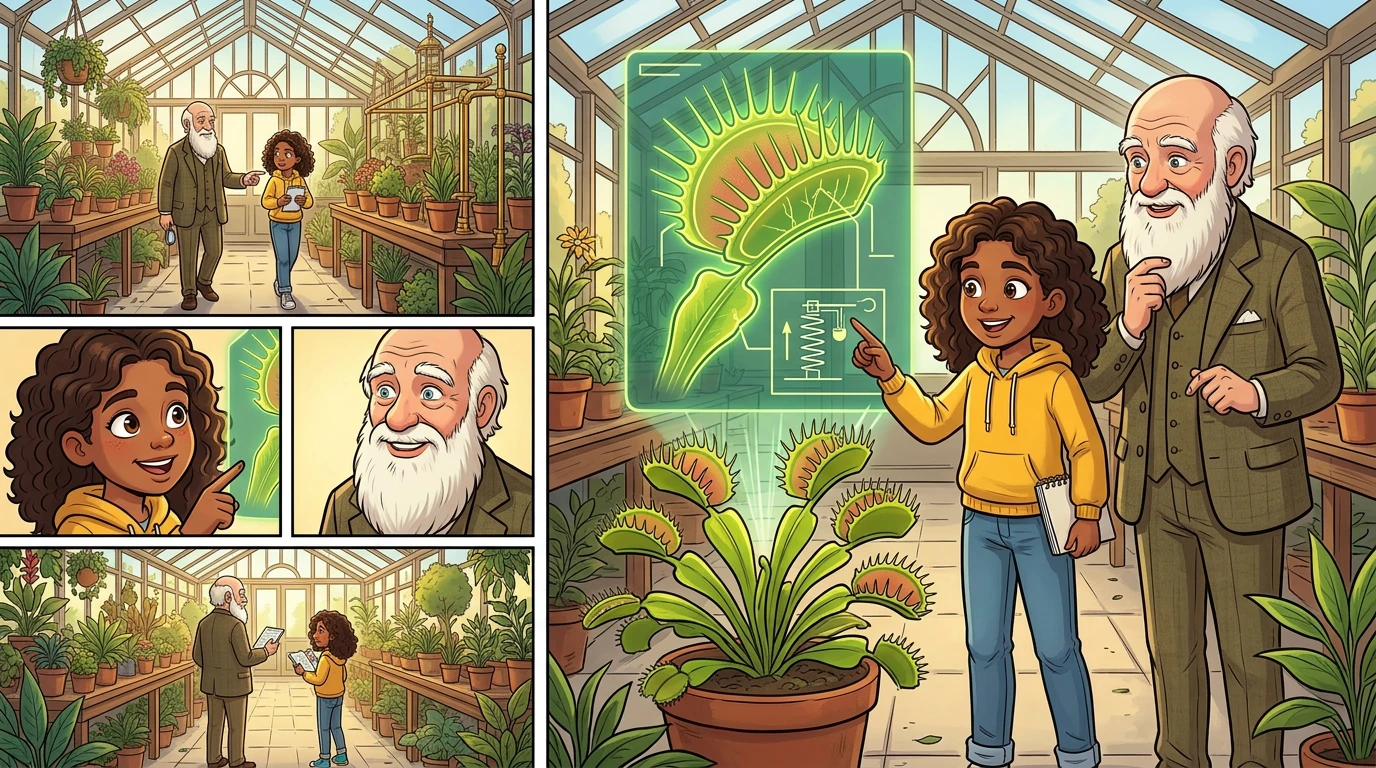
Darwin's work helped people understand how plants can adapt to survive in even the harshest conditions. Today, scientists are studying these plants to design new kinds of sensors and even robots! Who knew a plant could inspire technology? "It's amazing," Layla said. "So, if you look at the trigger hairs on the flytrap, and then the spring on a mousetrap, there's a direct engineering relationship?"
Page 8
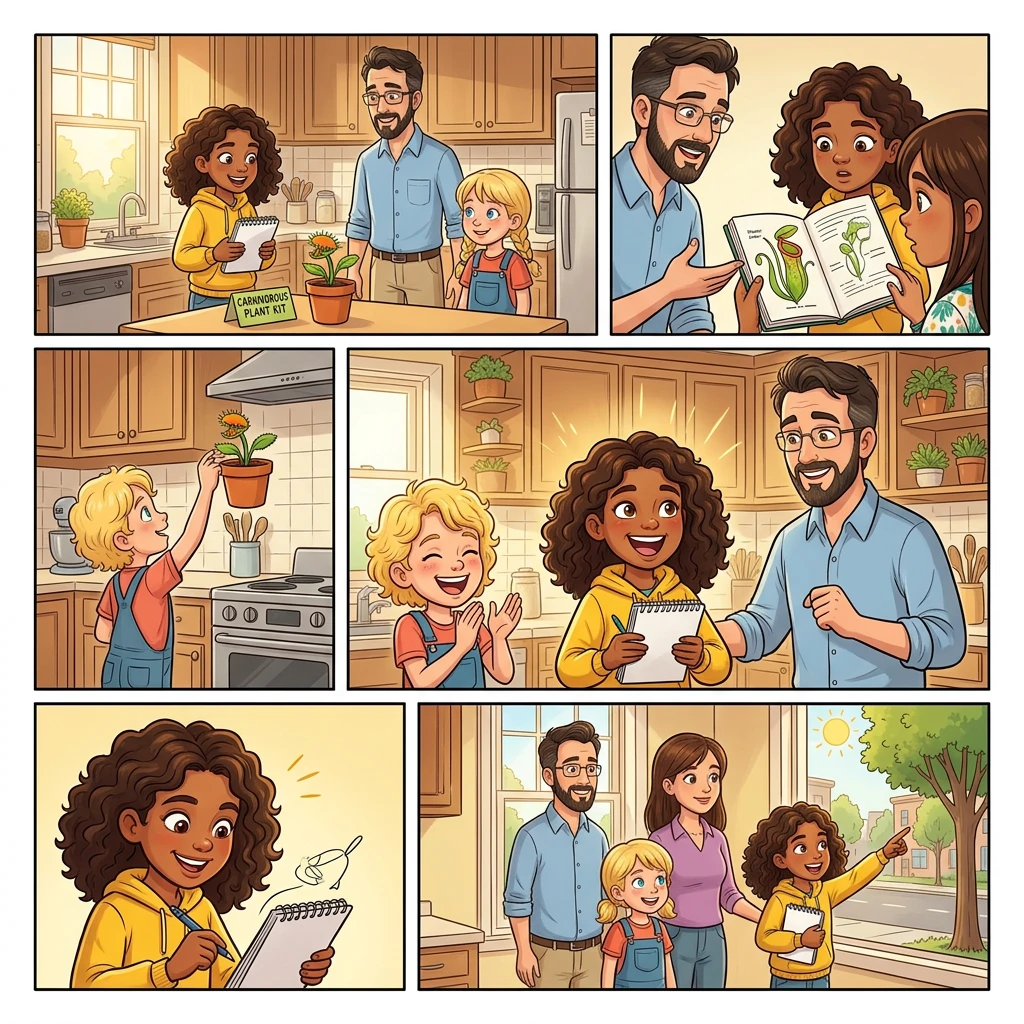
Suddenly, they were back in the kitchen! Sophie clapped her hands. "Wow, Darwin was cool!" Layla grinned. "He was! My flytrap probably isn't getting enough sunlight or the right bugs! Remember the quote: 'Chance favors the prepared mind?' So I need to prepare a home that attracts the right bugs." Her father nodded. "Exactly! You need to provide the right environment."
Page 9
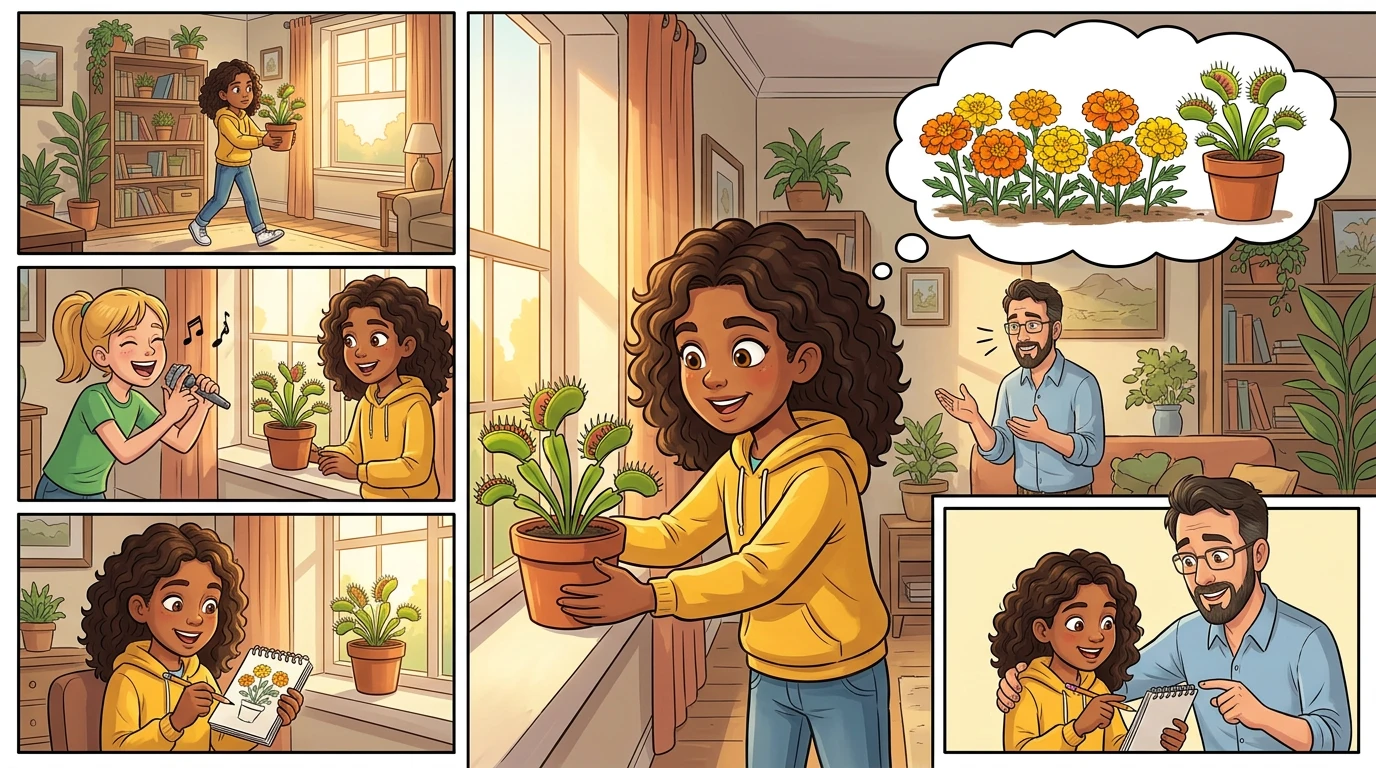
Layla decided to take action. "I'll move it to the sunniest spot and maybe put some fruit nearby to attract flies!" Sophie suggested, "Maybe you could sing to it!" Her father chuckled. "Or maybe you could build a tiny bug hotel nearby?" Layla's eyes widened. "That's it! Jess says that marigolds attract all kinds of insects! A marigold, Venus flytrap combo!"
Page 10
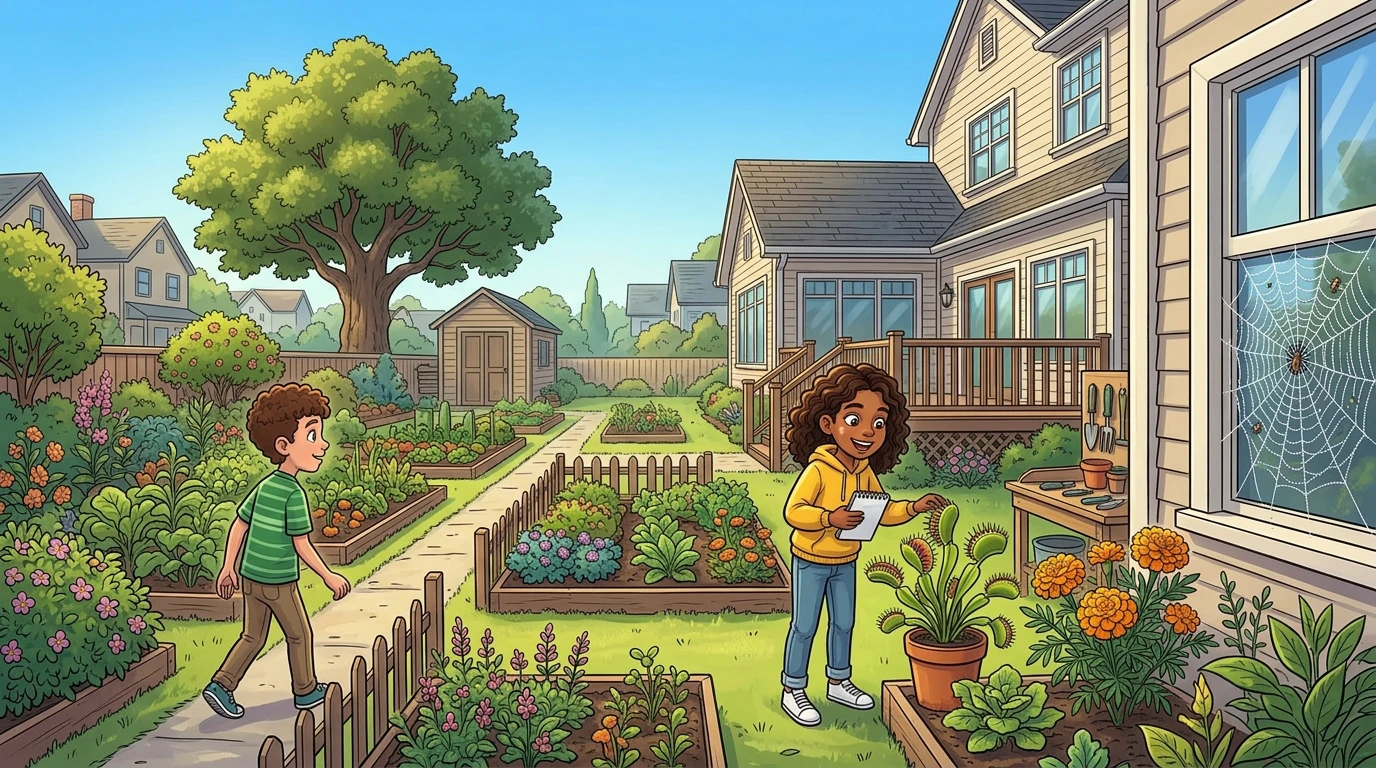
Layla smiled. "Carnivorous plants have evolved ingenious methods for trapping their prey." Nadia, a friend, asked as she came over, "If plants eat insects, what makes insects eat plants?" Layla's smile grew even wider. "That's a great question! Looks like our next adventure involves the wonders of herbivory."
About this story
- Audience: kids (ages 6–12)
Questions and answers
Questions and answers about Flora's Fantastic Plant Predicament
Read Wonder Books on your phone
Wonder Books is available on Android and iPhone and iPad. Get Wonder Books on Google Play · Get Wonder Books on the App Store.